
Search
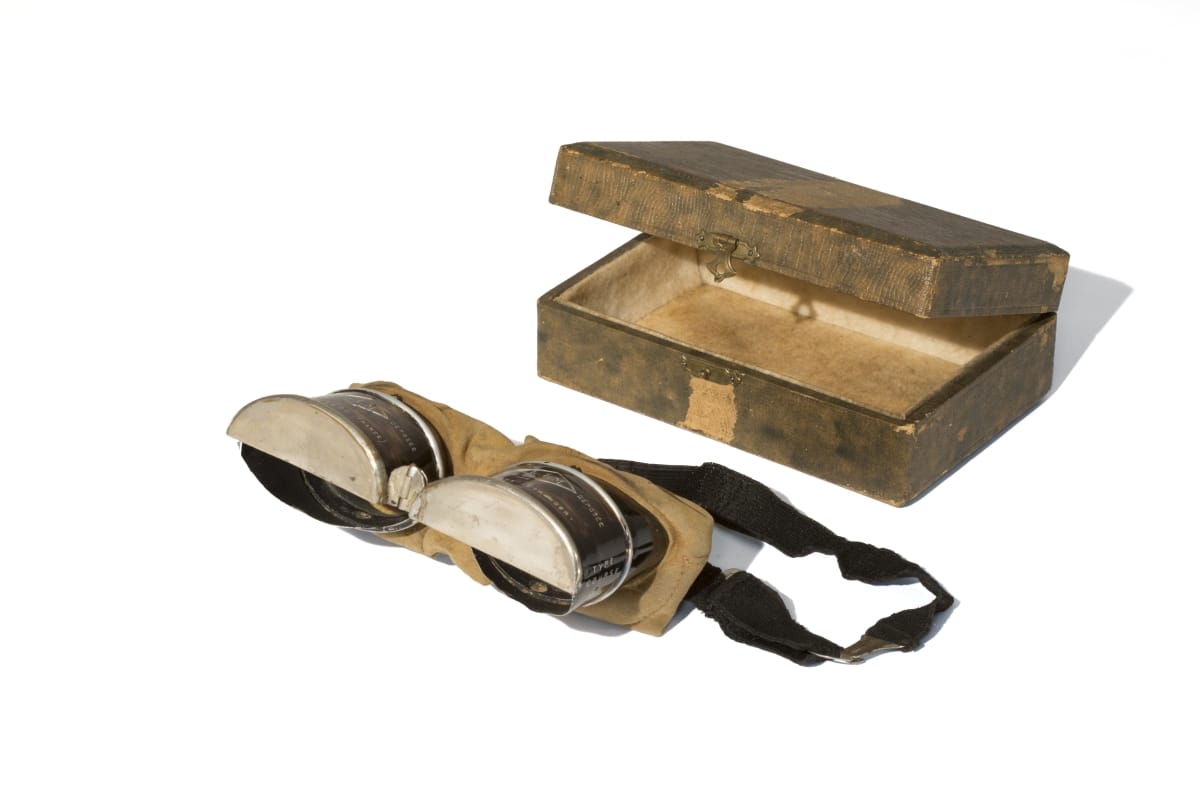
- Automobile Racing Goggles, Used by Joe Tracy, circa 1905 - Drivers racing in early open cars -- most without windshields -- faced particular dangers to their eyes. Dust, mud or oil could make it difficult to see the track, and flying stones might cause permanent injury. Goggles were essential equipment. These goggles belonged to Joe Tracy, who drove the Locomobile race car "Old 16" in the 1906 Vanderbilt Cup race.
- circa 1905
- Collections - Artifact
Automobile Racing Goggles, Used by Joe Tracy, circa 1905
Drivers racing in early open cars -- most without windshields -- faced particular dangers to their eyes. Dust, mud or oil could make it difficult to see the track, and flying stones might cause permanent injury. Goggles were essential equipment. These goggles belonged to Joe Tracy, who drove the Locomobile race car "Old 16" in the 1906 Vanderbilt Cup race.
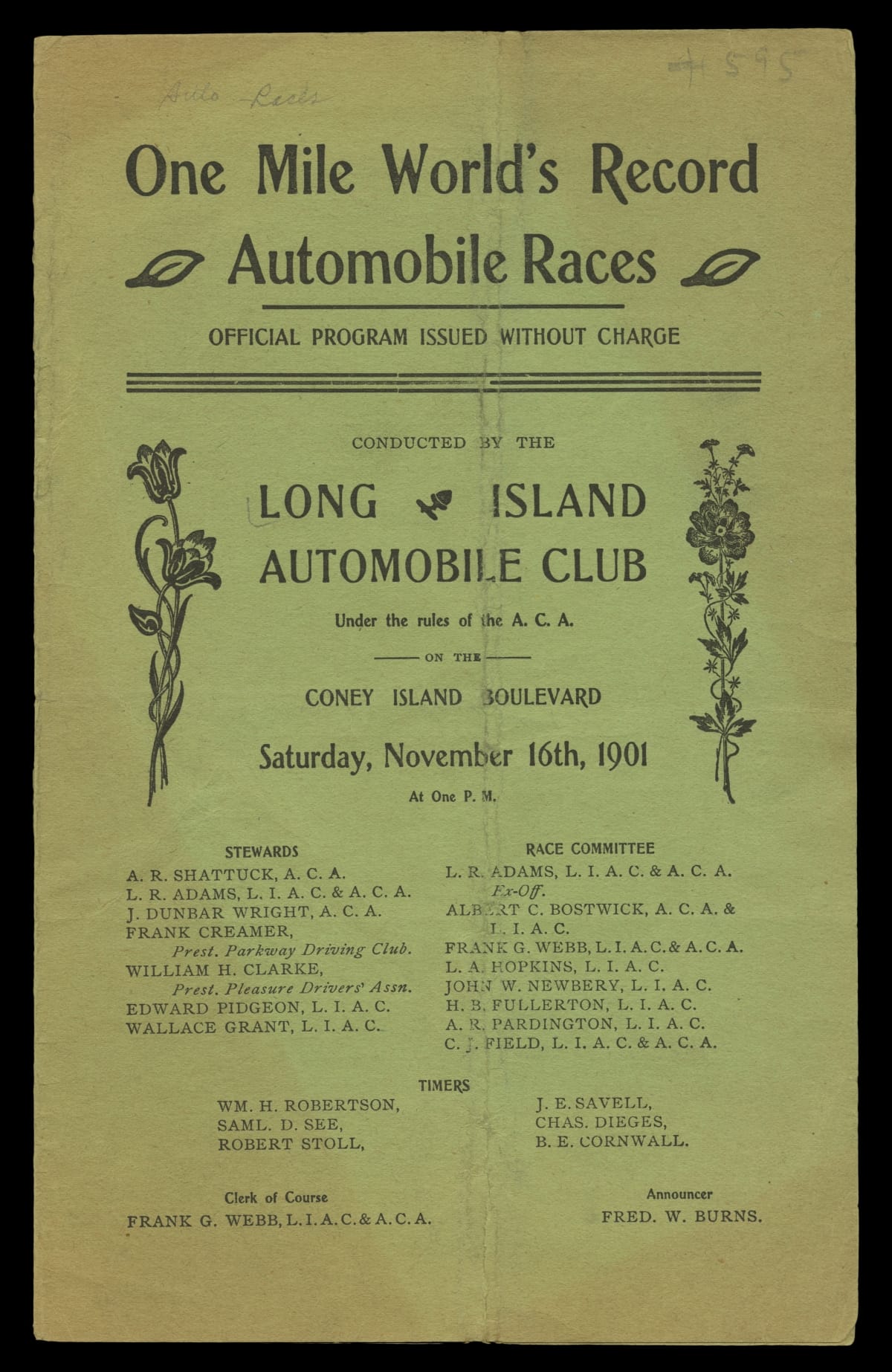
- Program for "One Mile World's Record Automobile Races," Brooklyn, New York, November 16, 1901 - Andrew Riker made headlines in November 1901 when his battery-powered "Torpedo" racer hit 57.1 miles per hour in a race at Coney Island, New York. It was a world speed record for electric automobiles. Despite his success, Riker soon determined that the automobile's future lay with a different fuel. In 1902, he joined Locomobile and started designing gasoline-powered cars.
- November 16, 1901
- Collections - Artifact
Program for "One Mile World's Record Automobile Races," Brooklyn, New York, November 16, 1901
Andrew Riker made headlines in November 1901 when his battery-powered "Torpedo" racer hit 57.1 miles per hour in a race at Coney Island, New York. It was a world speed record for electric automobiles. Despite his success, Riker soon determined that the automobile's future lay with a different fuel. In 1902, he joined Locomobile and started designing gasoline-powered cars.
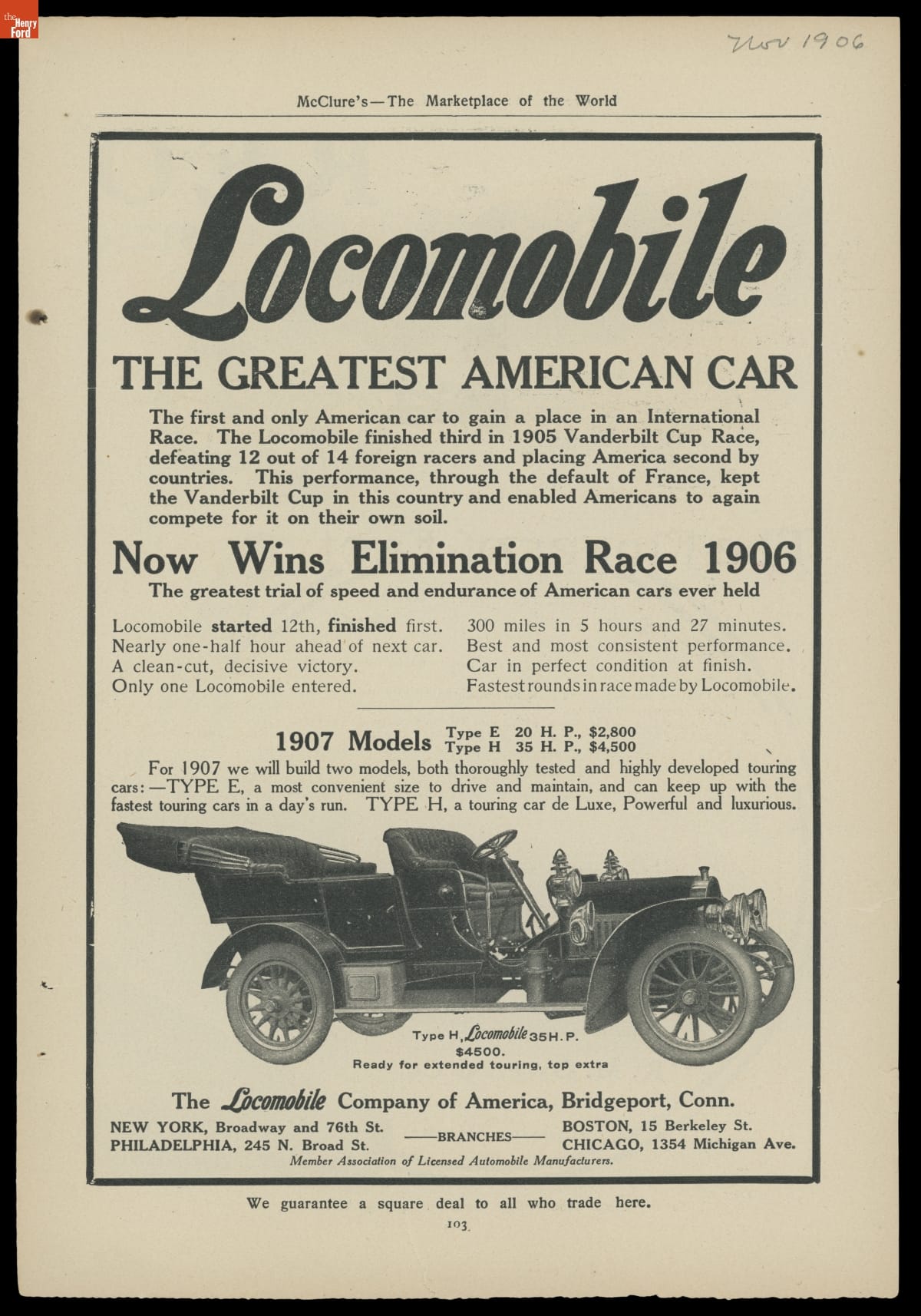
- Locomobile Company of America and Reo Motor Car Company Advertisements, November 1906 - Racing and advertising have always gone hand in hand in the automotive industry. Locomobile promoted its success at 1905 and 1906 Vanderbilt Cup racing events in this ad, published in <em>McClure's</em> magazine in November 1906. Two years later, a Locomobile would win the Vanderbilt Cup -- the first American car to win that major race.
- November 01, 1906
- Collections - Artifact
Locomobile Company of America and Reo Motor Car Company Advertisements, November 1906
Racing and advertising have always gone hand in hand in the automotive industry. Locomobile promoted its success at 1905 and 1906 Vanderbilt Cup racing events in this ad, published in McClure's magazine in November 1906. Two years later, a Locomobile would win the Vanderbilt Cup -- the first American car to win that major race.
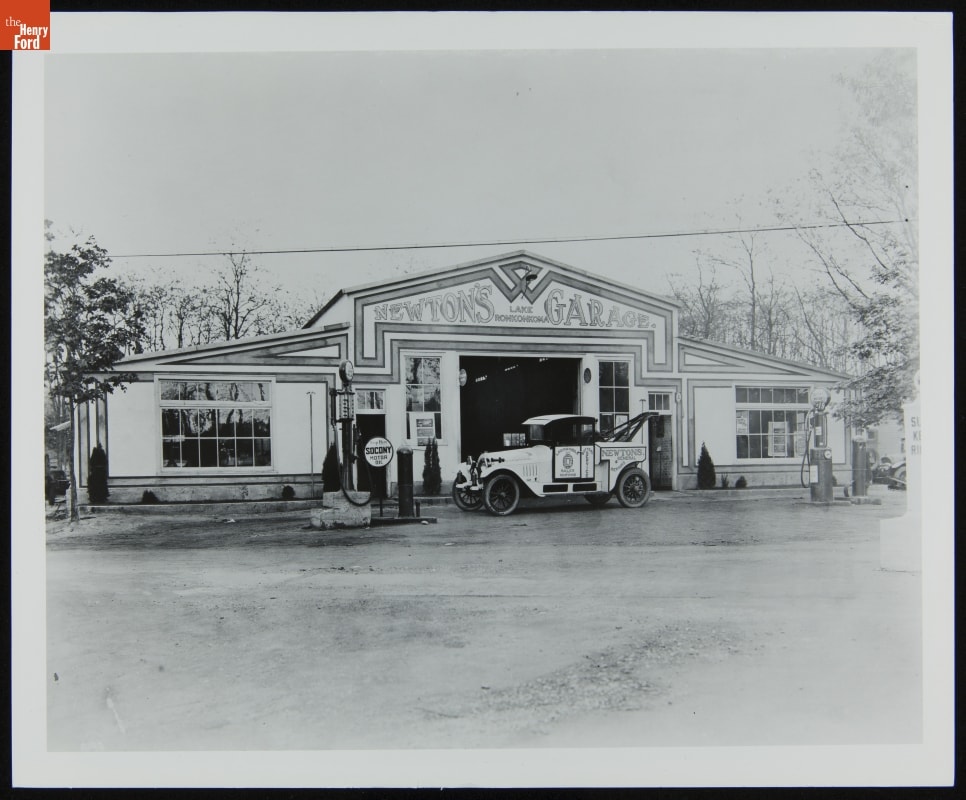
- Newton's Garage and Locomobile Tow Truck, Lake Ronkonkoma, New York, 1915-1925 -
- 1915-1925
- Collections - Artifact
Newton's Garage and Locomobile Tow Truck, Lake Ronkonkoma, New York, 1915-1925
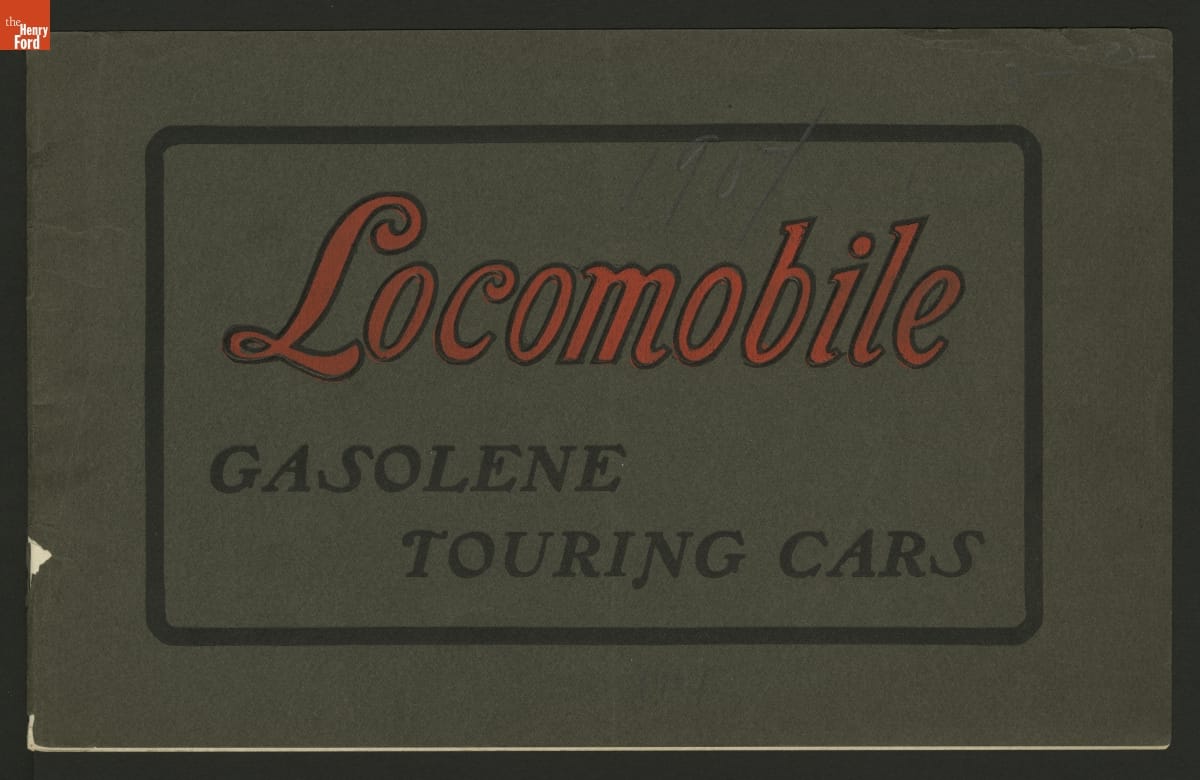
- 1904 Locomobile Gasolene Touring Cars - Locomobile promoted its "gasolene" touring cars in this 1904 sales catalog. The company began in 1899 by building steam-powered cars. And Andrew L. Riker, who designed this Locomobile, was known for creating electric-powered vehicles. This catalog provided buyers with the information and assurances of the Locomobile's quality.
- 1904
- Collections - Artifact
1904 Locomobile Gasolene Touring Cars
Locomobile promoted its "gasolene" touring cars in this 1904 sales catalog. The company began in 1899 by building steam-powered cars. And Andrew L. Riker, who designed this Locomobile, was known for creating electric-powered vehicles. This catalog provided buyers with the information and assurances of the Locomobile's quality.
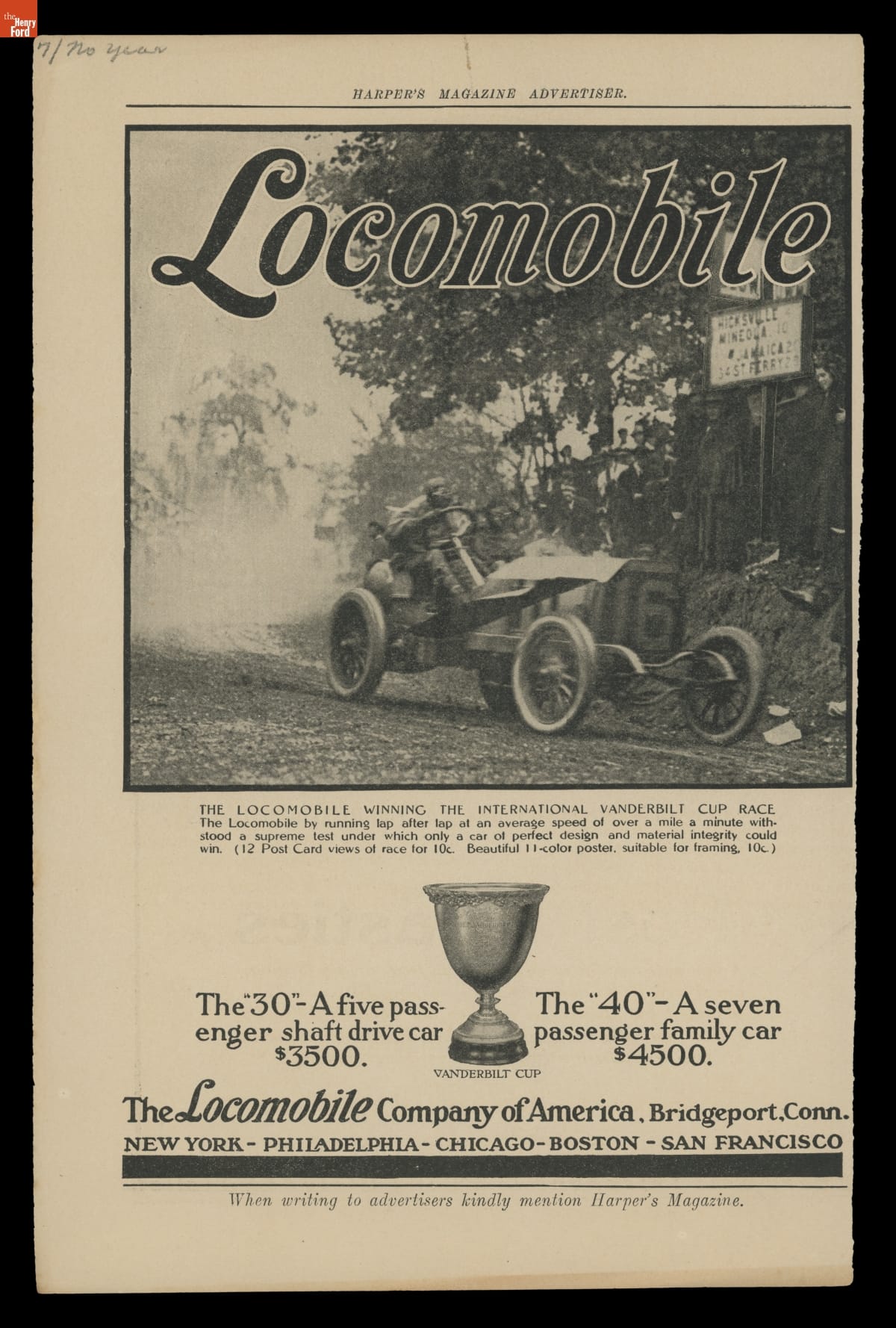
- Locomobile Advertisement, "Locomobile Winning the International Vanderbilt Cup Race," 1909 - After one of its cars, a 1906 racer nicknamed "Old 16," won the prestigious Vanderbilt Cup race in 1908, Locomobile featured the victory prominently in advertisements. This ad, run in <em>Harper's</em> magazine in 1909, boasted about the car's impressive 64.3 mph average race speed, and its durability under the competition's extreme conditions.
- 1909
- Collections - Artifact
Locomobile Advertisement, "Locomobile Winning the International Vanderbilt Cup Race," 1909
After one of its cars, a 1906 racer nicknamed "Old 16," won the prestigious Vanderbilt Cup race in 1908, Locomobile featured the victory prominently in advertisements. This ad, run in Harper's magazine in 1909, boasted about the car's impressive 64.3 mph average race speed, and its durability under the competition's extreme conditions.
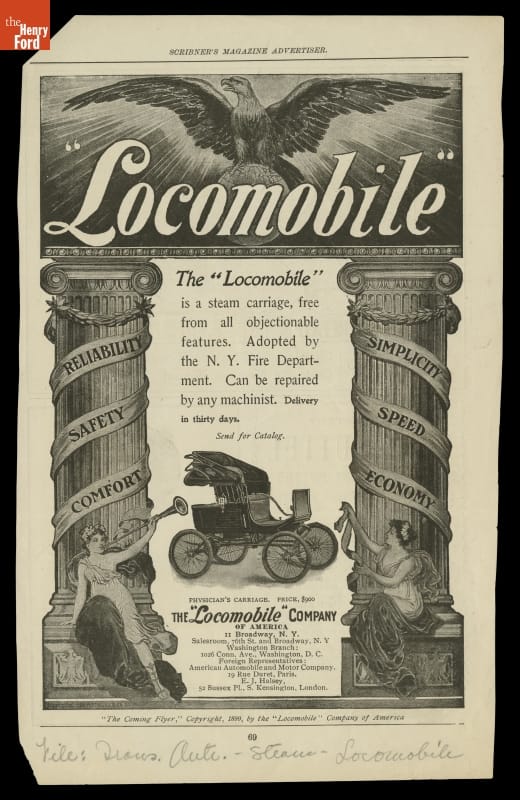
- Advertisement for the 1901 Locomobile, "The Locomobile is a Steam Carriage, Free from all Objectionable Features..." - This 1901 advertisement for Locomobile touted its many quality attributes.
- 1901
- Collections - Artifact
Advertisement for the 1901 Locomobile, "The Locomobile is a Steam Carriage, Free from all Objectionable Features..."
This 1901 advertisement for Locomobile touted its many quality attributes.
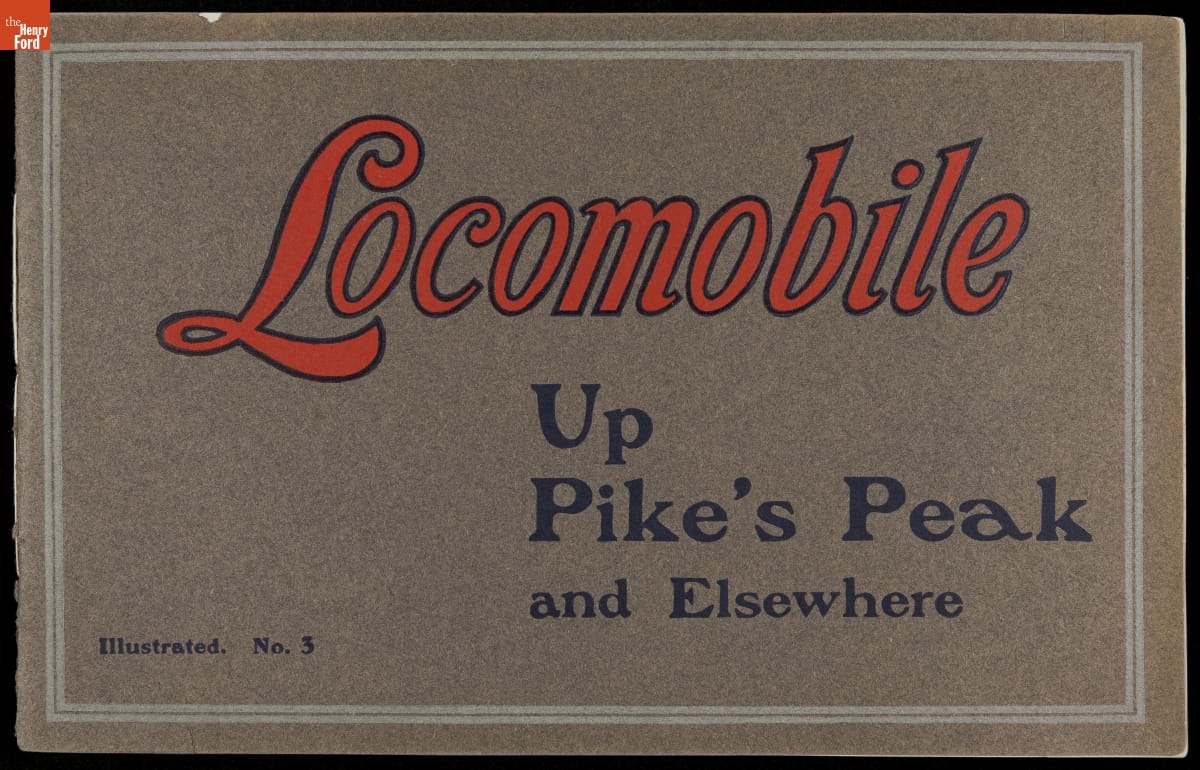
- Locomobile- Up Pike's Peak and Elsewhere, 1901 - Car brochures have evolved from straightforward product catalogues into polished creative sales tools. Their quality paper, rich color, inventive formats, and sophisticated graphic design all contribute to a buyer's developing impression of a car in a showroom. Advertising might entice people to a dealership, but brochures extend and deepen the relationship between vehicle and potential buyer.
- 1901
- Collections - Artifact
Locomobile- Up Pike's Peak and Elsewhere, 1901
Car brochures have evolved from straightforward product catalogues into polished creative sales tools. Their quality paper, rich color, inventive formats, and sophisticated graphic design all contribute to a buyer's developing impression of a car in a showroom. Advertising might entice people to a dealership, but brochures extend and deepen the relationship between vehicle and potential buyer.
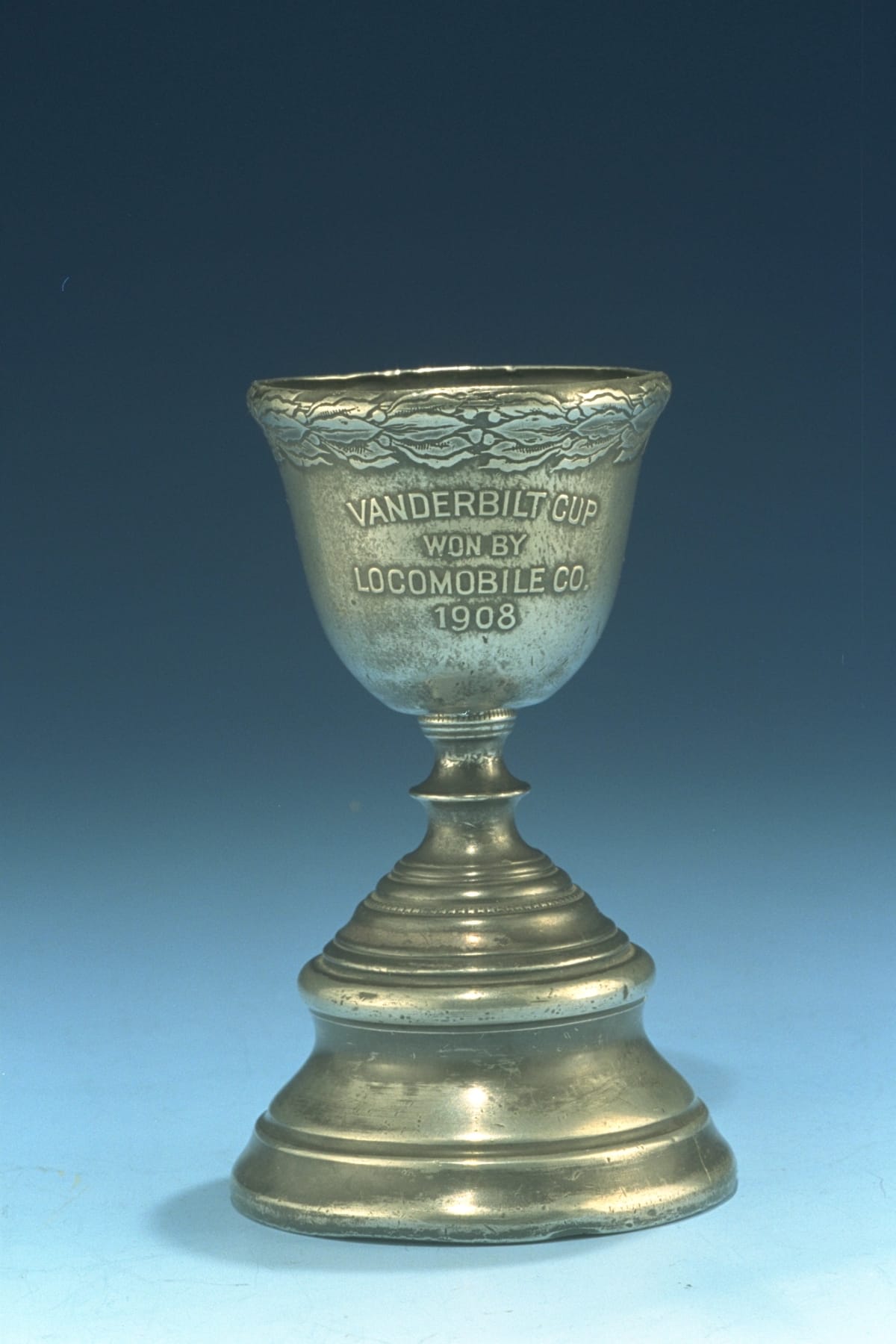
- Paperweight Commemorating the 1908 Victory of the Locomobile Company at the Vanderbilt Cup Races - The Vanderbilt Cup, held from 1904 to 1916, was America's first internationally prominent automobile race. European-built cars dominated the competition until 1908, when Connecticut-built Locomobile "Old 16" won with driver George Robertson. The victory was a milestone for America's automotive industry, proving that cars manufactured in the United States were every bit as good as their foreign rivals.
- 1908
- Collections - Artifact
Paperweight Commemorating the 1908 Victory of the Locomobile Company at the Vanderbilt Cup Races
The Vanderbilt Cup, held from 1904 to 1916, was America's first internationally prominent automobile race. European-built cars dominated the competition until 1908, when Connecticut-built Locomobile "Old 16" won with driver George Robertson. The victory was a milestone for America's automotive industry, proving that cars manufactured in the United States were every bit as good as their foreign rivals.
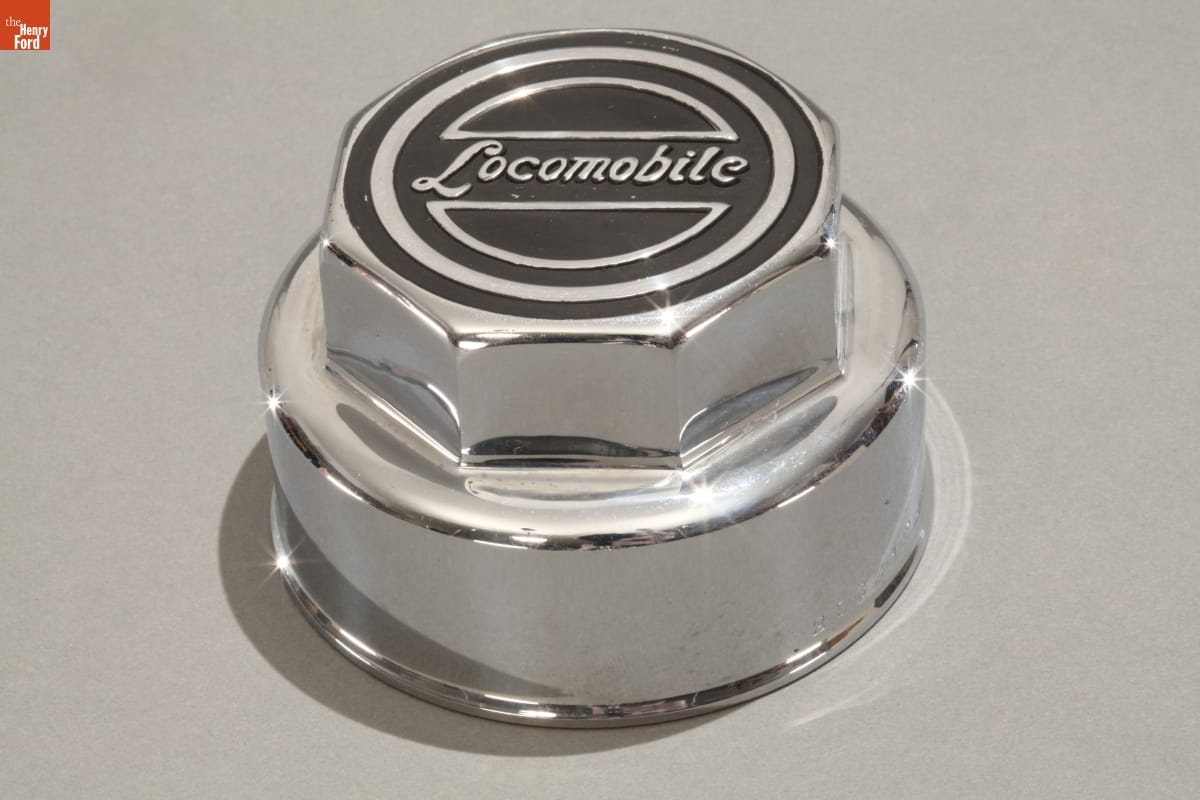
- Locomobile Hubcap, circa 1925 - Early automobile wheels had a central hub with a greased wheel bearing. Hub caps kept grease in and dust out. As wheels evolved and hubcaps became functionally unnecessary, they remained important to both manufacturers -- who branded wheel covers with maker names or logos -- and consumers -- who identified with hubcaps as statements about their cars and themselves.
- circa 1925
- Collections - Artifact
Locomobile Hubcap, circa 1925
Early automobile wheels had a central hub with a greased wheel bearing. Hub caps kept grease in and dust out. As wheels evolved and hubcaps became functionally unnecessary, they remained important to both manufacturers -- who branded wheel covers with maker names or logos -- and consumers -- who identified with hubcaps as statements about their cars and themselves.