
Search
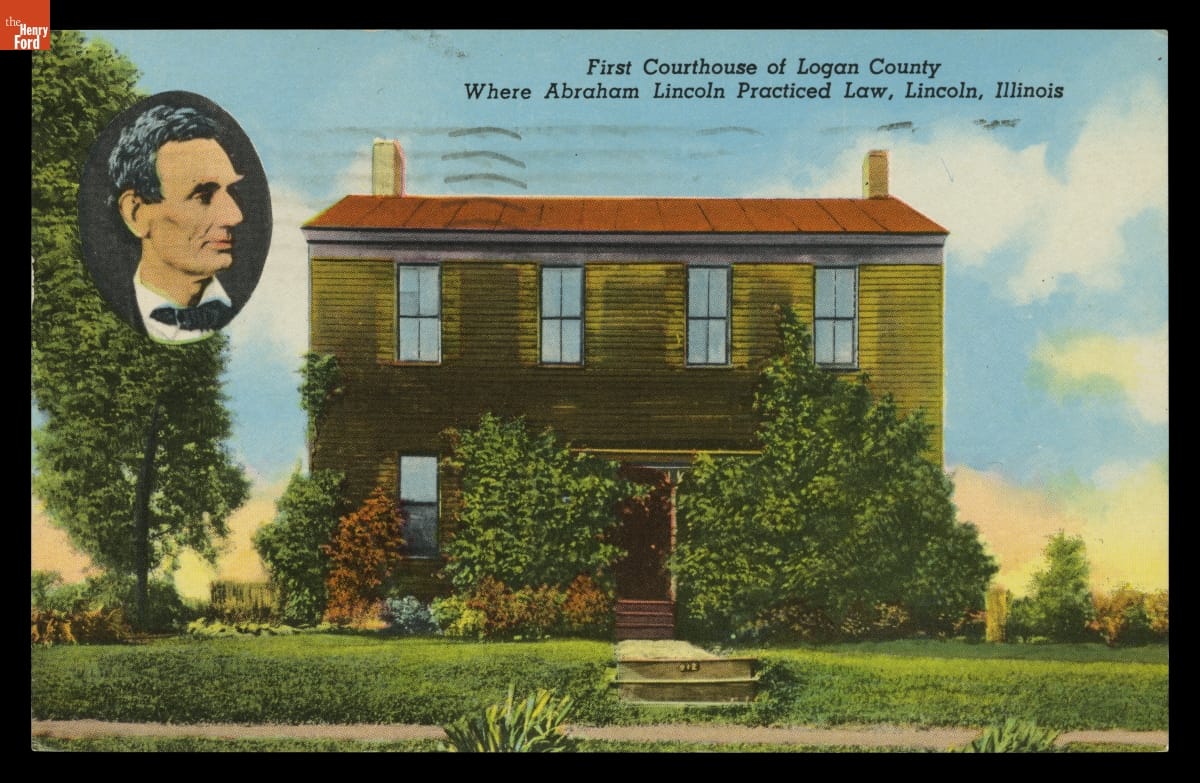
- "First Court House of Logan County Where Abraham Lincoln Practiced Law, Lincoln, Ill.," 1927 Postcard - Between 1840 and 1847, Abraham Lincoln tried cases as a traveling lawyer in this courthouse when it was located in Postville (later Lincoln), Illinois. When the Logan County seat moved to Mt. Pulaski, this courthouse was reused as a general store, jail, post office, and private dwelling. Henry Ford purchased it in 1929 and brought it to Greenfield Village.
- 1927
- Collections - Artifact
"First Court House of Logan County Where Abraham Lincoln Practiced Law, Lincoln, Ill.," 1927 Postcard
Between 1840 and 1847, Abraham Lincoln tried cases as a traveling lawyer in this courthouse when it was located in Postville (later Lincoln), Illinois. When the Logan County seat moved to Mt. Pulaski, this courthouse was reused as a general store, jail, post office, and private dwelling. Henry Ford purchased it in 1929 and brought it to Greenfield Village.
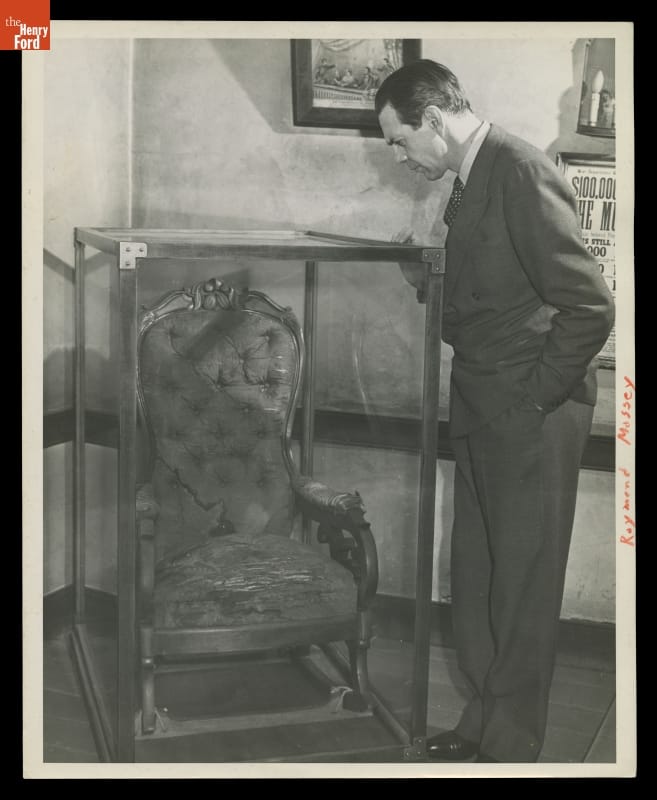
- Raymond Massey Viewing the Abraham Lincoln Chair, Then Exhibited in Greenfield Village, November 1943 - Actor Raymond Massey portrayed Abraham Lincoln in "Abe Lincoln in Illinois" first as a Broadway play in 1938-39, followed by a 1940 film. The story which traces Lincoln's early life through the 1860 election was written by noted playwright Robert Sherwood, and won a Pulitzer Prize in 1939. In late 1943, Massey toured the Logan County Courthouse where this photograph was taken.
- November 12, 1943
- Collections - Artifact
Raymond Massey Viewing the Abraham Lincoln Chair, Then Exhibited in Greenfield Village, November 1943
Actor Raymond Massey portrayed Abraham Lincoln in "Abe Lincoln in Illinois" first as a Broadway play in 1938-39, followed by a 1940 film. The story which traces Lincoln's early life through the 1860 election was written by noted playwright Robert Sherwood, and won a Pulitzer Prize in 1939. In late 1943, Massey toured the Logan County Courthouse where this photograph was taken.
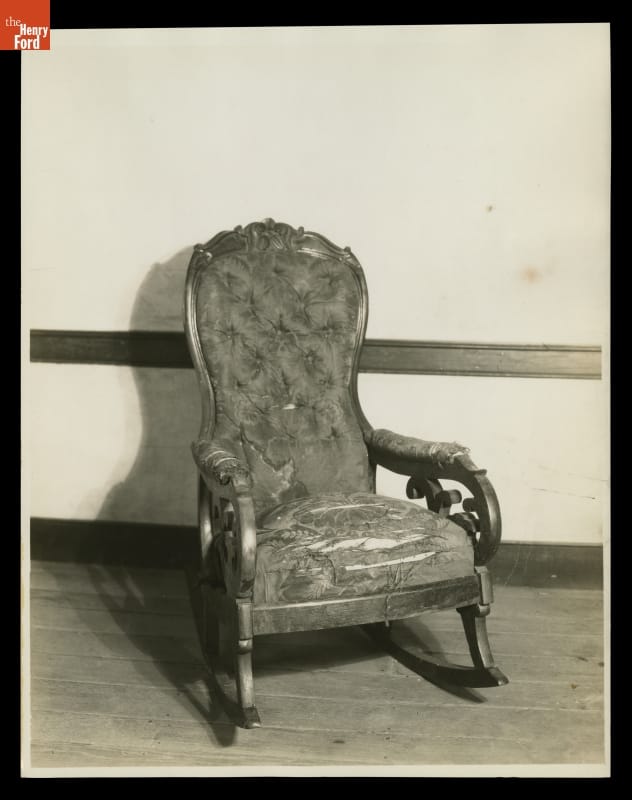
- The Abraham Lincoln Chair after Shipment to Greenfield Village, January 1930 - Henry Ford identified with self-made men who came from humble origins -- traits personified by Abraham Lincoln. In the late 1920s Ford began to acquire significant Lincoln-related artifacts including the chair in which President Lincoln had been sitting when he was shot. Ford clearly understood the chair's importance -- this rocker became a symbol of Lincoln's vision and personal sacrifice. Ford had the chair's arrival and unpacking filmed and photographed.
- January 06, 1930
- Collections - Artifact
The Abraham Lincoln Chair after Shipment to Greenfield Village, January 1930
Henry Ford identified with self-made men who came from humble origins -- traits personified by Abraham Lincoln. In the late 1920s Ford began to acquire significant Lincoln-related artifacts including the chair in which President Lincoln had been sitting when he was shot. Ford clearly understood the chair's importance -- this rocker became a symbol of Lincoln's vision and personal sacrifice. Ford had the chair's arrival and unpacking filmed and photographed.
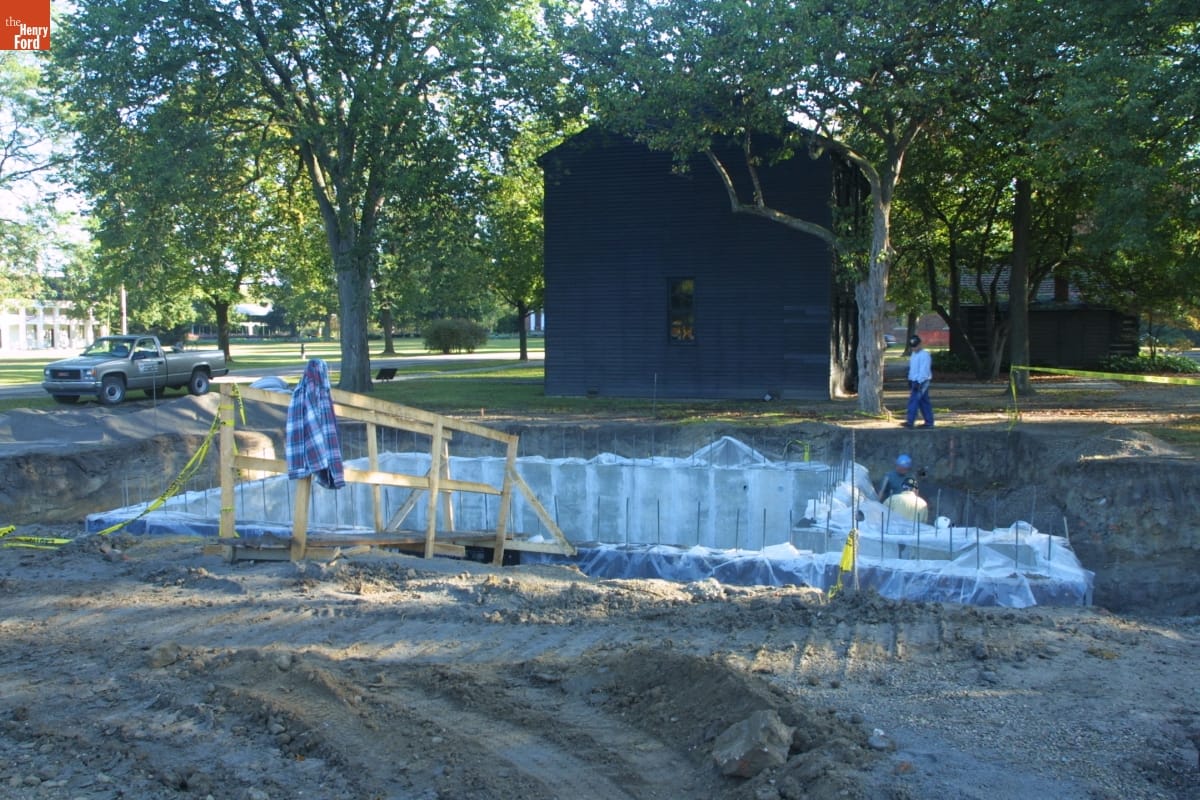
- Dr. Howard's Office Relocation Site during the Greenfield Village Restoration Project, September 2002 - By 2000, Greenfield Village began showing its age. Buildings and crumbling infrastructure desperately needed repair. Museum planners envisioned a revitalized village. They created themed "Historic Districts" by relocating and refurbishing the historic structures. Workers repaved streets and upgraded water, sewer, electric, and gas lines. In June 2003, nine months after restoration began, visitors passed through a new entrance into a reborn Greenfield Village.
- September 01, 2002
- Collections - Artifact
Dr. Howard's Office Relocation Site during the Greenfield Village Restoration Project, September 2002
By 2000, Greenfield Village began showing its age. Buildings and crumbling infrastructure desperately needed repair. Museum planners envisioned a revitalized village. They created themed "Historic Districts" by relocating and refurbishing the historic structures. Workers repaved streets and upgraded water, sewer, electric, and gas lines. In June 2003, nine months after restoration began, visitors passed through a new entrance into a reborn Greenfield Village.
- Former Site of Dr. Howard's Office after Relocation during the Greenfield Village Restoration Project, October 2002 - By 2000, Greenfield Village began showing its age. Buildings and crumbling infrastructure desperately needed repair. Museum planners envisioned a revitalized village. They created themed "Historic Districts" by relocating and refurbishing the historic structures. Workers repaved streets and upgraded water, sewer, electric, and gas lines. In June 2003, nine months after restoration began, visitors passed through a new entrance into a reborn Greenfield Village.
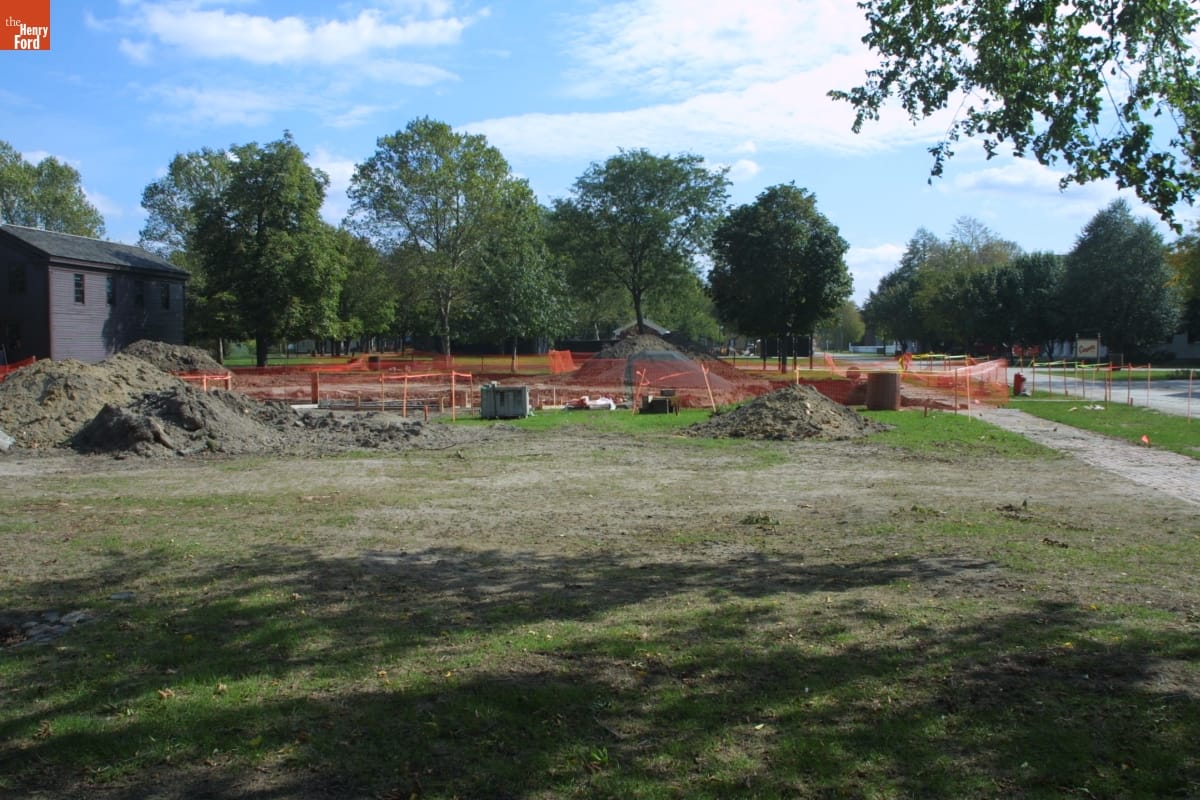
- October 01, 2002
- Collections - Artifact
Former Site of Dr. Howard's Office after Relocation during the Greenfield Village Restoration Project, October 2002
By 2000, Greenfield Village began showing its age. Buildings and crumbling infrastructure desperately needed repair. Museum planners envisioned a revitalized village. They created themed "Historic Districts" by relocating and refurbishing the historic structures. Workers repaved streets and upgraded water, sewer, electric, and gas lines. In June 2003, nine months after restoration began, visitors passed through a new entrance into a reborn Greenfield Village.
- Guide Virginia Cook Presenting the Abraham Lincoln Chair, Then on Exhibit in Greenfield Village, April 1955 - Henry Ford admired President Lincoln's humble, down-to-earth character and his embodiment of the ideals of the "self-made man." Ford collected many Lincoln-related artifacts, including the Logan County, Illinois, courthouse in which Lincoln had first practiced law and the chair in which Lincoln was assassinated. He housed his Lincoln collection inside the courthouse when it was re-erected in Greenfield Village.
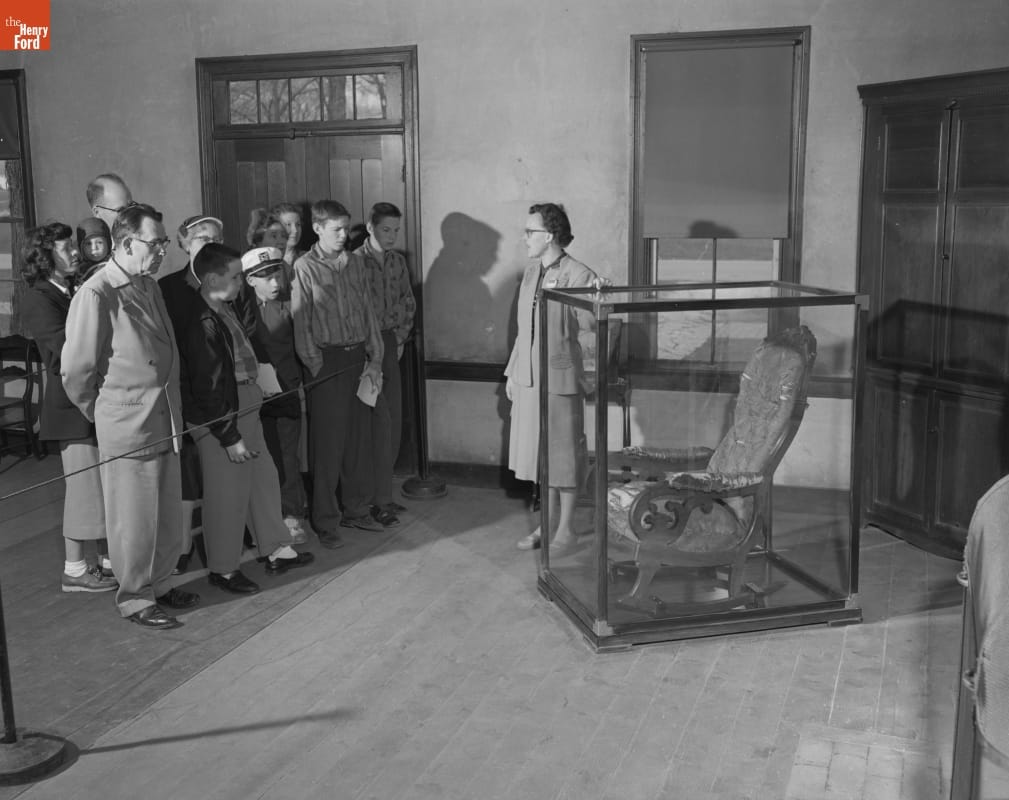
- April 13, 1955
- Collections - Artifact
Guide Virginia Cook Presenting the Abraham Lincoln Chair, Then on Exhibit in Greenfield Village, April 1955
Henry Ford admired President Lincoln's humble, down-to-earth character and his embodiment of the ideals of the "self-made man." Ford collected many Lincoln-related artifacts, including the Logan County, Illinois, courthouse in which Lincoln had first practiced law and the chair in which Lincoln was assassinated. He housed his Lincoln collection inside the courthouse when it was re-erected in Greenfield Village.
- Logan County Courthouse in Greenfield Village, May 24, 2010 - Between 1840 and 1847, Abraham Lincoln tried cases here as a traveling lawyer. Visiting once or twice a year, he worked mostly on cases resolving neighbors' disagreements over land, contracts, and debts. As Lincoln traveled, people got to know him because he always took time to talk to them. This helped him earn votes later when he went into politics.
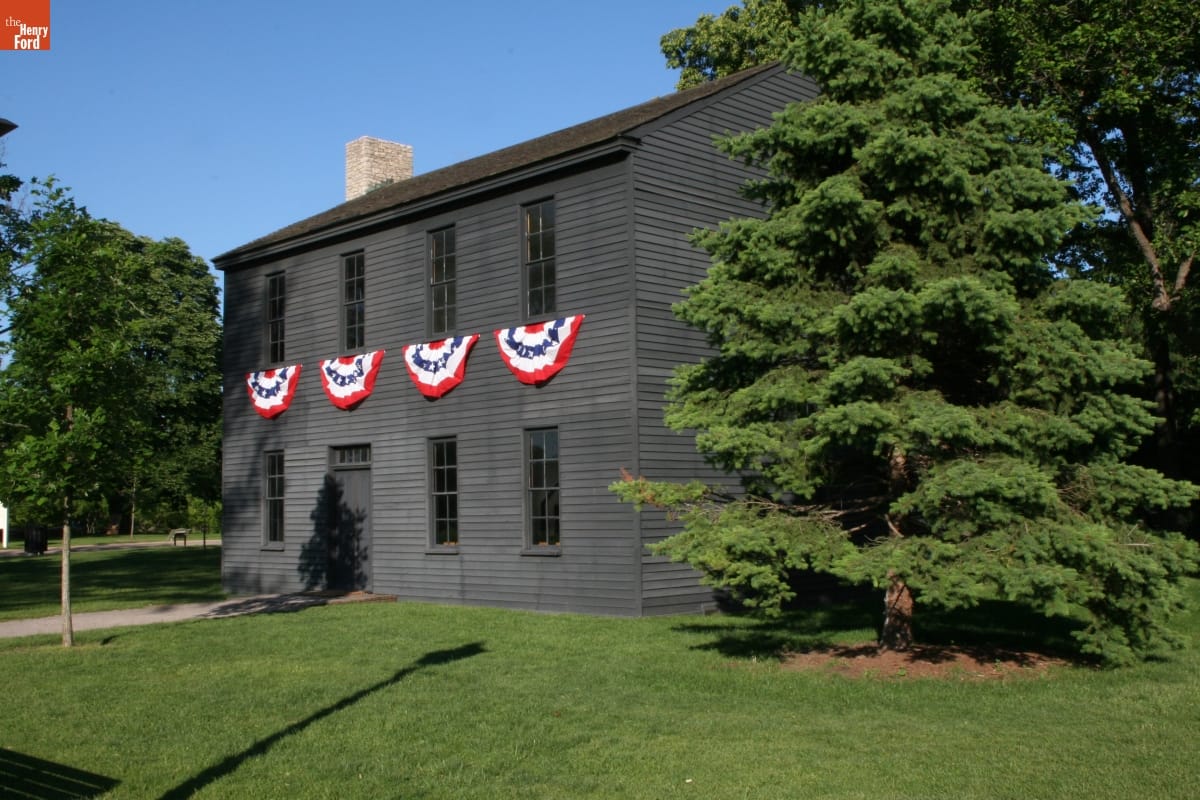
- May 24, 2010
- Collections - Artifact
Logan County Courthouse in Greenfield Village, May 24, 2010
Between 1840 and 1847, Abraham Lincoln tried cases here as a traveling lawyer. Visiting once or twice a year, he worked mostly on cases resolving neighbors' disagreements over land, contracts, and debts. As Lincoln traveled, people got to know him because he always took time to talk to them. This helped him earn votes later when he went into politics.
- Logan County Courthouse at Its Original Site, Lincoln, Illinois, September 1929 - Henry Ford's search for a building with an Abraham Lincoln connection led him to this Illinois structure, a courthouse where Lincoln had practiced law early in his career. Ford purchased the building, although by then it had become a private residence. The building was dismantled, moved, and re-erected in Greenfield Village in time for the official dedication in October 1929.
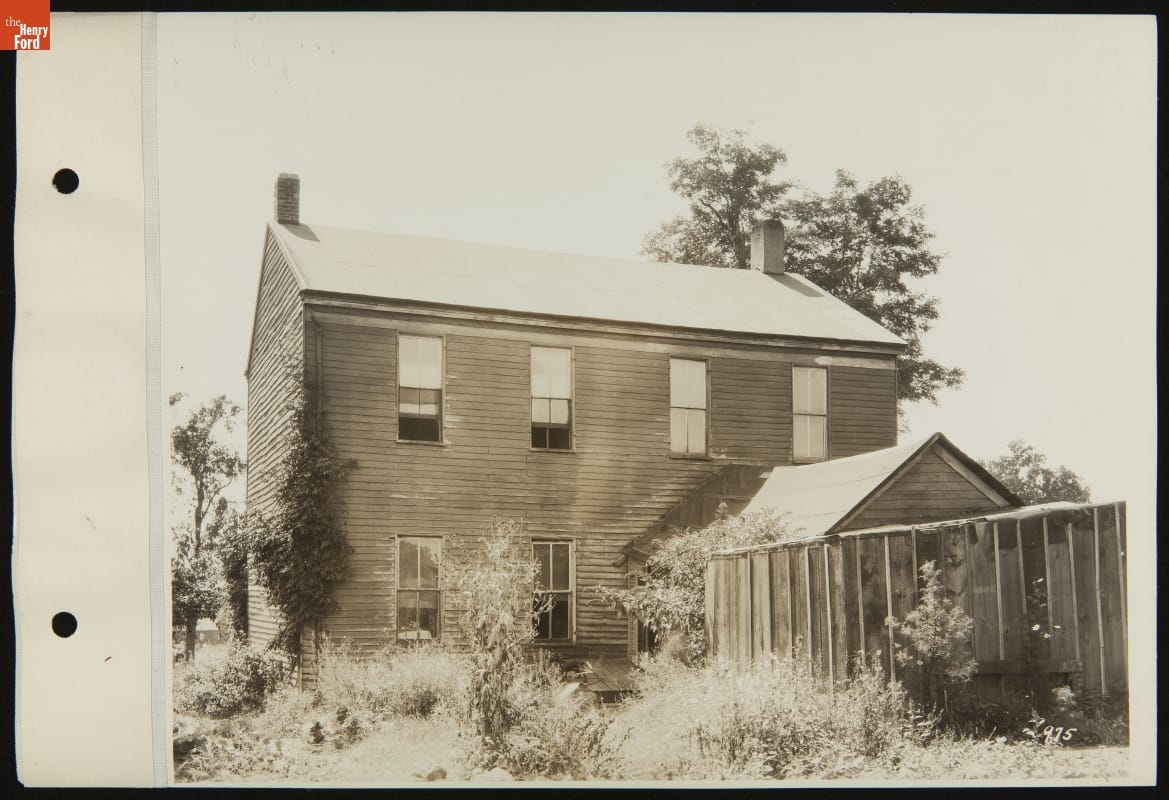
- September 07, 1929
- Collections - Artifact
Logan County Courthouse at Its Original Site, Lincoln, Illinois, September 1929
Henry Ford's search for a building with an Abraham Lincoln connection led him to this Illinois structure, a courthouse where Lincoln had practiced law early in his career. Ford purchased the building, although by then it had become a private residence. The building was dismantled, moved, and re-erected in Greenfield Village in time for the official dedication in October 1929.
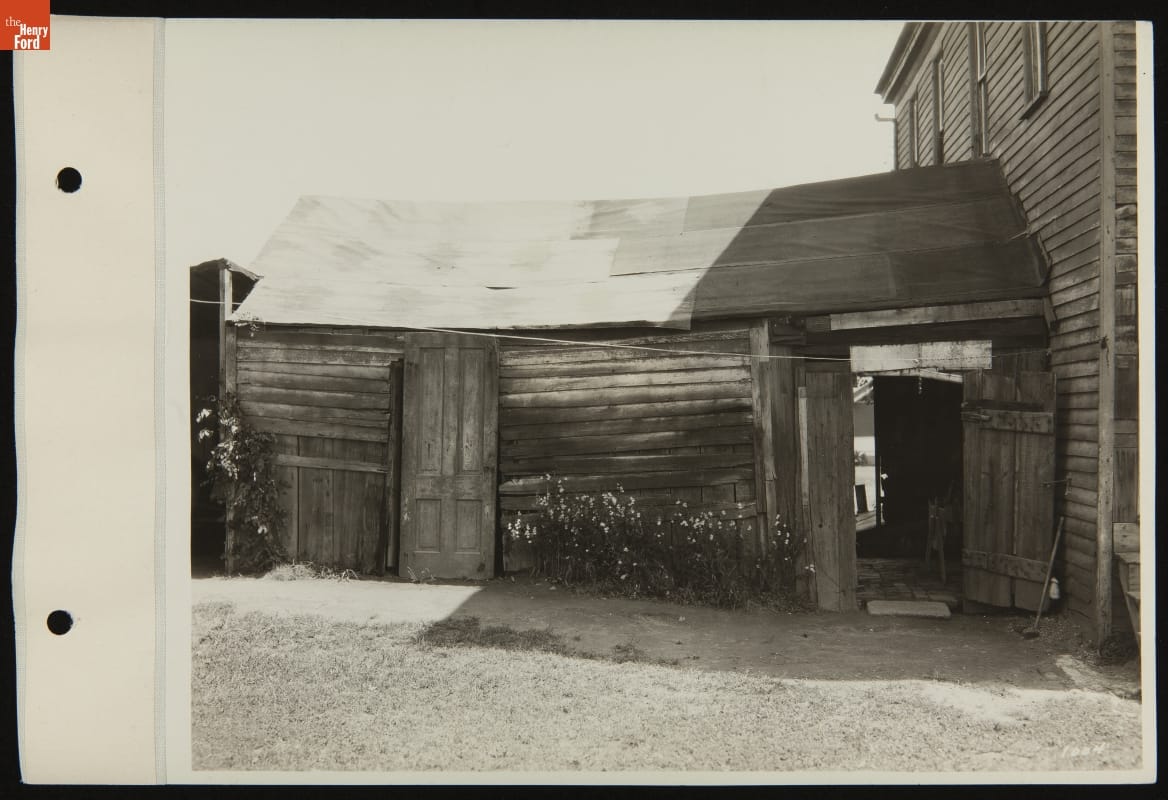
- Logan County Courthouse at Its Original Site, Lincoln, Illinois, September 1929 - Henry Ford wanted an Abraham Lincoln-related building for Greenfield Village. In 1929, Ford found the old Logan County, Illinois, courthouse where Lincoln had tried cases when he was a traveling lawyer and purchased it. The building by this time had become a private residence. This photograph, taken when the building was still located on its original site, documents a back addition once attached to the building.
- September 07, 1929
- Collections - Artifact
Logan County Courthouse at Its Original Site, Lincoln, Illinois, September 1929
Henry Ford wanted an Abraham Lincoln-related building for Greenfield Village. In 1929, Ford found the old Logan County, Illinois, courthouse where Lincoln had tried cases when he was a traveling lawyer and purchased it. The building by this time had become a private residence. This photograph, taken when the building was still located on its original site, documents a back addition once attached to the building.
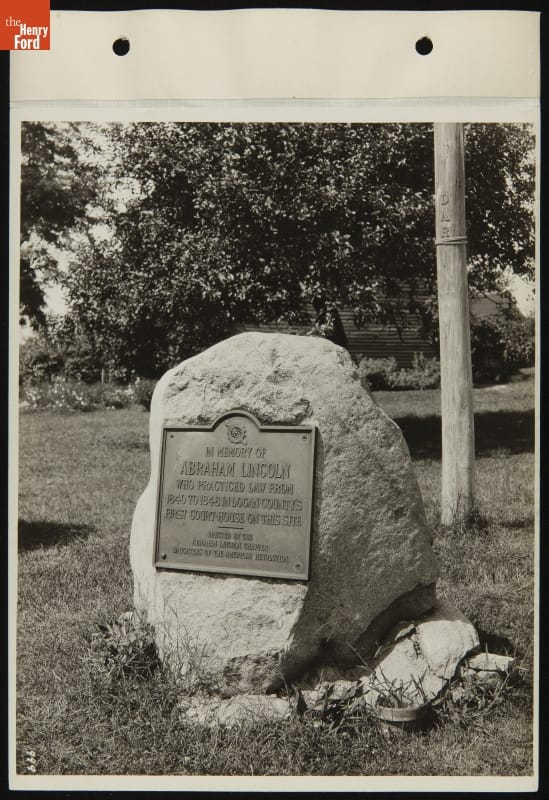
- Historical Marker near Logan County Courthouse at Its Original Site, Lincoln, Illinois, September 1929 -
- September 07, 1929
- Collections - Artifact
Historical Marker near Logan County Courthouse at Its Original Site, Lincoln, Illinois, September 1929