
Search
- Lotus 47 Driven by David Preston and John Wagstaff in the 24 Heures du Mans (24 Hours of Le Mans) Race, June 1967 - Dave Friedman has captured and preserved auto racing history through his photography and his collection of works by other photographers. Photographs from the 1967 24 Hours of Le Mans document the race-day atmosphere--the fans, officials, drivers and crews--along with the race itself. Ford Mark IV's victory was the first all-American win -- American drivers in a car designed and built in the United States.
- 10 June 1967 - 11 June 1967
- Collections - Artifact
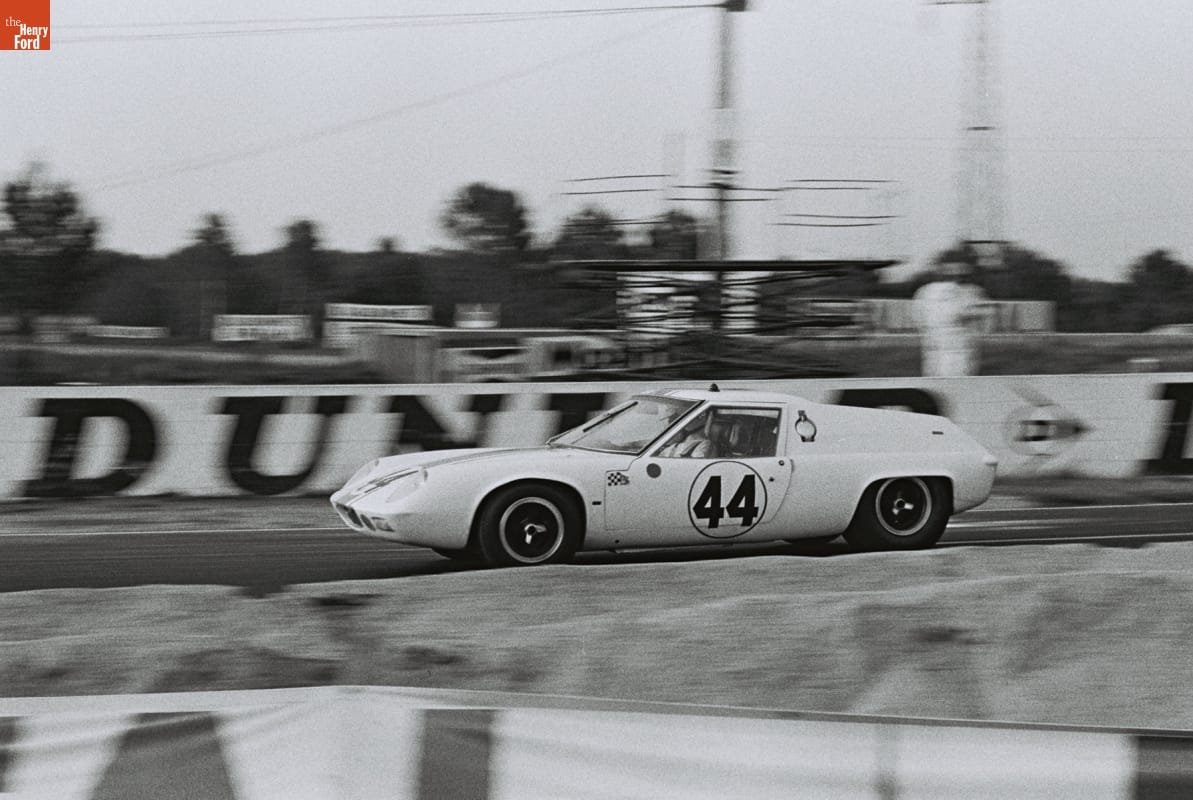
Lotus 47 Driven by David Preston and John Wagstaff in the 24 Heures du Mans (24 Hours of Le Mans) Race, June 1967
Dave Friedman has captured and preserved auto racing history through his photography and his collection of works by other photographers. Photographs from the 1967 24 Hours of Le Mans document the race-day atmosphere--the fans, officials, drivers and crews--along with the race itself. Ford Mark IV's victory was the first all-American win -- American drivers in a car designed and built in the United States.
- Lotus 47 Driven by David Preston and John Wagstaff in the 24 Heures du Mans (24 Hours of Le Mans) Race, June 1967 - Dave Friedman has captured and preserved auto racing history through his photography and his collection of works by other photographers. Photographs from the 1967 24 Hours of Le Mans document the race-day atmosphere--the fans, officials, drivers and crews--along with the race itself. Ford Mark IV's victory was the first all-American win -- American drivers in a car designed and built in the United States.
- 10 June 1967 - 11 June 1967
- Collections - Artifact
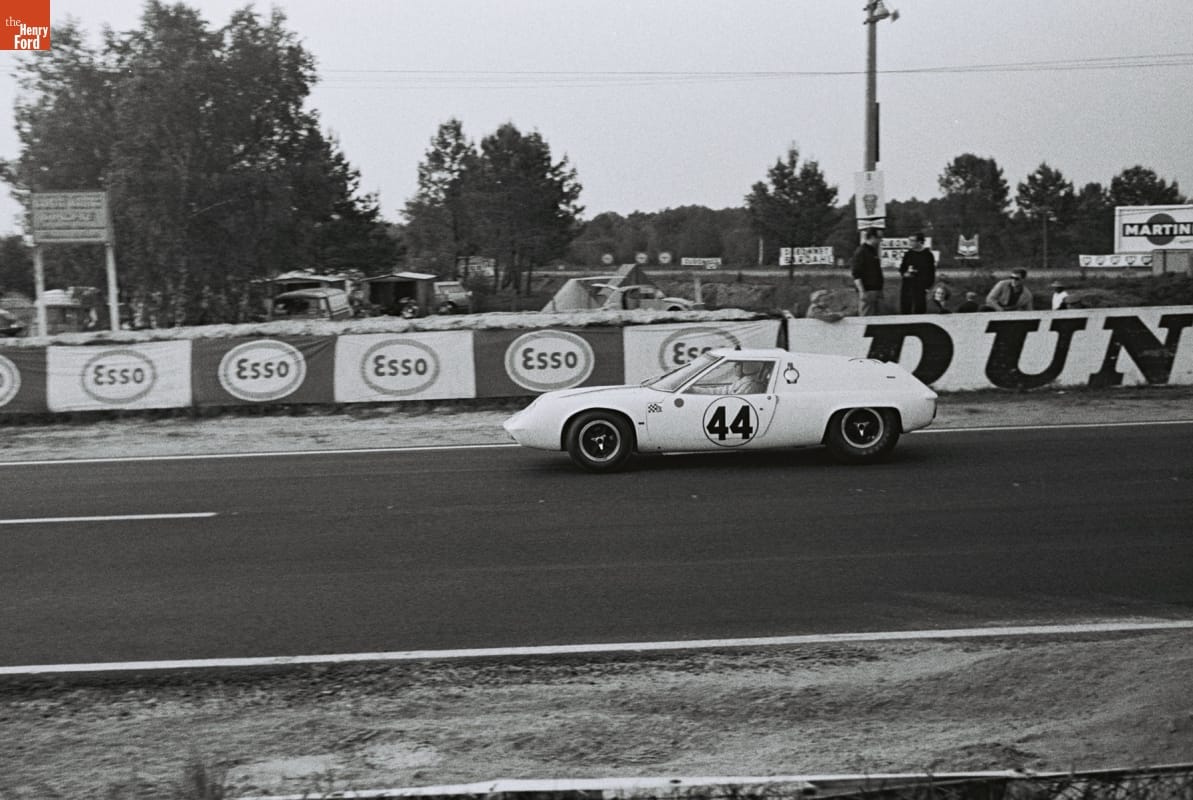
Lotus 47 Driven by David Preston and John Wagstaff in the 24 Heures du Mans (24 Hours of Le Mans) Race, June 1967
Dave Friedman has captured and preserved auto racing history through his photography and his collection of works by other photographers. Photographs from the 1967 24 Hours of Le Mans document the race-day atmosphere--the fans, officials, drivers and crews--along with the race itself. Ford Mark IV's victory was the first all-American win -- American drivers in a car designed and built in the United States.
- Lotus 47 Driven by David Preston and John Wagstaff in the 24 Heures du Mans (24 Hours of Le Mans) Race, June 1967 - Dave Friedman has captured and preserved auto racing history through his photography and his collection of works by other photographers. Photographs from the 1967 24 Hours of Le Mans document the race-day atmosphere--the fans, officials, drivers and crews--along with the race itself. Ford Mark IV's victory was the first all-American win -- American drivers in a car designed and built in the United States.
- 10 June 1967 - 11 June 1967
- Collections - Artifact
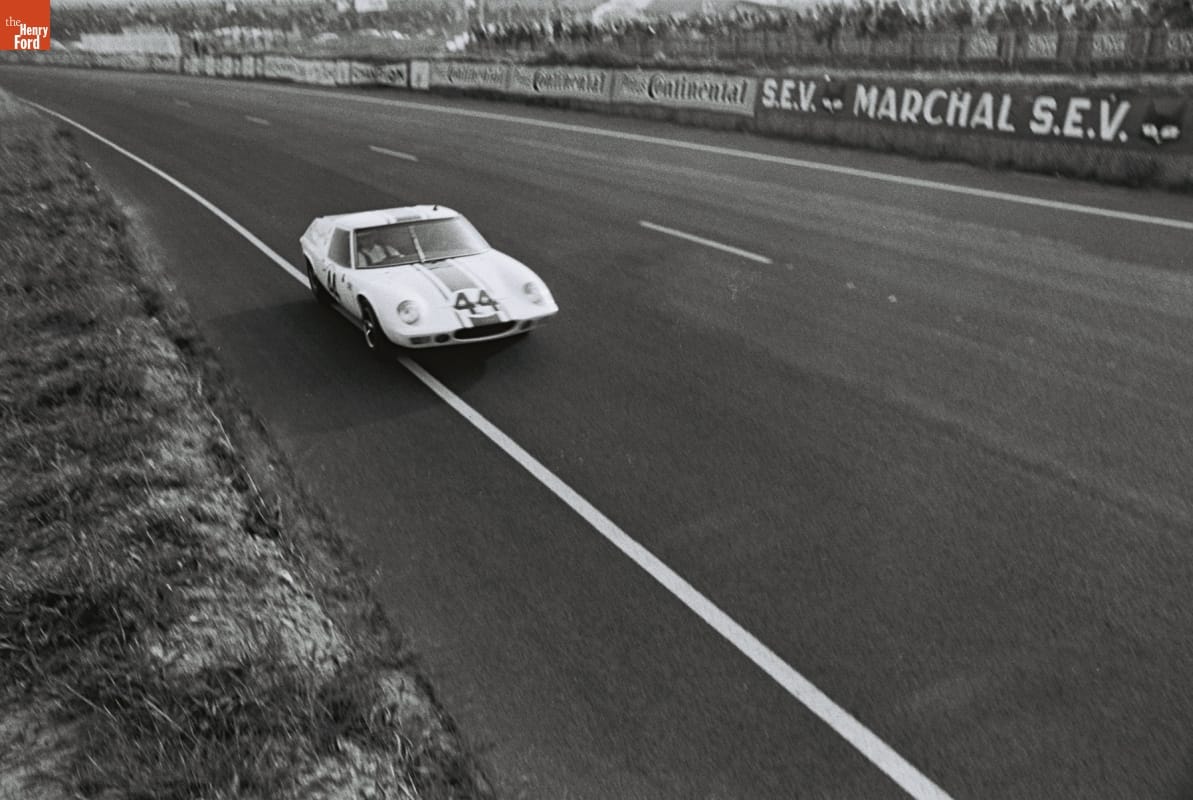
Lotus 47 Driven by David Preston and John Wagstaff in the 24 Heures du Mans (24 Hours of Le Mans) Race, June 1967
Dave Friedman has captured and preserved auto racing history through his photography and his collection of works by other photographers. Photographs from the 1967 24 Hours of Le Mans document the race-day atmosphere--the fans, officials, drivers and crews--along with the race itself. Ford Mark IV's victory was the first all-American win -- American drivers in a car designed and built in the United States.
- Lotus-Ford Race Car Driven by Jim Clark at Indianapolis 500, May 1966 - Dave Friedman has captured and preserved auto racing history through his own photography and his collection of works by other photographers. This image documents the weeks-long events surrounding the fiftieth running of the Indianapolis 500. Indy rookie Graham Hill finished first. Hill was one of only seven drivers to complete the race after crashes and mechanical failures thinned the original field of thirty-three.
- May 01, 1966
- Collections - Artifact
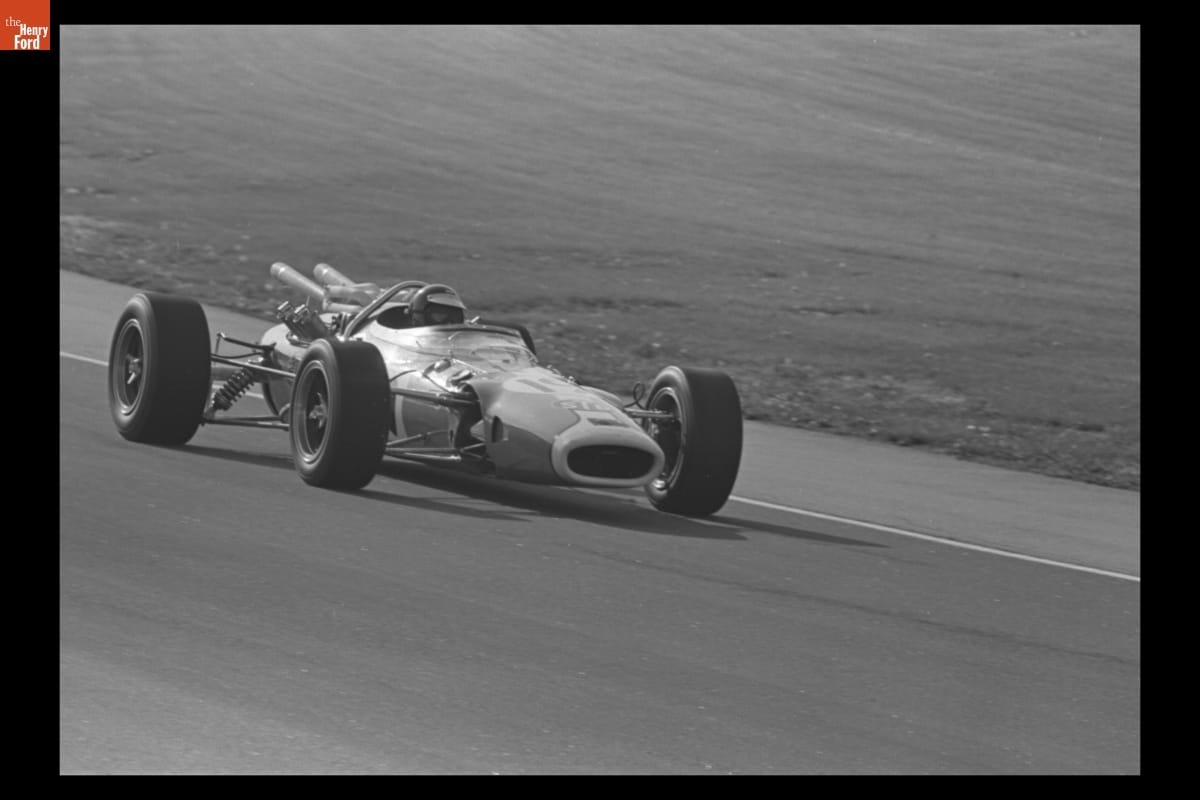
Lotus-Ford Race Car Driven by Jim Clark at Indianapolis 500, May 1966
Dave Friedman has captured and preserved auto racing history through his own photography and his collection of works by other photographers. This image documents the weeks-long events surrounding the fiftieth running of the Indianapolis 500. Indy rookie Graham Hill finished first. Hill was one of only seven drivers to complete the race after crashes and mechanical failures thinned the original field of thirty-three.
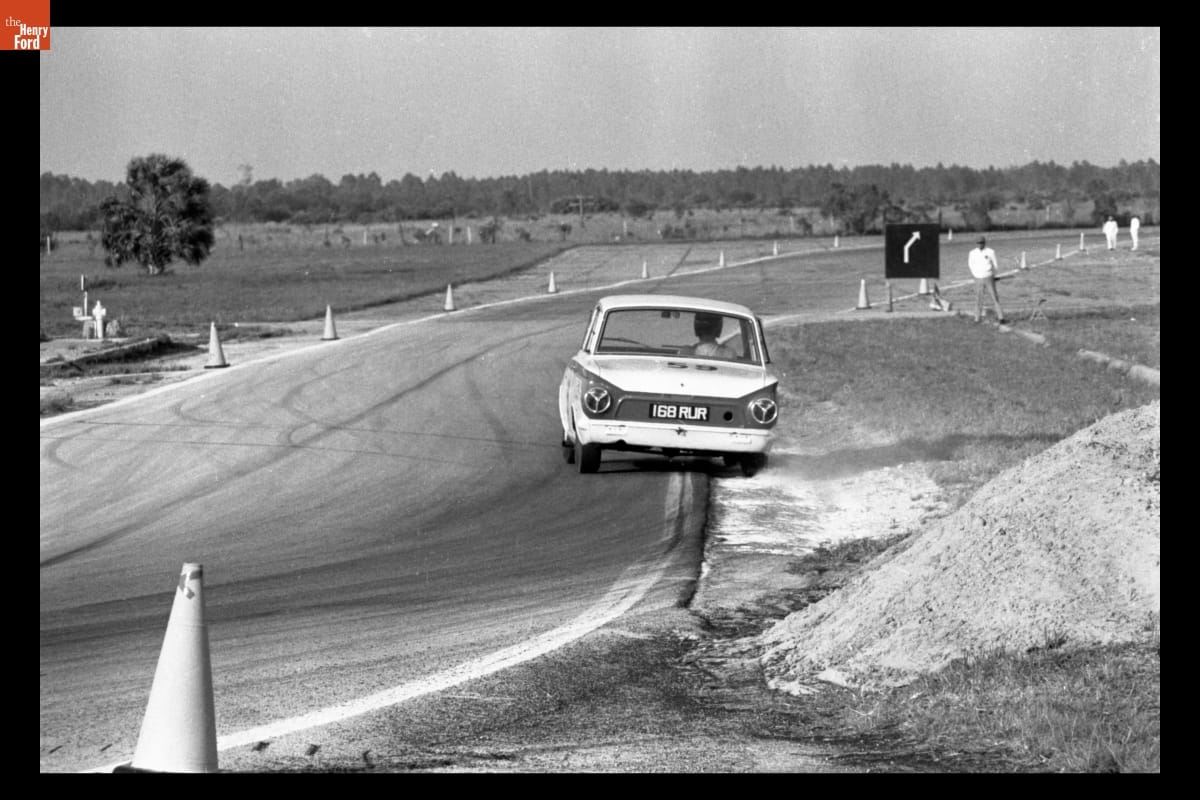
- Ford Cortina Lotus at 12 Hours of Sebring Race, March 1964 - Dave Friedman has captured and preserved auto racing history through his photography. His collection of works documents key races, vehicles, drivers, and teams. In March 1964, Ferrari -- as expected -- topped the prototype class at the 12 Hours of Sebring road race. The surprise, however, was the performance of the Carroll Shelby Cobras. They outclassed Ferrari in the GT class and swept the top three spots.
- March 21, 1964
- Collections - Artifact
Ford Cortina Lotus at 12 Hours of Sebring Race, March 1964
Dave Friedman has captured and preserved auto racing history through his photography. His collection of works documents key races, vehicles, drivers, and teams. In March 1964, Ferrari -- as expected -- topped the prototype class at the 12 Hours of Sebring road race. The surprise, however, was the performance of the Carroll Shelby Cobras. They outclassed Ferrari in the GT class and swept the top three spots.
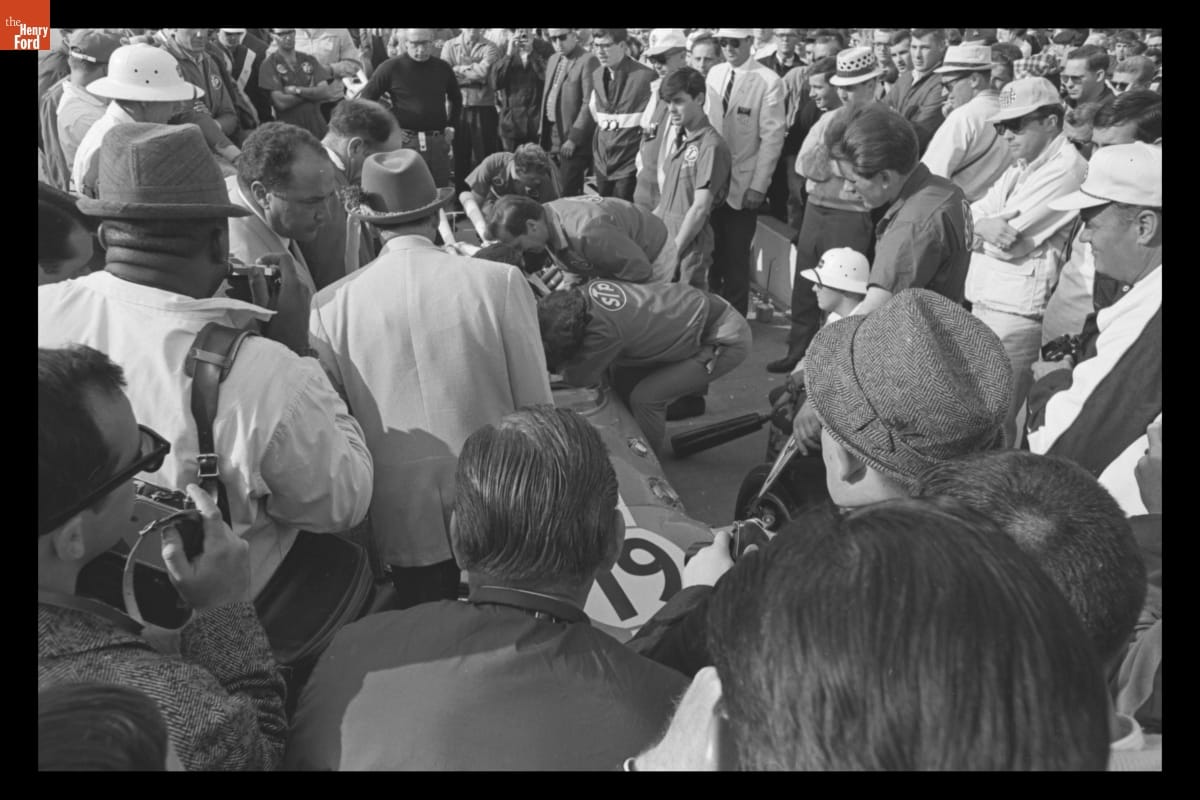
- Lotus-Ford Race Car Driven by Jim Clark at Indianapolis 500, May 1966 - Dave Friedman has captured and preserved auto racing history through his own photography and his collection of works by other photographers. This image documents the weeks-long events surrounding the fiftieth running of the Indianapolis 500. Indy rookie Graham Hill finished first. Hill was one of only seven drivers to complete the race after crashes and mechanical failures thinned the original field of thirty-three.
- May 01, 1966
- Collections - Artifact
Lotus-Ford Race Car Driven by Jim Clark at Indianapolis 500, May 1966
Dave Friedman has captured and preserved auto racing history through his own photography and his collection of works by other photographers. This image documents the weeks-long events surrounding the fiftieth running of the Indianapolis 500. Indy rookie Graham Hill finished first. Hill was one of only seven drivers to complete the race after crashes and mechanical failures thinned the original field of thirty-three.
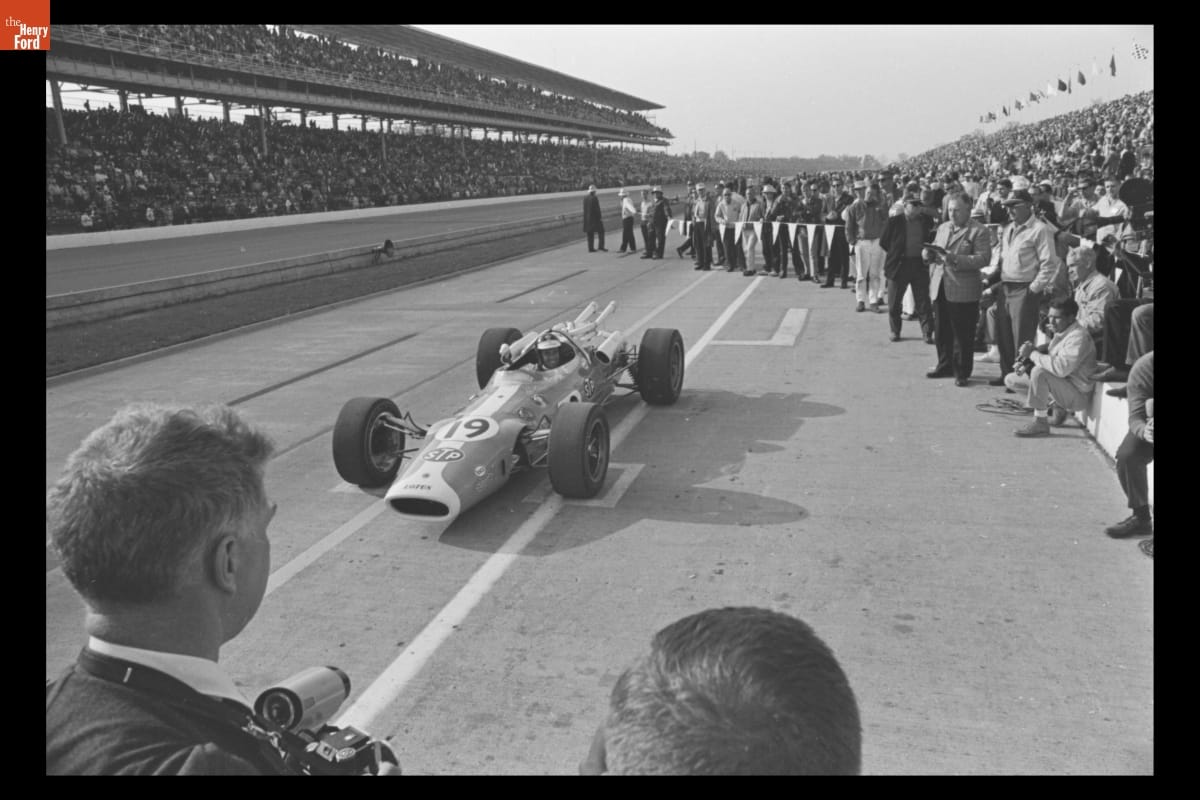
- Lotus-Ford Race Car Driven by Jim Clark at Indianapolis 500, May 1966 - Dave Friedman has captured and preserved auto racing history through his own photography and his collection of works by other photographers. This image documents the weeks-long events surrounding the fiftieth running of the Indianapolis 500. Indy rookie Graham Hill finished first. Hill was one of only seven drivers to complete the race after crashes and mechanical failures thinned the original field of thirty-three.
- May 01, 1966
- Collections - Artifact
Lotus-Ford Race Car Driven by Jim Clark at Indianapolis 500, May 1966
Dave Friedman has captured and preserved auto racing history through his own photography and his collection of works by other photographers. This image documents the weeks-long events surrounding the fiftieth running of the Indianapolis 500. Indy rookie Graham Hill finished first. Hill was one of only seven drivers to complete the race after crashes and mechanical failures thinned the original field of thirty-three.
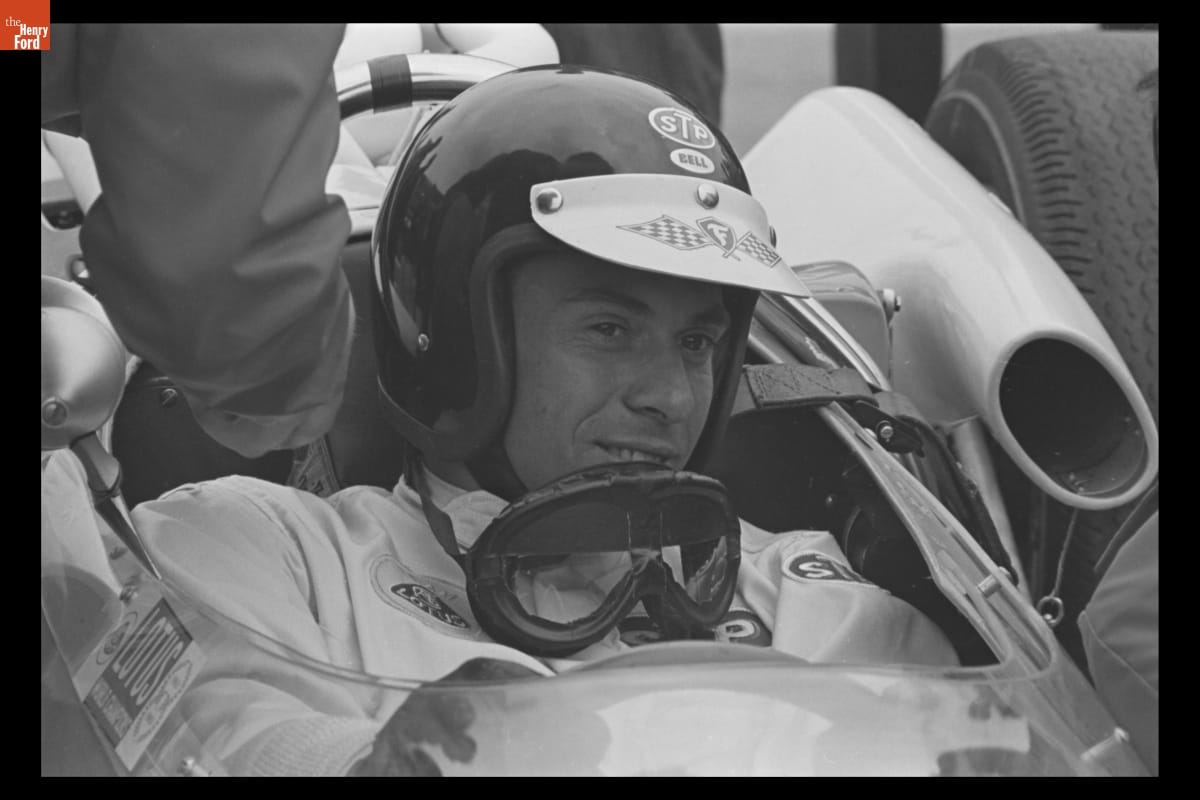
- Lotus-Ford Race Car Driven by Jim Clark at Indianapolis 500, May 1966 - Dave Friedman has captured and preserved auto racing history through his own photography and his collection of works by other photographers. This image documents the weeks-long events surrounding the fiftieth running of the Indianapolis 500. Indy rookie Graham Hill finished first. Hill was one of only seven drivers to complete the race after crashes and mechanical failures thinned the original field of thirty-three.
- May 01, 1966
- Collections - Artifact
Lotus-Ford Race Car Driven by Jim Clark at Indianapolis 500, May 1966
Dave Friedman has captured and preserved auto racing history through his own photography and his collection of works by other photographers. This image documents the weeks-long events surrounding the fiftieth running of the Indianapolis 500. Indy rookie Graham Hill finished first. Hill was one of only seven drivers to complete the race after crashes and mechanical failures thinned the original field of thirty-three.
- Lotus-Ford Race Car Driven by Jim Clark at Indianapolis 500, May 1966 - Dave Friedman has captured and preserved auto racing history through his own photography and his collection of works by other photographers. This image documents the weeks-long events surrounding the fiftieth running of the Indianapolis 500. Indy rookie Graham Hill finished first. Hill was one of only seven drivers to complete the race after crashes and mechanical failures thinned the original field of thirty-three.
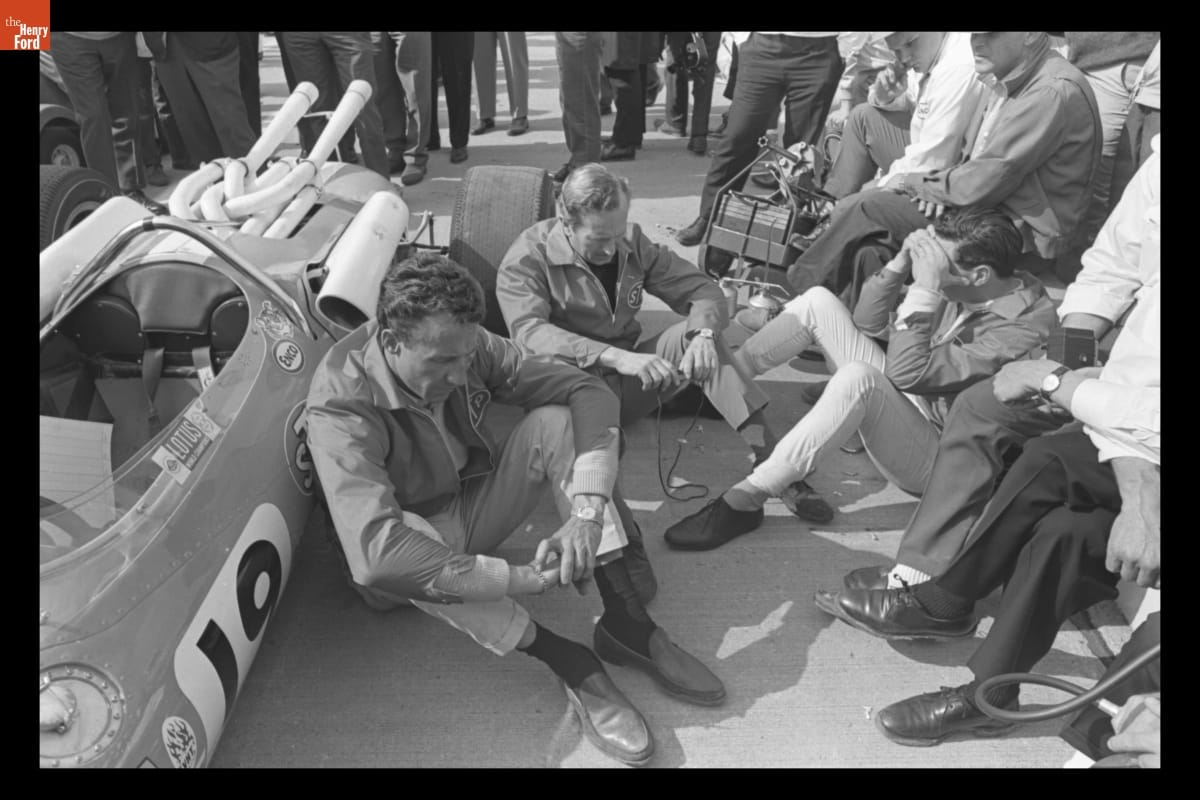
- May 01, 1966
- Collections - Artifact
Lotus-Ford Race Car Driven by Jim Clark at Indianapolis 500, May 1966
Dave Friedman has captured and preserved auto racing history through his own photography and his collection of works by other photographers. This image documents the weeks-long events surrounding the fiftieth running of the Indianapolis 500. Indy rookie Graham Hill finished first. Hill was one of only seven drivers to complete the race after crashes and mechanical failures thinned the original field of thirty-three.
- Lotus-Ford Race Car Driven by Jim Clark at Indianapolis 500, May 1966 - Dave Friedman has captured and preserved auto racing history through his own photography and his collection of works by other photographers. This image documents the weeks-long events surrounding the fiftieth running of the Indianapolis 500. Indy rookie Graham Hill finished first. Hill was one of only seven drivers to complete the race after crashes and mechanical failures thinned the original field of thirty-three.
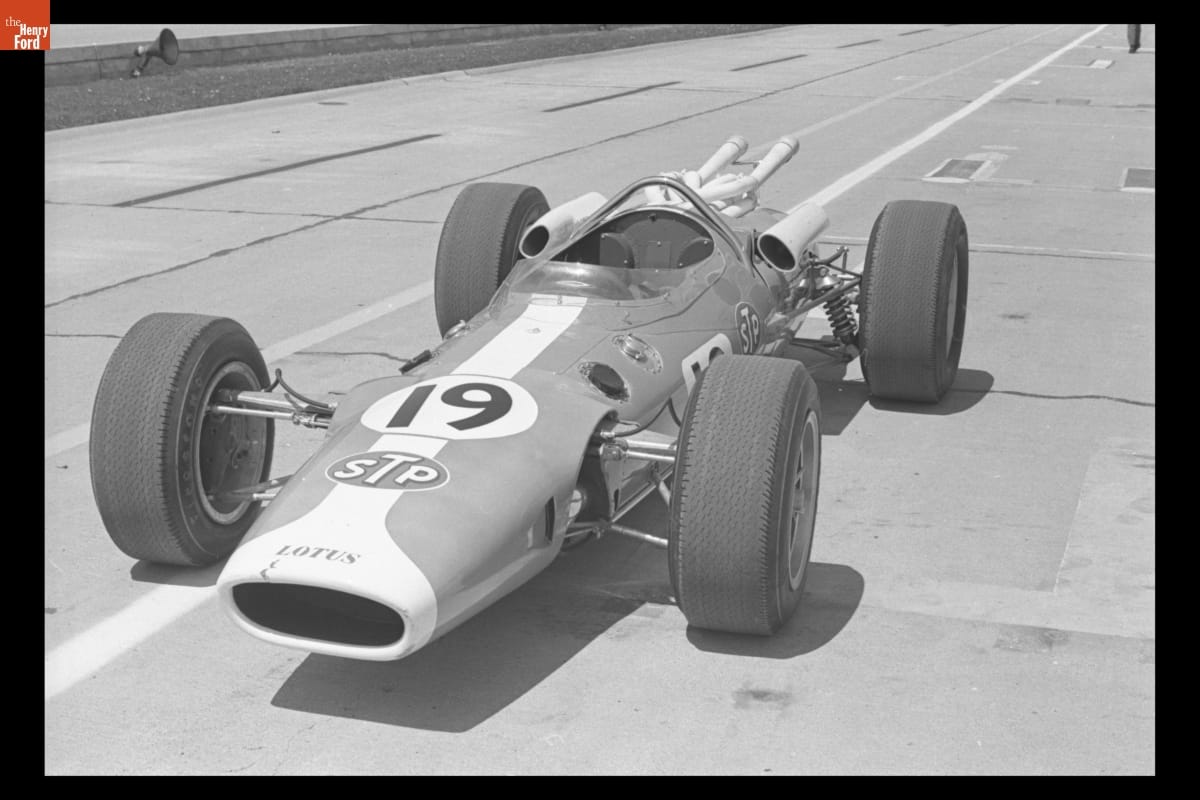
- May 01, 1966
- Collections - Artifact
Lotus-Ford Race Car Driven by Jim Clark at Indianapolis 500, May 1966
Dave Friedman has captured and preserved auto racing history through his own photography and his collection of works by other photographers. This image documents the weeks-long events surrounding the fiftieth running of the Indianapolis 500. Indy rookie Graham Hill finished first. Hill was one of only seven drivers to complete the race after crashes and mechanical failures thinned the original field of thirty-three.