
Search
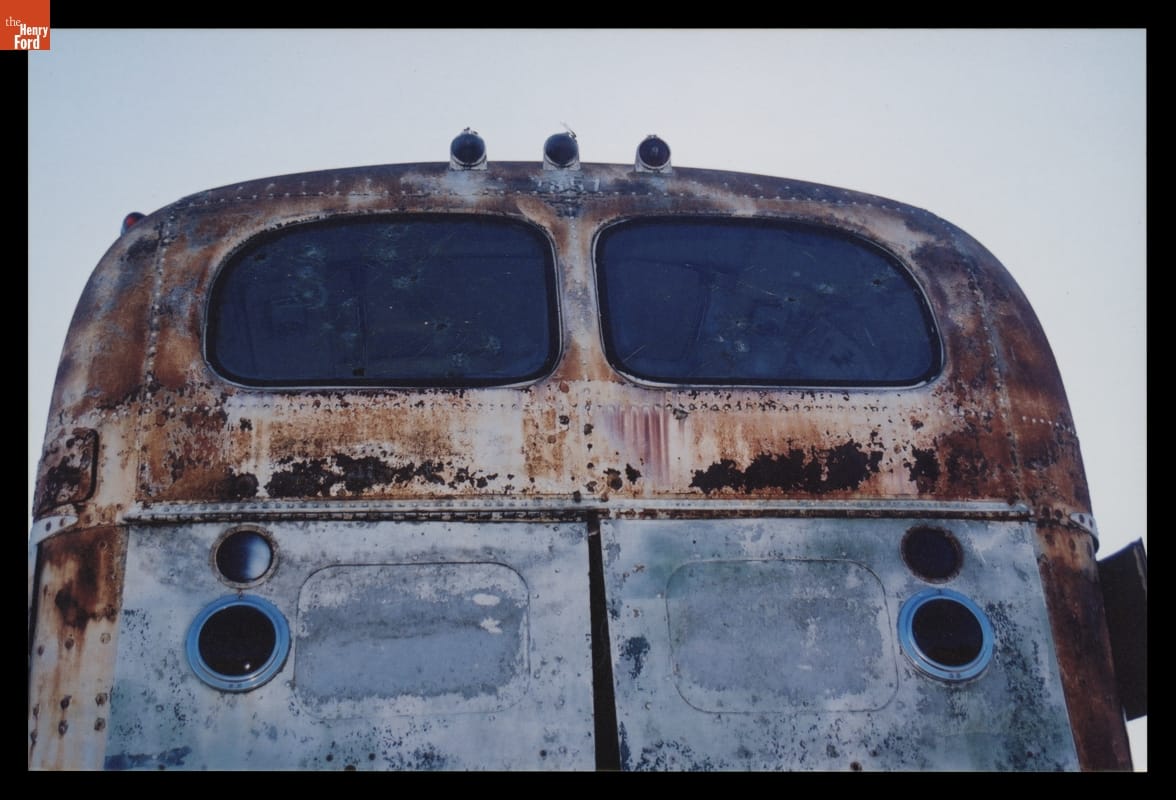
- Rosa Parks Bus before Restoration, outside Henry Ford Museum, September 12, 2002 - This bus, the site of Rosa Parks's stand against segregation laws, sat as a rusted storage shed before The Henry Ford acquired it and began a full restoration. Parks's act of defiance on December 1, 1955, sparked the Montgomery Bus Boycott, which helped to ignite the Civil Rights Movement. Today, the restored bus survives as a reminder of her courageous activism.
- September 12, 2002
- Collections - Artifact
Rosa Parks Bus before Restoration, outside Henry Ford Museum, September 12, 2002
This bus, the site of Rosa Parks's stand against segregation laws, sat as a rusted storage shed before The Henry Ford acquired it and began a full restoration. Parks's act of defiance on December 1, 1955, sparked the Montgomery Bus Boycott, which helped to ignite the Civil Rights Movement. Today, the restored bus survives as a reminder of her courageous activism.
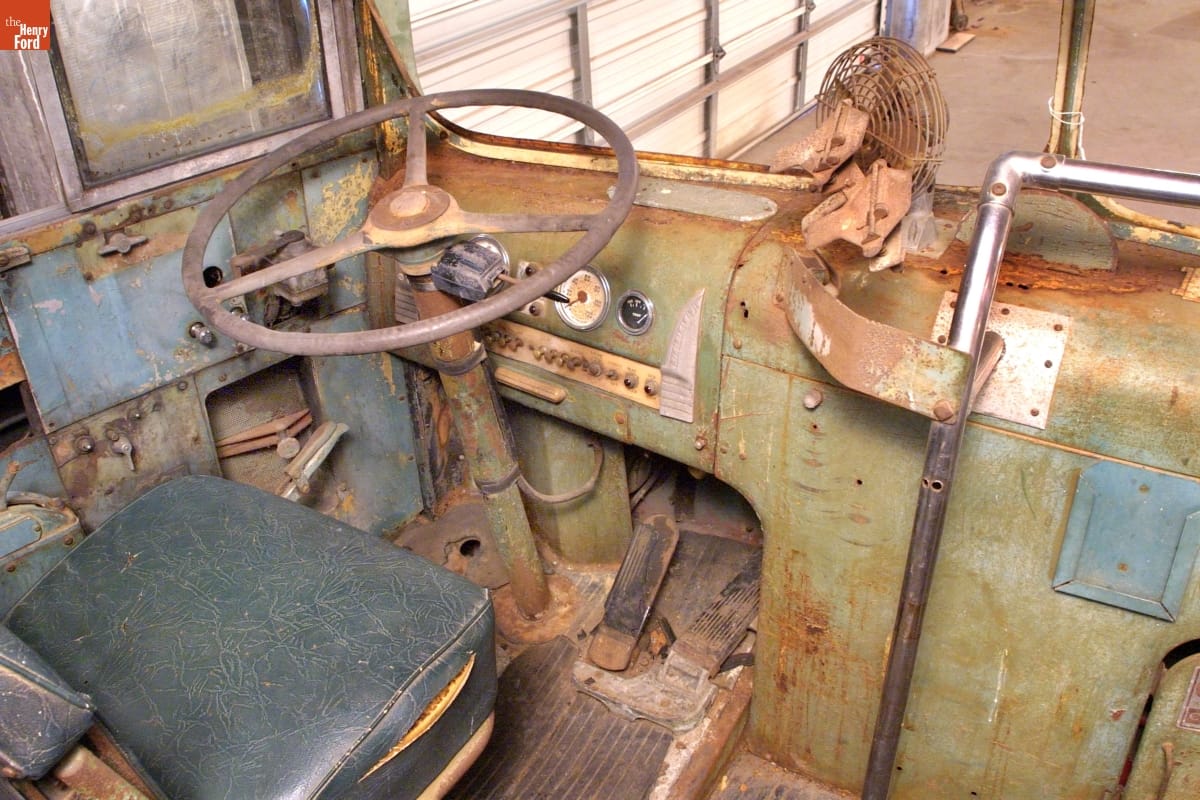
- Rosa Parks Bus before Restoration, Interior, Driver's Area, March 2002 - This bus, the site of Rosa Parks's stand against segregation laws, sat as a rusted storage shed before The Henry Ford acquired it and began a full restoration. Parks's act of defiance on December 1, 1955, sparked the Montgomery Bus Boycott, which helped to ignite the Civil Rights Movement. Today, the restored bus survives as a reminder of her courageous activism.
- March 01, 2002
- Collections - Artifact
Rosa Parks Bus before Restoration, Interior, Driver's Area, March 2002
This bus, the site of Rosa Parks's stand against segregation laws, sat as a rusted storage shed before The Henry Ford acquired it and began a full restoration. Parks's act of defiance on December 1, 1955, sparked the Montgomery Bus Boycott, which helped to ignite the Civil Rights Movement. Today, the restored bus survives as a reminder of her courageous activism.
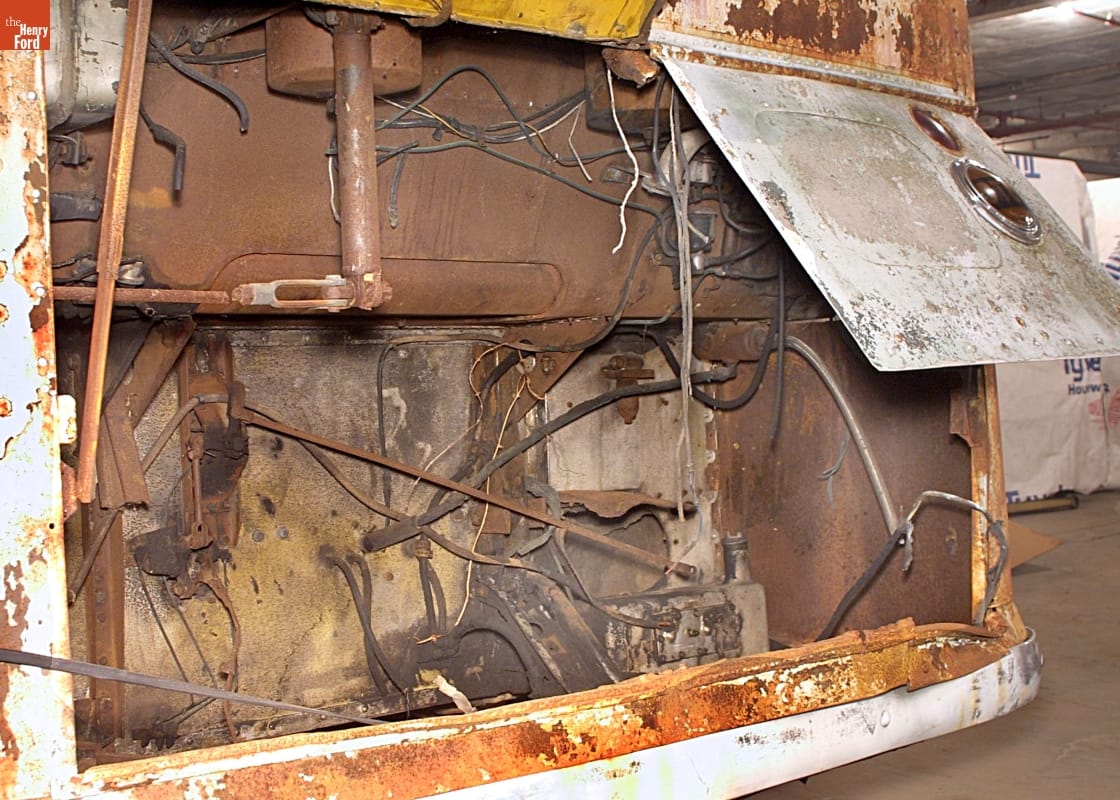
- Rosa Parks Bus before Restoration, Rear Engine Compartment, March 2002 - This bus, the site of Rosa Parks's stand against segregation laws, sat as a rusted storage shed before The Henry Ford acquired it and began a full restoration. Parks's act of defiance on December 1, 1955, sparked the Montgomery Bus Boycott, which helped to ignite the Civil Rights Movement. Today, the restored bus survives as a reminder of her courageous activism.
- March 01, 2002
- Collections - Artifact
Rosa Parks Bus before Restoration, Rear Engine Compartment, March 2002
This bus, the site of Rosa Parks's stand against segregation laws, sat as a rusted storage shed before The Henry Ford acquired it and began a full restoration. Parks's act of defiance on December 1, 1955, sparked the Montgomery Bus Boycott, which helped to ignite the Civil Rights Movement. Today, the restored bus survives as a reminder of her courageous activism.
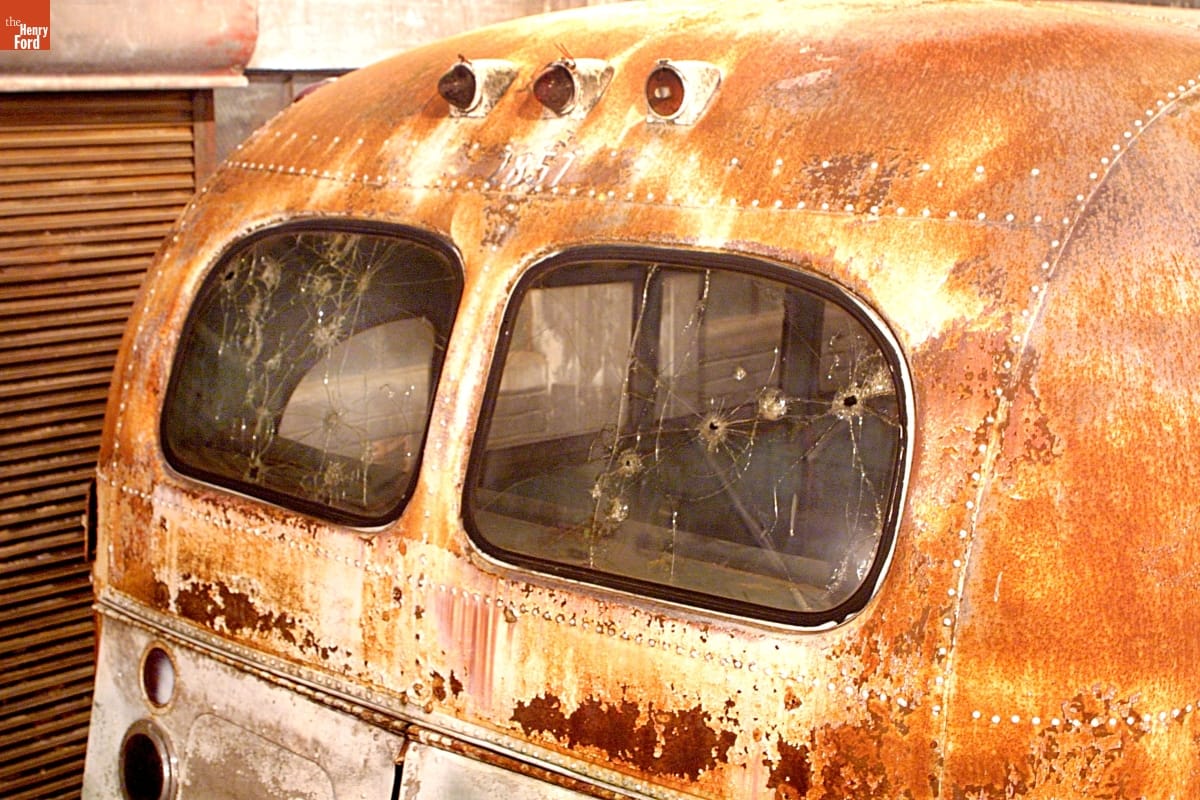
- Rosa Parks Bus before Restoration, Exterior Detail, March 2002 - This bus, the site of Rosa Parks's stand against segregation laws, sat as a rusted storage shed before The Henry Ford acquired it and began a full restoration. Parks's act of defiance on December 1, 1955, sparked the Montgomery Bus Boycott, which helped to ignite the Civil Rights Movement. Today, the restored bus survives as a reminder of her courageous activism.
- March 01, 2002
- Collections - Artifact
Rosa Parks Bus before Restoration, Exterior Detail, March 2002
This bus, the site of Rosa Parks's stand against segregation laws, sat as a rusted storage shed before The Henry Ford acquired it and began a full restoration. Parks's act of defiance on December 1, 1955, sparked the Montgomery Bus Boycott, which helped to ignite the Civil Rights Movement. Today, the restored bus survives as a reminder of her courageous activism.
- Moving the 15 Millionth Ford Model T Into "Henry Ford: A Personal History" Exhibit, February 1953 - Henry Ford himself was the focus of <em>Henry Ford: A Personal History</em>. Opened in 1953 during Ford Motor Company's 50th anniversary, the exhibit included artifacts like the fifteen millionth Ford Model T. The exhibit's second-floor location meant lifting the Model T with a crane and moving it on its side through tight doorways.
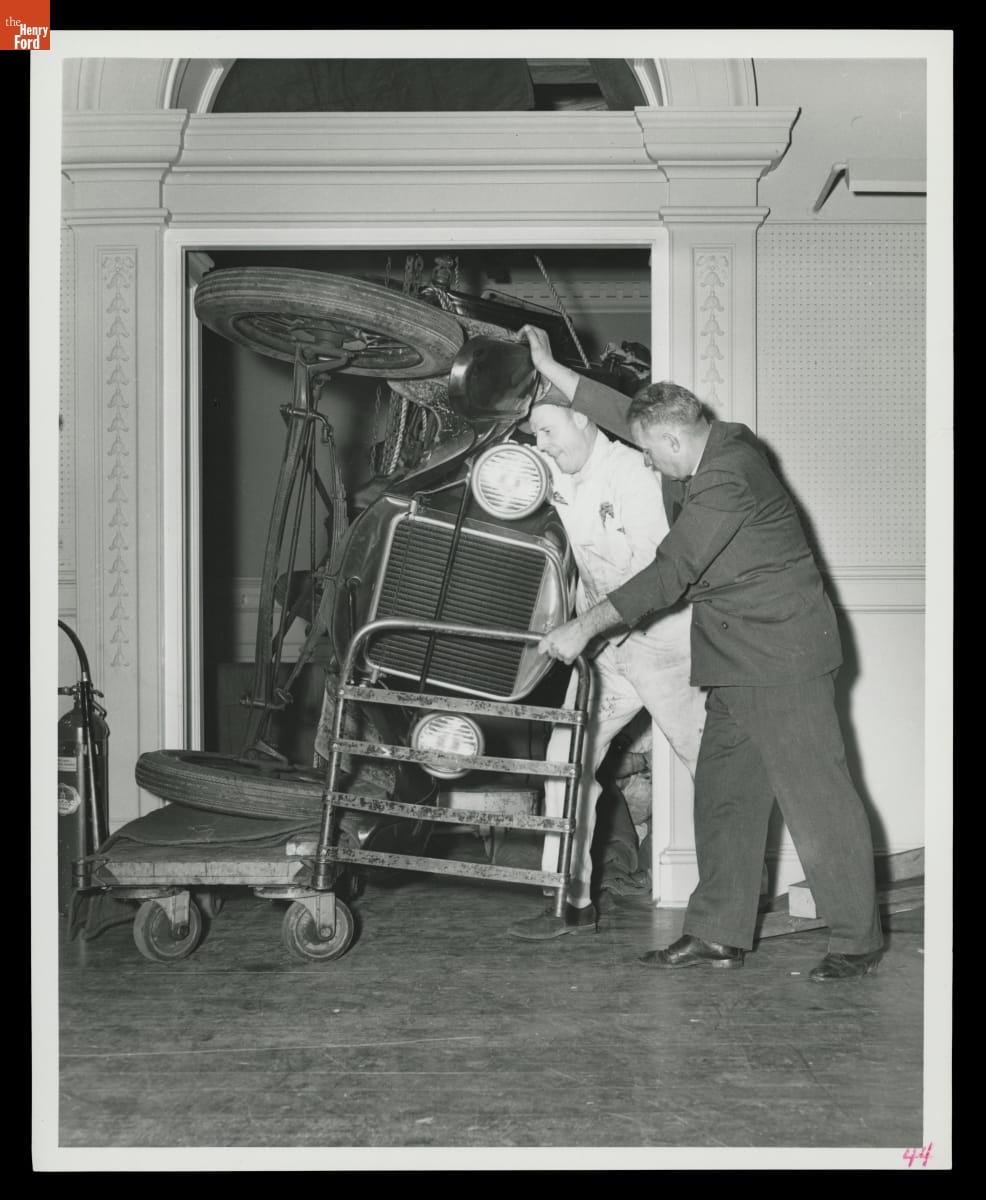
- February 01, 1953
- Collections - Artifact
Moving the 15 Millionth Ford Model T Into "Henry Ford: A Personal History" Exhibit, February 1953
Henry Ford himself was the focus of Henry Ford: A Personal History. Opened in 1953 during Ford Motor Company's 50th anniversary, the exhibit included artifacts like the fifteen millionth Ford Model T. The exhibit's second-floor location meant lifting the Model T with a crane and moving it on its side through tight doorways.
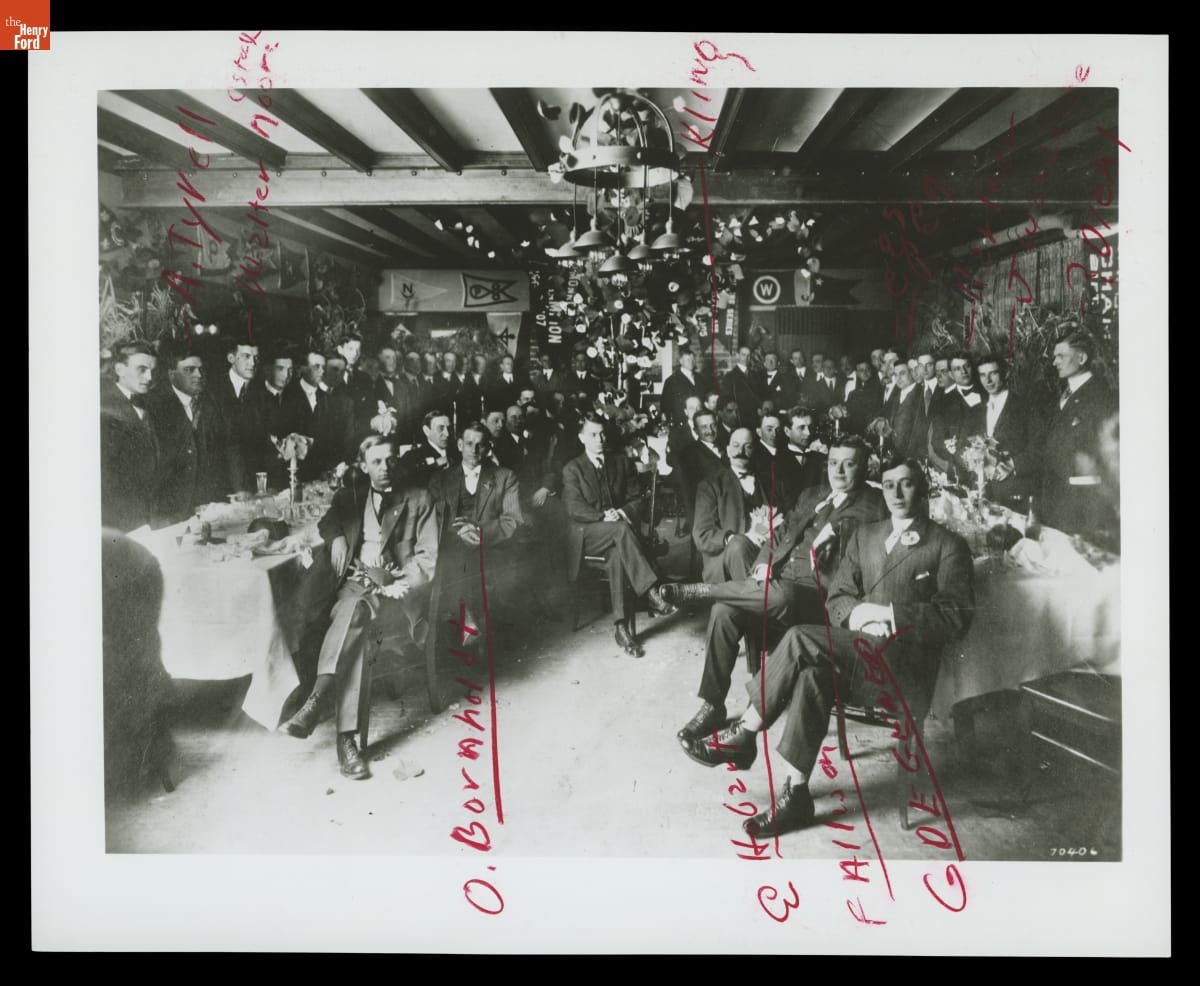
- Ford Motor Company Branch Managers Meeting, 1909 - Ford Motor Company distributed its vehicles around the country -- ultimately around the world -- through a network of branch houses in major cities. These branches, in turn, supplied vehicles to dealers. This allowed Ford to maintain consistent prices and service everywhere. Ford hosted its branch managers at regular meetings in Detroit, where they were updated on the company's latest activities.
- June 17, 1942
- Collections - Artifact
Ford Motor Company Branch Managers Meeting, 1909
Ford Motor Company distributed its vehicles around the country -- ultimately around the world -- through a network of branch houses in major cities. These branches, in turn, supplied vehicles to dealers. This allowed Ford to maintain consistent prices and service everywhere. Ford hosted its branch managers at regular meetings in Detroit, where they were updated on the company's latest activities.
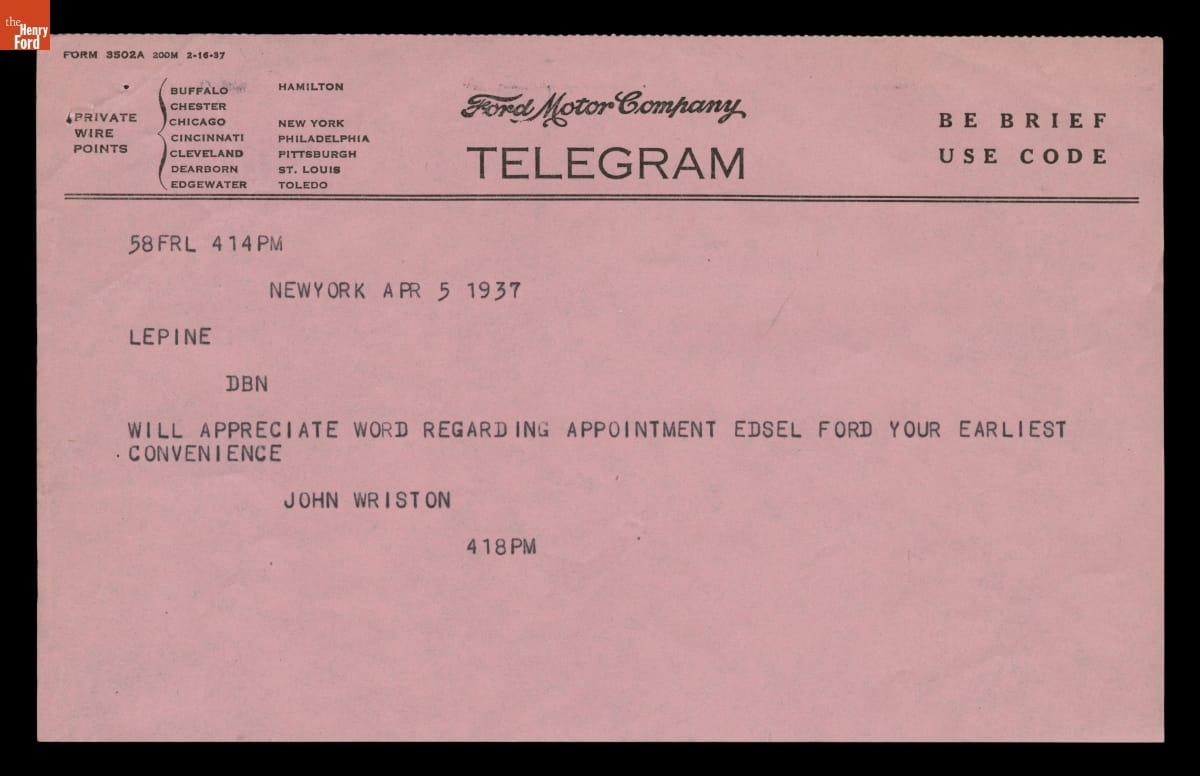
- Telegram from John Wriston to A. J. Lepine (for Edsel Ford) Arranging Meeting to Discuss Dearborn Inn Colonial Village, April 5, 1937 - By the mid-1930s, the Dearborn Inn, a popular luxury hotel, required additional accommodations to service travelers and visitors to the Edison Institute (later renamed The Henry Ford). The L.G. Treadway Service Corporation consulted with Edsel Ford about proposed upgrades that included a swimming pool, pool house, landscaping, and a "Colonial Village" of guest houses (replicas of homes famous in American history).
- April 05, 1937
- Collections - Artifact
Telegram from John Wriston to A. J. Lepine (for Edsel Ford) Arranging Meeting to Discuss Dearborn Inn Colonial Village, April 5, 1937
By the mid-1930s, the Dearborn Inn, a popular luxury hotel, required additional accommodations to service travelers and visitors to the Edison Institute (later renamed The Henry Ford). The L.G. Treadway Service Corporation consulted with Edsel Ford about proposed upgrades that included a swimming pool, pool house, landscaping, and a "Colonial Village" of guest houses (replicas of homes famous in American history).
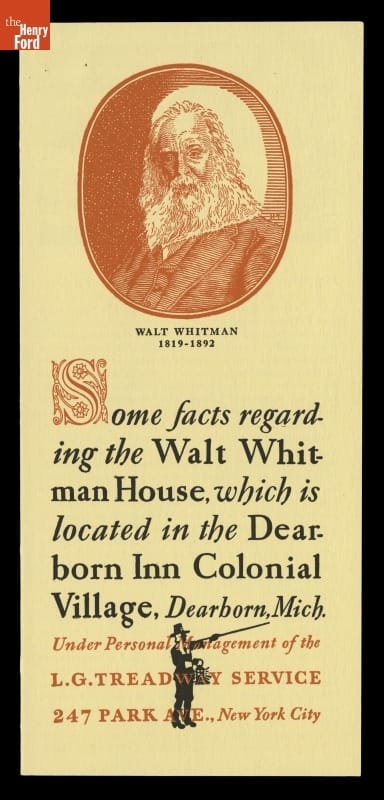
- Brochure, "Some Facts regarding the Walt Whitman House," Dearborn Inn Colonial Village, 1937 - By the mid-1930s, the Dearborn Inn, a popular luxury hotel, required additional accommodations to service travelers and visitors to the Edison Institute (later renamed The Henry Ford). The L.G. Treadway Service Corporation consulted with Edsel Ford and had five reproduction houses constructed behind the Inn. The exteriors were exact replicas of homes famous in American history, but guests found modern amenities inside.
- 1937
- Collections - Artifact
Brochure, "Some Facts regarding the Walt Whitman House," Dearborn Inn Colonial Village, 1937
By the mid-1930s, the Dearborn Inn, a popular luxury hotel, required additional accommodations to service travelers and visitors to the Edison Institute (later renamed The Henry Ford). The L.G. Treadway Service Corporation consulted with Edsel Ford and had five reproduction houses constructed behind the Inn. The exteriors were exact replicas of homes famous in American history, but guests found modern amenities inside.
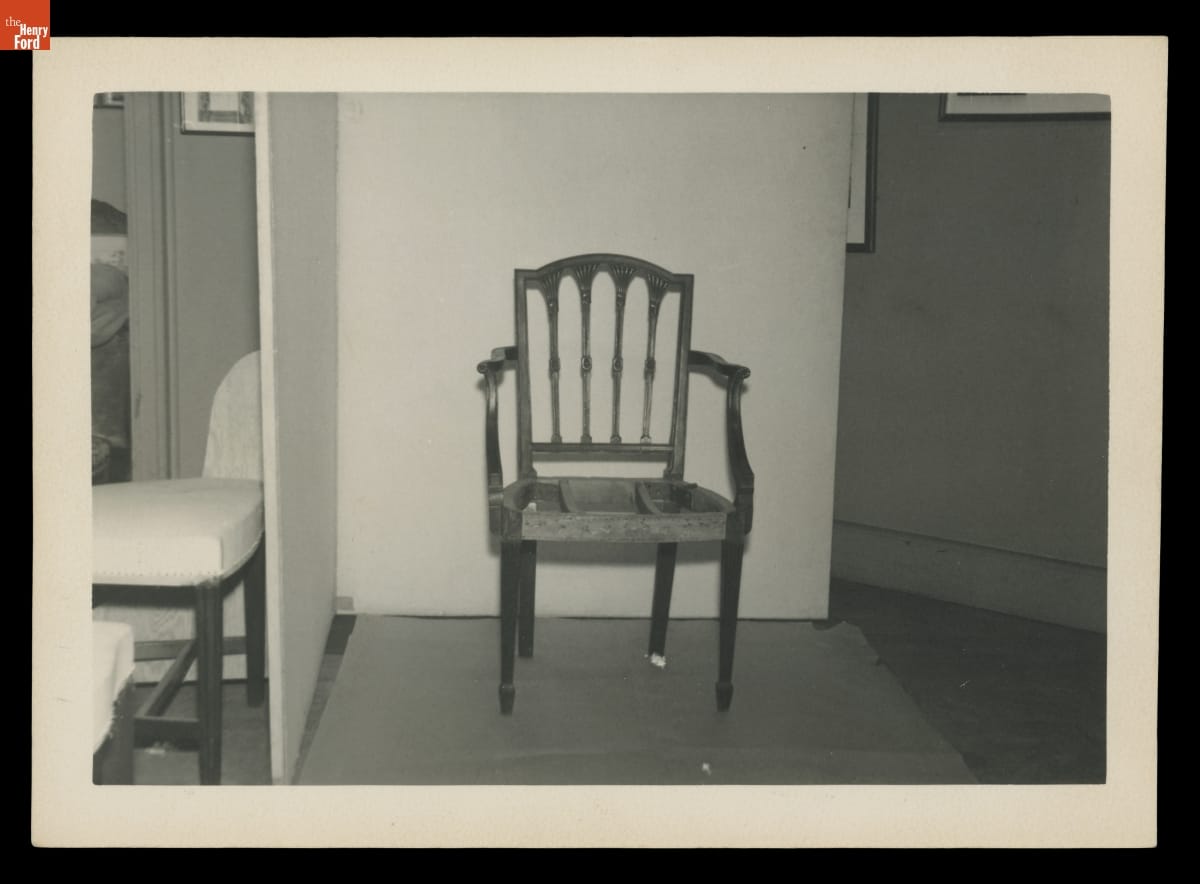
- Armchair, 1785-1805, Photographed at Ernest LoNano Interiors, New York, 1950-1953 - The firm of Ernest LoNano -- active from 1912 into the 1980s -- was known as the premier re-upholsterers of antique American furniture. Museums from coast to coast sought the advice of three generations of LoNanos for accuracy in period upholstery fabrics. The company specialized in adapting historic fabrics for reuse. This photograph documents the re-upholstery process on The Henry Ford's furniture by the firm.
- 1950-1953
- Collections - Artifact
Armchair, 1785-1805, Photographed at Ernest LoNano Interiors, New York, 1950-1953
The firm of Ernest LoNano -- active from 1912 into the 1980s -- was known as the premier re-upholsterers of antique American furniture. Museums from coast to coast sought the advice of three generations of LoNanos for accuracy in period upholstery fabrics. The company specialized in adapting historic fabrics for reuse. This photograph documents the re-upholstery process on The Henry Ford's furniture by the firm.
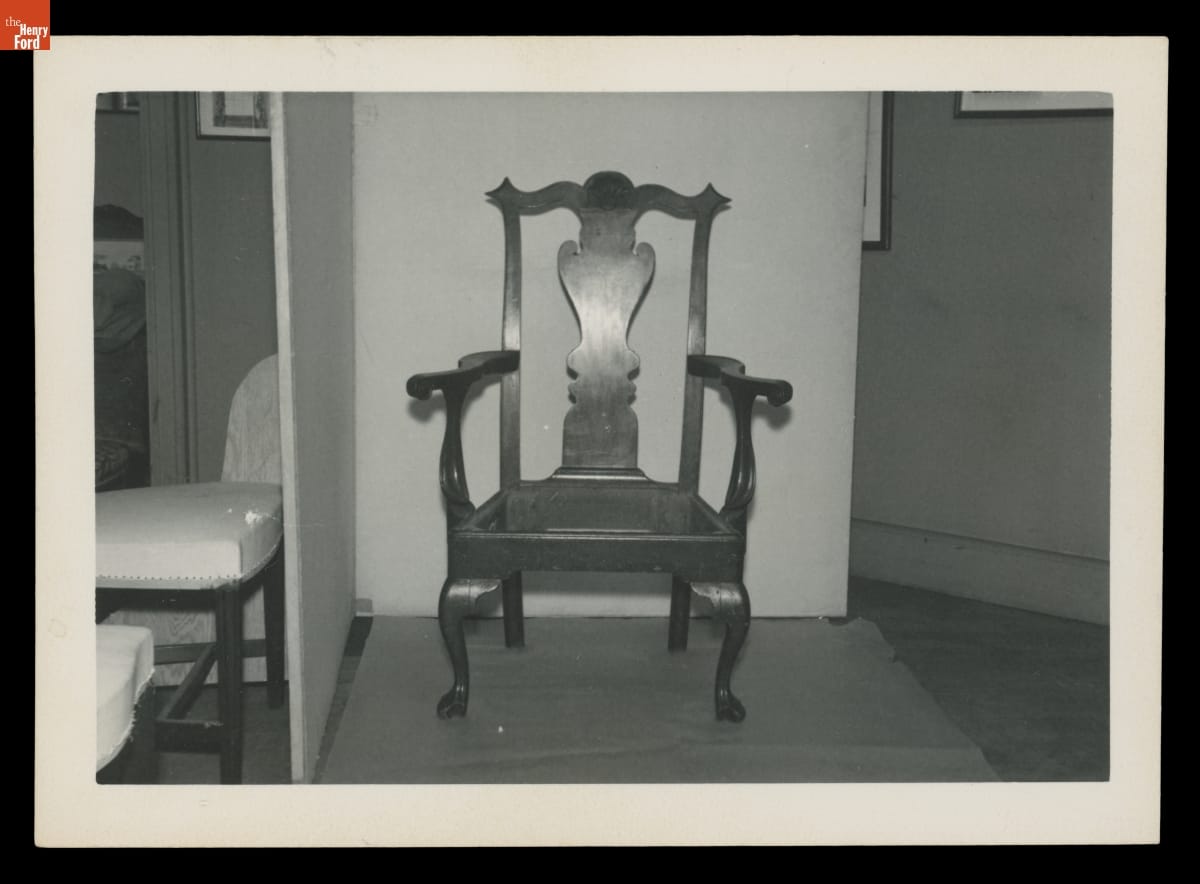
- Armchair, 1750-1770, Photographed at Ernest LoNano Interiors, New York, 1950-1953 - The firm of Ernest LoNano -- active from 1912 into the 1980s -- was known as the premier re-upholsterers of antique American furniture. Museums from coast to coast sought the advice of three generations of LoNanos for accuracy in period upholstery fabrics. The company specialized in adapting historic fabrics for reuse. This photograph documents the re-upholstery process on The Henry Ford's furniture by the firm.
- 1950-1953
- Collections - Artifact
Armchair, 1750-1770, Photographed at Ernest LoNano Interiors, New York, 1950-1953
The firm of Ernest LoNano -- active from 1912 into the 1980s -- was known as the premier re-upholsterers of antique American furniture. Museums from coast to coast sought the advice of three generations of LoNanos for accuracy in period upholstery fabrics. The company specialized in adapting historic fabrics for reuse. This photograph documents the re-upholstery process on The Henry Ford's furniture by the firm.