
Search
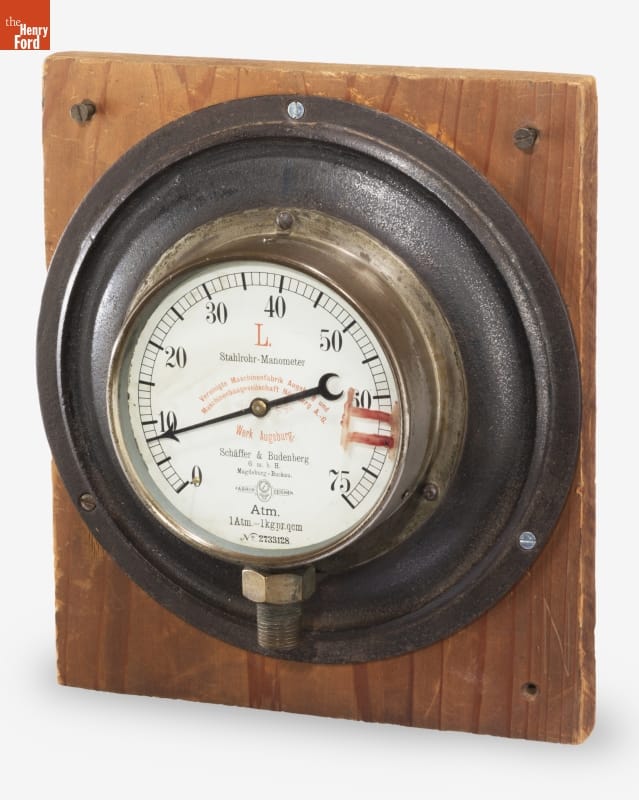
- Schaffer & Budenberg Manometer, 1898-1908 - The German firm of Schaeffner and Budenberg began manufacturing gauges in the 19th century. This manometer measures the pressure of a fluid or gas through a pipe -- such as those found on steam engines -- alerting workers so they can avoid any problems that may occur.
- 1898-1908
- Collections - Artifact
Schaffer & Budenberg Manometer, 1898-1908
The German firm of Schaeffner and Budenberg began manufacturing gauges in the 19th century. This manometer measures the pressure of a fluid or gas through a pipe -- such as those found on steam engines -- alerting workers so they can avoid any problems that may occur.
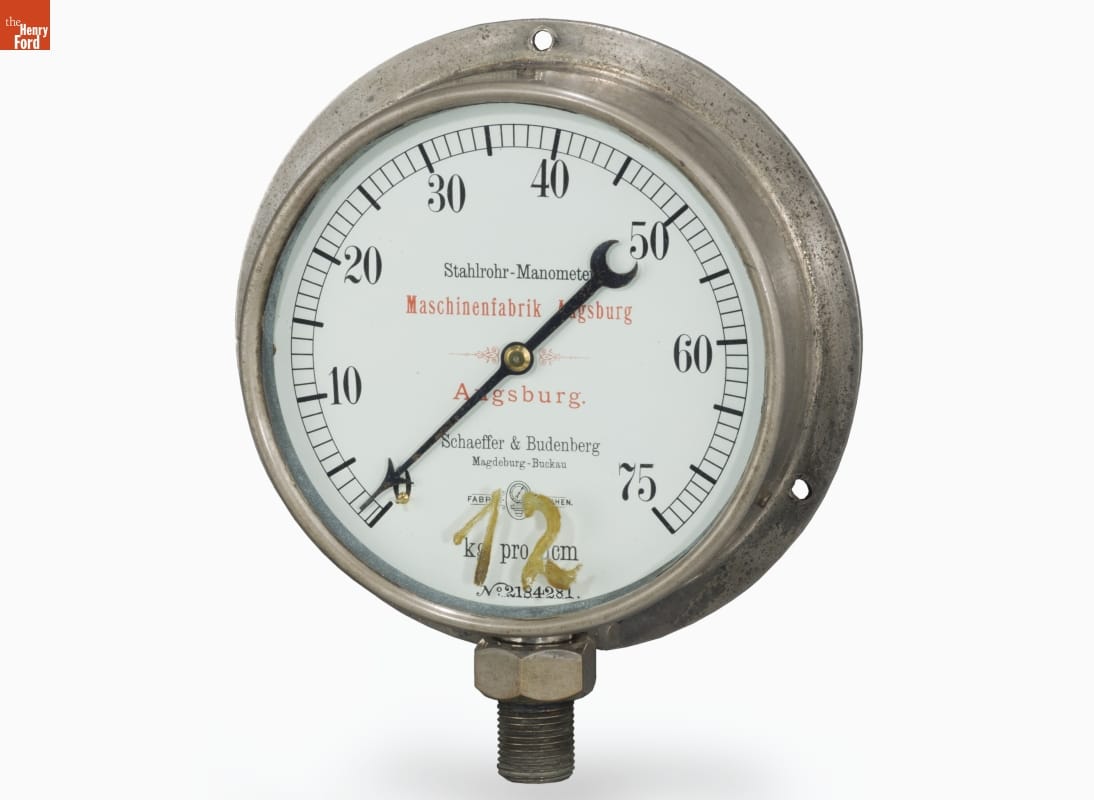
- Schaeffer & Budenberg Manometer, 1875-1898 - The German firm of Schaeffner and Budenberg began manufacturing gauges in the 19th century. This manometer measures the pressure of a fluid or gas through a pipe -- such as those found on steam engines -- alerting workers so they can avoid any problems that may occur.
- 1875-1898
- Collections - Artifact
Schaeffer & Budenberg Manometer, 1875-1898
The German firm of Schaeffner and Budenberg began manufacturing gauges in the 19th century. This manometer measures the pressure of a fluid or gas through a pipe -- such as those found on steam engines -- alerting workers so they can avoid any problems that may occur.
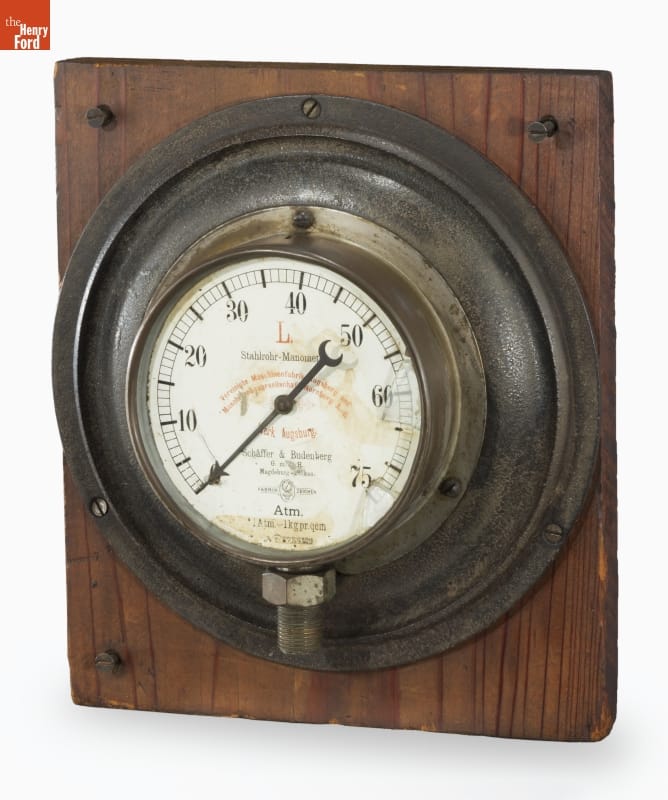
- Schaeffer & Budenberg Manometer, 1898-1908 - The German firm of Schaeffner and Budenberg began manufacturing gauges in the 19th century. This manometer measures the pressure of a fluid or gas through a pipe -- such as those found on steam engines -- alerting workers so they can avoid any problems that may occur.
- 1898-1908
- Collections - Artifact
Schaeffer & Budenberg Manometer, 1898-1908
The German firm of Schaeffner and Budenberg began manufacturing gauges in the 19th century. This manometer measures the pressure of a fluid or gas through a pipe -- such as those found on steam engines -- alerting workers so they can avoid any problems that may occur.
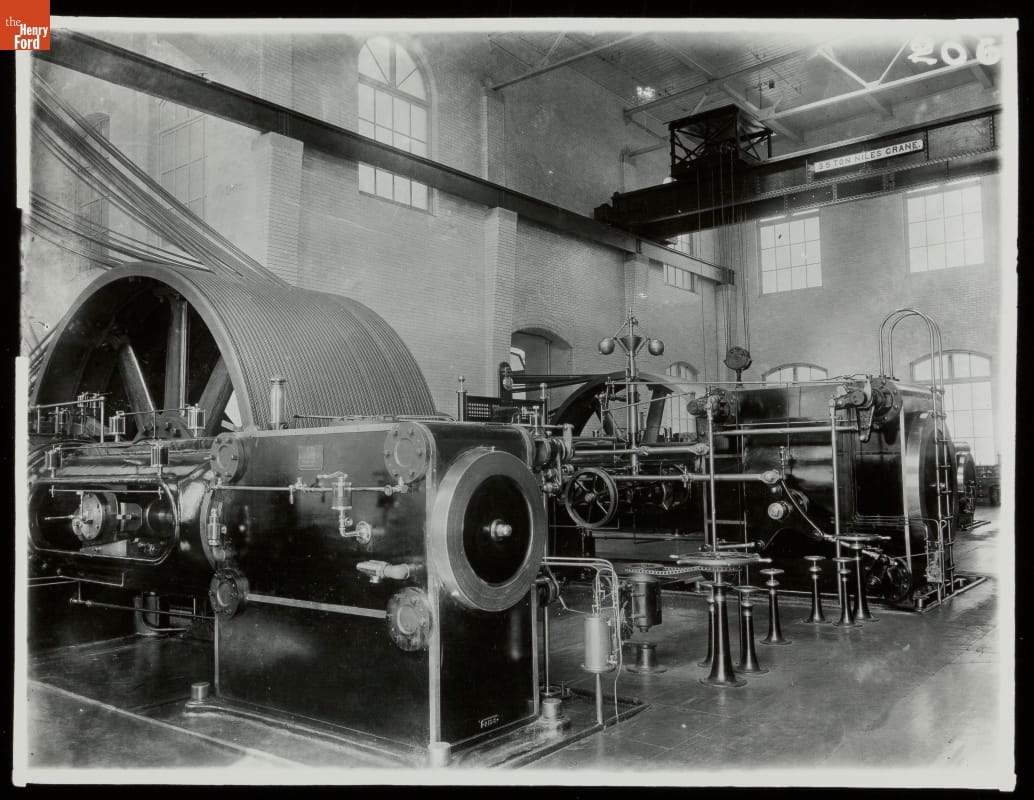
- Sharp Compound Engine at Manomet Textile Mill, New Bedford, Massachusetts, 1912 - As a center for American textile manufacture, New Bedford, Massachusetts, was driven by steam. Factories housed huge steam engines that powered generators to create the electricity needed to run mill machinery. This engine room powered Manomet Textile Mill, just one of the nearly 70 textile mills operating in New Bedford around the turn of the 20th century.
- February 01, 1912
- Collections - Artifact
Sharp Compound Engine at Manomet Textile Mill, New Bedford, Massachusetts, 1912
As a center for American textile manufacture, New Bedford, Massachusetts, was driven by steam. Factories housed huge steam engines that powered generators to create the electricity needed to run mill machinery. This engine room powered Manomet Textile Mill, just one of the nearly 70 textile mills operating in New Bedford around the turn of the 20th century.
- Engine Room at Manomet Textile Mill, New Bedford, Massachusetts, 1912. - As a center for American textile manufacture, New Bedford, Massachusetts, was driven by steam. Factories housed huge steam engines that powered generators to create the electricity needed to run mill machinery. This engine room powered Manomet Textile Mill, just one of the nearly 70 textile mills operating in New Bedford around the turn of the 20th century.
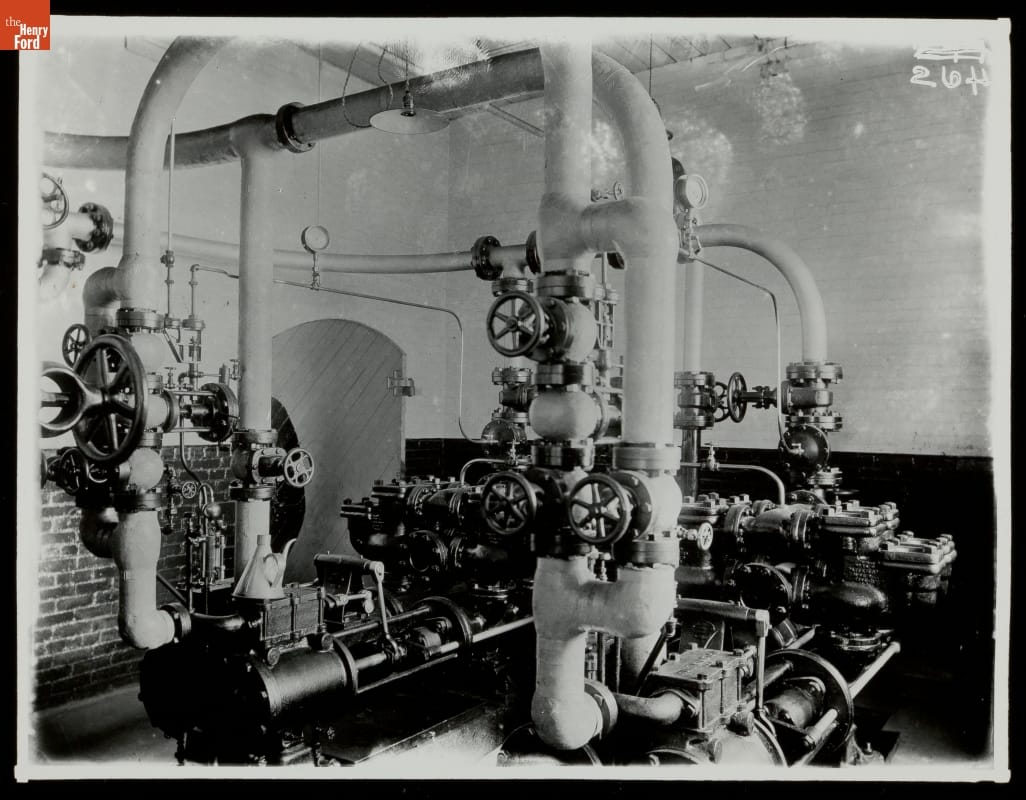
- February 01, 1912
- Collections - Artifact
Engine Room at Manomet Textile Mill, New Bedford, Massachusetts, 1912.
As a center for American textile manufacture, New Bedford, Massachusetts, was driven by steam. Factories housed huge steam engines that powered generators to create the electricity needed to run mill machinery. This engine room powered Manomet Textile Mill, just one of the nearly 70 textile mills operating in New Bedford around the turn of the 20th century.
- C. & G. Cooper Steam Engine at Manomet Textile Mill, New Bedford, Massachusetts, 1912 - As a center for American textile manufacture, New Bedford, Massachusetts, was driven by steam. Factories housed huge steam engines that powered generators to create the electricity needed to run mill machinery. This engine room powered Manomet Textile Mill, just one of the nearly 70 textile mills operating in New Bedford around the turn of the 20th century.
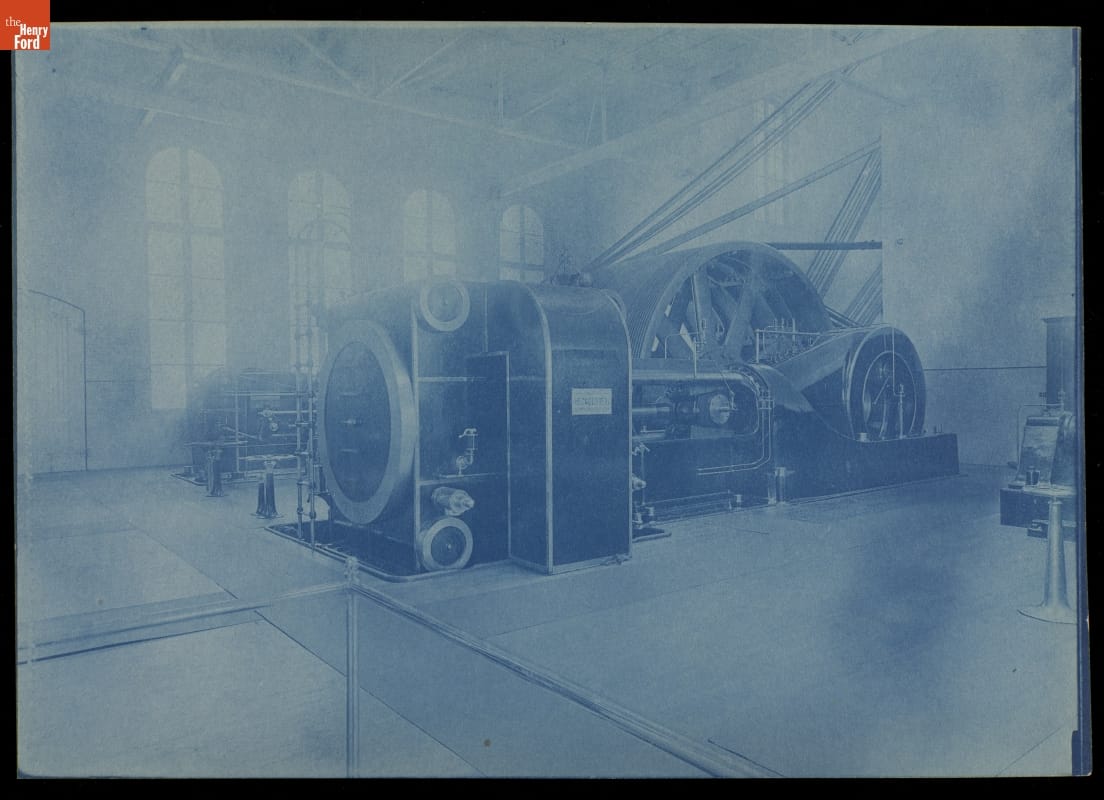
- February 01, 1912
- Collections - Artifact
C. & G. Cooper Steam Engine at Manomet Textile Mill, New Bedford, Massachusetts, 1912
As a center for American textile manufacture, New Bedford, Massachusetts, was driven by steam. Factories housed huge steam engines that powered generators to create the electricity needed to run mill machinery. This engine room powered Manomet Textile Mill, just one of the nearly 70 textile mills operating in New Bedford around the turn of the 20th century.
- Compound Engine at Manomet Textile Mill, New Bedford, Massachusetts, 1912 - As a center for American textile manufacture, New Bedford, Massachusetts, was driven by steam. Factories housed huge steam engines that powered generators to create the electricity needed to run mill machinery. This engine room powered Manomet Textile Mill, just one of the nearly 70 textile mills operating in New Bedford around the turn of the 20th century.
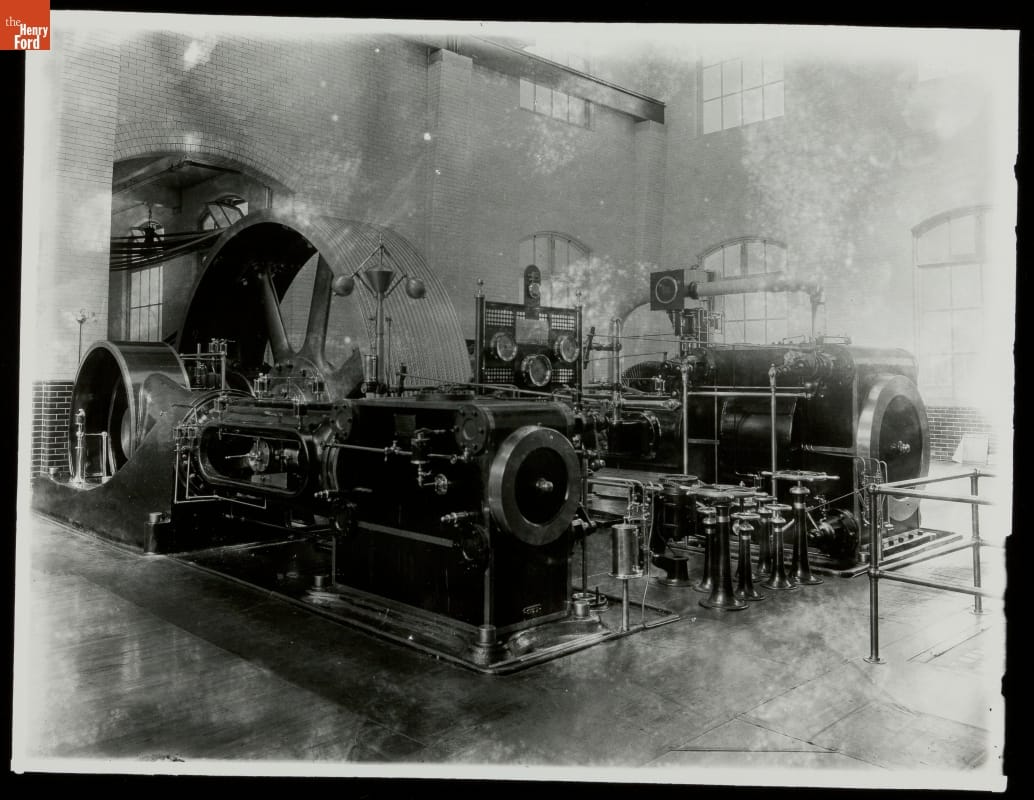
- February 01, 1912
- Collections - Artifact
Compound Engine at Manomet Textile Mill, New Bedford, Massachusetts, 1912
As a center for American textile manufacture, New Bedford, Massachusetts, was driven by steam. Factories housed huge steam engines that powered generators to create the electricity needed to run mill machinery. This engine room powered Manomet Textile Mill, just one of the nearly 70 textile mills operating in New Bedford around the turn of the 20th century.
- Schaeffer & Budenberg Manometer, 1875-1898 - The German firm of Schaeffner and Budenberg began manufacturing gauges in the 19th century. This manometer measures the pressure of a fluid or gas through a pipe -- such as those found on steam engines -- alerting workers so they can avoid any problems that may occur.
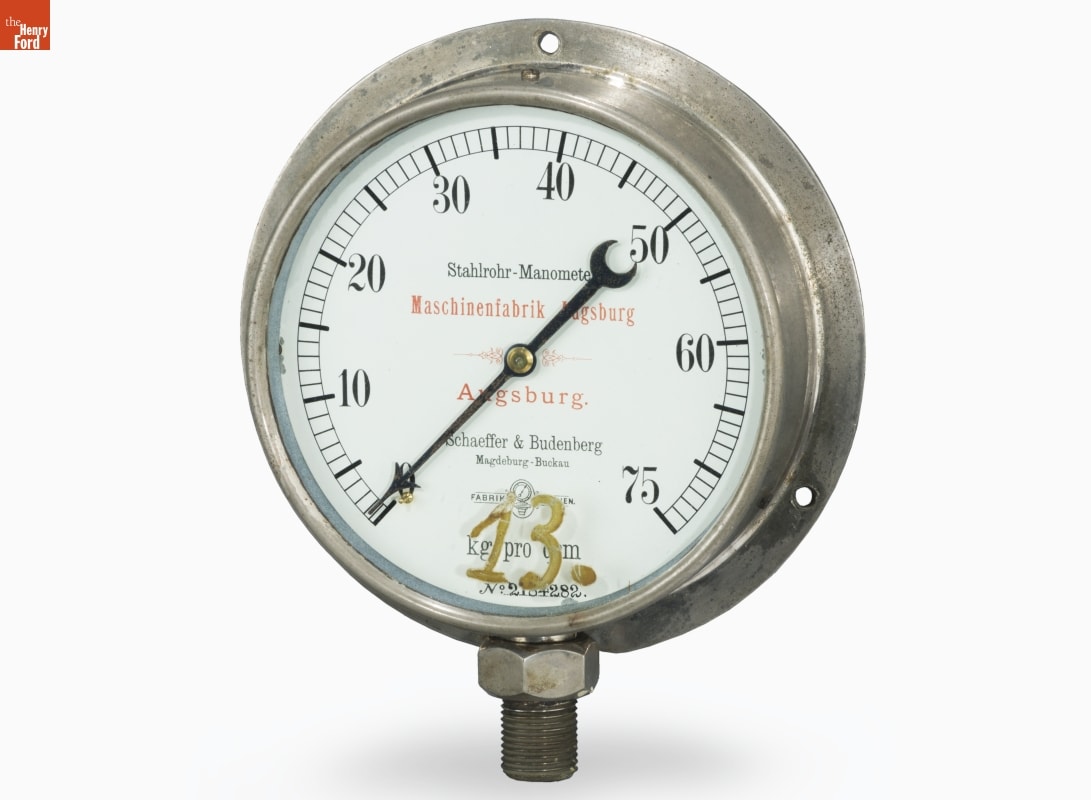
- 1875-1898
- Collections - Artifact
Schaeffer & Budenberg Manometer, 1875-1898
The German firm of Schaeffner and Budenberg began manufacturing gauges in the 19th century. This manometer measures the pressure of a fluid or gas through a pipe -- such as those found on steam engines -- alerting workers so they can avoid any problems that may occur.
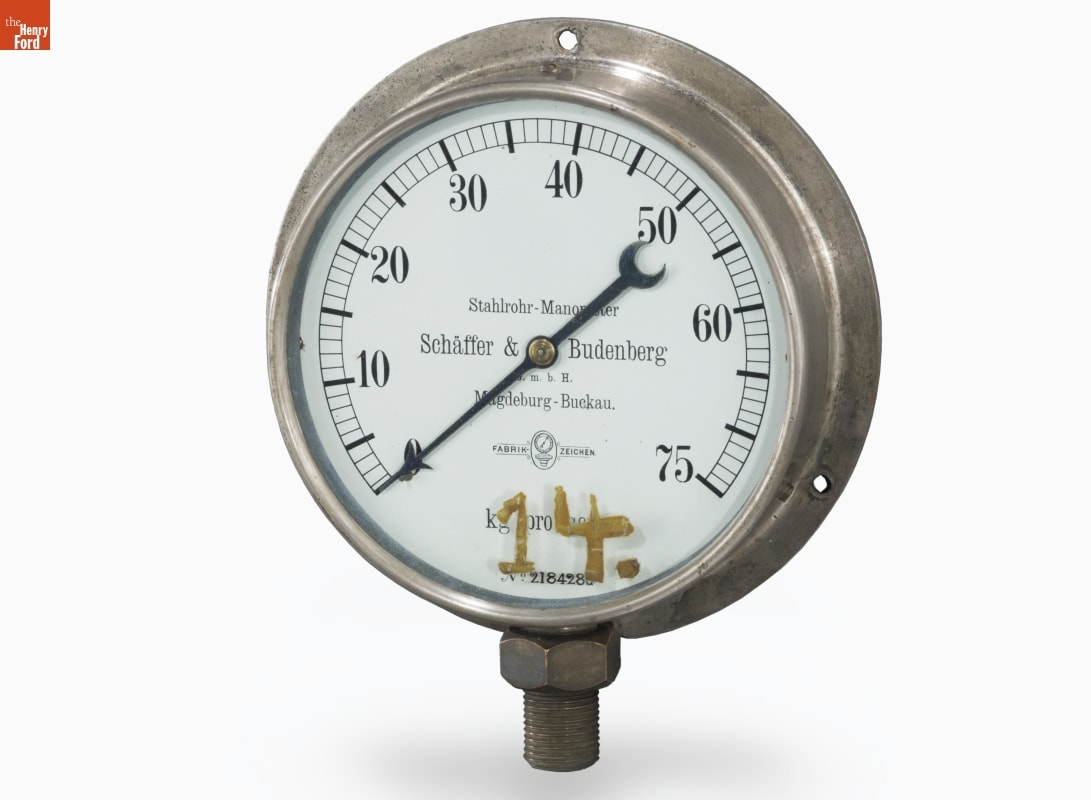
- Schaeffer & Budenberg Manometer, 1875-1898 - The German firm of Schaeffner and Budenberg began manufacturing gauges in the 19th century. This manometer measures the pressure of a fluid or gas through a pipe -- such as those found on steam engines -- alerting workers so they can avoid any problems that may occur.
- 1875-1898
- Collections - Artifact
Schaeffer & Budenberg Manometer, 1875-1898
The German firm of Schaeffner and Budenberg began manufacturing gauges in the 19th century. This manometer measures the pressure of a fluid or gas through a pipe -- such as those found on steam engines -- alerting workers so they can avoid any problems that may occur.
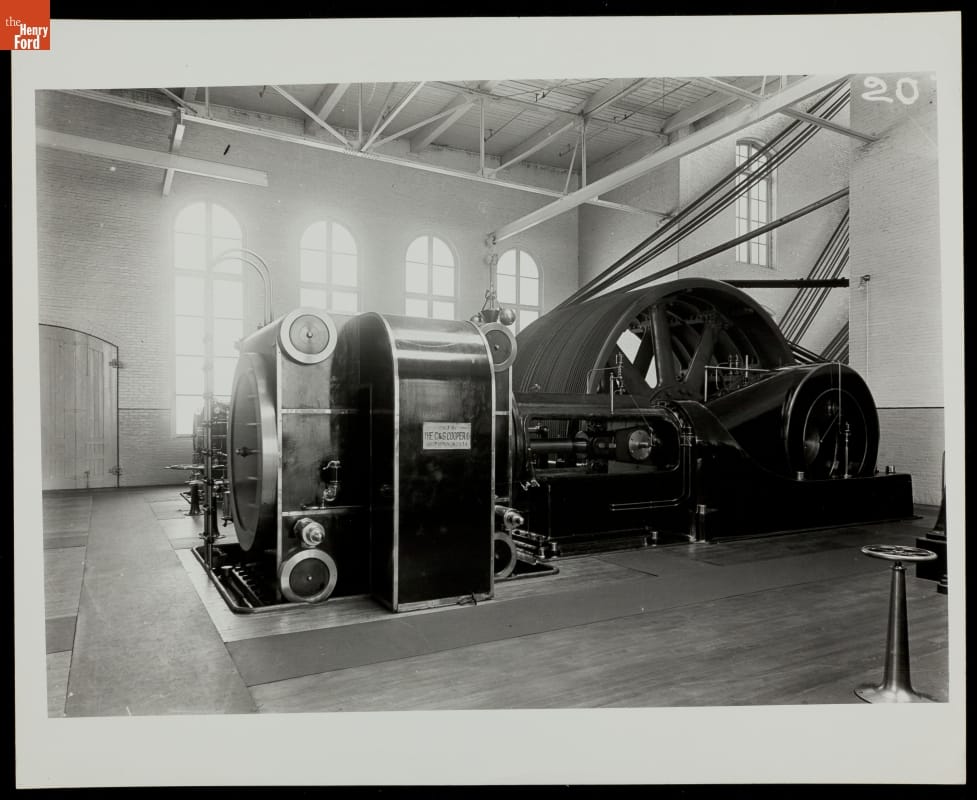
- C. & G. Cooper Steam Engine at Manomet Textile Mill, New Bedford, Massachusetts, 1912 - As a center for American textile manufacture, New Bedford, Massachusetts, was driven by steam. Factories housed huge steam engines that powered generators to create the electricity needed to run mill machinery. This engine room powered Manomet Textile Mill, just one of the nearly 70 textile mills operating in New Bedford around the turn of the 20th century.
- February 01, 1912
- Collections - Artifact
C. & G. Cooper Steam Engine at Manomet Textile Mill, New Bedford, Massachusetts, 1912
As a center for American textile manufacture, New Bedford, Massachusetts, was driven by steam. Factories housed huge steam engines that powered generators to create the electricity needed to run mill machinery. This engine room powered Manomet Textile Mill, just one of the nearly 70 textile mills operating in New Bedford around the turn of the 20th century.