
Search
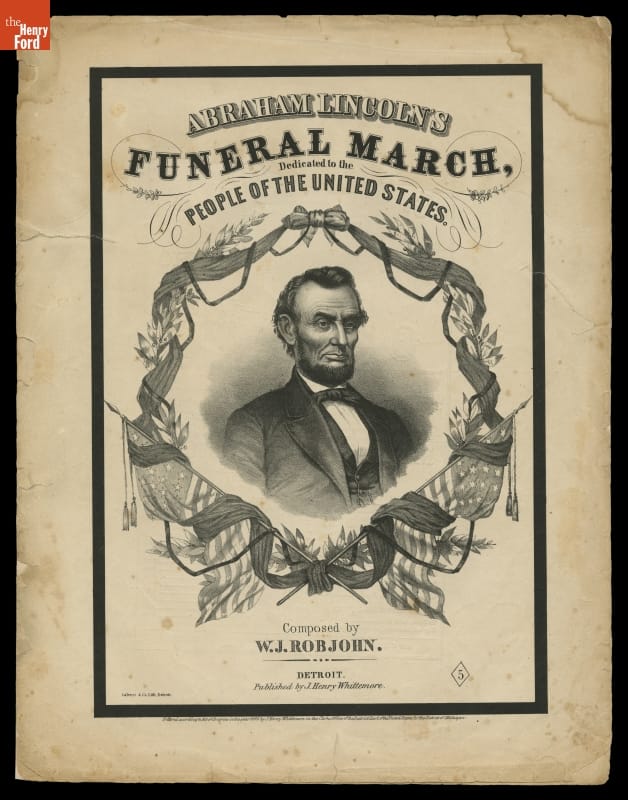
- Music Sheet, "Abraham Lincoln's Funeral March," 1865 - Abraham Lincoln's assassination on April 15, 1865 plunged Americans into deep mourning. This sheet music's somber composition and illustrated cover helped people to understand the tragic event. Printed in Detroit, it may have been used during that city's public mourning ceremony held April 25, 1865. The artist added a border depicting black cloth-draped U.S. flags and laurel leaves in the shape of a wreath around Lincoln's head.
- 1865
- Collections - Artifact
Music Sheet, "Abraham Lincoln's Funeral March," 1865
Abraham Lincoln's assassination on April 15, 1865 plunged Americans into deep mourning. This sheet music's somber composition and illustrated cover helped people to understand the tragic event. Printed in Detroit, it may have been used during that city's public mourning ceremony held April 25, 1865. The artist added a border depicting black cloth-draped U.S. flags and laurel leaves in the shape of a wreath around Lincoln's head.
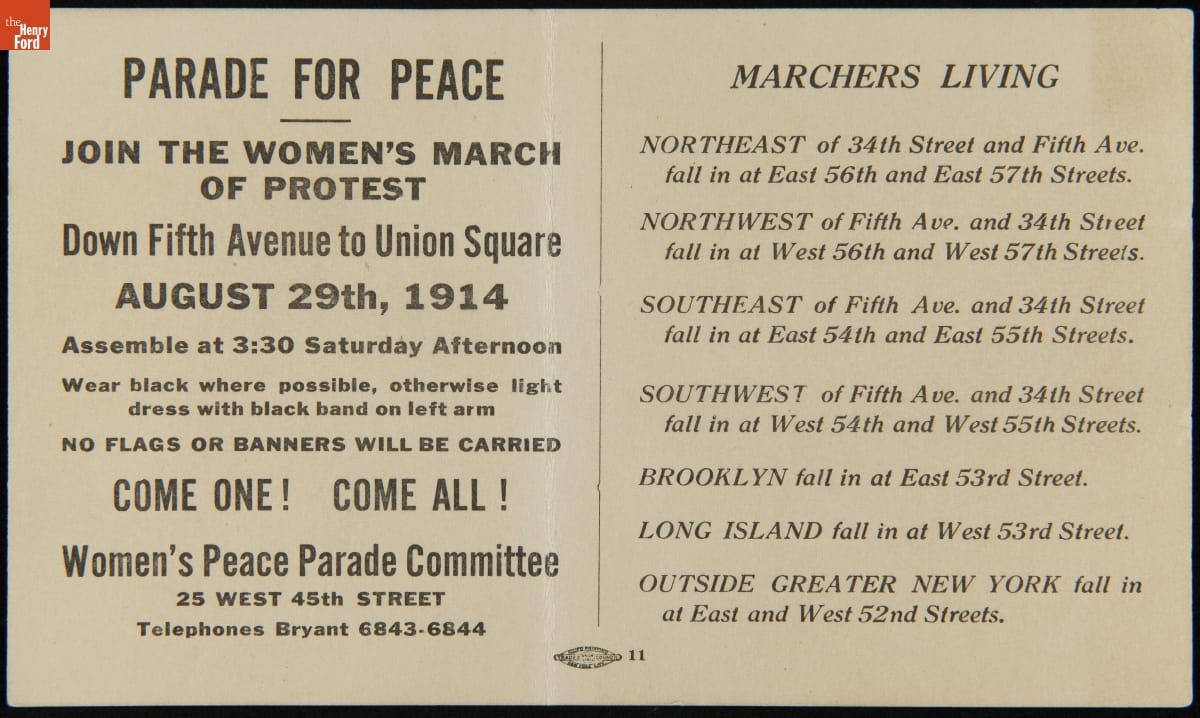
- Parade for Peace - Join the Women's March of Protest, August 29, 1914 -
- August 29, 1914
- Collections - Artifact
Parade for Peace - Join the Women's March of Protest, August 29, 1914
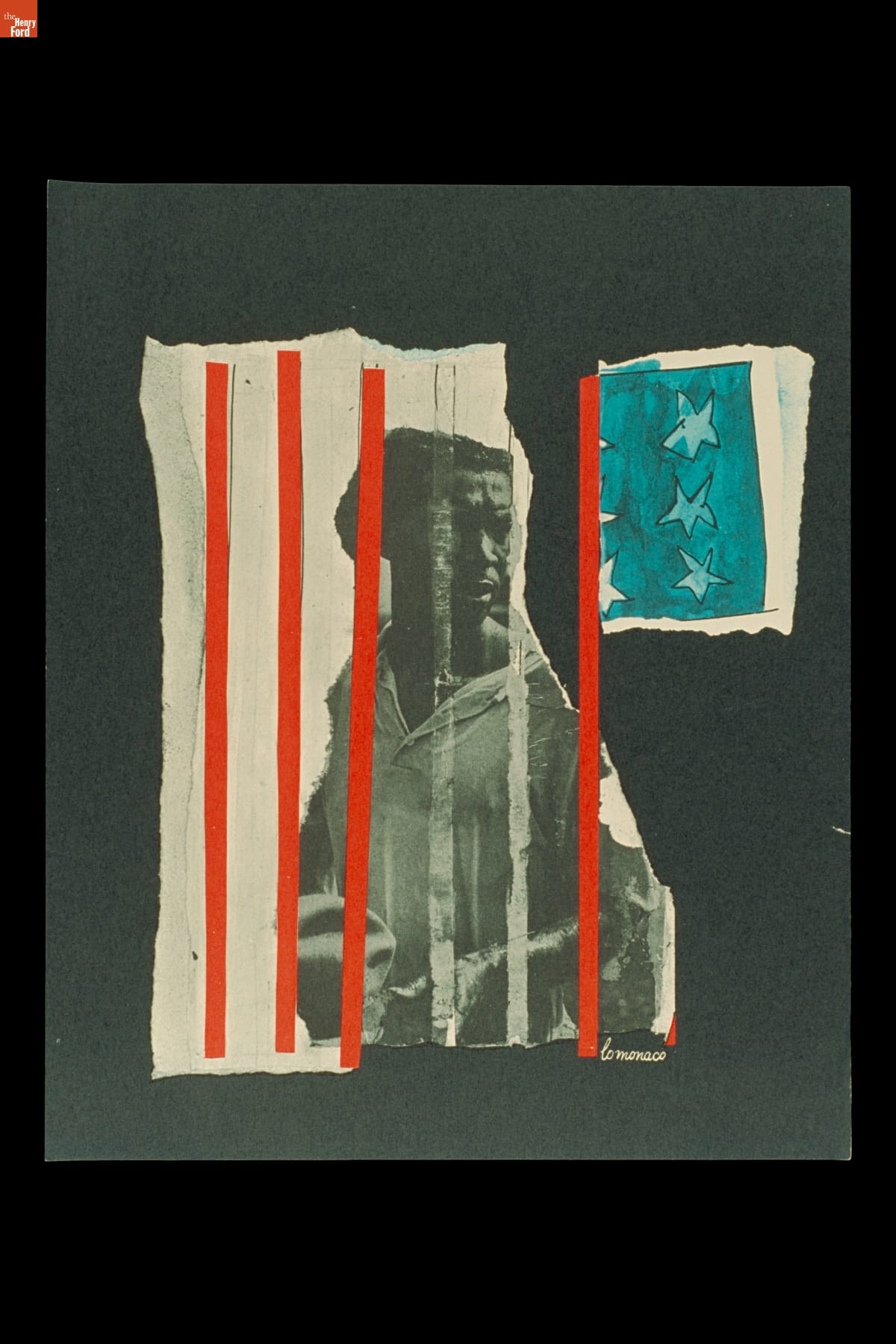
- "We Shall Overcome! A Jail Can Only Hold a Man's Body - His Mind and Heart Remain Free," 1963 - More than 250,000 civil rights advocates showed up at the 1963 March on Washington for Jobs and Freedom. This print, part of a souvenir portfolio made for the event, incorporated fragments of disturbing images from the movement. The artist intended these to symbolize man's inhumanity to his fellow man. Civil Rights activists hoped that they would stir people's emotions and incite action.
- August 28, 1963
- Collections - Artifact
"We Shall Overcome! A Jail Can Only Hold a Man's Body - His Mind and Heart Remain Free," 1963
More than 250,000 civil rights advocates showed up at the 1963 March on Washington for Jobs and Freedom. This print, part of a souvenir portfolio made for the event, incorporated fragments of disturbing images from the movement. The artist intended these to symbolize man's inhumanity to his fellow man. Civil Rights activists hoped that they would stir people's emotions and incite action.
- Hallmark "Mickey's Holiday Parade Series: Donald Plays the Cymbals" Christmas Ornament, 1999 - Already known for greeting cards, Hallmark introduced a line of Christmas ornaments in 1973. The company's annual release of an increasing array of ornaments revolutionized Christmas decorating, appealing to customers' interest in marking memories and milestones as well as expressing one's personality and unique tastes.

- 1999
- Collections - Artifact
Hallmark "Mickey's Holiday Parade Series: Donald Plays the Cymbals" Christmas Ornament, 1999
Already known for greeting cards, Hallmark introduced a line of Christmas ornaments in 1973. The company's annual release of an increasing array of ornaments revolutionized Christmas decorating, appealing to customers' interest in marking memories and milestones as well as expressing one's personality and unique tastes.
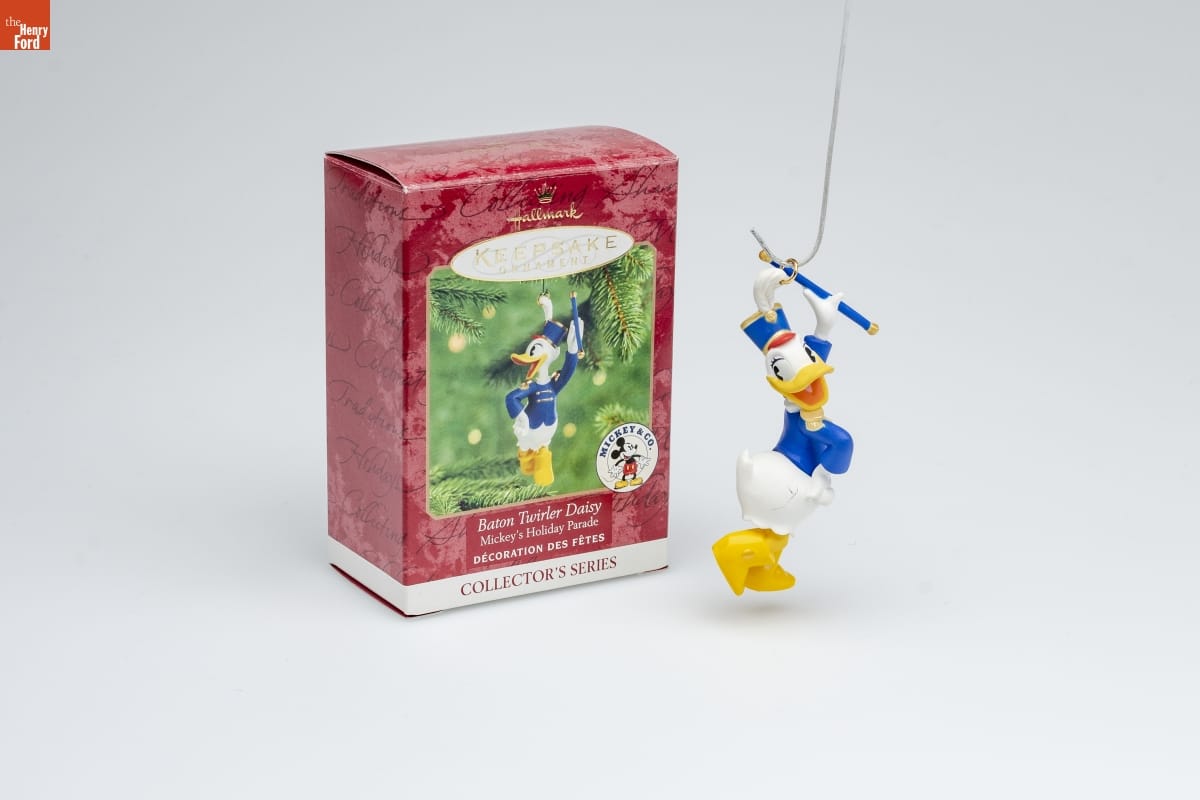
- Hallmark "Mickey's Holiday Parade Series: Baton Twirler Daisy" Christmas Ornament, 2000 - Already known for greeting cards, Hallmark introduced a line of Christmas ornaments in 1973. The company's annual release of an increasing array of ornaments revolutionized Christmas decorating, appealing to customers' interest in marking memories and milestones as well as expressing one's personality and unique tastes.
- 2000
- Collections - Artifact
Hallmark "Mickey's Holiday Parade Series: Baton Twirler Daisy" Christmas Ornament, 2000
Already known for greeting cards, Hallmark introduced a line of Christmas ornaments in 1973. The company's annual release of an increasing array of ornaments revolutionized Christmas decorating, appealing to customers' interest in marking memories and milestones as well as expressing one's personality and unique tastes.
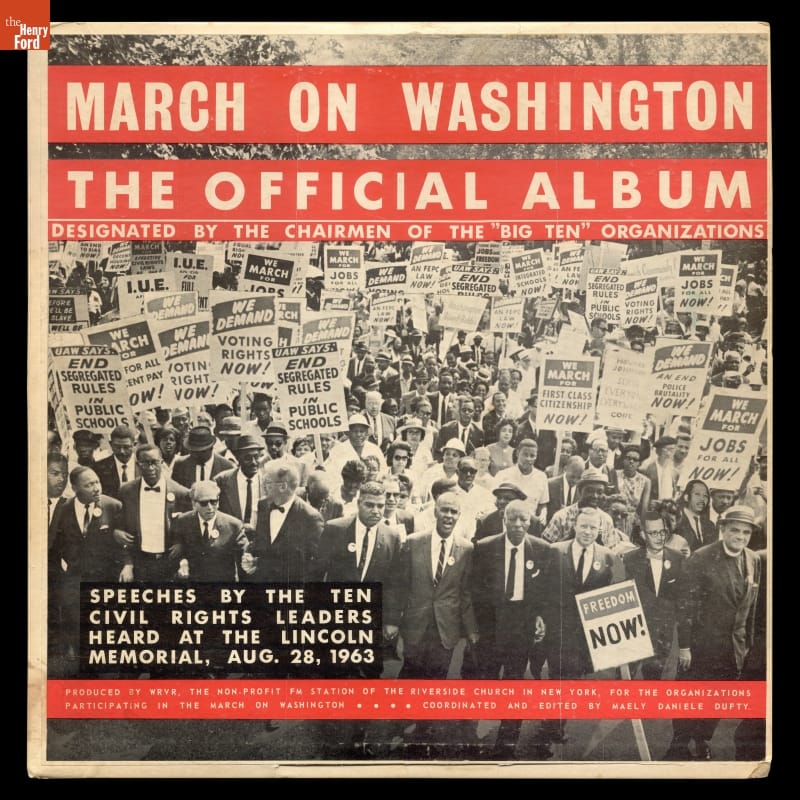
- Record Album, "March on Washington: The Official Album," 1963 - More than 250,000 civil rights advocates -- both African American and white -- showed up at this peaceful march on August 28, 1963, to support unity, jobs, and a new Civil Rights bill being proposed by President Kennedy. This LP record includes speeches by ten Civil Rights leaders heard at the Lincoln Memorial that day.
- August 28, 1963
- Collections - Artifact
Record Album, "March on Washington: The Official Album," 1963
More than 250,000 civil rights advocates -- both African American and white -- showed up at this peaceful march on August 28, 1963, to support unity, jobs, and a new Civil Rights bill being proposed by President Kennedy. This LP record includes speeches by ten Civil Rights leaders heard at the Lincoln Memorial that day.
- Tenor Horn, circa 1870 -
- circa 1870
- Collections - Artifact
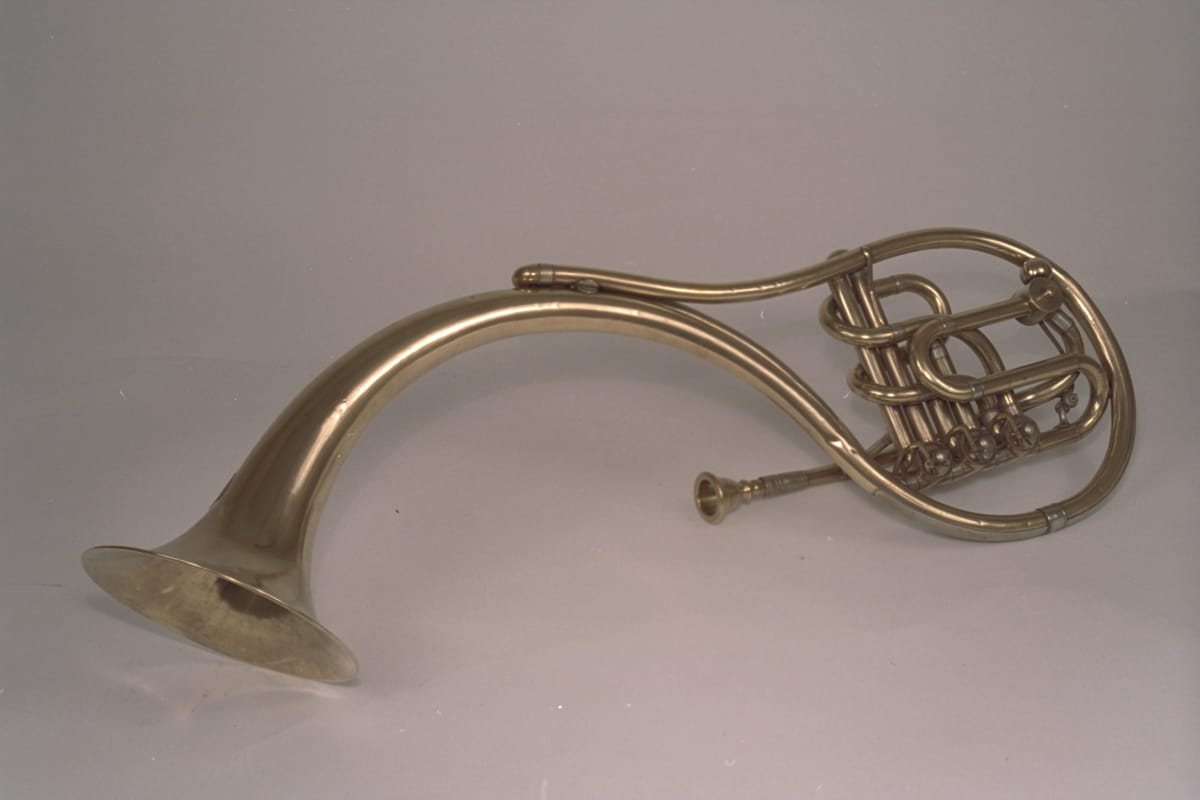
Tenor Horn, circa 1870
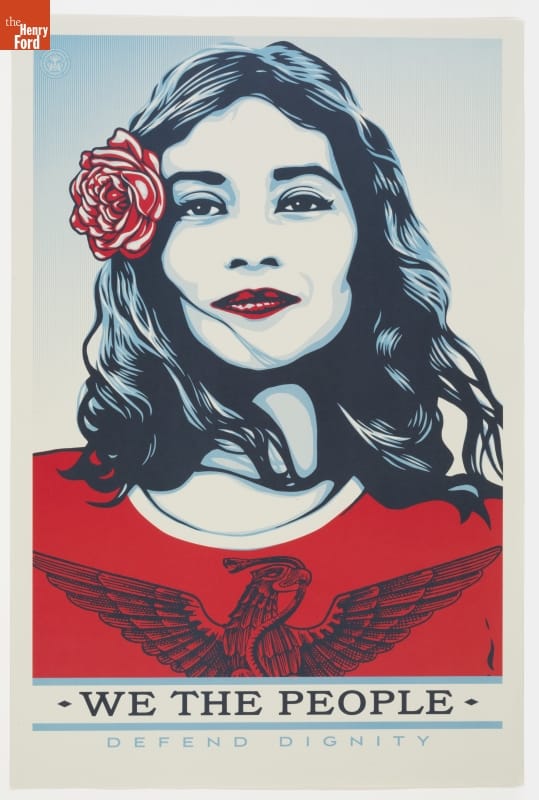
- "We the People Defend Dignity," 2016-2017 - This poster was created by Shepard Fairey in response to the election of Donald Trump as US president. The diverse range of people depicted in the "We the People" series are aesthetically similar to Fairey's Barack Obama "Hope" poster. These images appeared on the back page of The Washington Post on inauguration day and were carried as signs at protests.
- 2016-2017
- Collections - Artifact
"We the People Defend Dignity," 2016-2017
This poster was created by Shepard Fairey in response to the election of Donald Trump as US president. The diverse range of people depicted in the "We the People" series are aesthetically similar to Fairey's Barack Obama "Hope" poster. These images appeared on the back page of The Washington Post on inauguration day and were carried as signs at protests.
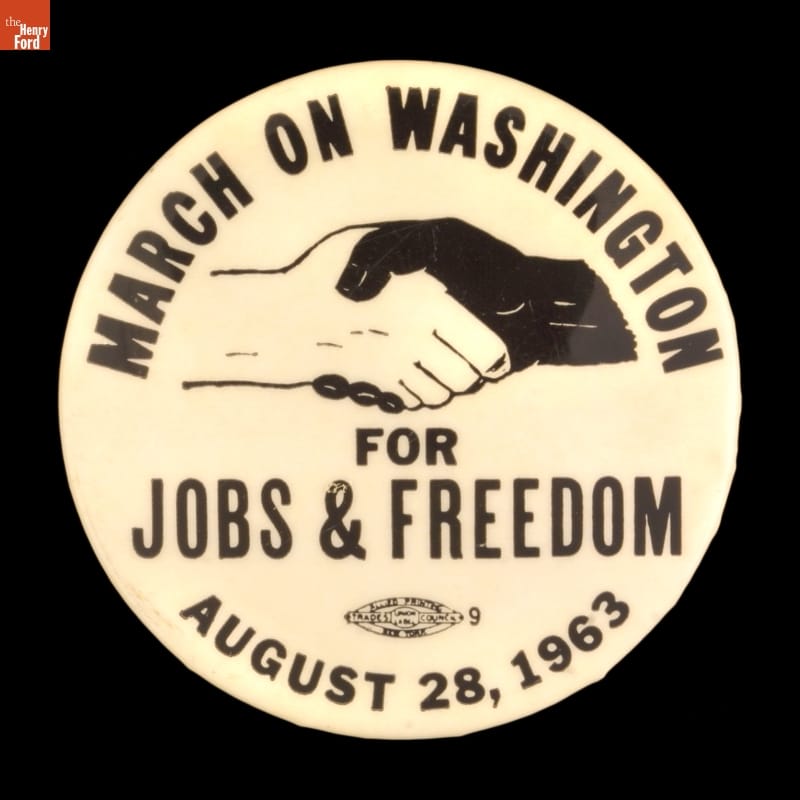
- Button, March on Washington for Jobs and Freedom, 1963 - More than 250,000 civil rights advocates showed up at this peaceful march to support unity, jobs, and a new Civil Rights bill being proposed by President Kennedy. Television viewers nationwide watched African Americans and whites march together, united behind a common cause. Songs and speeches at this march included Martin Luther King, Jr.'s famous "I Have a Dream" speech.
- August 28, 1963
- Collections - Artifact
Button, March on Washington for Jobs and Freedom, 1963
More than 250,000 civil rights advocates showed up at this peaceful march to support unity, jobs, and a new Civil Rights bill being proposed by President Kennedy. Television viewers nationwide watched African Americans and whites march together, united behind a common cause. Songs and speeches at this march included Martin Luther King, Jr.'s famous "I Have a Dream" speech.
- Button, "Emancipation March on Washington," 1963 - More than 250,000 civil rights advocates showed up at this peaceful march to support unity, jobs, and a new Civil Rights bill being proposed by President Kennedy. Television viewers nationwide watched African Americans and whites march together, united behind a common cause. Songs and speeches at this march included Martin Luther King, Jr.'s famous "I Have a Dream" speech.
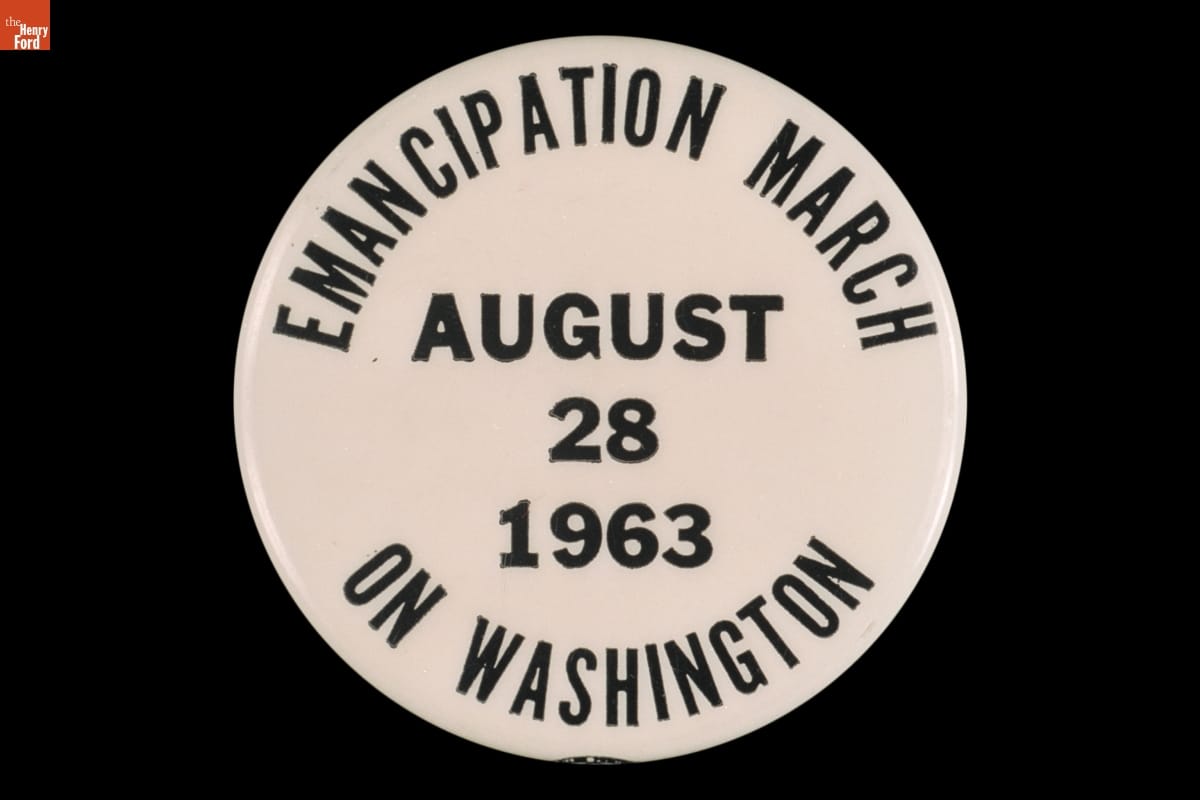
- August 28, 1963
- Collections - Artifact
Button, "Emancipation March on Washington," 1963
More than 250,000 civil rights advocates showed up at this peaceful march to support unity, jobs, and a new Civil Rights bill being proposed by President Kennedy. Television viewers nationwide watched African Americans and whites march together, united behind a common cause. Songs and speeches at this march included Martin Luther King, Jr.'s famous "I Have a Dream" speech.