
Search
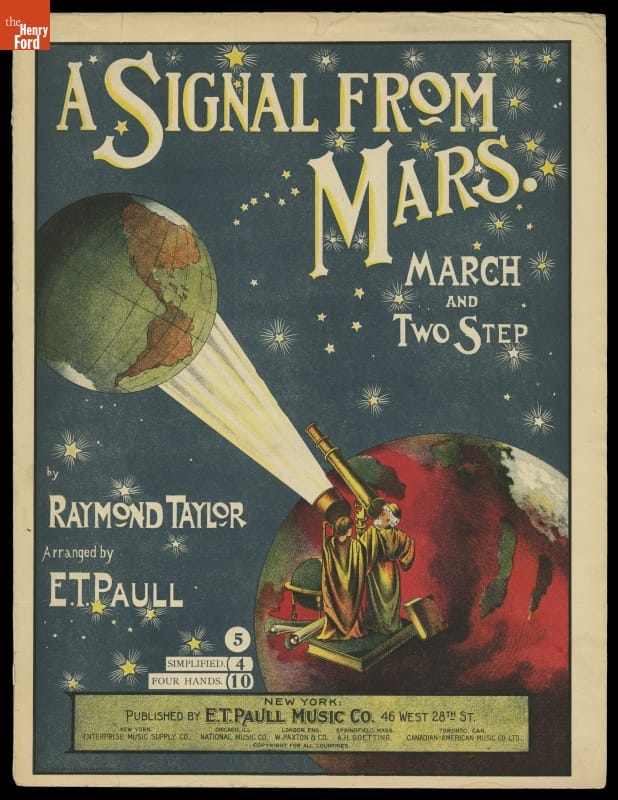
- "A Signal from Mars March and Two-Step," 1901 - The concept of "life on Mars" did not begin in tabloid magazines. In 1877, when astronomer Giovanni Schiaparelli's Mars report was translated into English, one word--canali--was misinterpreted to mean "canal." The idea of intelligent Martian lifeforms was influenced by this misunderstanding. This music documents the rise of "Mars Fever" and its impact upon popular, artistic and scientific cultures.
- 1901
- Collections - Artifact
"A Signal from Mars March and Two-Step," 1901
The concept of "life on Mars" did not begin in tabloid magazines. In 1877, when astronomer Giovanni Schiaparelli's Mars report was translated into English, one word--canali--was misinterpreted to mean "canal." The idea of intelligent Martian lifeforms was influenced by this misunderstanding. This music documents the rise of "Mars Fever" and its impact upon popular, artistic and scientific cultures.
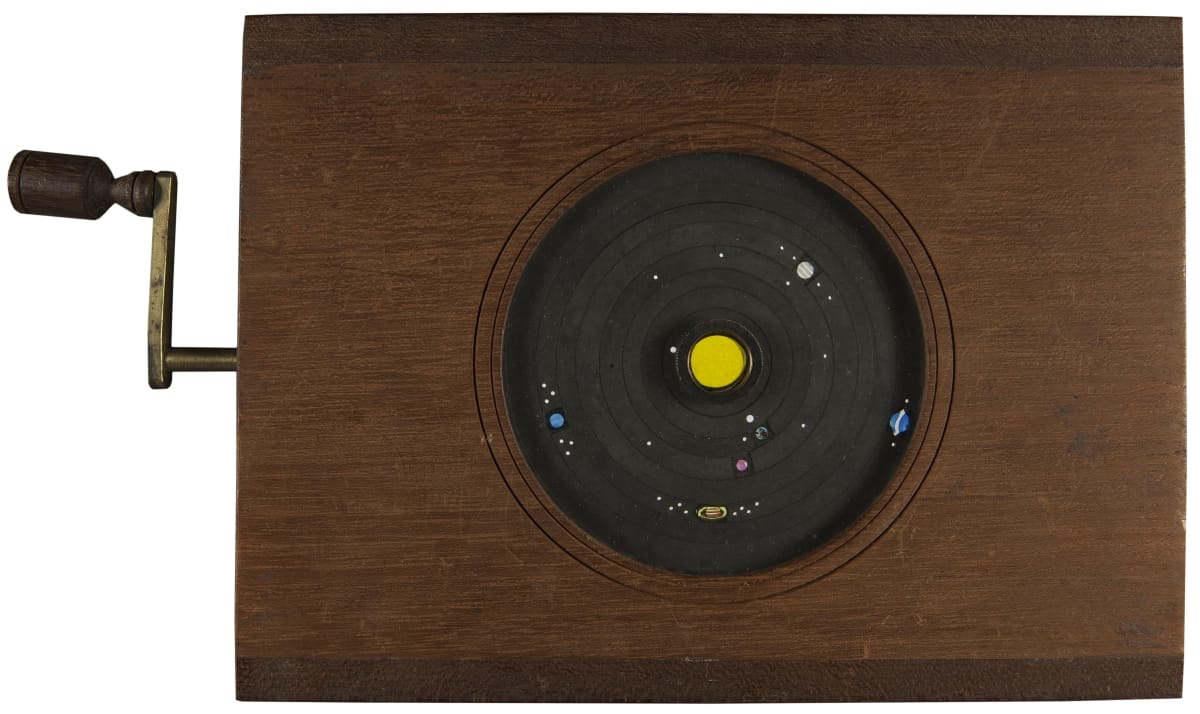
- Mechanical Lantern Slide, the Solar System, 1860-1900 - Magic lanterns use a concave mirror and light source to project images on glass slides with painted or photographic scenes. Developed in the 17th century, magic lanterns predate slide projectors and motion pictures. In the hands of magicians, they became "lanterns of fright," projecting wondrous images and apparitions. Slide themes ranged widely: exotic travel, folklore, advertising, history, science, and art.
- 1860-1900
- Collections - Artifact
Mechanical Lantern Slide, the Solar System, 1860-1900
Magic lanterns use a concave mirror and light source to project images on glass slides with painted or photographic scenes. Developed in the 17th century, magic lanterns predate slide projectors and motion pictures. In the hands of magicians, they became "lanterns of fright," projecting wondrous images and apparitions. Slide themes ranged widely: exotic travel, folklore, advertising, history, science, and art.
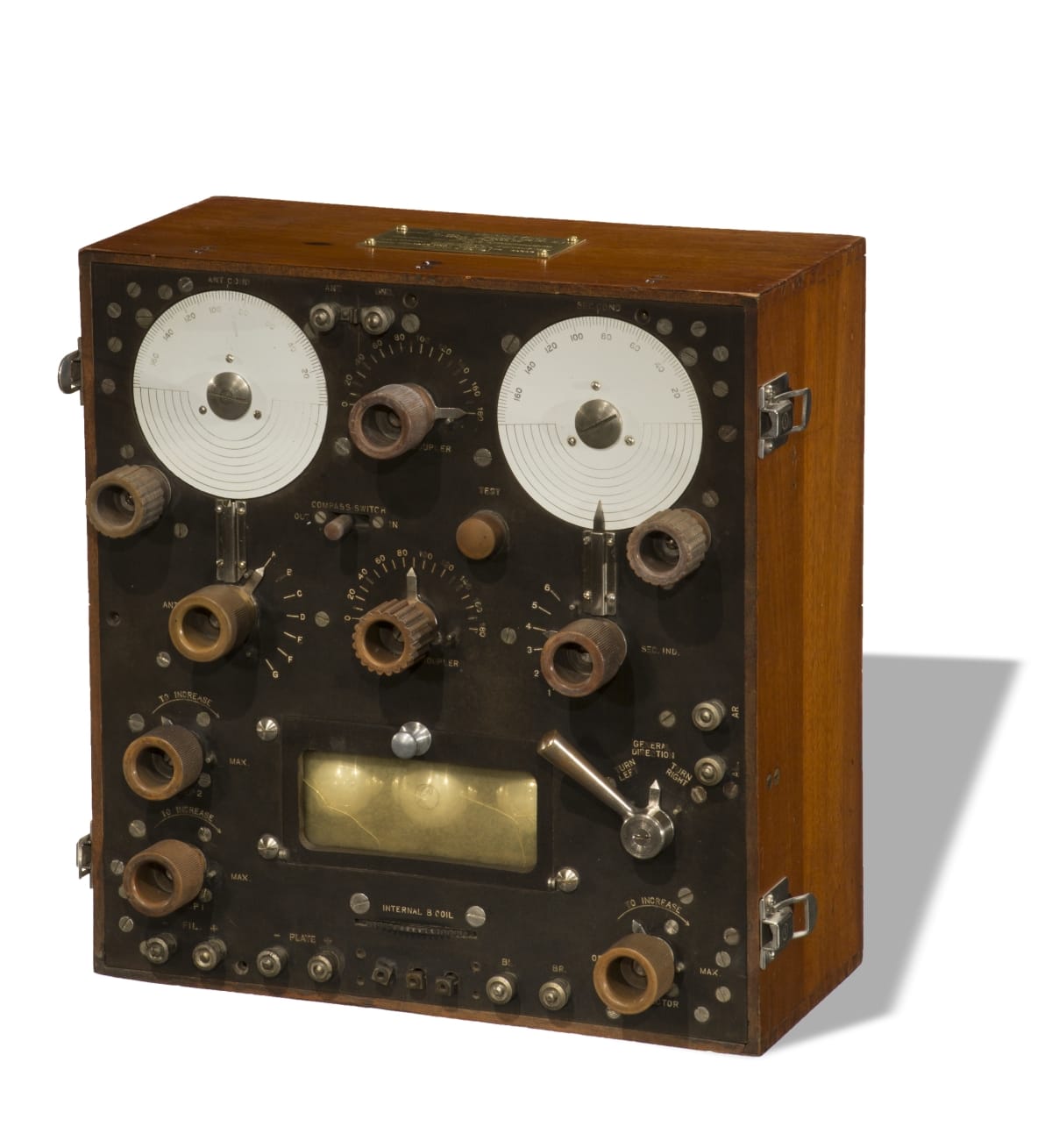
- Radio Receiver, Type SE-950, Used by Charles Francis Jenkins in Experiment Detecting Radio Signals from Mars - The SE950 was produced commercially during WWI as a rugged field radio; its versatile nature allowed it to remain useful in Charles Francis Jenkins' laboratory. The radio was used in a curious 1924 experiment as Mars drew near Earth's orbit. The SE950 was connected to a device capable of photographically recording any "alien communication" broadcast during military-imposed radio silence.
- August 01, 1924
- Collections - Artifact
Radio Receiver, Type SE-950, Used by Charles Francis Jenkins in Experiment Detecting Radio Signals from Mars
The SE950 was produced commercially during WWI as a rugged field radio; its versatile nature allowed it to remain useful in Charles Francis Jenkins' laboratory. The radio was used in a curious 1924 experiment as Mars drew near Earth's orbit. The SE950 was connected to a device capable of photographically recording any "alien communication" broadcast during military-imposed radio silence.
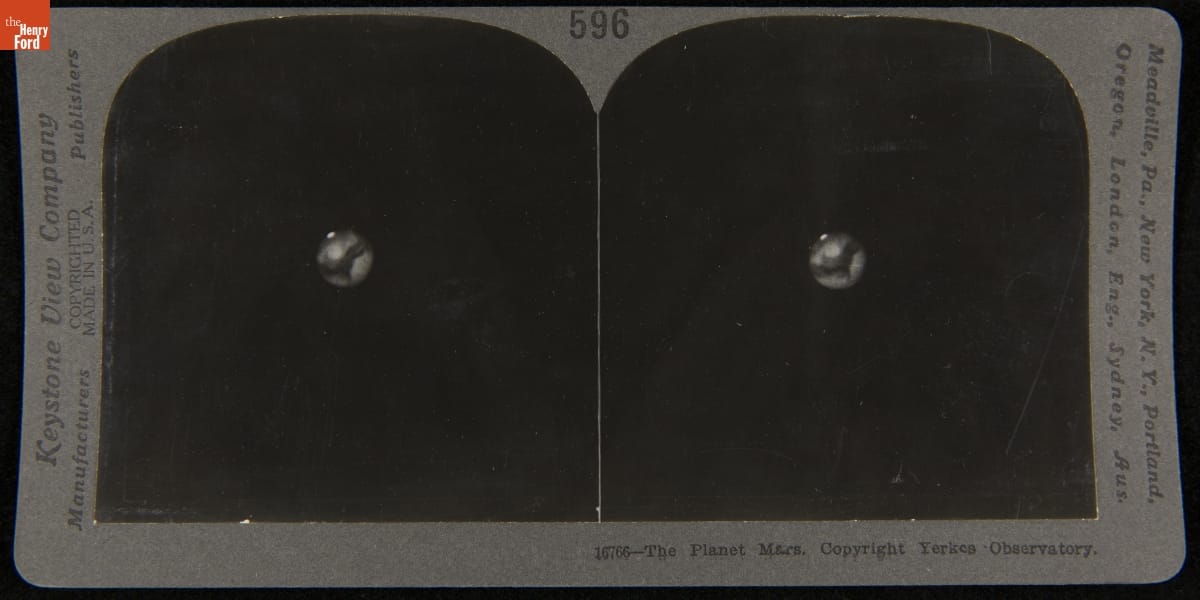
- Stereograph, "The Planet Mars," 1909 - Americans loved stereographs -- millions were made from the mid-1800s through the 1930s. A stereograph consists of two offset photos that appear to have three-dimensional depth when viewed through a stereoscope. These images entertained and educated. Stereographs could transport viewers to distant events, exotic places, and even worlds beyond, like this image of Mars taken through a 40-inch telescope at the Yerkes Observatory.
- September 28, 1909
- Collections - Artifact
Stereograph, "The Planet Mars," 1909
Americans loved stereographs -- millions were made from the mid-1800s through the 1930s. A stereograph consists of two offset photos that appear to have three-dimensional depth when viewed through a stereoscope. These images entertained and educated. Stereographs could transport viewers to distant events, exotic places, and even worlds beyond, like this image of Mars taken through a 40-inch telescope at the Yerkes Observatory.
- Sands of Mars, 1954 -
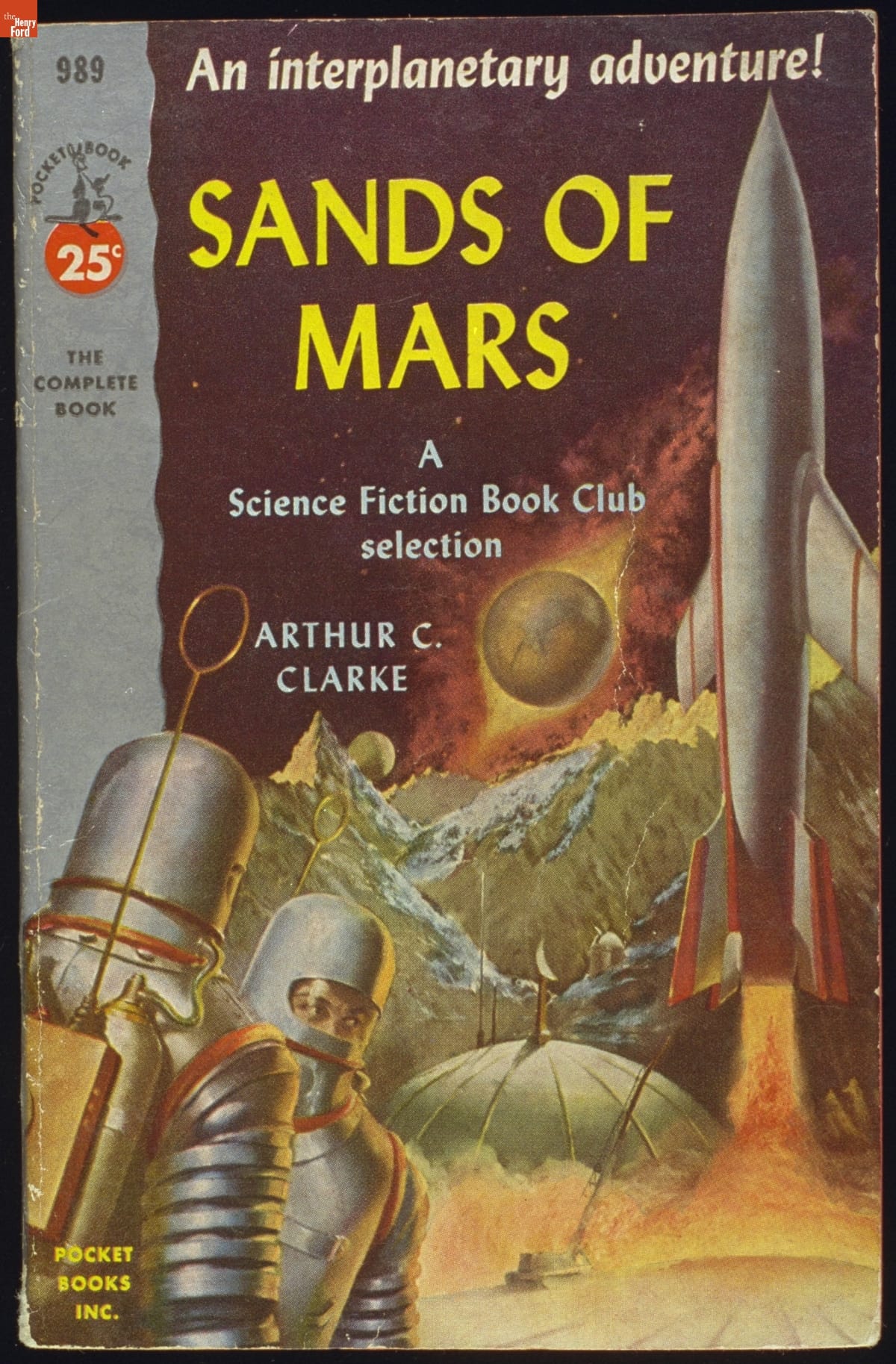
- 1954
- Collections - Artifact
Sands of Mars, 1954