
Search
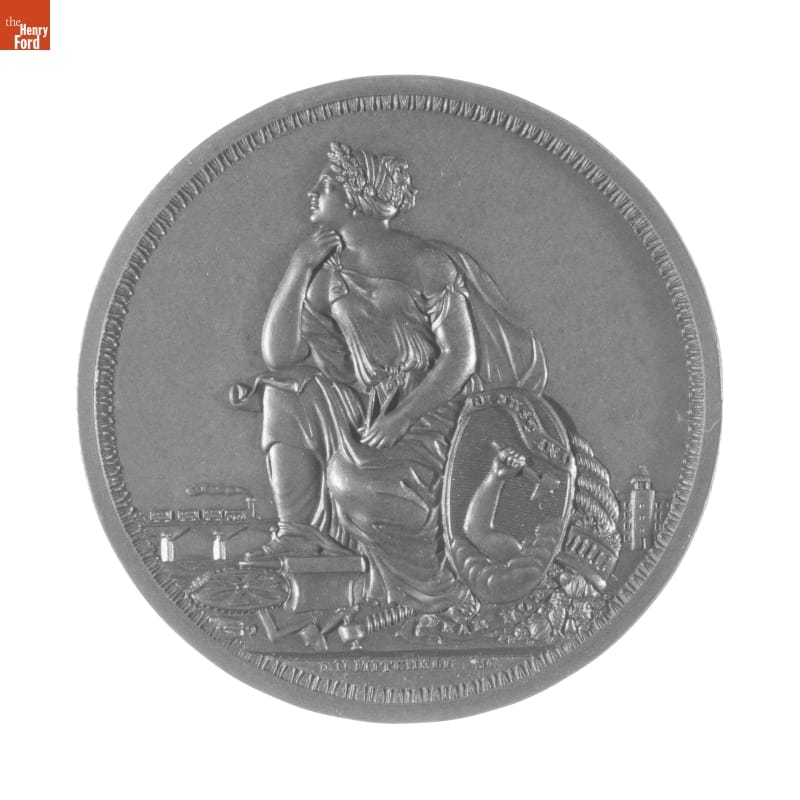
- Massachusetts Charitable Mechanic Association Medal Awarded to "Jeffers & Hill for Recumbent Chair," 1856 - Nineteenth-century mechanics' societies and business associations promoted technological ingenuity by sponsoring fairs and competitions. Officials awarded medals, certificates, and other premiums to exhibitors whose products were deemed worthy of merit. The Massachusetts Charitable Mechanic Association presented this medal to the firm of Jeffers and Hill for a "recumbent chair."
- 1856
- Collections - Artifact
Massachusetts Charitable Mechanic Association Medal Awarded to "Jeffers & Hill for Recumbent Chair," 1856
Nineteenth-century mechanics' societies and business associations promoted technological ingenuity by sponsoring fairs and competitions. Officials awarded medals, certificates, and other premiums to exhibitors whose products were deemed worthy of merit. The Massachusetts Charitable Mechanic Association presented this medal to the firm of Jeffers and Hill for a "recumbent chair."
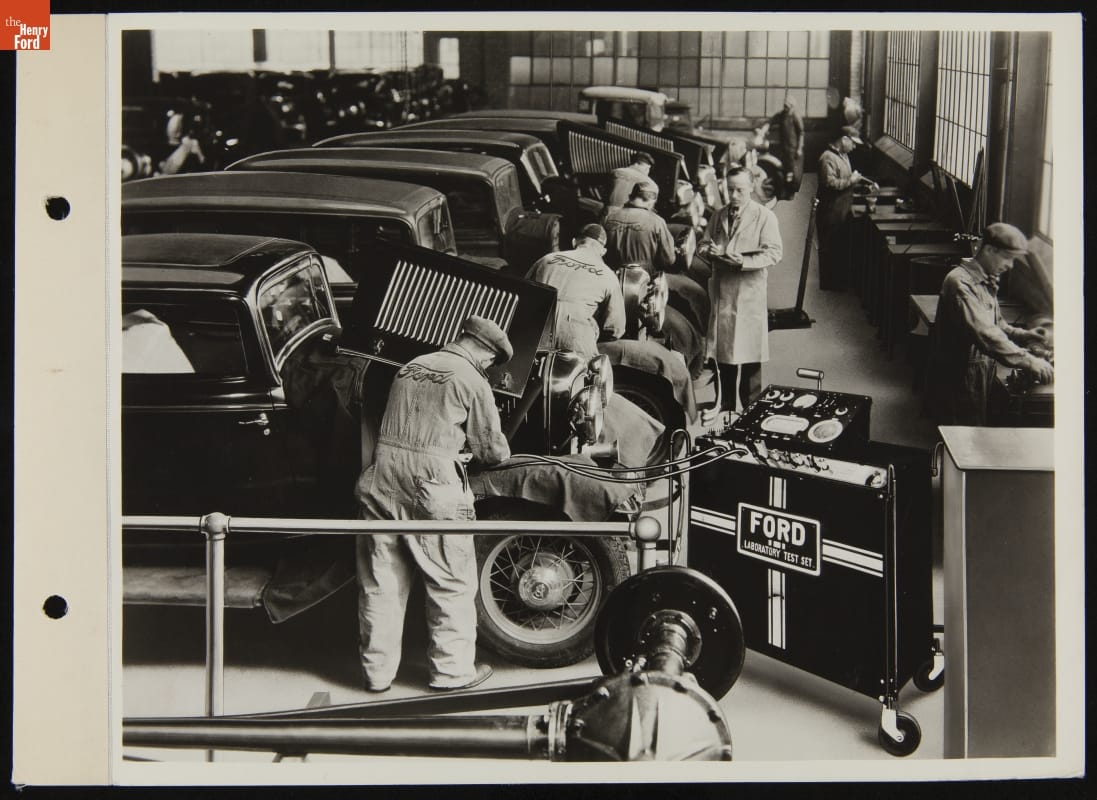
- Attendants Using Laboratory Test Sets at Southwestern Motor Sales, Lincoln Park, Michigan, September 1934 - In the mid-1930s, Ford Motor Company produced the affordable Ford Laboratory Test Set. Automobile mechanics rolled this portable diagnostic equipment to the vehicle, hooked up the unit, and checked the condition of the vehicle's engine or electrical performance. The unit detected problems quickly and eliminated guesswork -- saving time and money for both the customer and dealership.
- September 24, 1934
- Collections - Artifact
Attendants Using Laboratory Test Sets at Southwestern Motor Sales, Lincoln Park, Michigan, September 1934
In the mid-1930s, Ford Motor Company produced the affordable Ford Laboratory Test Set. Automobile mechanics rolled this portable diagnostic equipment to the vehicle, hooked up the unit, and checked the condition of the vehicle's engine or electrical performance. The unit detected problems quickly and eliminated guesswork -- saving time and money for both the customer and dealership.
- Handbook for the Artisan, Mechanic, and Engineer, 1870 -
- 1870
- Collections - Artifact
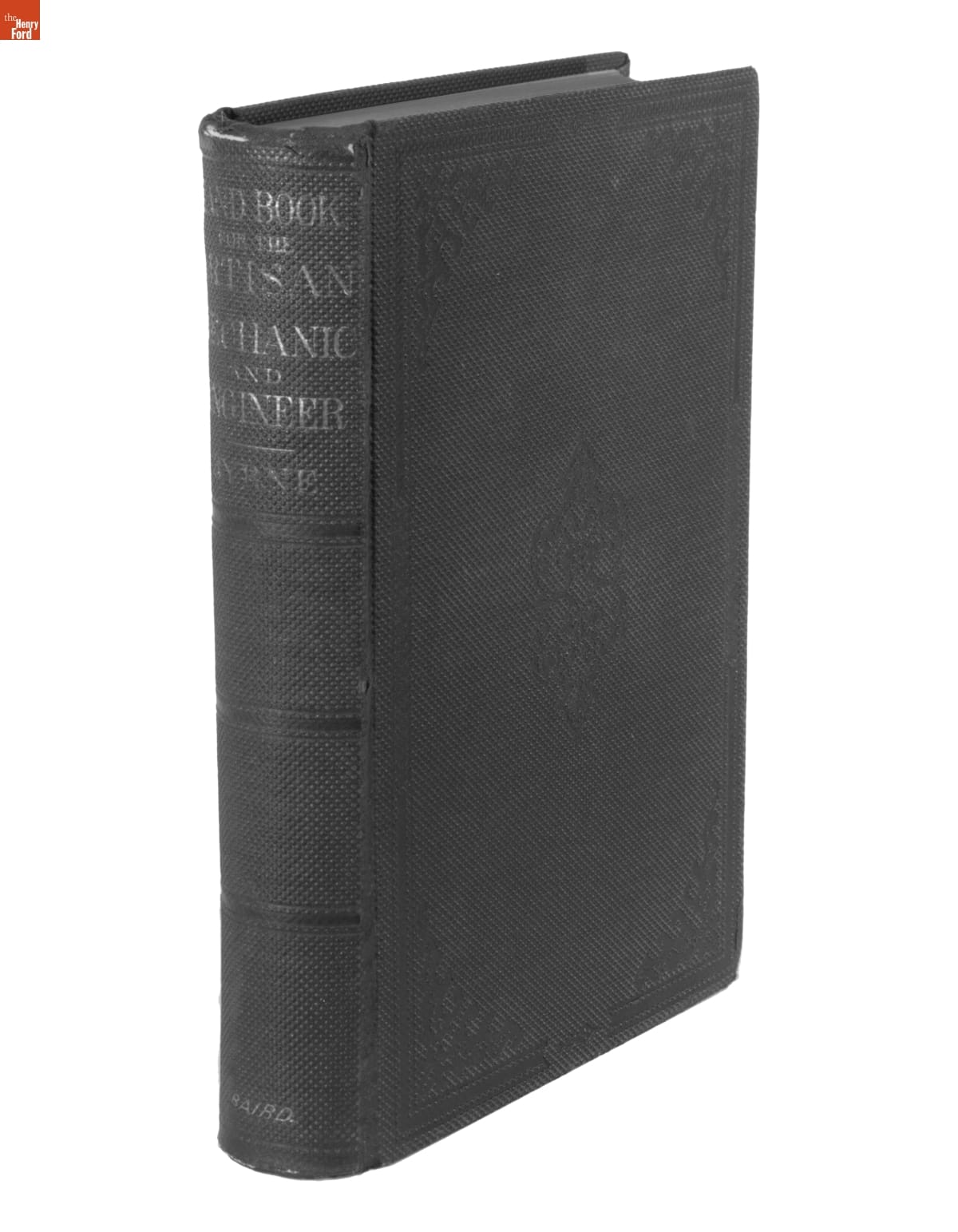
Handbook for the Artisan, Mechanic, and Engineer, 1870
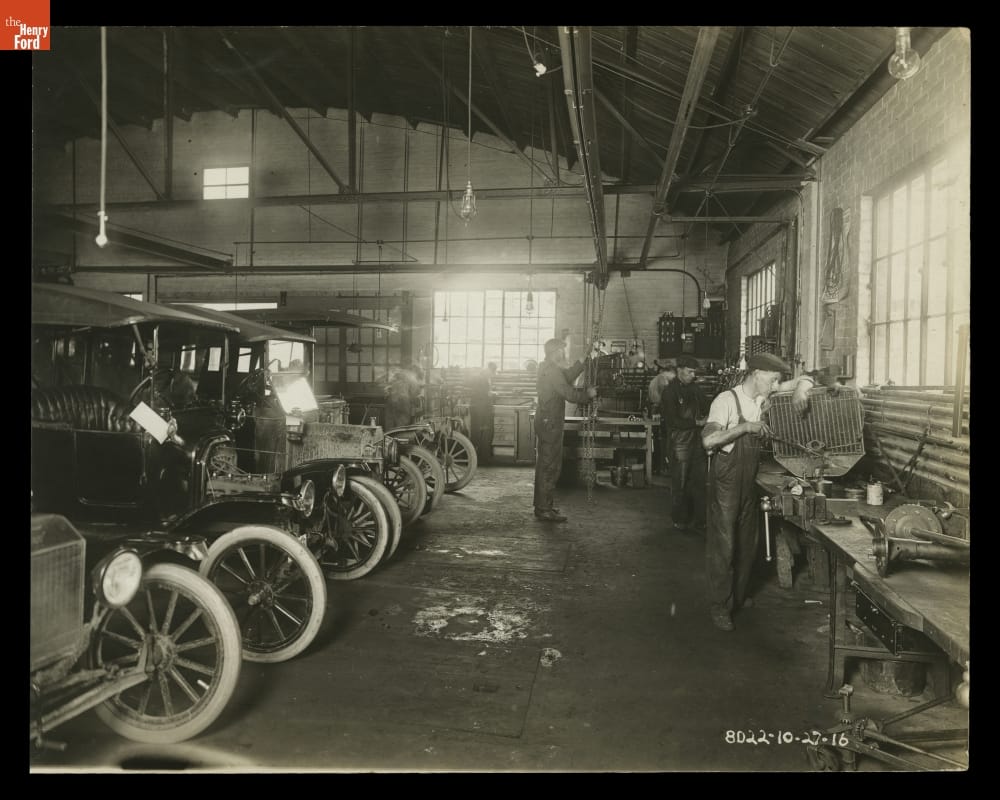
- Mechanics Working in Ford Service Garage, View Showing Overhead Monorail and Repair Bench, Pontiac, Michigan, 1916 -
- October 27, 1916
- Collections - Artifact
Mechanics Working in Ford Service Garage, View Showing Overhead Monorail and Repair Bench, Pontiac, Michigan, 1916
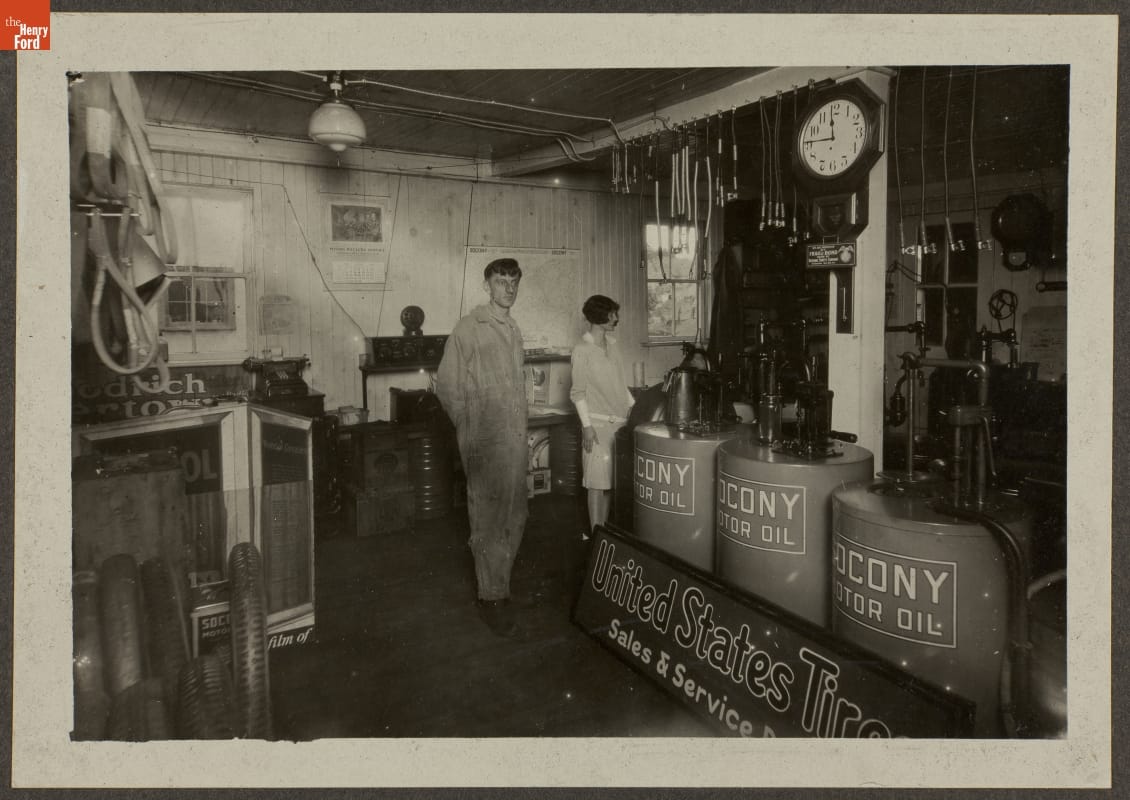
- Interior of a Socony Service Station, 1929 - By the late 1920s, gas stations were fixtures in the American landscape. As the market became more crowded, gas itself was priced competitively, while stations made money on the "TBA" trinity of tires, batteries, and accessories. This interior shot of a Socony (Standard Oil Company of New York) station service bay is typical, featuring oil, tires, belts, and a radio.
- June 01, 1929
- Collections - Artifact
Interior of a Socony Service Station, 1929
By the late 1920s, gas stations were fixtures in the American landscape. As the market became more crowded, gas itself was priced competitively, while stations made money on the "TBA" trinity of tires, batteries, and accessories. This interior shot of a Socony (Standard Oil Company of New York) station service bay is typical, featuring oil, tires, belts, and a radio.
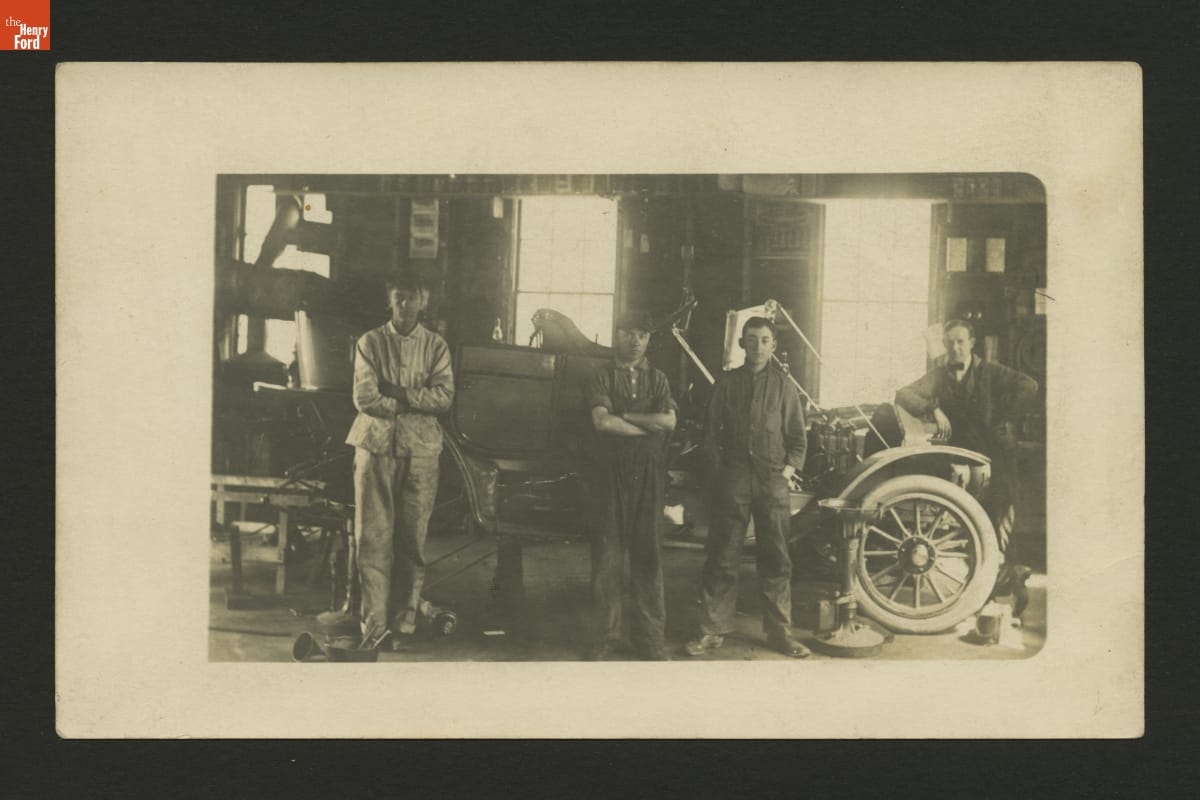
- Mechanics in a Car Repair Shop, circa 1910 - Early automobiles needed lots of routine maintenance and broke down fairly often. Many owners turned their cars over to eager young mechanics attracted to this new technology. Some nervous car owners probably asked themselves, "Can I trust my expensive automobile to these kids?"
- circa 1910
- Collections - Artifact
Mechanics in a Car Repair Shop, circa 1910
Early automobiles needed lots of routine maintenance and broke down fairly often. Many owners turned their cars over to eager young mechanics attracted to this new technology. Some nervous car owners probably asked themselves, "Can I trust my expensive automobile to these kids?"
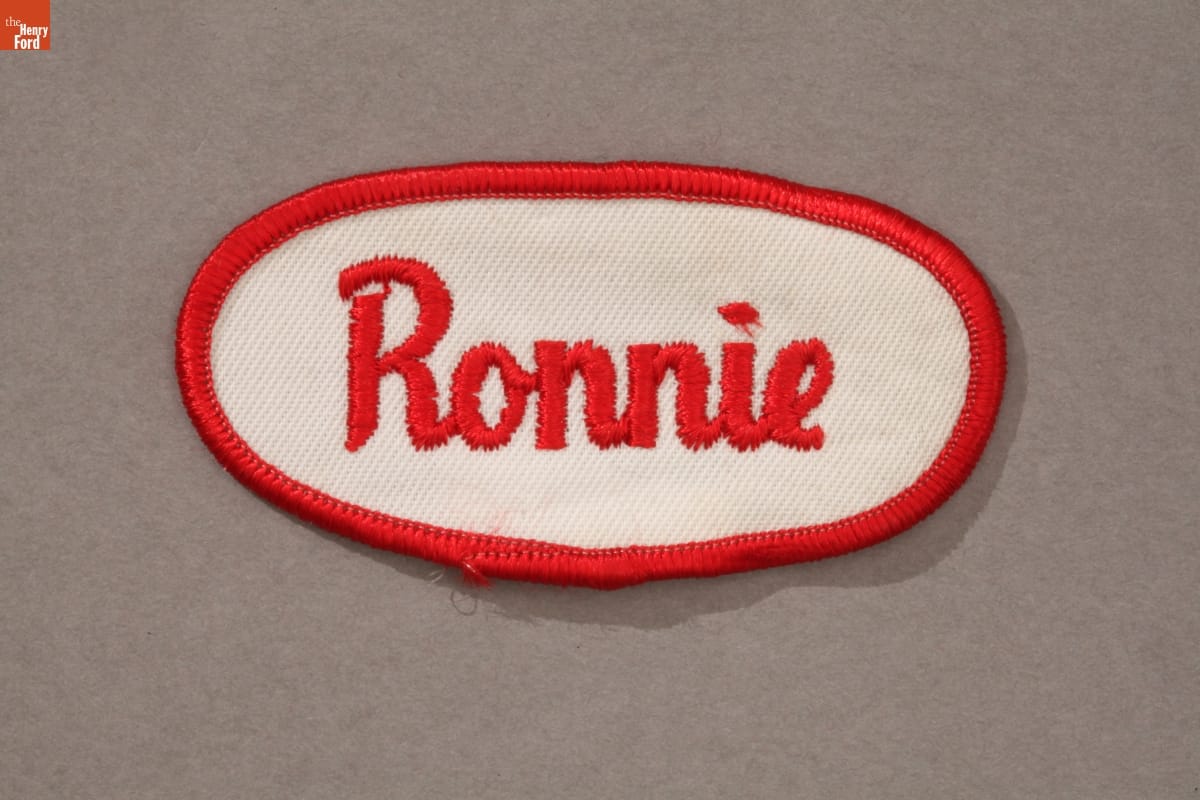
- Uniform Name Patch, 1958-1973 - A skilled -- and trusted -- mechanic readily found fans among car owners, who enthusiastically recommended him to family and friends. Customers marveled at seasoned mechanics who could diagnose a problem by the sound of the engine, the smell of gas-fouled plugs, or the pattern of wear on visible parts.
- 1958-1973
- Collections - Artifact
Uniform Name Patch, 1958-1973
A skilled -- and trusted -- mechanic readily found fans among car owners, who enthusiastically recommended him to family and friends. Customers marveled at seasoned mechanics who could diagnose a problem by the sound of the engine, the smell of gas-fouled plugs, or the pattern of wear on visible parts.
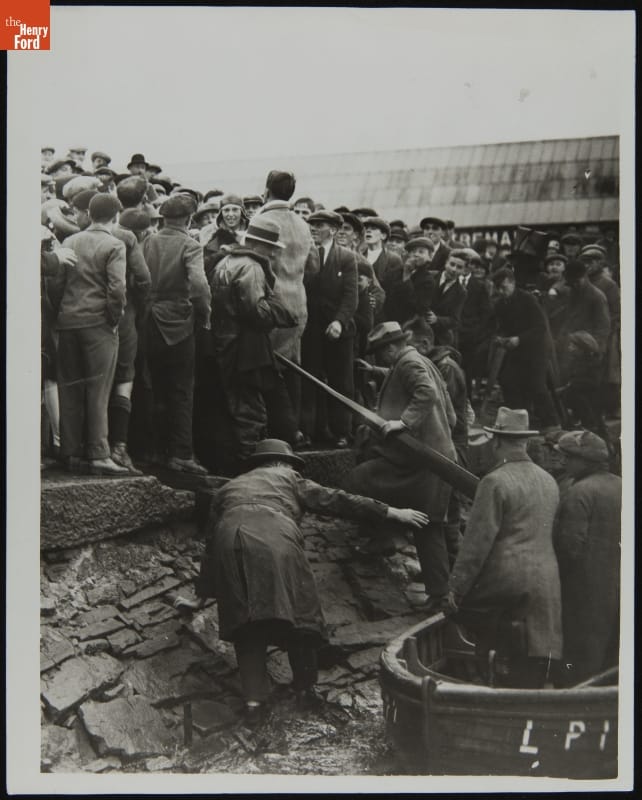
- Amelia Earhart and the "Friendship" Crew at Burry Port after the Transatlantic Flight, June 18, 1928 - Amelia Earhart and her <EM>Friendship</EM> crewmates, Wilmer Stultz and Louis Gordon, had intended to fly from Newfoundland to Southampton, England, in June 1928. Instead, they landed off Burry Port, Wales. It did not matter. When the trio came ashore, some 2,000 people -- nearly the entire population of Burry Port -- came out to see the woman who had conquered the Atlantic Ocean.
- June 18, 1928
- Collections - Artifact
Amelia Earhart and the "Friendship" Crew at Burry Port after the Transatlantic Flight, June 18, 1928
Amelia Earhart and her Friendship crewmates, Wilmer Stultz and Louis Gordon, had intended to fly from Newfoundland to Southampton, England, in June 1928. Instead, they landed off Burry Port, Wales. It did not matter. When the trio came ashore, some 2,000 people -- nearly the entire population of Burry Port -- came out to see the woman who had conquered the Atlantic Ocean.
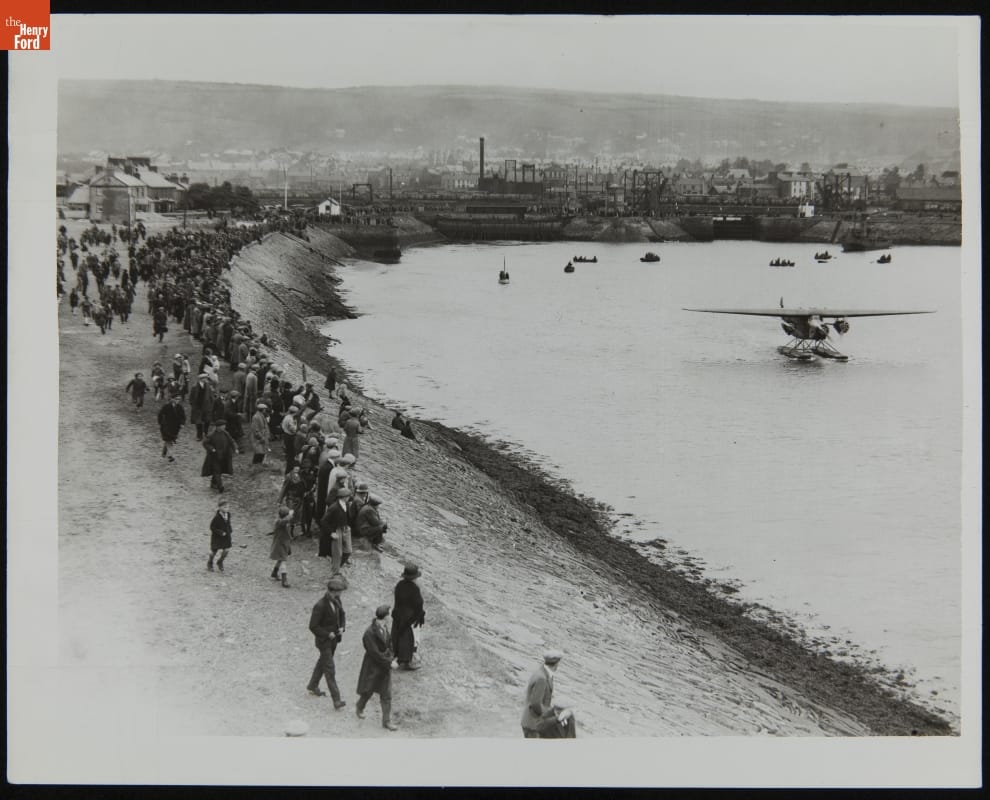
- Amelia Earhart and the "Friendship" Crew Leaving Burry Port for Southampton, June 19, 1928 - When Amelia Earhart, Wilmer Stultz and Louis Gordon left Newfoundland on their transatlantic flight in June 1928, their intended destination was Southampton, England. Instead, they landed at Burry Port, Wales, 135 miles away. After a night's rest, they flew on to Southampton. Earhart, who never touched the controls over the Atlantic, got her chance to pilot the <EM>Friendship</EM> on this last leg.
- June 19, 1928
- Collections - Artifact
Amelia Earhart and the "Friendship" Crew Leaving Burry Port for Southampton, June 19, 1928
When Amelia Earhart, Wilmer Stultz and Louis Gordon left Newfoundland on their transatlantic flight in June 1928, their intended destination was Southampton, England. Instead, they landed at Burry Port, Wales, 135 miles away. After a night's rest, they flew on to Southampton. Earhart, who never touched the controls over the Atlantic, got her chance to pilot the Friendship on this last leg.
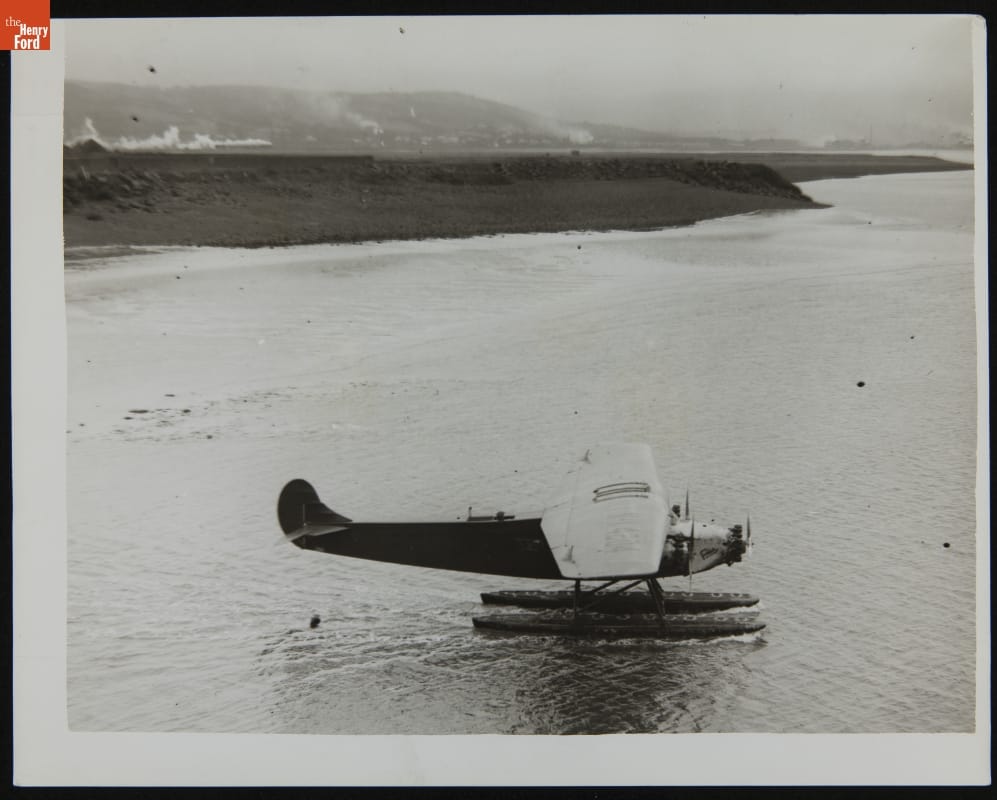
- Amelia Earhart and the "Friendship" Crew Leaving Burry Port for Southampton, June 19, 1928 - In June 1928 Amelia Earhart became the first woman to fly across the Atlantic Ocean, but largely as a passenger. Wilmer Stultz and Louis Gordon did the actual piloting. The trio made their crossing in a Fokker F.VII Tri-Motor named <EM>Friendship</EM>. Their successful flight took them from Trepassey Harbour, Newfoundland, to Burry Port, Wales, in 20 hours and 40 minutes.
- June 19, 1928
- Collections - Artifact
Amelia Earhart and the "Friendship" Crew Leaving Burry Port for Southampton, June 19, 1928
In June 1928 Amelia Earhart became the first woman to fly across the Atlantic Ocean, but largely as a passenger. Wilmer Stultz and Louis Gordon did the actual piloting. The trio made their crossing in a Fokker F.VII Tri-Motor named Friendship. Their successful flight took them from Trepassey Harbour, Newfoundland, to Burry Port, Wales, in 20 hours and 40 minutes.