
Search
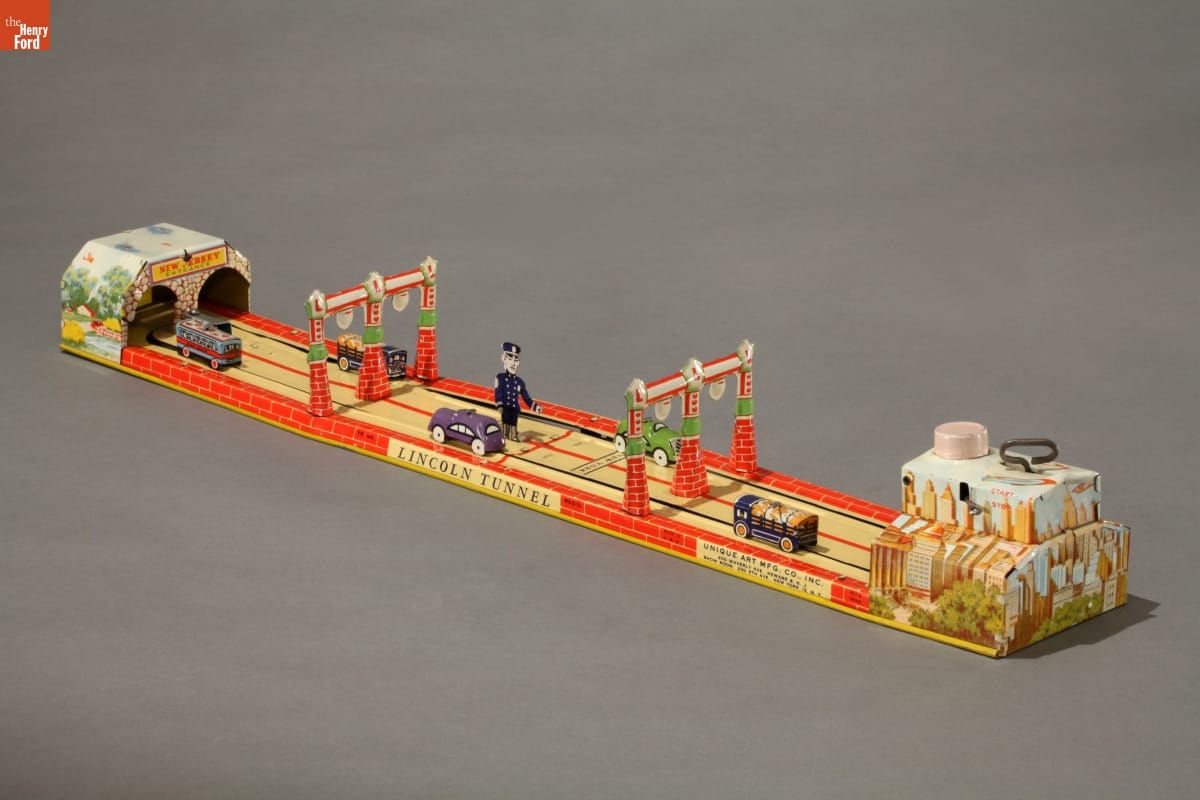
- Lincoln Tunnel Mechanical Toy, 1925-1940 - This lithographed, pressed metal toy by Unique Art Manufacturing Company, Inc., has vehicles traveling in and out of the Lincoln Tunnel. Cars enter either through rural New Jersey or urban New York. The Lincoln Tunnel opened in 1937 and runs under the Hudson River between New Jersey and Manhattan.
- 1925-1940
- Collections - Artifact
Lincoln Tunnel Mechanical Toy, 1925-1940
This lithographed, pressed metal toy by Unique Art Manufacturing Company, Inc., has vehicles traveling in and out of the Lincoln Tunnel. Cars enter either through rural New Jersey or urban New York. The Lincoln Tunnel opened in 1937 and runs under the Hudson River between New Jersey and Manhattan.
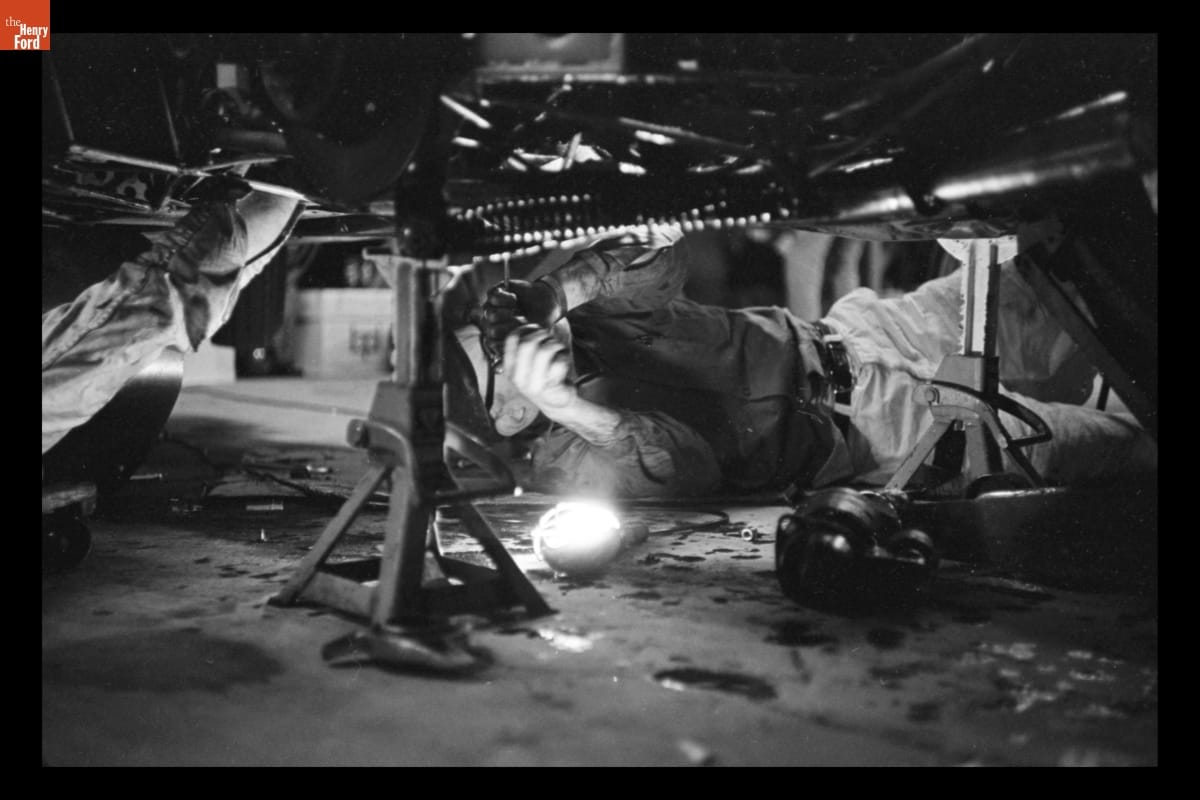
- Mechanic Working on Shelby Cobra Daytona Coupe at the Daytona Continental 2000 km Race, February 1965 - Carroll Shelby's Shelby American racing team entered six cars in the 1965 Daytona Continental 2000-Kilometer Race. Of those six cars, four -- two Ford GT40s and two Shelby Cobra Daytona Coupes -- finished in the top five positions. The overall victory went to the team's #73 GT40 driven by Ken Miles and Lloyd Ruby -- the first win by a GT40 anywhere.
- February 28, 1965
- Collections - Artifact
Mechanic Working on Shelby Cobra Daytona Coupe at the Daytona Continental 2000 km Race, February 1965
Carroll Shelby's Shelby American racing team entered six cars in the 1965 Daytona Continental 2000-Kilometer Race. Of those six cars, four -- two Ford GT40s and two Shelby Cobra Daytona Coupes -- finished in the top five positions. The overall victory went to the team's #73 GT40 driven by Ken Miles and Lloyd Ruby -- the first win by a GT40 anywhere.
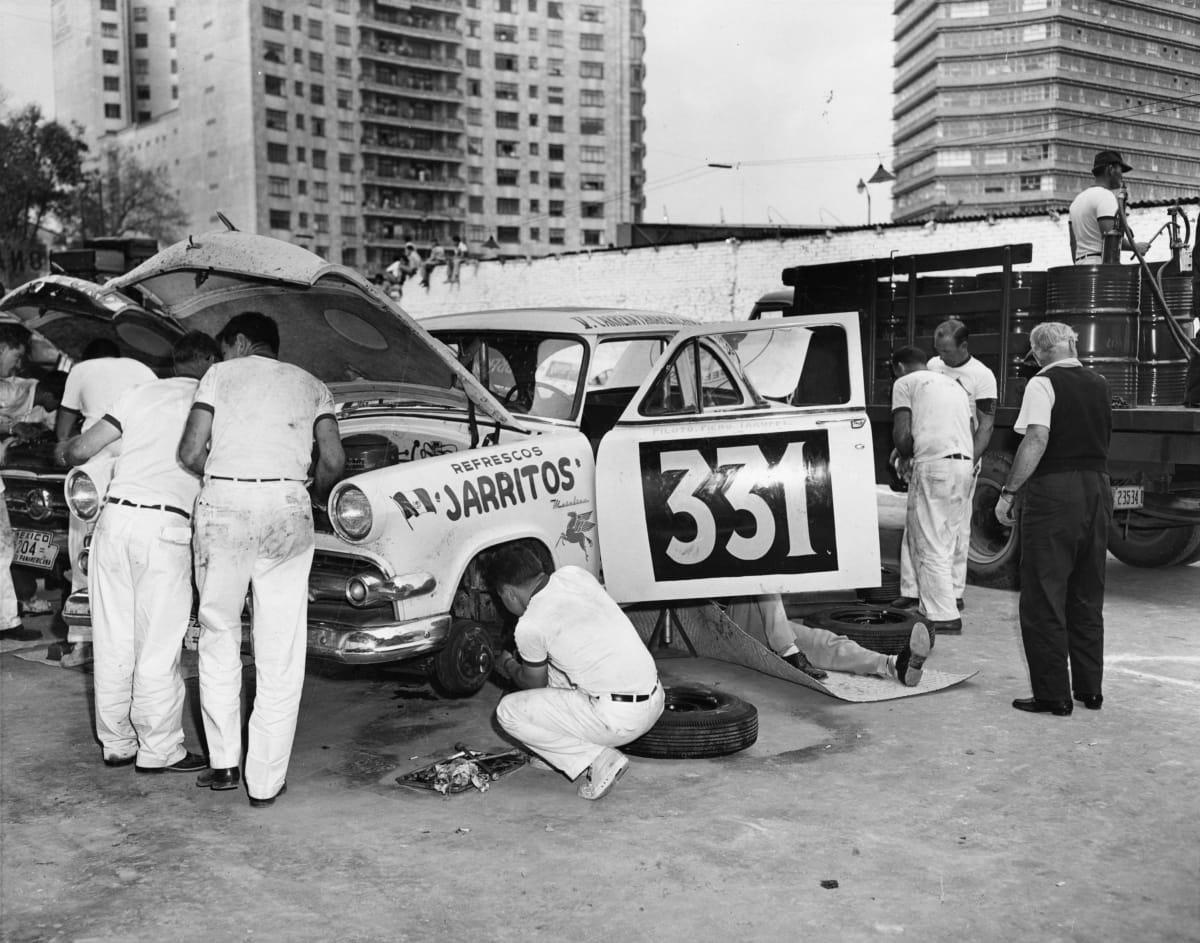
- Mechanics Working on Race Car during the La Carrera Panamericana (Mexican Road Race), 1954 - La Carrera Panamericana is known famously in motorsports as a long and difficult race that often led to the deaths of many competitors, spectators, and safety personnel. It was important for racing teams and their mechanics to constantly inspect and maintain their vehicles to reduce the dangers of mechanical failure or miscalculation of racing physics.
- November 01, 1954
- Collections - Artifact
Mechanics Working on Race Car during the La Carrera Panamericana (Mexican Road Race), 1954
La Carrera Panamericana is known famously in motorsports as a long and difficult race that often led to the deaths of many competitors, spectators, and safety personnel. It was important for racing teams and their mechanics to constantly inspect and maintain their vehicles to reduce the dangers of mechanical failure or miscalculation of racing physics.
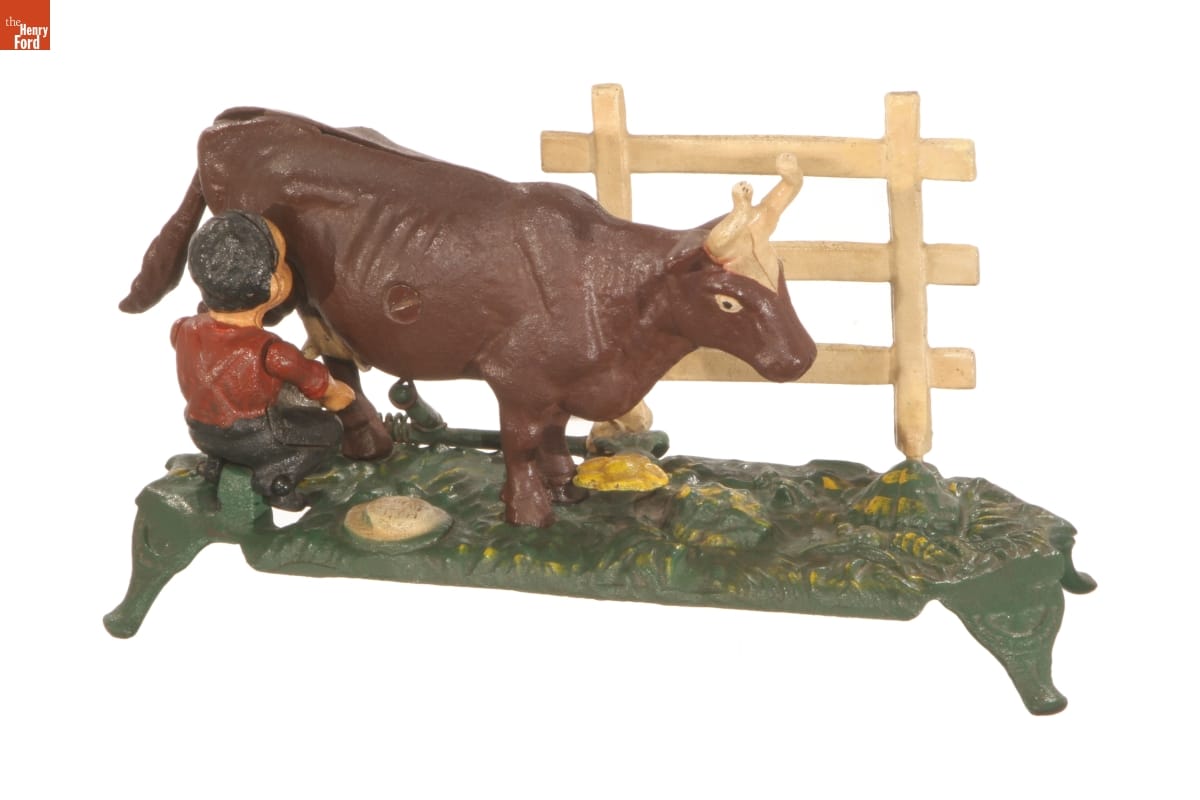
- Kicking Cow Bank, 1950-1965 - Saving money can be fun. Beginning in the late 1800s, families could purchase mechanical banks. These banks used ingenious mechanisms to deposit money. This mid-twentieth-century reproduction depicts a man milking a cow. When the saver deposits a coin, the cow kicks -- a real hazard if the animal was treated roughly -- and the man tumbles backwards.
- 1950-1965
- Collections - Artifact
Kicking Cow Bank, 1950-1965
Saving money can be fun. Beginning in the late 1800s, families could purchase mechanical banks. These banks used ingenious mechanisms to deposit money. This mid-twentieth-century reproduction depicts a man milking a cow. When the saver deposits a coin, the cow kicks -- a real hazard if the animal was treated roughly -- and the man tumbles backwards.
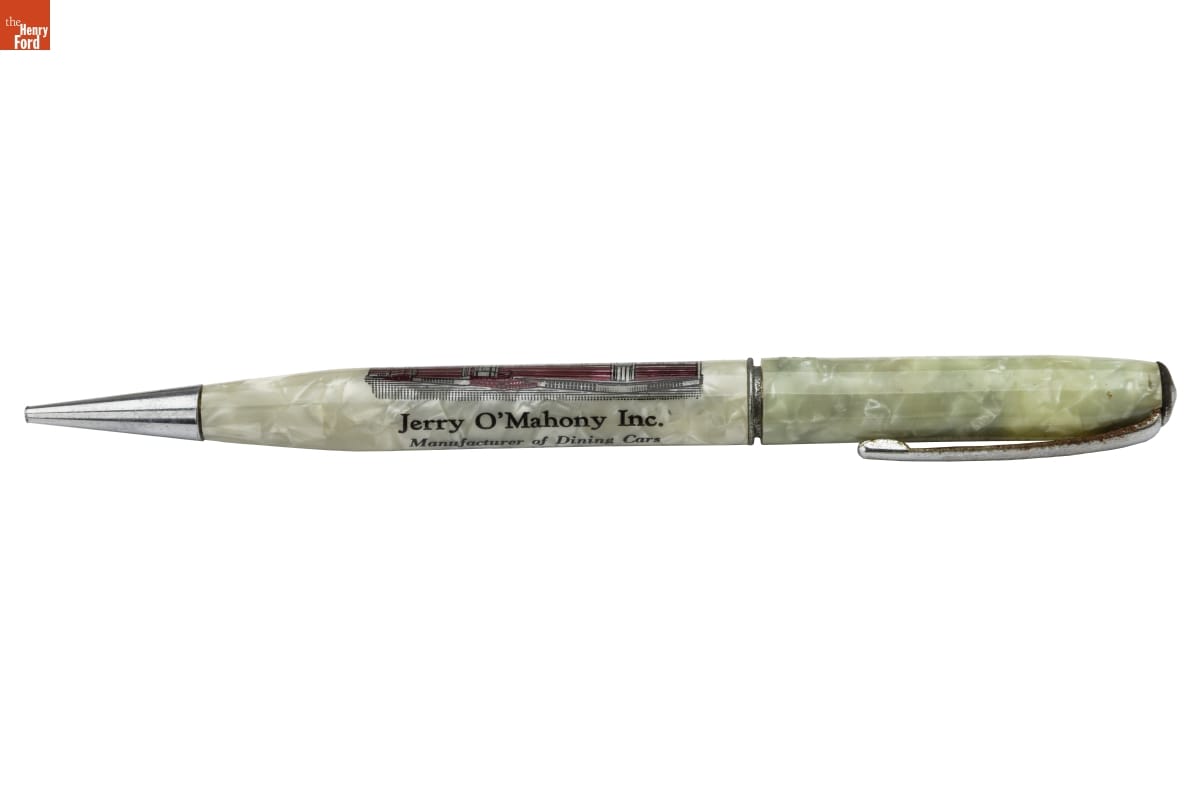
- "Jerry O'Mahony, Inc." Mechanical Pencil, 1945-1949 -
- 1945-1949
- Collections - Artifact
"Jerry O'Mahony, Inc." Mechanical Pencil, 1945-1949
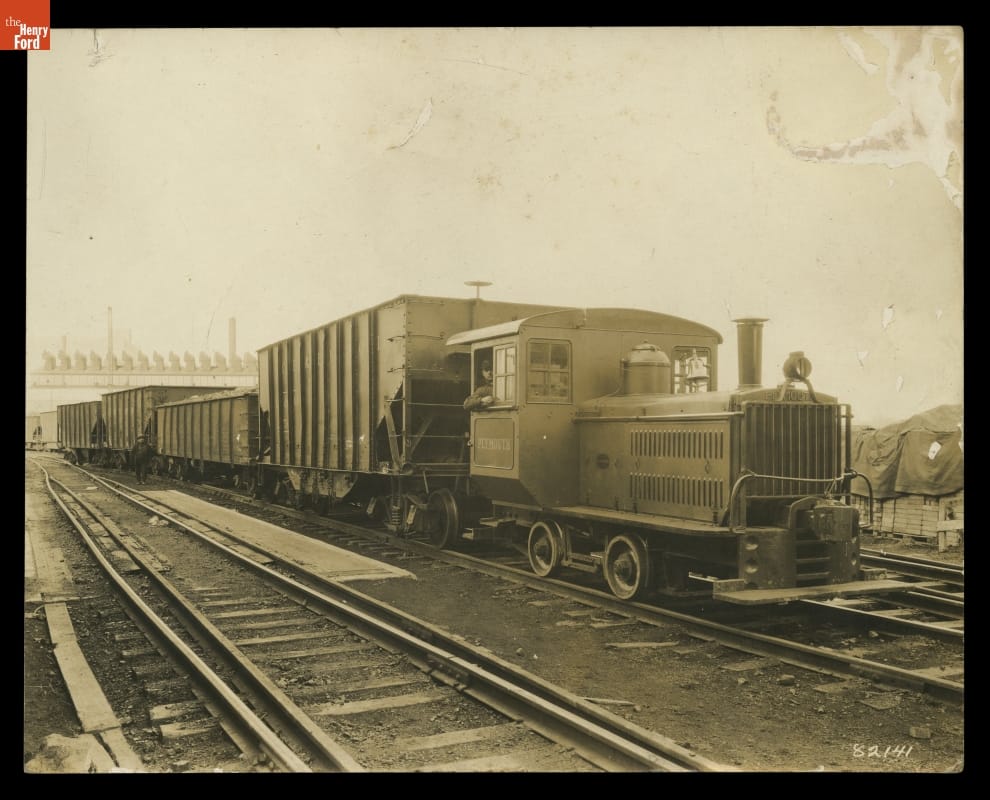
- Engineer Charles Vaughn in Plymouth Locomotive at Mistersky Power Plant, West Jefferson Avenue, Detroit, Michigan, circa 1930 - Engineer Charles Vaughn shuttles carloads of coal at Detroit's Mistersky Power Plant around 1930. The gasoline-powered Plymouth locomotive did not require the coal and water used by steam engines, and it could be operated by one person. The locomotive's light weight and simple operation made it ideal for small industrial railroads. This engine joined The Henry Ford's collection in 1979.
- circa 1930
- Collections - Artifact
Engineer Charles Vaughn in Plymouth Locomotive at Mistersky Power Plant, West Jefferson Avenue, Detroit, Michigan, circa 1930
Engineer Charles Vaughn shuttles carloads of coal at Detroit's Mistersky Power Plant around 1930. The gasoline-powered Plymouth locomotive did not require the coal and water used by steam engines, and it could be operated by one person. The locomotive's light weight and simple operation made it ideal for small industrial railroads. This engine joined The Henry Ford's collection in 1979.
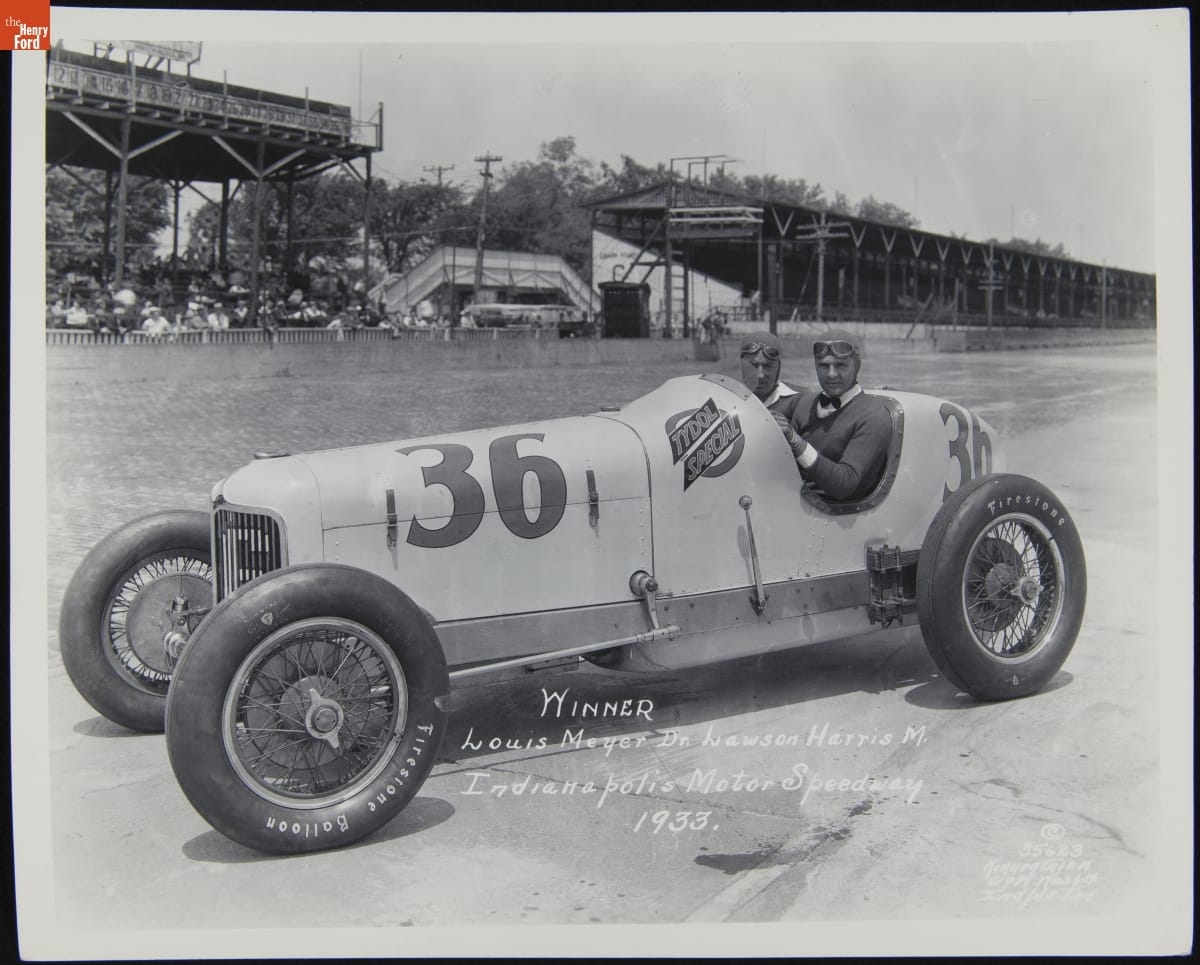
- Winners of the 1933 Indianapolis 500, Driver Louis Meyer and Mechanic Lawson Harris, in #36 Tydol Special - Driver Louis Meyer and riding mechanic Lawson Harris won the Indianapolis 500 in 1933, averaging 104.162 mph. Their Miller-built car was sponsored by Tydol gasoline. It was the second of Meyer's three Indy 500 victories. Meyer is also credited with starting the Indy tradition of drinking milk in Victory Lane -- he downed a glass of buttermilk after his 1936 win.
- 1933
- Collections - Artifact
Winners of the 1933 Indianapolis 500, Driver Louis Meyer and Mechanic Lawson Harris, in #36 Tydol Special
Driver Louis Meyer and riding mechanic Lawson Harris won the Indianapolis 500 in 1933, averaging 104.162 mph. Their Miller-built car was sponsored by Tydol gasoline. It was the second of Meyer's three Indy 500 victories. Meyer is also credited with starting the Indy tradition of drinking milk in Victory Lane -- he downed a glass of buttermilk after his 1936 win.
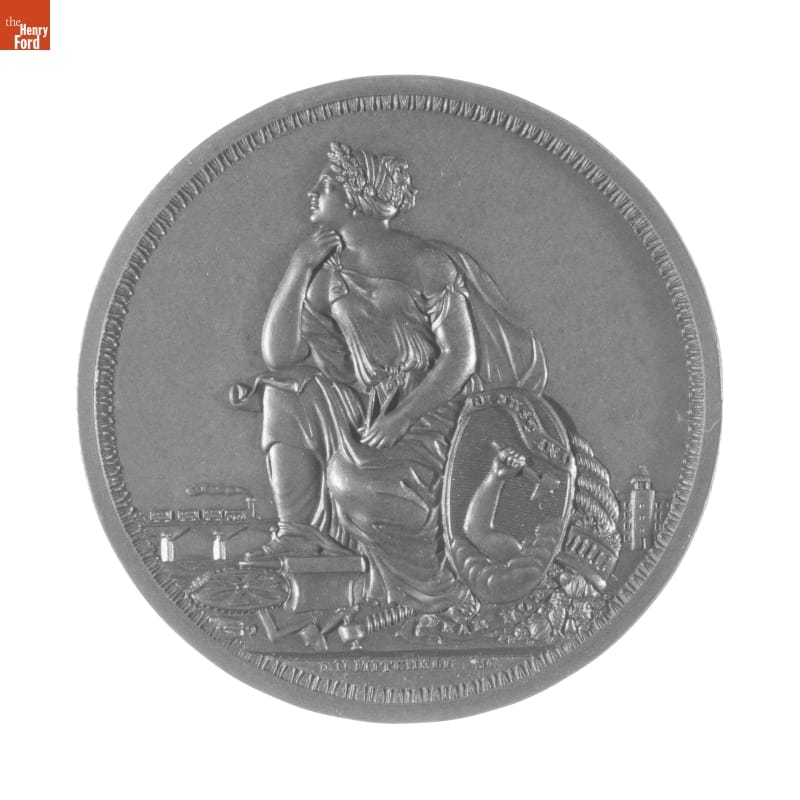
- Massachusetts Charitable Mechanic Association Medal Awarded to "Jeffers & Hill for Recumbent Chair," 1856 - Nineteenth-century mechanics' societies and business associations promoted technological ingenuity by sponsoring fairs and competitions. Officials awarded medals, certificates, and other premiums to exhibitors whose products were deemed worthy of merit. The Massachusetts Charitable Mechanic Association presented this medal to the firm of Jeffers and Hill for a "recumbent chair."
- 1856
- Collections - Artifact
Massachusetts Charitable Mechanic Association Medal Awarded to "Jeffers & Hill for Recumbent Chair," 1856
Nineteenth-century mechanics' societies and business associations promoted technological ingenuity by sponsoring fairs and competitions. Officials awarded medals, certificates, and other premiums to exhibitors whose products were deemed worthy of merit. The Massachusetts Charitable Mechanic Association presented this medal to the firm of Jeffers and Hill for a "recumbent chair."
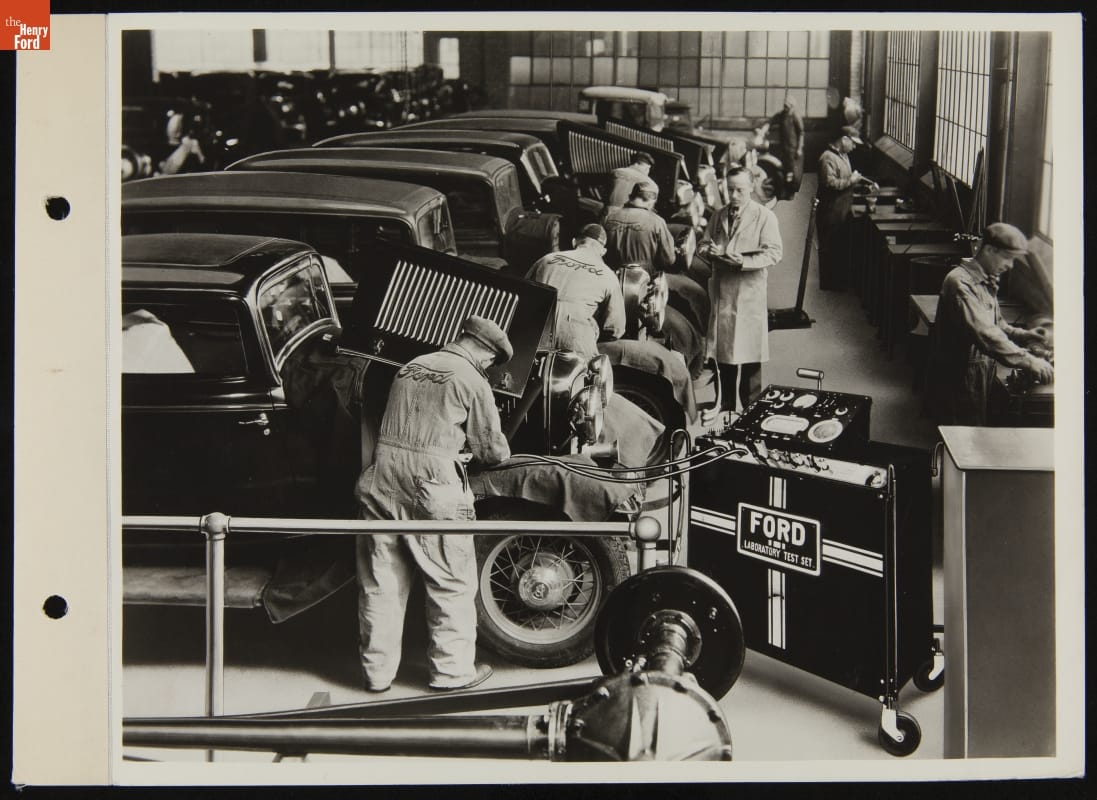
- Attendants Using Laboratory Test Sets at Southwestern Motor Sales, Lincoln Park, Michigan, September 1934 - In the mid-1930s, Ford Motor Company produced the affordable Ford Laboratory Test Set. Automobile mechanics rolled this portable diagnostic equipment to the vehicle, hooked up the unit, and checked the condition of the vehicle's engine or electrical performance. The unit detected problems quickly and eliminated guesswork -- saving time and money for both the customer and dealership.
- September 24, 1934
- Collections - Artifact
Attendants Using Laboratory Test Sets at Southwestern Motor Sales, Lincoln Park, Michigan, September 1934
In the mid-1930s, Ford Motor Company produced the affordable Ford Laboratory Test Set. Automobile mechanics rolled this portable diagnostic equipment to the vehicle, hooked up the unit, and checked the condition of the vehicle's engine or electrical performance. The unit detected problems quickly and eliminated guesswork -- saving time and money for both the customer and dealership.
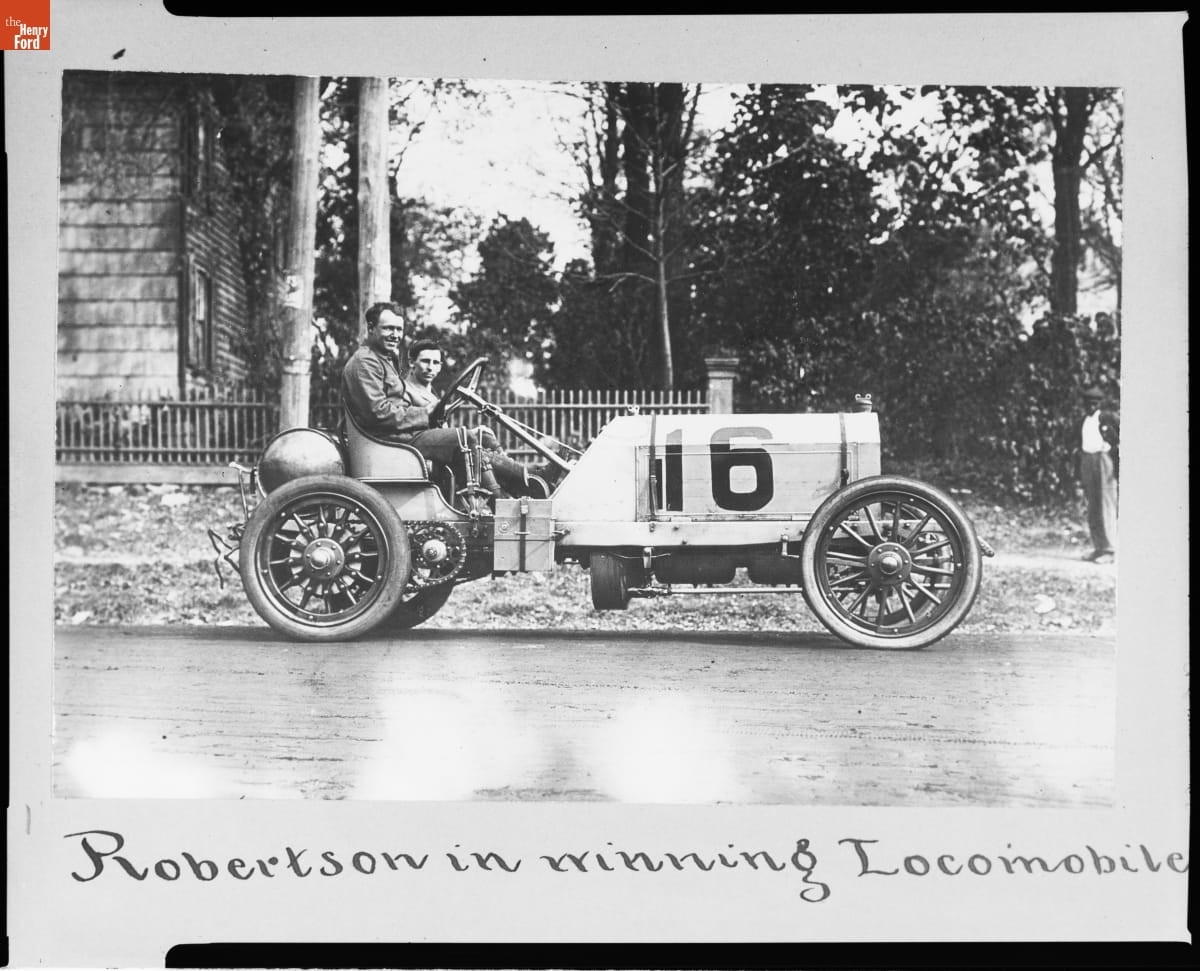
- George Robertson in the Winning Locomobile #16 at the 1908 Vanderbilt Cup Race - Driver George Robertson and riding mechanic Glenn Ethridge won the 1908 Vanderbilt Cup with a 1906 Locomobile. It was the first American-built car to win America's first great automobile race. The Locomobile competed while wearing number 16, and it's been known as "Old 16" ever since.
- October 24, 1908
- Collections - Artifact
George Robertson in the Winning Locomobile #16 at the 1908 Vanderbilt Cup Race
Driver George Robertson and riding mechanic Glenn Ethridge won the 1908 Vanderbilt Cup with a 1906 Locomobile. It was the first American-built car to win America's first great automobile race. The Locomobile competed while wearing number 16, and it's been known as "Old 16" ever since.