
Search
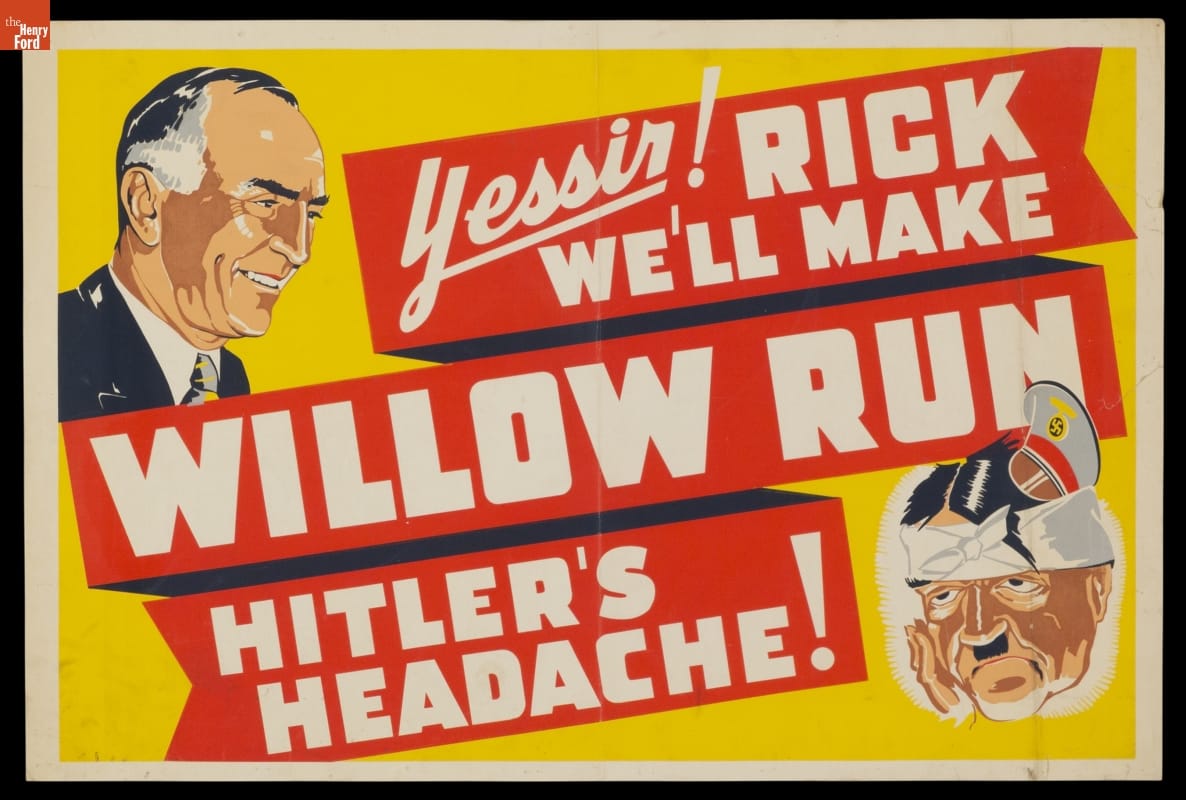
- World War II Poster, "Yessir! Rick We'll Make Willow Run Hitler's Headache!," circa 1943 - The people of Ford Motor Company's Willow Run plant felt -- justifiably -- that their efforts were crucial to Allied victory in World War II. The B-24 Liberator airplanes they built formed the backbone of the Allies' strategic bombing campaign against Germany. Posters like this reinforced the idea that the harder Willow Run's employees worked, the weaker the enemy became.
- circa 1943
- Collections - Artifact
World War II Poster, "Yessir! Rick We'll Make Willow Run Hitler's Headache!," circa 1943
The people of Ford Motor Company's Willow Run plant felt -- justifiably -- that their efforts were crucial to Allied victory in World War II. The B-24 Liberator airplanes they built formed the backbone of the Allies' strategic bombing campaign against Germany. Posters like this reinforced the idea that the harder Willow Run's employees worked, the weaker the enemy became.
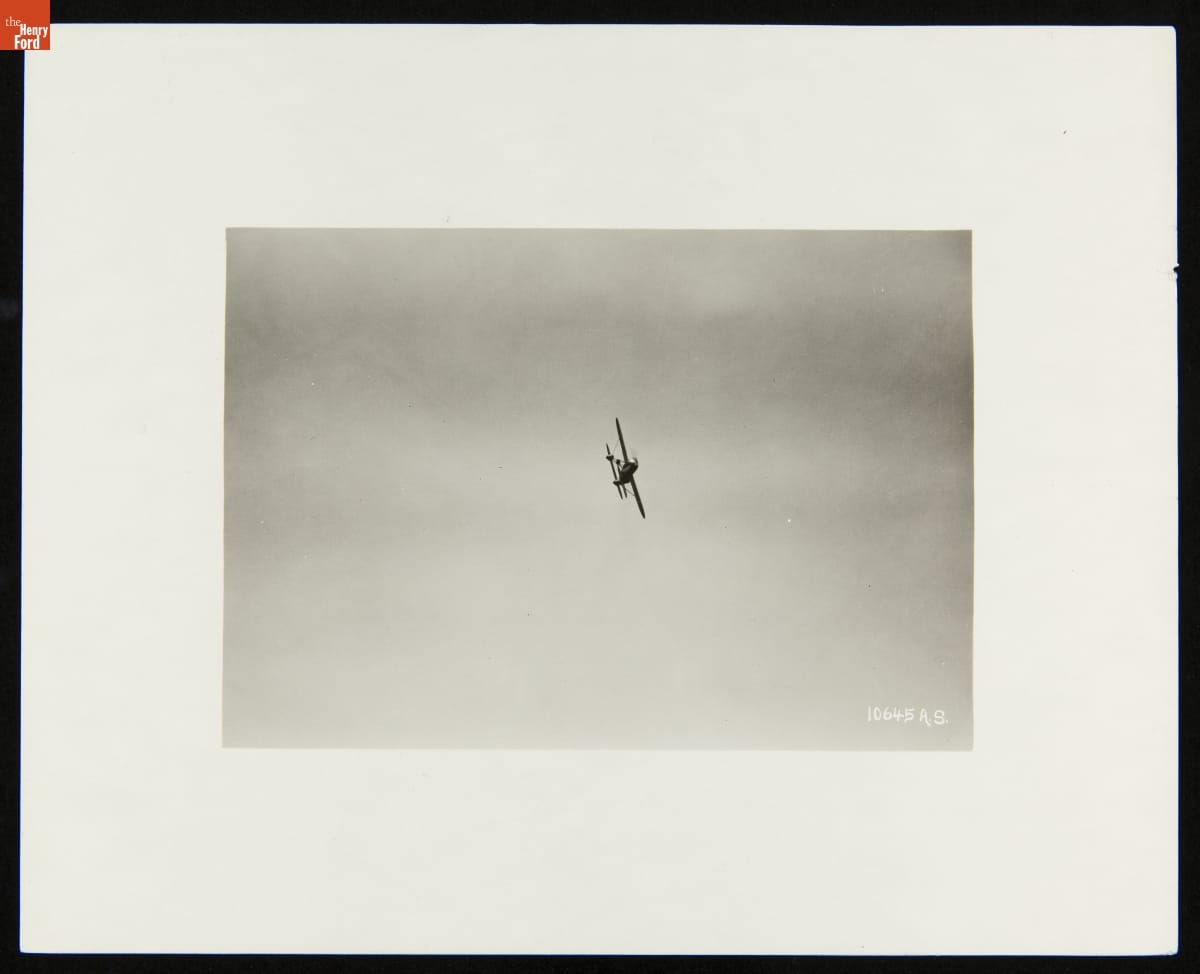
- Lieutenant Russell L. Maughan in a Navy Aircraft, Rounding the Pylon, Pulitzer Air Race, October 14, 1922 - Air races provided pilots and manufacturers with an opportunity to test new technologies and show them off to enthusiastic audiences. The annual National Air Races were the premier competition in the United States from the 1920s through the 1940s. Publisher Ralph Pulitzer sponsored the event's top prize. Russell Maughan won the 1922 contest held near Mount Clemens, Michigan.
- October 14, 1922
- Collections - Artifact
Lieutenant Russell L. Maughan in a Navy Aircraft, Rounding the Pylon, Pulitzer Air Race, October 14, 1922
Air races provided pilots and manufacturers with an opportunity to test new technologies and show them off to enthusiastic audiences. The annual National Air Races were the premier competition in the United States from the 1920s through the 1940s. Publisher Ralph Pulitzer sponsored the event's top prize. Russell Maughan won the 1922 contest held near Mount Clemens, Michigan.
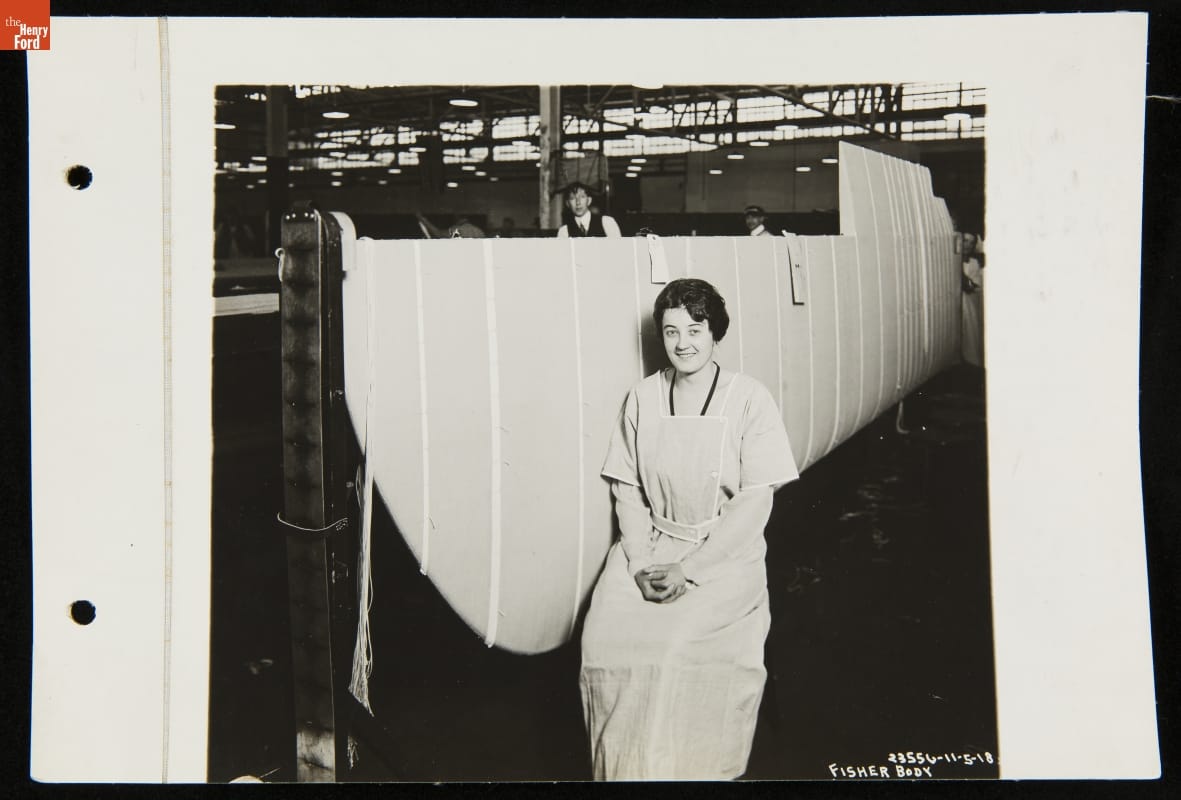
- Worker Sitting Beside Airplane Wing at the Fisher Body Plant, November 4, 1918 - When the United States entered World War I in April 1917, the country had a shortage of combat-ready aircraft. U.S. officials contracted with several manufacturers to build a variant of the British de Havilland DH-4 bomber. Fisher Body Corporation produced 1,600 of these "Liberty Planes." The DH-4 was the only American-built airplane flown in combat during the war.
- November 05, 1918
- Collections - Artifact
Worker Sitting Beside Airplane Wing at the Fisher Body Plant, November 4, 1918
When the United States entered World War I in April 1917, the country had a shortage of combat-ready aircraft. U.S. officials contracted with several manufacturers to build a variant of the British de Havilland DH-4 bomber. Fisher Body Corporation produced 1,600 of these "Liberty Planes." The DH-4 was the only American-built airplane flown in combat during the war.
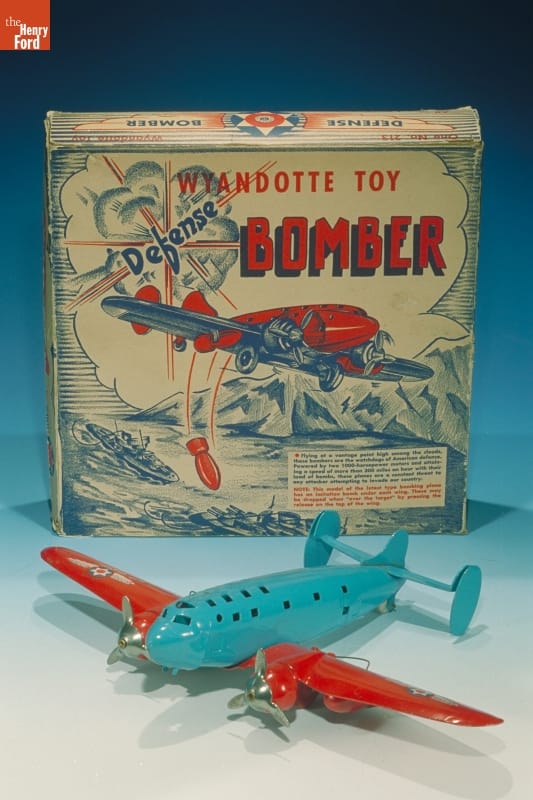
- Toy Bomber, 1948-1950 - Wyandotte Toys began in 1920, and became one of the world's largest producers of toy guns by 1929. During the 1930s and 1940s, the company diversified into other product lines, including toy vehicles, mechanical toys, and military toys.
- 1948-1950
- Collections - Artifact
Toy Bomber, 1948-1950
Wyandotte Toys began in 1920, and became one of the world's largest producers of toy guns by 1929. During the 1930s and 1940s, the company diversified into other product lines, including toy vehicles, mechanical toys, and military toys.
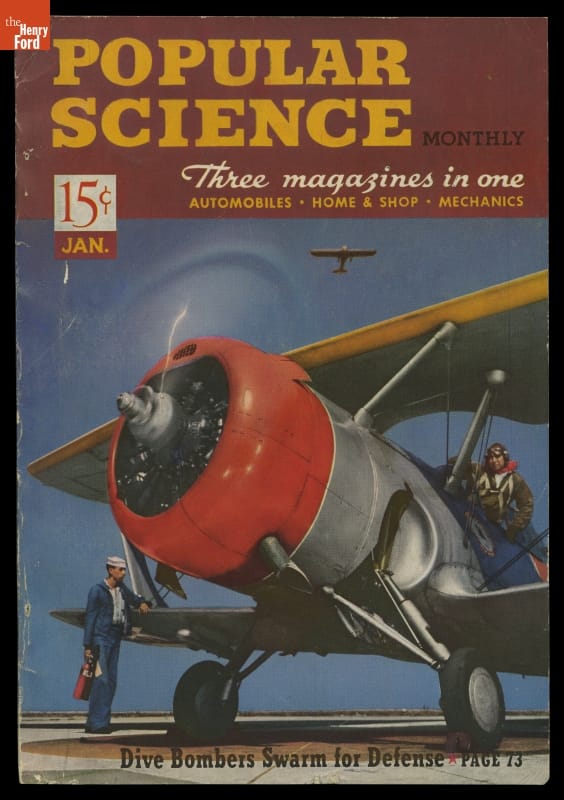
- Popular Science Magazine for January 1941, "Dive Bombers Swarm for Defense" - <em>Popular Science</em> provided coverage of scientific and technological advancements. In typical issues from the late 1930s and early 40s, subscribers could learn about new inventions, plan home workshop projects, receive helpful tips about automobiles, and read other wide-ranging stories. But as America's entry into the Second World War approached, many articles focused on the nation's military and defensive capabilities.
- January 01, 1941
- Collections - Artifact
Popular Science Magazine for January 1941, "Dive Bombers Swarm for Defense"
Popular Science provided coverage of scientific and technological advancements. In typical issues from the late 1930s and early 40s, subscribers could learn about new inventions, plan home workshop projects, receive helpful tips about automobiles, and read other wide-ranging stories. But as America's entry into the Second World War approached, many articles focused on the nation's military and defensive capabilities.
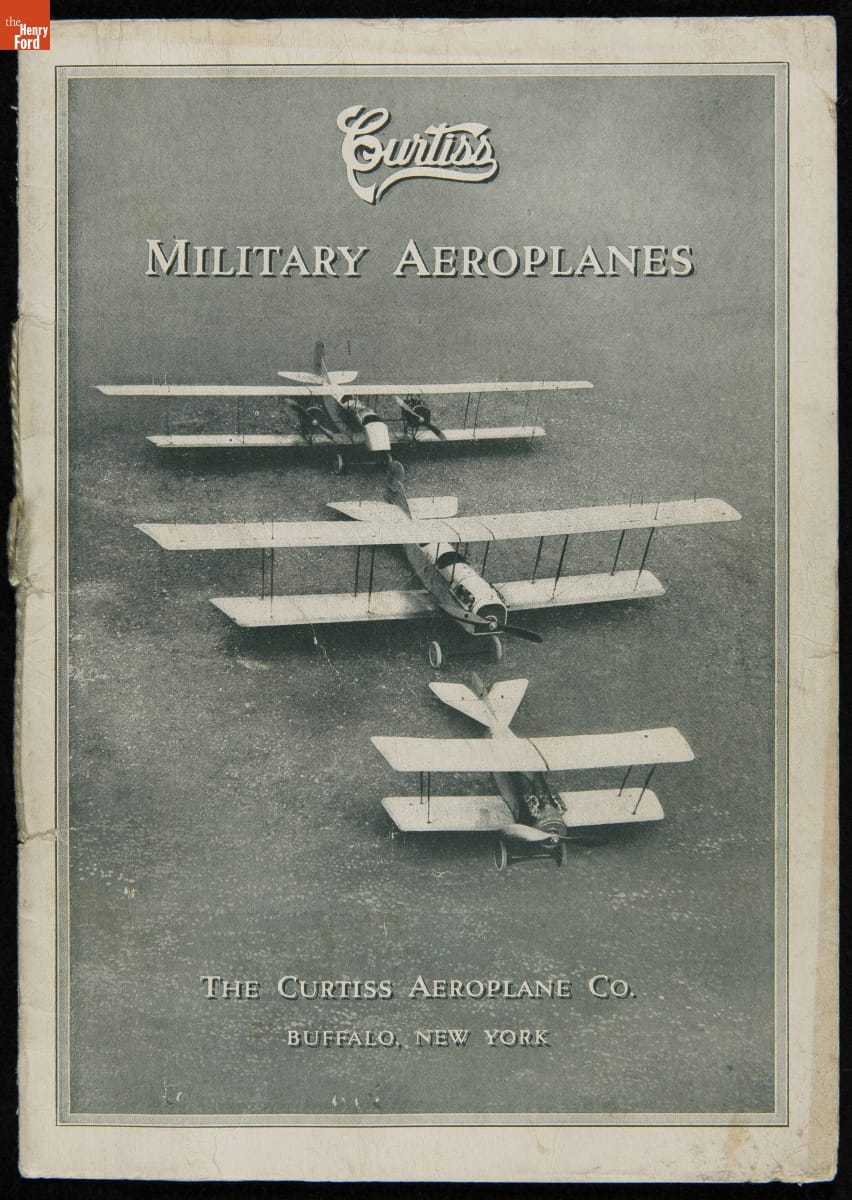
- Curtiss Aeroplane Co. Trade Catalog, "Curtiss Military Aeroplanes," 1916 - Glenn Curtiss established what would become the Curtiss Aeroplane and Motor Company in his hometown of Hammondsport, New York, in 1909. As military orders soared during World War I, Curtiss relocated the company to Buffalo, New York, in 1916. Curtiss's firm was acquired by Willys-Overland the following year, and it merged with the Wright Company in 1929.
- 1916
- Collections - Artifact
Curtiss Aeroplane Co. Trade Catalog, "Curtiss Military Aeroplanes," 1916
Glenn Curtiss established what would become the Curtiss Aeroplane and Motor Company in his hometown of Hammondsport, New York, in 1909. As military orders soared during World War I, Curtiss relocated the company to Buffalo, New York, in 1916. Curtiss's firm was acquired by Willys-Overland the following year, and it merged with the Wright Company in 1929.
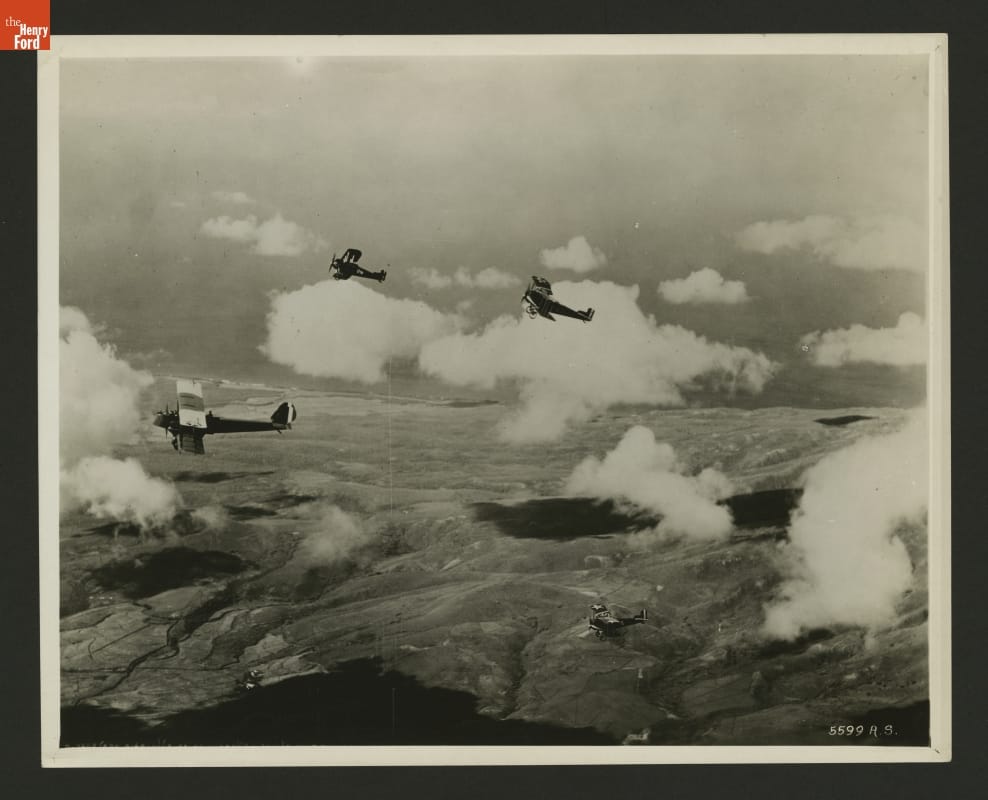
- Pursuit Planes with a Bomber - This United States Army Air Service photograph shows World War I-era pursuit planes attacking a bomber. Active from 1918 until 1926, the Air Service aided the Allied forces during the First World War and was a forerunner of the United States Air Force.
- 1918-1926
- Collections - Artifact
Pursuit Planes with a Bomber
This United States Army Air Service photograph shows World War I-era pursuit planes attacking a bomber. Active from 1918 until 1926, the Air Service aided the Allied forces during the First World War and was a forerunner of the United States Air Force.
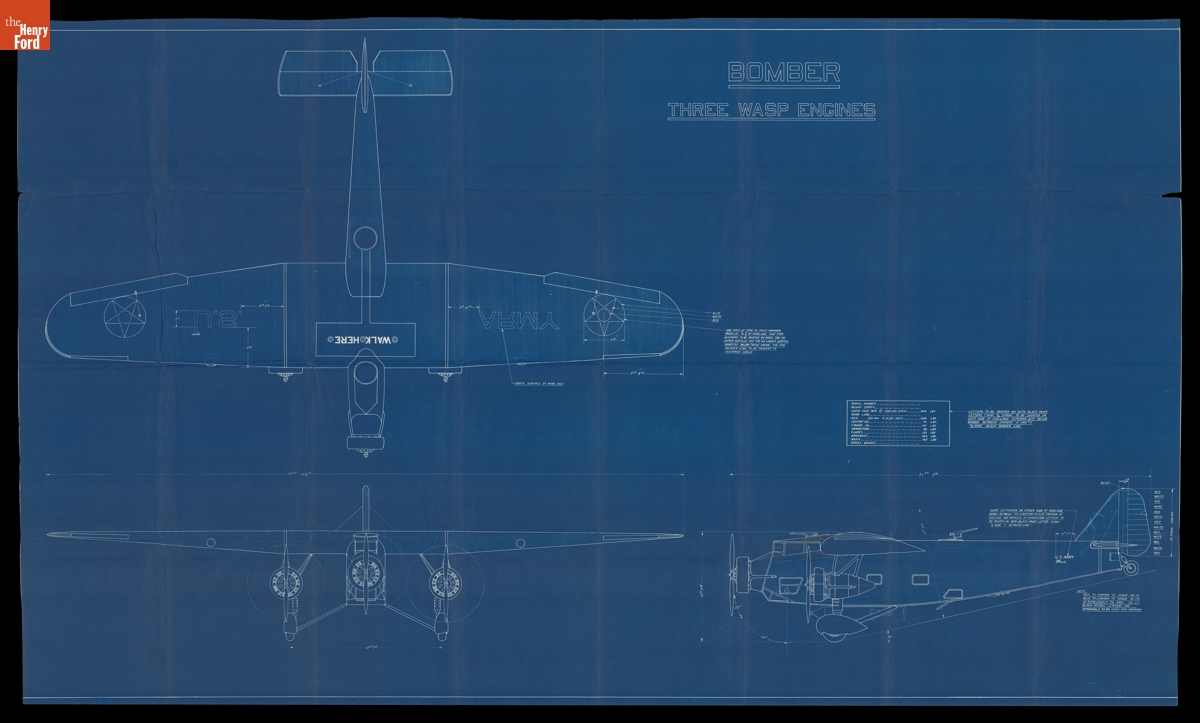
- Drawing, "Three View Assembly," Ford XB-906, May 11, 1931 -
- May 11, 1931
- Collections - Artifact
Drawing, "Three View Assembly," Ford XB-906, May 11, 1931
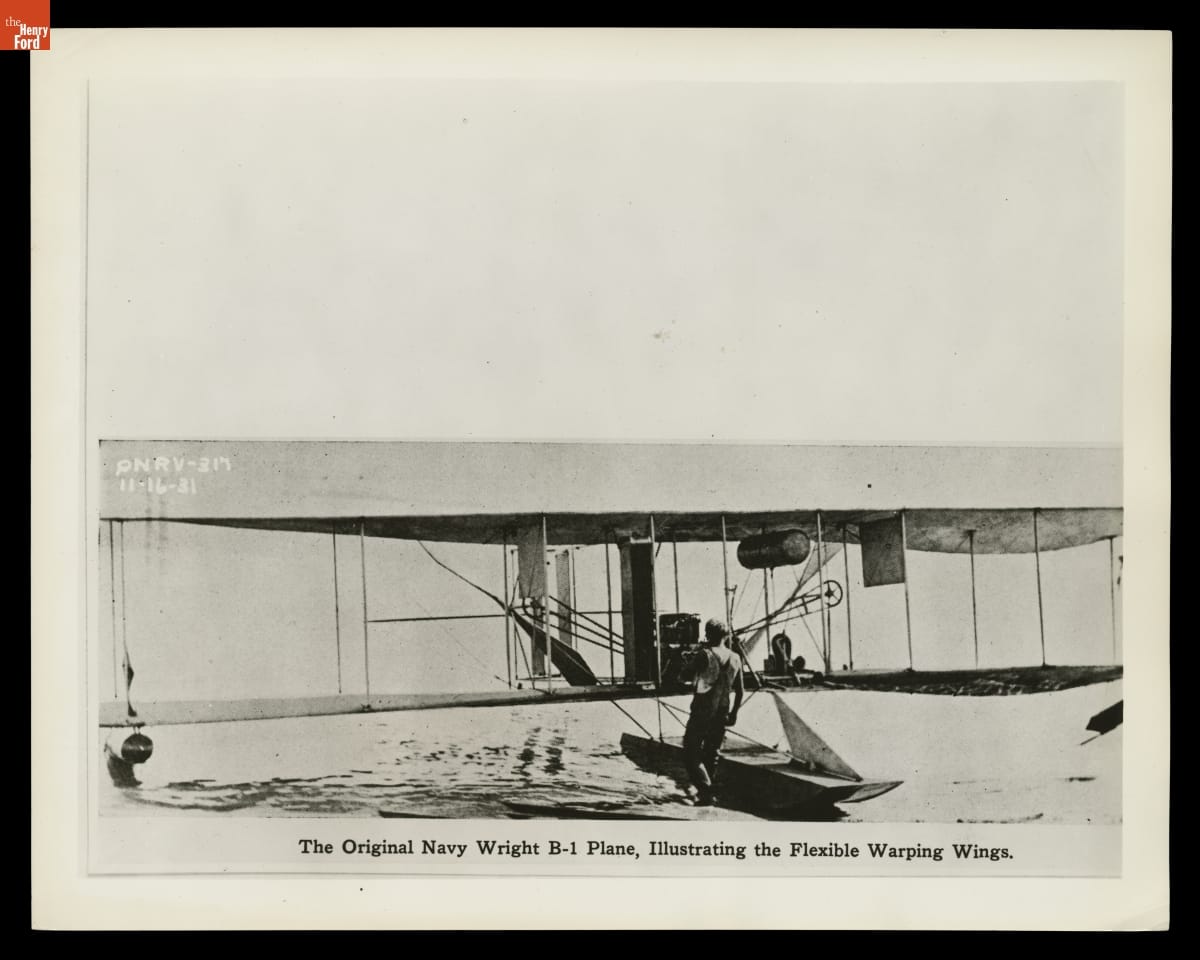
- "Original Navy Wright B-1 Plane, Illustrating the Flexible Warping Wings," circa 1912 - Among the Wright brothers' breakthroughs in inventing the airplane was their system of control. By twisting -- or warping -- the wings in flight, a pilot could control the plane's lateral movement. The Wrights were still using this control technique when they built the Model B, their most successful commercial aircraft, from 1910 to 1914.
- 1911-1913
- Collections - Artifact
"Original Navy Wright B-1 Plane, Illustrating the Flexible Warping Wings," circa 1912
Among the Wright brothers' breakthroughs in inventing the airplane was their system of control. By twisting -- or warping -- the wings in flight, a pilot could control the plane's lateral movement. The Wrights were still using this control technique when they built the Model B, their most successful commercial aircraft, from 1910 to 1914.
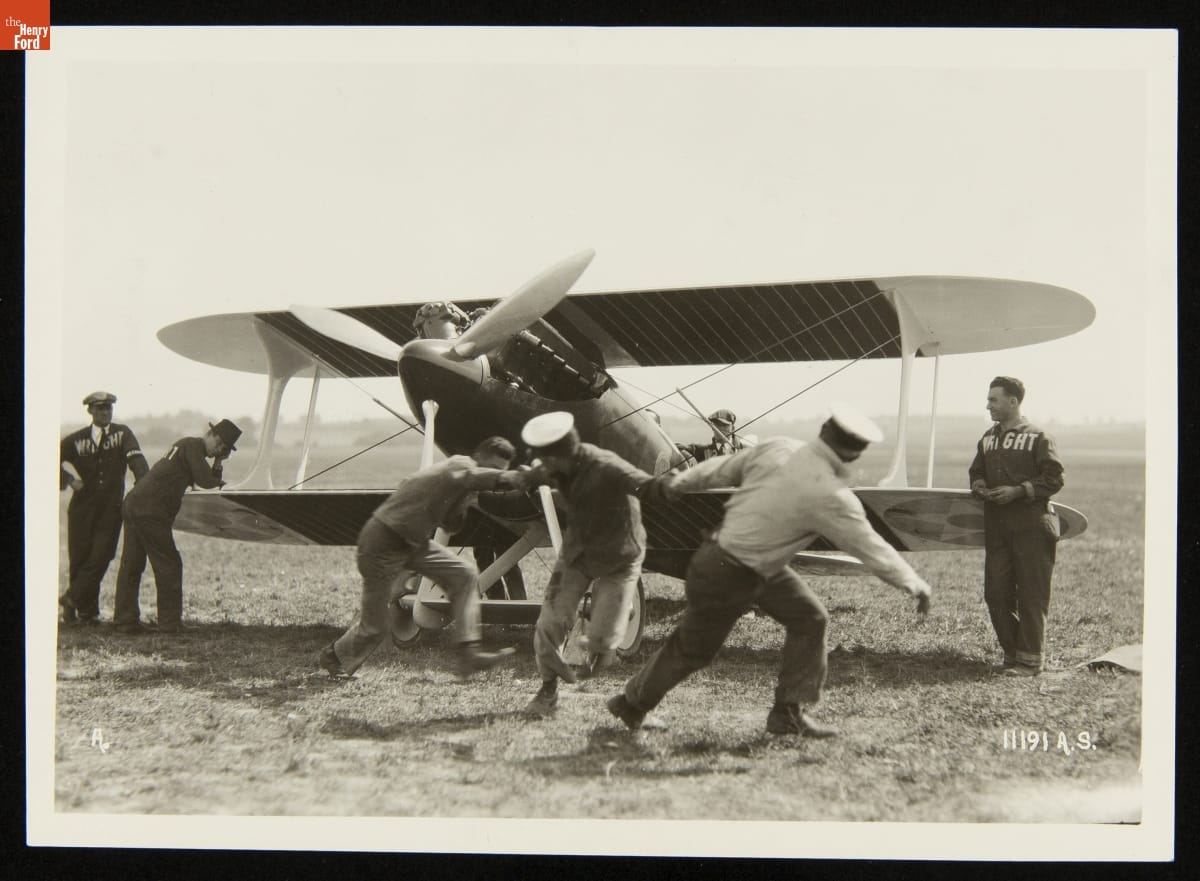
- United States Navy Servicemen Hand-Starting a Wright F2W Aircraft, National Air Race, October 1923 - Wright Aeronautical Corporation built two Wright F2W airplanes -- both entered by the United States Navy in the 1923 National Air Race at St. Louis, Missouri. Powered by a 780-horsepower Wright T-3 Tornado V-12 engine, the F2W had a top speed of 240 mph. One of the F2W planes crashed during the 1923 race, but the other finished in third place.
- October 01, 1923
- Collections - Artifact
United States Navy Servicemen Hand-Starting a Wright F2W Aircraft, National Air Race, October 1923
Wright Aeronautical Corporation built two Wright F2W airplanes -- both entered by the United States Navy in the 1923 National Air Race at St. Louis, Missouri. Powered by a 780-horsepower Wright T-3 Tornado V-12 engine, the F2W had a top speed of 240 mph. One of the F2W planes crashed during the 1923 race, but the other finished in third place.