
Search
- "The Young Mill-Wright and Miller's Guide," 1836 - This instructional handbook was originally written and published by Oliver Evans (1755-1819). In the late 1700s, Evans developed a continuous conveyor system for milling flour. <EM>The Young Mill-Wright and Miller's Guide</EM> explained his labor-saving innovations through text and technical illustrations. Published in fifteen editions between 1795 and 1860, the influential book helped revolutionize the flour-milling industry.
- 1836
- Collections - Artifact
"The Young Mill-Wright and Miller's Guide," 1836
This instructional handbook was originally written and published by Oliver Evans (1755-1819). In the late 1700s, Evans developed a continuous conveyor system for milling flour. The Young Mill-Wright and Miller's Guide explained his labor-saving innovations through text and technical illustrations. Published in fifteen editions between 1795 and 1860, the influential book helped revolutionize the flour-milling industry.
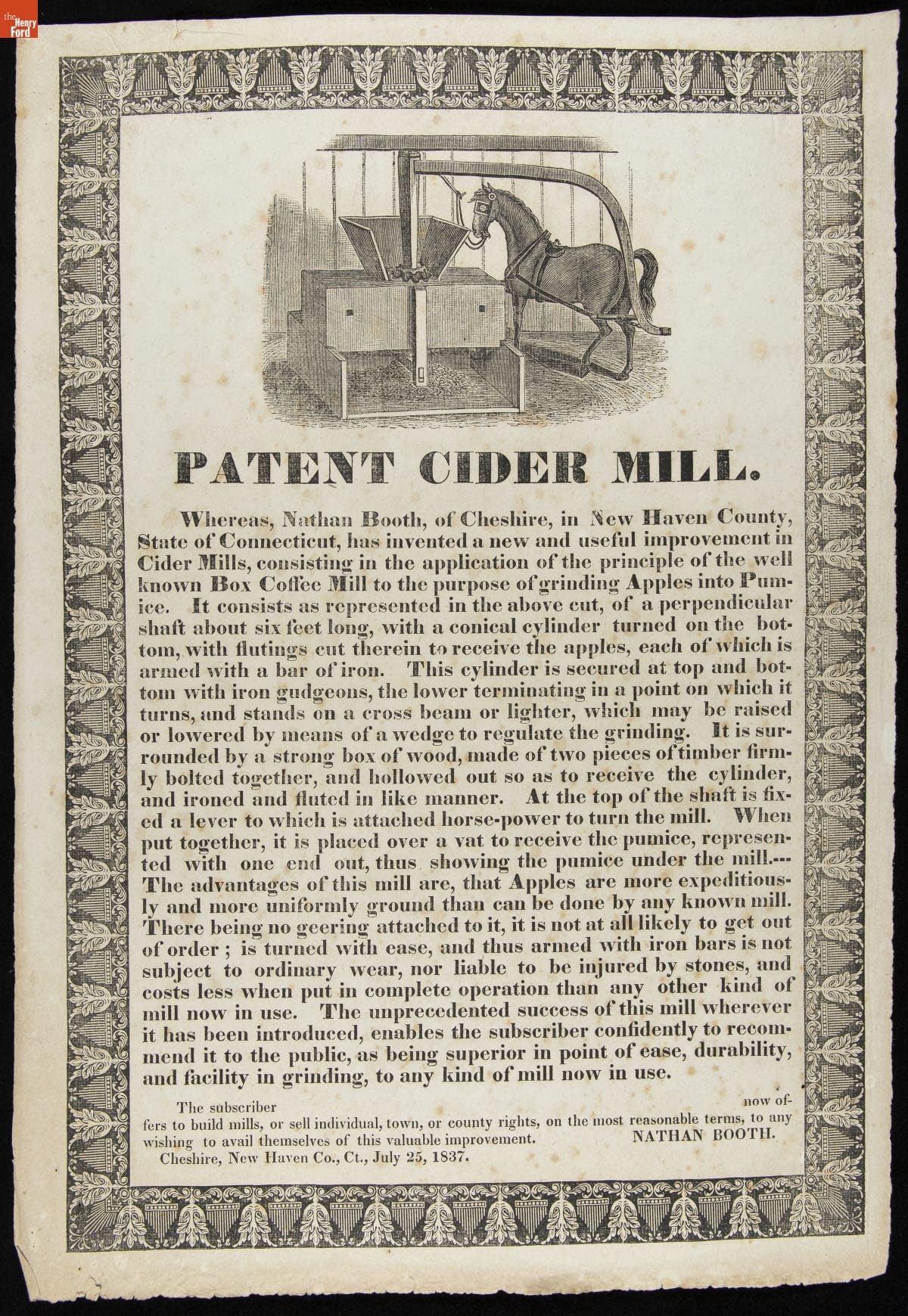
- Patent Cider Mill, 1837 -
- July 25, 1837
- Collections - Artifact
Patent Cider Mill, 1837
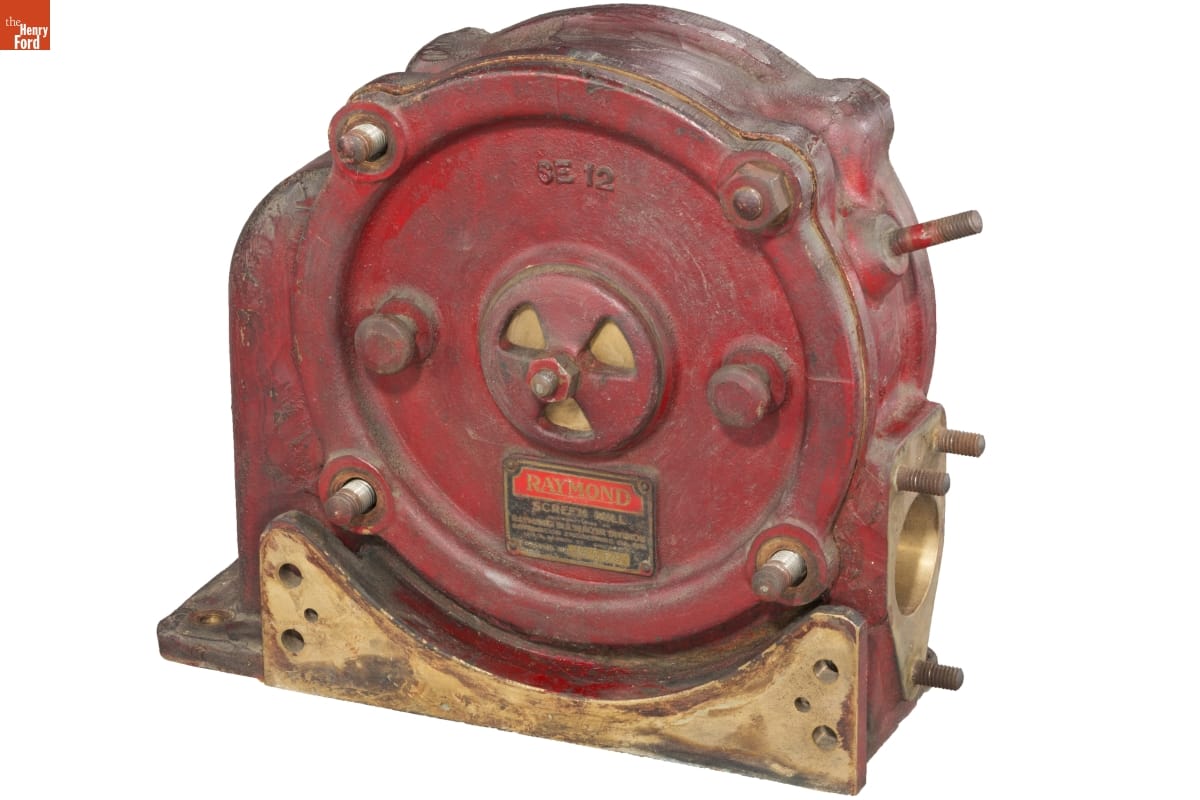
- Screen Mill -
- Collections - Artifact
Screen Mill
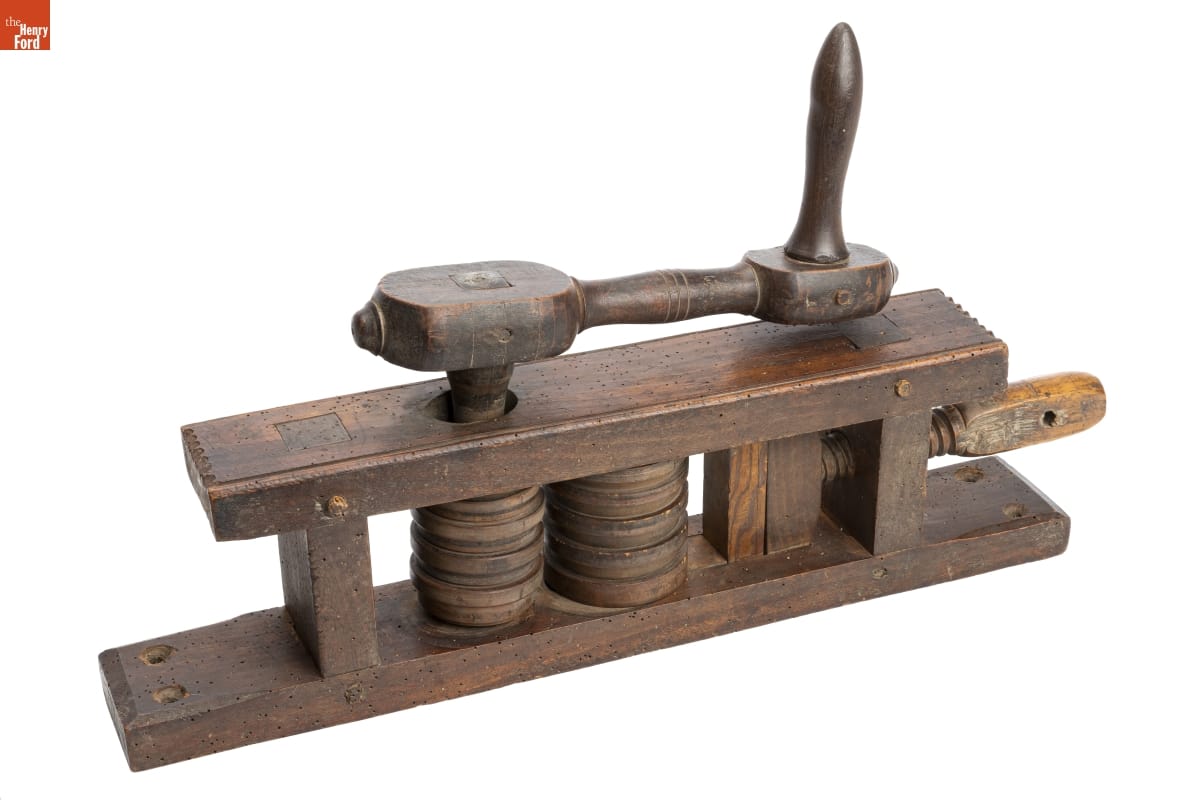
- Plait Mill -
- 1800-1899
- Collections - Artifact
Plait Mill
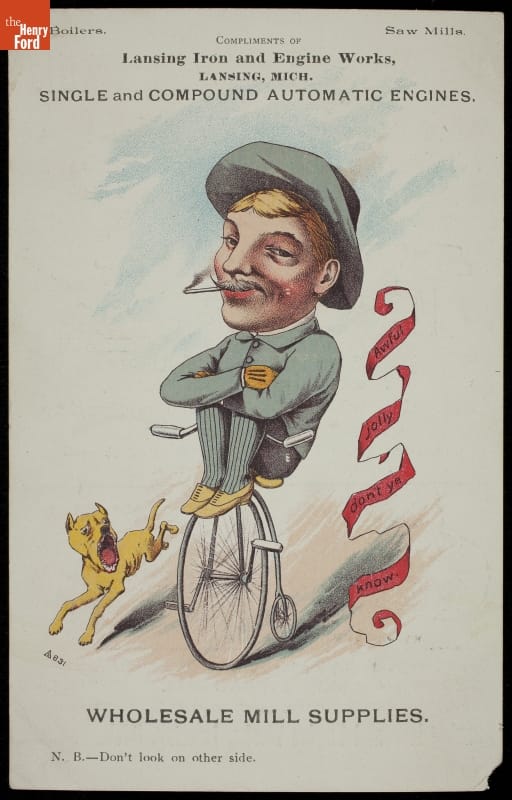
- Trade Card for Wholesale Mill Supplies, Lansing Iron and Engine Works, 1885-1890 - In the last third of the nineteenth century, an unprecedented variety of consumer goods and services flooded the American market. Advertisers, armed with new methods of color printing, bombarded potential customers with trade cards. Americans enjoyed and often saved the vibrant little advertisements found in product packages or distributed by local merchants. Many survive as historical records of commercialism in the United States.
- 1885-1890
- Collections - Artifact
Trade Card for Wholesale Mill Supplies, Lansing Iron and Engine Works, 1885-1890
In the last third of the nineteenth century, an unprecedented variety of consumer goods and services flooded the American market. Advertisers, armed with new methods of color printing, bombarded potential customers with trade cards. Americans enjoyed and often saved the vibrant little advertisements found in product packages or distributed by local merchants. Many survive as historical records of commercialism in the United States.
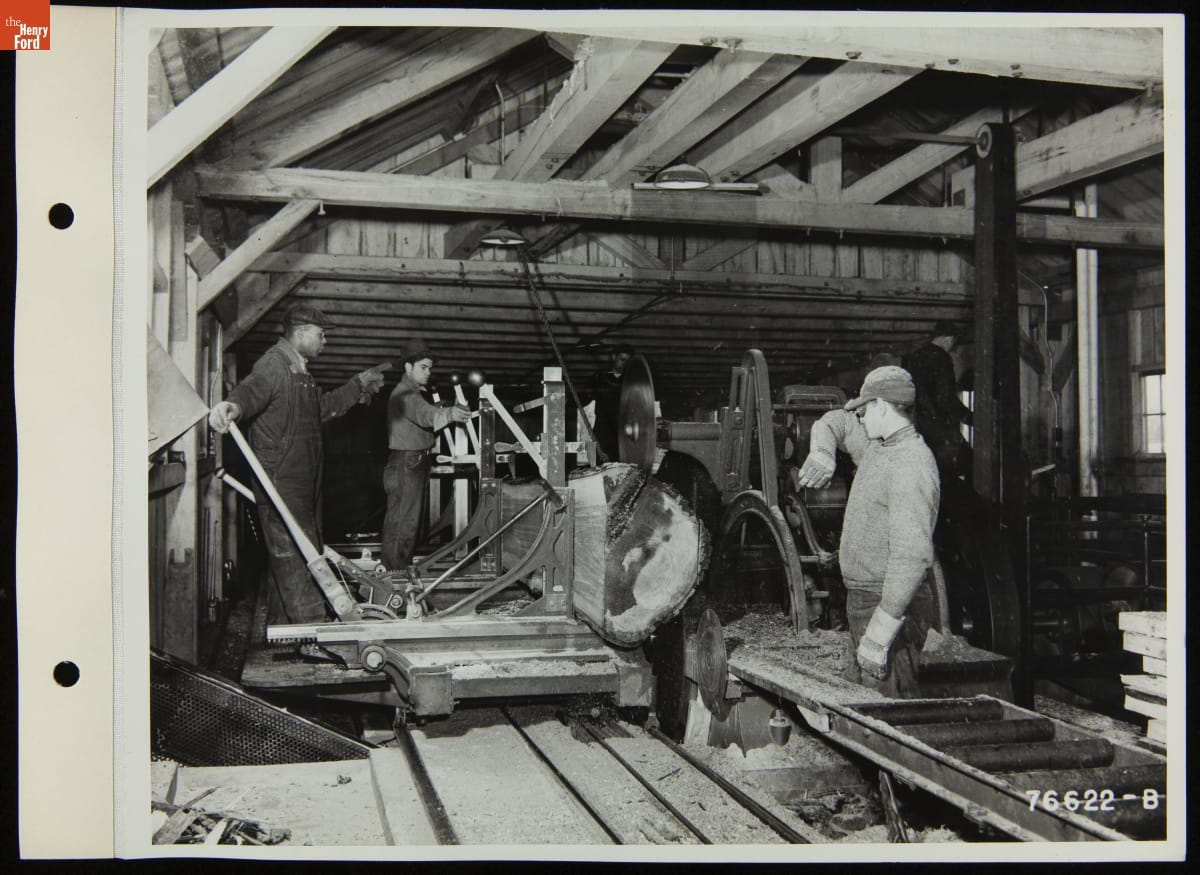
- Men Working at a Sawmill during Construction of the Willow Run Bomber Plant, March 5, 1942 - During World War II, Ford Motor Company built B-24 bomber airplanes at its Willow Run plant, located 35 miles west of Detroit. Work on the factory's buildings started in March 1941. As trees were cleared, Ford erected an on-site sawmill that processed them into lumber. Much of that lumber went into temporary structures and housing at the rising factory.
- March 05, 1942
- Collections - Artifact
Men Working at a Sawmill during Construction of the Willow Run Bomber Plant, March 5, 1942
During World War II, Ford Motor Company built B-24 bomber airplanes at its Willow Run plant, located 35 miles west of Detroit. Work on the factory's buildings started in March 1941. As trees were cleared, Ford erected an on-site sawmill that processed them into lumber. Much of that lumber went into temporary structures and housing at the rising factory.
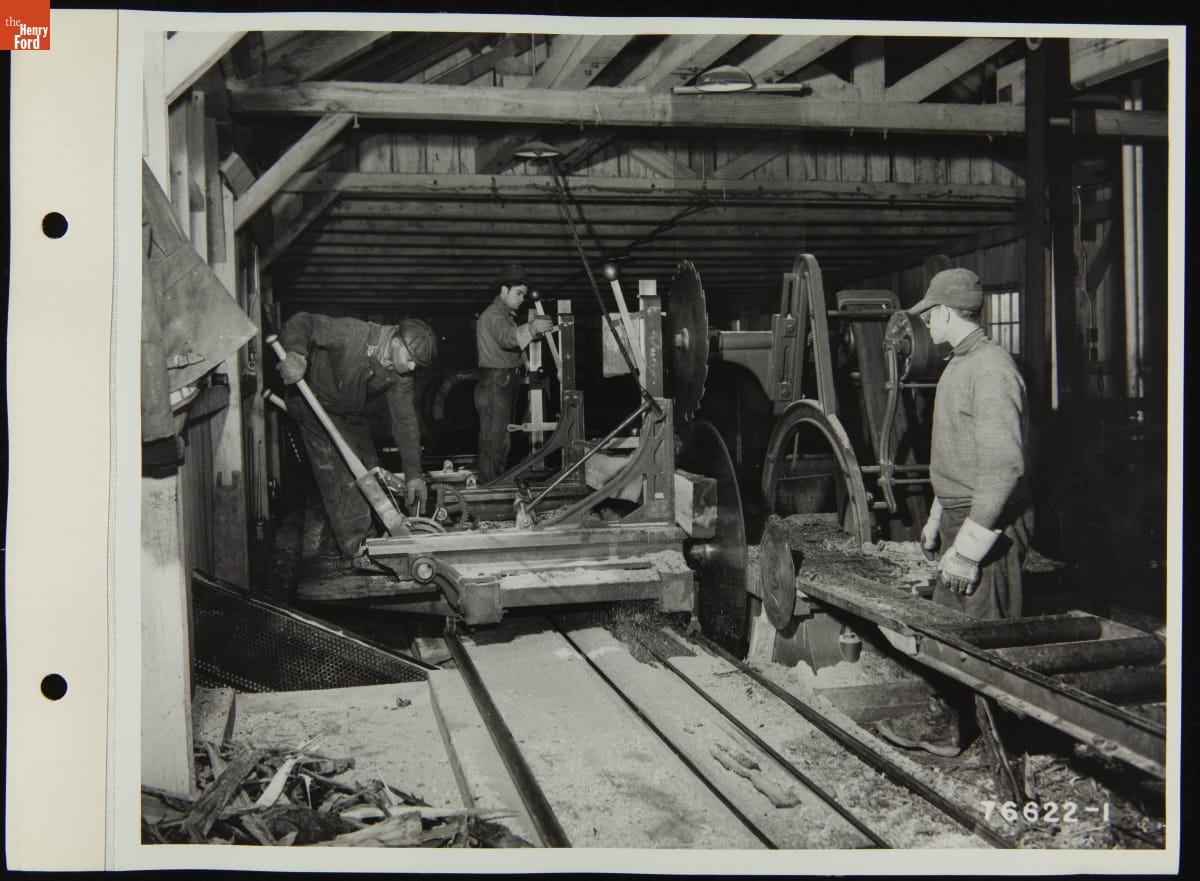
- Men Working at a Sawmill during Construction of the Willow Run Bomber Plant, March 5, 1942 - During World War II, Ford Motor Company built B-24 bomber airplanes at its Willow Run plant, located 35 miles west of Detroit. Work on the factory's buildings started in March 1941. As trees were cleared, Ford erected an on-site sawmill that processed them into lumber. Much of that lumber went into temporary structures and housing at the rising factory.
- March 05, 1942
- Collections - Artifact
Men Working at a Sawmill during Construction of the Willow Run Bomber Plant, March 5, 1942
During World War II, Ford Motor Company built B-24 bomber airplanes at its Willow Run plant, located 35 miles west of Detroit. Work on the factory's buildings started in March 1941. As trees were cleared, Ford erected an on-site sawmill that processed them into lumber. Much of that lumber went into temporary structures and housing at the rising factory.
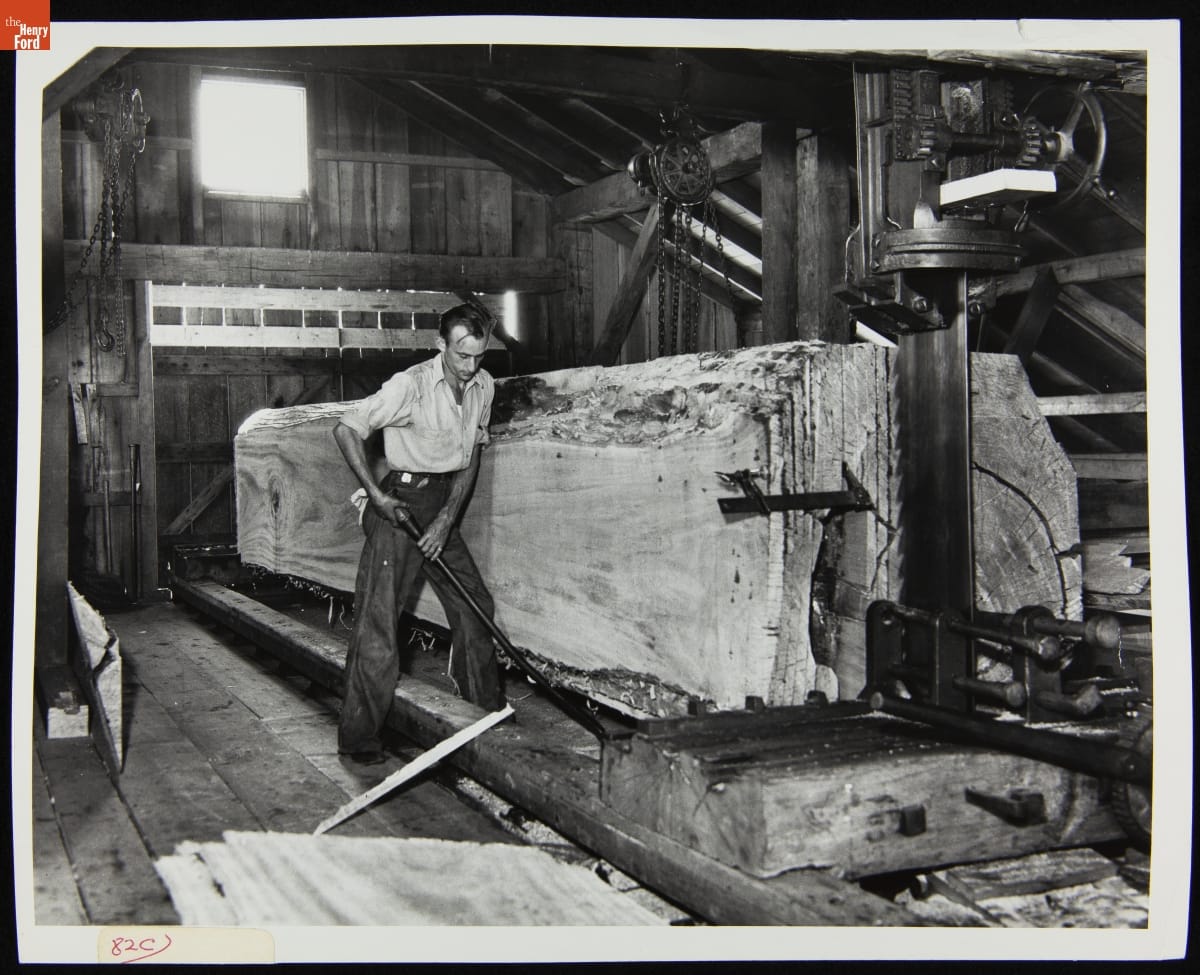
- A Man Working in the Tripp Sawmill in Greenfield Village, 1936-1940 -
- 15 June 1936 - 30 December 1940
- Collections - Artifact
A Man Working in the Tripp Sawmill in Greenfield Village, 1936-1940
- License Granting the Marrietta Steam Mill Company Use of an Oliver Evans Patented Steam Engine, 1812 - In 1804, Oliver Evans received a patent for a high-pressure steam engine -- a radical departure from the early low-pressure engines operating in the United States at the time. Evans found commercial applications in the flour-milling industry, where some of his other innovations had already been influential. One of Evans's patented engines was installed in a steam flour mill in Marietta, Ohio, in 1811.
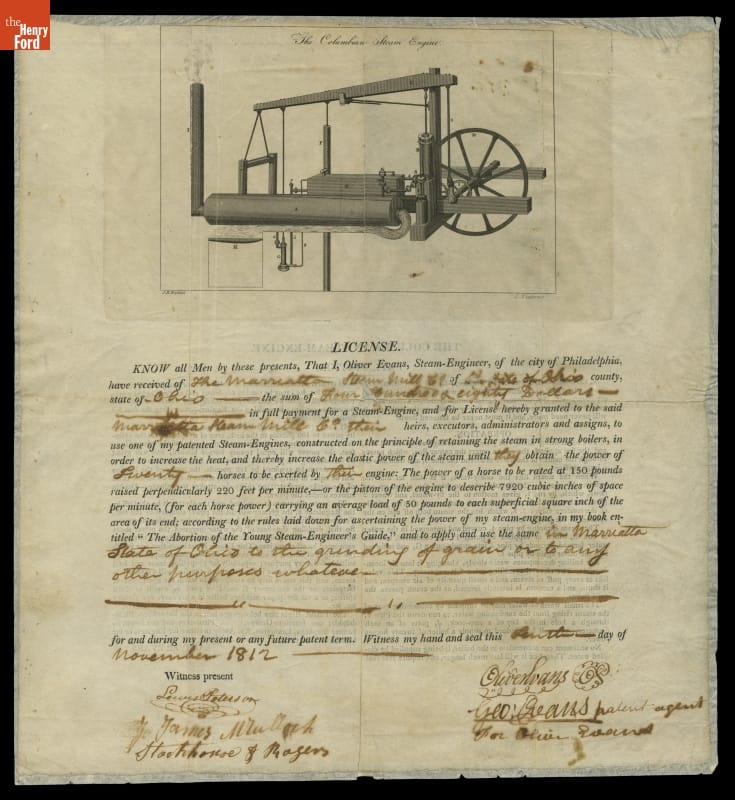
- November 04, 1812
- Collections - Artifact
License Granting the Marrietta Steam Mill Company Use of an Oliver Evans Patented Steam Engine, 1812
In 1804, Oliver Evans received a patent for a high-pressure steam engine -- a radical departure from the early low-pressure engines operating in the United States at the time. Evans found commercial applications in the flour-milling industry, where some of his other innovations had already been influential. One of Evans's patented engines was installed in a steam flour mill in Marietta, Ohio, in 1811.
- Mill & Factory, January 1936 -
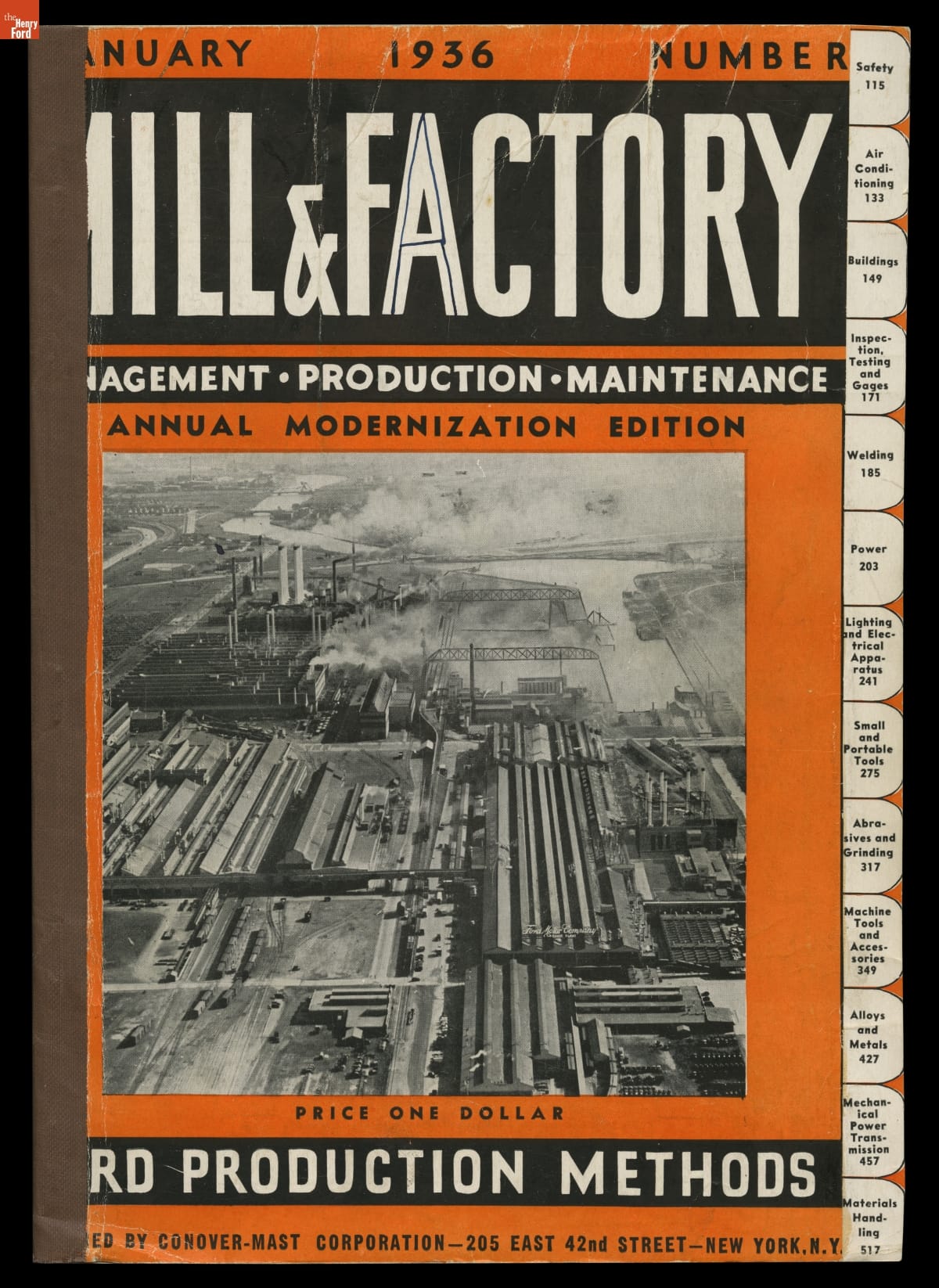
- January 01, 1936
- Collections - Artifact
Mill & Factory, January 1936