
Search
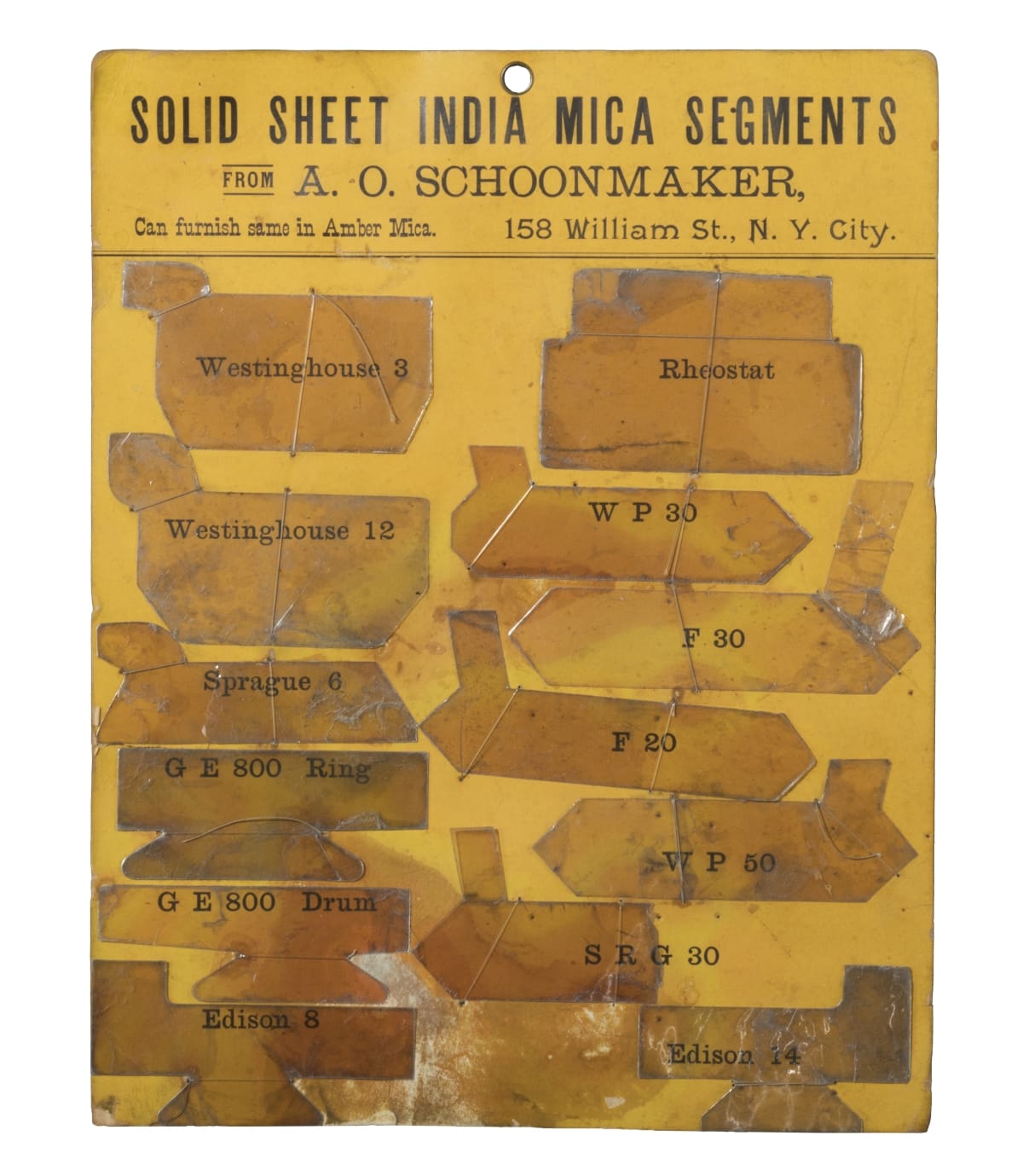
- A.O. Schoonmaker Mica Segment Display Board, circa 1900 -
- circa 1900
- Collections - Artifact
A.O. Schoonmaker Mica Segment Display Board, circa 1900
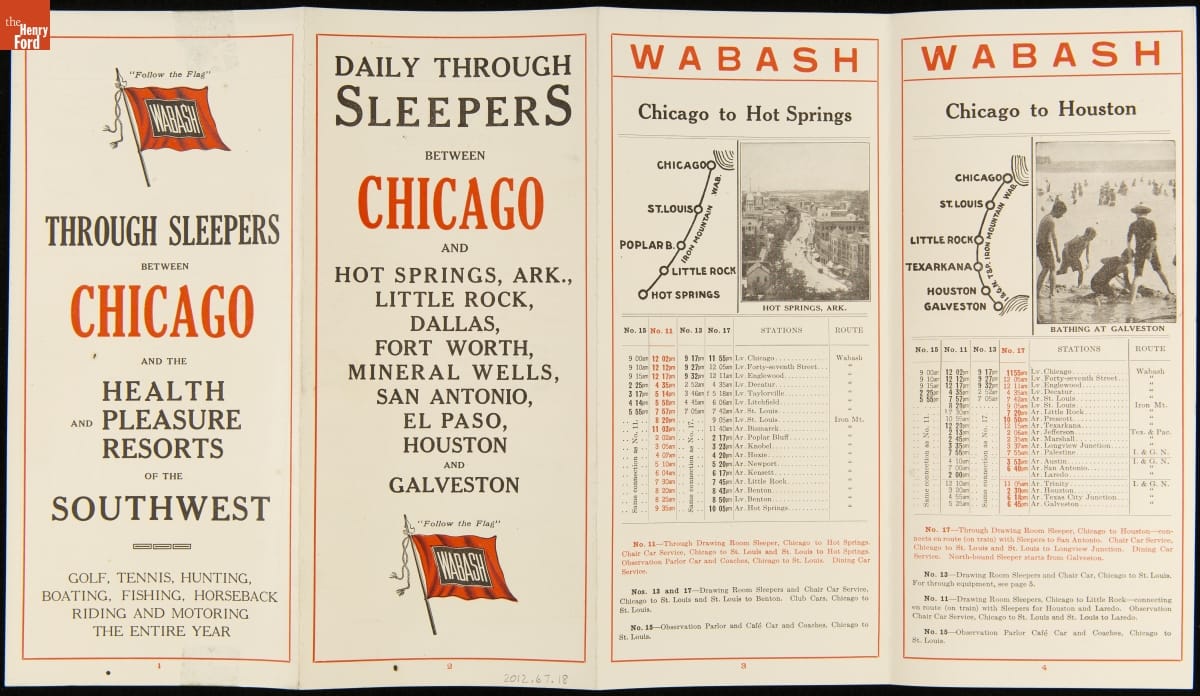
- Daily Through Sleepers between Chicago and the Health and Pleasure Resorts of the Southwest, 1915 - The Wabash Railway, with origins dating back to 1838, was a strong Midwestern carrier until Amtrak took over the national passenger railroad system in 1971. This timetable advertised Wabash's through trains between Chicago and resort communities in Arkansas and Texas. Wabash operated the service in cooperation with the St. Louis, Iron Mountain & Southern Railway and the International & Great Northern Railway.
- 1915
- Collections - Artifact
Daily Through Sleepers between Chicago and the Health and Pleasure Resorts of the Southwest, 1915
The Wabash Railway, with origins dating back to 1838, was a strong Midwestern carrier until Amtrak took over the national passenger railroad system in 1971. This timetable advertised Wabash's through trains between Chicago and resort communities in Arkansas and Texas. Wabash operated the service in cooperation with the St. Louis, Iron Mountain & Southern Railway and the International & Great Northern Railway.
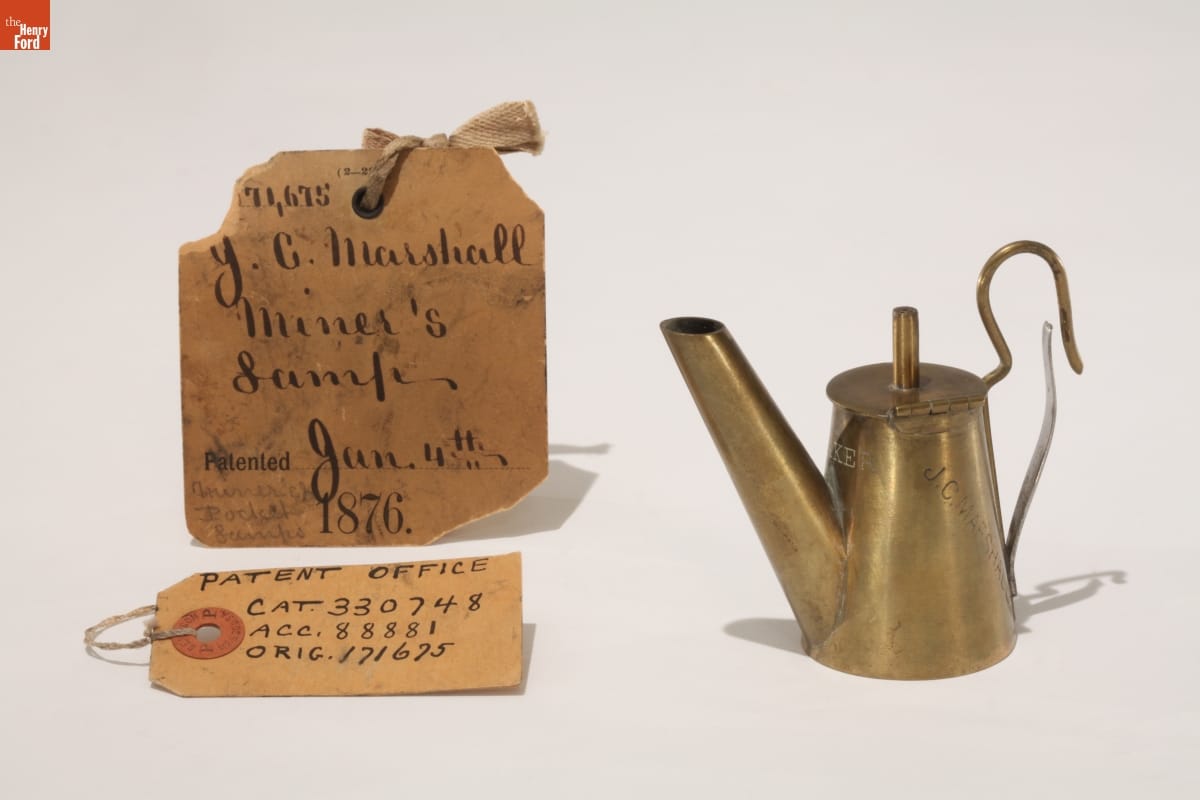
- Patent Model of Miners' Lamp, 1876 - From 1790 to 1880, the U.S. Patent Office required applicants to submit a miniature model along with diagrams and written descriptions detailing the operation of their invention. Patent models could be no larger than 12" by 12" by 12". Though they were usually not operational, these models helped explain an inventor's idea and protect it from competitors.
- January 04, 1876
- Collections - Artifact
Patent Model of Miners' Lamp, 1876
From 1790 to 1880, the U.S. Patent Office required applicants to submit a miniature model along with diagrams and written descriptions detailing the operation of their invention. Patent models could be no larger than 12" by 12" by 12". Though they were usually not operational, these models helped explain an inventor's idea and protect it from competitors.
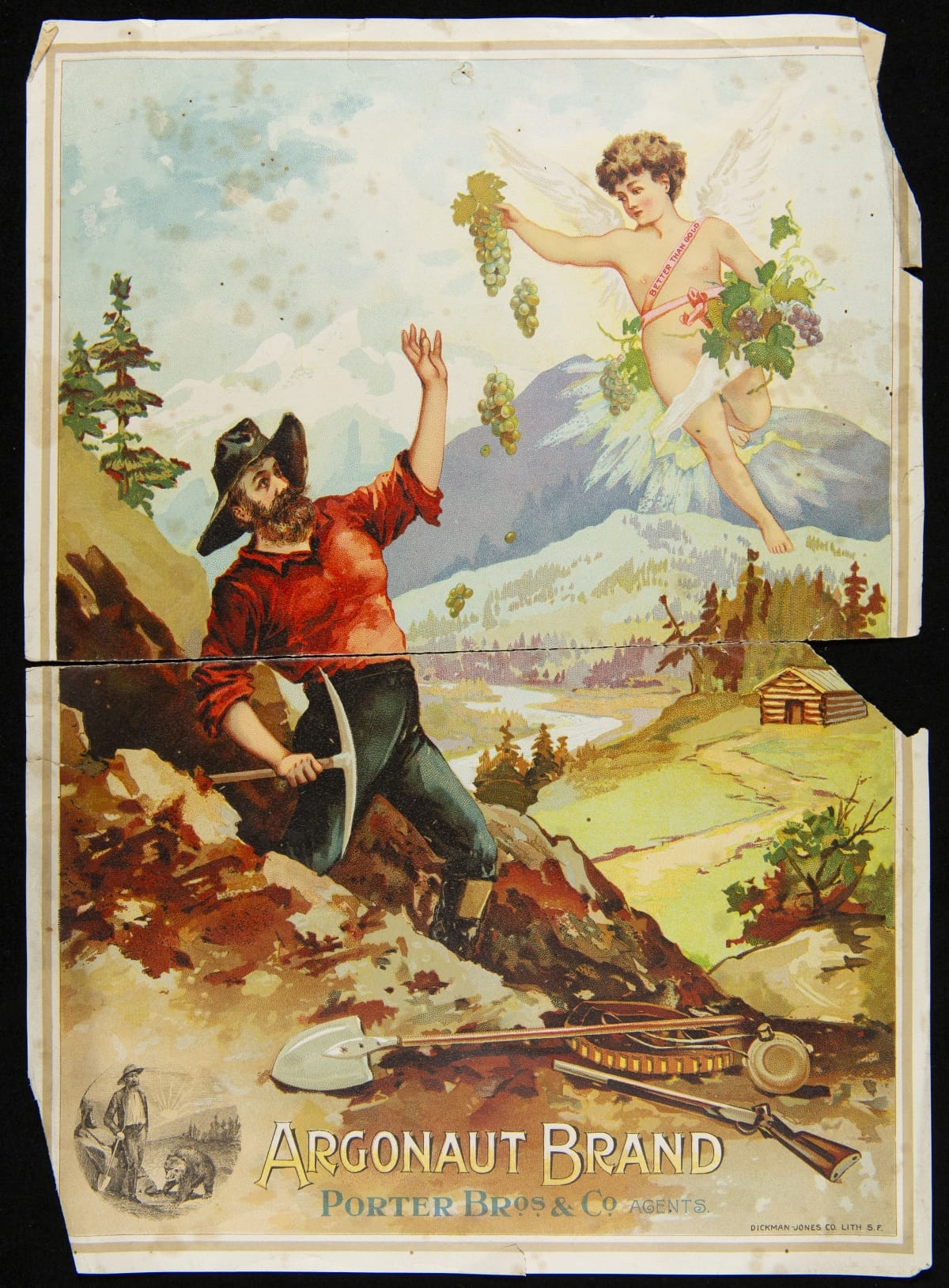
- Label, "Argonaut Brand Grapes," 1888-1899 -
- 1888-1899
- Collections - Artifact
Label, "Argonaut Brand Grapes," 1888-1899
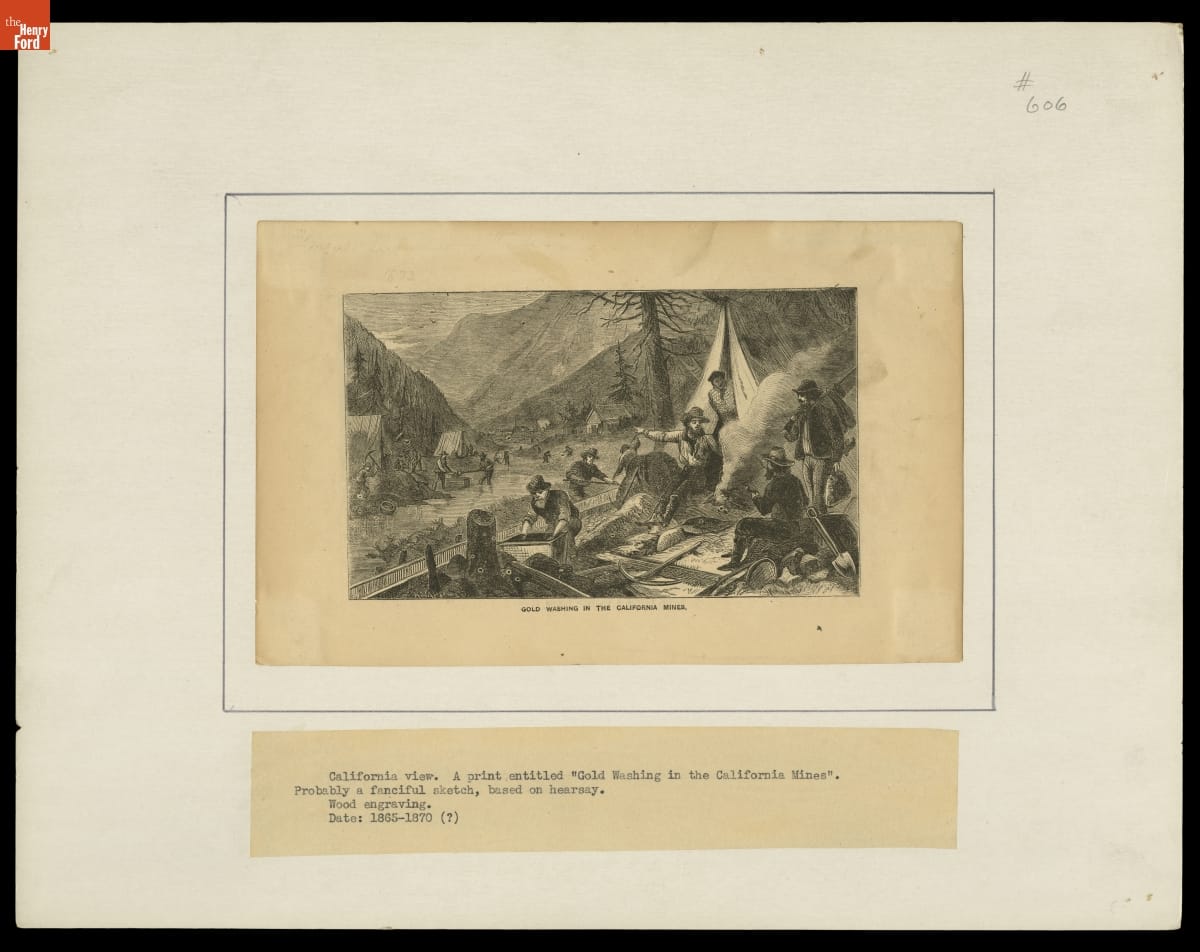
- Gold Washing in the California Mine, 1865-1870 -
- 1865-1870
- Collections - Artifact
Gold Washing in the California Mine, 1865-1870
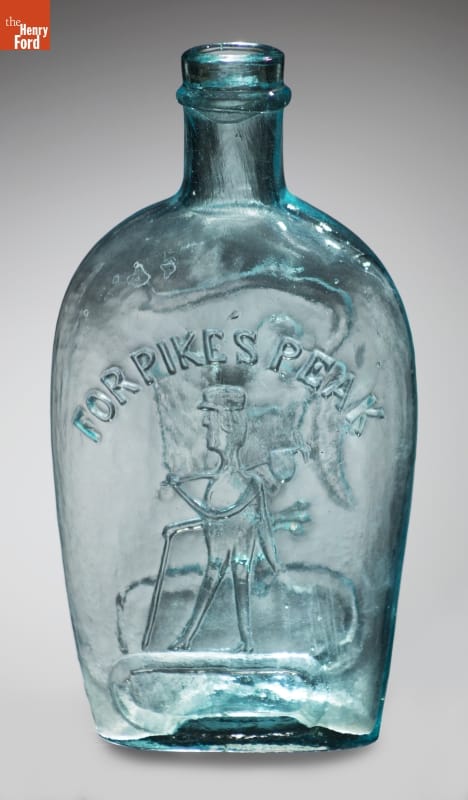
- Flask, 1859-1875 - Glass factories in America began producing inexpensive, mold-formed flasks in the early 1800s. These figured flasks, often decorated with symbols of national pride or political or cultural affiliation, appealed to America's common man. Those who dreamed of striking it rich also found their aspirations molded in glass. This flask contains an image of a prospector bound "For Pikes Peak" -- an area rumored with gold.
- 1859-1875
- Collections - Artifact
Flask, 1859-1875
Glass factories in America began producing inexpensive, mold-formed flasks in the early 1800s. These figured flasks, often decorated with symbols of national pride or political or cultural affiliation, appealed to America's common man. Those who dreamed of striking it rich also found their aspirations molded in glass. This flask contains an image of a prospector bound "For Pikes Peak" -- an area rumored with gold.
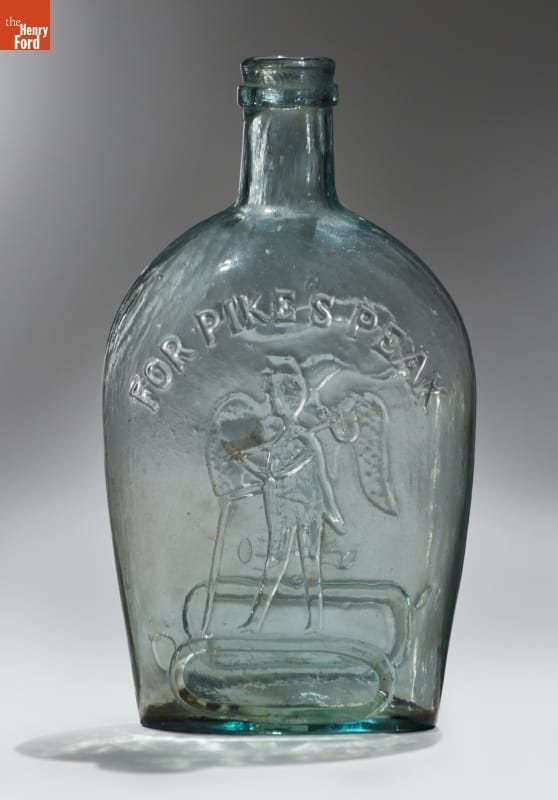
- Flask, 1859-1875 - Glass factories in America began producing inexpensive, mold-formed flasks in the early 1800s. These figured flasks, often decorated with symbols of national pride or political or cultural affiliation, appealed to America's common man. Those who dreamed of striking it rich also found their aspirations molded in glass. This flask contains an image of a prospector bound "For Pikes Peak" -- an area rumored with gold.
- 1859-1875
- Collections - Artifact
Flask, 1859-1875
Glass factories in America began producing inexpensive, mold-formed flasks in the early 1800s. These figured flasks, often decorated with symbols of national pride or political or cultural affiliation, appealed to America's common man. Those who dreamed of striking it rich also found their aspirations molded in glass. This flask contains an image of a prospector bound "For Pikes Peak" -- an area rumored with gold.
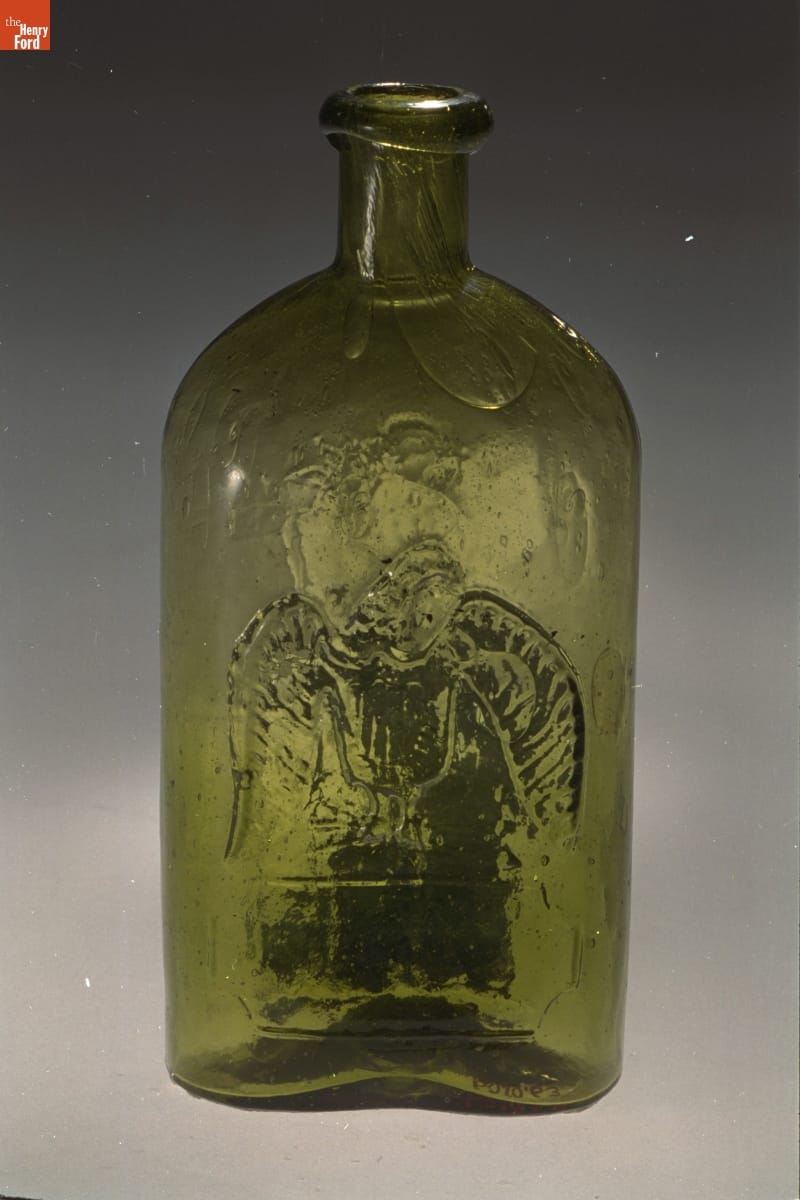
- Flask, 1859-1875 - Glass factories in America began producing inexpensive, mold-formed flasks in the early 1800s. These figured flasks, often decorated with symbols of national pride or political or cultural affiliation, appealed to America's common man. This flask contains images of an eagle and a prospector. This "prospector" however appears to be more interested in drinking from his bottle than in striking it rich.
- 1859-1875
- Collections - Artifact
Flask, 1859-1875
Glass factories in America began producing inexpensive, mold-formed flasks in the early 1800s. These figured flasks, often decorated with symbols of national pride or political or cultural affiliation, appealed to America's common man. This flask contains images of an eagle and a prospector. This "prospector" however appears to be more interested in drinking from his bottle than in striking it rich.
- Street Scene of a California Gold Mining Town, about 1850 - Placerville, a California gold-mining town, is the subject of this daguerreotype from about 1850. The two men panning for gold on the street are posing, but the buildings -- including hotel, general store, saloon, and "Legal Coin in Exchange for Dust" shop -- offer an authentic view of daily life for gold-seekers and merchants during the California Gold Rush.
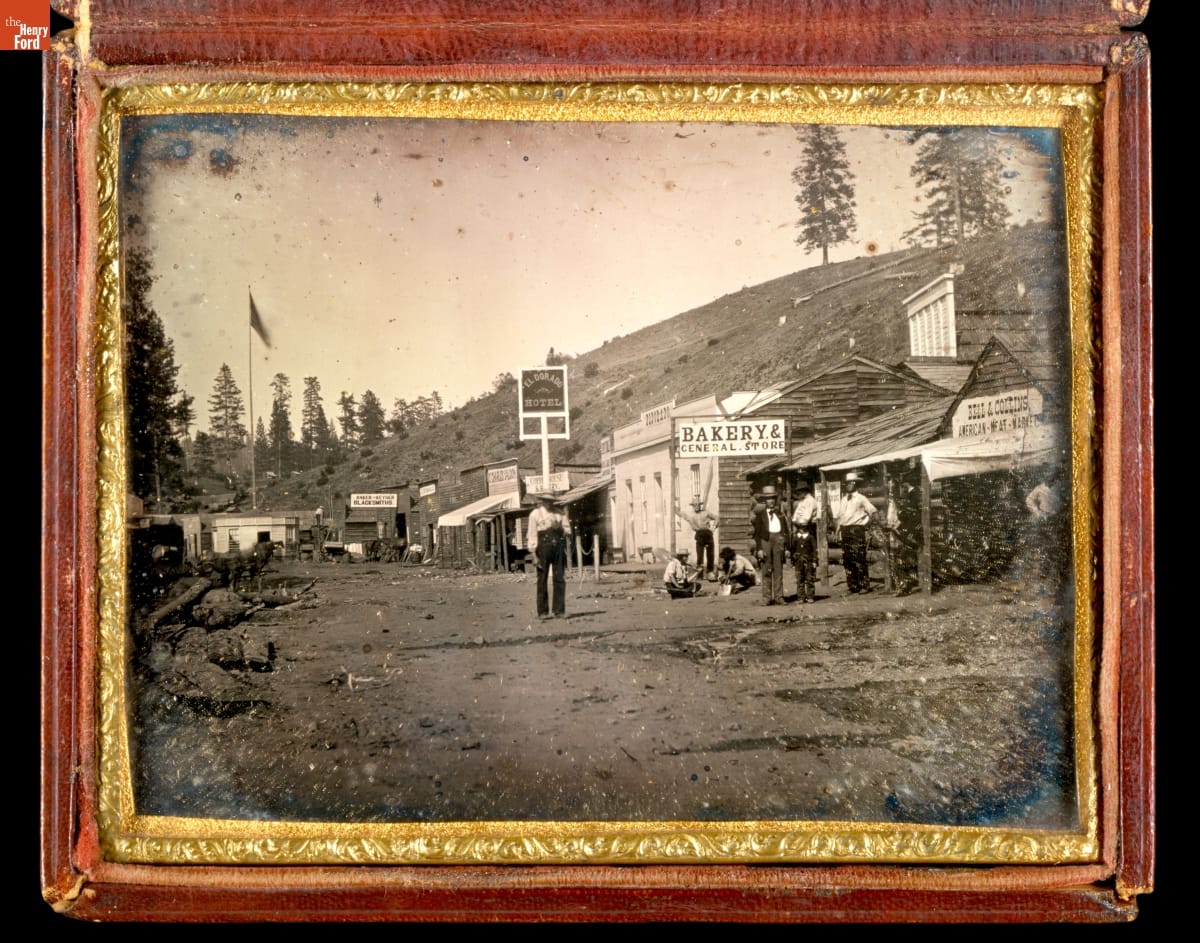
- circa 1850
- Collections - Artifact
Street Scene of a California Gold Mining Town, about 1850
Placerville, a California gold-mining town, is the subject of this daguerreotype from about 1850. The two men panning for gold on the street are posing, but the buildings -- including hotel, general store, saloon, and "Legal Coin in Exchange for Dust" shop -- offer an authentic view of daily life for gold-seekers and merchants during the California Gold Rush.
- Trade Card for the G. Mennen Chemical Company, "Our Mama Recommends Mennen's Borated Talcum Toilet Powder," 1880-1900 - In the last third of the nineteenth century, an unprecedented variety of consumer goods and services flooded the American market. Advertisers, armed with new methods of color printing, bombarded potential customers with trade cards. Americans enjoyed and often saved the vibrant little advertisements found in product packages or distributed by local merchants. Many survive as historical records of commercialism in the United States.
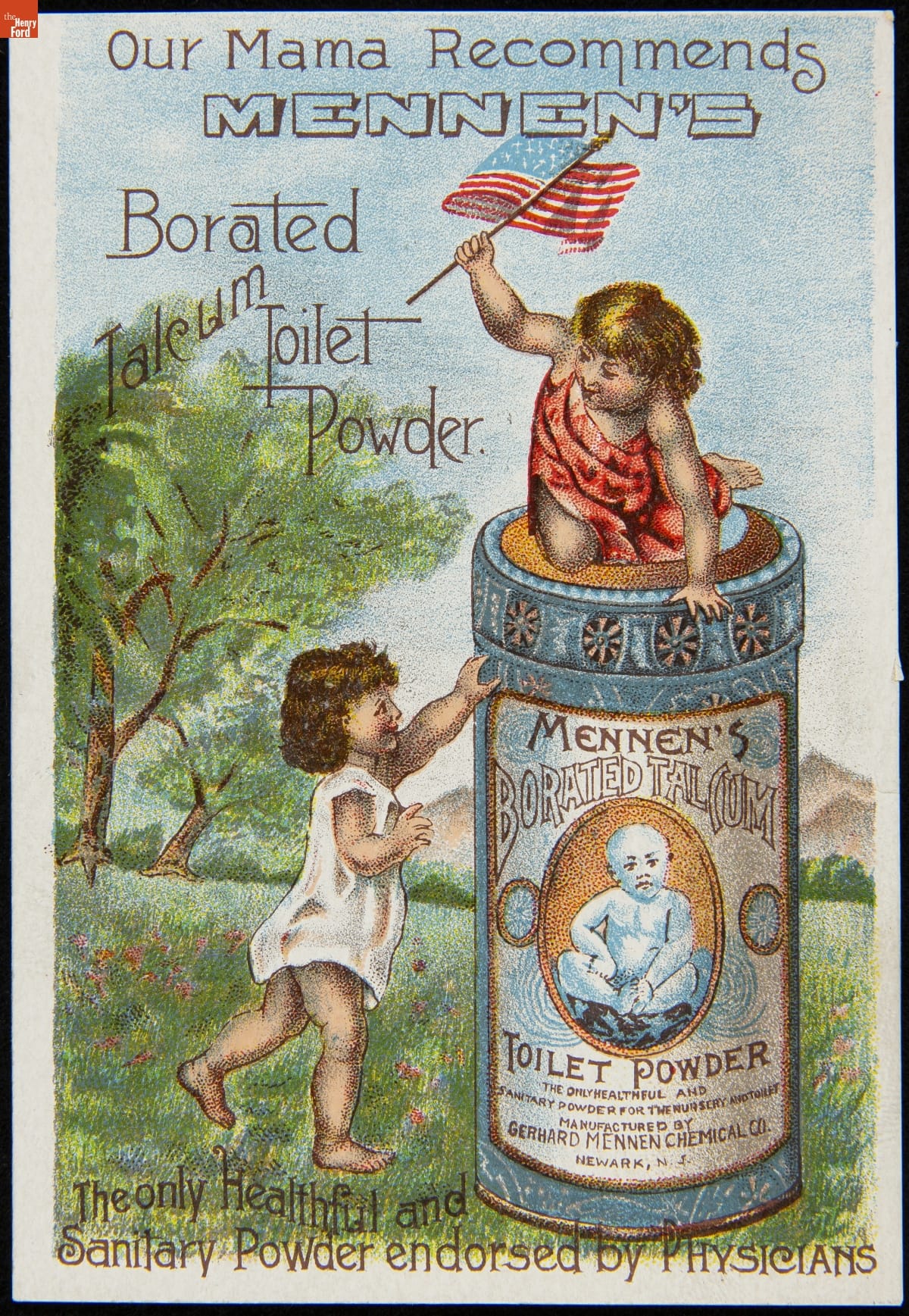
- 1880-1900
- Collections - Artifact
Trade Card for the G. Mennen Chemical Company, "Our Mama Recommends Mennen's Borated Talcum Toilet Powder," 1880-1900
In the last third of the nineteenth century, an unprecedented variety of consumer goods and services flooded the American market. Advertisers, armed with new methods of color printing, bombarded potential customers with trade cards. Americans enjoyed and often saved the vibrant little advertisements found in product packages or distributed by local merchants. Many survive as historical records of commercialism in the United States.