
Search
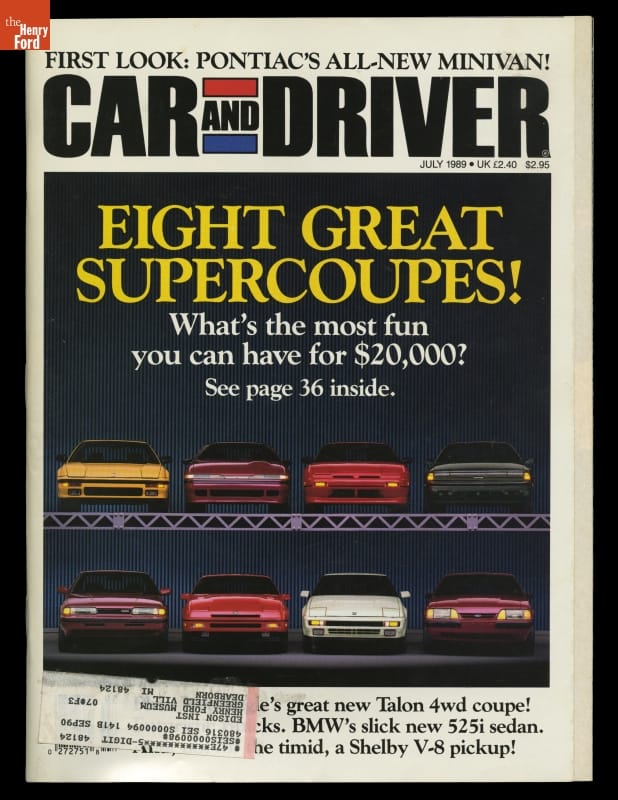
- "Car and Driver," July 1989 - Car magazines provide drivers with information about the automobile industry, vehicles and the people who drive them, and car culture. Manufacturers also advertise their products and technological advancements in these pages. In this July 1989 issue of <EM>Car and Driver</EM>, readers could learn about minivans, coupes, sedans, and pickups, or view ads promoting popular vehicles like the Honda Accord.
- July 01, 1989
- Collections - Artifact
"Car and Driver," July 1989
Car magazines provide drivers with information about the automobile industry, vehicles and the people who drive them, and car culture. Manufacturers also advertise their products and technological advancements in these pages. In this July 1989 issue of Car and Driver, readers could learn about minivans, coupes, sedans, and pickups, or view ads promoting popular vehicles like the Honda Accord.
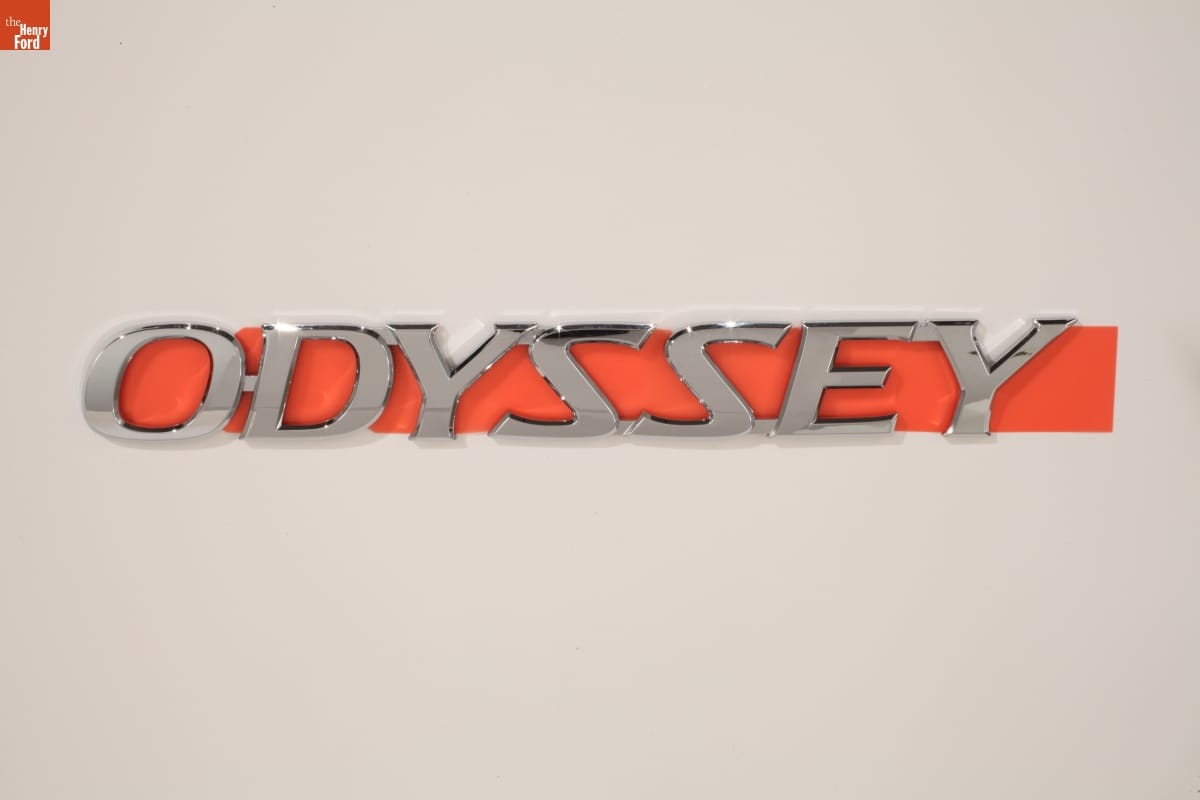
- Honda Odyssey Nameplate, 2005-2007 - Car model names might seem straightforward (especially once they are well-established and familiar) but most are masterpieces of allusion, rife with references to glamorous locations, social rank, rugged environment -- all tied to the self-image and aspirations of potential car buyers. Different styles of lettering -- whether bold, high-tech, freehand, or formal -- offer further reinforcement to the power of a model name.
- 2005-2007
- Collections - Artifact
Honda Odyssey Nameplate, 2005-2007
Car model names might seem straightforward (especially once they are well-established and familiar) but most are masterpieces of allusion, rife with references to glamorous locations, social rank, rugged environment -- all tied to the self-image and aspirations of potential car buyers. Different styles of lettering -- whether bold, high-tech, freehand, or formal -- offer further reinforcement to the power of a model name.
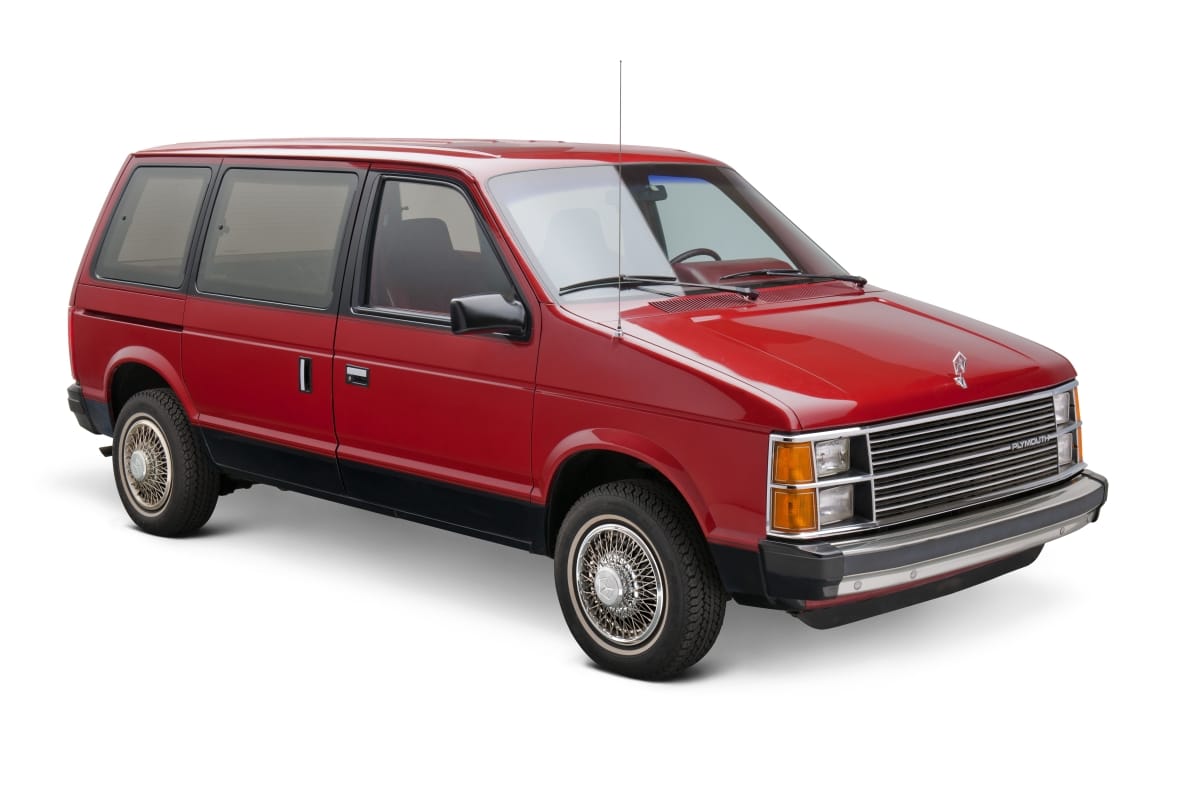
- 1984 Plymouth Voyager Minivan - Plymouth Voyager advertising called this the "all-new space-age American family wagon," and it really was a new kind of vehicle. Shorter than typical sedans, station wagons, or large vans, the new "mini-vans" were easy to drive but could carry seven people, plus lots of luggage, camping gear, or sports equipment. They were instantly popular with buyers and were immediately copied by other manufacturers, foreign and domestic.
- 1984
- Collections - Artifact
1984 Plymouth Voyager Minivan
Plymouth Voyager advertising called this the "all-new space-age American family wagon," and it really was a new kind of vehicle. Shorter than typical sedans, station wagons, or large vans, the new "mini-vans" were easy to drive but could carry seven people, plus lots of luggage, camping gear, or sports equipment. They were instantly popular with buyers and were immediately copied by other manufacturers, foreign and domestic.
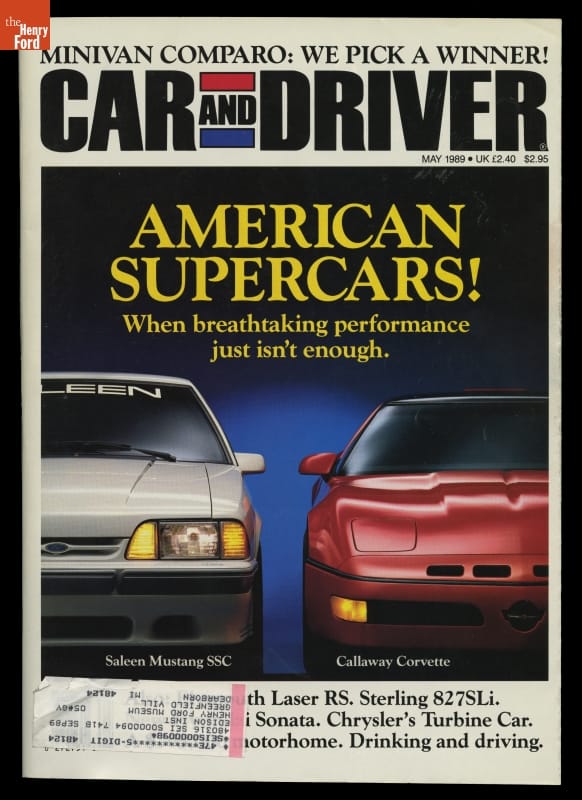
- "Car and Driver," May 1989 - Car magazines help drivers make informed decisions about cars. In this May 1989 issue of <EM>Car and Driver</EM>, editors show how the Chrysler turbine engine worked among other car-related stories.
- May 01, 1989
- Collections - Artifact
"Car and Driver," May 1989
Car magazines help drivers make informed decisions about cars. In this May 1989 issue of Car and Driver, editors show how the Chrysler turbine engine worked among other car-related stories.
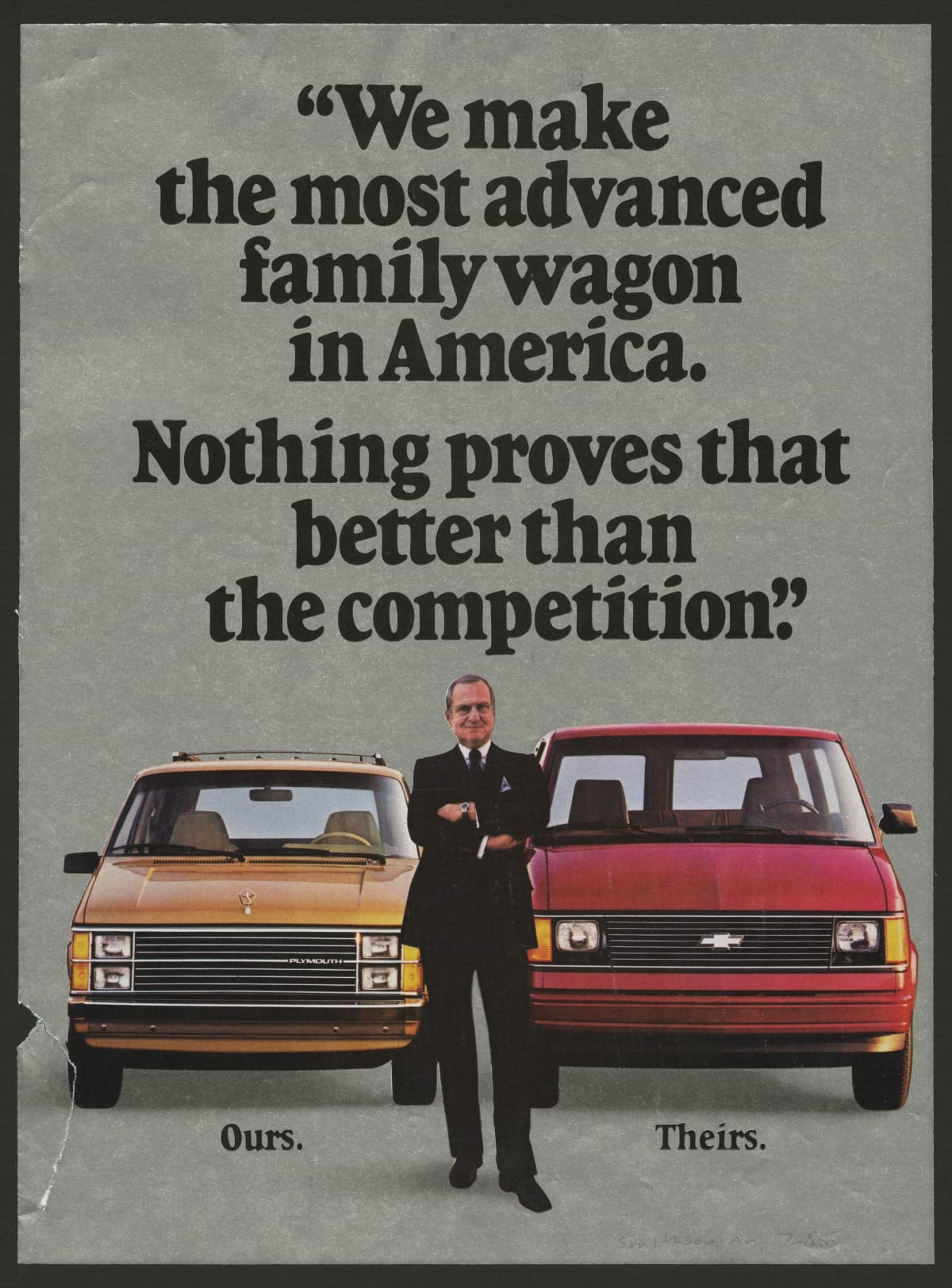
- "1985 Chrysler Advertisement, "We Make the Most Advanced Family Wagon in America" - In this 1985 ad, Chrysler touted its minivans and their success in leading the industry to a new market segment. Introduced in 1983, Chrysler's minivans catered to baby boomers and their families. The minivan provided van-like space but with car-like drive and comfort. The front-wheel-drive vehicle could seat seven, and its sliding door and low floor provided easy step-in access.
- July 01, 1985
- Collections - Artifact
"1985 Chrysler Advertisement, "We Make the Most Advanced Family Wagon in America"
In this 1985 ad, Chrysler touted its minivans and their success in leading the industry to a new market segment. Introduced in 1983, Chrysler's minivans catered to baby boomers and their families. The minivan provided van-like space but with car-like drive and comfort. The front-wheel-drive vehicle could seat seven, and its sliding door and low floor provided easy step-in access.
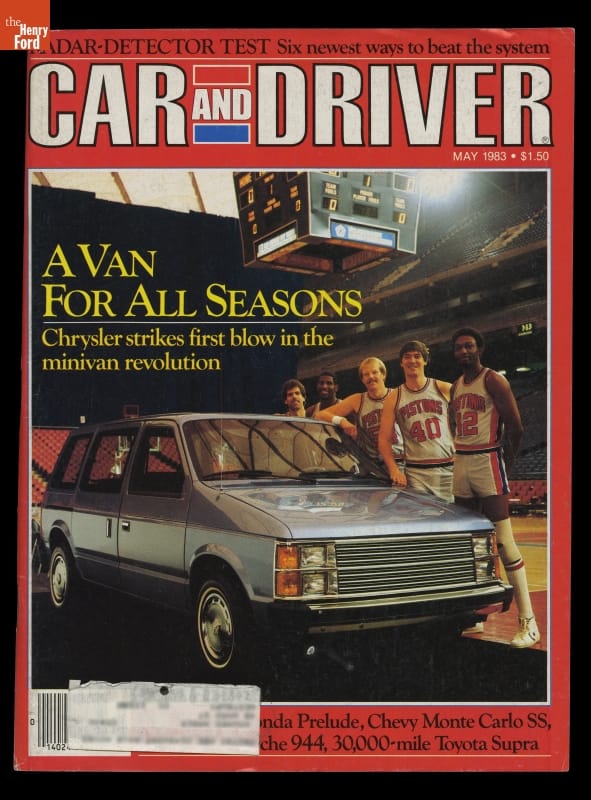
- "Car and Driver," May 1983 - In the 1980s, baby boomer parents began buying minivans. Boomers embraced the roomier and easy-handling minivans rather than their parents' station wagons they had grown up with. This May 1983 issue of <EM>Car and Driver</EM> took a look at the minivan revolution.
- May 01, 1983
- Collections - Artifact
"Car and Driver," May 1983
In the 1980s, baby boomer parents began buying minivans. Boomers embraced the roomier and easy-handling minivans rather than their parents' station wagons they had grown up with. This May 1983 issue of Car and Driver took a look at the minivan revolution.
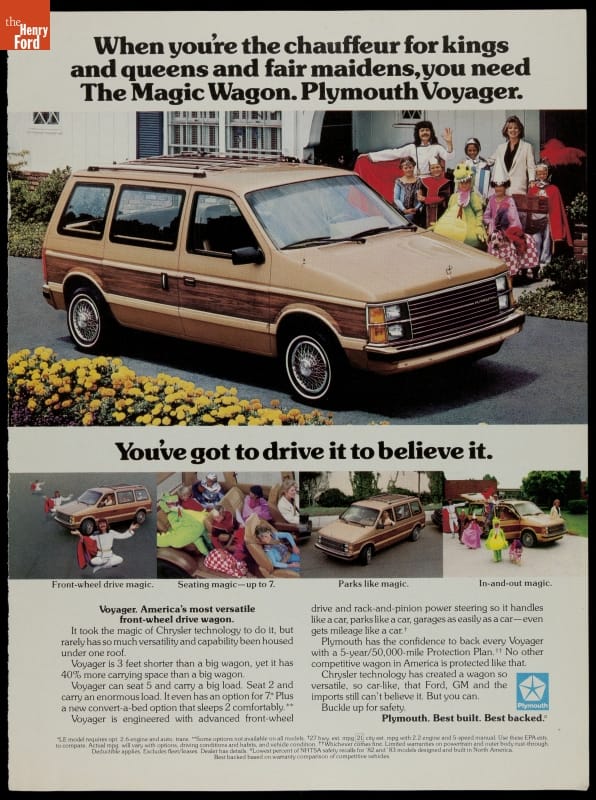
- Advertisement for Plymouth Voyager, 1984 - Chrysler introduced its all-new Plymouth Voyager and Dodge Caravan models for 1984. The minivan was something new in the family-car market -- larger than a station wagon, but smaller than a traditional van and able to fit into most garages. Chrysler's minivans handled like cars, too, with a front-wheel-drive layout that kept riders lower to the ground than full-size vans.
- 1984
- Collections - Artifact
Advertisement for Plymouth Voyager, 1984
Chrysler introduced its all-new Plymouth Voyager and Dodge Caravan models for 1984. The minivan was something new in the family-car market -- larger than a station wagon, but smaller than a traditional van and able to fit into most garages. Chrysler's minivans handled like cars, too, with a front-wheel-drive layout that kept riders lower to the ground than full-size vans.
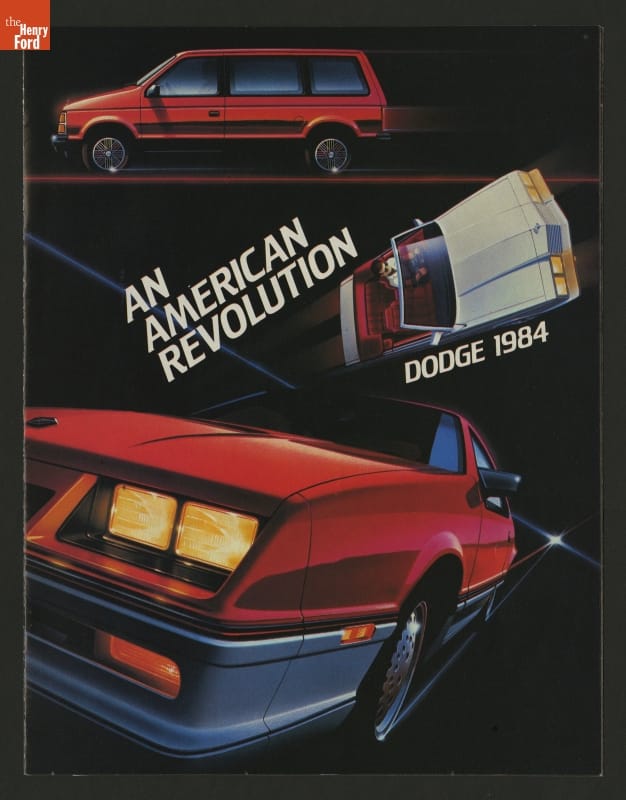
- 1984 Dodge Brochure, "An American Revolution" - Car brochures have evolved from straightforward product catalogues into polished creative sales tools. Their quality paper, rich color, inventive formats, and sophisticated graphic design all contribute to a buyer's developing impression of a car in a showroom. Advertising might entice people to a dealership, but brochures extend and deepen the relationship between vehicle and potential buyer.
- 1984
- Collections - Artifact
1984 Dodge Brochure, "An American Revolution"
Car brochures have evolved from straightforward product catalogues into polished creative sales tools. Their quality paper, rich color, inventive formats, and sophisticated graphic design all contribute to a buyer's developing impression of a car in a showroom. Advertising might entice people to a dealership, but brochures extend and deepen the relationship between vehicle and potential buyer.
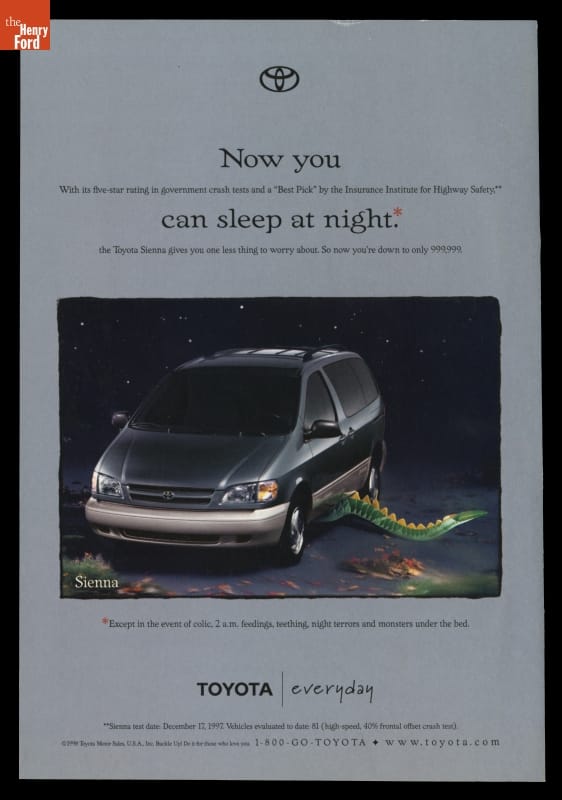
- "Now You Can Sleep at Night," Toyota Sienna Minivan Advertisement, 1999 - The automobile is a paradox -- a practical tool that plays host to both human needs and fantasies. Like car consumers, automotive ads seem to land somewhere between fantasy and reality, emotions and rationality. Many ads incorporate apparent opposites: fantasy can sell practicality, and vice versa. Sometimes the car has disappeared completely -- an emotional appeal prompts us to complete the ad.
- 1999
- Collections - Artifact
"Now You Can Sleep at Night," Toyota Sienna Minivan Advertisement, 1999
The automobile is a paradox -- a practical tool that plays host to both human needs and fantasies. Like car consumers, automotive ads seem to land somewhere between fantasy and reality, emotions and rationality. Many ads incorporate apparent opposites: fantasy can sell practicality, and vice versa. Sometimes the car has disappeared completely -- an emotional appeal prompts us to complete the ad.
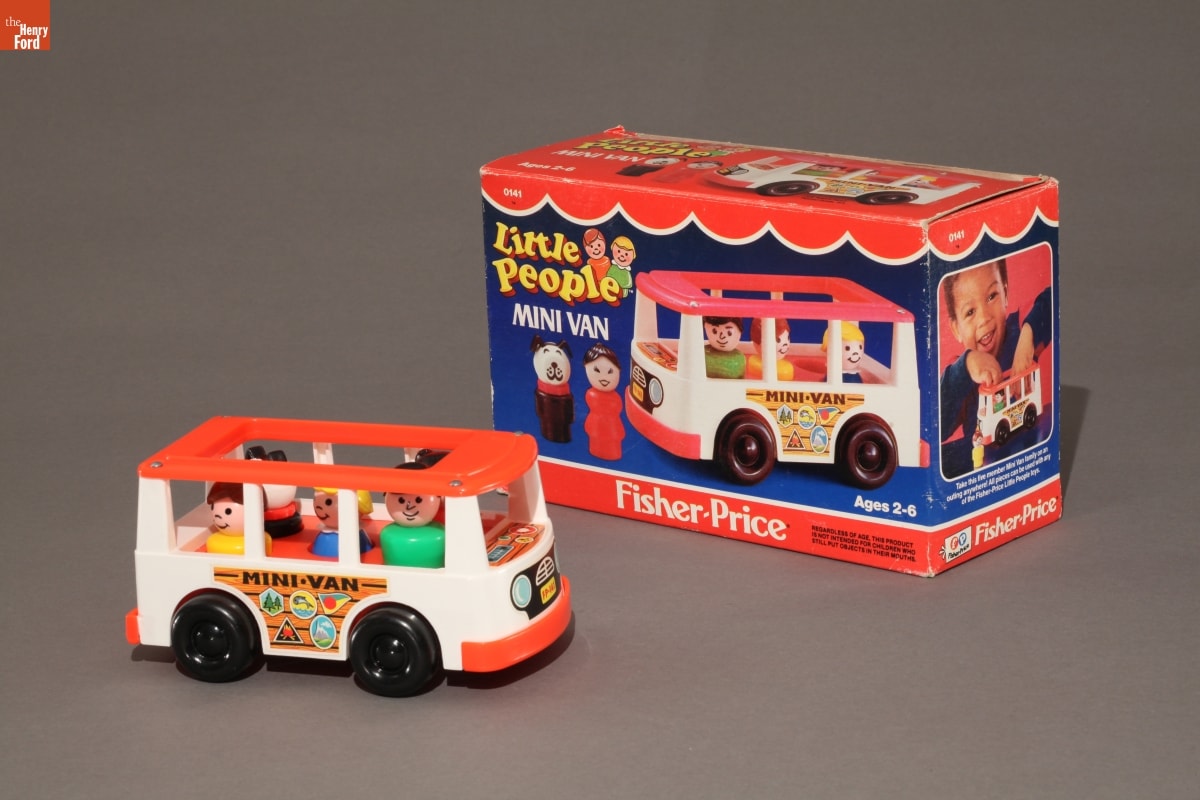
- Fisher-Price Toy Minivan, 1985-1990 - When Fisher-Price introduced this toy minibus in the late 1960s, it was designed to look like the small VW bus popular at the time. By the mid-1980s, when the minivan began to replace the station wagon as the family car of choice, Fisher-Price simply renamed this toy the mini-van -- though they didn't change the toy's design.
- 1985-1990
- Collections - Artifact
Fisher-Price Toy Minivan, 1985-1990
When Fisher-Price introduced this toy minibus in the late 1960s, it was designed to look like the small VW bus popular at the time. By the mid-1980s, when the minivan began to replace the station wagon as the family car of choice, Fisher-Price simply renamed this toy the mini-van -- though they didn't change the toy's design.