
Search
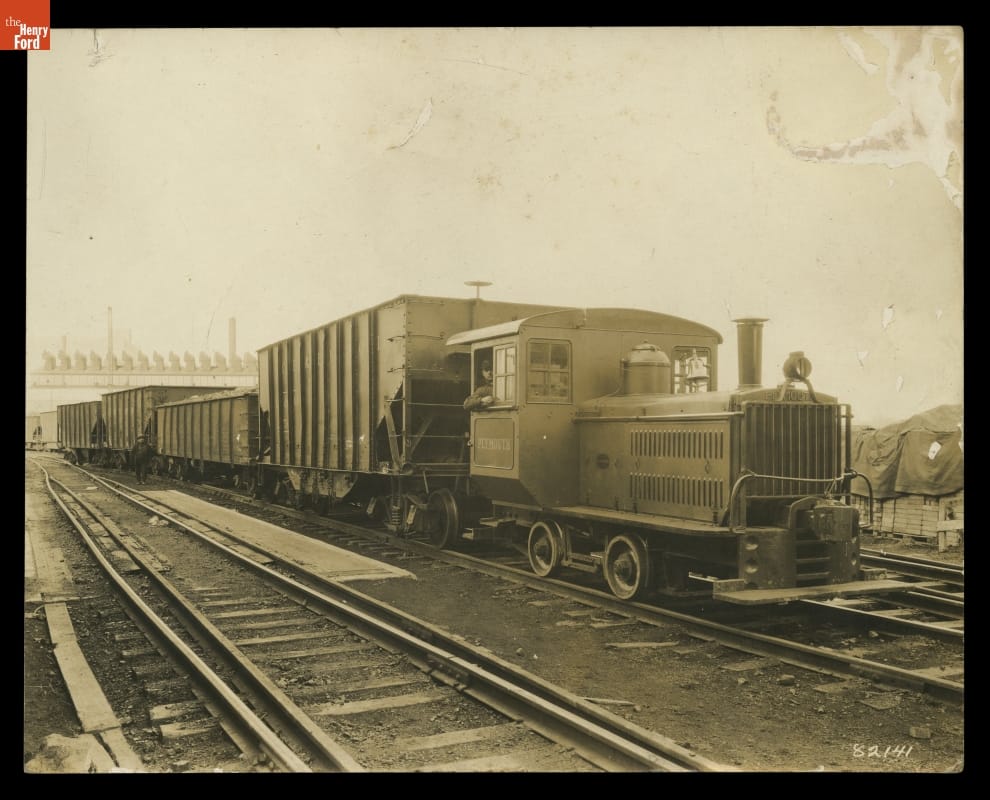
- Engineer Charles Vaughn in Plymouth Locomotive at Mistersky Power Plant, West Jefferson Avenue, Detroit, Michigan, circa 1930 - Engineer Charles Vaughn shuttles carloads of coal at Detroit's Mistersky Power Plant around 1930. The gasoline-powered Plymouth locomotive did not require the coal and water used by steam engines, and it could be operated by one person. The locomotive's light weight and simple operation made it ideal for small industrial railroads. This engine joined The Henry Ford's collection in 1979.
- circa 1930
- Collections - Artifact
Engineer Charles Vaughn in Plymouth Locomotive at Mistersky Power Plant, West Jefferson Avenue, Detroit, Michigan, circa 1930
Engineer Charles Vaughn shuttles carloads of coal at Detroit's Mistersky Power Plant around 1930. The gasoline-powered Plymouth locomotive did not require the coal and water used by steam engines, and it could be operated by one person. The locomotive's light weight and simple operation made it ideal for small industrial railroads. This engine joined The Henry Ford's collection in 1979.
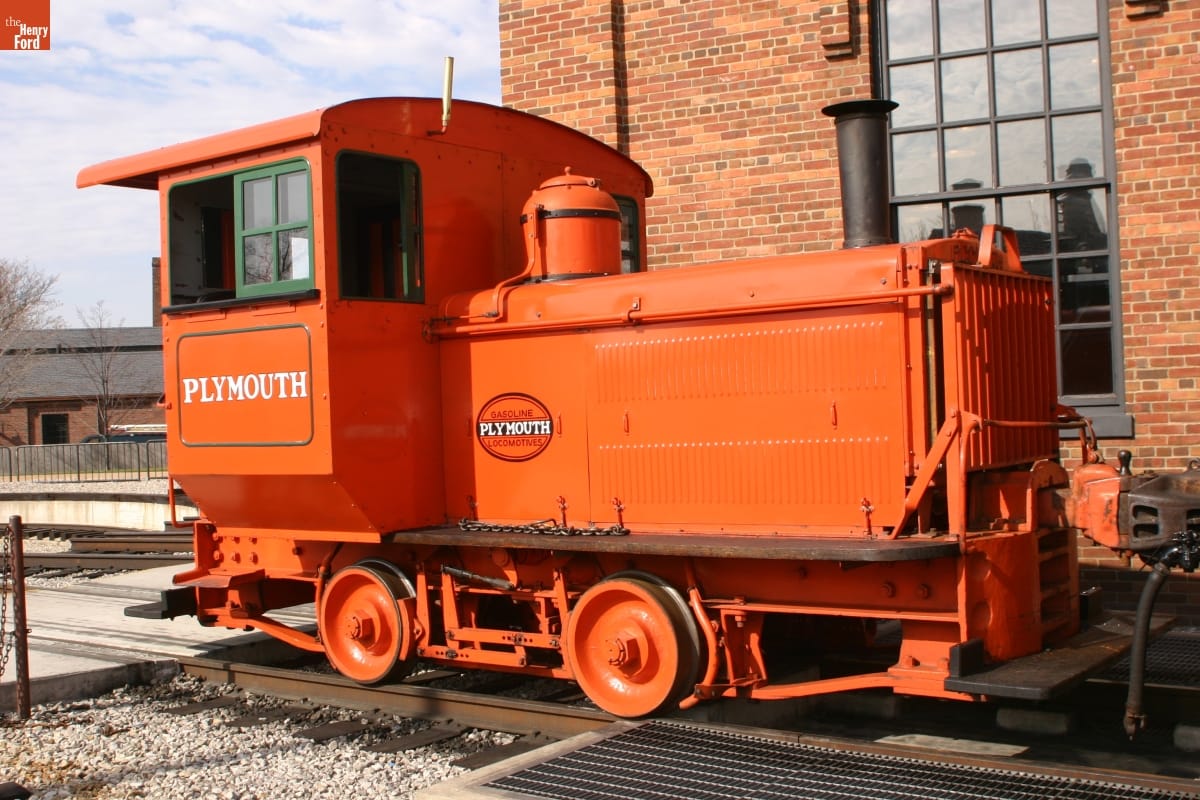
- 1927 Plymouth Gasoline-Mechanical Locomotive - Because they didn't use the coal and water required by steam engines, Plymouth gasoline locomotives were well suited to small industrial railroads. This engine shuttled coal cars at the Mistersky Power Plant in Detroit. Unlike modern diesel locomotives, which operate via electric motors powered by on-board generators, this locomotive's gas engine is mechanically connected to its wheels.
- 1927
- Collections - Artifact
1927 Plymouth Gasoline-Mechanical Locomotive
Because they didn't use the coal and water required by steam engines, Plymouth gasoline locomotives were well suited to small industrial railroads. This engine shuttled coal cars at the Mistersky Power Plant in Detroit. Unlike modern diesel locomotives, which operate via electric motors powered by on-board generators, this locomotive's gas engine is mechanically connected to its wheels.