
Search
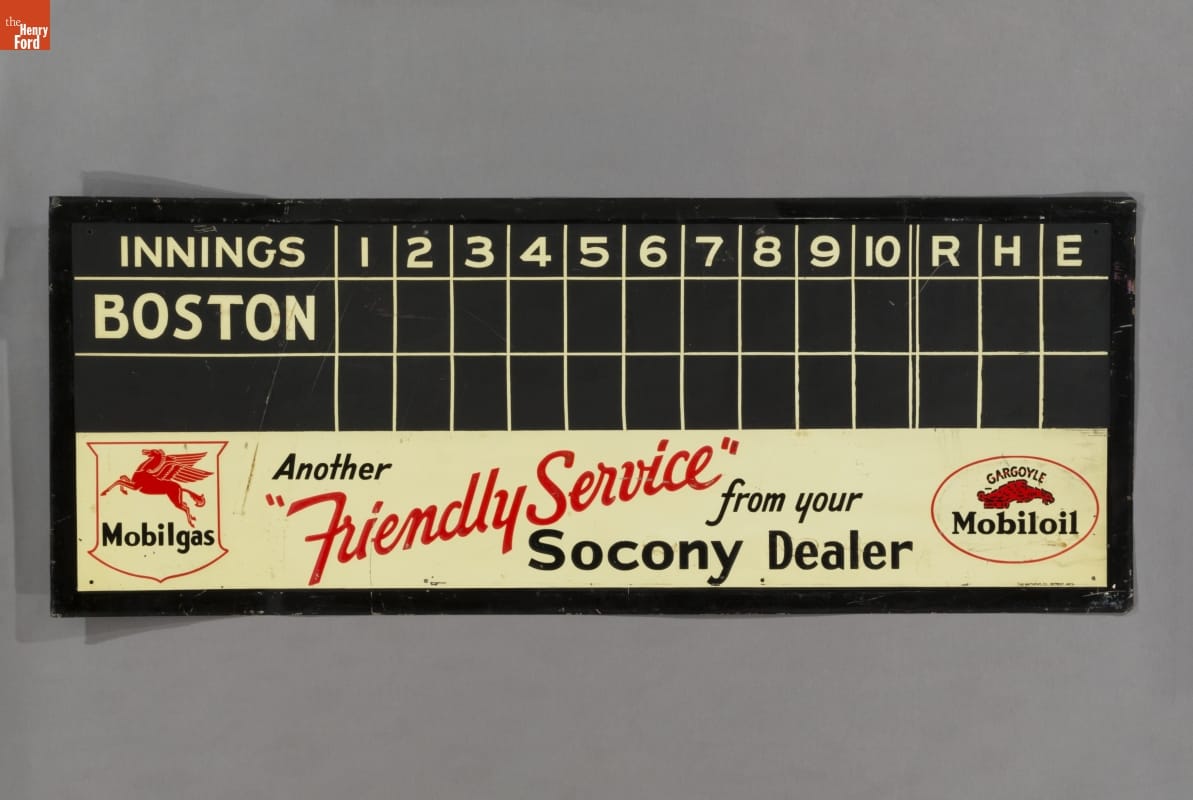
- Socony Dealer Scoreboard Sign, 1932-1955 - The Standard Oil Company of New York, branded as Socony, was formed in 1911. It merged with Vacuum Oil Company in 1931, and the new firm started promoting its products under the Mobilgas and Mobiloil names a few years later. Mobil built its reputation on economy, performance, and friendly service -- like the "friendly service" advertised on this baseball scoreboard.
- 1932-1955
- Collections - Artifact
Socony Dealer Scoreboard Sign, 1932-1955
The Standard Oil Company of New York, branded as Socony, was formed in 1911. It merged with Vacuum Oil Company in 1931, and the new firm started promoting its products under the Mobilgas and Mobiloil names a few years later. Mobil built its reputation on economy, performance, and friendly service -- like the "friendly service" advertised on this baseball scoreboard.
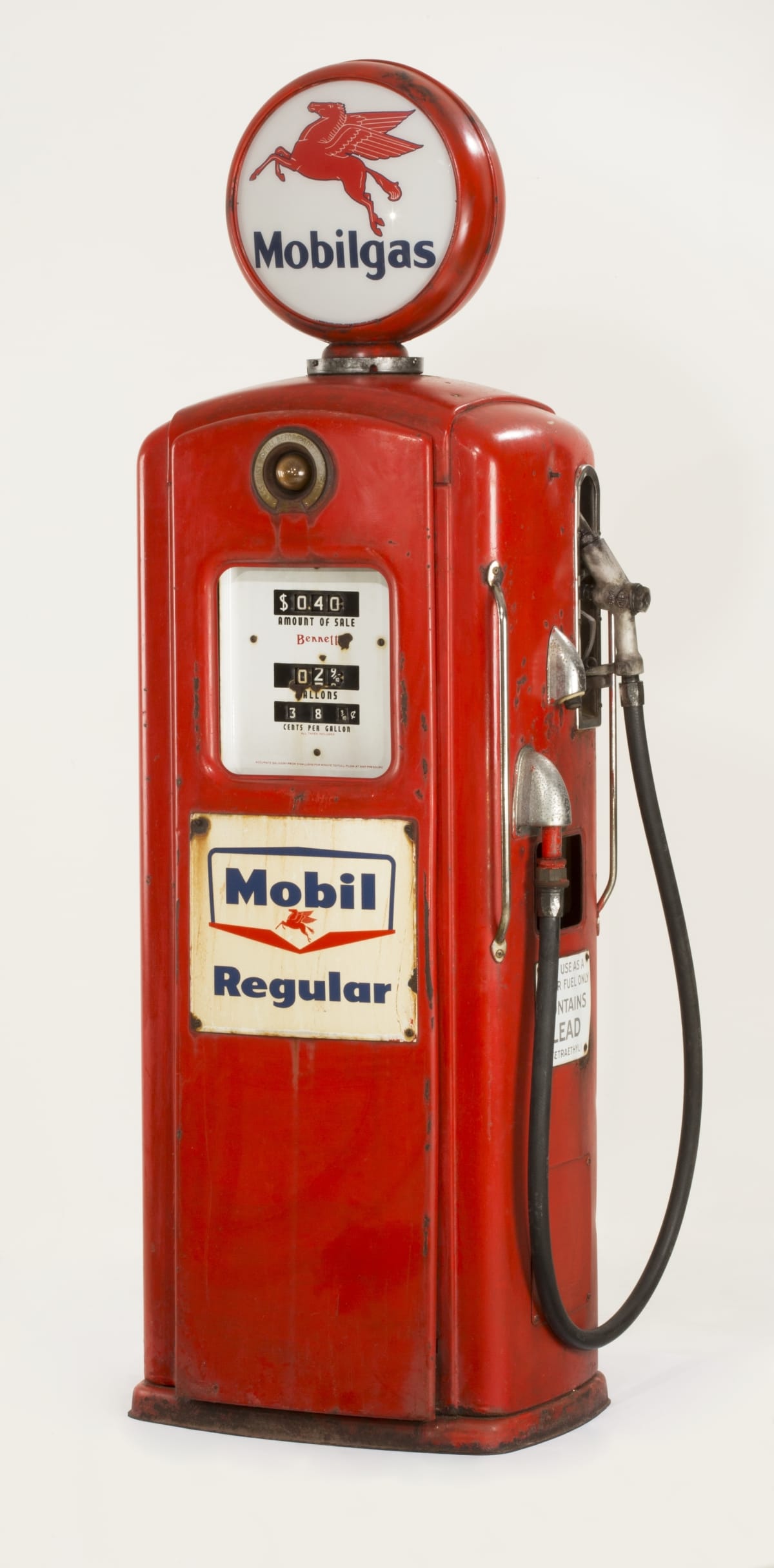
- Mobil Gas Pump, 1946-1960 - By the 1940s, "computing" pumps like this automatically calculated the amount of gasoline and the price. This type of pump did away with the price charts used by service station attendants. Mobil formed from a merger of Socony and Vacuum Oil in 1931 -- both with extensive networks of gas stations. Mobil began using Vacuum's flying red horse logo system-wide in 1934.
- 1946-1960
- Collections - Artifact
Mobil Gas Pump, 1946-1960
By the 1940s, "computing" pumps like this automatically calculated the amount of gasoline and the price. This type of pump did away with the price charts used by service station attendants. Mobil formed from a merger of Socony and Vacuum Oil in 1931 -- both with extensive networks of gas stations. Mobil began using Vacuum's flying red horse logo system-wide in 1934.
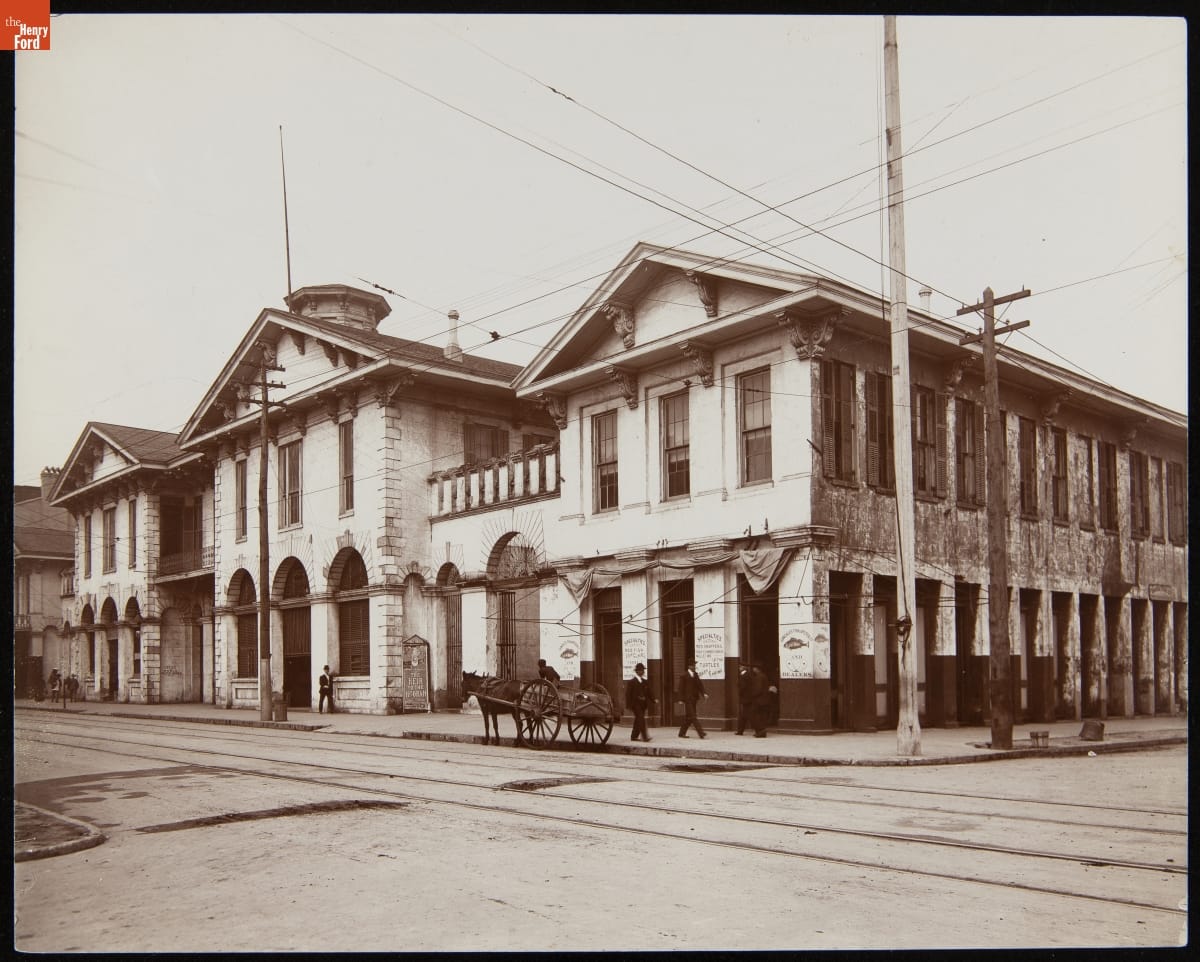
- Old Market House, Mobile, Alabama, -
- circa 1906
- Collections - Artifact
Old Market House, Mobile, Alabama,
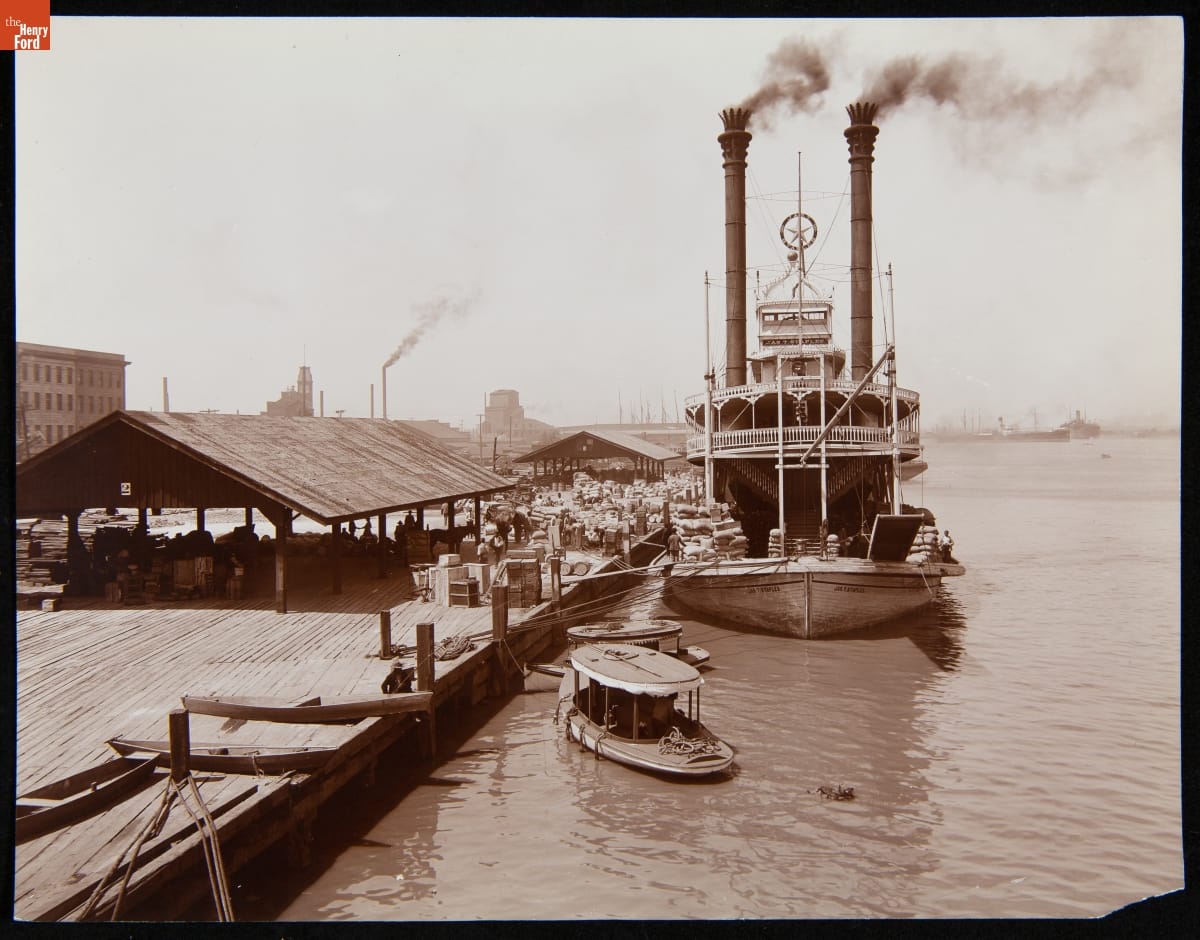
- Along the Docks, Mobile, Alabama, 1900-1915 -
- 1900-1915
- Collections - Artifact
Along the Docks, Mobile, Alabama, 1900-1915
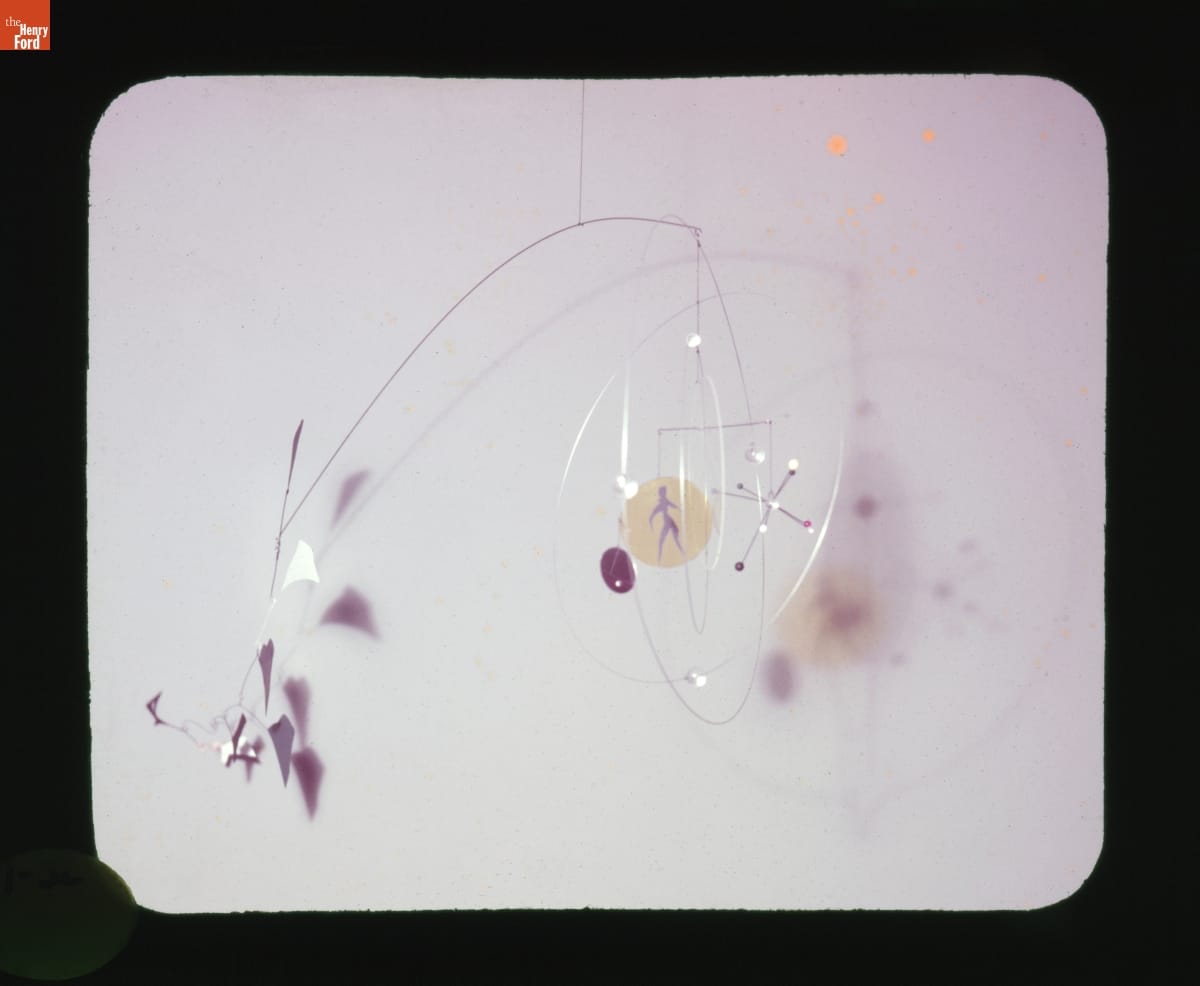
- Model of Mobile Designed by Malcolm Moran for the Ford Rotunda, circa 1953 - As part of its fiftieth anniversary celebration in 1953, Ford Motor Company refurbished the Rotunda--an exhibit area and hospitality center for Ford's Rouge factory tours. The company commissioned artists to design and install various design elements, including this mobile by sculptor Malcolm Moran, which symbolized progressive research and engineering. The completed mobile hung inside the entrance of the Rotunda.
- circa 1953
- Collections - Artifact
Model of Mobile Designed by Malcolm Moran for the Ford Rotunda, circa 1953
As part of its fiftieth anniversary celebration in 1953, Ford Motor Company refurbished the Rotunda--an exhibit area and hospitality center for Ford's Rouge factory tours. The company commissioned artists to design and install various design elements, including this mobile by sculptor Malcolm Moran, which symbolized progressive research and engineering. The completed mobile hung inside the entrance of the Rotunda.
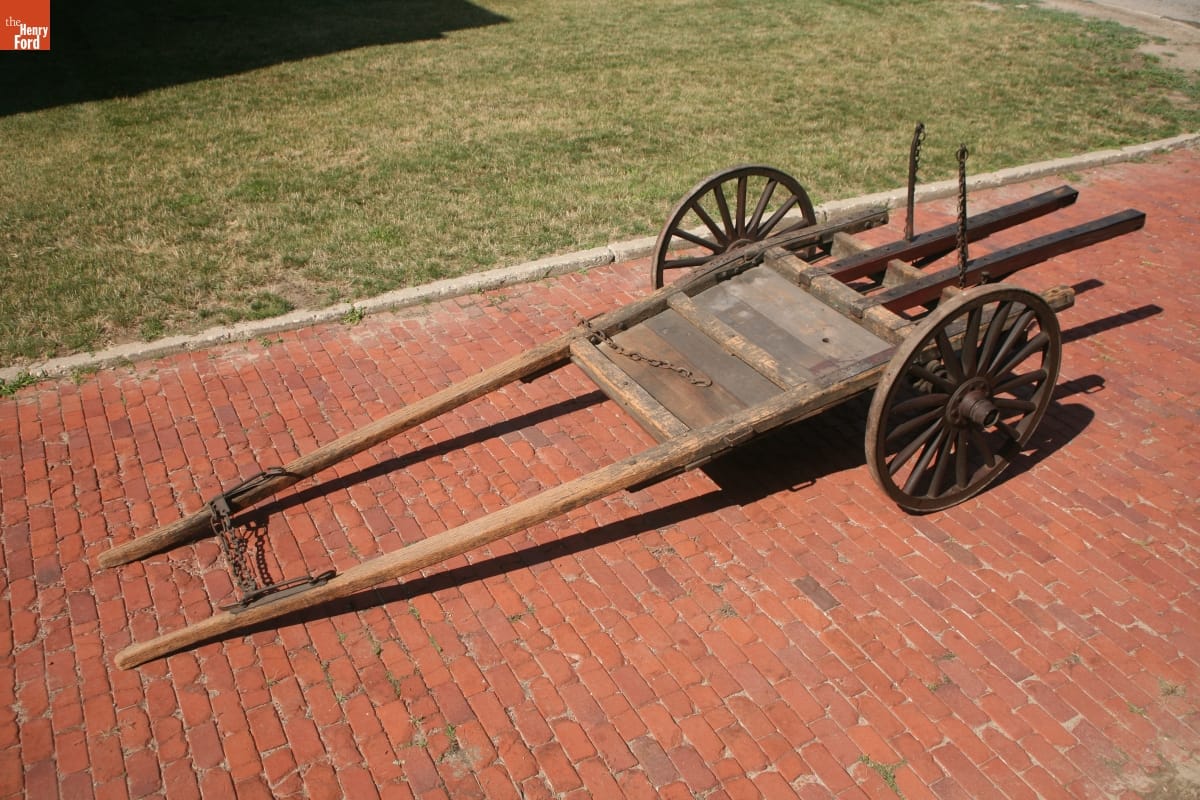
- Horse Drawn Dray, circa 1890 - Simple two-wheeled drays like this were the most common means of moving goods between docks, railroad stations, and businesses in pre-automotive American cities. This dray was made by Studebaker of South Bend, Indiana, once the nation's largest maker of horse-drawn vehicles. Studebaker entered the automobile business in 1902 and became a major builder before ending motor vehicle production in 1966.
- circa 1890
- Collections - Artifact
Horse Drawn Dray, circa 1890
Simple two-wheeled drays like this were the most common means of moving goods between docks, railroad stations, and businesses in pre-automotive American cities. This dray was made by Studebaker of South Bend, Indiana, once the nation's largest maker of horse-drawn vehicles. Studebaker entered the automobile business in 1902 and became a major builder before ending motor vehicle production in 1966.
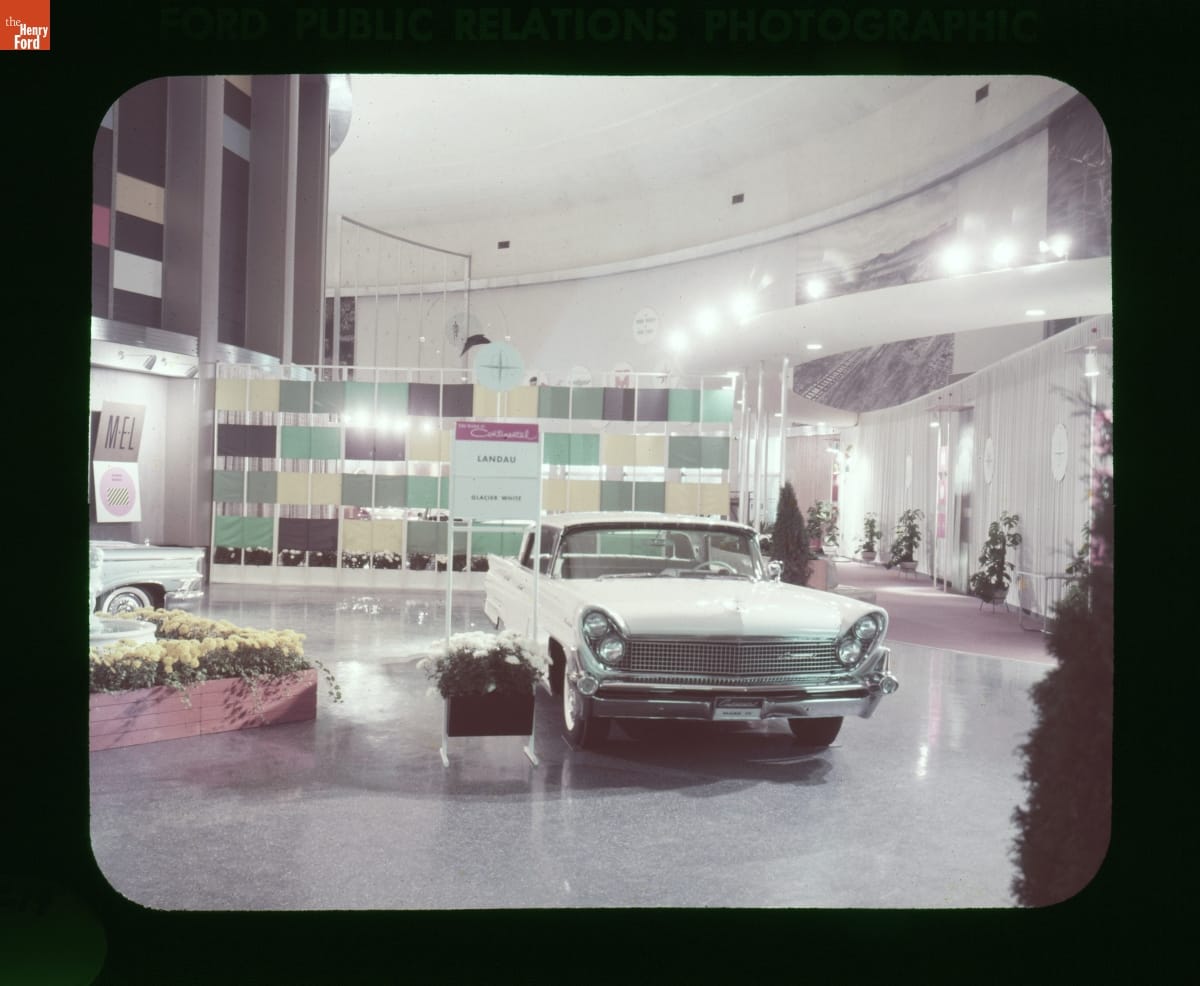
- The Mobile Designed by Malcolm Moran Suspended inside the Ford Rotunda Entrance, circa 1953 - As part of its fiftieth anniversary celebration in 1953, Ford Motor Company refurbished the Rotunda -- an exhibit area and hospitality center for Ford's Rouge factory tours. In addition to several dedicated exhibition spaces, the new design included an auditorium, a public lounge, and a themed outdoor ride. The Rotunda drew two million visitors annually until it was destroyed by fire in 1962.
- circa 1953
- Collections - Artifact
The Mobile Designed by Malcolm Moran Suspended inside the Ford Rotunda Entrance, circa 1953
As part of its fiftieth anniversary celebration in 1953, Ford Motor Company refurbished the Rotunda -- an exhibit area and hospitality center for Ford's Rouge factory tours. In addition to several dedicated exhibition spaces, the new design included an auditorium, a public lounge, and a themed outdoor ride. The Rotunda drew two million visitors annually until it was destroyed by fire in 1962.
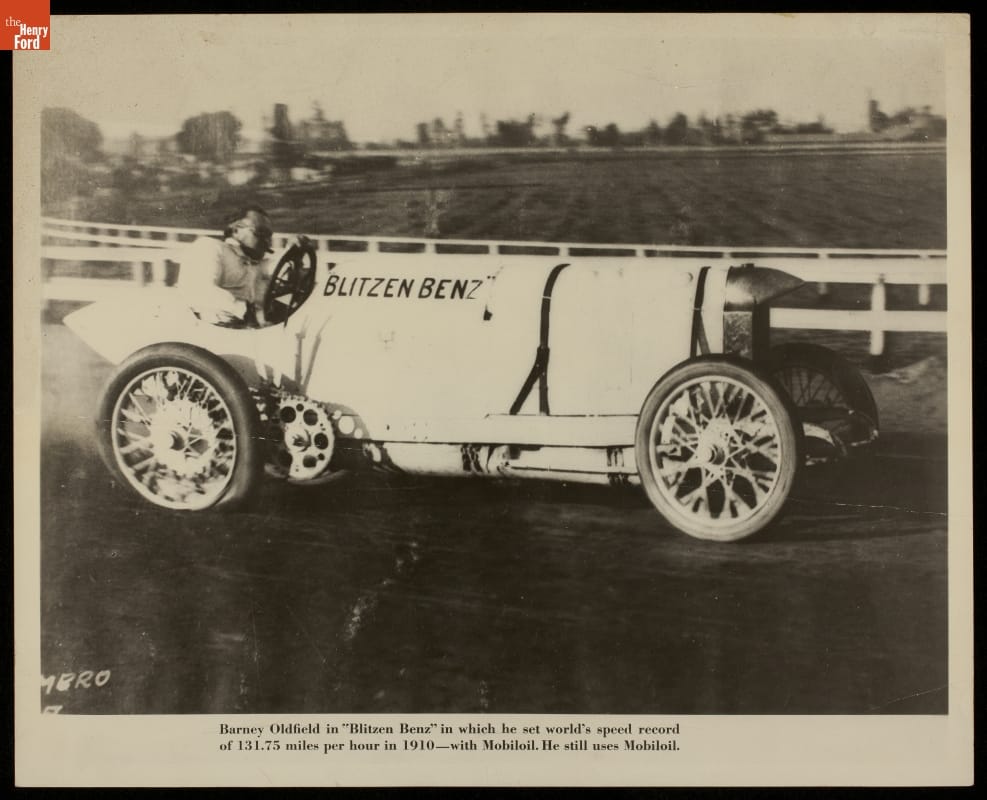
- Barney Oldfield Driving the "Blitzen Benz" Car on a Racetrack, 1910 - In 1910, Barney Oldfield piloted the "Blitzen Benz." This powerful, German-made machine was built for speed. In March, the existing world's land speed record fell as the race car -- then named "Lightning Benz" -- bolted down the sands of Daytona Beach, Florida, at over 131 miles per hour. With Oldfield behind the wheel, the vehicle broke numerous track records throughout the year.
- 1910
- Collections - Artifact
Barney Oldfield Driving the "Blitzen Benz" Car on a Racetrack, 1910
In 1910, Barney Oldfield piloted the "Blitzen Benz." This powerful, German-made machine was built for speed. In March, the existing world's land speed record fell as the race car -- then named "Lightning Benz" -- bolted down the sands of Daytona Beach, Florida, at over 131 miles per hour. With Oldfield behind the wheel, the vehicle broke numerous track records throughout the year.
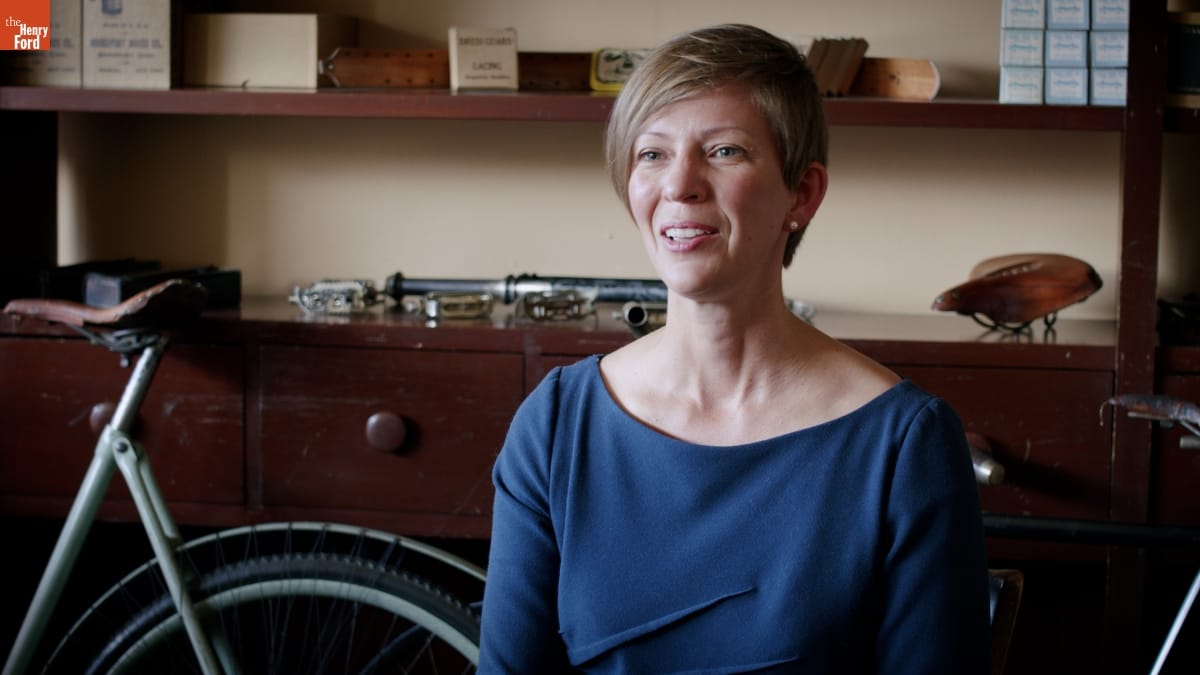
- "What's Next?," Clip for Interview with Jessica Robinson, August 28, 2020 - Jessica Robinson, co-founder of Detroit Mobility Lab, Michigan Mobility Institute, and Assembly Ventures, was the Spring 2020 Entrepreneur-in-Residence at The Henry Ford, funded by the William Davidson Foundation Initiative for Entrepreneurship. During her interview, Robinson describes how her organizations -- and her residency projects -- encourage technological education in the midst of dramatic new transportation technologies.
- August 28, 2020
- Collections - Artifact
"What's Next?," Clip for Interview with Jessica Robinson, August 28, 2020
Jessica Robinson, co-founder of Detroit Mobility Lab, Michigan Mobility Institute, and Assembly Ventures, was the Spring 2020 Entrepreneur-in-Residence at The Henry Ford, funded by the William Davidson Foundation Initiative for Entrepreneurship. During her interview, Robinson describes how her organizations -- and her residency projects -- encourage technological education in the midst of dramatic new transportation technologies.
- Ford Dealership in Mobile, Alabama, circa 1922 -
- circa 1922
- Collections - Artifact
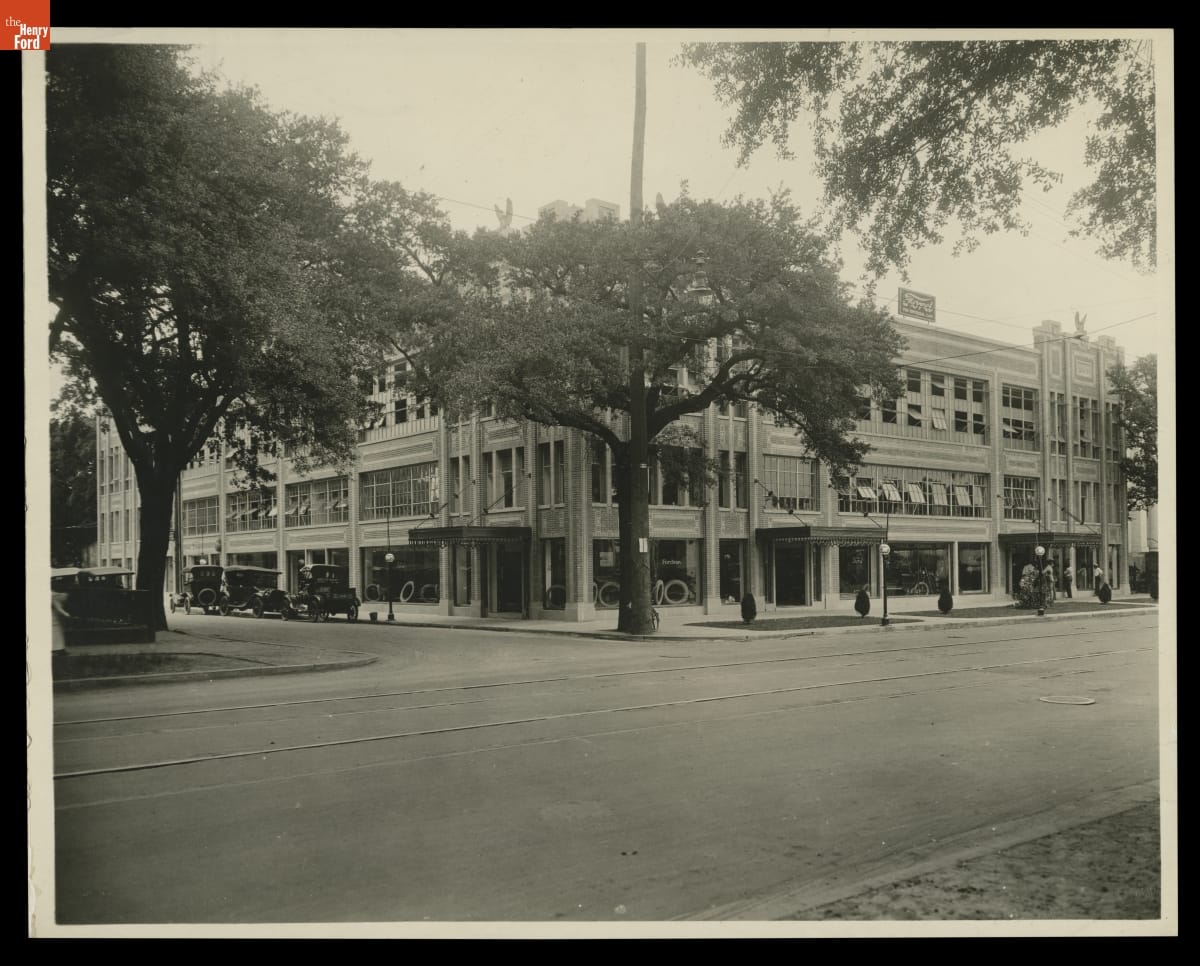
Ford Dealership in Mobile, Alabama, circa 1922