
Search
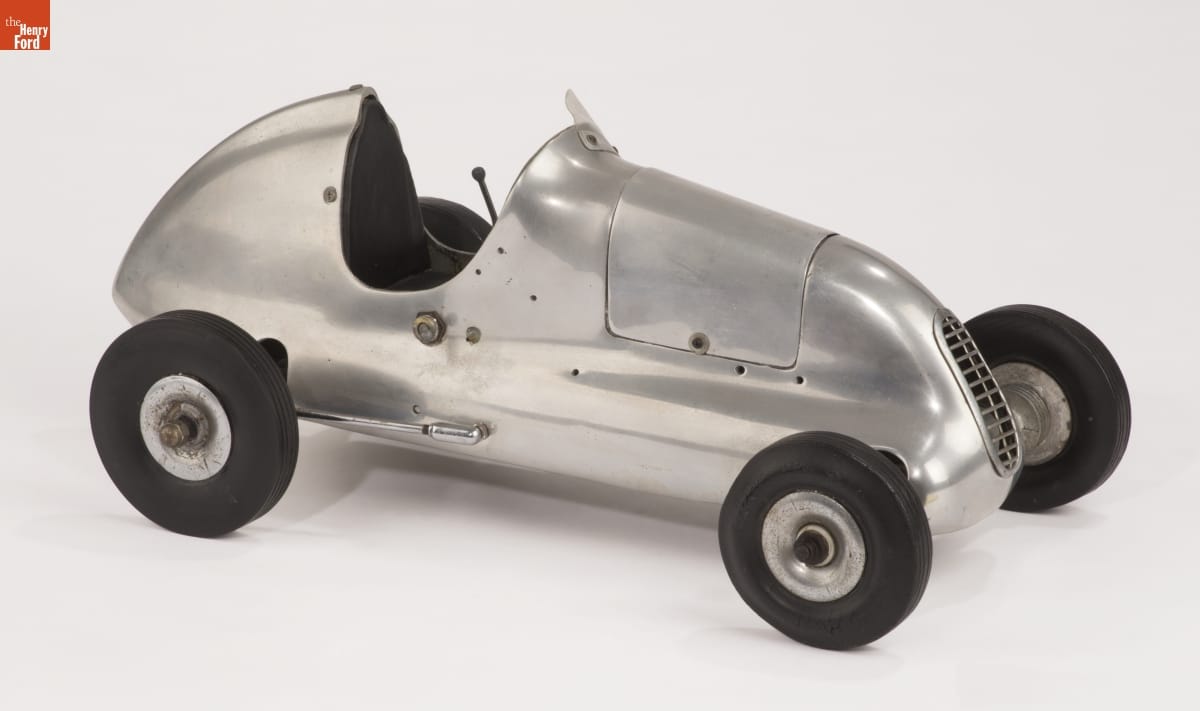
- Dooling "Mercury Second Series" Gas-Powered Racing Tether Car, 1940-1941 - Tether cars, gas-powered model race cars, were popular in the 1930s and 1940s. They were raced individually while tethered to a central pivot, or against each other on a scaled-down board track. This second series "Mercury" from Dooling Brothers features a cast aluminum body and frame. Its front-wheel-drive layout is somewhat unusual for a tether car.
- 1940-1941
- Collections - Artifact
Dooling "Mercury Second Series" Gas-Powered Racing Tether Car, 1940-1941
Tether cars, gas-powered model race cars, were popular in the 1930s and 1940s. They were raced individually while tethered to a central pivot, or against each other on a scaled-down board track. This second series "Mercury" from Dooling Brothers features a cast aluminum body and frame. Its front-wheel-drive layout is somewhat unusual for a tether car.
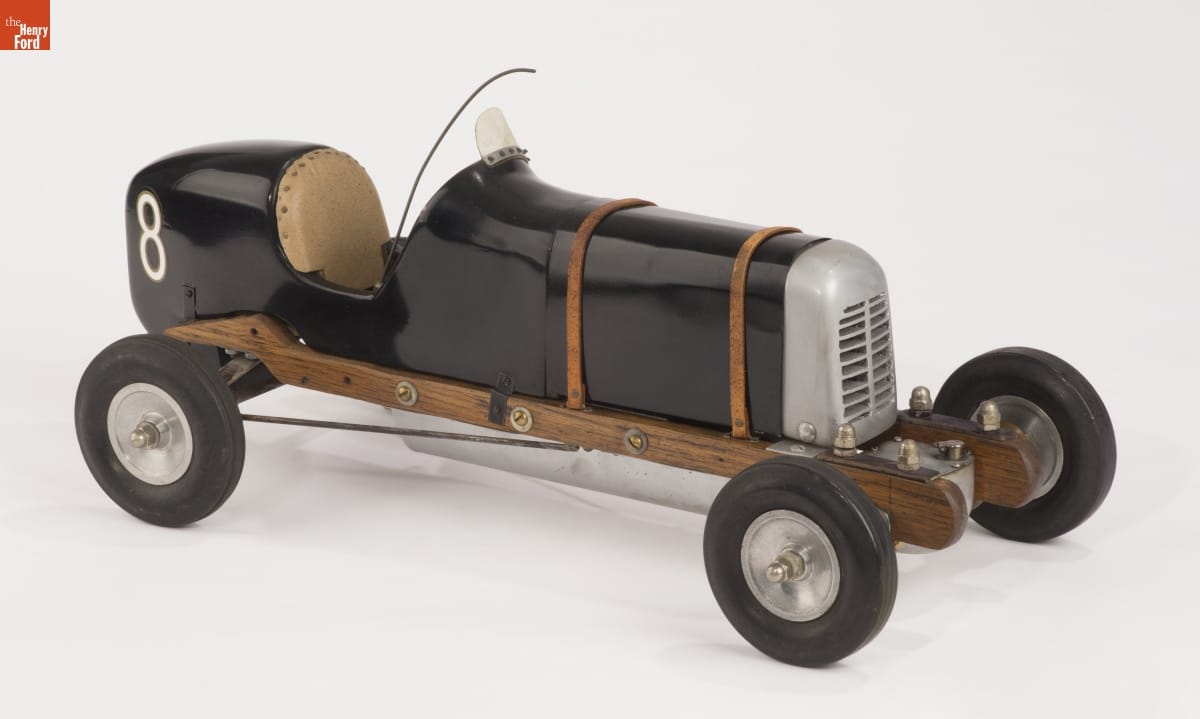
- Zip Grandell Special Gas-Powered Racing Tether Car, 1940-1950 - Tether cars, gas-powered model race cars, were popular in the 1930s and 1940s. They were raced individually while tethered to a central pivot, or against each other on a scaled-down board track. This is one of about six or eight models built by Charles "Zip" Grandell. Note the front-wheel-drive differential housing, and the suspension leaf springs at rear.
- 1940-1950
- Collections - Artifact
Zip Grandell Special Gas-Powered Racing Tether Car, 1940-1950
Tether cars, gas-powered model race cars, were popular in the 1930s and 1940s. They were raced individually while tethered to a central pivot, or against each other on a scaled-down board track. This is one of about six or eight models built by Charles "Zip" Grandell. Note the front-wheel-drive differential housing, and the suspension leaf springs at rear.
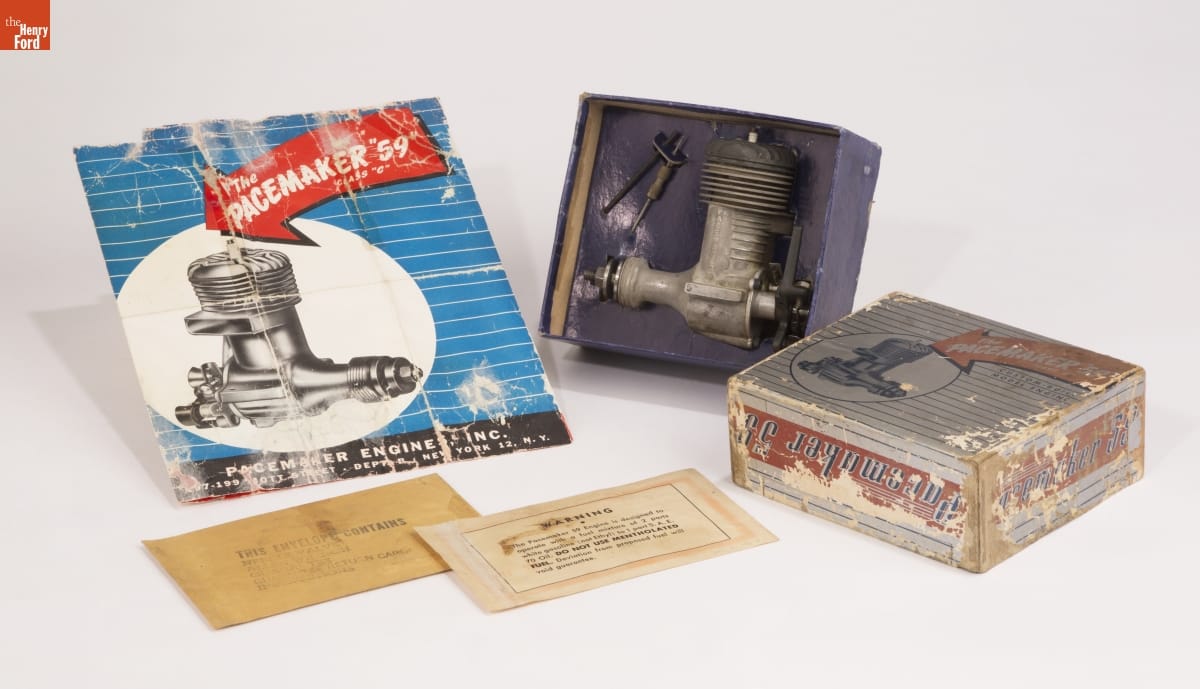
- Pacemaker "59" Engine, 1946-1947 - Tether cars, gas-powered model race cars, were popular in the 1930s and 1940s. They were raced individually while tethered to a central pivot, or against each other on a scaled-down board track. This Pacemaker "59" race engine was produced by Pacemaker Engines of New York, New York. "59" refers to its displacement of .594 cubic inches.
- 1946-1947
- Collections - Artifact
Pacemaker "59" Engine, 1946-1947
Tether cars, gas-powered model race cars, were popular in the 1930s and 1940s. They were raced individually while tethered to a central pivot, or against each other on a scaled-down board track. This Pacemaker "59" race engine was produced by Pacemaker Engines of New York, New York. "59" refers to its displacement of .594 cubic inches.
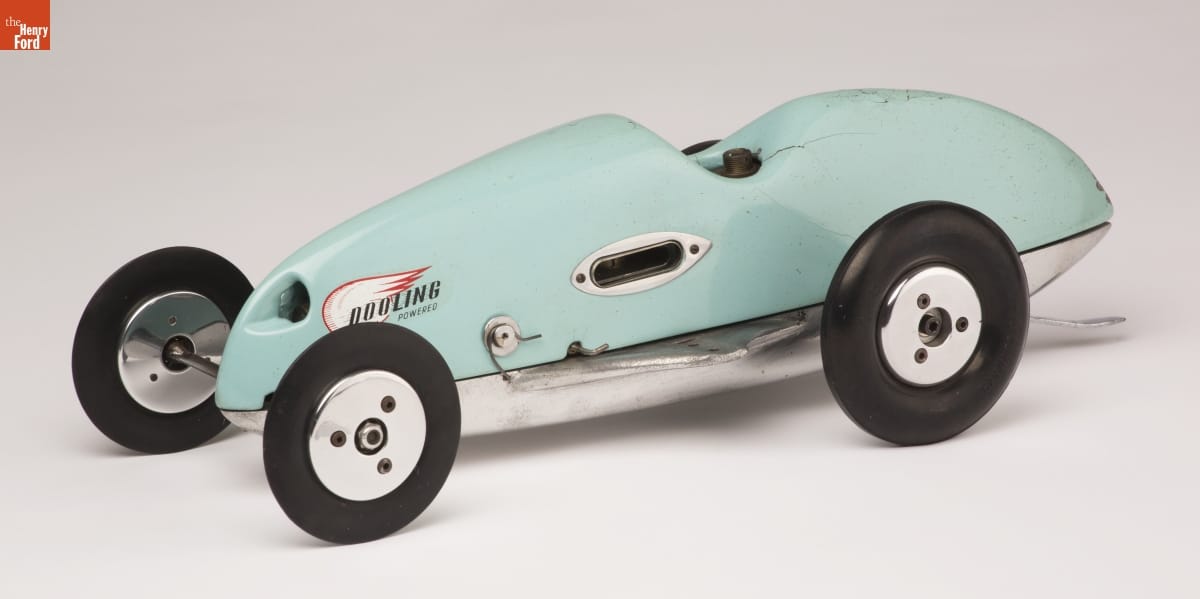
- Fox Proto "Long Tail" Gas-Powered Racing Tether Car, 1946-1947 - Tether cars, gas-powered model race cars, were popular in the 1930s and 1940s. They were raced individually while tethered to a central pivot, or against each other on a scaled-down board track. Fox Specialties of Oakland, California, manufactured this model circa 1946. Its frame is aluminum, while its wood upper body is pine.
- 1946-1947
- Collections - Artifact
Fox Proto "Long Tail" Gas-Powered Racing Tether Car, 1946-1947
Tether cars, gas-powered model race cars, were popular in the 1930s and 1940s. They were raced individually while tethered to a central pivot, or against each other on a scaled-down board track. Fox Specialties of Oakland, California, manufactured this model circa 1946. Its frame is aluminum, while its wood upper body is pine.
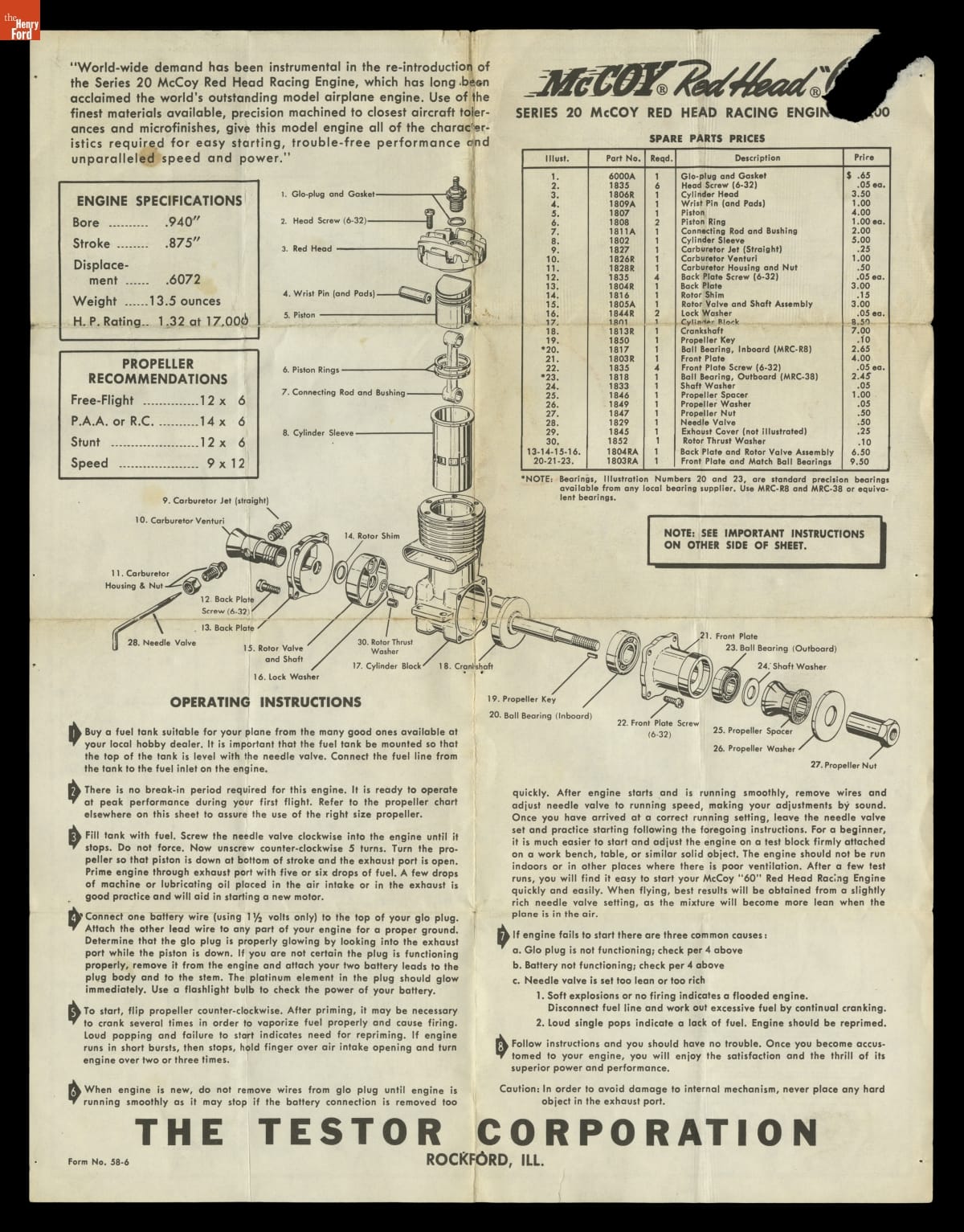
- Operating Instructions for the McCoy "Red Head 60" Racing Engine, 1956-1966 - Tether cars, gas-powered model race cars, were popular in the 1930s and 1940s. They were raced individually while tethered to a central pivot, or against each other on a scaled-down board track. The McCoy "60" racing engine produced 1.32 horsepower. The "60" referred to its displacement of .6072 cubic inches. The engine used a glow plug for ignition.
- 1956-1966
- Collections - Artifact
Operating Instructions for the McCoy "Red Head 60" Racing Engine, 1956-1966
Tether cars, gas-powered model race cars, were popular in the 1930s and 1940s. They were raced individually while tethered to a central pivot, or against each other on a scaled-down board track. The McCoy "60" racing engine produced 1.32 horsepower. The "60" referred to its displacement of .6072 cubic inches. The engine used a glow plug for ignition.
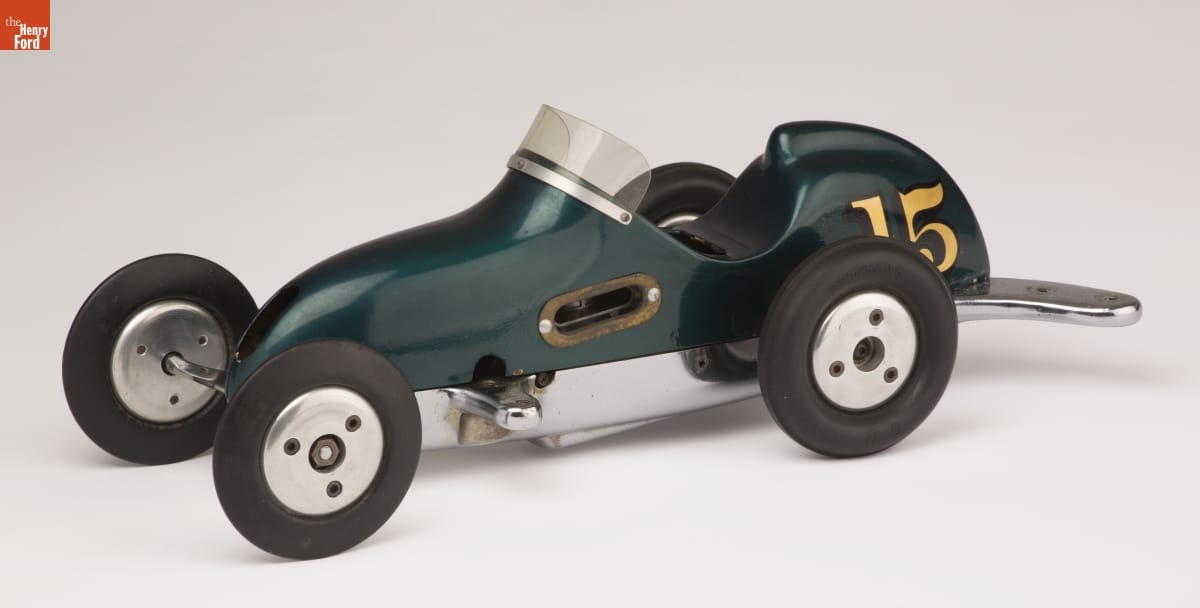
- C & R "Special" or "Curly Car" Gas-Powered Racing Tether Car, 1947-1950 - Tether cars, gas-powered model race cars, were popular in the 1930s and 1940s. They were raced individually while tethered to a central pivot, or against each other on a scaled-down board track. This model was produced by C & R Products Company of Hayward, California. C & R "Curly Cars" were nicknamed after company owner and racer Curly Glover.
- 1947-1950
- Collections - Artifact
C & R "Special" or "Curly Car" Gas-Powered Racing Tether Car, 1947-1950
Tether cars, gas-powered model race cars, were popular in the 1930s and 1940s. They were raced individually while tethered to a central pivot, or against each other on a scaled-down board track. This model was produced by C & R Products Company of Hayward, California. C & R "Curly Cars" were nicknamed after company owner and racer Curly Glover.
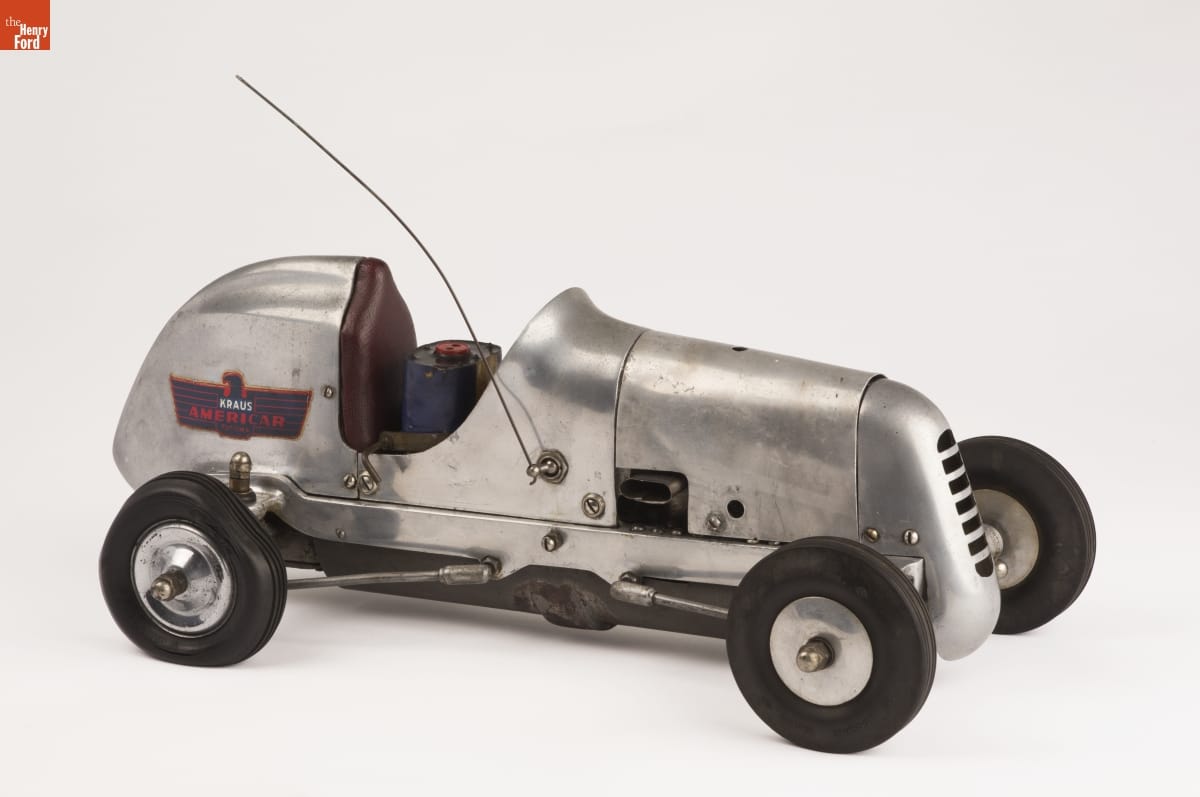
- Dooling "Mercury Deluxe" Gas-Powered Racing Tether Car, 1939-1940 - Tether cars, gas-powered model race cars, were popular in the 1930s and 1940s. They were raced individually while tethered to a central pivot, or against each other on a scaled-down board track. Dooling Brothers, of Los Angeles, California, manufactured a complete line of open-cockpit and streamliner models. Company owners Tom, Harris and Russell Dooling were successful tether car racers themselves.
- 1939-1940
- Collections - Artifact
Dooling "Mercury Deluxe" Gas-Powered Racing Tether Car, 1939-1940
Tether cars, gas-powered model race cars, were popular in the 1930s and 1940s. They were raced individually while tethered to a central pivot, or against each other on a scaled-down board track. Dooling Brothers, of Los Angeles, California, manufactured a complete line of open-cockpit and streamliner models. Company owners Tom, Harris and Russell Dooling were successful tether car racers themselves.
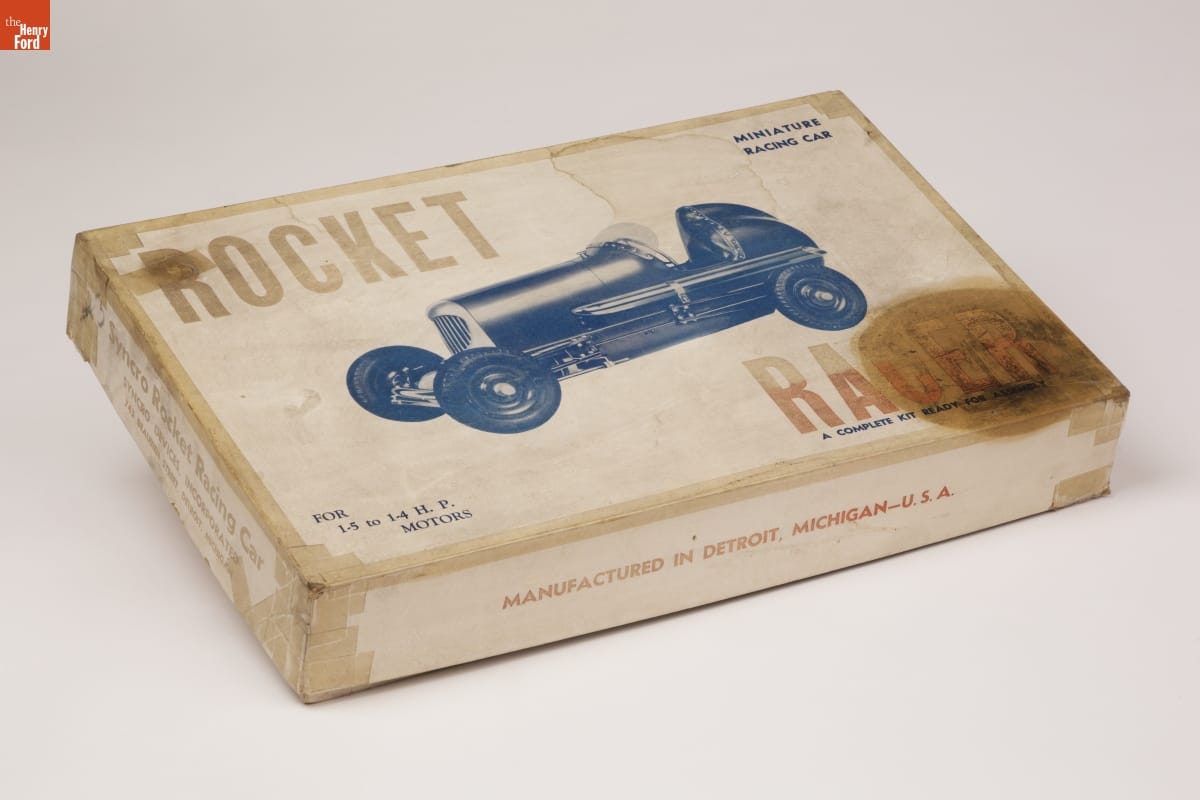
- Syncro Rocket Gas-Powered Racing Tether Car Kit, 1938-1939 - Tether cars, gas-powered model race cars, were popular in the 1930s and 1940s. They were raced individually while tethered to a central pivot, or against each other on a scaled-down board track. Syncro Devices, Inc., of Detroit, Michigan, made this model kit of an open-cockpit racer about 1938. Syncro built approximately 75-100 kits during its two years in production.
- 1938-1939
- Collections - Artifact
Syncro Rocket Gas-Powered Racing Tether Car Kit, 1938-1939
Tether cars, gas-powered model race cars, were popular in the 1930s and 1940s. They were raced individually while tethered to a central pivot, or against each other on a scaled-down board track. Syncro Devices, Inc., of Detroit, Michigan, made this model kit of an open-cockpit racer about 1938. Syncro built approximately 75-100 kits during its two years in production.
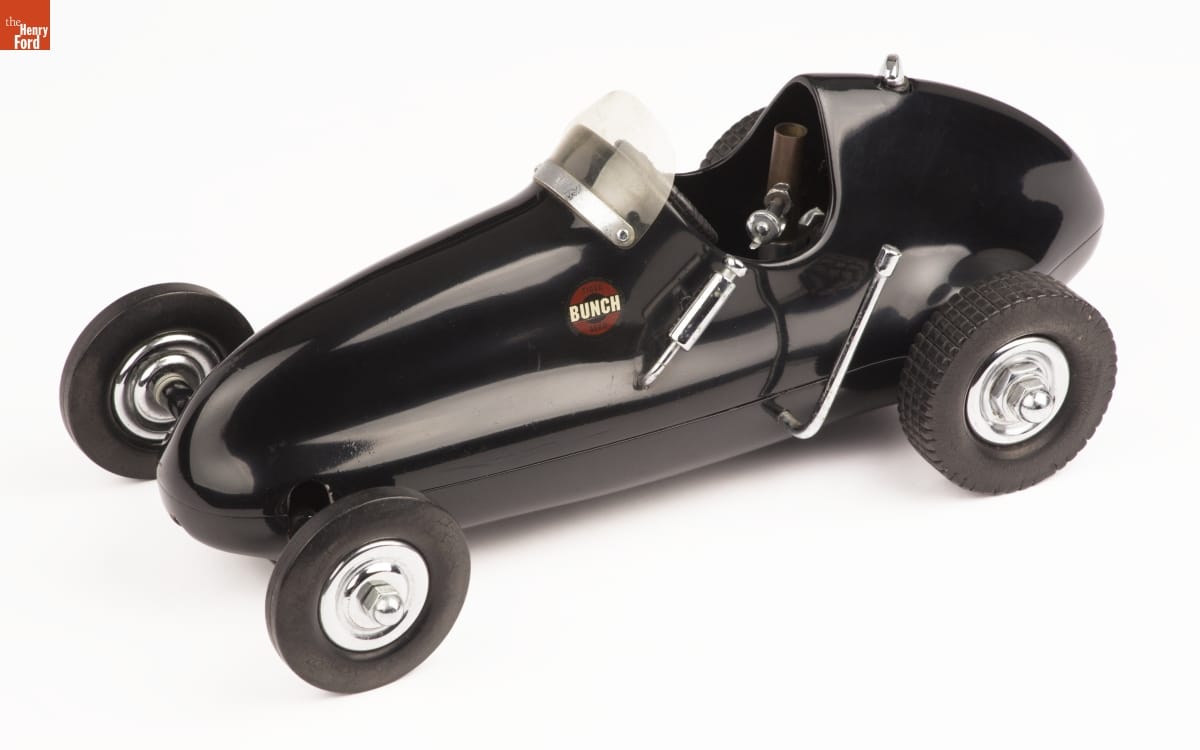
- Dooling "Pee Wee" Gas-Powered Racing Tether Car, 1942 - Tether cars, gas-powered model race cars, were popular in the 1930s and 1940s. They were raced individually while tethered to a central pivot, or against each other on a scaled-down board track. Dooling Brothers, of Los Angeles, California, manufactured a complete line of open-cockpit and streamliner models. Company owners Tom, Harris and Russell Dooling were successful tether car racers themselves.
- 1942
- Collections - Artifact
Dooling "Pee Wee" Gas-Powered Racing Tether Car, 1942
Tether cars, gas-powered model race cars, were popular in the 1930s and 1940s. They were raced individually while tethered to a central pivot, or against each other on a scaled-down board track. Dooling Brothers, of Los Angeles, California, manufactured a complete line of open-cockpit and streamliner models. Company owners Tom, Harris and Russell Dooling were successful tether car racers themselves.
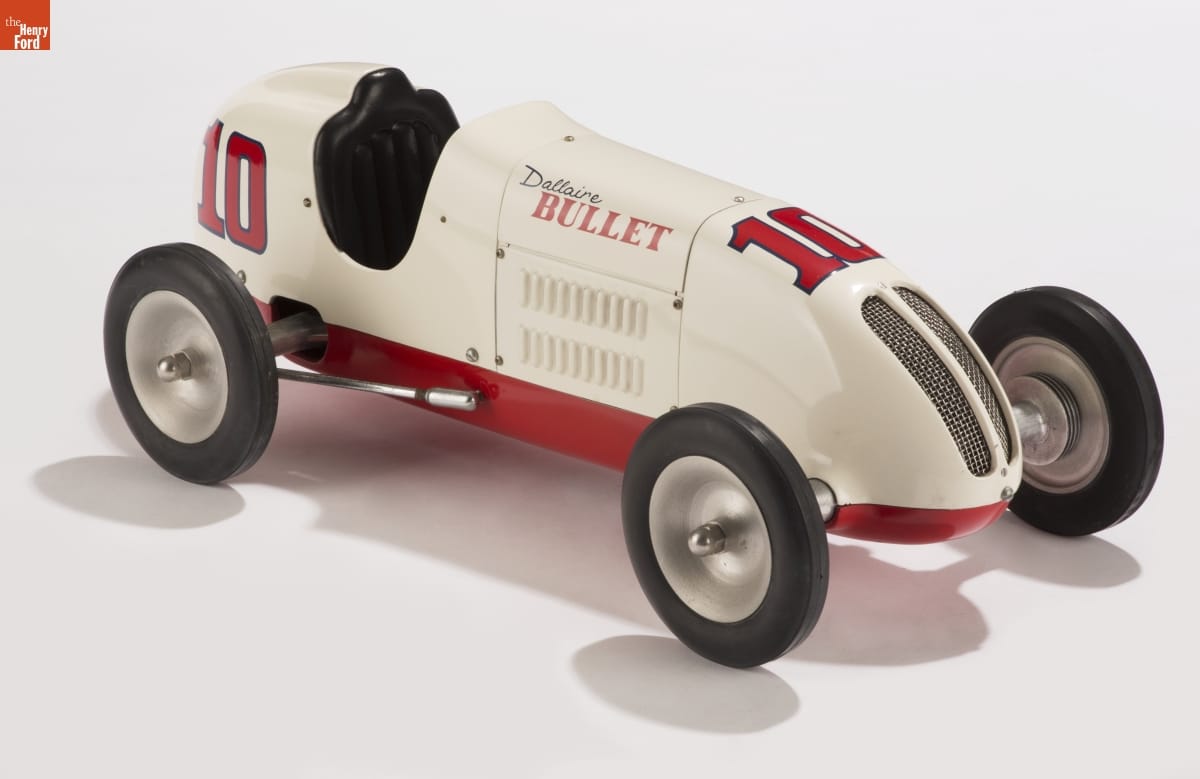
- Dallaire Bullet Gas-Powered Racing Tether Car, 1940-1941 - Tether cars, gas-powered model race cars, were popular in the 1930s and 1940s. They were raced individually while tethered to a central pivot, or against each other on a scaled-down board track. Many of the model racers were powered by model airplane engines, so it's not surprising that model airplane companies -- like Dallaire -- began producing tether cars.
- 1940-1941
- Collections - Artifact
Dallaire Bullet Gas-Powered Racing Tether Car, 1940-1941
Tether cars, gas-powered model race cars, were popular in the 1930s and 1940s. They were raced individually while tethered to a central pivot, or against each other on a scaled-down board track. Many of the model racers were powered by model airplane engines, so it's not surprising that model airplane companies -- like Dallaire -- began producing tether cars.