
Search
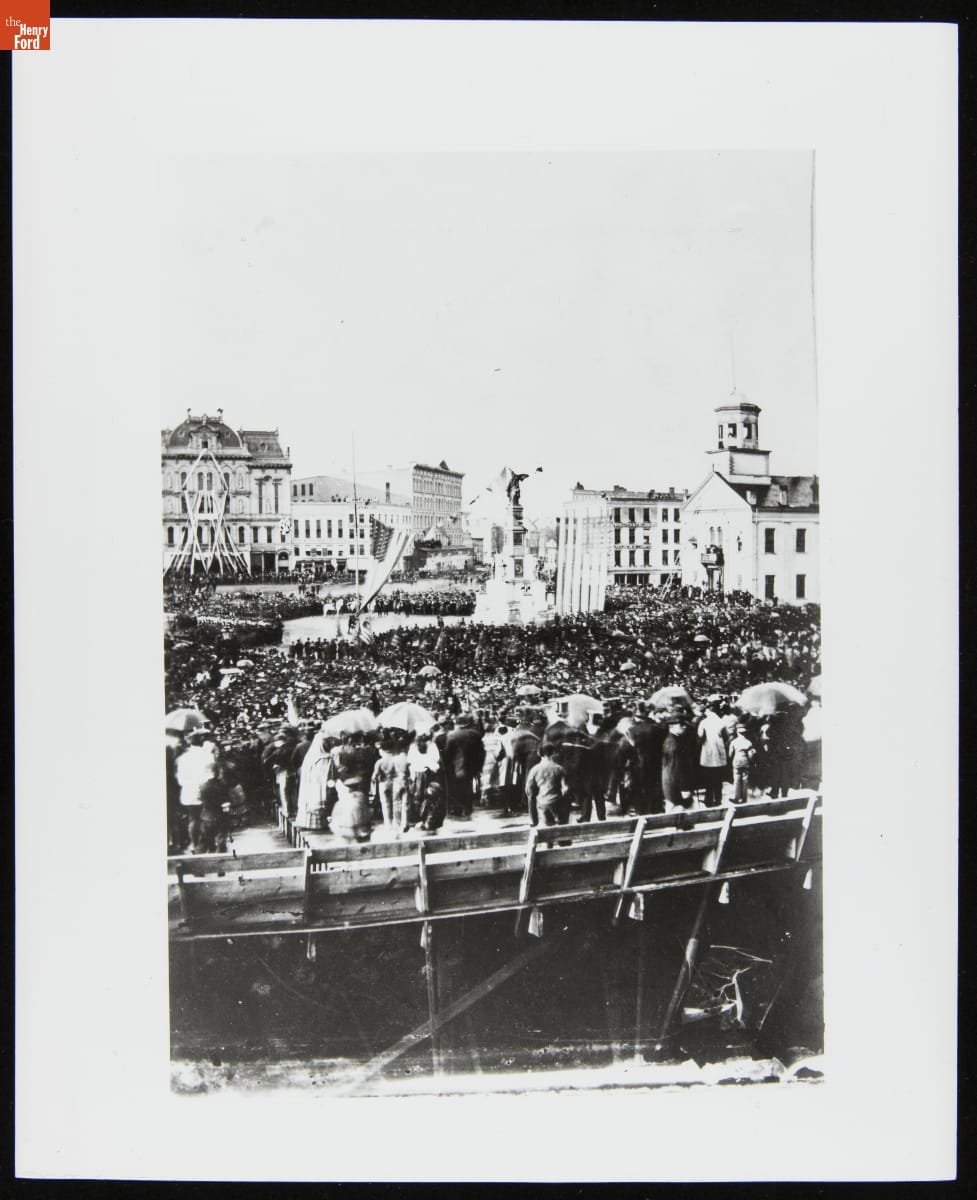
- Unveiling the Michigan Sodliers' and Sailors' Monument, Detroit, Michigan, April 9, 1872 -
- April 09, 1872
- Collections - Artifact
Unveiling the Michigan Sodliers' and Sailors' Monument, Detroit, Michigan, April 9, 1872
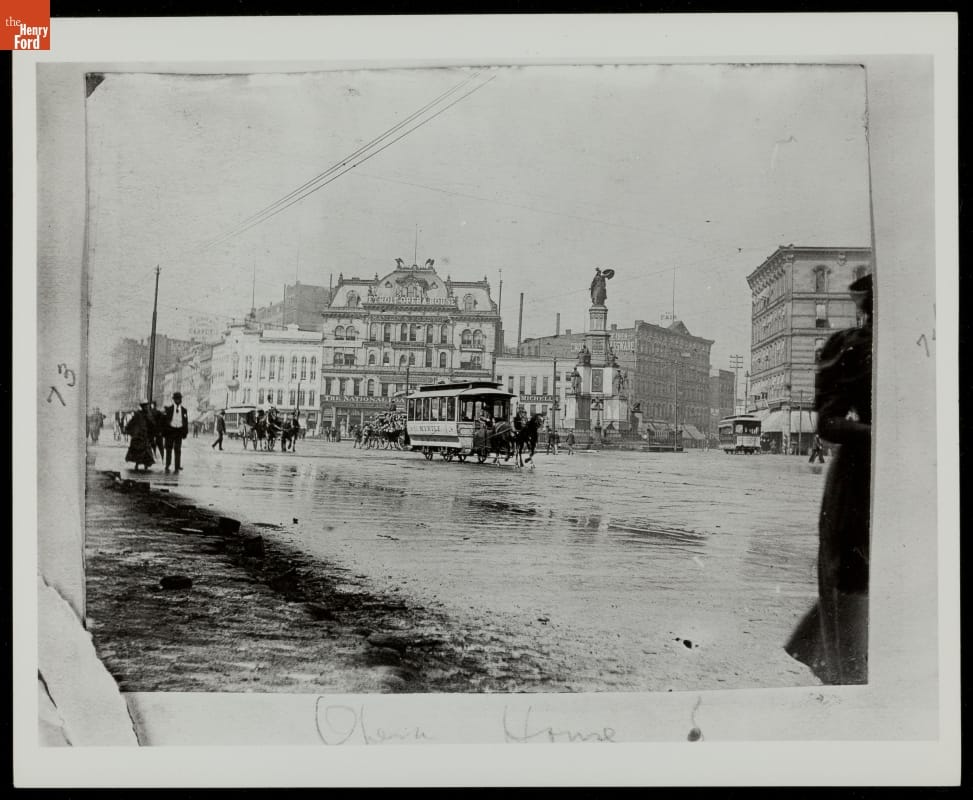
- Detroit Opera House, Detroit, Michigan, circa 1890 - The first Detroit Opera House stands behind a horse-drawn streetcar at Campus Martius, a former military training ground that became the "point of origin" of Detroit's coordinate street system and site of the Michigan Soldiers' and Sailors' Monument. Electric streetcar lines (note the wires strung above the streets) coexisted with horsecars in turn-of-the-ninteenth-century Detroit.
- circa 1890
- Collections - Artifact
Detroit Opera House, Detroit, Michigan, circa 1890
The first Detroit Opera House stands behind a horse-drawn streetcar at Campus Martius, a former military training ground that became the "point of origin" of Detroit's coordinate street system and site of the Michigan Soldiers' and Sailors' Monument. Electric streetcar lines (note the wires strung above the streets) coexisted with horsecars in turn-of-the-ninteenth-century Detroit.
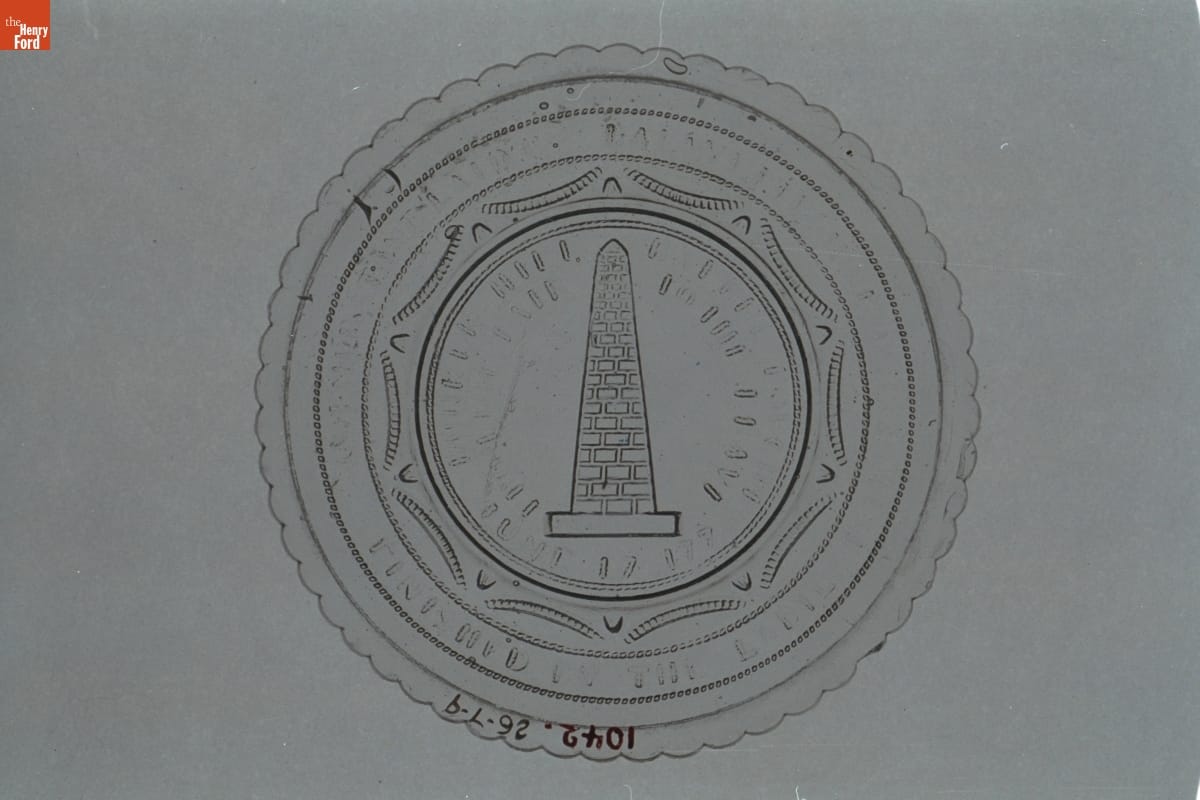
- Cup Plate, 1843 - Americans in the early 19th century poured hot tea into their saucers to cool -- leaving the staining liquid around the teacup's base. Hostesses would provide guests with cup plates to prevent damage to tablecloths and wood. Pressed glass cup plates were popular from the 1820s to the 1860s. Pressed designs varied from purely decorative to images of famous men, places and events.
- 1843
- Collections - Artifact
Cup Plate, 1843
Americans in the early 19th century poured hot tea into their saucers to cool -- leaving the staining liquid around the teacup's base. Hostesses would provide guests with cup plates to prevent damage to tablecloths and wood. Pressed glass cup plates were popular from the 1820s to the 1860s. Pressed designs varied from purely decorative to images of famous men, places and events.
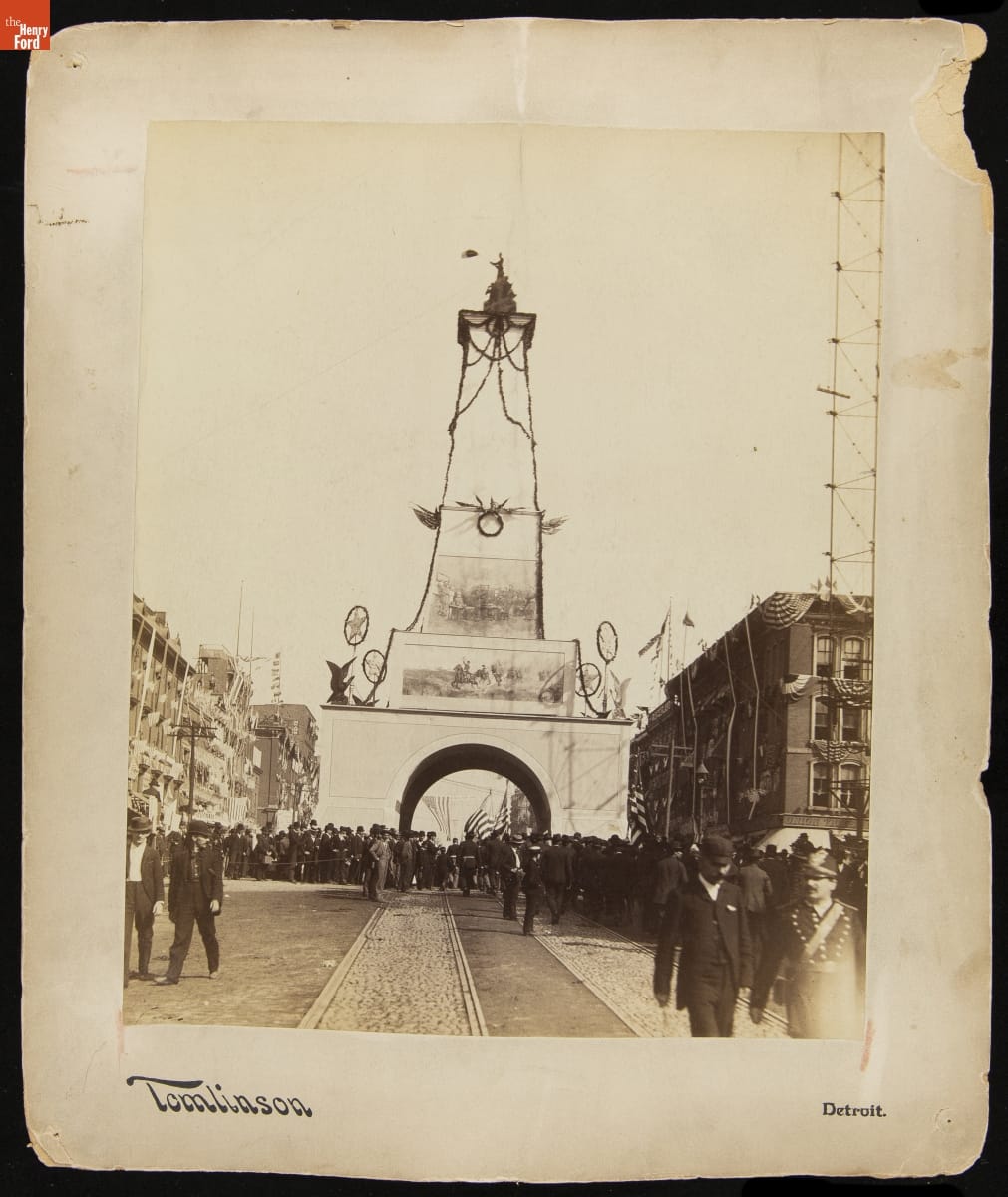
- Arch Erected at Woodward Avenue and Jefferson Avenue during the 1891 G.A.R. Encampment in Detroit, Michigan - The Grand Army of the Republic (G.A.R.), a Union veterans' organization formed in 1866, held state and national conventions or "encampments" where members could reunite with other Civil War veterans. Encampment attendees paraded through town, gathered at receptions, toured local attractions, and reminisced about shared wartime experiences. The G.A.R. sponsored these meetings for more than 80 years.
- 1891
- Collections - Artifact
Arch Erected at Woodward Avenue and Jefferson Avenue during the 1891 G.A.R. Encampment in Detroit, Michigan
The Grand Army of the Republic (G.A.R.), a Union veterans' organization formed in 1866, held state and national conventions or "encampments" where members could reunite with other Civil War veterans. Encampment attendees paraded through town, gathered at receptions, toured local attractions, and reminisced about shared wartime experiences. The G.A.R. sponsored these meetings for more than 80 years.
- "View Master Bicentennial Gift Pak," 1976 -
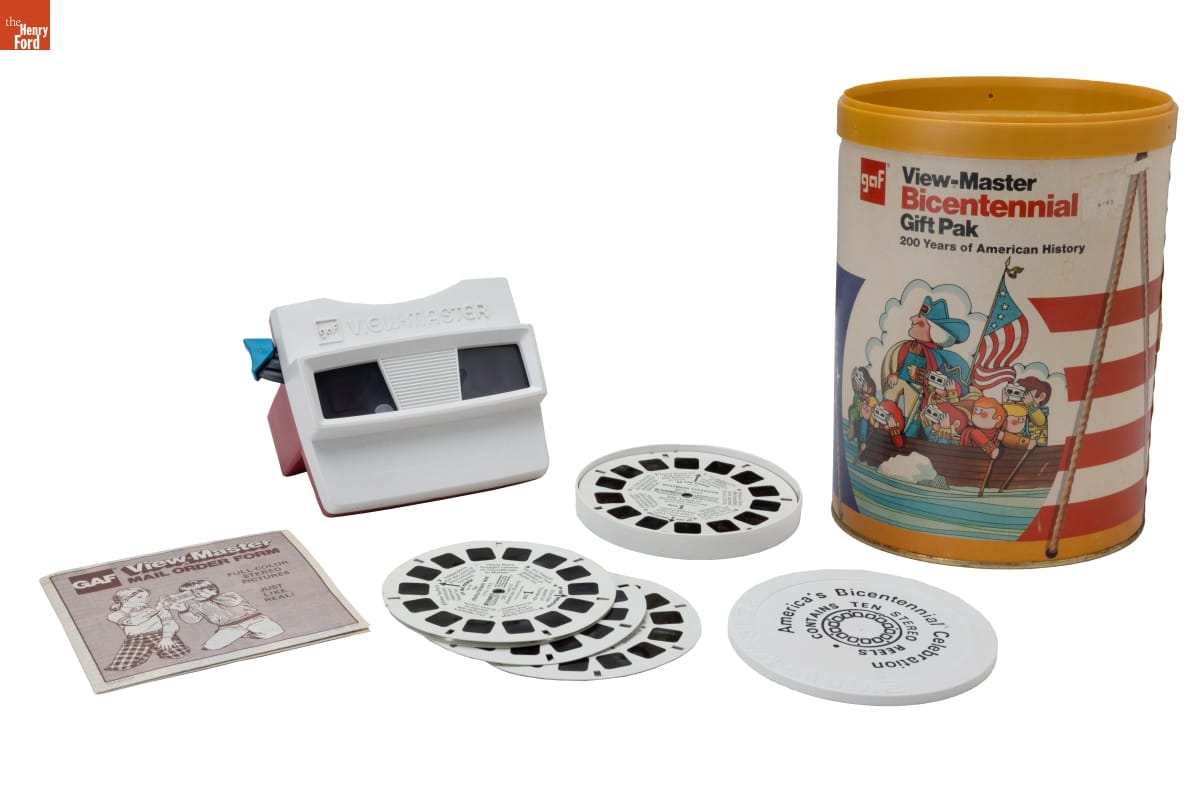
- 1976
- Collections - Artifact
"View Master Bicentennial Gift Pak," 1976
- Wright Brothers Memorial, Kill Devil Hills, North Carolina, 1928-1929 - This monument marked the spot where Wilbur Wright assembled the Wright brothers' first experimental glider in 1900. The marker was the brainchild of William Tate, who hosted the Wrights on their trips to North Carolina. Funds for the monument were raised entirely by the citizens of Kitty Hawk, ensuring that it was a local tribute to the pioneering aviators.
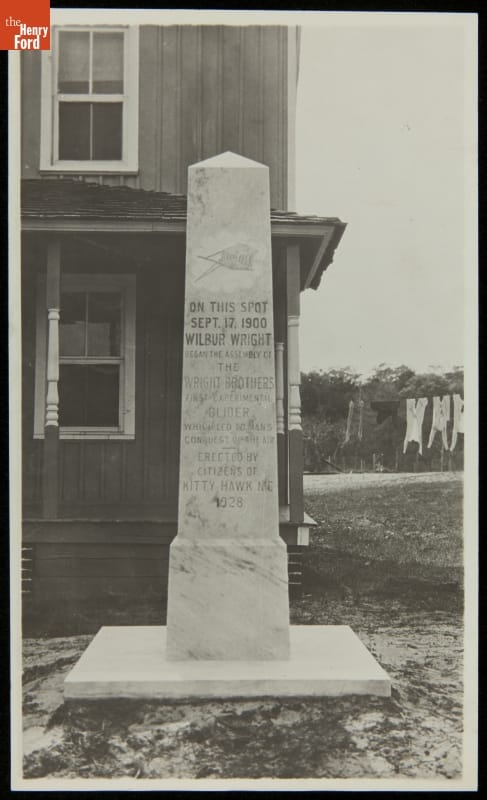
- 1928-1929
- Collections - Artifact
Wright Brothers Memorial, Kill Devil Hills, North Carolina, 1928-1929
This monument marked the spot where Wilbur Wright assembled the Wright brothers' first experimental glider in 1900. The marker was the brainchild of William Tate, who hosted the Wrights on their trips to North Carolina. Funds for the monument were raised entirely by the citizens of Kitty Hawk, ensuring that it was a local tribute to the pioneering aviators.
- Memorial Painting for Elijah and Lucy White, circa 1826 -
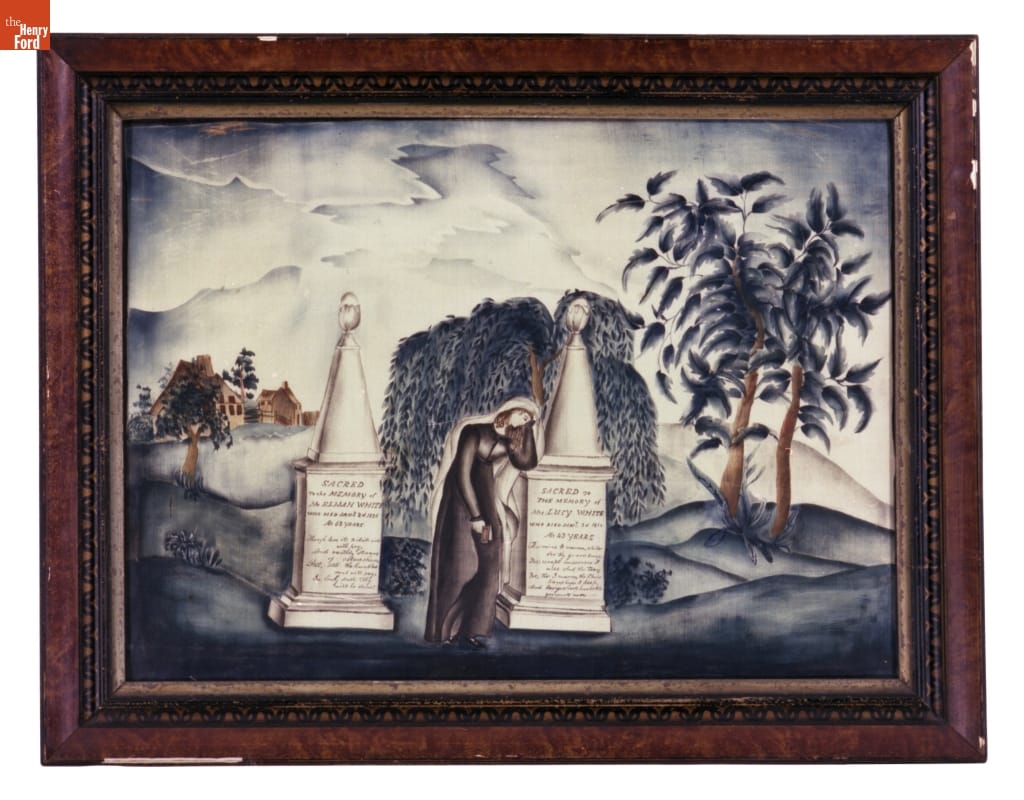
- circa 1826
- Collections - Artifact
Memorial Painting for Elijah and Lucy White, circa 1826
- George Washington Carver and Austin W. Curtis, Jr. at Tuskegee Institute with Sculpture by Steffen Thomas, circa 1938 - In Tuskegee, Alabama, agricultural and environmental scientist George Washington Carver and his assistant, chemist Austin Curtis, Jr., stand in front of a statue commemorating Carver's 40 years of service to the Tuskegee Institute.
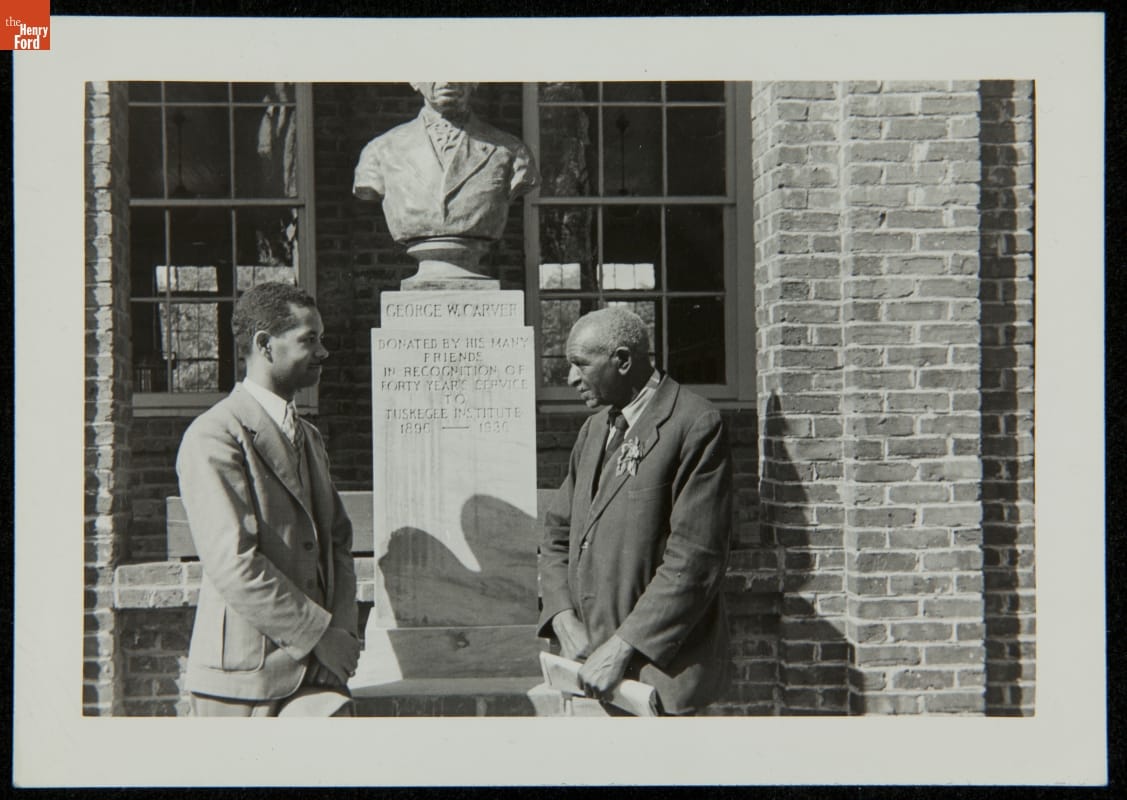
- June 02, 1937
- Collections - Artifact
George Washington Carver and Austin W. Curtis, Jr. at Tuskegee Institute with Sculpture by Steffen Thomas, circa 1938
In Tuskegee, Alabama, agricultural and environmental scientist George Washington Carver and his assistant, chemist Austin Curtis, Jr., stand in front of a statue commemorating Carver's 40 years of service to the Tuskegee Institute.
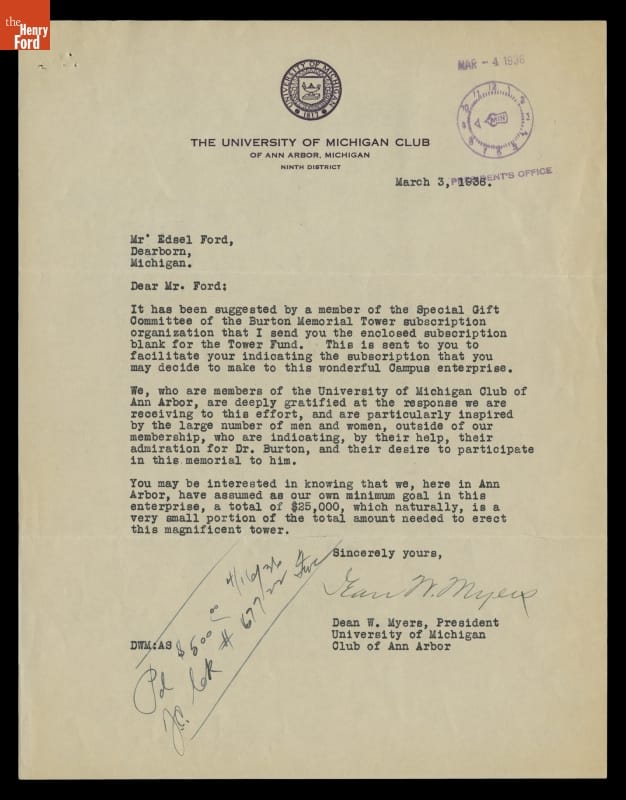
- Letter to Edsel Ford from Dean W. Myers, University of Michigan Club of Ann Arbor, March 3, 1936 -
- March 03, 1936
- Collections - Artifact
Letter to Edsel Ford from Dean W. Myers, University of Michigan Club of Ann Arbor, March 3, 1936
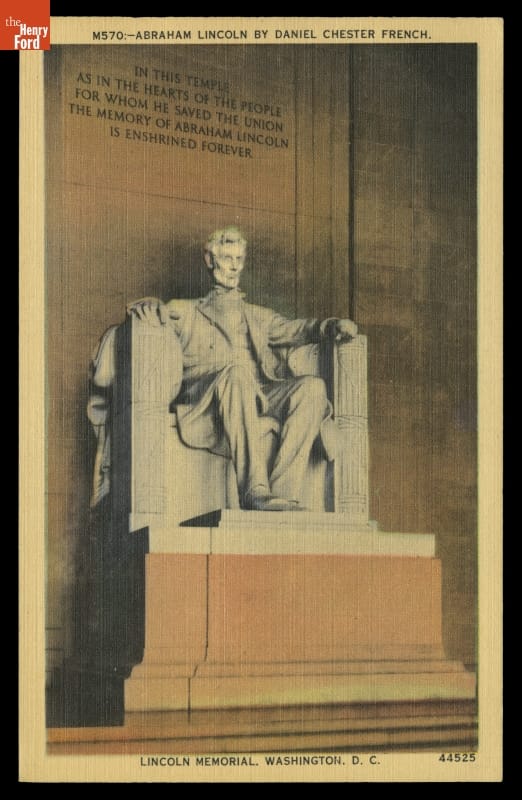
- "Abraham Lincoln by Daniel Chester French, Lincoln Memorial, Washington, D.C." - In 1911, Congress formed a Commission to create an appropriate tribute to Abraham Lincoln in the nation's capital. The commissioners determined that this tribute should be a symbolic rather than literal representation. Sculptor Daniel Chester French's statue idealized Lincoln's memory by revealing his "essential nobility." After delays in completing the statue, the Lincoln Memorial was finally dedicated in 1922.
- 1930-1945
- Collections - Artifact
"Abraham Lincoln by Daniel Chester French, Lincoln Memorial, Washington, D.C."
In 1911, Congress formed a Commission to create an appropriate tribute to Abraham Lincoln in the nation's capital. The commissioners determined that this tribute should be a symbolic rather than literal representation. Sculptor Daniel Chester French's statue idealized Lincoln's memory by revealing his "essential nobility." After delays in completing the statue, the Lincoln Memorial was finally dedicated in 1922.