
Search
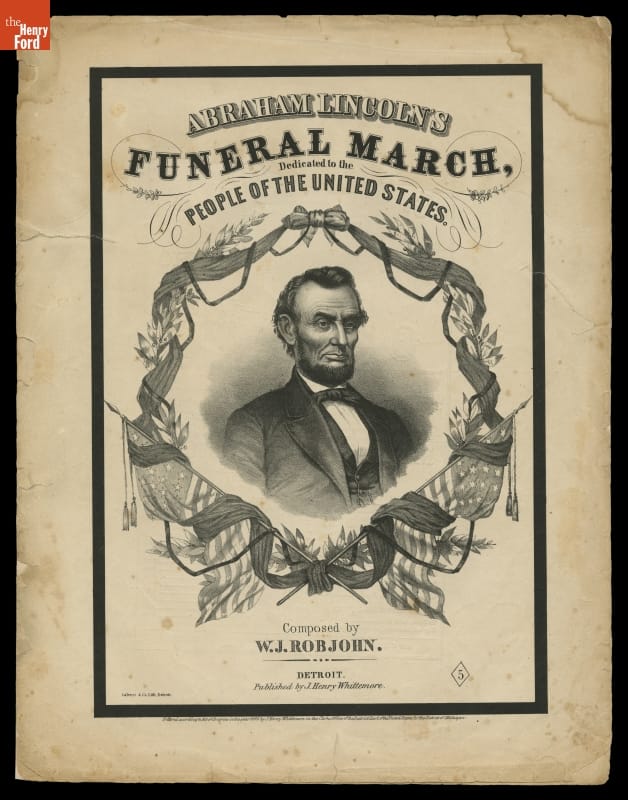
- Music Sheet, "Abraham Lincoln's Funeral March," 1865 - Abraham Lincoln's assassination on April 15, 1865 plunged Americans into deep mourning. This sheet music's somber composition and illustrated cover helped people to understand the tragic event. Printed in Detroit, it may have been used during that city's public mourning ceremony held April 25, 1865. The artist added a border depicting black cloth-draped U.S. flags and laurel leaves in the shape of a wreath around Lincoln's head.
- 1865
- Collections - Artifact
Music Sheet, "Abraham Lincoln's Funeral March," 1865
Abraham Lincoln's assassination on April 15, 1865 plunged Americans into deep mourning. This sheet music's somber composition and illustrated cover helped people to understand the tragic event. Printed in Detroit, it may have been used during that city's public mourning ceremony held April 25, 1865. The artist added a border depicting black cloth-draped U.S. flags and laurel leaves in the shape of a wreath around Lincoln's head.
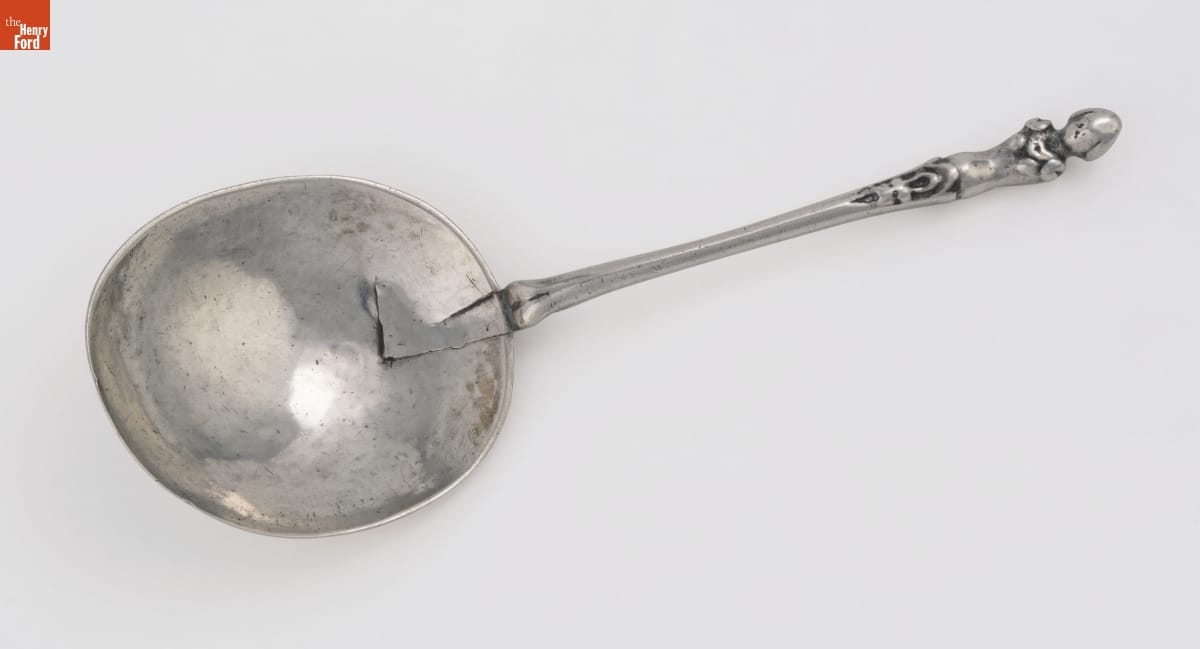
- Spoon, 1721-1748 -
- 1693
- Collections - Artifact
Spoon, 1721-1748
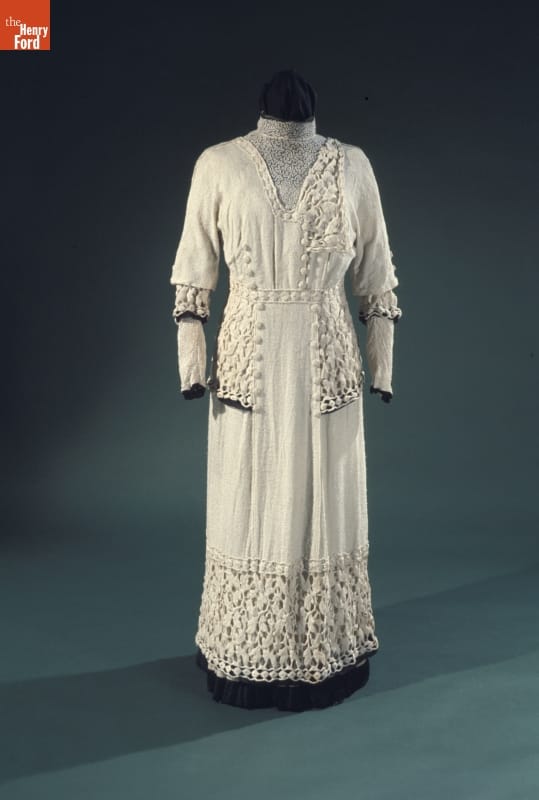
- Dress, circa 1915 -
- circa 1915
- Collections - Artifact
Dress, circa 1915
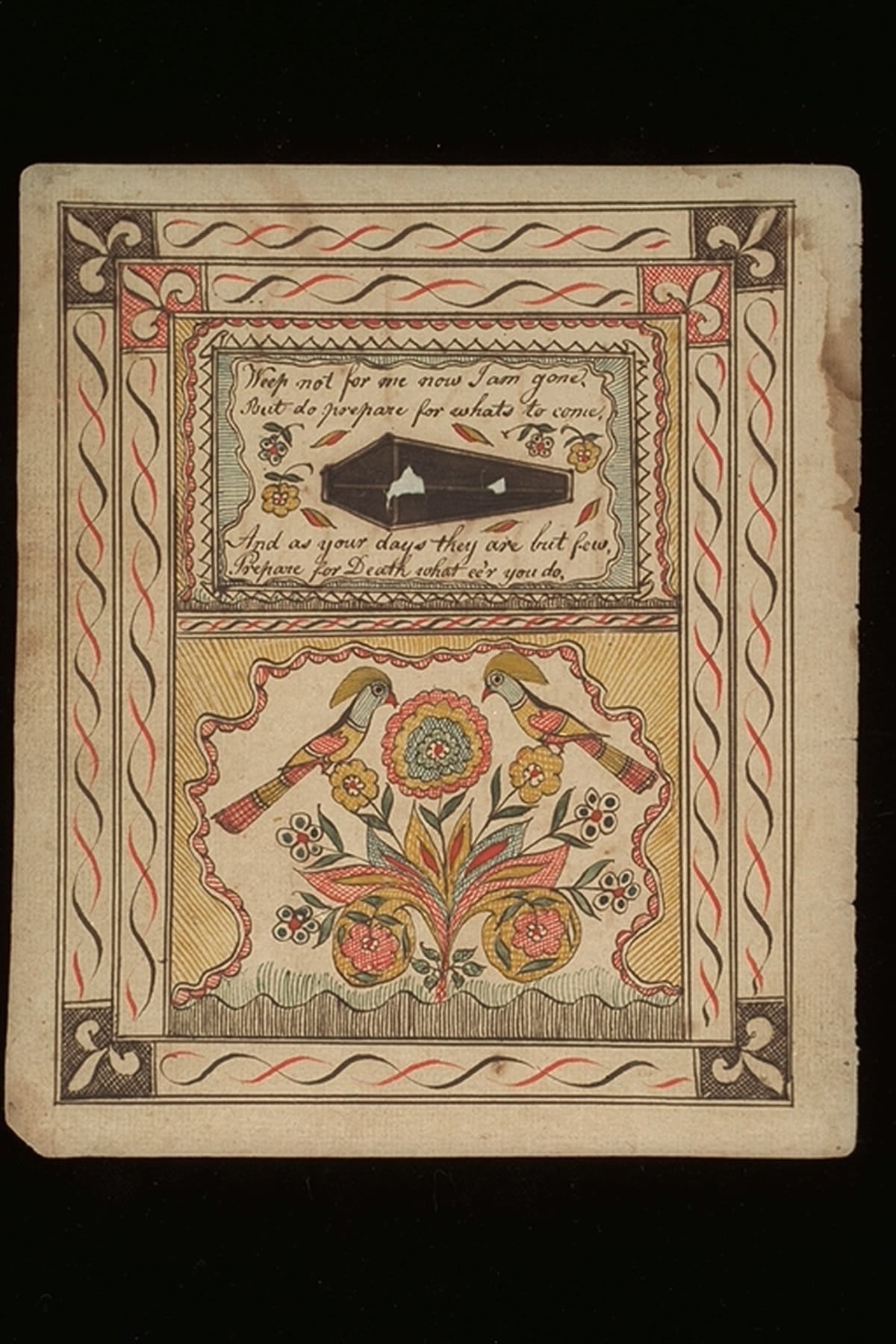
- Mourning Drawing, circa 1820 - Early European inhabitants in the Valley of Virginia created decorative documents to commemorate important family events. Most of these keepsakes, known as Fraktur, were created by and for German immigrants. Others show influences from the English, Irish or Scot-Irish settlers. This design suggests similarities with German Fraktur, but differs in format, language and imagery -- a blending of art and traditions between the Valley's ethnic populations.
- circa 1820
- Collections - Artifact
Mourning Drawing, circa 1820
Early European inhabitants in the Valley of Virginia created decorative documents to commemorate important family events. Most of these keepsakes, known as Fraktur, were created by and for German immigrants. Others show influences from the English, Irish or Scot-Irish settlers. This design suggests similarities with German Fraktur, but differs in format, language and imagery -- a blending of art and traditions between the Valley's ethnic populations.
- Memorial Painting for Sarah Burgat, 1826 -
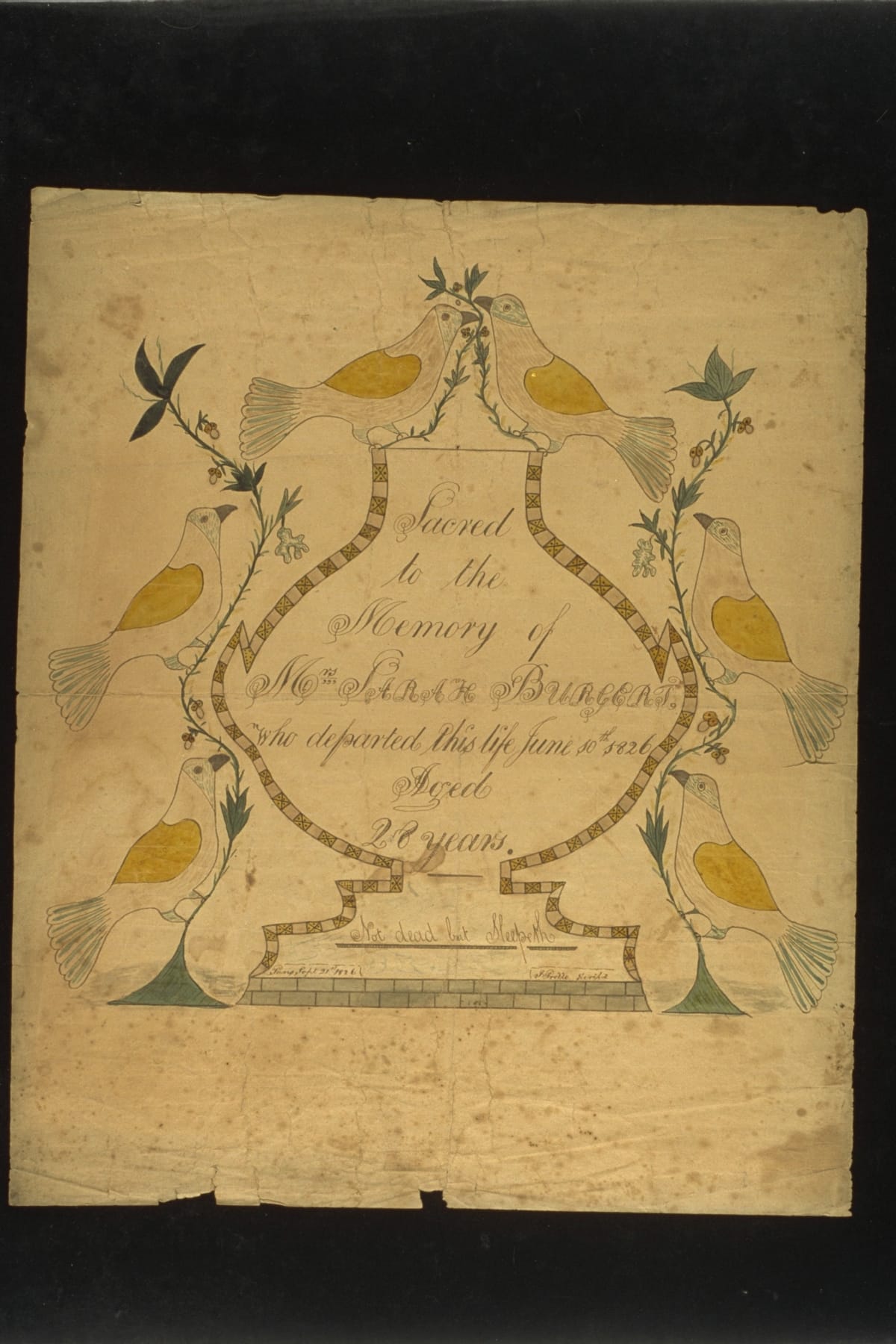
- June 10, 1826
- Collections - Artifact
Memorial Painting for Sarah Burgat, 1826
- Memorial Painting for Elijah and Lucy White, circa 1826 -
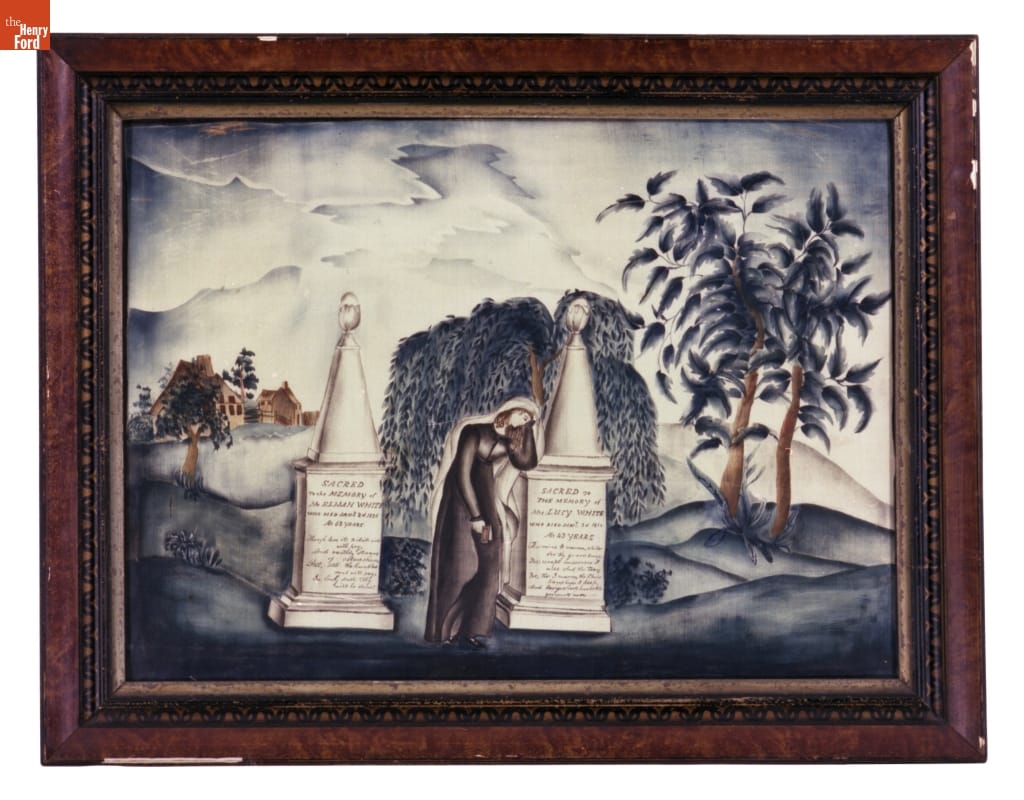
- circa 1826
- Collections - Artifact
Memorial Painting for Elijah and Lucy White, circa 1826
- Mourning Pendant, 1780-1800 - Before the 20th century, death came early and often. One way people coped was to wear jewelry as memorials to their loved ones. Over the centuries, mourning jewelry followed the prevailing fashions. Shortly after independence, Americans favored illuminated, miniature brooches and pendants painted on ivory. These featured shapes derived from classical design, symbols such as urns and weeping women dressed as ancient Romans.
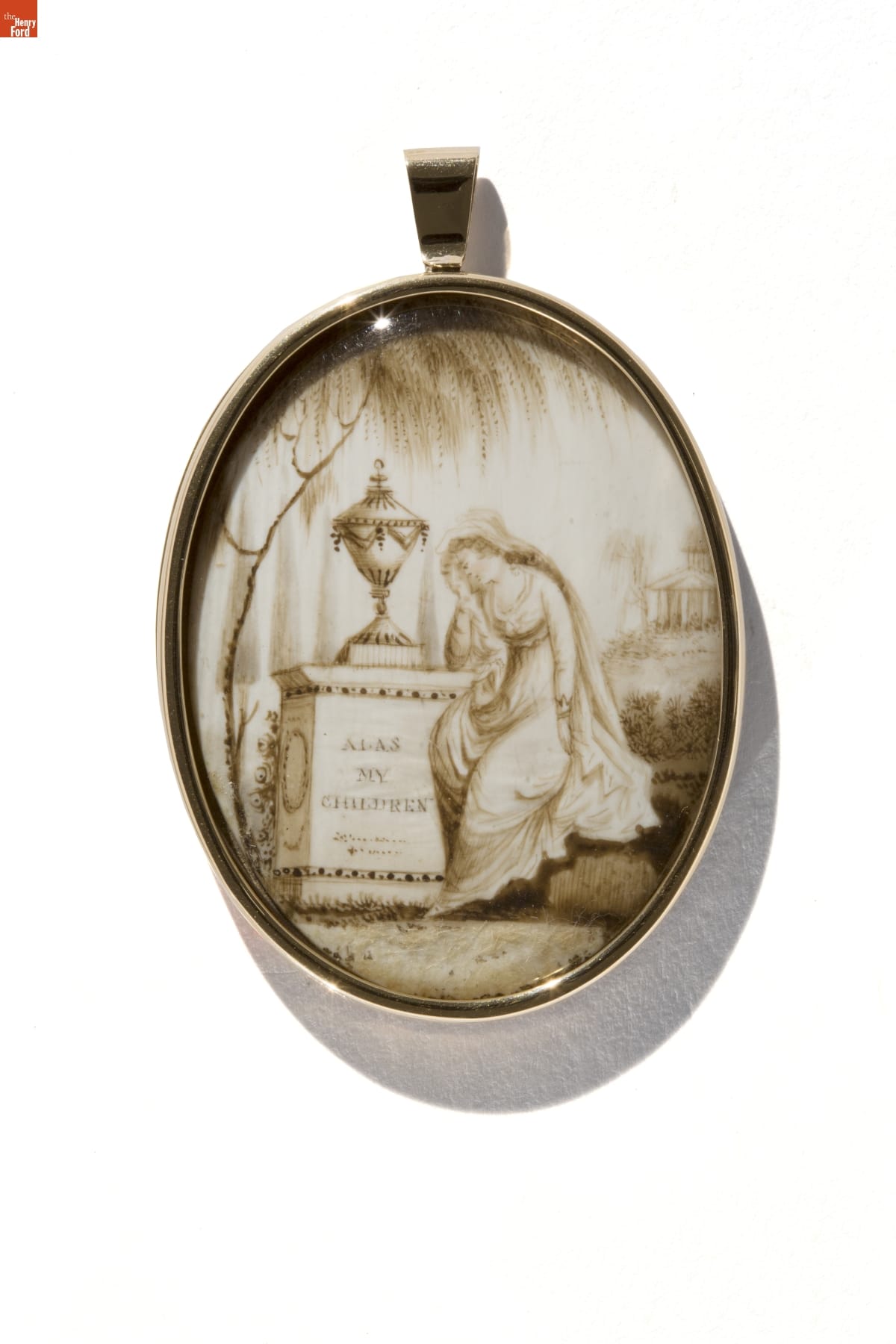
- 1780-1800
- Collections - Artifact
Mourning Pendant, 1780-1800
Before the 20th century, death came early and often. One way people coped was to wear jewelry as memorials to their loved ones. Over the centuries, mourning jewelry followed the prevailing fashions. Shortly after independence, Americans favored illuminated, miniature brooches and pendants painted on ivory. These featured shapes derived from classical design, symbols such as urns and weeping women dressed as ancient Romans.
- Mourning Pendant for William Oliphant, 1790 - Before the 20th century, death came early and often. One way people coped was to wear jewelry as memorials to their loved ones. Over the centuries, mourning jewelry followed the prevailing fashions. Shortly after independence, Americans favored illuminated, miniature brooches and pendants painted on ivory. These featured shapes derived from classical design, symbols such as urns and weeping women dressed as ancient Romans.
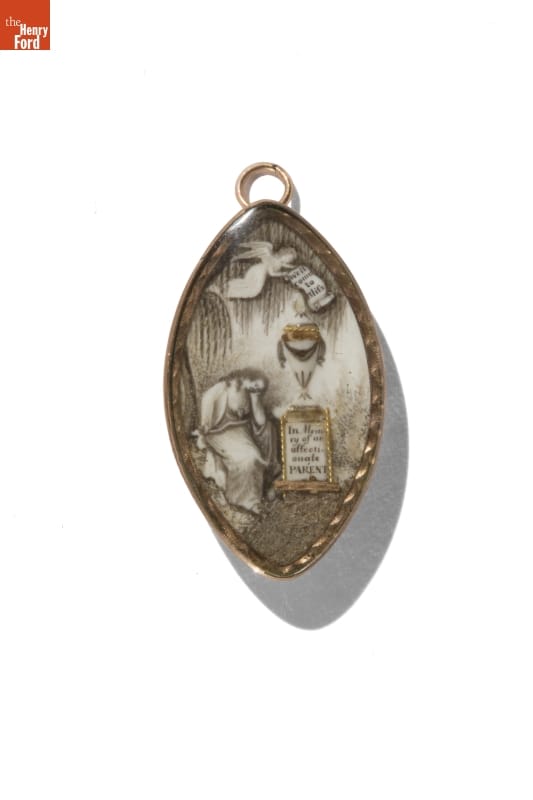
- April 10, 1790
- Collections - Artifact
Mourning Pendant for William Oliphant, 1790
Before the 20th century, death came early and often. One way people coped was to wear jewelry as memorials to their loved ones. Over the centuries, mourning jewelry followed the prevailing fashions. Shortly after independence, Americans favored illuminated, miniature brooches and pendants painted on ivory. These featured shapes derived from classical design, symbols such as urns and weeping women dressed as ancient Romans.
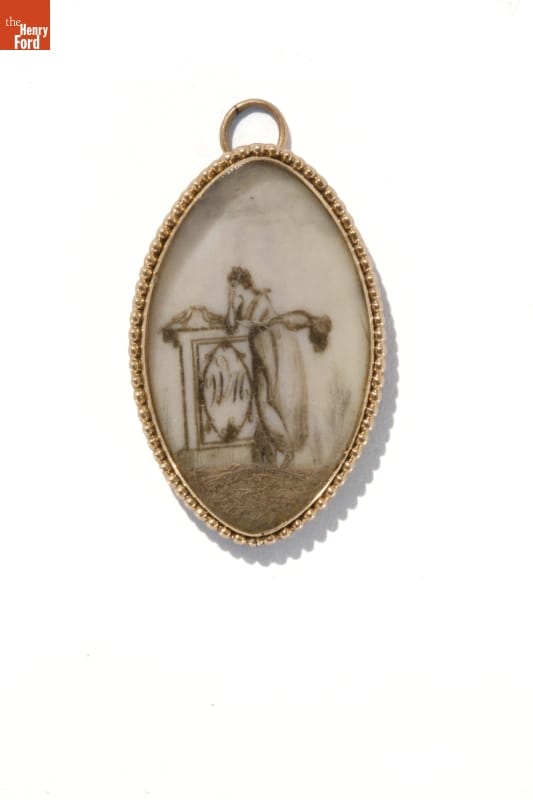
- Mourning Pendant, 1790-1810 - Before the 20th century, death came early and often. One way people coped was to wear jewelry as memorials to their loved ones. Over the centuries, mourning jewelry followed the prevailing fashions. Shortly after independence, Americans favored illuminated, miniature brooches and pendants painted on ivory. These featured shapes derived from classical design, symbols such as urns and weeping women dressed as ancient Romans.
- 1790-1810
- Collections - Artifact
Mourning Pendant, 1790-1810
Before the 20th century, death came early and often. One way people coped was to wear jewelry as memorials to their loved ones. Over the centuries, mourning jewelry followed the prevailing fashions. Shortly after independence, Americans favored illuminated, miniature brooches and pendants painted on ivory. These featured shapes derived from classical design, symbols such as urns and weeping women dressed as ancient Romans.
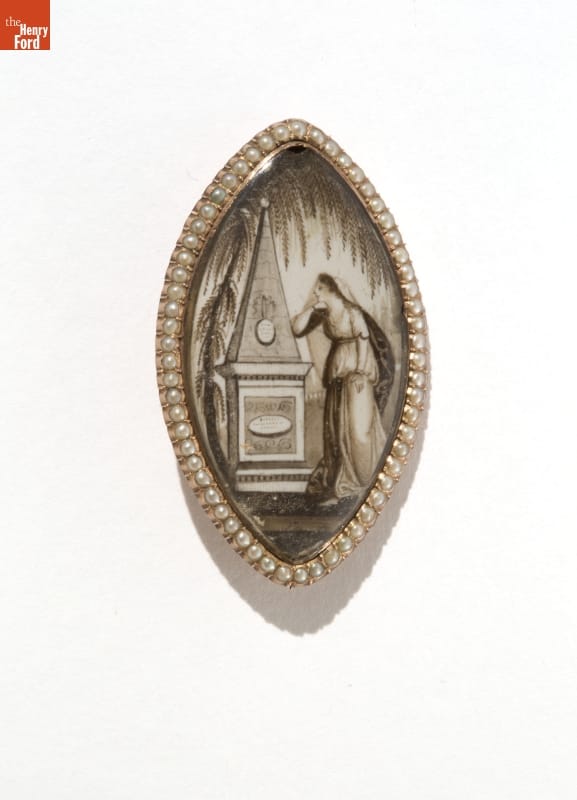
- Mourning Pendant, 1790-1810 - Before the 20th century, death came early and often. One way people coped was to wear jewelry as memorials to their loved ones. Over the centuries, mourning jewelry followed the prevailing fashions. Shortly after independence, Americans favored illuminated, miniature brooches and pendants painted on ivory. These featured shapes derived from classical design, symbols such as urns and weeping women dressed as ancient Romans.
- 1790-1810
- Collections - Artifact
Mourning Pendant, 1790-1810
Before the 20th century, death came early and often. One way people coped was to wear jewelry as memorials to their loved ones. Over the centuries, mourning jewelry followed the prevailing fashions. Shortly after independence, Americans favored illuminated, miniature brooches and pendants painted on ivory. These featured shapes derived from classical design, symbols such as urns and weeping women dressed as ancient Romans.