
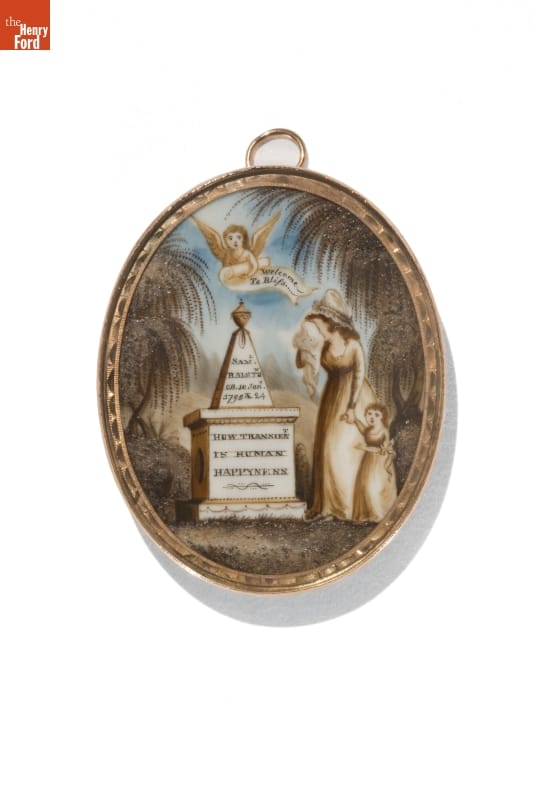
Mourning Pendant, 1790-1810
THF154692 / Mourning Pendant, 1790-1810 / view 2
01
Artifact Overview
Before the 20th century, death came early and often. One way people coped was to wear jewelry as memorials to their loved ones. Over the centuries, mourning jewelry followed the prevailing fashions. Shortly after independence, Americans favored illuminated, miniature brooches and pendants painted on ivory. These featured shapes derived from classical design, symbols such as urns and weeping women dressed as ancient Romans.
Artifact Details
Artifact
Pendant (Jewelry)
Date Made
1790-1810
Location
Not on exhibit to the public.
Object ID
61.151.2
Credit
From the Collections of The Henry Ford.
Material
Gold (Metal)
Ivory (Tooth component)
Glass (Material)
Human hair
Sepia (Ink)
Watercolor (Paint)
Technique
Grisaille
Hairwork
Dimensions
Height: 3.438 in
Width: 2.438 in
Inscriptions
obverse:
In Memory of my Deceafed [sic] Children and a Sincere Friend
Keywords |
|---|
02
Related Content
 Set
SetLove Tokens and Mourning Miniatures
- 30 Artifacts
Before the 20th century, death came early and often. One way people coped was to wear jewelry as memorials to their loved ones. Over the centuries, mourning jewelry followed the prevailing fashions. Shortly after independence, Americans favored illuminated, miniature brooches and pendants painted on ivory. These featured shapes derived from classical design, symbols such as urns and weeping women dressed as ancient Romans. article
Mourning Jewelry at The Henry Ford
Take a tour through our collection of mourning jewelry--one way 18th and 19h century Americans coped with death, which came early and often for their loved ones.