
Search
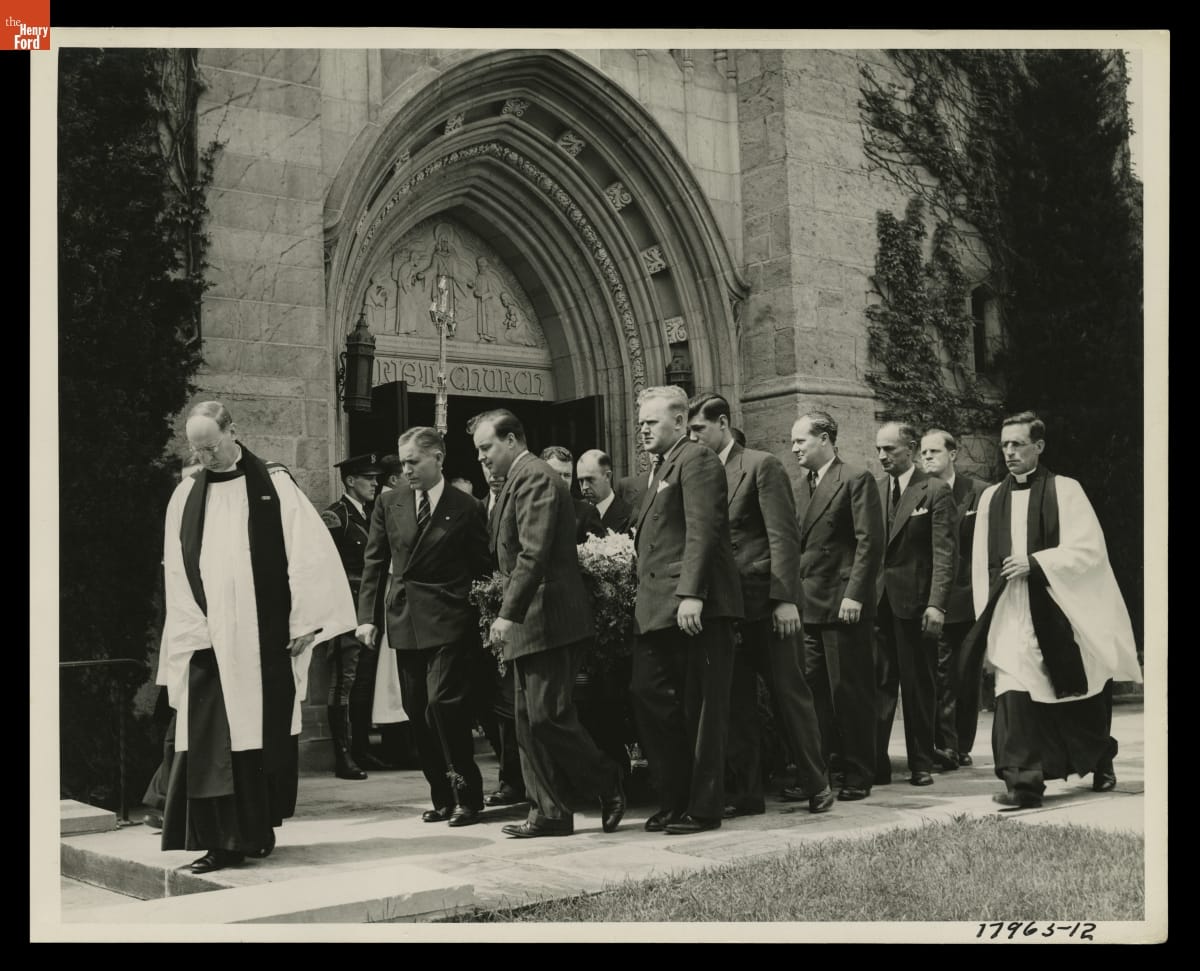
- Funeral of Edsel Ford, Grosse Pointe, Michigan, May 28, 1943 - Edsel Ford's death on May 26, 1943, saddened all who knew him. He was a devoted husband and father, a patron of the arts, and a skilled collaborator in automotive design. Mr. Ford's funeral, at Christ Church in Grosse Pointe, Michigan, was attended by prominent executives and engineers from throughout the automotive industry.
- May 28, 1943
- Collections - Artifact
Funeral of Edsel Ford, Grosse Pointe, Michigan, May 28, 1943
Edsel Ford's death on May 26, 1943, saddened all who knew him. He was a devoted husband and father, a patron of the arts, and a skilled collaborator in automotive design. Mr. Ford's funeral, at Christ Church in Grosse Pointe, Michigan, was attended by prominent executives and engineers from throughout the automotive industry.
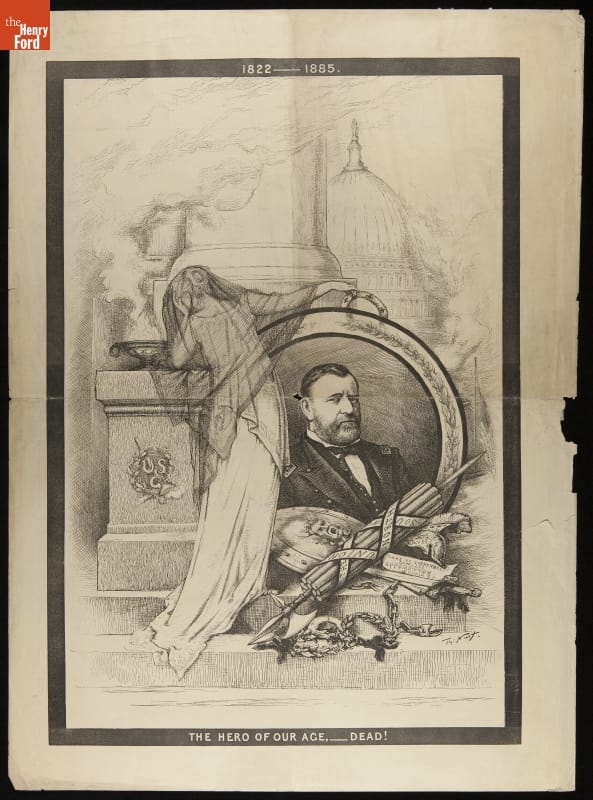
- Line Engraving from a Thomas Nast Drawing, "Hero of Our Age, -Dead!," 1885 - Thomas Nast (1840-1902) was an influential illustrator and political cartoonist. His illustrations -- especially those created during his 25-year career working for Harper & Brothers -- reflected his political and social leanings. Nast was a friend and supporter of Ulysses Grant. This engraving appeared in <EM>Harper's Weekly</EM> on August 1, 1885, about ten days after the former President's death.
- August 01, 1885
- Collections - Artifact
Line Engraving from a Thomas Nast Drawing, "Hero of Our Age, -Dead!," 1885
Thomas Nast (1840-1902) was an influential illustrator and political cartoonist. His illustrations -- especially those created during his 25-year career working for Harper & Brothers -- reflected his political and social leanings. Nast was a friend and supporter of Ulysses Grant. This engraving appeared in Harper's Weekly on August 1, 1885, about ten days after the former President's death.
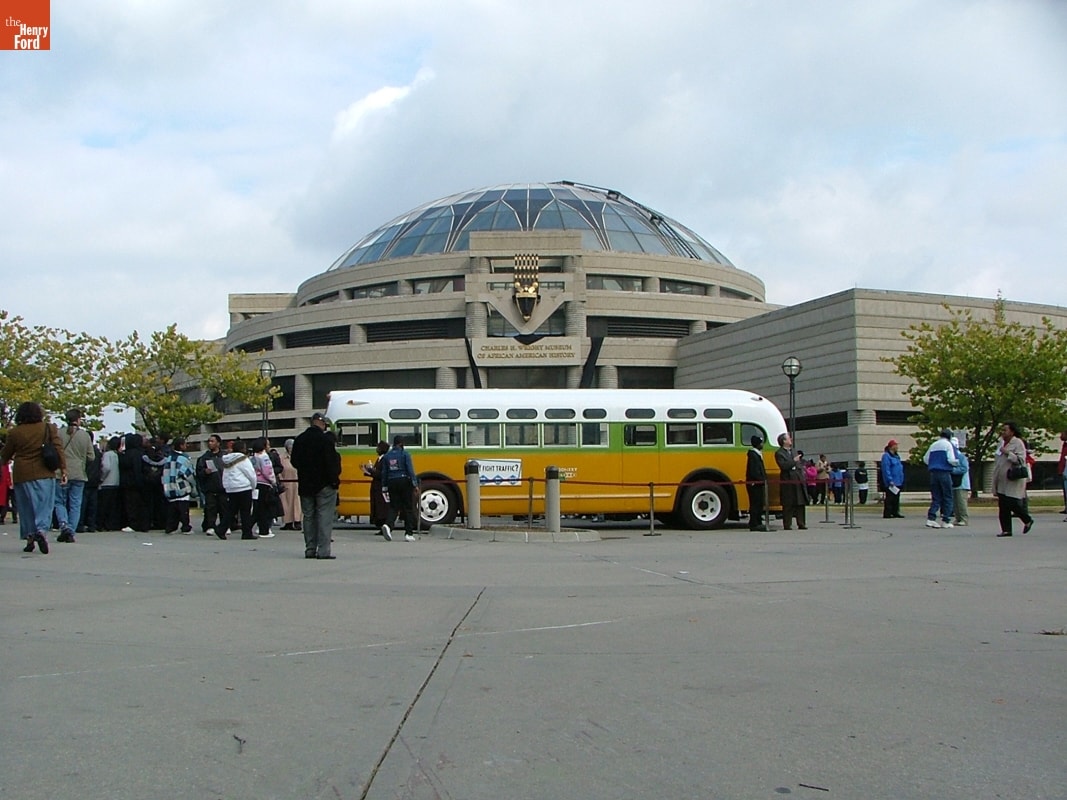
- Rosa Parks Bus outside Charles H. Wright Museum, Where Rosa Parks Lay in Repose, November 1, 2005 -
- November 01, 2005
- Collections - Artifact
Rosa Parks Bus outside Charles H. Wright Museum, Where Rosa Parks Lay in Repose, November 1, 2005
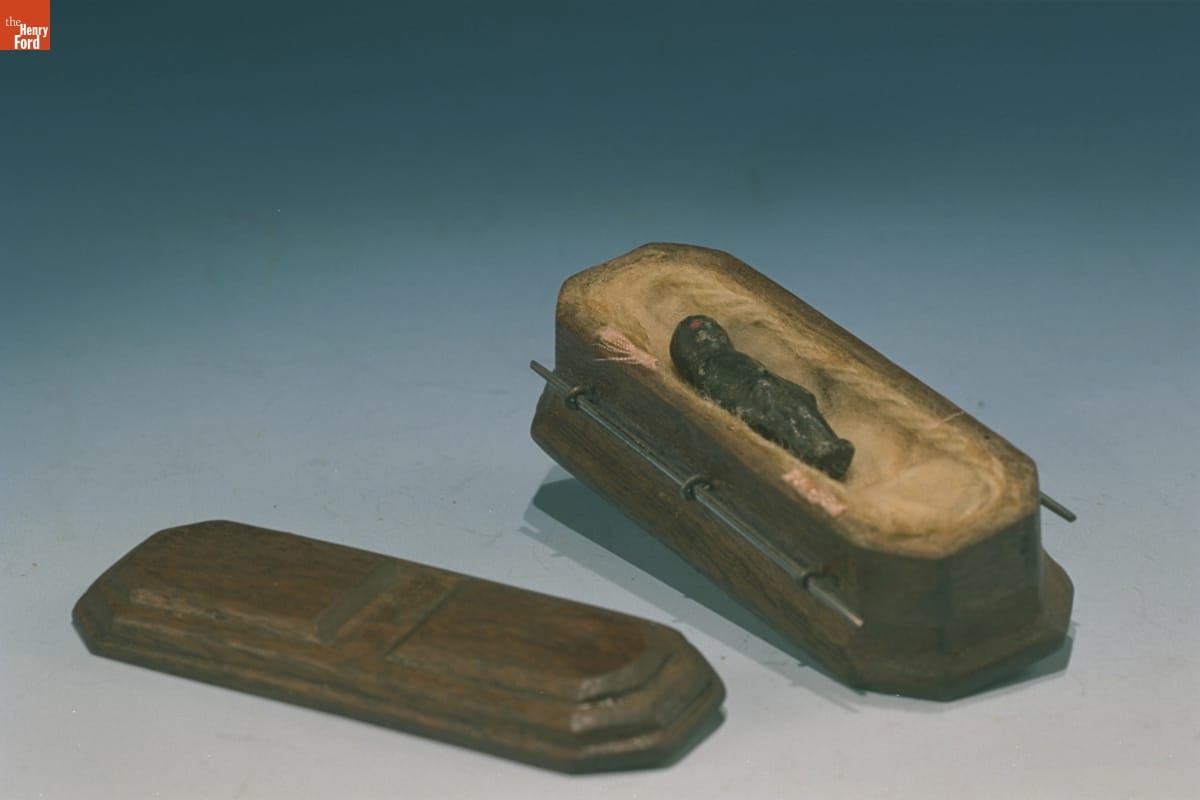
- Toy Coffin with Doll, 1870-1900 - In the late 1800s, children were given toys to help them learn gender-specific roles and the skills they would need as adults. Mourning and funeral practices at this time were elaborate, essential things to learn since the death of a loved one was a relatively common experience. Some parents let their children conduct pretend funerals with dolls and doll-sized coffins.
- 1870-1900
- Collections - Artifact
Toy Coffin with Doll, 1870-1900
In the late 1800s, children were given toys to help them learn gender-specific roles and the skills they would need as adults. Mourning and funeral practices at this time were elaborate, essential things to learn since the death of a loved one was a relatively common experience. Some parents let their children conduct pretend funerals with dolls and doll-sized coffins.
- Rosa Parks Bus outside Charles H. Wright Museum, Where Rosa Parks Lay in Repose, November 1, 2005 -
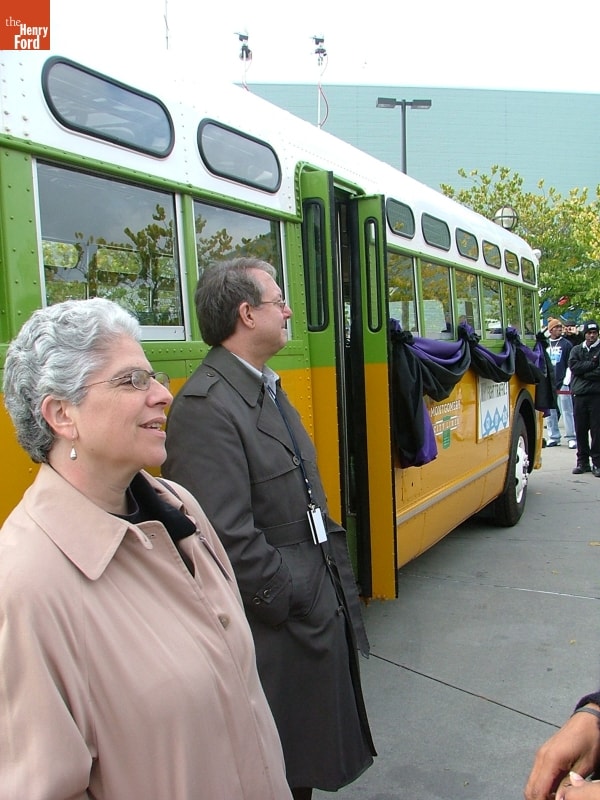
- November 01, 2005
- Collections - Artifact
Rosa Parks Bus outside Charles H. Wright Museum, Where Rosa Parks Lay in Repose, November 1, 2005
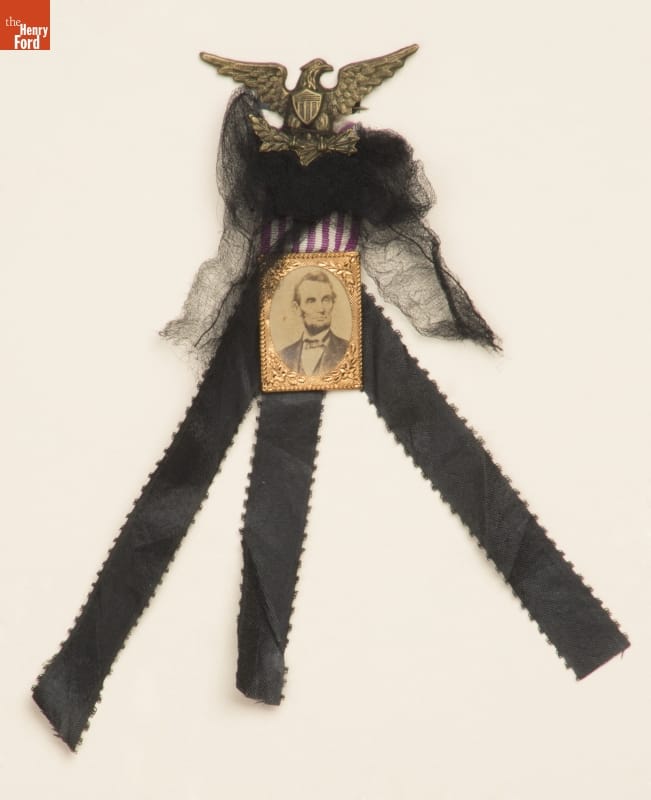
- Abraham Lincoln Mourning Badge, 1865 - A small photographic portrait creates a badge for mourning the death of Abraham Lincoln. It is topped by a metallic eagle, black crepe bow, and a striped red-and-white ribbon. Three black ribbons stream from the photo's brass frame. This would have been worn on clothing during the spring of 1865 by the many American citizens who felt a strong bond with the martyred President.
- 1865
- Collections - Artifact
Abraham Lincoln Mourning Badge, 1865
A small photographic portrait creates a badge for mourning the death of Abraham Lincoln. It is topped by a metallic eagle, black crepe bow, and a striped red-and-white ribbon. Three black ribbons stream from the photo's brass frame. This would have been worn on clothing during the spring of 1865 by the many American citizens who felt a strong bond with the martyred President.
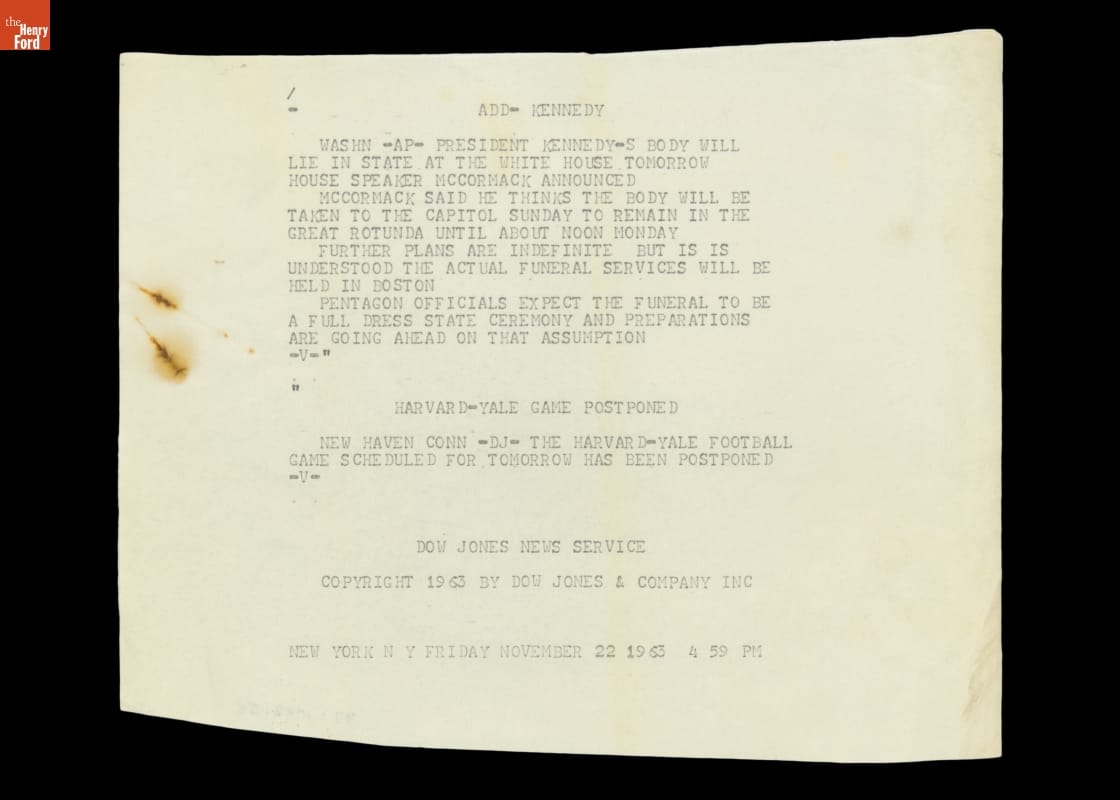
- Teletype Message with Wire Service News Coverage of John F. Kennedy Assassination, November 22, 1963 - In the routine course of business, Ford Motor Company received a steady flow of news and financial reports from the Wall Street Journal. These dispatches came over the teletype machine on November 22, 1963 describing events from the arrival of President John F. Kennedy and his wife Jacqueline in Dallas through the official report of his death several hours later.
- November 22, 1963
- Collections - Artifact
Teletype Message with Wire Service News Coverage of John F. Kennedy Assassination, November 22, 1963
In the routine course of business, Ford Motor Company received a steady flow of news and financial reports from the Wall Street Journal. These dispatches came over the teletype machine on November 22, 1963 describing events from the arrival of President John F. Kennedy and his wife Jacqueline in Dallas through the official report of his death several hours later.
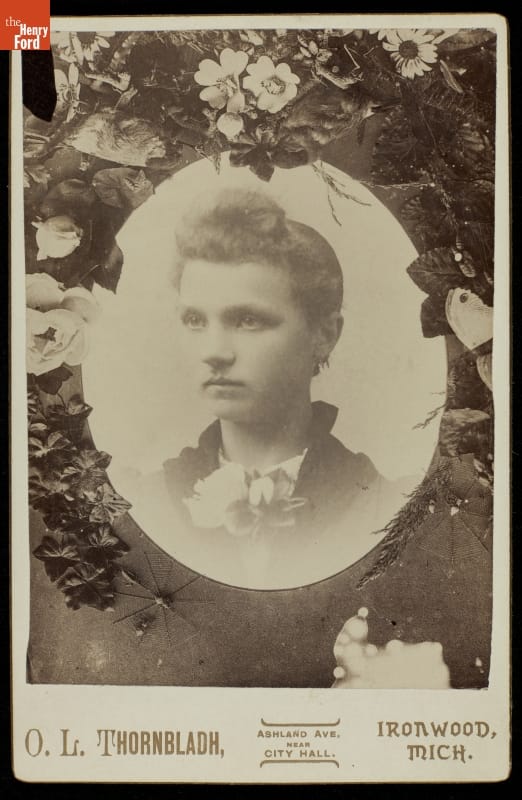
- Memorial Portrait of a Young Woman, circa 1890 - Professional photographers produced the first cabinet cards in 1867, and people soon preferred these photographic prints on cardboard stock to the earlier, smaller cartes-de-visite. American commonly collected and exchanged cabinet photographs through the early 1900s, often to commemorate loved ones who had passed away. This memorial portrait was made in O.L. Thornbladh's Ironwood, Michigan, studio around 1890.
- circa 1890
- Collections - Artifact
Memorial Portrait of a Young Woman, circa 1890
Professional photographers produced the first cabinet cards in 1867, and people soon preferred these photographic prints on cardboard stock to the earlier, smaller cartes-de-visite. American commonly collected and exchanged cabinet photographs through the early 1900s, often to commemorate loved ones who had passed away. This memorial portrait was made in O.L. Thornbladh's Ironwood, Michigan, studio around 1890.
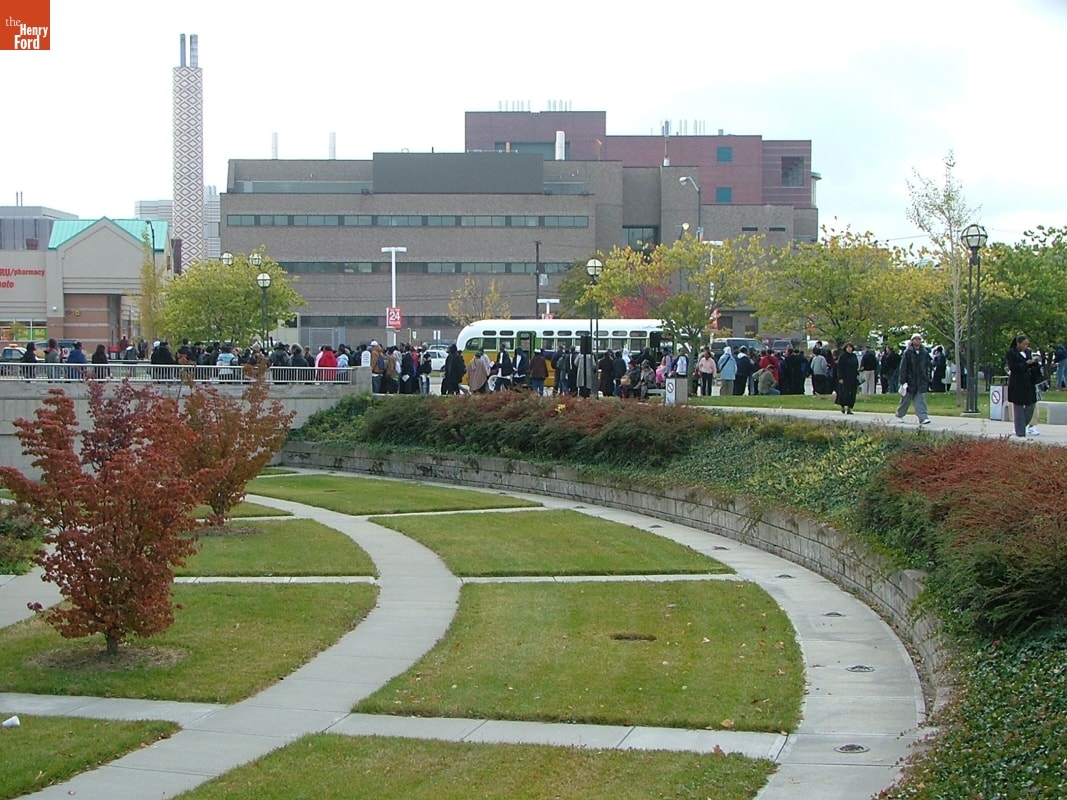
- Crowd outside Charles H. Wright Museum, Where Rosa Parks Lay in Repose, November 1, 2005 -
- November 01, 2005
- Collections - Artifact
Crowd outside Charles H. Wright Museum, Where Rosa Parks Lay in Repose, November 1, 2005
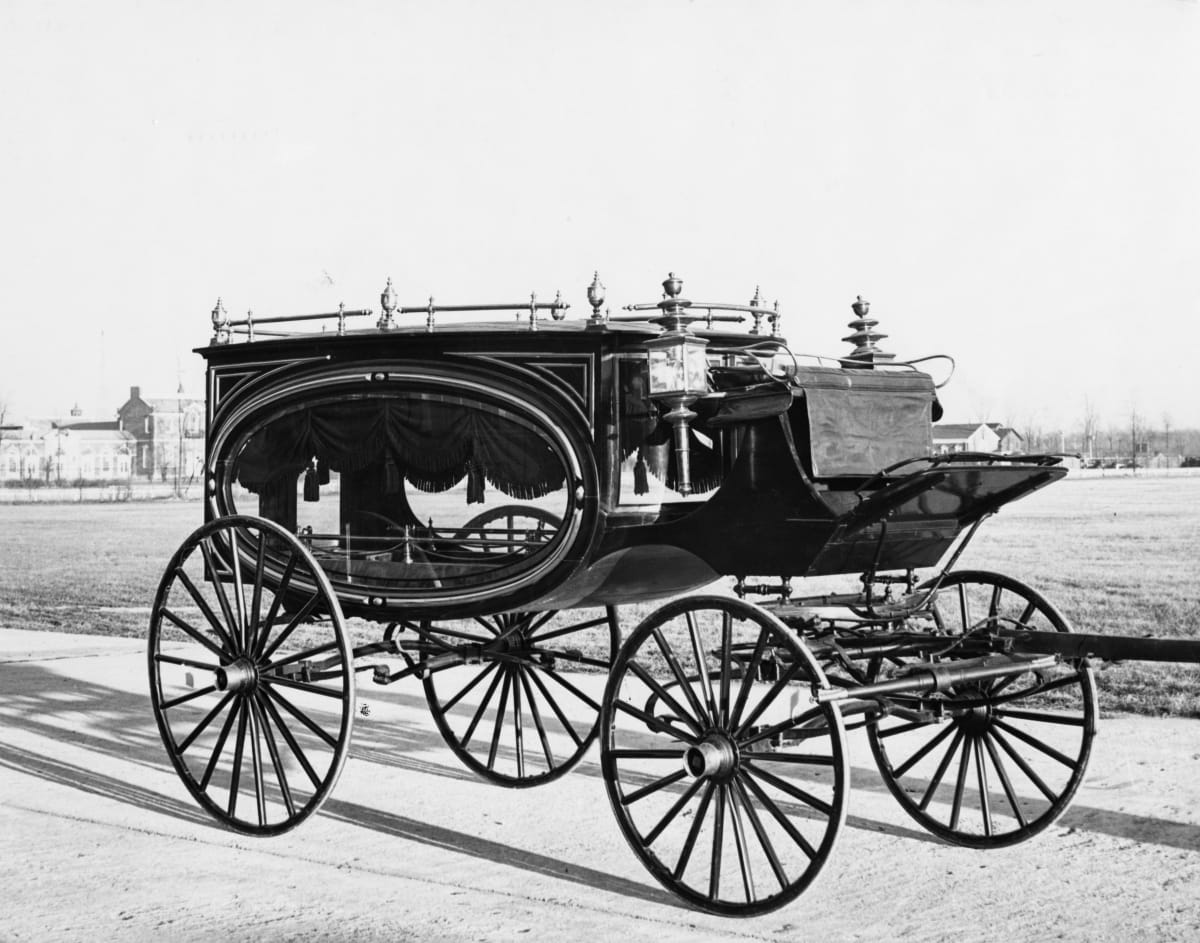
- Hearse, circa 1875 - Horse-drawn hearses like this one first appeared in the mid-19th century. A floor-mounted roller assisted in loading and unloading coffins, and large oval windows provided an unobstructed view for mourners outside the vehicle. Decorative elements on hearses ranged from plain to elaborate -- and sometimes garish. This example is tastefully appointed with brass rails and finials.
- circa 1875
- Collections - Artifact
Hearse, circa 1875
Horse-drawn hearses like this one first appeared in the mid-19th century. A floor-mounted roller assisted in loading and unloading coffins, and large oval windows provided an unobstructed view for mourners outside the vehicle. Decorative elements on hearses ranged from plain to elaborate -- and sometimes garish. This example is tastefully appointed with brass rails and finials.