
Hearse, circa 1875
THF80580 / Hearse, circa 1875
01
Artifact Overview
Horse-drawn hearses like this one first appeared in the mid-19th century. A floor-mounted roller assisted in loading and unloading coffins, and large oval windows provided an unobstructed view for mourners outside the vehicle. Decorative elements on hearses ranged from plain to elaborate -- and sometimes garish. This example is tastefully appointed with brass rails and finials.
Artifact Details
Artifact
Hearse
Date Made
circa 1875
Creators
Place of Creation
Location
Not on exhibit to the public.
Object ID
36.520.127
Credit
From the Collections of The Henry Ford.
Material
Wood (Plant material)
Brocade (Textile)
Damask
Gold leaf
Paint (Coating)
Nickel
Technique
Plating (Metal coating)
Color
Black (Color)
Ivory (Color)
Dimensions
Height: 88 in
Width: 74 in
Length: 157 in
Wheelbase: 99 in
Diameter: 40.5 in (Wheel Diameter)
Diameter: 50 in (Wheel Diameter)
Keywords |
|---|
02
Related Content
 Set
SetOnline Horse-Drawn Vehicles Collection
- 29 Artifacts
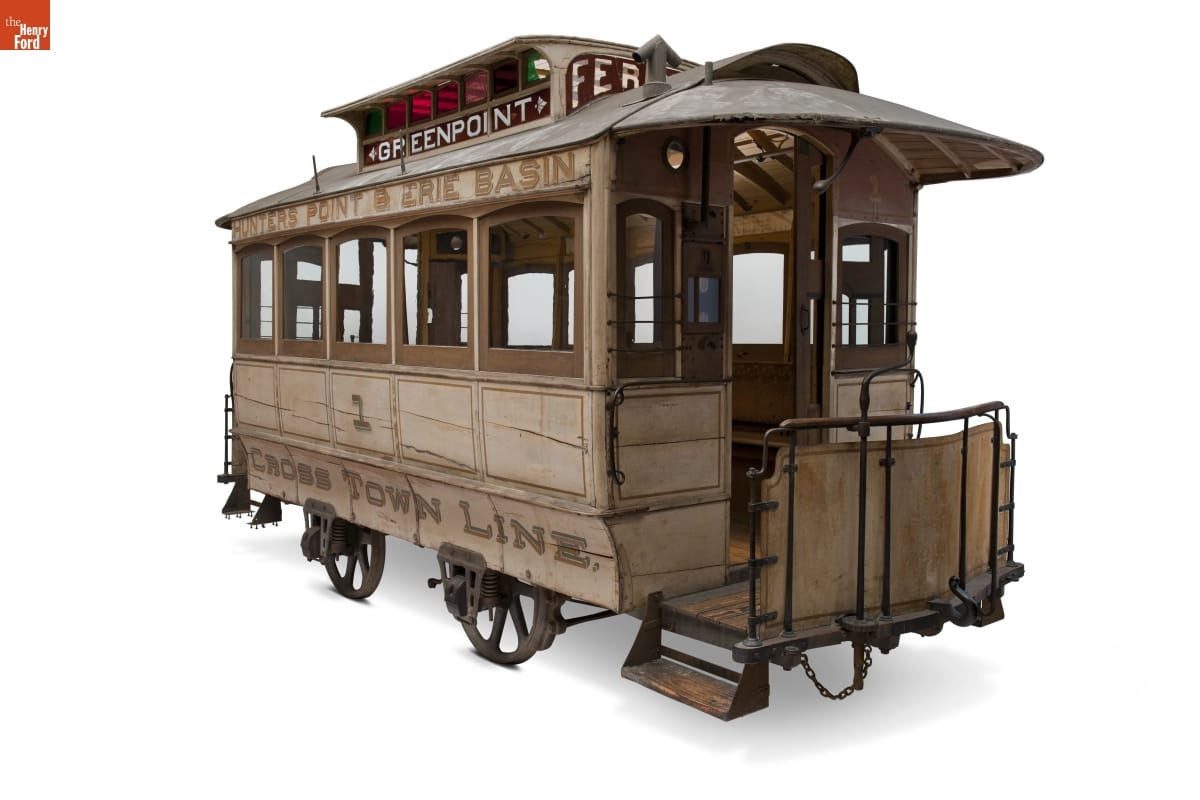
The horse-drawn streetcar was an important means of public transportation in 19th-century American cities. New York's Brooklyn City Railroad ran this car on its line between Hunters Point in Long Island City, and Erie Basin in South Brooklyn. But horses were expensive to stable and feed -- and messy too. Operators embraced electric streetcars starting in the late 1880s. article
Report from the 2015 Concours d'Elegance of America
Go behind the scenes to Michigan's Concours d’Elegance of America at St. John’s, which this year featured two of our vehicles: Tom Beatty’s 1951 Belly Tank Lakester and our 1928 Cleveland 4-61 motorcycle.