
Search
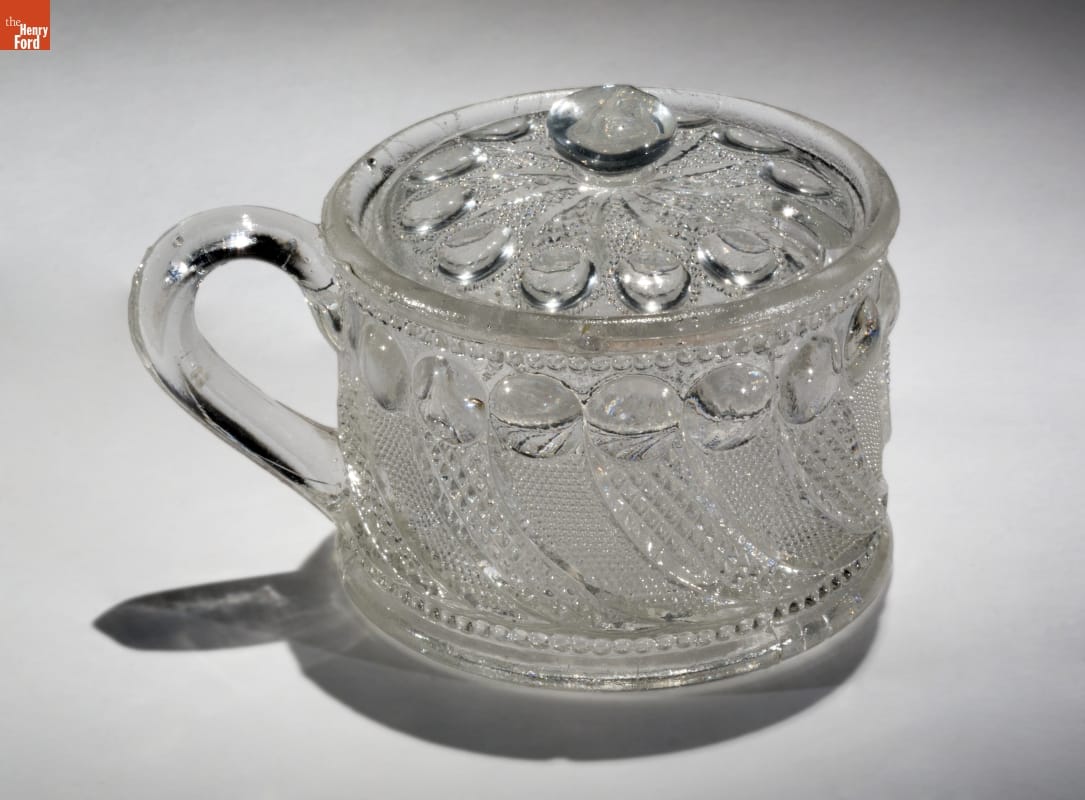
- Mustard Pot, 1830-1845 - Mechanically pressed glass was an innovation in glass history, making decorative, "patterned" glass available to a broad audience. One of the earliest types of pressed glass, dating to the 1830s is known as "Lacy Glass". Complex stippled patterns were developed to help hide technical defects caused by early presses, when the glass gather was cut off and dropped into a mold.
- 1830-1845
- Collections - Artifact
Mustard Pot, 1830-1845
Mechanically pressed glass was an innovation in glass history, making decorative, "patterned" glass available to a broad audience. One of the earliest types of pressed glass, dating to the 1830s is known as "Lacy Glass". Complex stippled patterns were developed to help hide technical defects caused by early presses, when the glass gather was cut off and dropped into a mold.
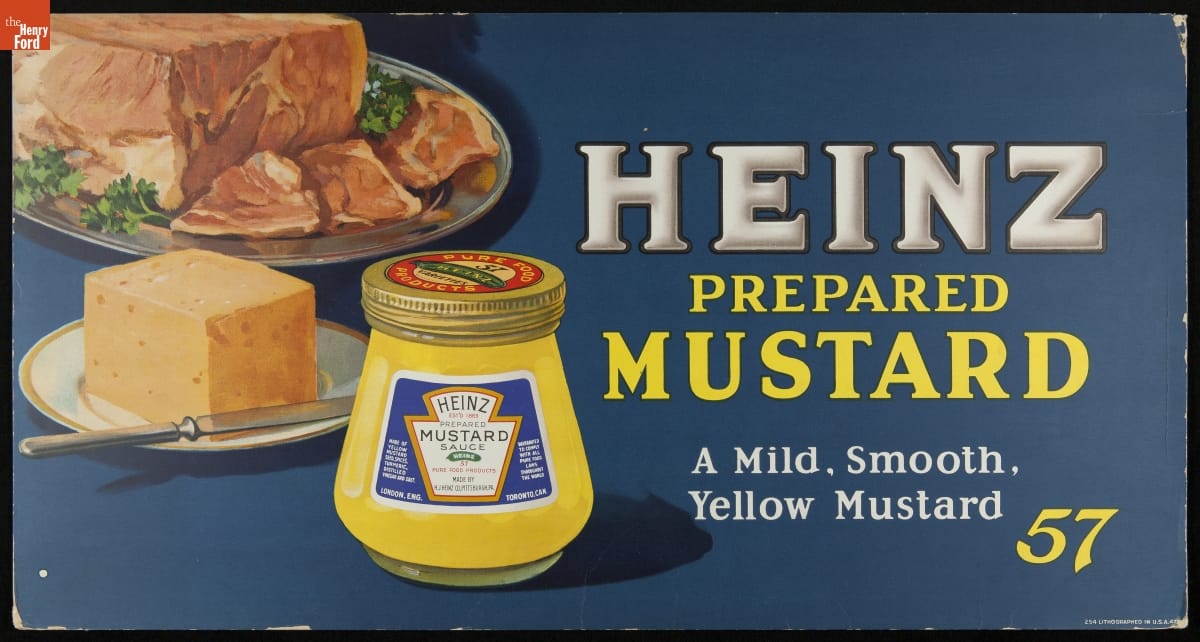
- Streetcar Advertising Poster for Heinz Prepared Mustard, "A Mild, Smooth, Yellow Mustard" circa 1922 - Henry J. Heinz rarely missed an opportunity to market his "57 Varieties" -- a catchy slogan he created despite offering a line of more than 60 packaged food products. A prolific promoter, Heinz aimed to reach consumers in stores, at home, and everywhere in-between. This colorful poster advertised Heinz Prepared Mustard to passengers riding a streetcar.
- circa 1922
- Collections - Artifact
Streetcar Advertising Poster for Heinz Prepared Mustard, "A Mild, Smooth, Yellow Mustard" circa 1922
Henry J. Heinz rarely missed an opportunity to market his "57 Varieties" -- a catchy slogan he created despite offering a line of more than 60 packaged food products. A prolific promoter, Heinz aimed to reach consumers in stores, at home, and everywhere in-between. This colorful poster advertised Heinz Prepared Mustard to passengers riding a streetcar.
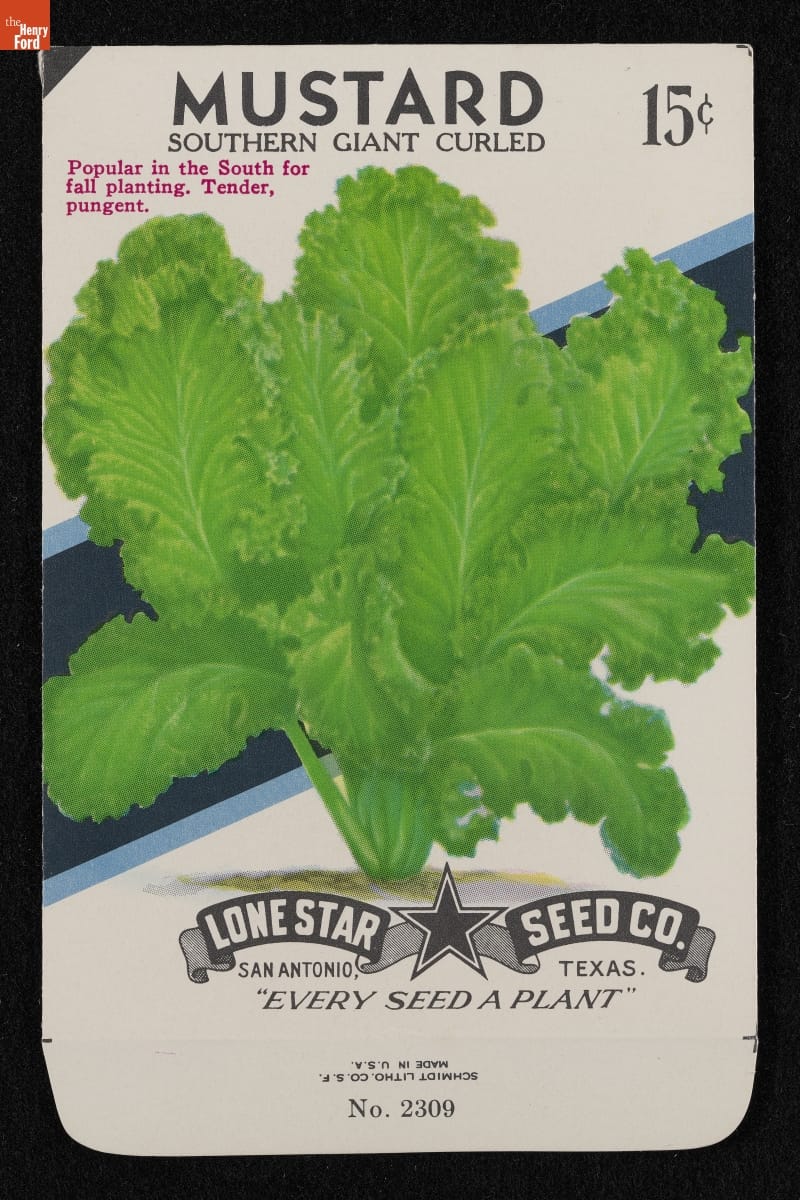
- Lone Star Seed Co. "Mustard: Southern Giant Curled" Seed Packet, 1971 - The Lone Star Seed Company was founded by brothers Paul and Roland Roberts in San Antonio, Texas, in the early 1920s. The company sold flower and vegetable seeds throughout Texas, Louisiana, Oklahoma, and New Mexico -- many from racks in feed, grocery, hardware, and department stores. The packets often contained information printed in English and Spanish, reflecting the company's market area.
- 1971
- Collections - Artifact
Lone Star Seed Co. "Mustard: Southern Giant Curled" Seed Packet, 1971
The Lone Star Seed Company was founded by brothers Paul and Roland Roberts in San Antonio, Texas, in the early 1920s. The company sold flower and vegetable seeds throughout Texas, Louisiana, Oklahoma, and New Mexico -- many from racks in feed, grocery, hardware, and department stores. The packets often contained information printed in English and Spanish, reflecting the company's market area.
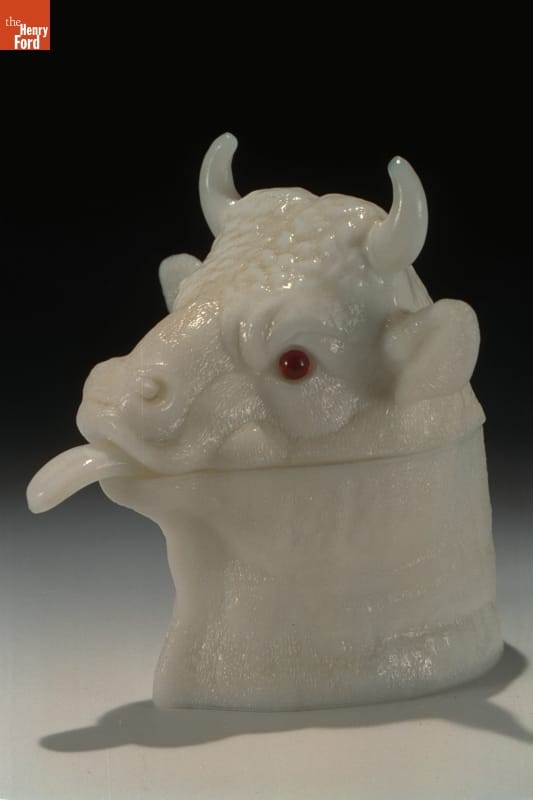
- Mustard Jar, 1888-1894 - Nineteenth-century American glassmakers experimented with new methods to create products for a growing consumer market. In the 1820s, pressing glass into metal molds by machine was perfected, and by the mid-1800s, manufacturers were creating a variety of inexpensive pressed glass housewares. America's middle-class consumers could now decorate their homes with attractive glass bowls, creamers, dishes, plates, vases, and other tableware.
- 1888-1894
- Collections - Artifact
Mustard Jar, 1888-1894
Nineteenth-century American glassmakers experimented with new methods to create products for a growing consumer market. In the 1820s, pressing glass into metal molds by machine was perfected, and by the mid-1800s, manufacturers were creating a variety of inexpensive pressed glass housewares. America's middle-class consumers could now decorate their homes with attractive glass bowls, creamers, dishes, plates, vases, and other tableware.
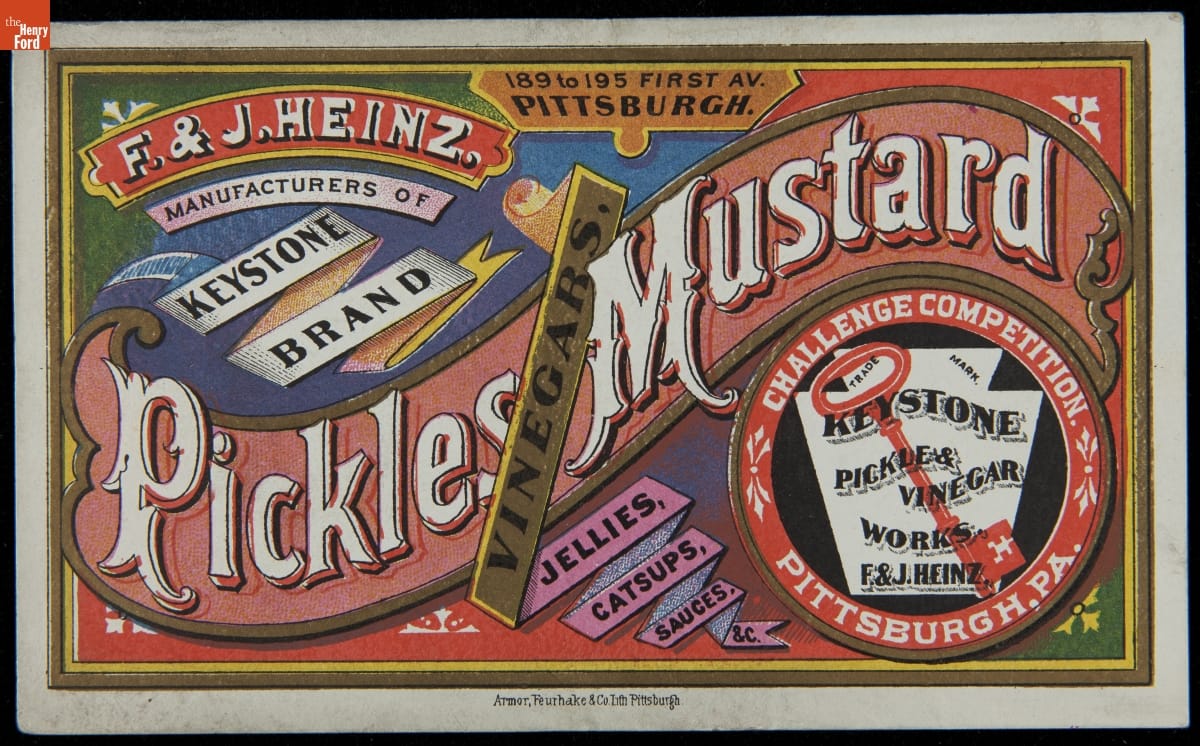
- Trade Card for Keystone Brand Pickles, Vinegars, Mustard, F. & J. Heinz, circa 1880 - In 1869, H.J. Heinz entered his first business partnership to form Heinz & Noble, which sold pickled foods and condiments until going out of business in 1875. In 1876, Heinz persuaded family members to begin a new company -- F. & J. Heinz -- with H.J. Heinz running the company behind the scenes until he could rebuild his reputation and take over the company.
- circa 1880
- Collections - Artifact
Trade Card for Keystone Brand Pickles, Vinegars, Mustard, F. & J. Heinz, circa 1880
In 1869, H.J. Heinz entered his first business partnership to form Heinz & Noble, which sold pickled foods and condiments until going out of business in 1875. In 1876, Heinz persuaded family members to begin a new company -- F. & J. Heinz -- with H.J. Heinz running the company behind the scenes until he could rebuild his reputation and take over the company.
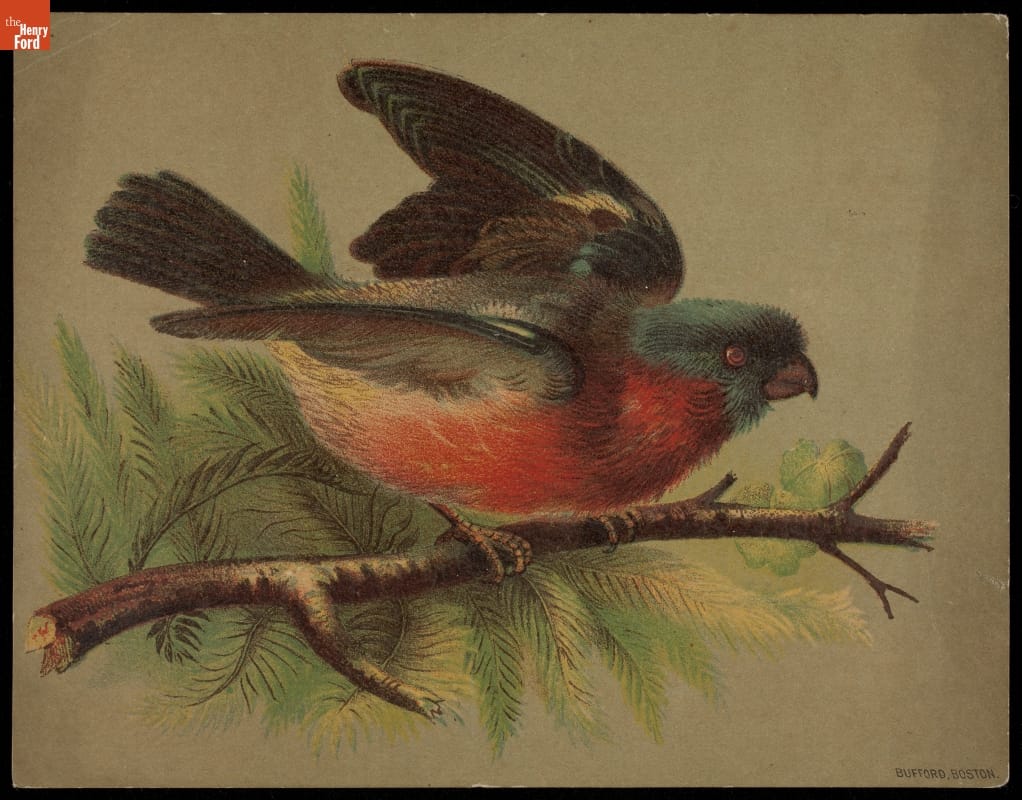
- Trade Card for Mustard and Spices, Jewett & Sherman Co., circa 1890 - In the last third of the nineteenth century, an unprecedented variety of consumer goods and services flooded the American market. Advertisers, armed with new methods of color printing, bombarded potential customers with trade cards. Americans enjoyed and often saved the vibrant little advertisements found in product packages or distributed by local merchants. Many survive as historical records of commercialism in the United States.
- circa 1890
- Collections - Artifact
Trade Card for Mustard and Spices, Jewett & Sherman Co., circa 1890
In the last third of the nineteenth century, an unprecedented variety of consumer goods and services flooded the American market. Advertisers, armed with new methods of color printing, bombarded potential customers with trade cards. Americans enjoyed and often saved the vibrant little advertisements found in product packages or distributed by local merchants. Many survive as historical records of commercialism in the United States.
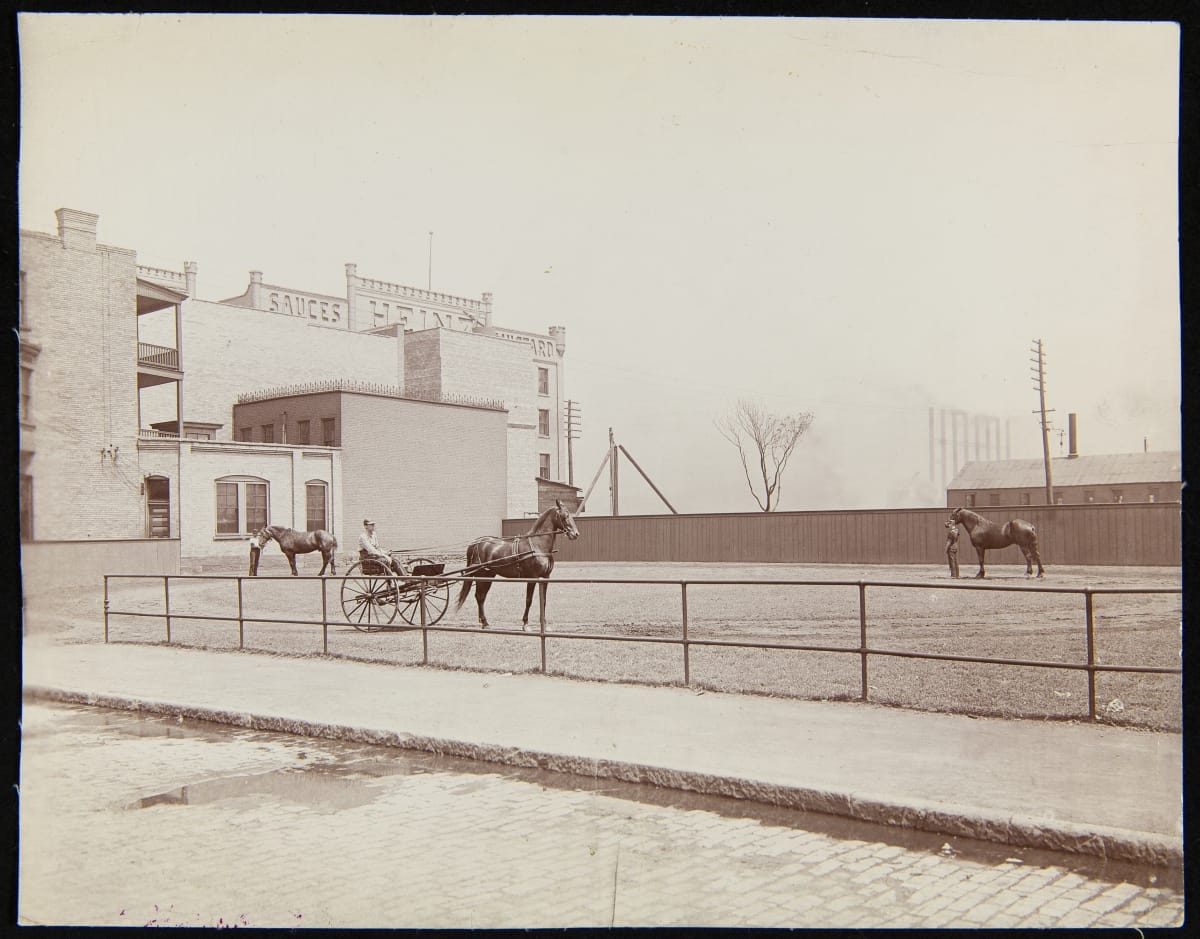
- Employees Exercising Horses, H. J. Heinz Company, Pittsburgh, Pennsylvania, circa 1905 - Before the 1920s, the H.J. Heinz Company transported their goods by rail and by horse-drawn wagons. The main factory in Pittsburgh, Pennsylvania, had top-of-the-line stables, sometimes referred to as "equine palaces," where the horses received only the best feed and care. In this photograph, employees are exercising the horses on the grounds within the factory complex.
- circa 1905
- Collections - Artifact
Employees Exercising Horses, H. J. Heinz Company, Pittsburgh, Pennsylvania, circa 1905
Before the 1920s, the H.J. Heinz Company transported their goods by rail and by horse-drawn wagons. The main factory in Pittsburgh, Pennsylvania, had top-of-the-line stables, sometimes referred to as "equine palaces," where the horses received only the best feed and care. In this photograph, employees are exercising the horses on the grounds within the factory complex.