
Search
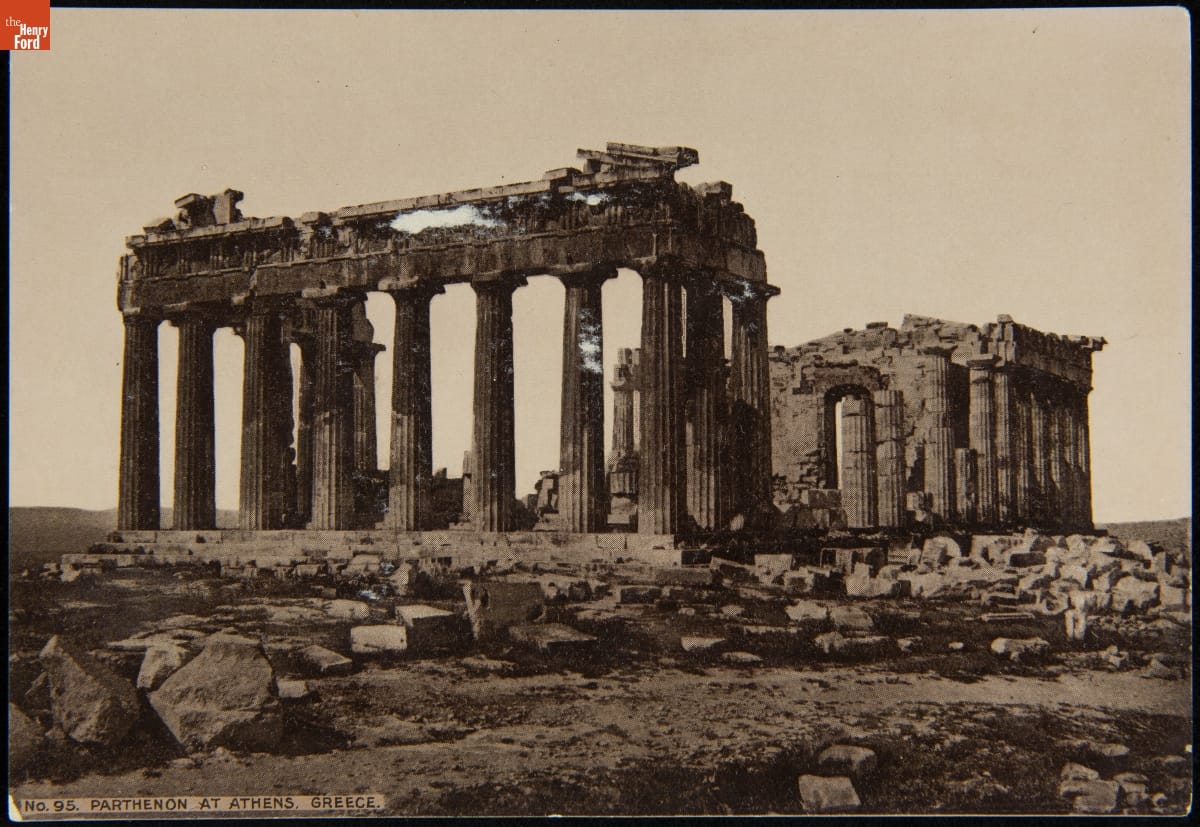
- Trade Card for C.I. Hood & Co. with Hood's Photos of the World, "Parthenon at Athens, Greece," 1890-1910 - In the late 19th century, trade cards were a major means of advertising goods and services. Patent medicine producer, C.I. Hood & Co., had its own advertising department, creating cookbooks, calendars, and, most abundantly, trade cards. The trade card series, "Hood's Photos of the World," became popular among consumers, as it offered views of far-away places, providing a window to the broader world.
- 1890-1910
- Collections - Artifact
Trade Card for C.I. Hood & Co. with Hood's Photos of the World, "Parthenon at Athens, Greece," 1890-1910
In the late 19th century, trade cards were a major means of advertising goods and services. Patent medicine producer, C.I. Hood & Co., had its own advertising department, creating cookbooks, calendars, and, most abundantly, trade cards. The trade card series, "Hood's Photos of the World," became popular among consumers, as it offered views of far-away places, providing a window to the broader world.
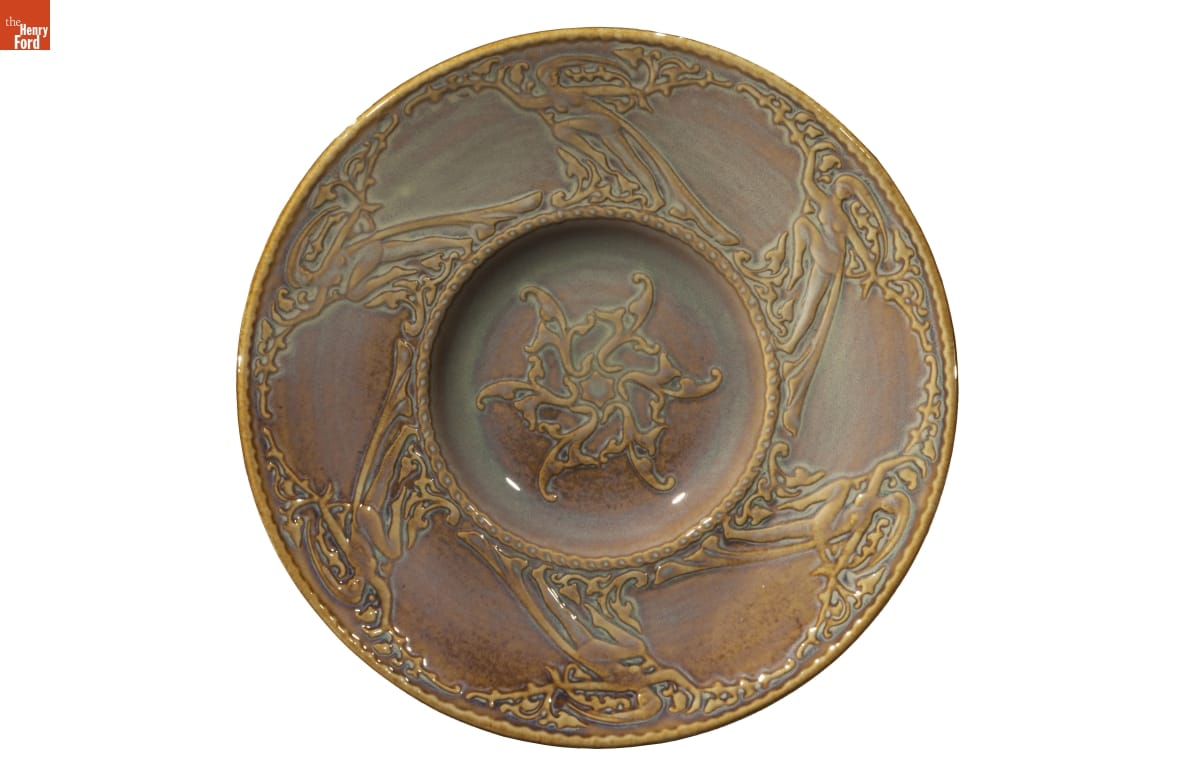
- Plate, 1920-1930 - The Cowan Pottery near Cleveland, Ohio, produced exceptional artistic and commercial wares during its heyday, from 1920 to 1931. Hiring the best local talent, the pottery produced pieces influenced by the Arts and Crafts and Art Deco styles. This plate shows the classical myth of Apollo and Daphne, at the point where the wood nymph Daphne transforms into a laurel tree.
- 1920-1930
- Collections - Artifact
Plate, 1920-1930
The Cowan Pottery near Cleveland, Ohio, produced exceptional artistic and commercial wares during its heyday, from 1920 to 1931. Hiring the best local talent, the pottery produced pieces influenced by the Arts and Crafts and Art Deco styles. This plate shows the classical myth of Apollo and Daphne, at the point where the wood nymph Daphne transforms into a laurel tree.
- Vase, 1916 -
- 1916
- Collections - Artifact
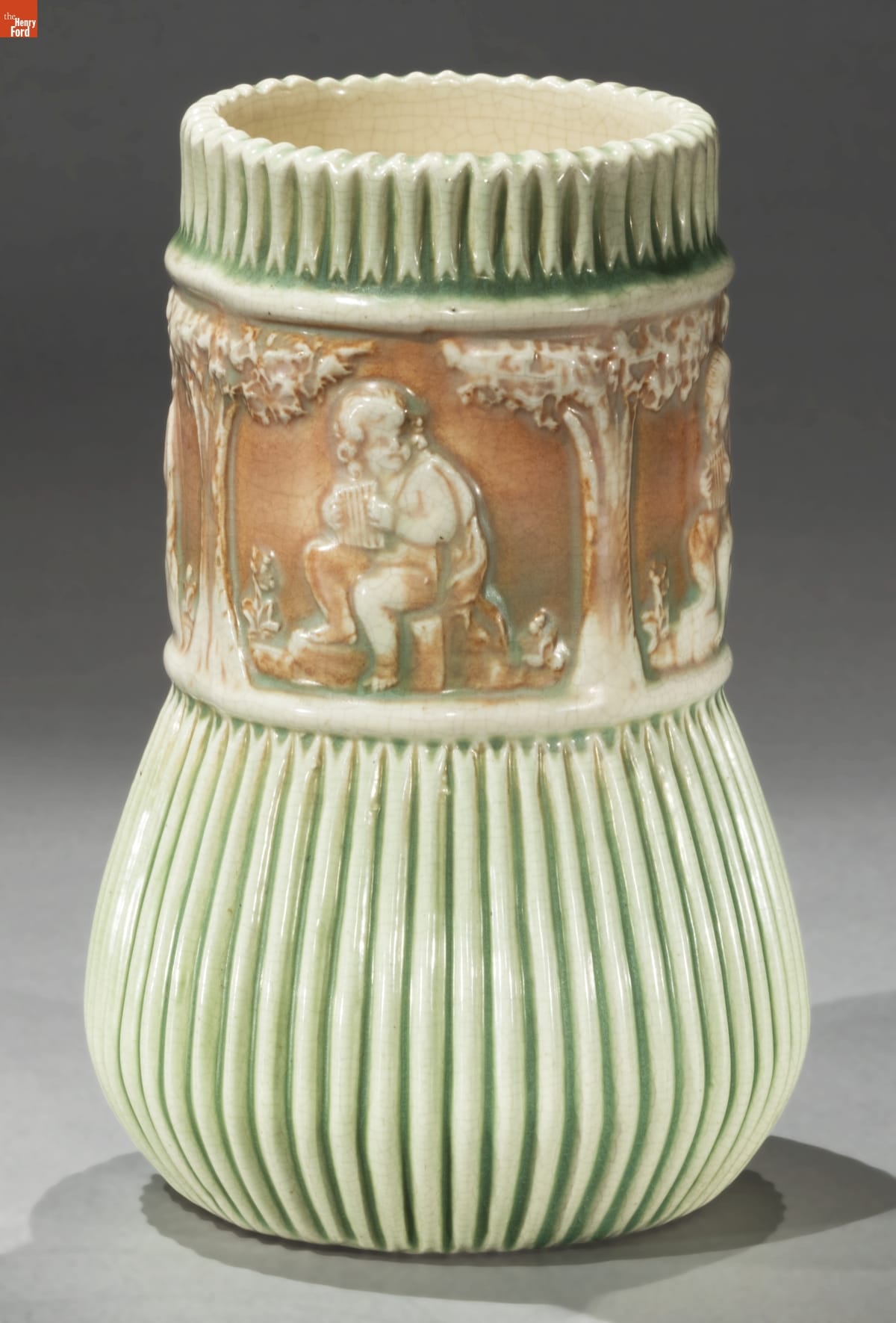
Vase, 1916
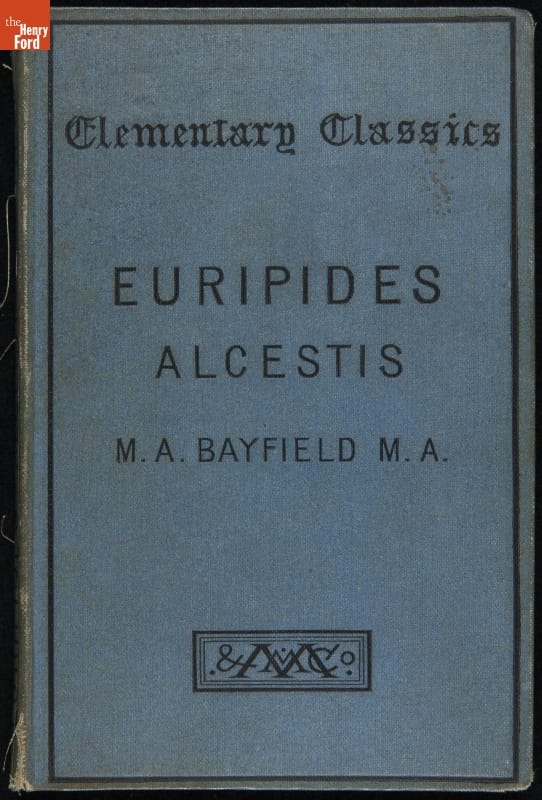
- Book Used by the Wright Family, "The Alcestis of Euripides," 1890 - Bishop Milton Wright maintained an extensive library in his Dayton, Ohio, home. His books ranged from scientific works like Charles Darwin's <EM>On the Origin of Species</EM>, to poems by Virgil, to novels by Mark Twain. Wright's sons, Wilbur and Orville, used the bishop's books on physics and ornithology to start their research on the problem of human flight.
- 1890
- Collections - Artifact
Book Used by the Wright Family, "The Alcestis of Euripides," 1890
Bishop Milton Wright maintained an extensive library in his Dayton, Ohio, home. His books ranged from scientific works like Charles Darwin's On the Origin of Species, to poems by Virgil, to novels by Mark Twain. Wright's sons, Wilbur and Orville, used the bishop's books on physics and ornithology to start their research on the problem of human flight.
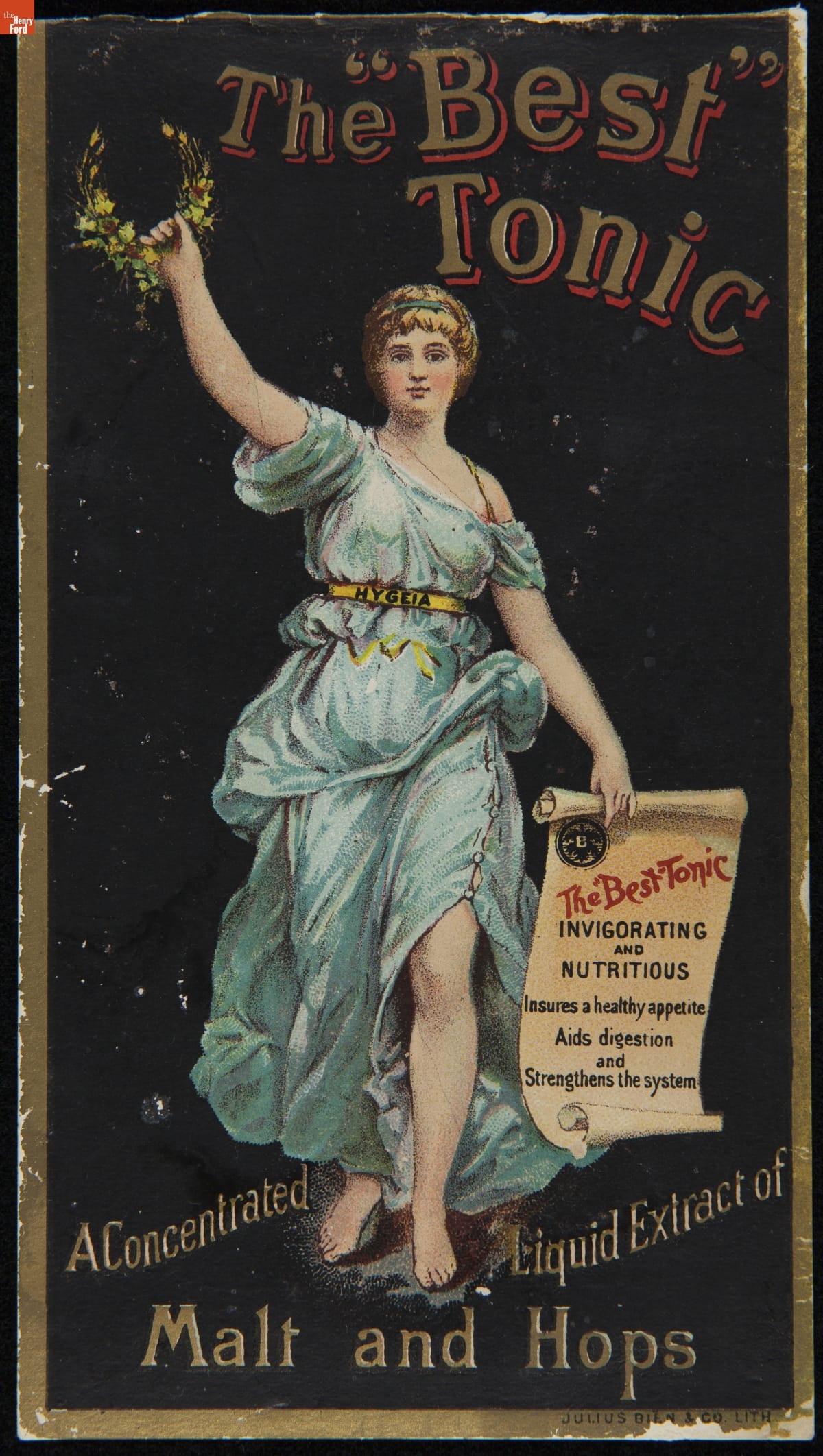
- Trade Card for The "Best Tonic," 1880-1900 - In the last third of the nineteenth century, an unprecedented variety of consumer goods and services flooded the American market. Advertisers, armed with new methods of color printing, bombarded potential customers with trade cards. Americans enjoyed and often saved the vibrant little advertisements found in product packages or distributed by local merchants. Many survive as historical records of commercialism in the United States.
- 1880-1900
- Collections - Artifact
Trade Card for The "Best Tonic," 1880-1900
In the last third of the nineteenth century, an unprecedented variety of consumer goods and services flooded the American market. Advertisers, armed with new methods of color printing, bombarded potential customers with trade cards. Americans enjoyed and often saved the vibrant little advertisements found in product packages or distributed by local merchants. Many survive as historical records of commercialism in the United States.
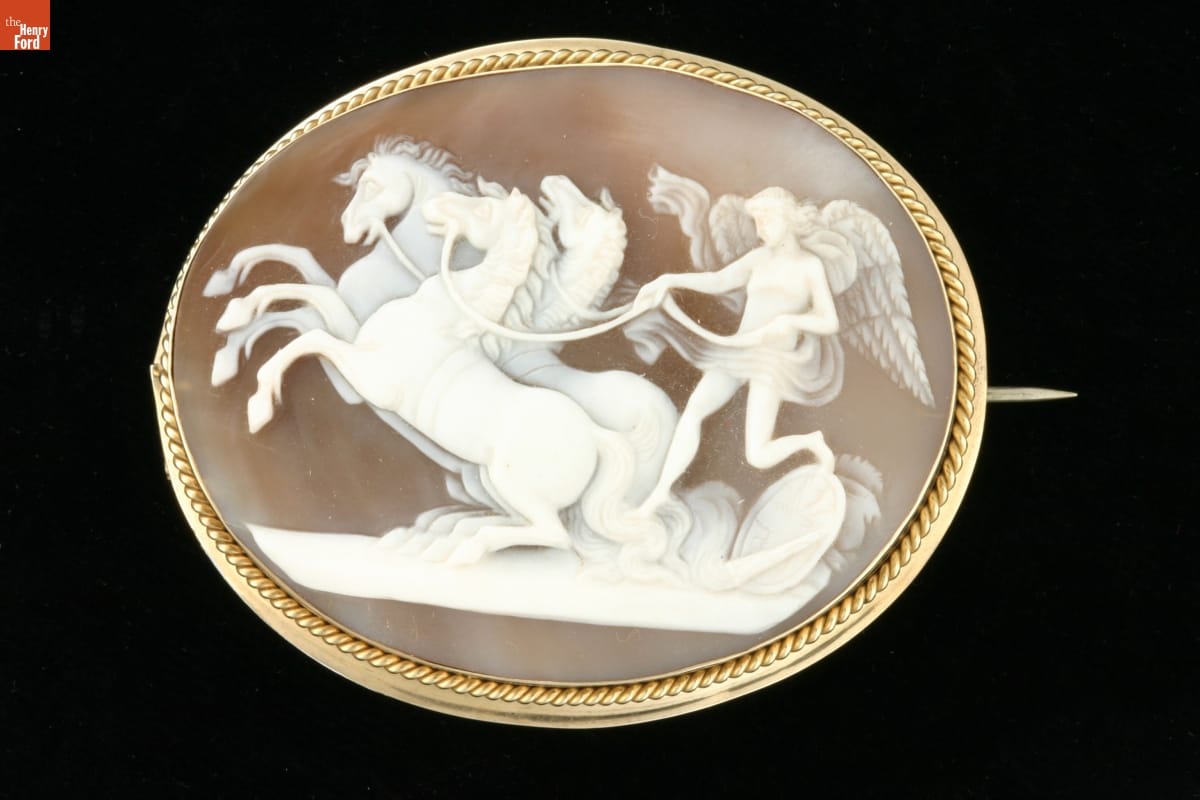
- Cameo Brooch, 1833 -
- 1833
- Collections - Artifact
Cameo Brooch, 1833
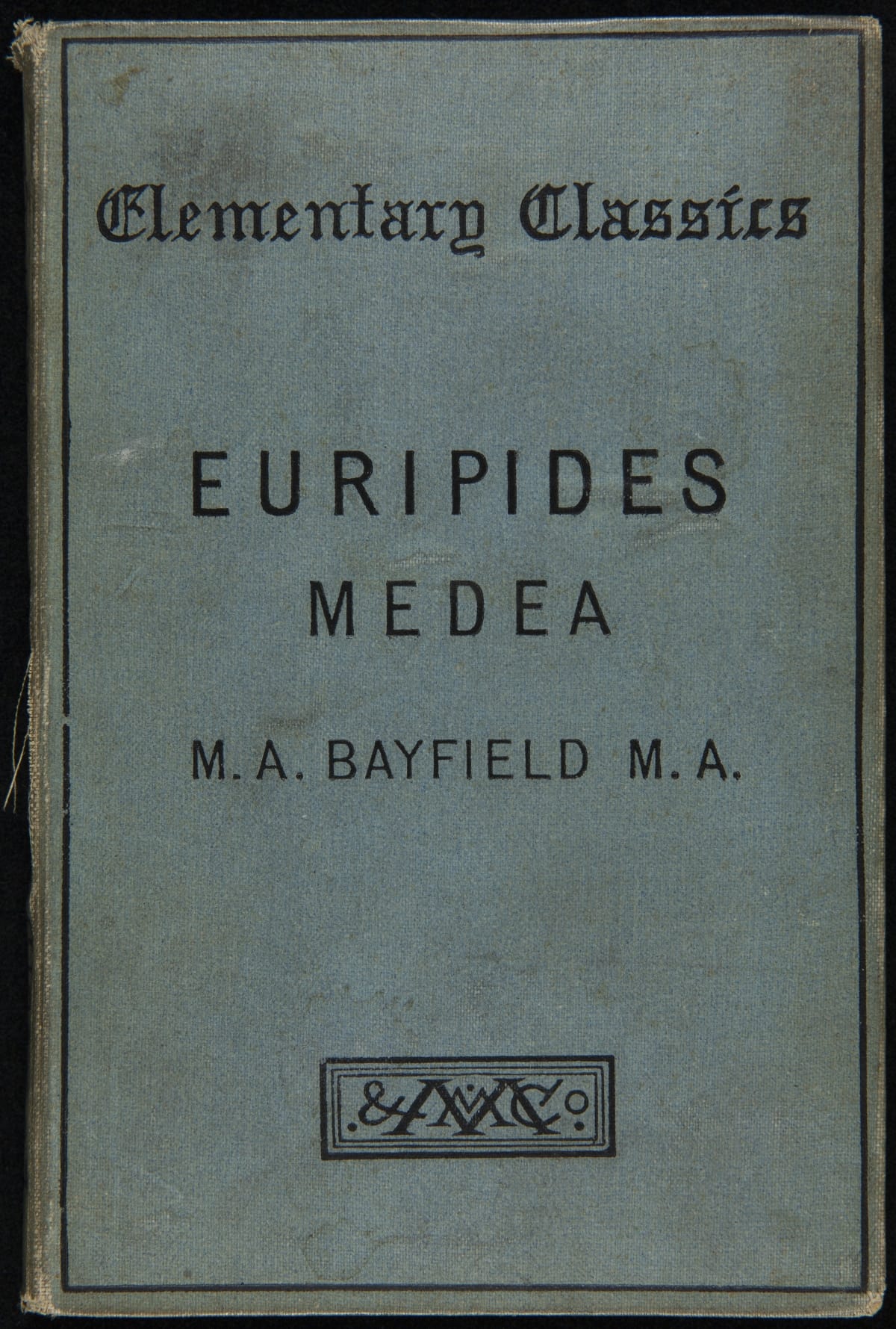
- Book Used by Katharine Wright, "Medea," 1892 - Milton and Susan Wright encouraged an interest in learning in their children Reuchlin, Lorin, Wilbur, Orville, and Katharine -- though not necessarily in formal education. Katharine was the only Wright child to finish college, graduating from Oberlin in 1898. Neither Wilbur nor Orville finished high school, but they learned much from their father's extensive home library.
- 1892
- Collections - Artifact
Book Used by Katharine Wright, "Medea," 1892
Milton and Susan Wright encouraged an interest in learning in their children Reuchlin, Lorin, Wilbur, Orville, and Katharine -- though not necessarily in formal education. Katharine was the only Wright child to finish college, graduating from Oberlin in 1898. Neither Wilbur nor Orville finished high school, but they learned much from their father's extensive home library.
- Trade Card for "Best Tonic," Philip Best Brewing Co., 1870-1900 - In the last third of the nineteenth century, an unprecedented variety of consumer goods and services flooded the American market. Advertisers, armed with new methods of color printing, bombarded potential customers with trade cards. Americans enjoyed and often saved the vibrant little advertisements found in product packages or distributed by local merchants. Many survive as historical records of commercialism in the United States.
- 1870-1900
- Collections - Artifact
Trade Card for "Best Tonic," Philip Best Brewing Co., 1870-1900
In the last third of the nineteenth century, an unprecedented variety of consumer goods and services flooded the American market. Advertisers, armed with new methods of color printing, bombarded potential customers with trade cards. Americans enjoyed and often saved the vibrant little advertisements found in product packages or distributed by local merchants. Many survive as historical records of commercialism in the United States.
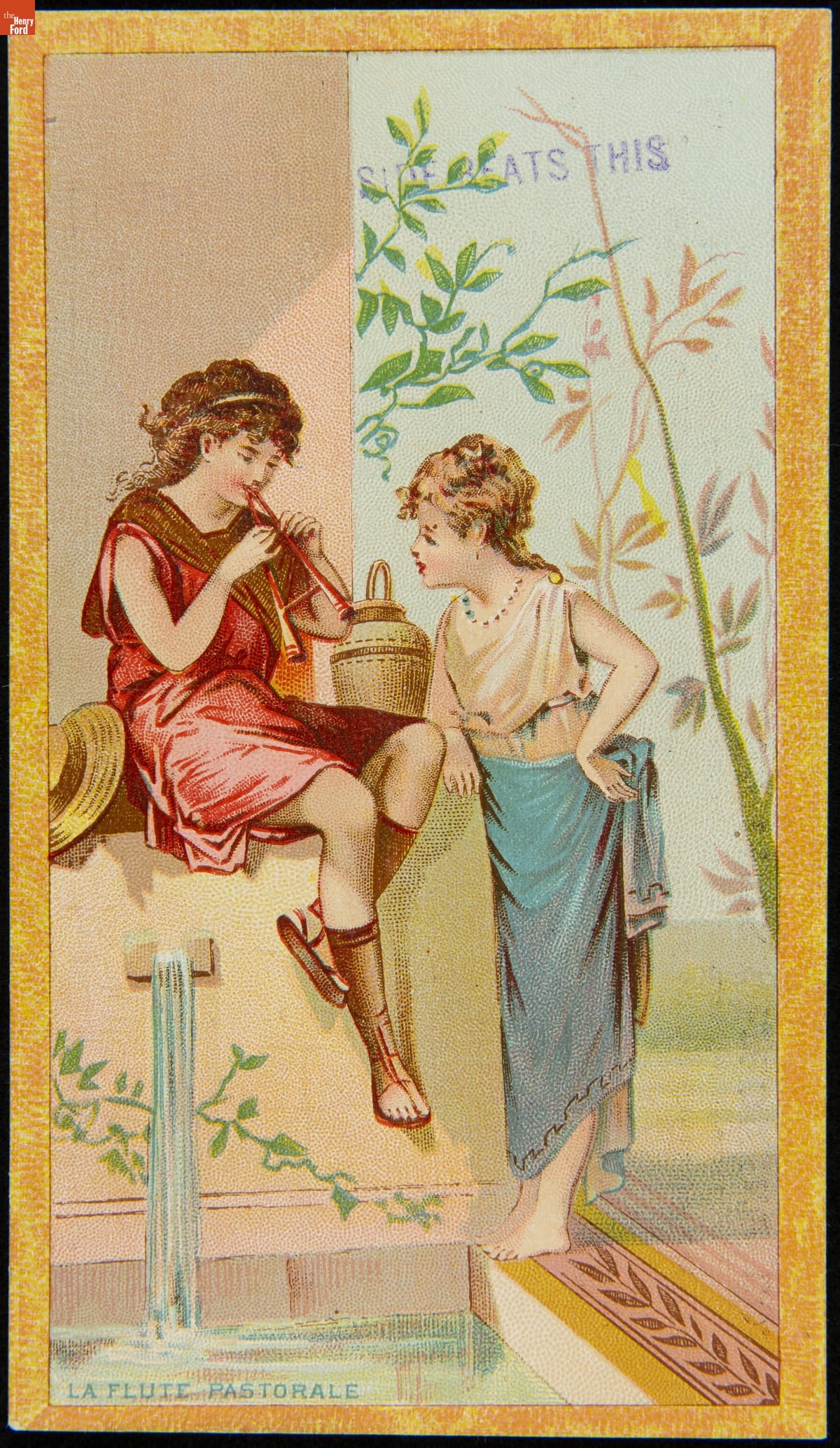
- Trade Card for Zoa Phora Medicine Company, 1862-1890 - In the last third of the nineteenth century, an unprecedented variety of consumer goods and services flooded the American market. Advertisers, armed with new methods of color printing, bombarded potential customers with trade cards. Americans enjoyed and often saved the vibrant little advertisements found in product packages or distributed by local merchants. Many survive as historical records of commercialism in the United States.
- 1862-1890
- Collections - Artifact
Trade Card for Zoa Phora Medicine Company, 1862-1890
In the last third of the nineteenth century, an unprecedented variety of consumer goods and services flooded the American market. Advertisers, armed with new methods of color printing, bombarded potential customers with trade cards. Americans enjoyed and often saved the vibrant little advertisements found in product packages or distributed by local merchants. Many survive as historical records of commercialism in the United States.