
Search
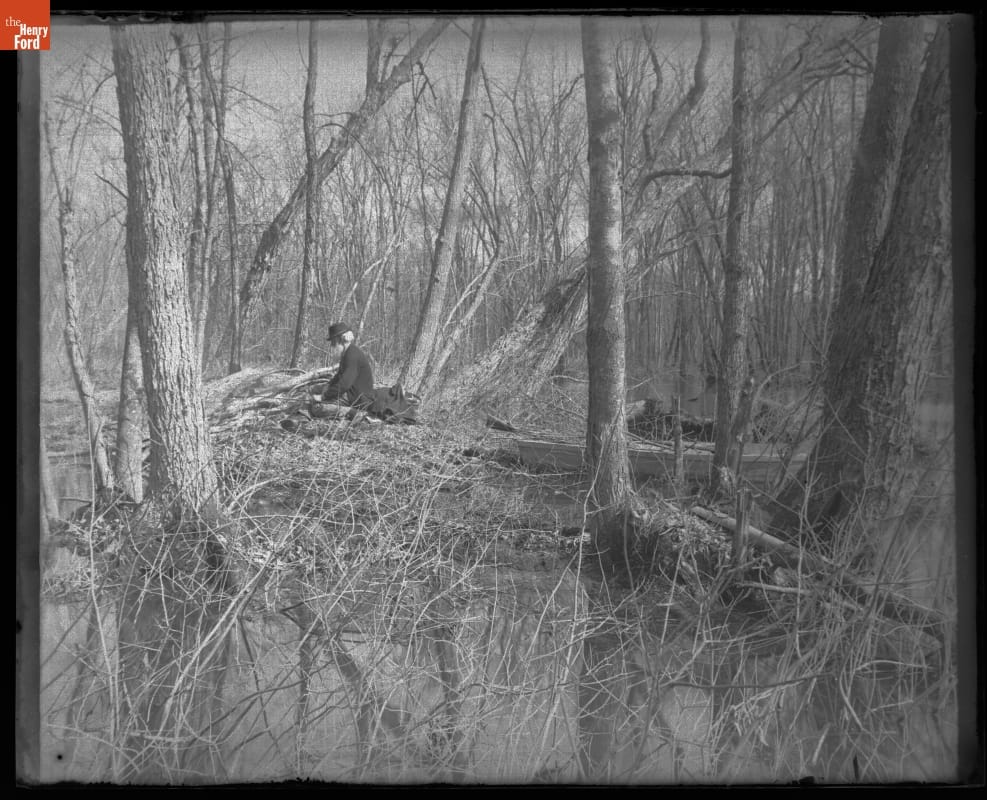
- John Burroughs Sitting in Black Creek Swamp, West Park, New York, 1900 - John Burroughs (1837-1921) was an internationally known naturalist and writer whose nature essays were well-received in both literary and scientific circles. From his home in the Catskills of upstate New York, Burroughs wrote mostly about what could be found in accessible and familiar landscapes. He wanted his readers to appreciate the natural world that surrounded them.
- March 01, 1900
- Collections - Artifact
John Burroughs Sitting in Black Creek Swamp, West Park, New York, 1900
John Burroughs (1837-1921) was an internationally known naturalist and writer whose nature essays were well-received in both literary and scientific circles. From his home in the Catskills of upstate New York, Burroughs wrote mostly about what could be found in accessible and familiar landscapes. He wanted his readers to appreciate the natural world that surrounded them.
- Landscape with Open Fields, Hills, and Clouds -
- Collections - Artifact
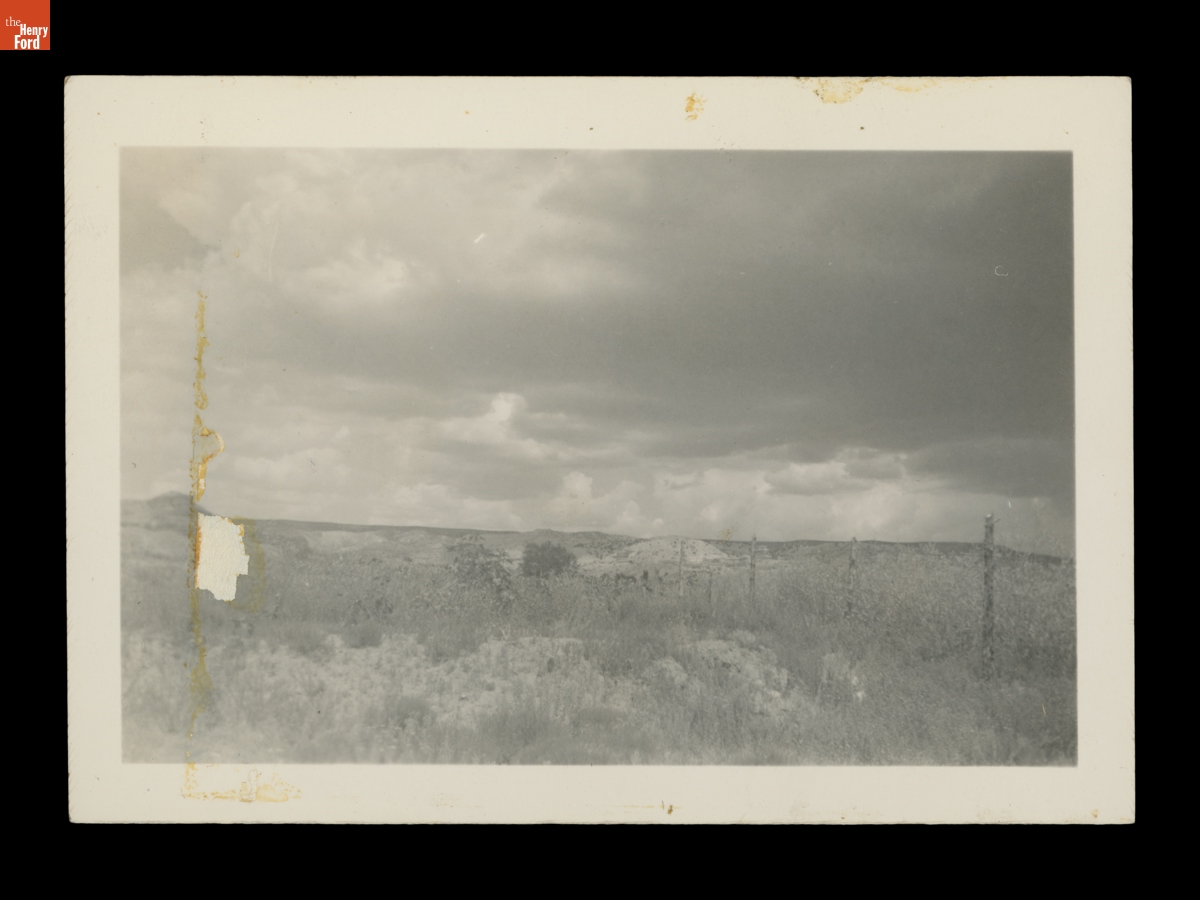
Landscape with Open Fields, Hills, and Clouds
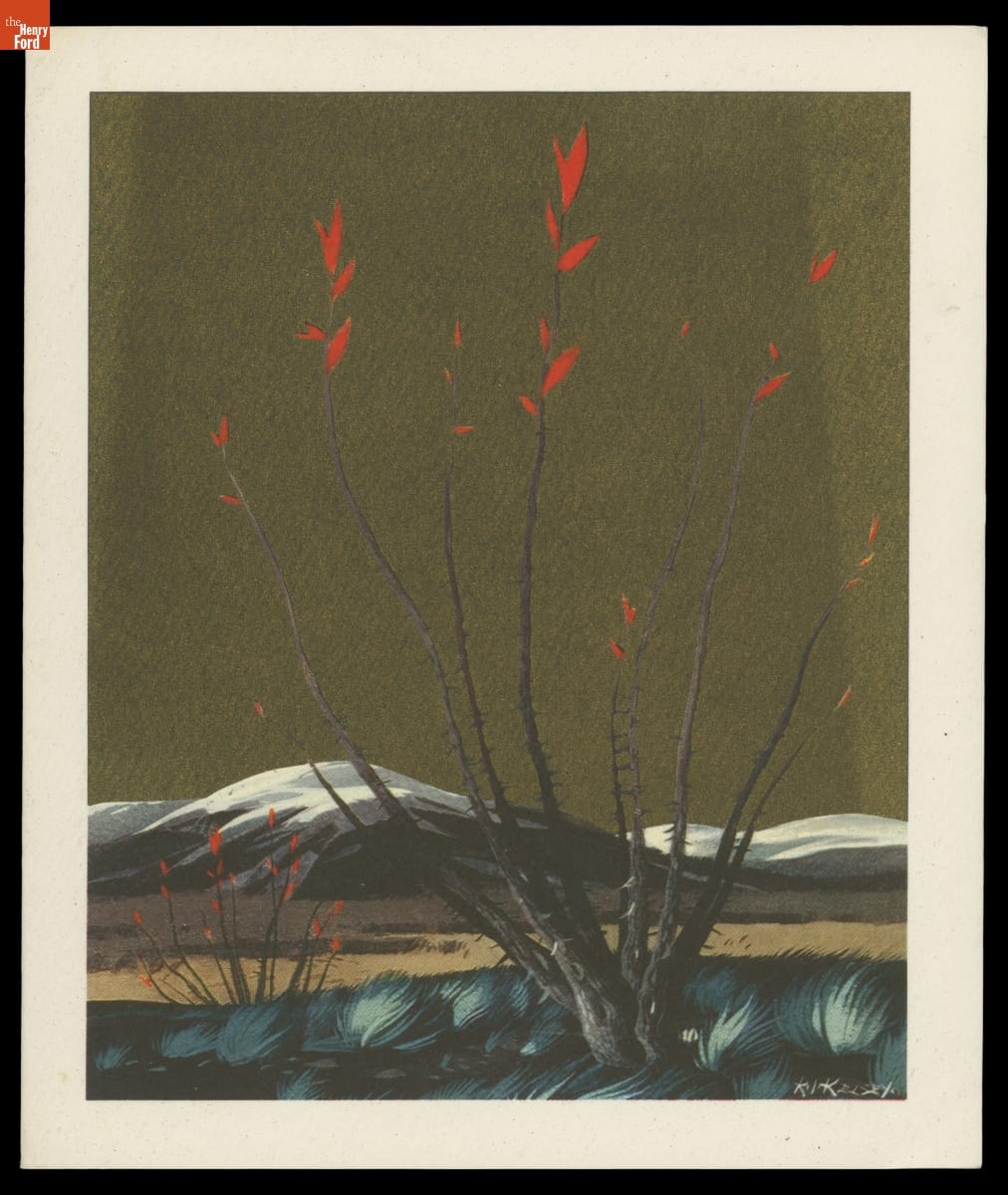
- Candlewood Tree, 1952 - Richmond "Dick" Kelsey (1905-1987) studied art in Southern California in the 1920s and 30s. In 1938, Walt Disney hired the watercolor artist and muralist to work on several animated films: <em>Pinocchio</em>, <em>Fantasia</em>, and <em>Bambi</em>. After serving in World War II, Kelsey returned to work for Disney. In addition to his animation work, he designed Christmas cards for greeting card companies.
- 1952
- Collections - Artifact
Candlewood Tree, 1952
Richmond "Dick" Kelsey (1905-1987) studied art in Southern California in the 1920s and 30s. In 1938, Walt Disney hired the watercolor artist and muralist to work on several animated films: Pinocchio, Fantasia, and Bambi. After serving in World War II, Kelsey returned to work for Disney. In addition to his animation work, he designed Christmas cards for greeting card companies.
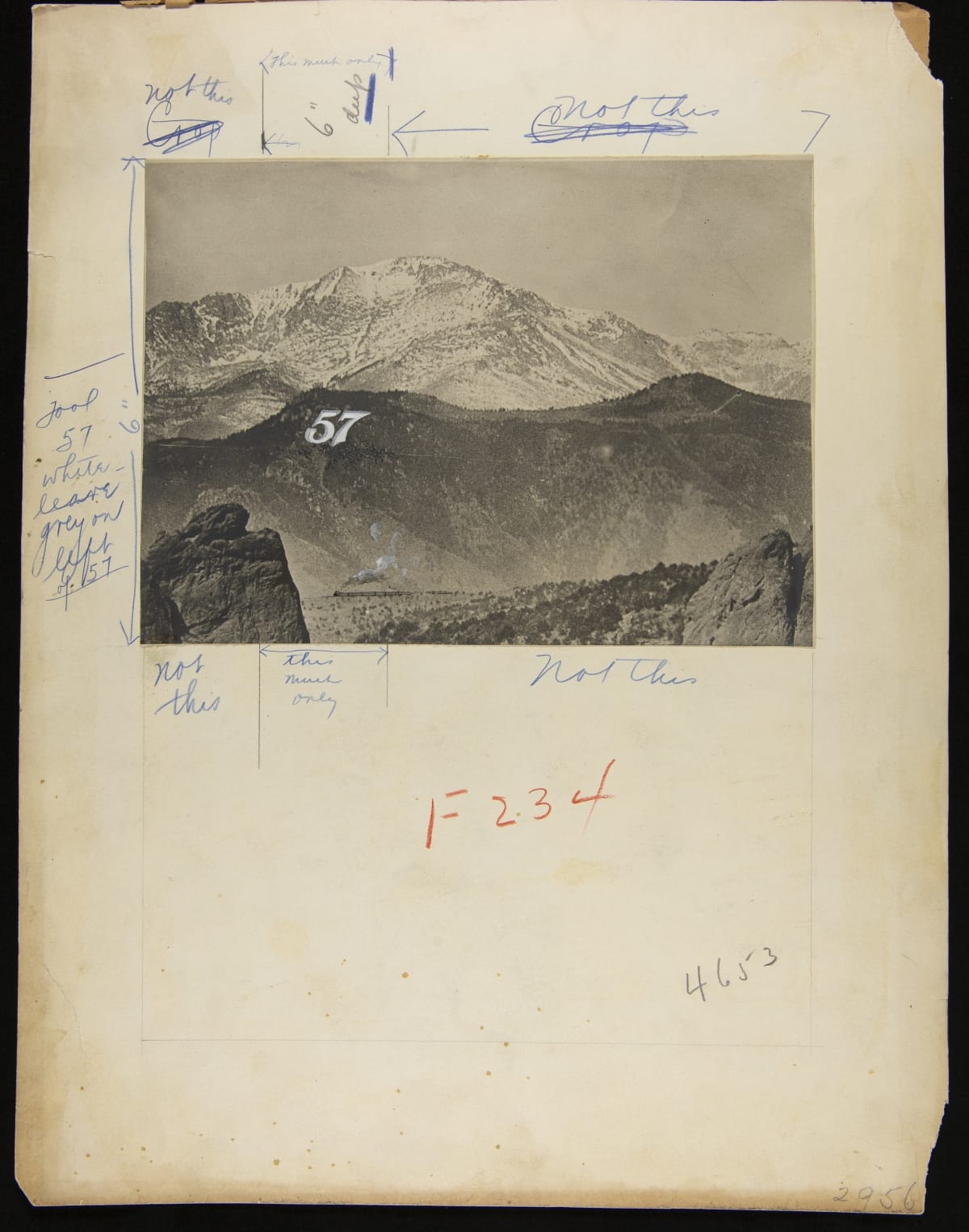
- Advertising Layout, Heinz "57" in a Mountain Landscape - The H.J. Heinz Company marketed its products everywhere from stores to various publications and even on streetcars. This advertising layout represents one of the steps in the marketing process in which the drawing or illustration, size, color, and arrangement are taken into consideration before the final advertisement is created. This layout was utilized in advertising to promote Heinz's famous "57 Varieties".
- Collections - Artifact
Advertising Layout, Heinz "57" in a Mountain Landscape
The H.J. Heinz Company marketed its products everywhere from stores to various publications and even on streetcars. This advertising layout represents one of the steps in the marketing process in which the drawing or illustration, size, color, and arrangement are taken into consideration before the final advertisement is created. This layout was utilized in advertising to promote Heinz's famous "57 Varieties".
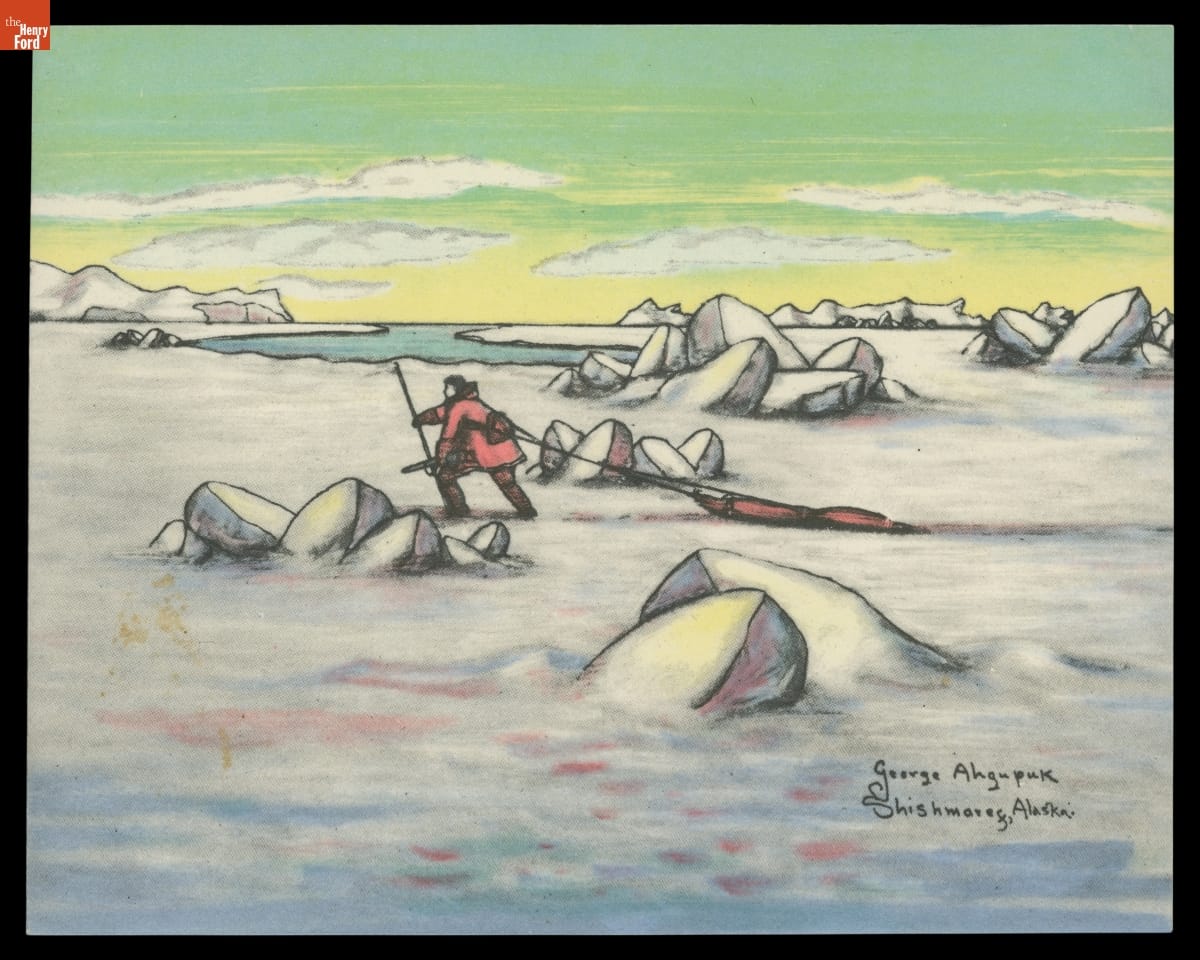
- "An Old Fashioned Christmas and a Happy Prosperous New Year," 1951 - George Twok Aden Ahgupuk (1911-2001), an Inupiat artist from Shishmaref, Alaska, began his artistic career during a several-month hospital stay in 1934. Ahgupuk's artwork of Native Alaskan life became widely known years later through a developing friendship with fellow artist and illustrator Rockwell Kent. Kent also encouraged him to illustrate Christmas cards. Ahgupuk did and explored other commercial ventures that documented native life.
- 1951
- Collections - Artifact
"An Old Fashioned Christmas and a Happy Prosperous New Year," 1951
George Twok Aden Ahgupuk (1911-2001), an Inupiat artist from Shishmaref, Alaska, began his artistic career during a several-month hospital stay in 1934. Ahgupuk's artwork of Native Alaskan life became widely known years later through a developing friendship with fellow artist and illustrator Rockwell Kent. Kent also encouraged him to illustrate Christmas cards. Ahgupuk did and explored other commercial ventures that documented native life.
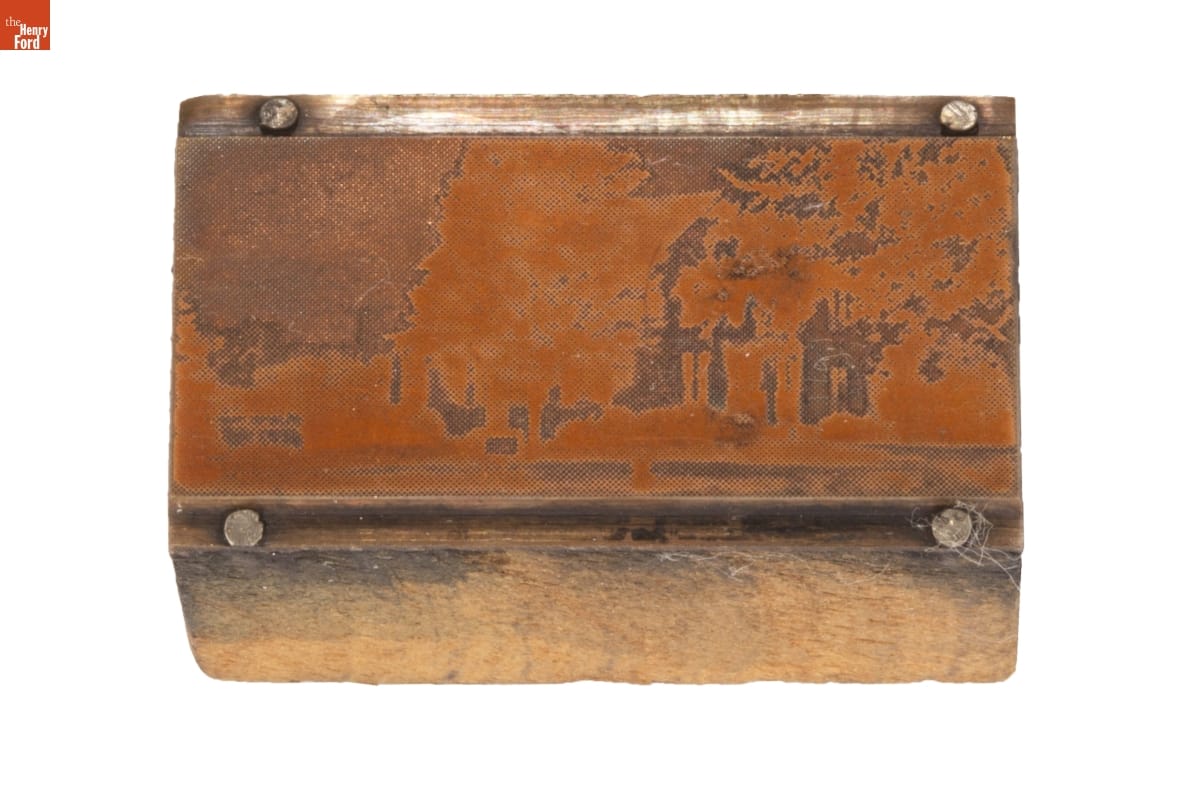
- Printing Block, Landscape Scene, 1860-1940 -
- 1860-1940
- Collections - Artifact
Printing Block, Landscape Scene, 1860-1940
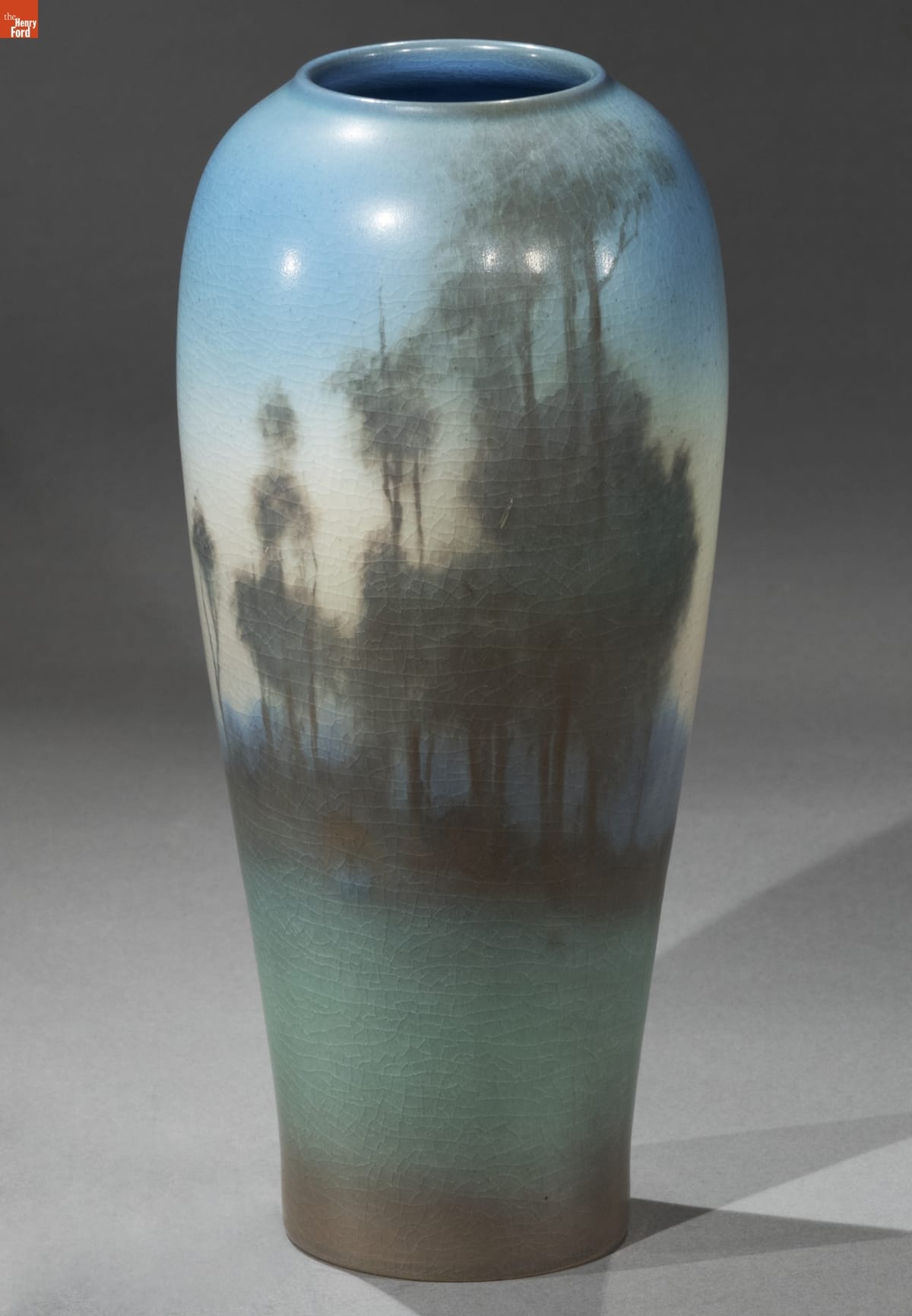
- Vase, 1917 - The Rookwood Pottery was founded in Cincinnati in 1880 by Maria Longworth Nichols. She hired a number of talented potters and decorators, making the firm a leader among art potteries by the 1890s. The vellum technique was invented in 1904 and consists of a light-colored matte background with floral or landscape decoration.
- 1917
- Collections - Artifact
Vase, 1917
The Rookwood Pottery was founded in Cincinnati in 1880 by Maria Longworth Nichols. She hired a number of talented potters and decorators, making the firm a leader among art potteries by the 1890s. The vellum technique was invented in 1904 and consists of a light-colored matte background with floral or landscape decoration.
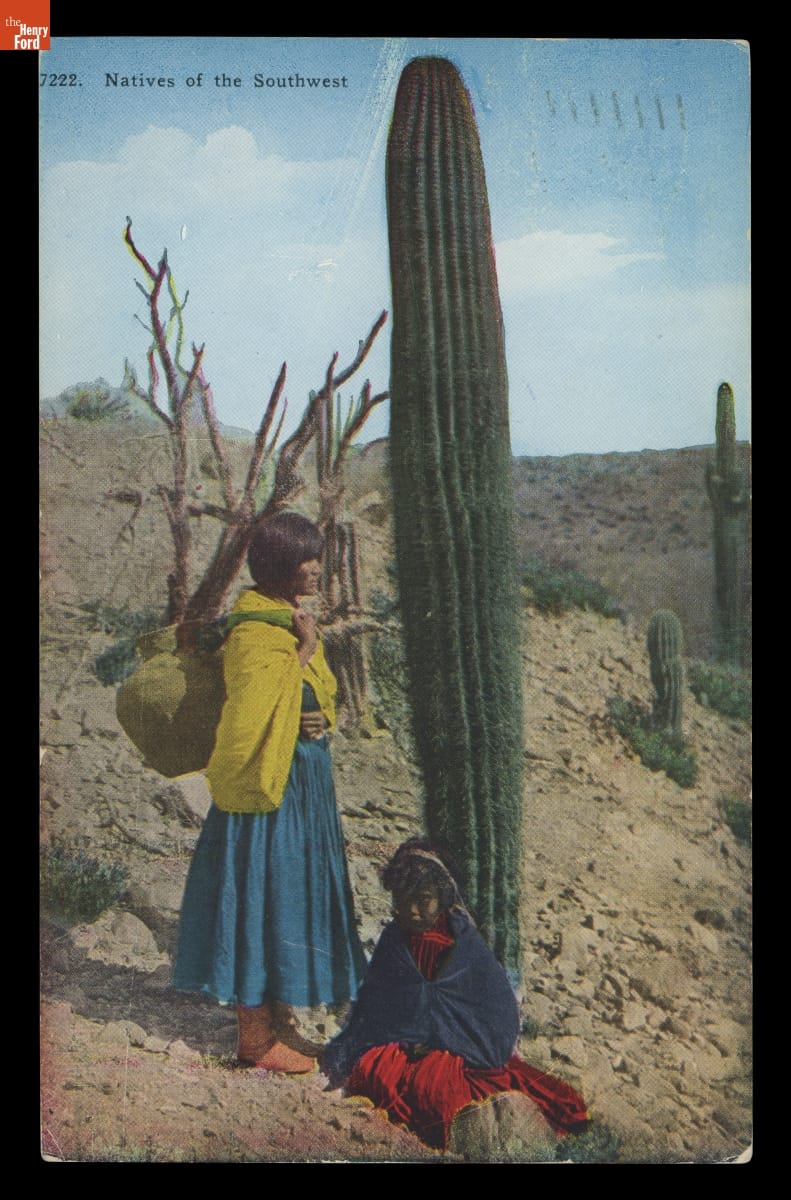
- "Natives of the Southwest," circa 1935 -
- circa 1935
- Collections - Artifact
"Natives of the Southwest," circa 1935
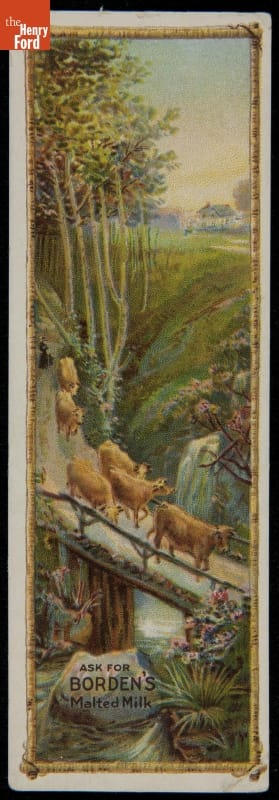
- Trade Card for Borden's Malted Milk, Borden's Condensed Milk Co., 1899-1919 - In the last third of the nineteenth century, an unprecedented variety of consumer goods flooded the American market. Some enterprising advertisers sought to distinguish their products from the competition, distributing trade cards that doubled as a bookmark. Americans enjoyed and often saved the popular little advertisements, which survive as historical records of consumerism in the United States.
- 1899-1919
- Collections - Artifact
Trade Card for Borden's Malted Milk, Borden's Condensed Milk Co., 1899-1919
In the last third of the nineteenth century, an unprecedented variety of consumer goods flooded the American market. Some enterprising advertisers sought to distinguish their products from the competition, distributing trade cards that doubled as a bookmark. Americans enjoyed and often saved the popular little advertisements, which survive as historical records of consumerism in the United States.
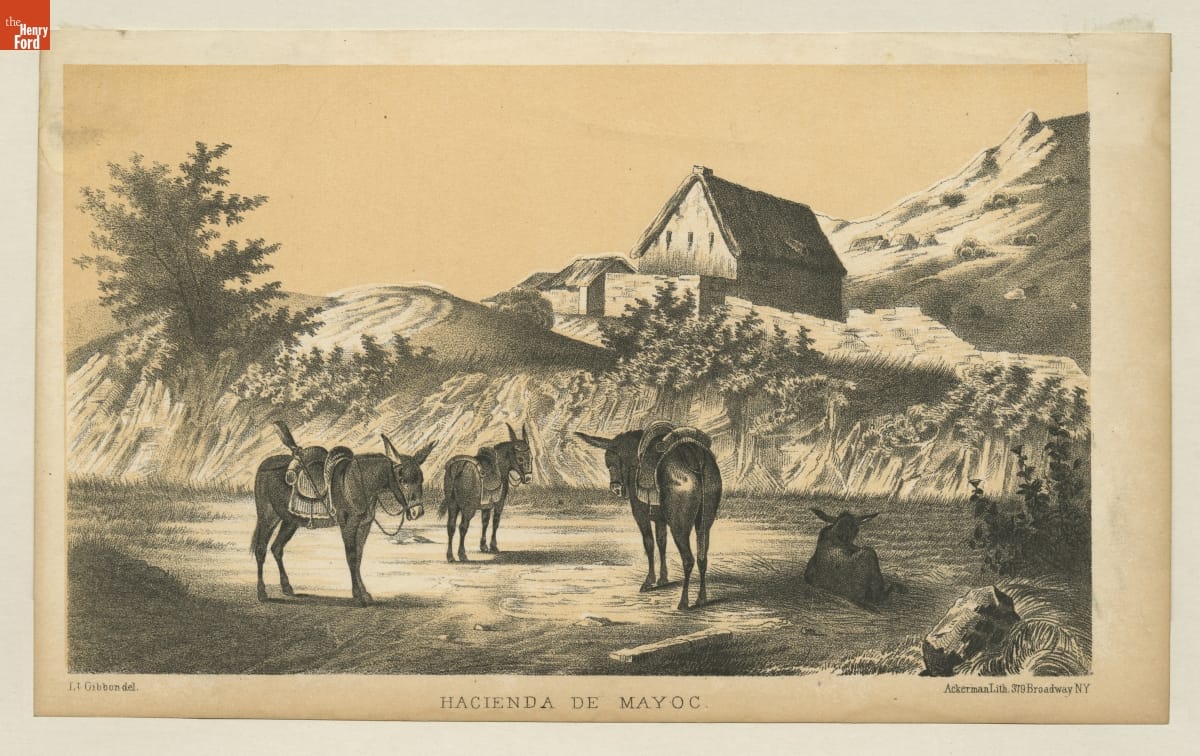
- Lithograph, "Hacienda de Mayoc," circa 1855 -
- circa 1855
- Collections - Artifact
Lithograph, "Hacienda de Mayoc," circa 1855