
Search
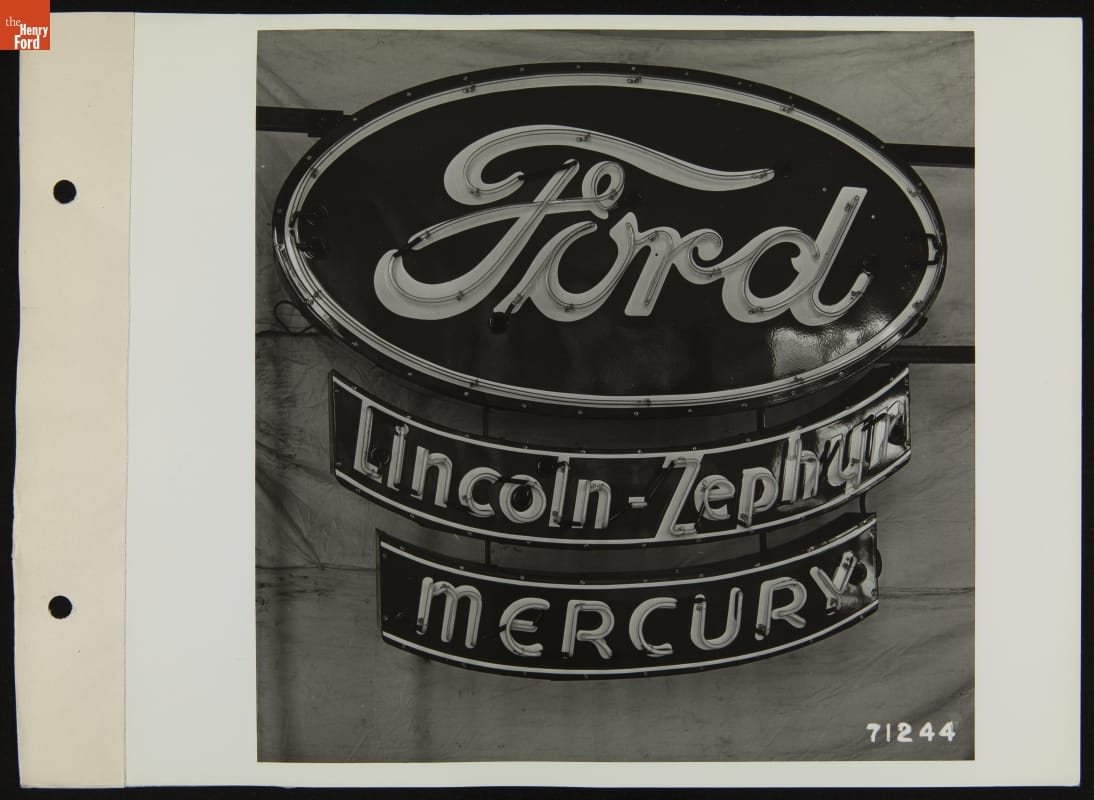
- Ford, Lincoln-Zephyr, and Mercury Neon Automobile Dealers' Sign, December 1938 - Ford Motor Company purchased upscale Lincoln in 1922 and introduced mid-priced Mercury for 1939. Together with affordable Ford-branded cars, these lines gave Ford Motor Company a well-rounded range of automobiles at various price points. Zephyr was introduced for 1936 to give Lincoln a less expensive model to market during the Great Depression.
- December 29, 1938
- Collections - Artifact
Ford, Lincoln-Zephyr, and Mercury Neon Automobile Dealers' Sign, December 1938
Ford Motor Company purchased upscale Lincoln in 1922 and introduced mid-priced Mercury for 1939. Together with affordable Ford-branded cars, these lines gave Ford Motor Company a well-rounded range of automobiles at various price points. Zephyr was introduced for 1936 to give Lincoln a less expensive model to market during the Great Depression.
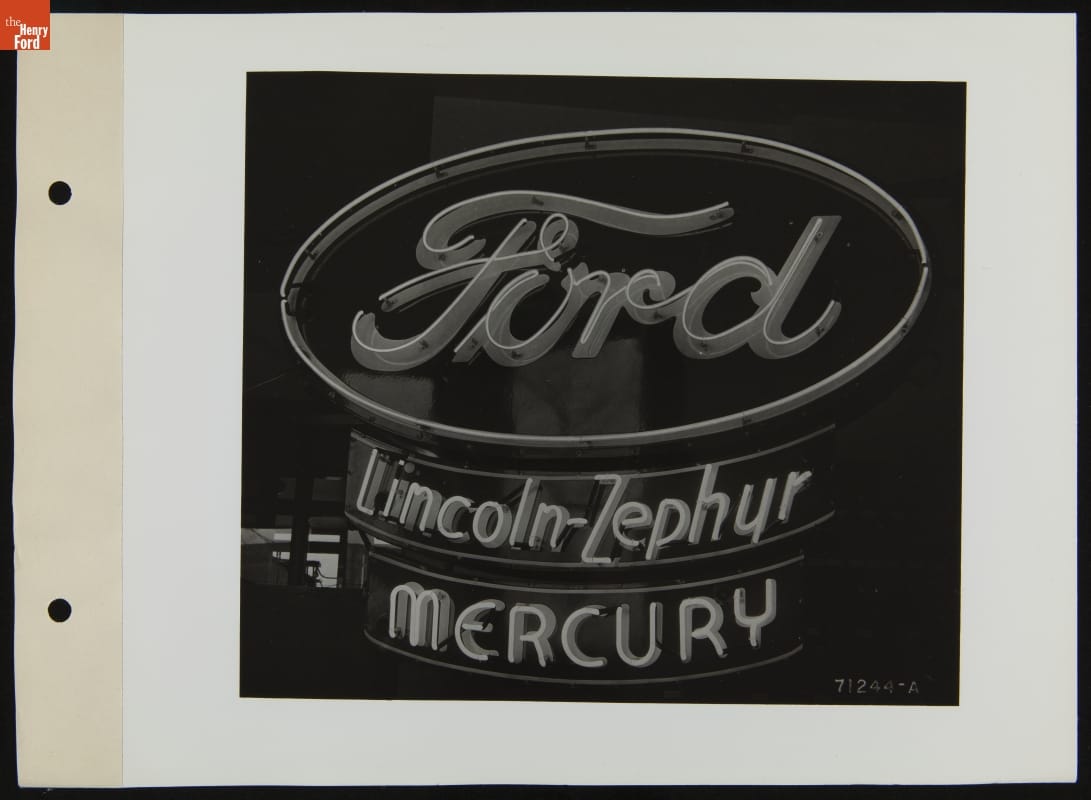
- Ford, Lincoln-Zephyr, and Mercury Neon Automobile Dealers' Sign, December 1938 - Ford Motor Company purchased upscale Lincoln in 1922 and introduced mid-priced Mercury for 1939. Together with affordable Ford-branded cars, these lines gave Ford Motor Company a well-rounded range of automobiles at various price points. Zephyr was introduced for 1936 to give Lincoln a less expensive model to market during the Great Depression.
- December 29, 1938
- Collections - Artifact
Ford, Lincoln-Zephyr, and Mercury Neon Automobile Dealers' Sign, December 1938
Ford Motor Company purchased upscale Lincoln in 1922 and introduced mid-priced Mercury for 1939. Together with affordable Ford-branded cars, these lines gave Ford Motor Company a well-rounded range of automobiles at various price points. Zephyr was introduced for 1936 to give Lincoln a less expensive model to market during the Great Depression.
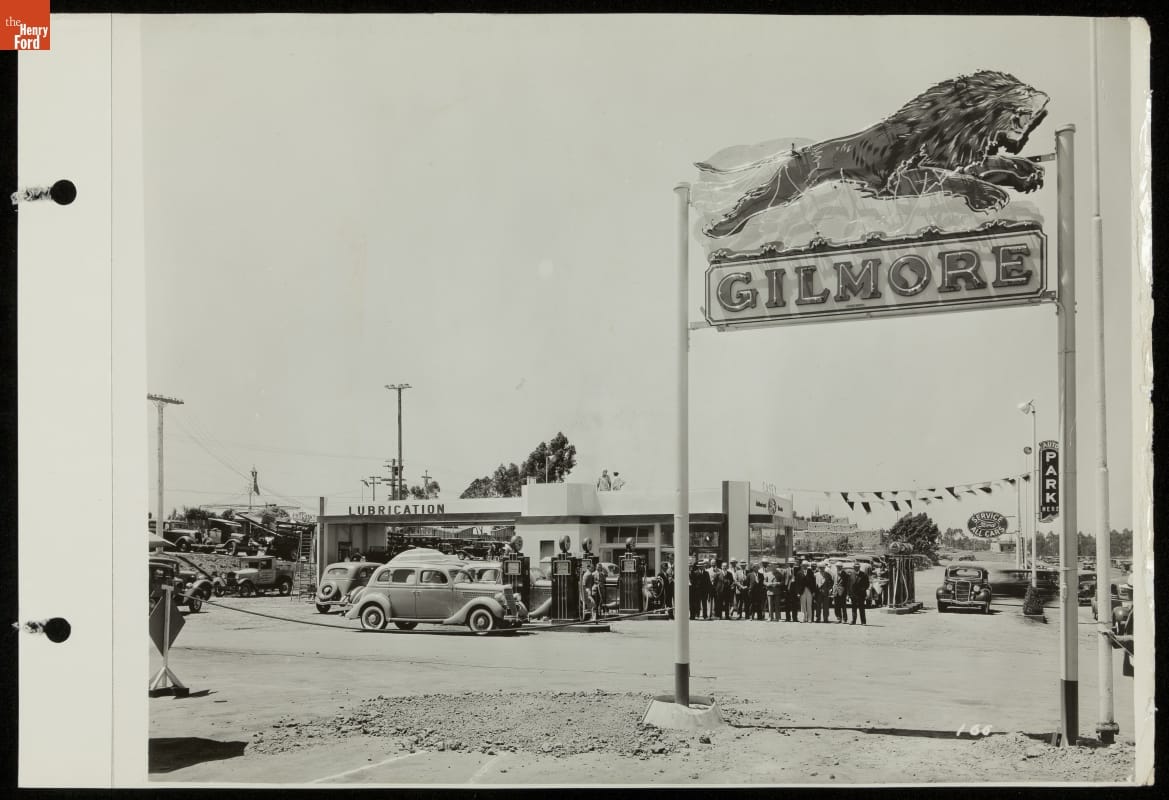
- Gilmore Oil Company Neon Sign in Front of Casey's Master Service Station, California Pacific International Exposition, San Diego, 1935 - Ford Motor Company's corporate presence at the 1935 California Pacific International Exposition permeated the San Diego fairgrounds. In one parking lot, an enterprising local Ford dealer opened "Casey's Master Service Station." This modern exhibit was also a functioning station, servicing automobiles while their owners explored the fair. Casey's and other Exposition attractions heightened Ford's visibility and provided bonus advertising.
- 1935
- Collections - Artifact
Gilmore Oil Company Neon Sign in Front of Casey's Master Service Station, California Pacific International Exposition, San Diego, 1935
Ford Motor Company's corporate presence at the 1935 California Pacific International Exposition permeated the San Diego fairgrounds. In one parking lot, an enterprising local Ford dealer opened "Casey's Master Service Station." This modern exhibit was also a functioning station, servicing automobiles while their owners explored the fair. Casey's and other Exposition attractions heightened Ford's visibility and provided bonus advertising.
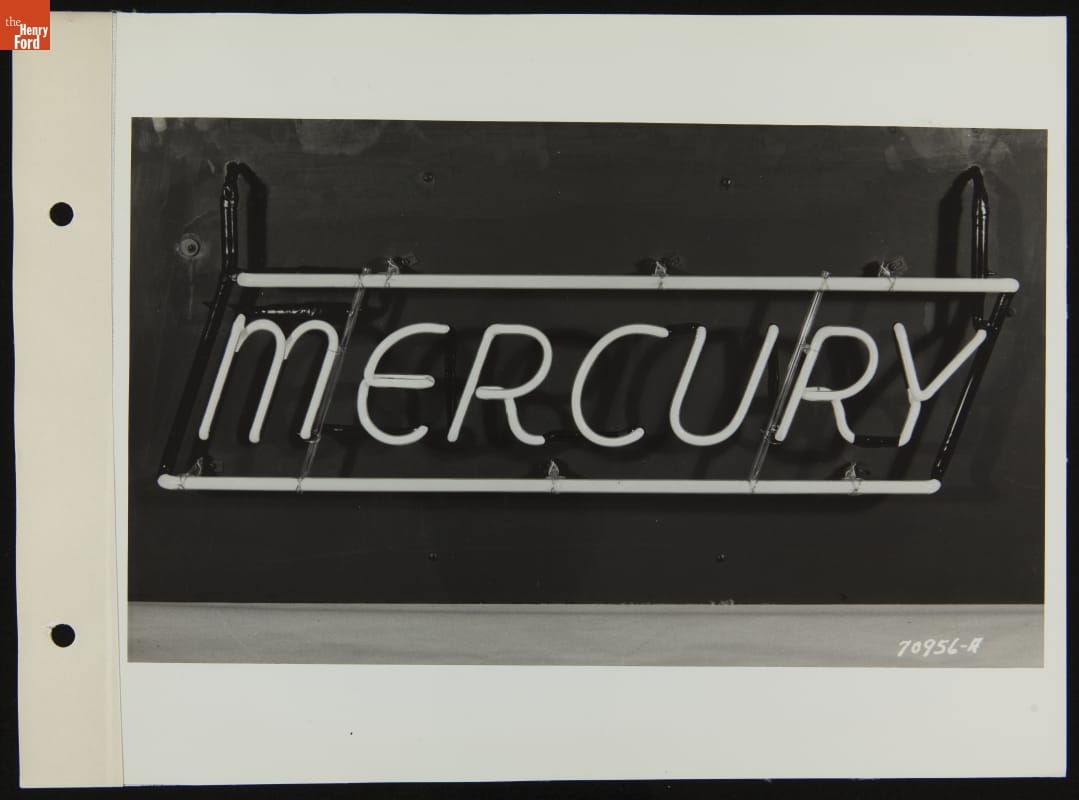
- "Mercury" Neon Sign, October 1938 - Ford Motor Company introduced its Mercury line of automobiles for the 1939 model year. The medium-priced Mercury fit neatly between the basic Ford and the upscale Lincoln. The new brand, championed by Edsel Ford, gave Ford Motor Company a wide range of products like those offered by rivals General Motors and Chrysler.
- October 28, 1938
- Collections - Artifact
"Mercury" Neon Sign, October 1938
Ford Motor Company introduced its Mercury line of automobiles for the 1939 model year. The medium-priced Mercury fit neatly between the basic Ford and the upscale Lincoln. The new brand, championed by Edsel Ford, gave Ford Motor Company a wide range of products like those offered by rivals General Motors and Chrysler.
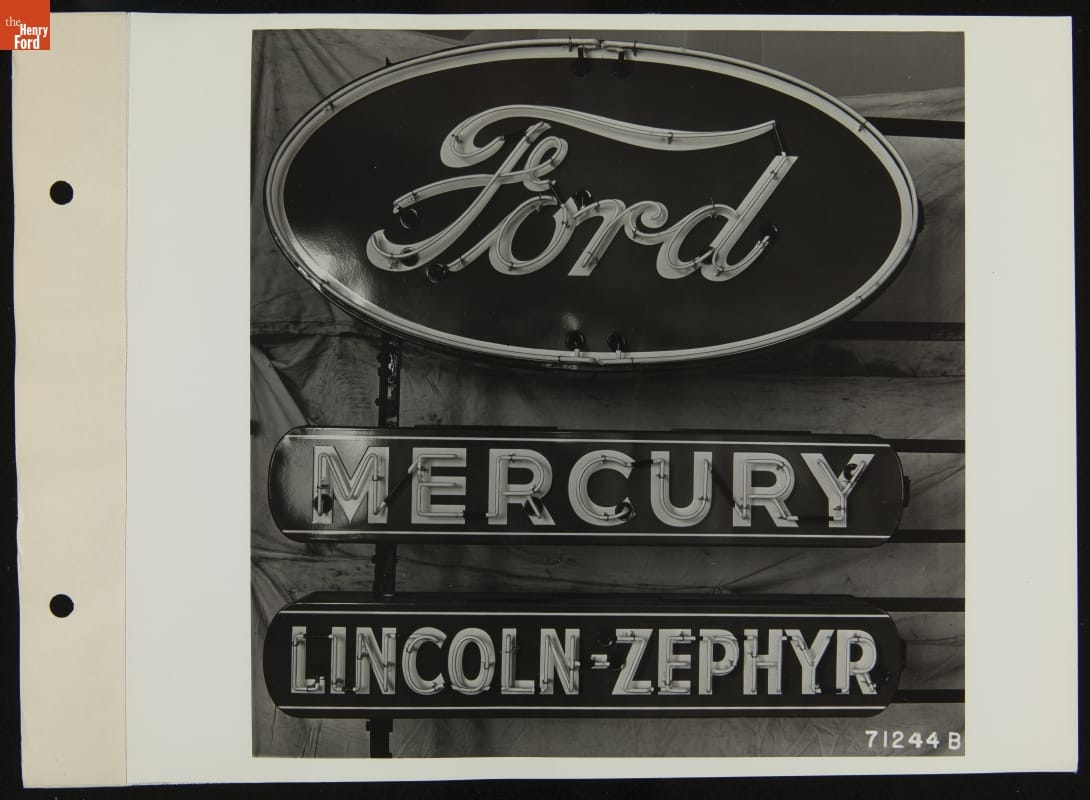
- Ford, Lincoln-Zephyr, and Mercury Neon Automobile Dealers' Sign, December 1938 - Ford Motor Company purchased upscale Lincoln in 1922 and introduced mid-priced Mercury for 1939. Together with affordable Ford-branded cars, these lines gave Ford Motor Company a well-rounded range of automobiles at various price points. Zephyr was introduced for 1936 to give Lincoln a less expensive model to market during the Great Depression.
- December 29, 1938
- Collections - Artifact
Ford, Lincoln-Zephyr, and Mercury Neon Automobile Dealers' Sign, December 1938
Ford Motor Company purchased upscale Lincoln in 1922 and introduced mid-priced Mercury for 1939. Together with affordable Ford-branded cars, these lines gave Ford Motor Company a well-rounded range of automobiles at various price points. Zephyr was introduced for 1936 to give Lincoln a less expensive model to market during the Great Depression.
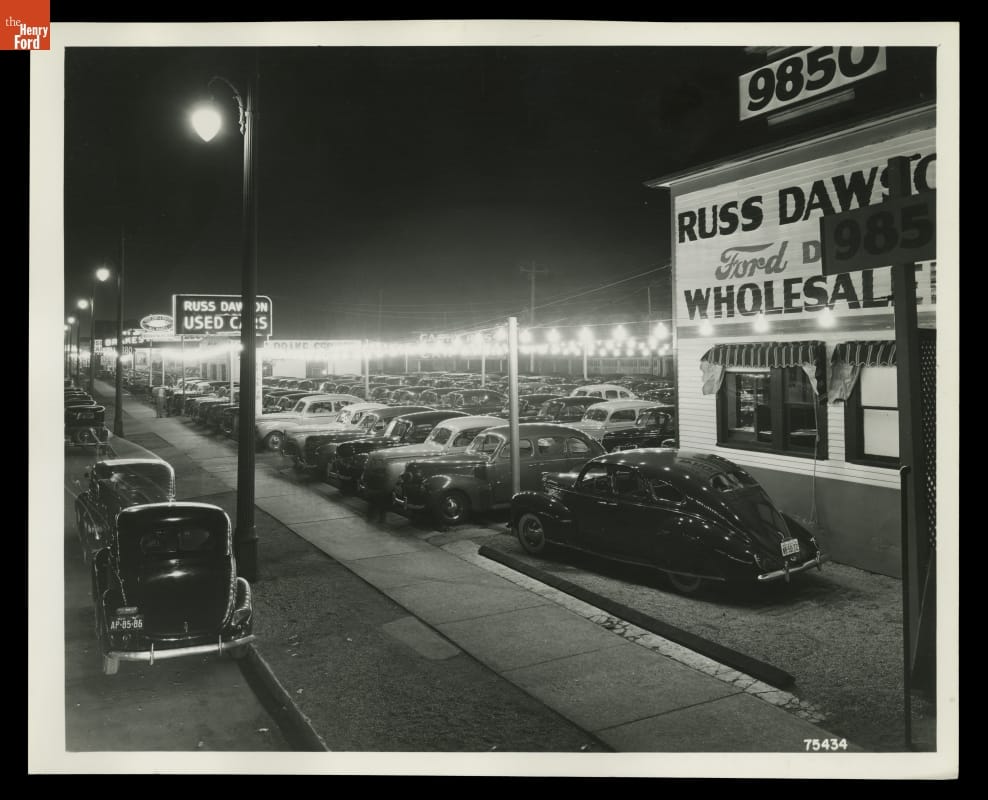
- Used Car Lot at Russ Dawson Ford Dealership, Detroit, Michigan, 1941 - Used cars benefited customers who could buy fancier pre-owned vehicles for the price of new economy models. Bright outdoor lighting highlighted a dealer's inventory at night and attracted customers if the sales office kept evening hours. By the time this photo was taken, the challenging economy of the Great Depression had improved.
- April 18, 1941
- Collections - Artifact
Used Car Lot at Russ Dawson Ford Dealership, Detroit, Michigan, 1941
Used cars benefited customers who could buy fancier pre-owned vehicles for the price of new economy models. Bright outdoor lighting highlighted a dealer's inventory at night and attracted customers if the sales office kept evening hours. By the time this photo was taken, the challenging economy of the Great Depression had improved.
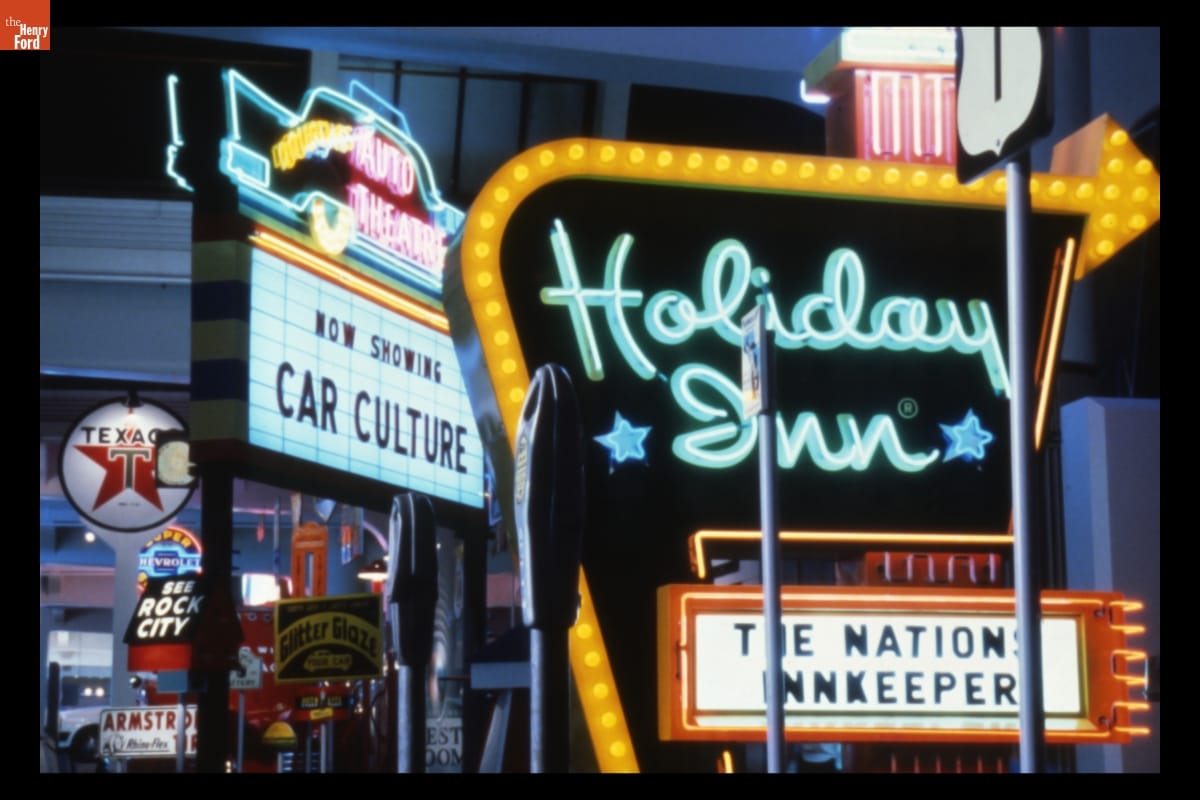
- Automobile in American Life Exhibit in Henry Ford Museum, circa 1987 - For 50 years, Henry Ford Museum displayed artifacts in tightly packed rows with little supporting context. That changed in the 1980s with a new focus on social history. No exhibit signaled this shift like <em>The Automobile in American Life</em>, opened in 1987. Cars were shown alongside related objects like highway travel guides, fast food menus, and roadside signs.
- circa 1987
- Collections - Artifact
Automobile in American Life Exhibit in Henry Ford Museum, circa 1987
For 50 years, Henry Ford Museum displayed artifacts in tightly packed rows with little supporting context. That changed in the 1980s with a new focus on social history. No exhibit signaled this shift like The Automobile in American Life, opened in 1987. Cars were shown alongside related objects like highway travel guides, fast food menus, and roadside signs.
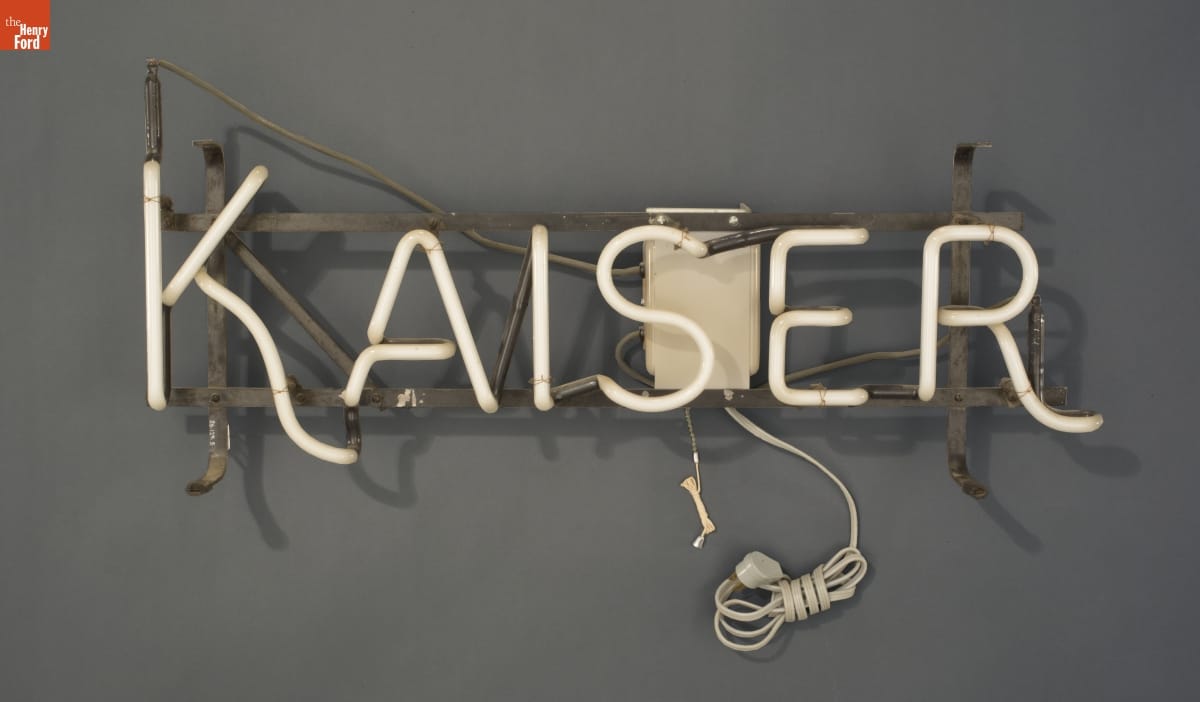
- Kaiser Motors Neon Sign, 1947-1953 - Henry Kaiser and Joseph Frazer formed their automobile company in 1945 to take advantage of the post-World War II seller's market. Kaiser-Frazer captured five percent of U.S. auto sales in 1947-1948, but that was the firm's peak. Frazer left in 1951 over management disagreements with Kaiser. The renamed Kaiser Motors Corporation abandoned the passenger car market in 1955.
- 1947-1954
- Collections - Artifact
Kaiser Motors Neon Sign, 1947-1953
Henry Kaiser and Joseph Frazer formed their automobile company in 1945 to take advantage of the post-World War II seller's market. Kaiser-Frazer captured five percent of U.S. auto sales in 1947-1948, but that was the firm's peak. Frazer left in 1951 over management disagreements with Kaiser. The renamed Kaiser Motors Corporation abandoned the passenger car market in 1955.
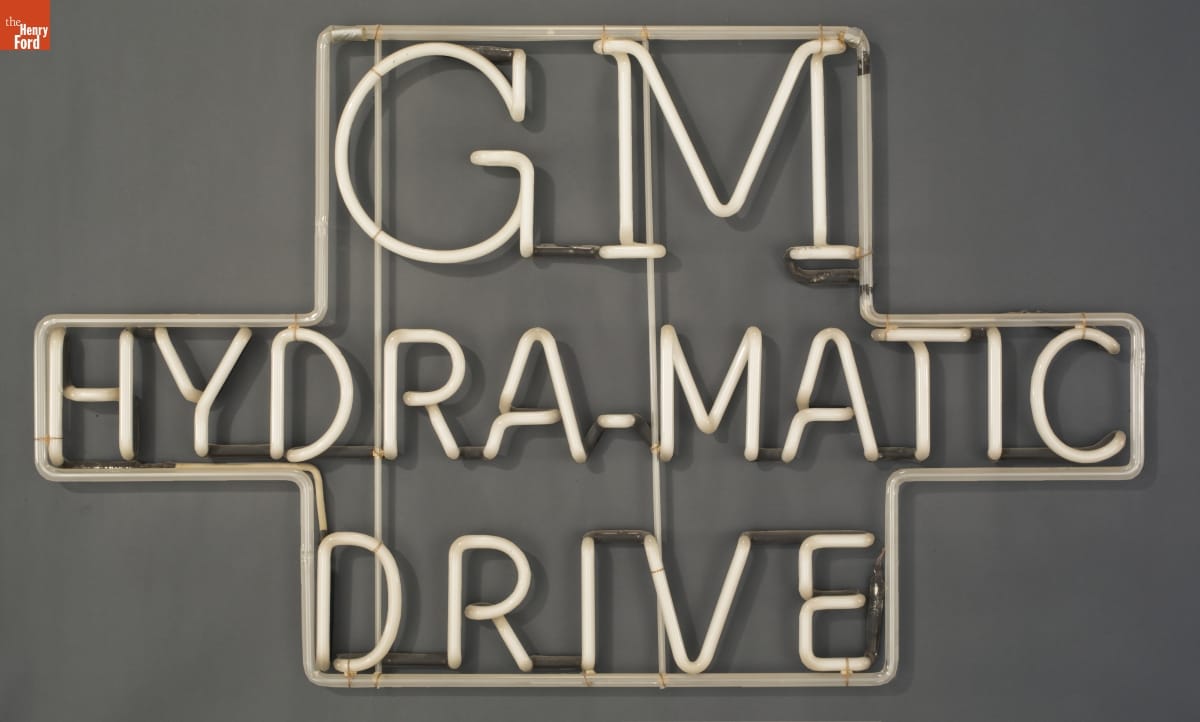
- General Motors Neon Sign, circa 1950 - General Motors introduced Hydra-Matic Drive in its Oldsmobile line for the 1940 model year. It was the first mass-produced, fully automatic transmission in a passenger car. Hydra-Matic Drive quickly proved popular. Other automakers soon developed their own automatic transmissions or bought Hydra-Matic units from GM.
- circa 1950
- Collections - Artifact
General Motors Neon Sign, circa 1950
General Motors introduced Hydra-Matic Drive in its Oldsmobile line for the 1940 model year. It was the first mass-produced, fully automatic transmission in a passenger car. Hydra-Matic Drive quickly proved popular. Other automakers soon developed their own automatic transmissions or bought Hydra-Matic units from GM.
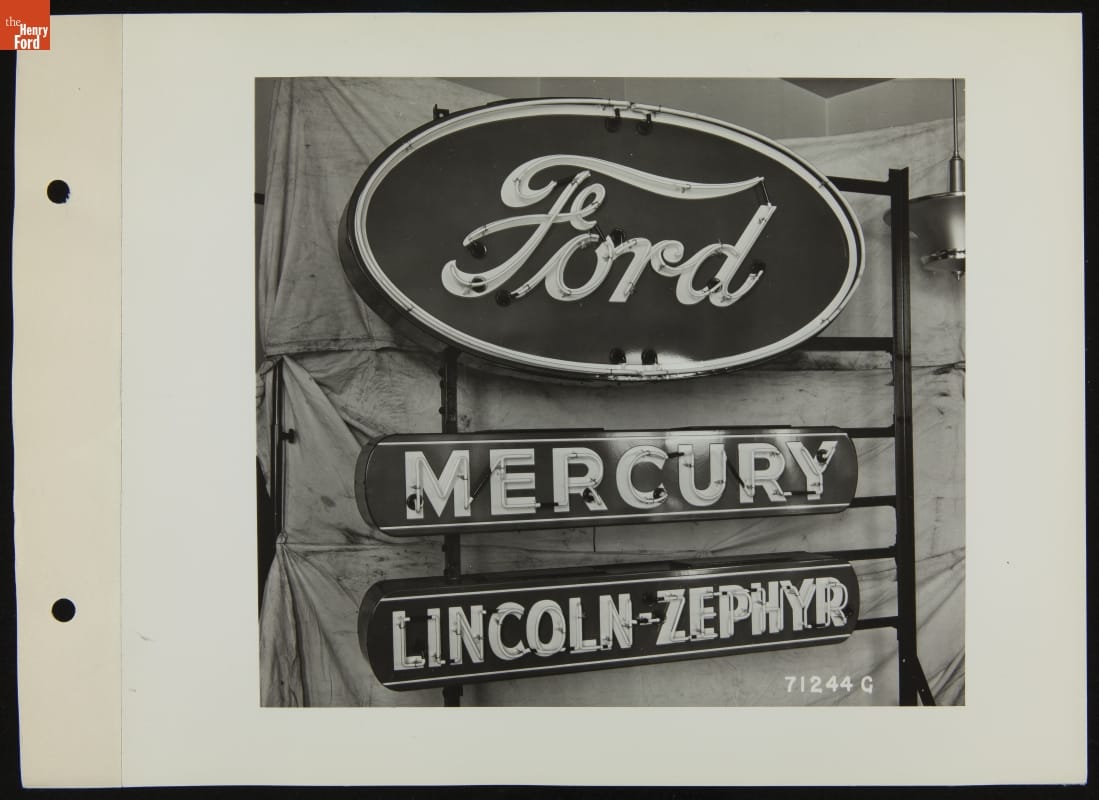
- Ford, Lincoln-Zephyr, and Mercury Neon Automobile Dealers' Sign, December 1938 - Ford Motor Company purchased upscale Lincoln in 1922 and introduced mid-priced Mercury for 1939. Together with affordable Ford-branded cars, these lines gave Ford Motor Company a well-rounded range of automobiles at various price points. Zephyr was introduced for 1936 to give Lincoln a less expensive model to market during the Great Depression.
- December 29, 1938
- Collections - Artifact
Ford, Lincoln-Zephyr, and Mercury Neon Automobile Dealers' Sign, December 1938
Ford Motor Company purchased upscale Lincoln in 1922 and introduced mid-priced Mercury for 1939. Together with affordable Ford-branded cars, these lines gave Ford Motor Company a well-rounded range of automobiles at various price points. Zephyr was introduced for 1936 to give Lincoln a less expensive model to market during the Great Depression.