
Search
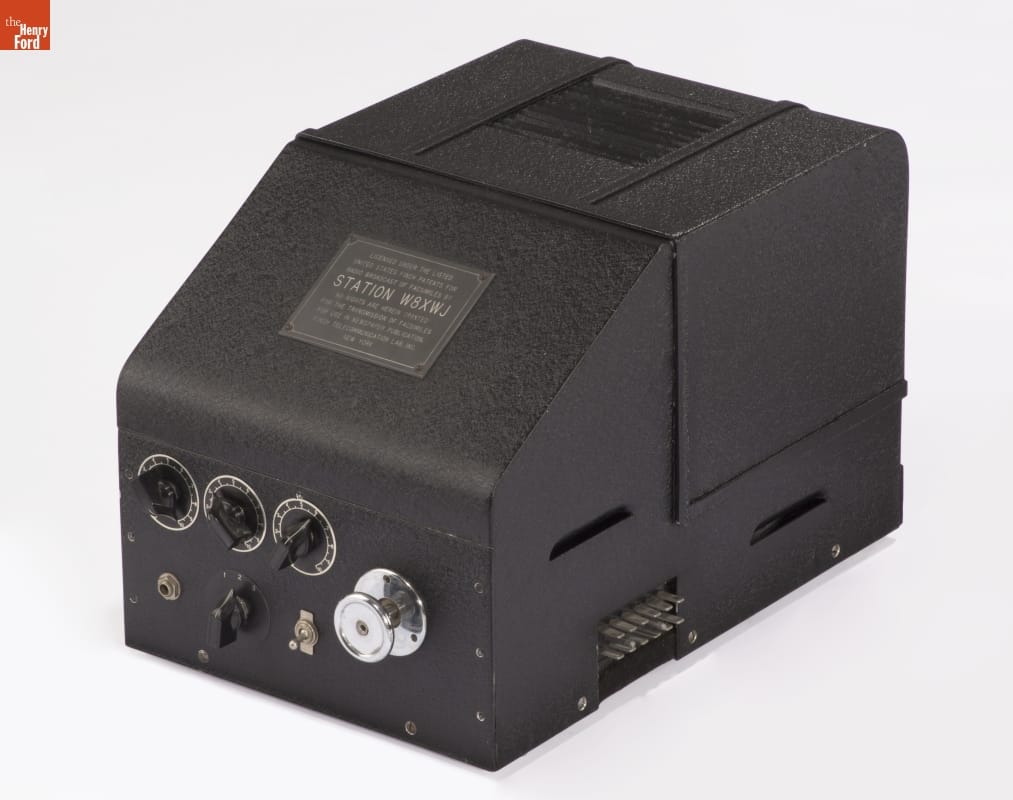
- Finch Facsimile Transmitter, 1938-1940 - From 1938-1940, the <EM>Detroit News</EM> experimented with a domestic radio-facsimile subscription service. This transmitter converted images and text into electrical impulses, sent over the radio waves--reassembled by receivers in the homes of customers. The idea was revolutionary, however, the process was slow and signal reception was unreliable beyond a mile or two of the transmission tower.
- 1938-1940
- Collections - Artifact
Finch Facsimile Transmitter, 1938-1940
From 1938-1940, the Detroit News experimented with a domestic radio-facsimile subscription service. This transmitter converted images and text into electrical impulses, sent over the radio waves--reassembled by receivers in the homes of customers. The idea was revolutionary, however, the process was slow and signal reception was unreliable beyond a mile or two of the transmission tower.
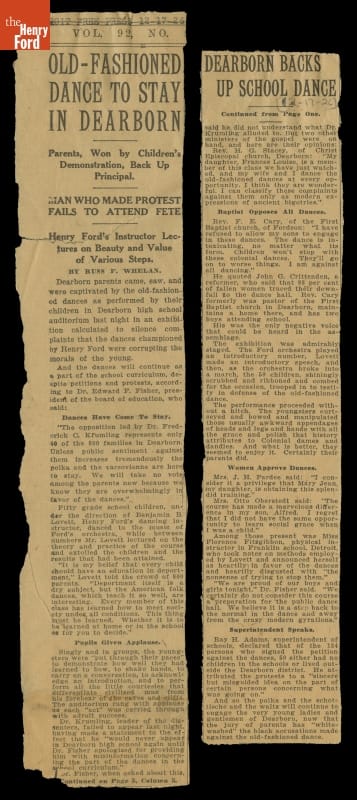
- Newspaper Article, "Old-Fashioned Dance to Stay in Dearborn...Dearborn Backs Up School Dance," 1926 - As Henry Ford extended his traditional American dance classes to local Dearborn schoolchildren, some parents grew alarmed--they weren't sure they approved of boys and girls dancing together. A dance demonstration by the children soon set most of the parents' minds at ease. They quickly realized the benefit of having their children learn these old-time dances--and the good manners that went along with them.
- December 17, 1926
- Collections - Artifact
Newspaper Article, "Old-Fashioned Dance to Stay in Dearborn...Dearborn Backs Up School Dance," 1926
As Henry Ford extended his traditional American dance classes to local Dearborn schoolchildren, some parents grew alarmed--they weren't sure they approved of boys and girls dancing together. A dance demonstration by the children soon set most of the parents' minds at ease. They quickly realized the benefit of having their children learn these old-time dances--and the good manners that went along with them.
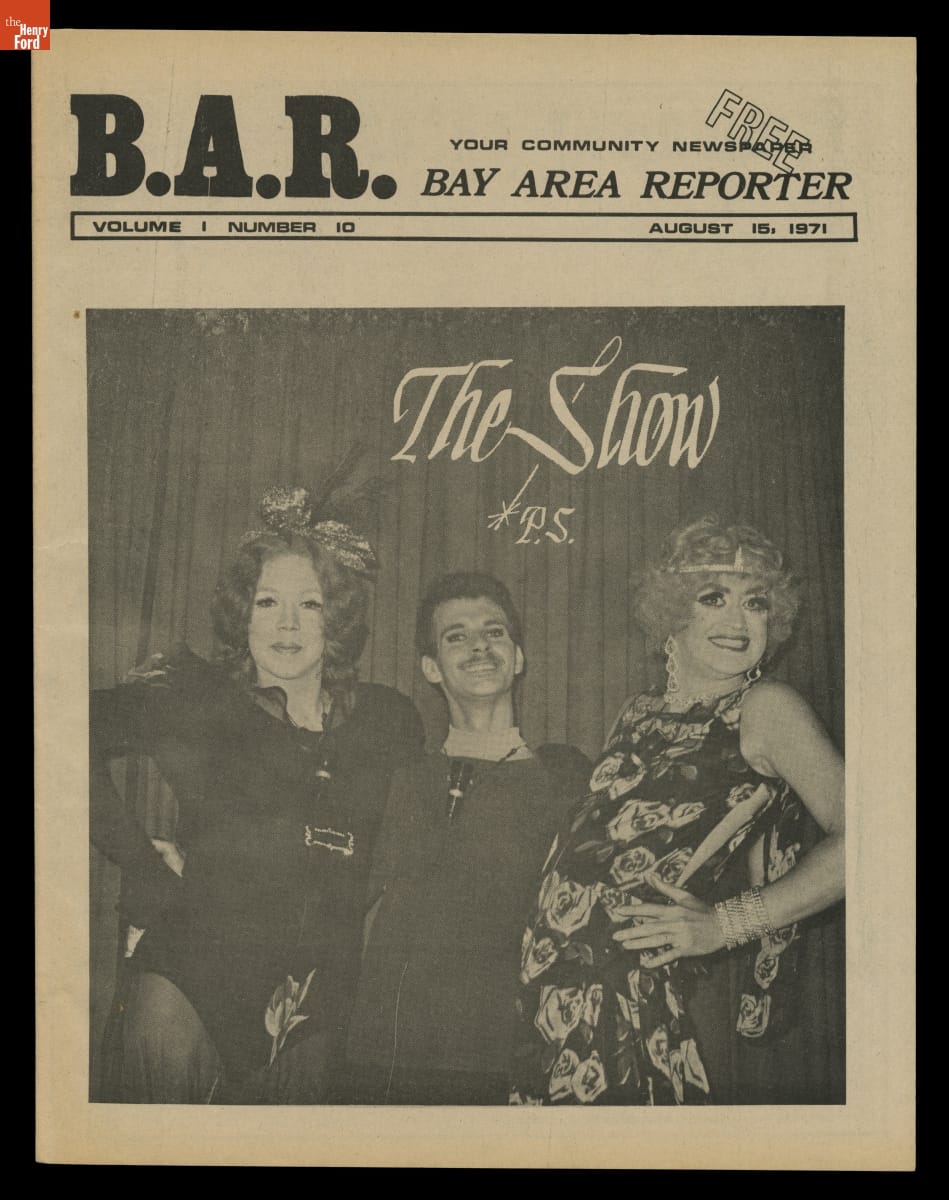
- "B.A.R.: Bay Area Reporter," Volume 1, Number 10, August 15, 1971 -
- August 15, 1971
- Collections - Artifact
"B.A.R.: Bay Area Reporter," Volume 1, Number 10, August 15, 1971
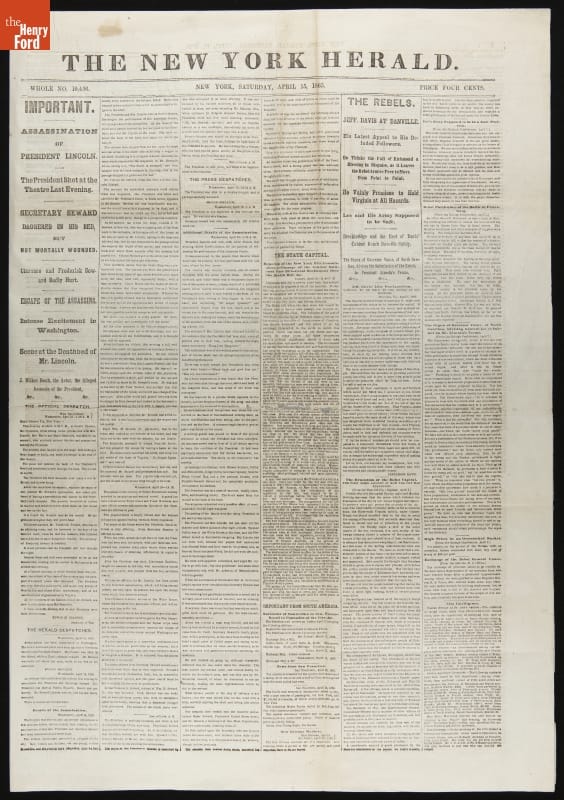
- New York Herald Newspaper for April 15, 1865 - This April 15, 1865, issue of the <em>New York Herald</em> reported the developing news surrounding President Abraham Lincoln's death. Published on the date of the President's death, it had the latest news via telegraph dispatches from their reporters and from U.S. Secretary of War, Edwin M. Stanton. The editors made space on the front page for this shocking news, replacing what they had already prepared that day.
- April 15, 1865
- Collections - Artifact
New York Herald Newspaper for April 15, 1865
This April 15, 1865, issue of the New York Herald reported the developing news surrounding President Abraham Lincoln's death. Published on the date of the President's death, it had the latest news via telegraph dispatches from their reporters and from U.S. Secretary of War, Edwin M. Stanton. The editors made space on the front page for this shocking news, replacing what they had already prepared that day.
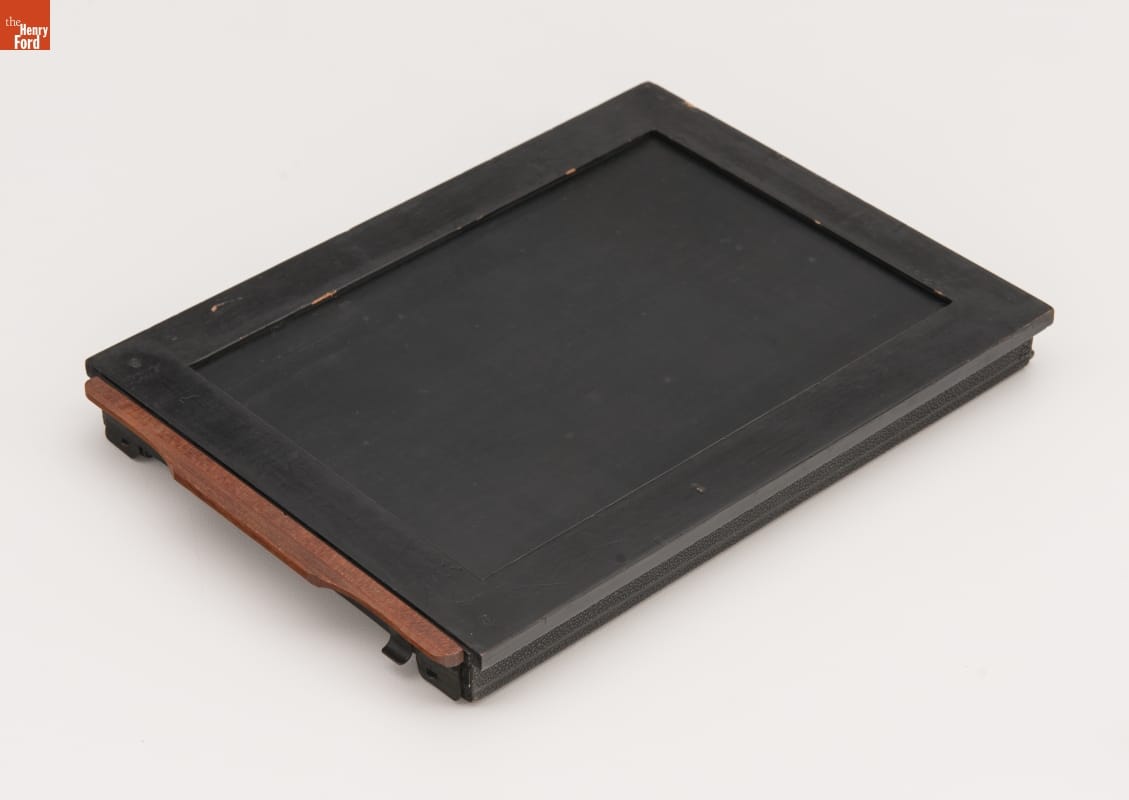
- Graflex Photographic Plate Holder, circa 1925 - This Graflex aerial camera magazine holds multiple sheets of film. Film sheets are loaded into the metal body of the magazine. After making an exposure a lever slides towards the leather bag; the film shifts into the attached bag and then up into the stack of film sheets. Safe from further exposure by light, the film remains here until processing.
- circa 1925
- Collections - Artifact
Graflex Photographic Plate Holder, circa 1925
This Graflex aerial camera magazine holds multiple sheets of film. Film sheets are loaded into the metal body of the magazine. After making an exposure a lever slides towards the leather bag; the film shifts into the attached bag and then up into the stack of film sheets. Safe from further exposure by light, the film remains here until processing.
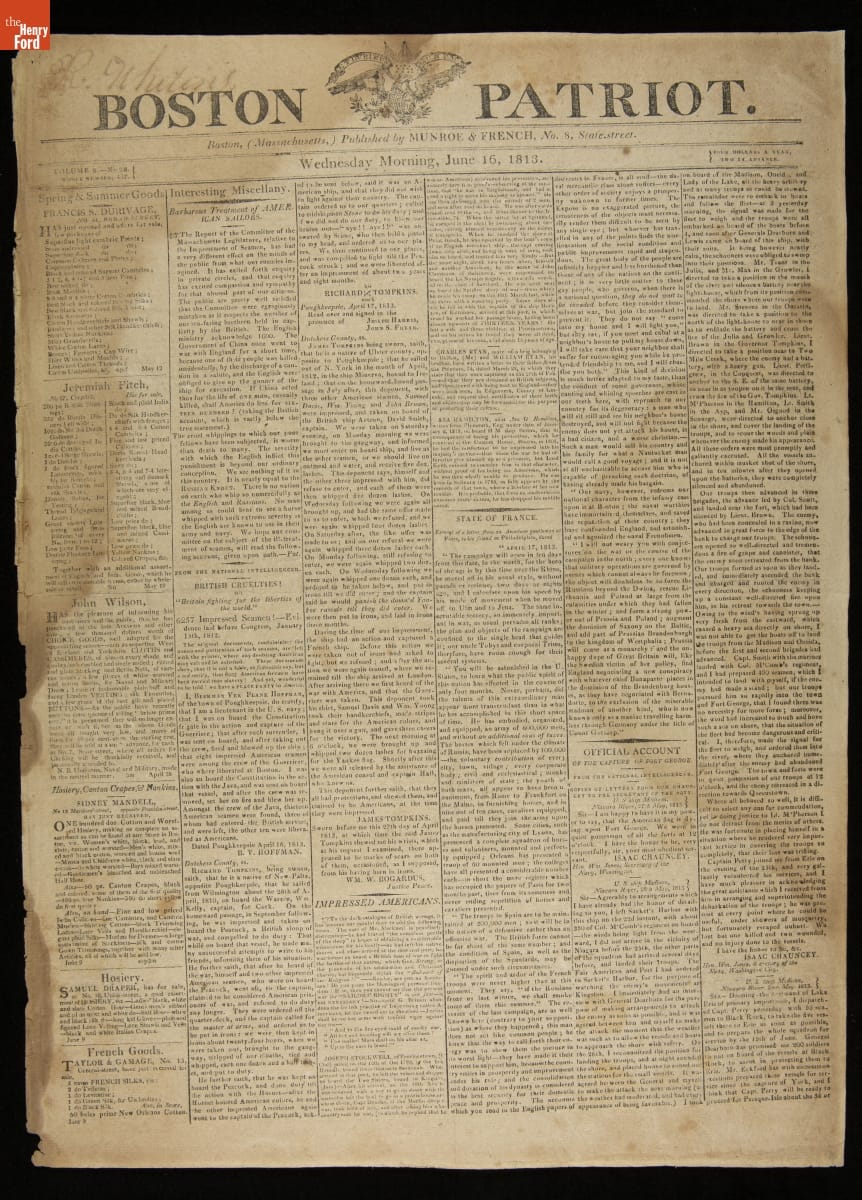
- Boston Patriot, Volume 9, No. 28, June 16, 1813 -
- June 16, 1813
- Collections - Artifact
Boston Patriot, Volume 9, No. 28, June 16, 1813
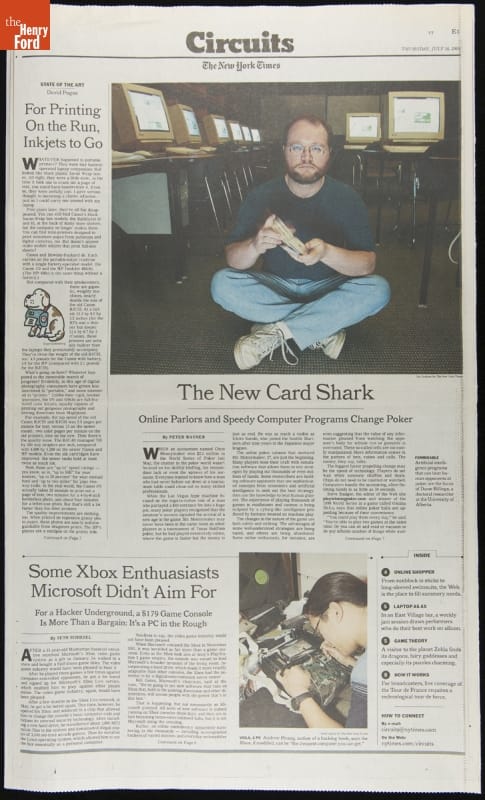
- The New York Times, "Some Xbox Enthusiasts Microsoft Didn't Aim For," July 10, 2003 - When Andrew "bunnie" Huang used a screwdriver to open his Microsoft Xbox, he willingly opened a legal Pandora's box. Marketed as a simple gaming system, the Xbox was actually a powerful computer with locked down features. Huang's modifications unlocked the system's full potential--and challenged copyright law. His book, "Hacking the Xbox," is a controversial guidebook for the "mod-chipping" movement.
- July 10, 2003
- Collections - Artifact
The New York Times, "Some Xbox Enthusiasts Microsoft Didn't Aim For," July 10, 2003
When Andrew "bunnie" Huang used a screwdriver to open his Microsoft Xbox, he willingly opened a legal Pandora's box. Marketed as a simple gaming system, the Xbox was actually a powerful computer with locked down features. Huang's modifications unlocked the system's full potential--and challenged copyright law. His book, "Hacking the Xbox," is a controversial guidebook for the "mod-chipping" movement.
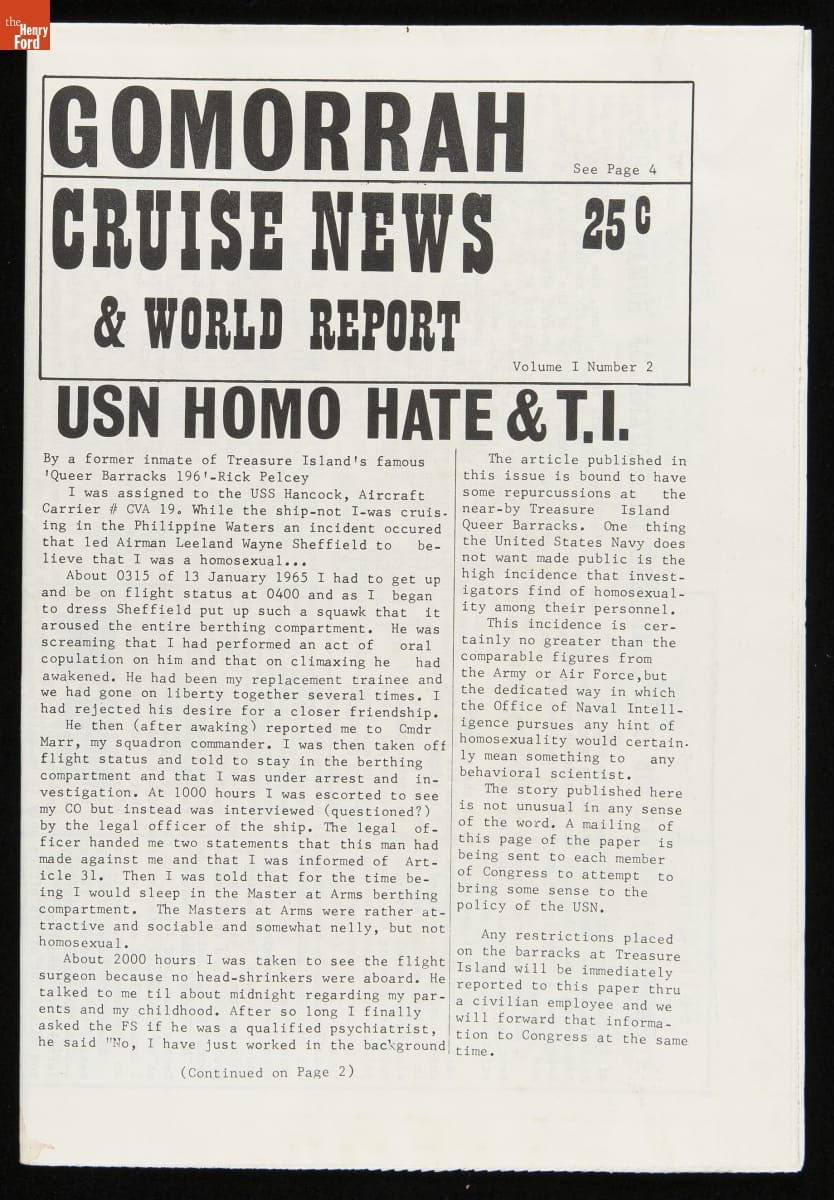
- Cruise News & World Report, Volume I, Number 2, circa 1965 - LGBTQ+ newspapers became more available beginning in the 1950s as organizations added print media to their activist tool kit. These newspapers were a regionally focused way to rally the LGBTQ+ community, share information, and fight discrimination. Many of these newspapers came to rely on gay bars as a location for disbursement as they were among the only private gay spaces in many cities.
- circa 1965
- Collections - Artifact
Cruise News & World Report, Volume I, Number 2, circa 1965
LGBTQ+ newspapers became more available beginning in the 1950s as organizations added print media to their activist tool kit. These newspapers were a regionally focused way to rally the LGBTQ+ community, share information, and fight discrimination. Many of these newspapers came to rely on gay bars as a location for disbursement as they were among the only private gay spaces in many cities.
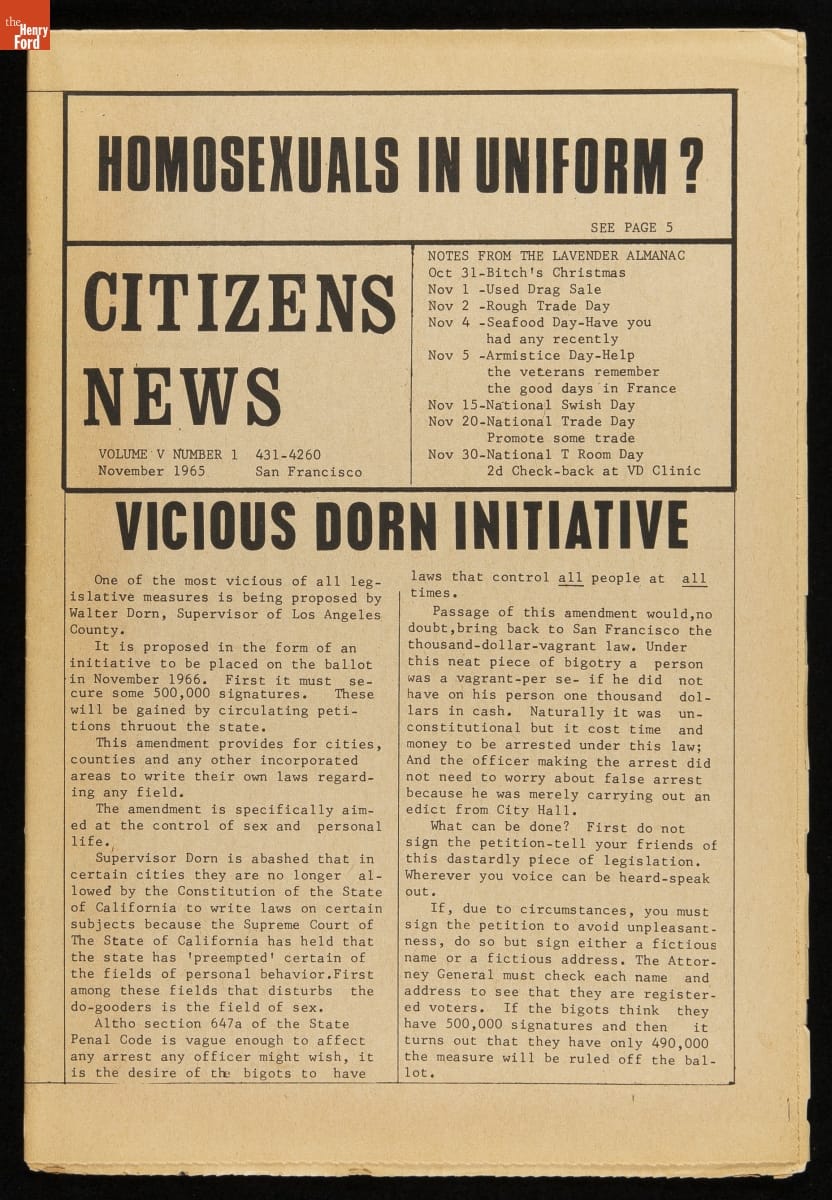
- Citizens News, Volume V, Number 1, November 1965 - LGBTQ+ newspapers became more available beginning in the 1950s as organizations added print media to their activist tool kit. These newspapers were a regionally focused way to rally the LGBTQ+ community, share information, and fight discrimination. Many of these newspapers came to rely on gay bars as a location for disbursement as they were among the only private gay spaces in many cities.
- November 01, 1965
- Collections - Artifact
Citizens News, Volume V, Number 1, November 1965
LGBTQ+ newspapers became more available beginning in the 1950s as organizations added print media to their activist tool kit. These newspapers were a regionally focused way to rally the LGBTQ+ community, share information, and fight discrimination. Many of these newspapers came to rely on gay bars as a location for disbursement as they were among the only private gay spaces in many cities.
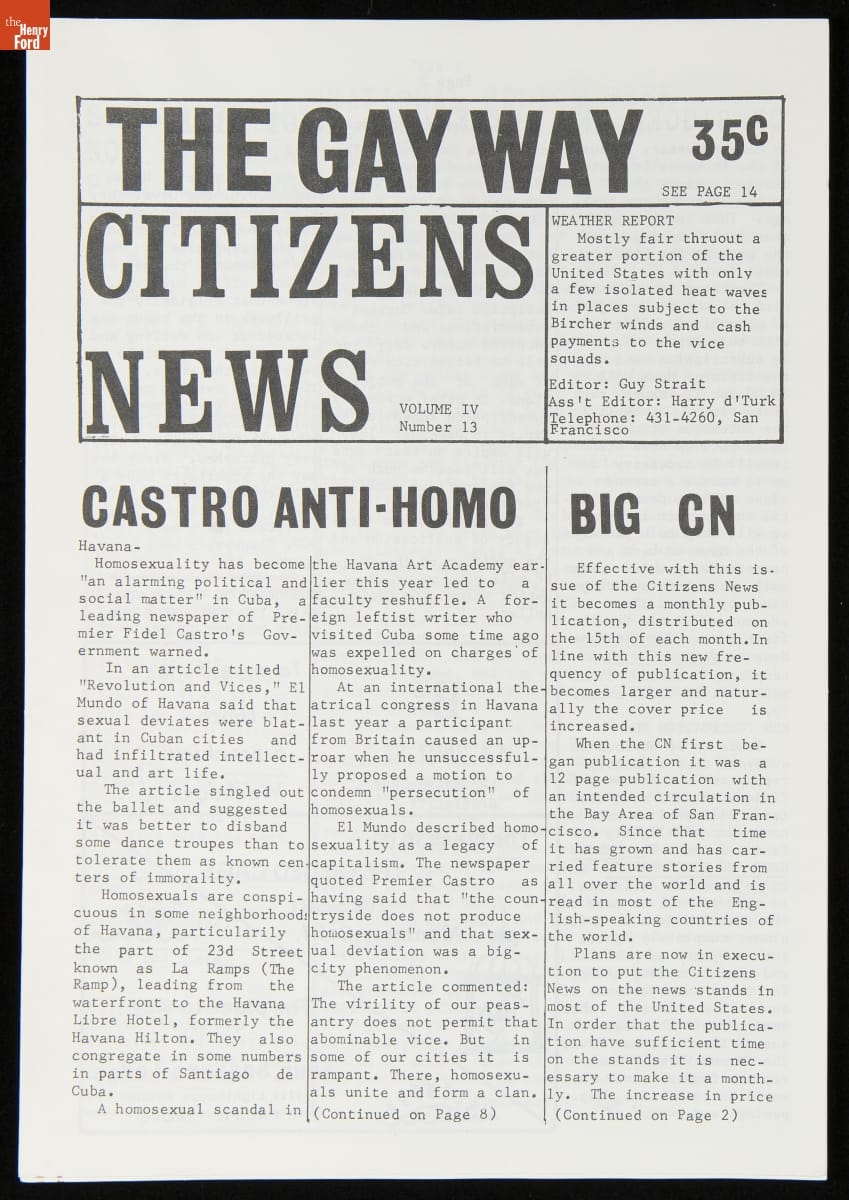
- Citizens News, Volume IV, Number13, 1964-1965 - LGBTQ+ newspapers became more available beginning in the 1950s as organizations added print media to their activist tool kit. These newspapers were a regionally focused way to rally the LGBTQ+ community, share information, and fight discrimination. Many of these newspapers came to rely on gay bars as a location for disbursement as they were among the only private gay spaces in many cities.
- 1964-1965
- Collections - Artifact
Citizens News, Volume IV, Number13, 1964-1965
LGBTQ+ newspapers became more available beginning in the 1950s as organizations added print media to their activist tool kit. These newspapers were a regionally focused way to rally the LGBTQ+ community, share information, and fight discrimination. Many of these newspapers came to rely on gay bars as a location for disbursement as they were among the only private gay spaces in many cities.