
Search
- "What We Don't Talk About When We Talk About Fat," 2020 - Aubrey Gordon (born 1983), also known as “Your Fat Friend,” is an author, podcaster, and activist, focusing on fatness, fat acceptance, and anti-fat bias. Her first book, <em>What We Don't Talk About When We Talk About Fat</em>, was published in 2020. It analyzes the anti-fat bias (or “fatphobia”) embedded in American culture, and how it affects the lives of fat people.

- 2020
- Collections - Artifact
"What We Don't Talk About When We Talk About Fat," 2020
Aubrey Gordon (born 1983), also known as “Your Fat Friend,” is an author, podcaster, and activist, focusing on fatness, fat acceptance, and anti-fat bias. Her first book, What We Don't Talk About When We Talk About Fat, was published in 2020. It analyzes the anti-fat bias (or “fatphobia”) embedded in American culture, and how it affects the lives of fat people.
- "You Just Need to Lose Weight: And 19 Other Myths About Fat People," 2023 - Aubrey Gordon (born 1983), also known as “Your Fat Friend,” is an author, podcaster, and activist, focusing on fatness, fat acceptance, and anti-fat bias. She published her second book, <em> You Just Need to Lose Weight</em>, in 2024. It examines myths regarding body weight, and addresses them with scientific and historical research.

- 2023
- Collections - Artifact
"You Just Need to Lose Weight: And 19 Other Myths About Fat People," 2023
Aubrey Gordon (born 1983), also known as “Your Fat Friend,” is an author, podcaster, and activist, focusing on fatness, fat acceptance, and anti-fat bias. She published her second book, You Just Need to Lose Weight, in 2024. It examines myths regarding body weight, and addresses them with scientific and historical research.
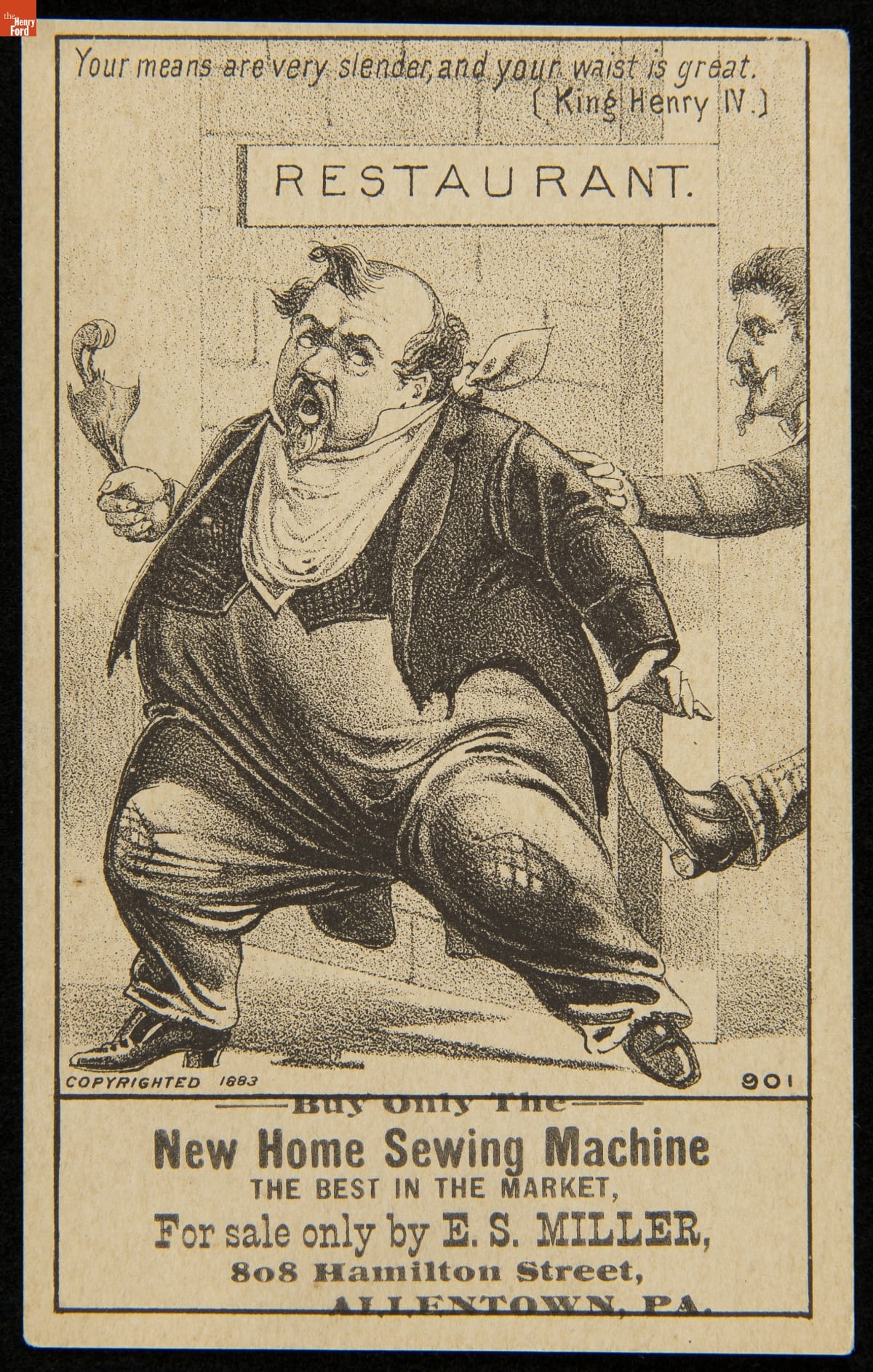
- Trade Card for the New Home Sewing Machine Company, 1883 - In the last third of the nineteenth century, an unprecedented variety of consumer goods and services flooded the American market. Advertisers, armed with new methods of color printing, bombarded potential customers with trade cards. Americans enjoyed and often saved the vibrant little advertisements found in product packages or distributed by local merchants. Many survive as historical records of commercialism in the United States.
- circa 1883
- Collections - Artifact
Trade Card for the New Home Sewing Machine Company, 1883
In the last third of the nineteenth century, an unprecedented variety of consumer goods and services flooded the American market. Advertisers, armed with new methods of color printing, bombarded potential customers with trade cards. Americans enjoyed and often saved the vibrant little advertisements found in product packages or distributed by local merchants. Many survive as historical records of commercialism in the United States.