
Search
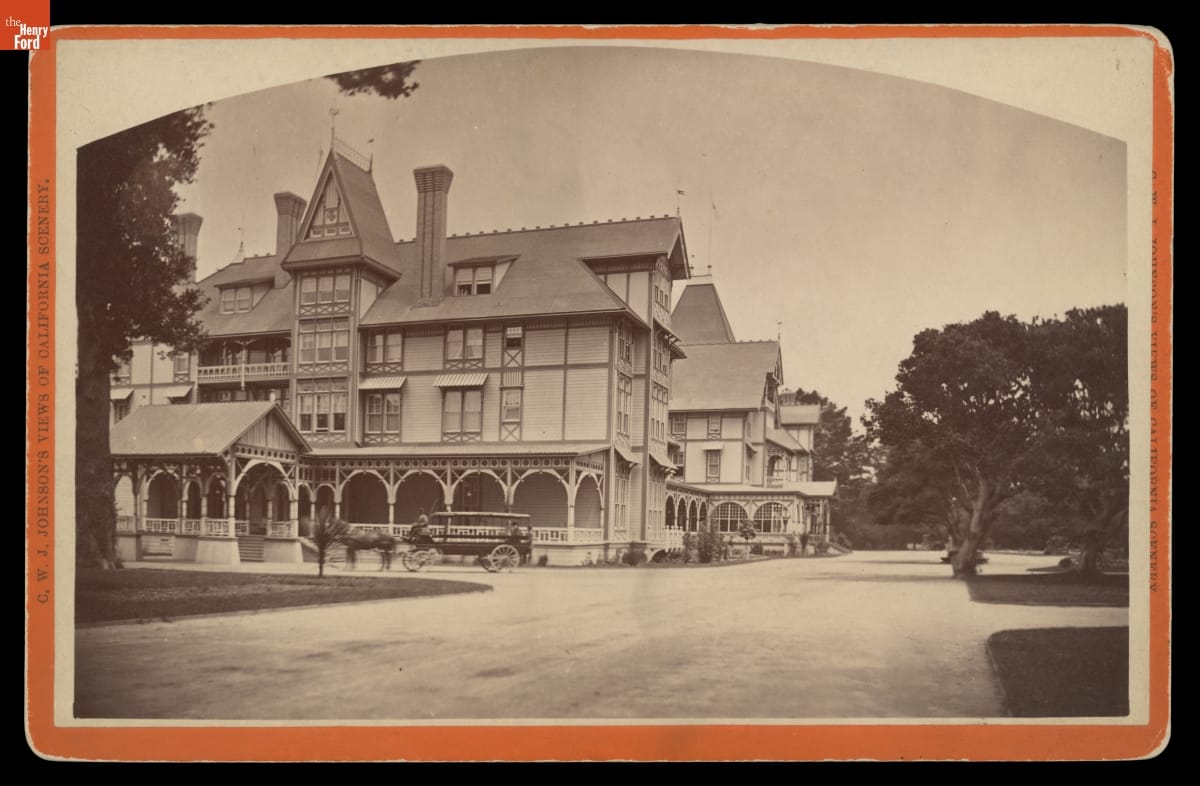
- Omnibus in front of Hotel Del Monte, Monterey, California, circa 1890 - Larger hotels in the second half of the nineteenth century often maintained horse-drawn coaches or omnibuses to transport guests to and from nearby railroad stations or take them on excursions during their stay. California's Hotel Del Monte, shown here with waiting omnibus, offered guests the 17-Mile Drive -- an outing complete with scenic views and stops at historic sites.
- circa 1890
- Collections - Artifact
Omnibus in front of Hotel Del Monte, Monterey, California, circa 1890
Larger hotels in the second half of the nineteenth century often maintained horse-drawn coaches or omnibuses to transport guests to and from nearby railroad stations or take them on excursions during their stay. California's Hotel Del Monte, shown here with waiting omnibus, offered guests the 17-Mile Drive -- an outing complete with scenic views and stops at historic sites.
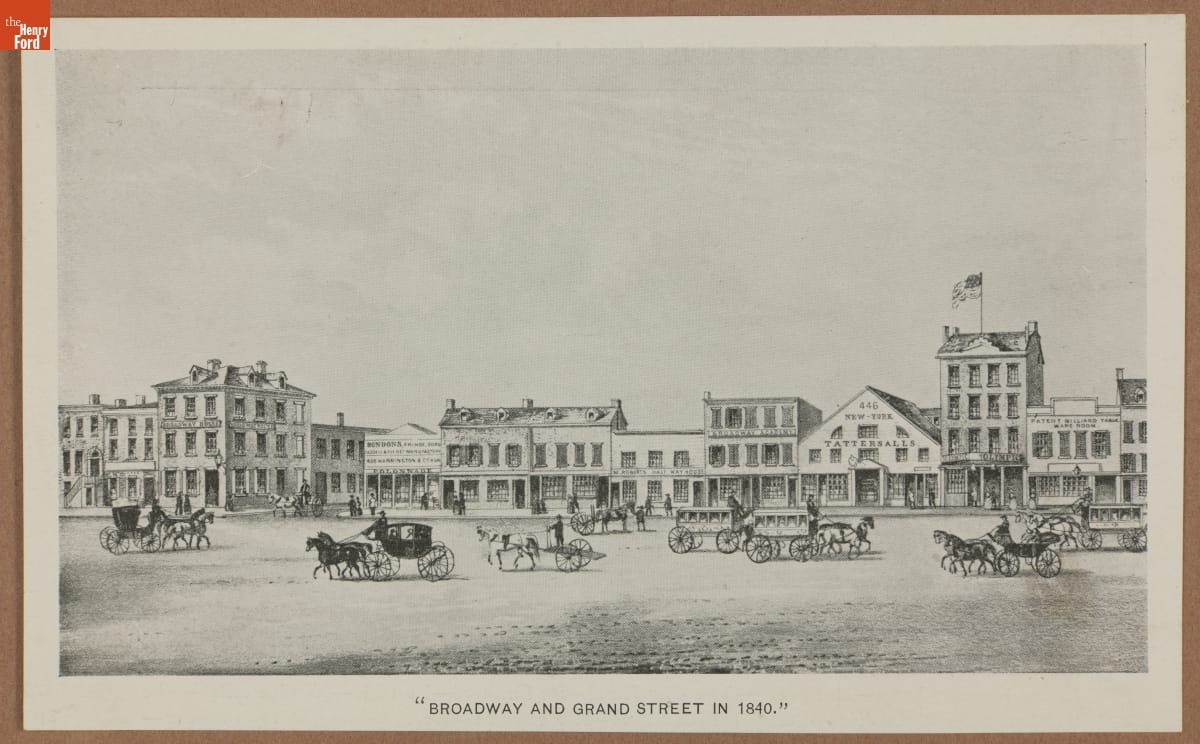
- Photoengraving, "Broadway and Grand Street in 1840" -
- 1840
- Collections - Artifact
Photoengraving, "Broadway and Grand Street in 1840"
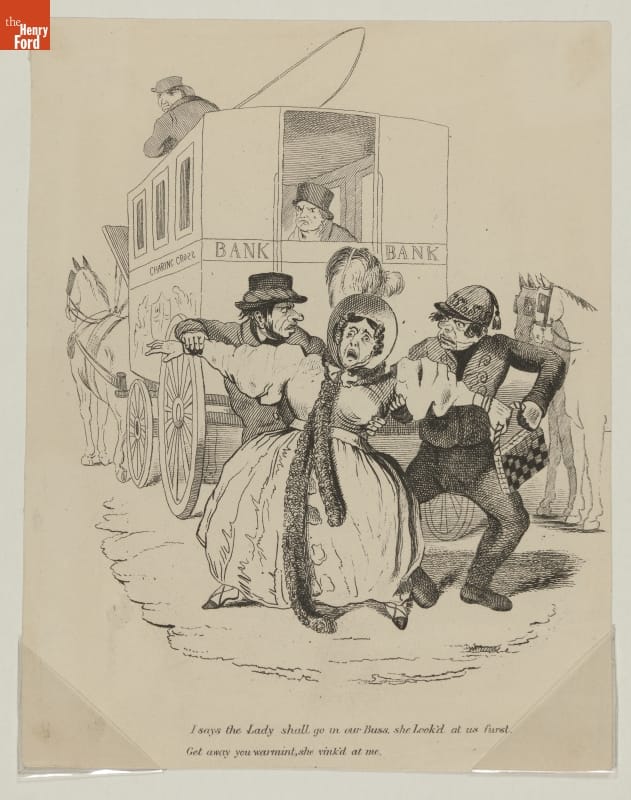
- Cartoon Depicting Omnibus Drivers Competing for Passengers, London, England, 1845-1850 - Horse-drawn omnibuses were in use in London, England, by 1831. These large, enclosed vehicles provided regular, fare-based transportation on fixed routes through cities. The modern motor bus serves the same purpose in metropolitan areas today. "Omnibus" is a Latin word meaning "for all."
- 1845-1850
- Collections - Artifact
Cartoon Depicting Omnibus Drivers Competing for Passengers, London, England, 1845-1850
Horse-drawn omnibuses were in use in London, England, by 1831. These large, enclosed vehicles provided regular, fare-based transportation on fixed routes through cities. The modern motor bus serves the same purpose in metropolitan areas today. "Omnibus" is a Latin word meaning "for all."
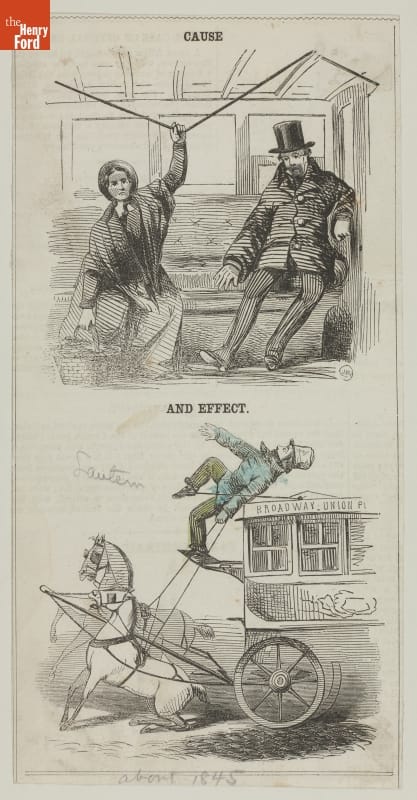
- Cartoon, "Cause and Effect," circa 1845 - The first horse-drawn omnibuses on American streets appeared in the late 1820s. These large, enclosed vehicles provided regular, fare-based transportation on fixed routes through cities. The modern motor bus serves the same purpose in American cities today. "Omnibus" is a Latin word meaning "for all."
- circa 1845
- Collections - Artifact
Cartoon, "Cause and Effect," circa 1845
The first horse-drawn omnibuses on American streets appeared in the late 1820s. These large, enclosed vehicles provided regular, fare-based transportation on fixed routes through cities. The modern motor bus serves the same purpose in American cities today. "Omnibus" is a Latin word meaning "for all."
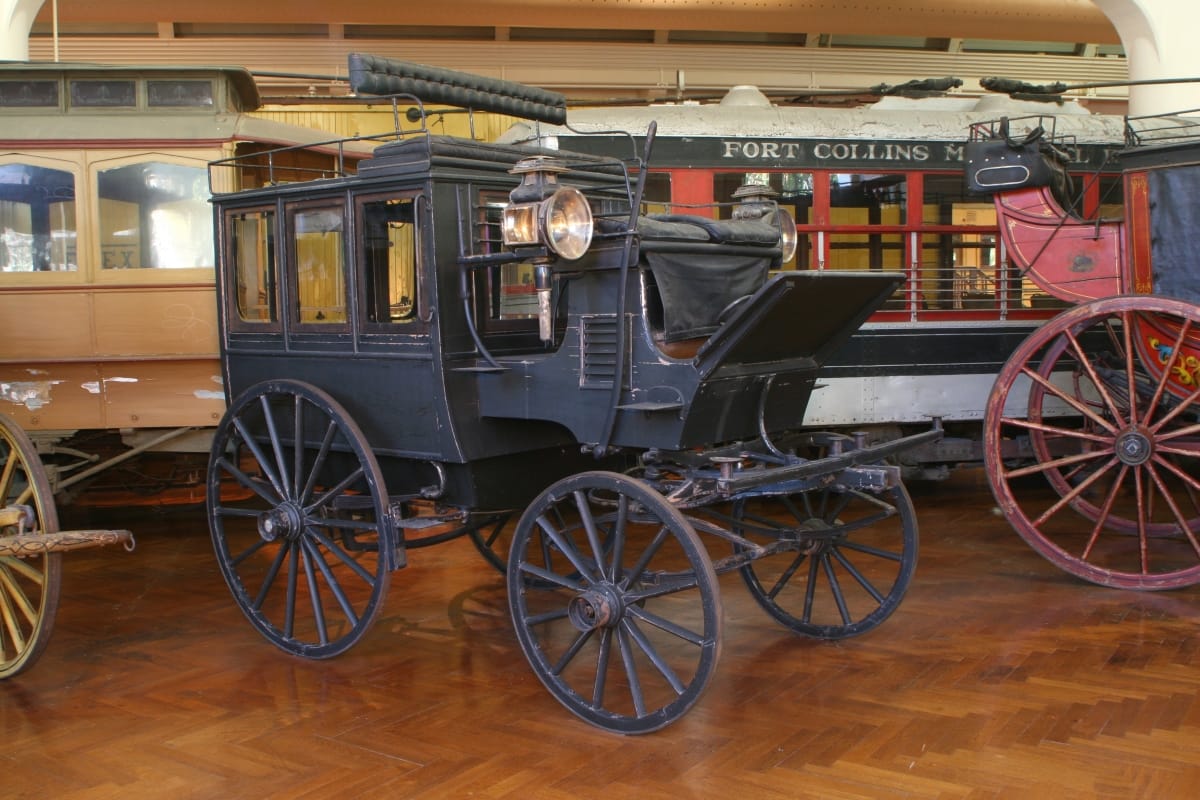
- Private Omnibus Made for Mary Cochrane Baldwin, circa 1895 - The private omnibus developed as a general-purpose carriage for wealthy owners. It was roomy enough to use for daytime shopping trips, but formal enough to carry passengers to an evening at the opera. This omnibus belonged to Mary Cochrane Baldwin, second wife of California Gold Rush millionaire Elias Jackson Baldwin. It was made by Larkins & Company of San Francisco.
- circa 1895
- Collections - Artifact
Private Omnibus Made for Mary Cochrane Baldwin, circa 1895
The private omnibus developed as a general-purpose carriage for wealthy owners. It was roomy enough to use for daytime shopping trips, but formal enough to carry passengers to an evening at the opera. This omnibus belonged to Mary Cochrane Baldwin, second wife of California Gold Rush millionaire Elias Jackson Baldwin. It was made by Larkins & Company of San Francisco.
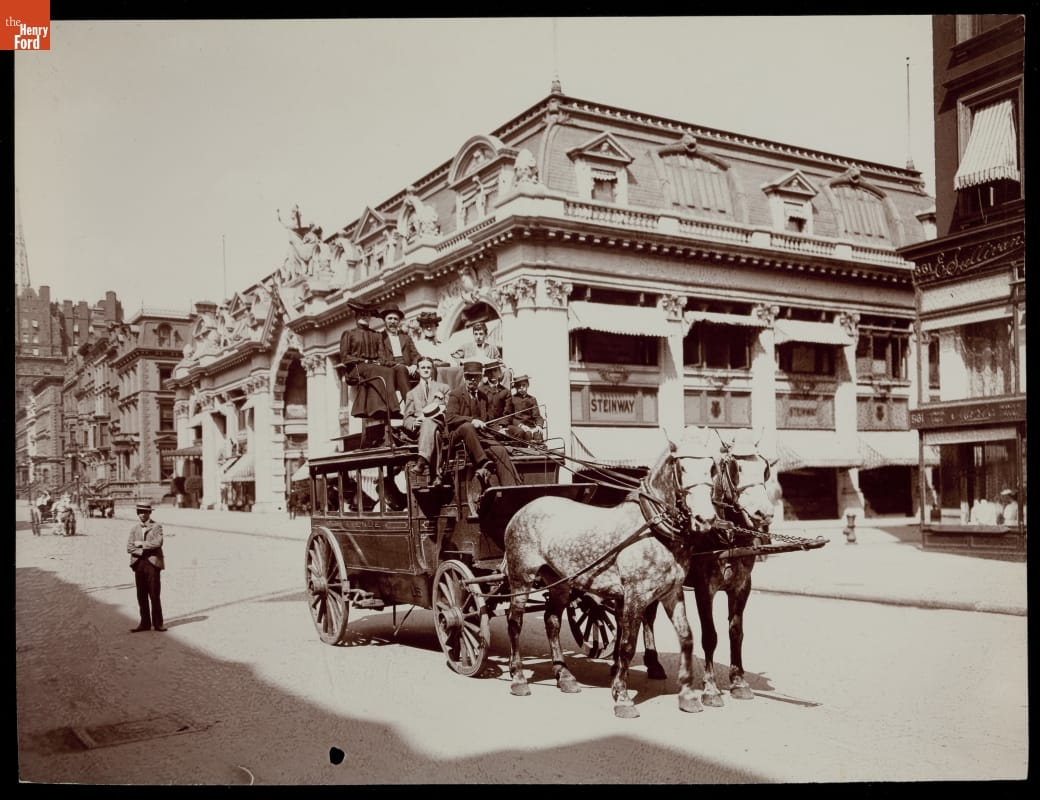
- Horse-Drawn Omnibus on Fifth Avenue, New York City, circa 1900 - Fifth Avenue residents opposed streetcar lines, claiming the vehicles were too quick and quiet to safely share the street with pedestrians and horse-drawn traffic. As an alternative, the Fifth Avenue Coach Company ran omnibuses like the one in this Detroit Publishing Company photograph. The fleet was replaced by gasoline-driven motor coaches in 1907.
- circa 1900
- Collections - Artifact
Horse-Drawn Omnibus on Fifth Avenue, New York City, circa 1900
Fifth Avenue residents opposed streetcar lines, claiming the vehicles were too quick and quiet to safely share the street with pedestrians and horse-drawn traffic. As an alternative, the Fifth Avenue Coach Company ran omnibuses like the one in this Detroit Publishing Company photograph. The fleet was replaced by gasoline-driven motor coaches in 1907.
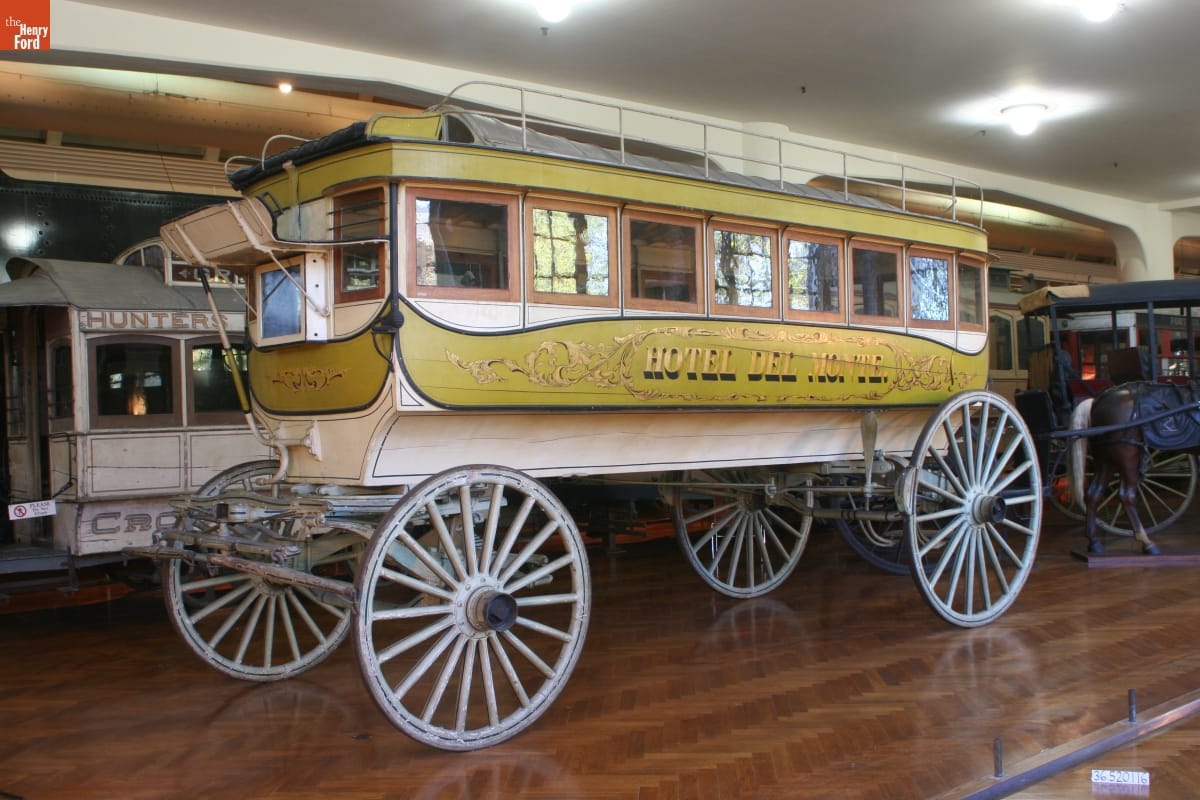
- Hotel Del Monte Omnibus, 1880-1885 - American cities used horse-drawn omnibuses for public transportation from the 1830s into the 1910s. Passengers entered through a rear door and sat on seats that ran lengthwise along each side. Larger hotels, like the fashionable Hotel Del Monte in Monterey, California, used omnibuses to transport guests between railroad station and hotel, or on special excursions during their stay.
- 1880-1885
- Collections - Artifact
Hotel Del Monte Omnibus, 1880-1885
American cities used horse-drawn omnibuses for public transportation from the 1830s into the 1910s. Passengers entered through a rear door and sat on seats that ran lengthwise along each side. Larger hotels, like the fashionable Hotel Del Monte in Monterey, California, used omnibuses to transport guests between railroad station and hotel, or on special excursions during their stay.
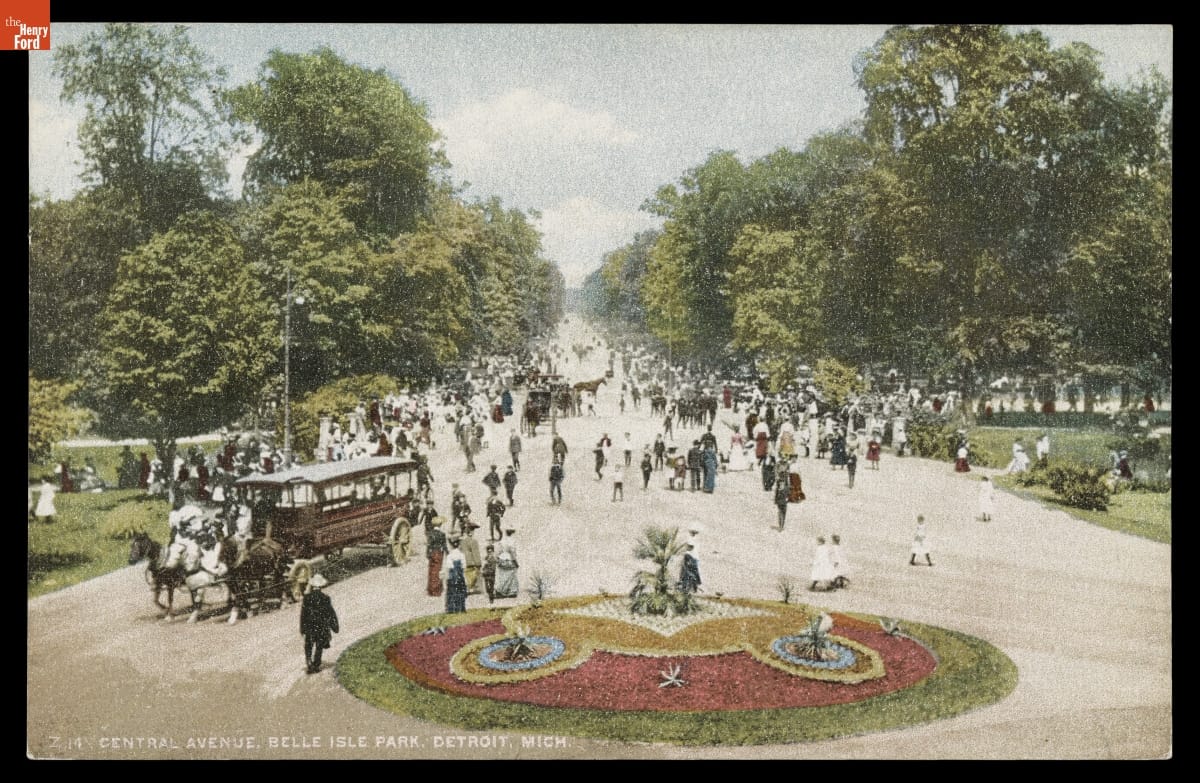
- Central Avenue, Belle Isle Park, Detroit, Michigan - Belle Isle is the largest municipal island park in the United States. Fredrick Law Olmsted, the father of landscape architecture, designed portions of the park. The City of Detroit opened Belle Isle to the public in 1880; over 260,000 people visited the park in the summer of 1882, proving its immediate popularity. It has remained among Michigan's most visited parks.
- 1903
- Collections - Artifact
Central Avenue, Belle Isle Park, Detroit, Michigan
Belle Isle is the largest municipal island park in the United States. Fredrick Law Olmsted, the father of landscape architecture, designed portions of the park. The City of Detroit opened Belle Isle to the public in 1880; over 260,000 people visited the park in the summer of 1882, proving its immediate popularity. It has remained among Michigan's most visited parks.
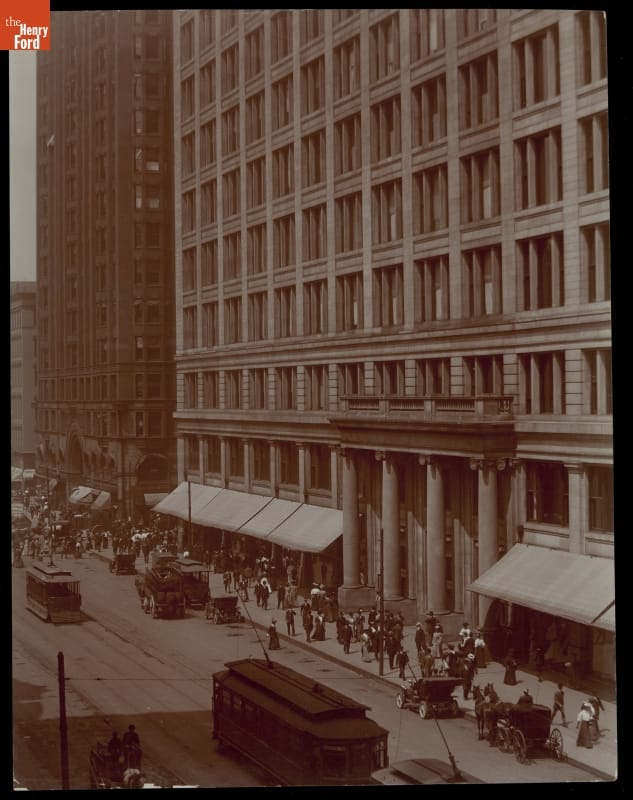
- Entrance to Marshall Field's Department Store, Chicago, Illinois, circa 1908 - From 1895 to 1924, the Detroit Publishing Company was one of the world's chief image publishers. The company had a wide-ranging stock of original photographs--including this image showing streetcars, horse-drawn vehicles, early automobiles, and pedestrians in front of Chicago's Marshall Field's. Throughout the 20th century, this famous department store grew to become a major national chain.
- 1907-1910
- Collections - Artifact
Entrance to Marshall Field's Department Store, Chicago, Illinois, circa 1908
From 1895 to 1924, the Detroit Publishing Company was one of the world's chief image publishers. The company had a wide-ranging stock of original photographs--including this image showing streetcars, horse-drawn vehicles, early automobiles, and pedestrians in front of Chicago's Marshall Field's. Throughout the 20th century, this famous department store grew to become a major national chain.
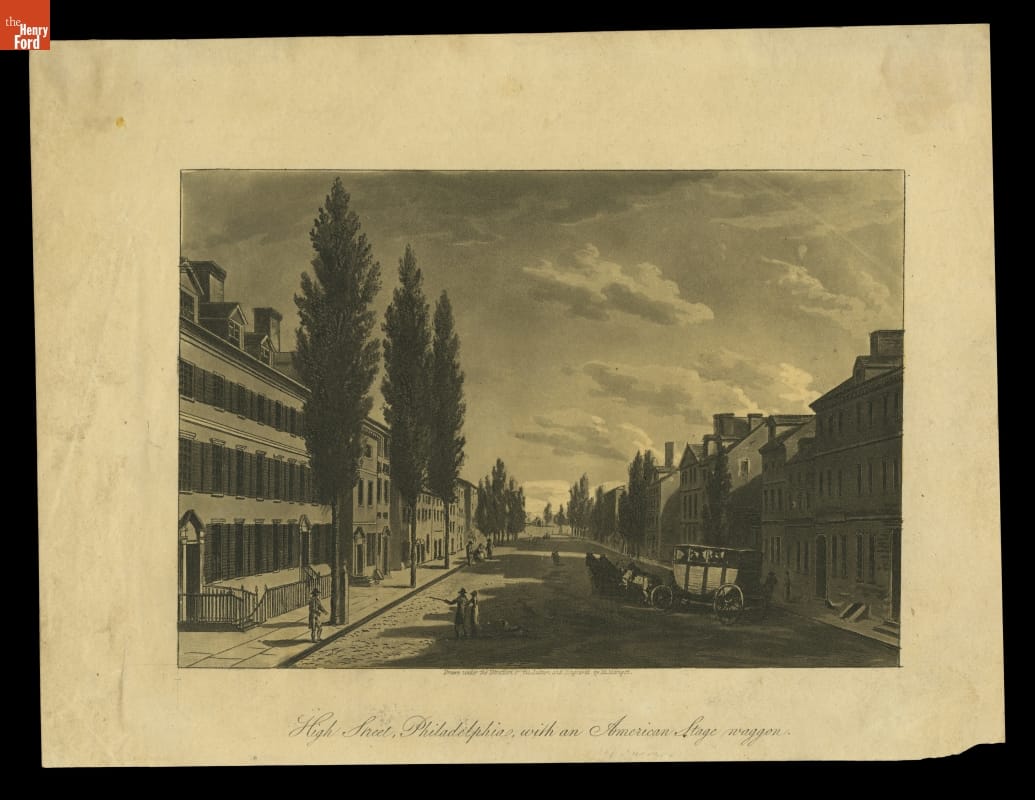
- Aquatint Print, "High Street, Philadelphia, with an American Stage Waggon," 1795-1807 - In the 1790s, Philadelphia was America's most prosperous, populous and cosmopolitan city. It was also the young nation's temporary capital, while Washington, D.C., was being built. This circa 1797 print shows fine homes along High Street (later called Market Street), a major thoroughfare running from east to west through the center of the city.
- 1795-1807
- Collections - Artifact
Aquatint Print, "High Street, Philadelphia, with an American Stage Waggon," 1795-1807
In the 1790s, Philadelphia was America's most prosperous, populous and cosmopolitan city. It was also the young nation's temporary capital, while Washington, D.C., was being built. This circa 1797 print shows fine homes along High Street (later called Market Street), a major thoroughfare running from east to west through the center of the city.