
Search
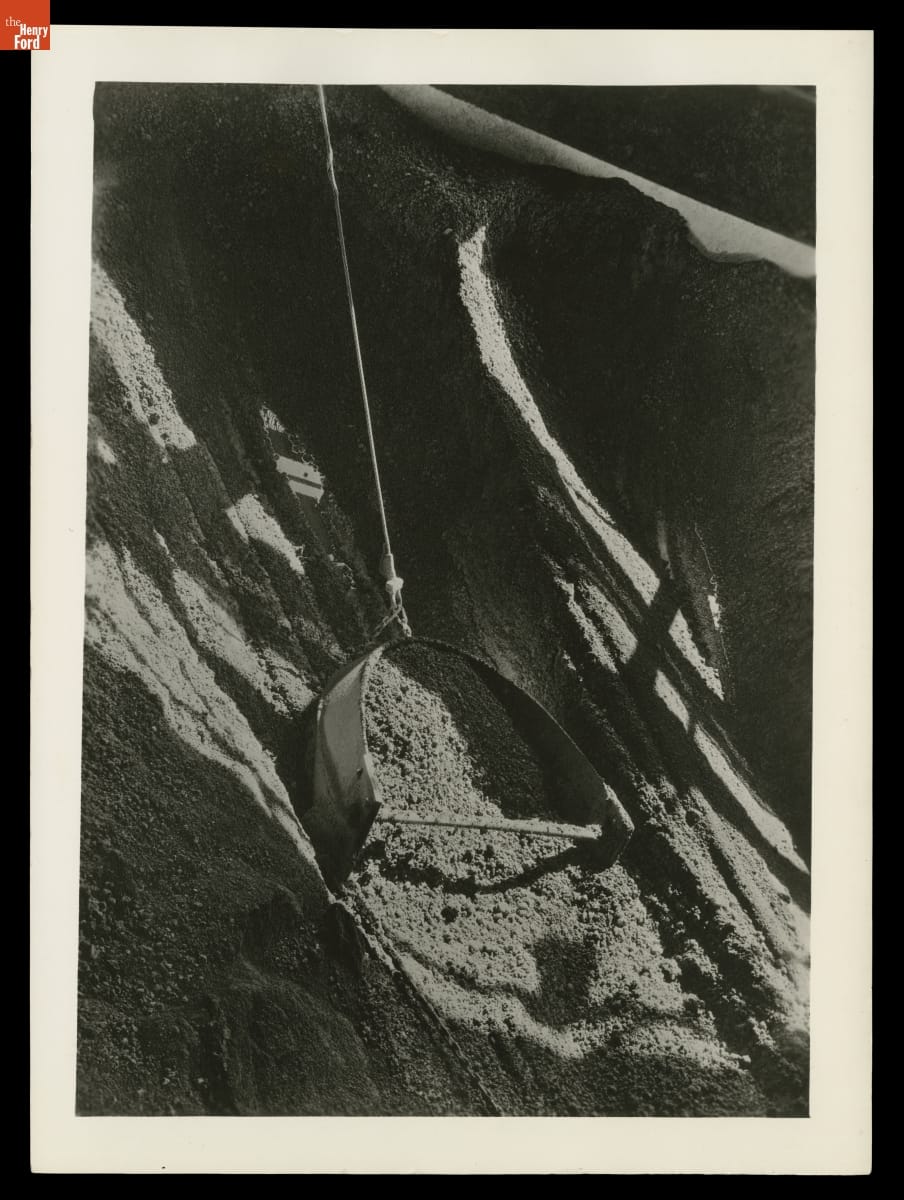
- Shoveling Ore, Aluminum Company of America (Alcoa), 1930-1934 - The Aluminum Company of America (Alcoa) hired Margaret Bourke-White to photograph its factories and foundries for inclusion in its 1934 World's Fair display. The resulting photos demonstrated Bourke-White's talent for taking simple, yet dynamic photos and elevating industrial scenes into artistic pieces. This talent helped distinguish Bourke-White as one of the leading photojournalists of the 20th century.
- March 15, 1935
- Collections - Artifact
Shoveling Ore, Aluminum Company of America (Alcoa), 1930-1934
The Aluminum Company of America (Alcoa) hired Margaret Bourke-White to photograph its factories and foundries for inclusion in its 1934 World's Fair display. The resulting photos demonstrated Bourke-White's talent for taking simple, yet dynamic photos and elevating industrial scenes into artistic pieces. This talent helped distinguish Bourke-White as one of the leading photojournalists of the 20th century.
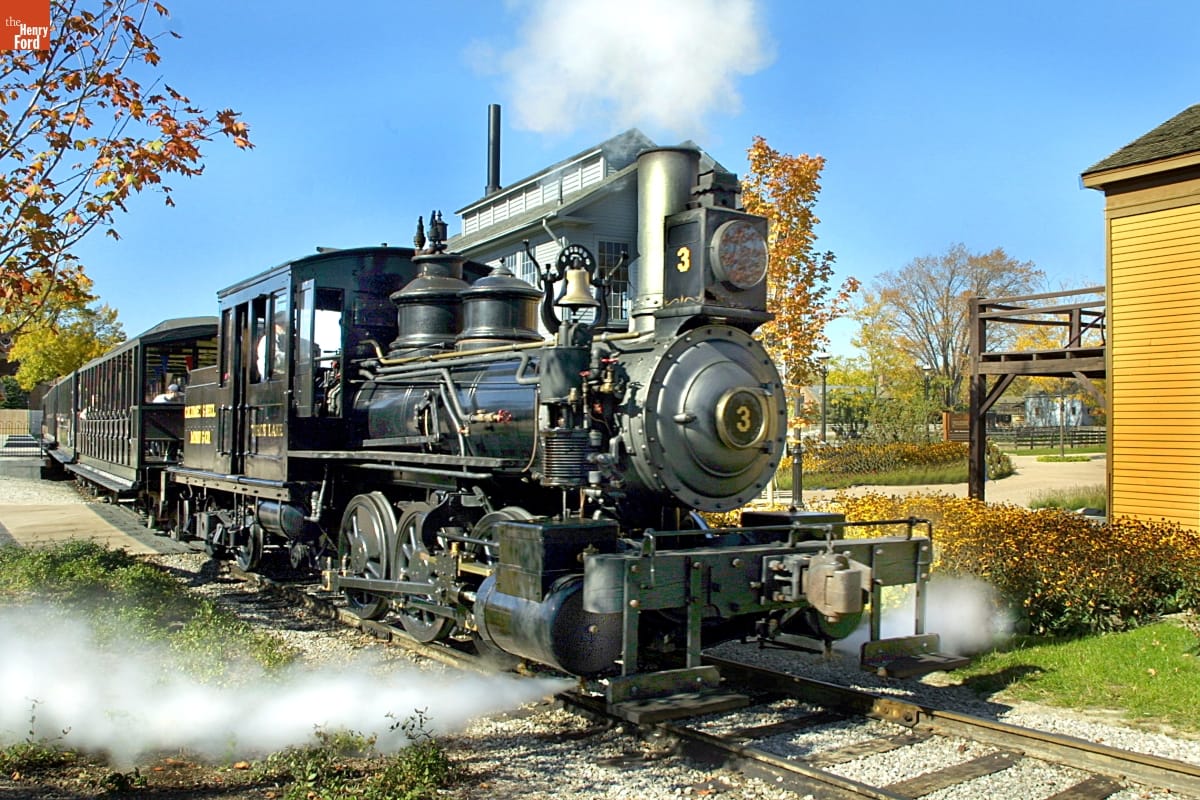
- Torch Lake Steam Locomotive, 1873 - <EM>Torch Lake</EM>, built by Mason Machine Works in 1873, hauled ore for the Calumet and Hecla Mining Company on Michigan's Keweenaw Peninsula. The engine is an articulated design. The driving wheels pivot under the boiler, allowing the locomotive to handle sharp curves. <EM>Torch Lake</EM> joined The Henry Ford's collection in 1969.
- 1873
- Collections - Artifact
Torch Lake Steam Locomotive, 1873
Torch Lake, built by Mason Machine Works in 1873, hauled ore for the Calumet and Hecla Mining Company on Michigan's Keweenaw Peninsula. The engine is an articulated design. The driving wheels pivot under the boiler, allowing the locomotive to handle sharp curves. Torch Lake joined The Henry Ford's collection in 1969.
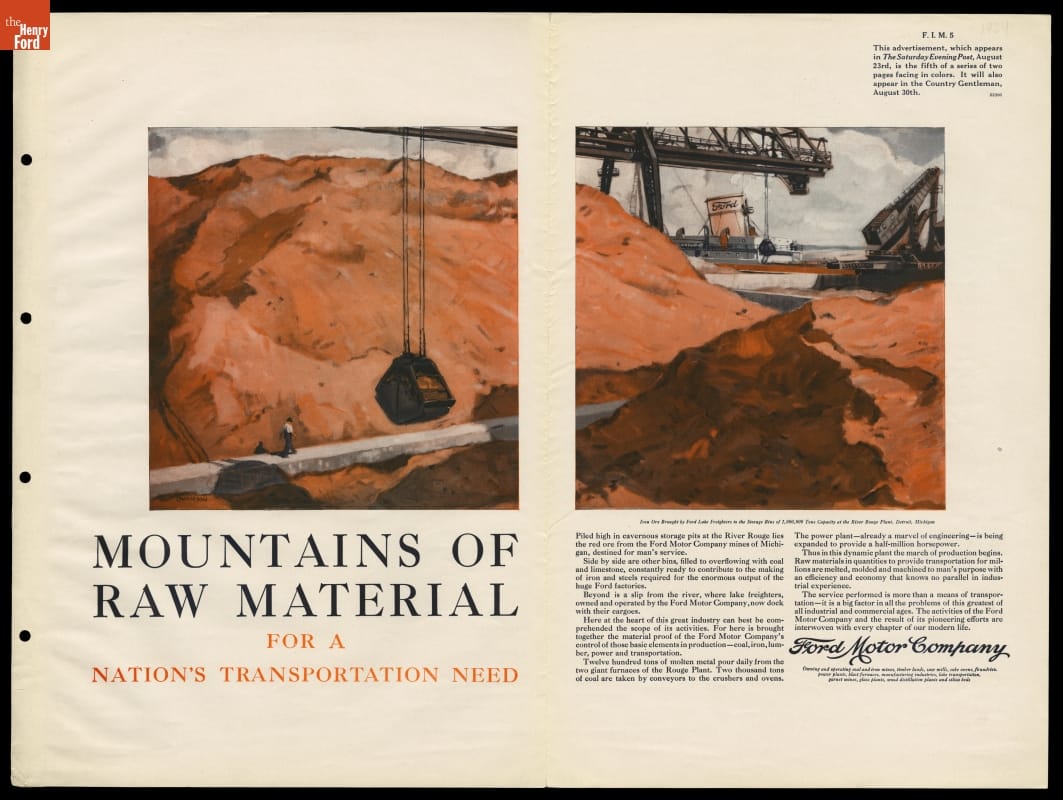
- 1924 Ford Motor Company Institutional Message Advertising Campaign, "Mountains of Raw Material" - In 1924-25 the Ford Motor Company ran a series of sixteen dramatic advertisements in the <EM>Saturday Evening Post</EM> and <EM>Country Gentleman</EM> magazines. Rather than promoting the Model T specifically, the ads aimed to convey the company's scale and philosophy. Here a desolate landscape of iron ore stored at the Rouge plant underscores the company's commitment to basic manufacturing processes.
- 1924
- Collections - Artifact
1924 Ford Motor Company Institutional Message Advertising Campaign, "Mountains of Raw Material"
In 1924-25 the Ford Motor Company ran a series of sixteen dramatic advertisements in the Saturday Evening Post and Country Gentleman magazines. Rather than promoting the Model T specifically, the ads aimed to convey the company's scale and philosophy. Here a desolate landscape of iron ore stored at the Rouge plant underscores the company's commitment to basic manufacturing processes.
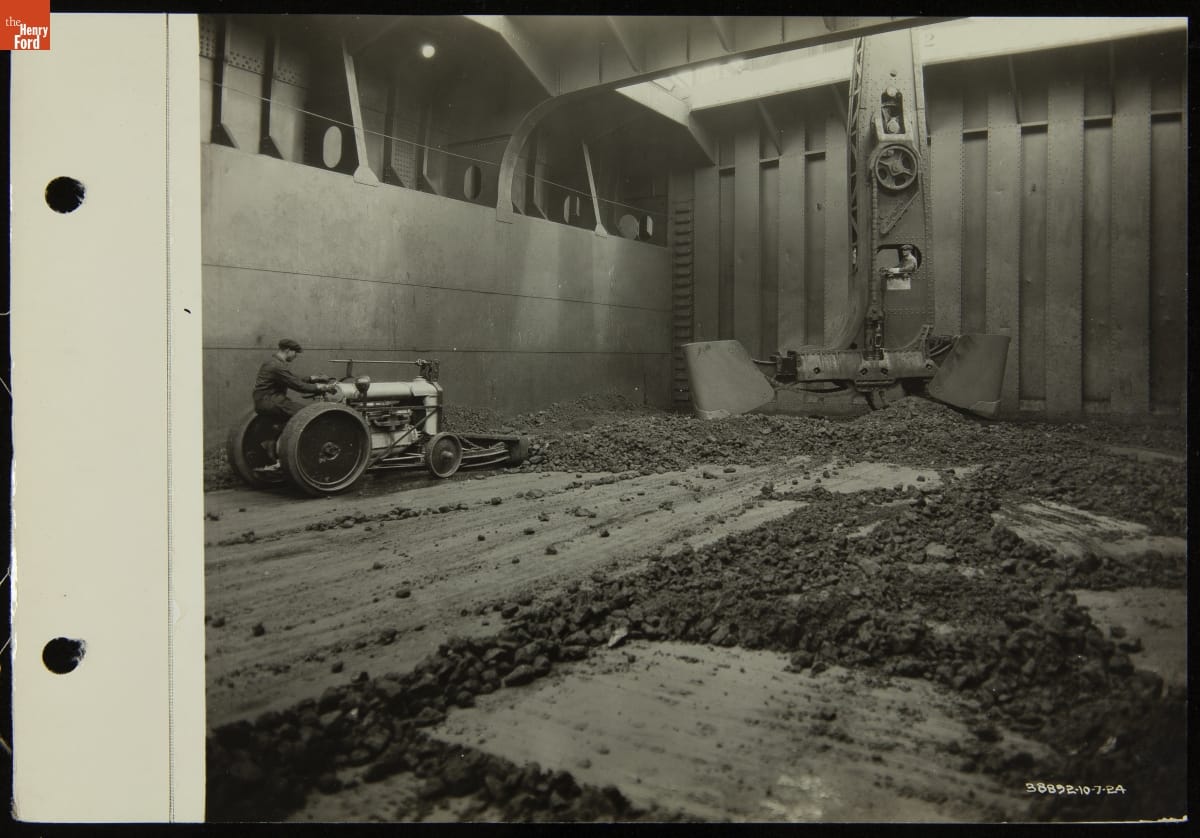
- Employee Driving Ore Tractor inside Hull of Ford Freighter "Henry Ford II" at the Ford Rouge Plant, October 7, 1924 - Henry Ford had two ore freighters built in 1924 and named them after his grandsons, Henry Ford II and Benson Ford. The vessels, owned and operated by Ford Motor Company, primarily carried ore from western Lake Superior to the steel mill at Ford's River Rouge Plant near Detroit. This photograph shows a tractor moving the remaining ore inside one of the <em>Henry Ford II</em>'s hold compartments.
- October 07, 1924
- Collections - Artifact
Employee Driving Ore Tractor inside Hull of Ford Freighter "Henry Ford II" at the Ford Rouge Plant, October 7, 1924
Henry Ford had two ore freighters built in 1924 and named them after his grandsons, Henry Ford II and Benson Ford. The vessels, owned and operated by Ford Motor Company, primarily carried ore from western Lake Superior to the steel mill at Ford's River Rouge Plant near Detroit. This photograph shows a tractor moving the remaining ore inside one of the Henry Ford II's hold compartments.
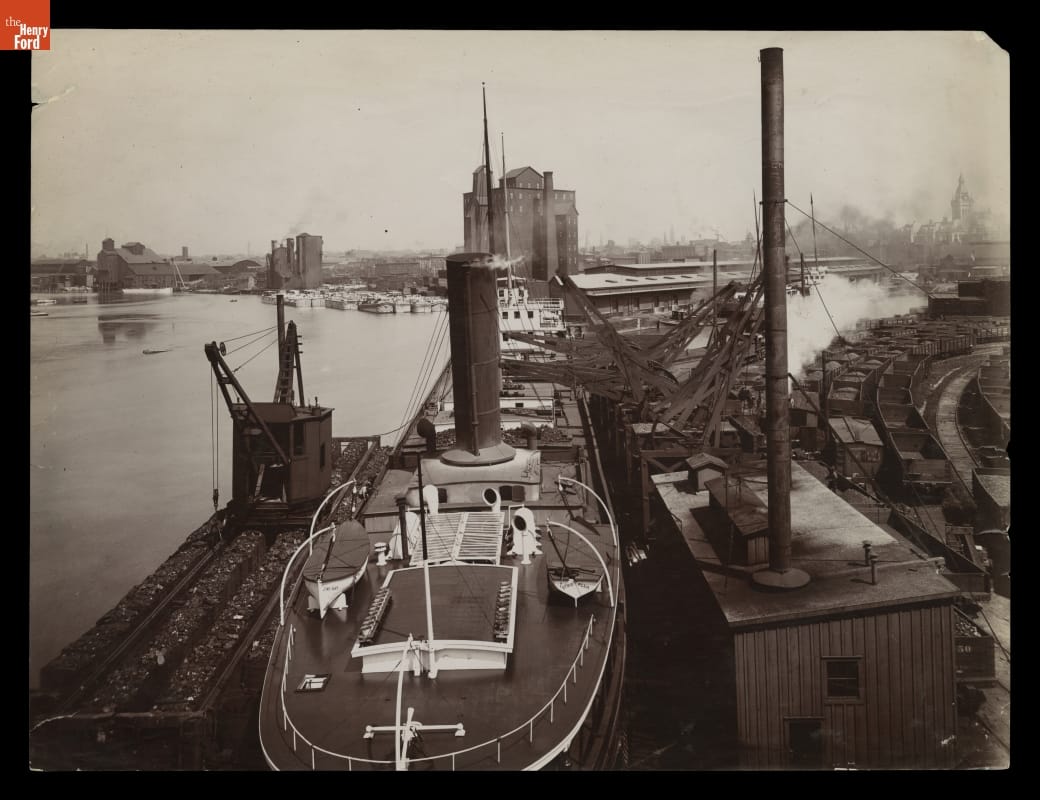
- Loading Coal onto Steamship, Lackawanna Railroad Ore Docks, Buffalo, New York, circa 1900 - The Delaware, Lackawanna & Western Railroad connected New York City with Buffalo, passing through northeastern Pennsylvania's anthracite coal region on the way. Clean-burning anthracite, which produced little smoke or soot, was particularly well suited to home heating. When oil and natural gas gained favor, DL&W's fortunes declined. Hoping to avoid bankruptcy, it merged with the Erie Railroad in 1960.
- circa 1900
- Collections - Artifact
Loading Coal onto Steamship, Lackawanna Railroad Ore Docks, Buffalo, New York, circa 1900
The Delaware, Lackawanna & Western Railroad connected New York City with Buffalo, passing through northeastern Pennsylvania's anthracite coal region on the way. Clean-burning anthracite, which produced little smoke or soot, was particularly well suited to home heating. When oil and natural gas gained favor, DL&W's fortunes declined. Hoping to avoid bankruptcy, it merged with the Erie Railroad in 1960.
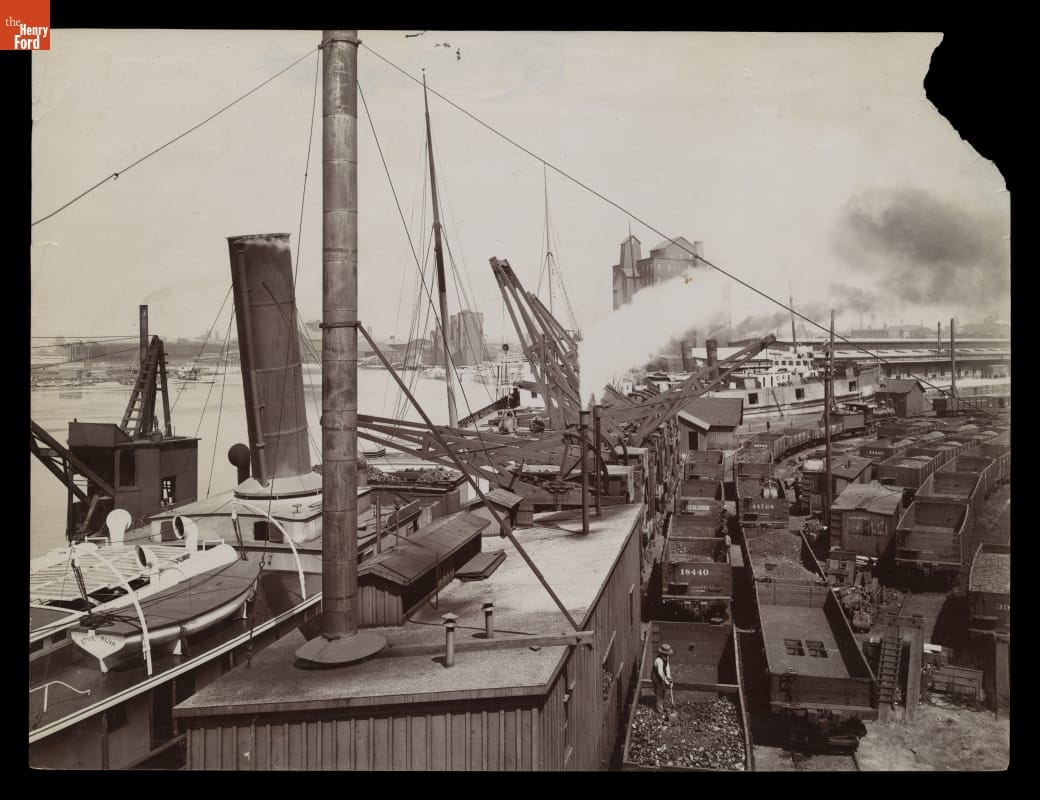
- Unloading Ore at Lackawanna Ore Docks, Buffalo, New York, circa 1900 - From 1895 to 1924, the Detroit Publishing Company was one of the major image publishers in the world. The company's wide-ranging stock of original photographs documented life and landscapes from across the nation and around the globe. From the tens of thousands of negatives, the company created prints, postcards, lantern slides, panoramas, and other merchandise for sale to educators, businessmen, advertisers, homeowners and travelers.
- circa 1900
- Collections - Artifact
Unloading Ore at Lackawanna Ore Docks, Buffalo, New York, circa 1900
From 1895 to 1924, the Detroit Publishing Company was one of the major image publishers in the world. The company's wide-ranging stock of original photographs documented life and landscapes from across the nation and around the globe. From the tens of thousands of negatives, the company created prints, postcards, lantern slides, panoramas, and other merchandise for sale to educators, businessmen, advertisers, homeowners and travelers.
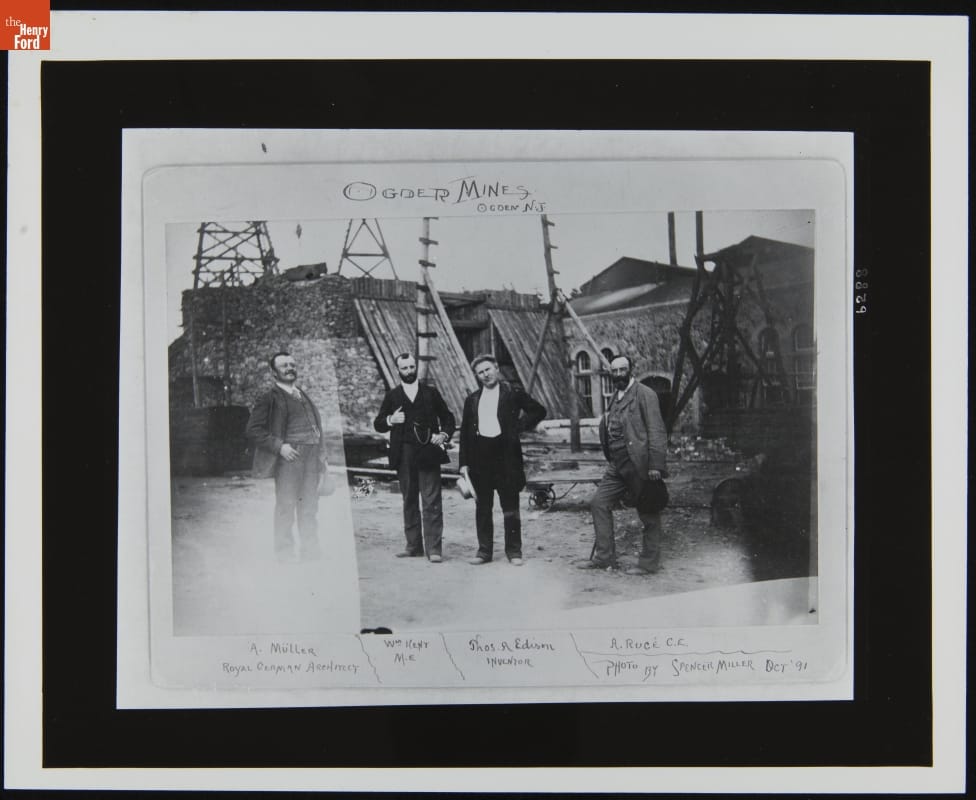
- Alfred Muller, William Kent, Thomas Edison and A. Ruce at Edison's Ore-Concentrating Works, October 1891 - During the 1890s, Thomas Edison launched a New Jersey mining operation to address an iron ore shortage. He designed rock-crushing technology and an electromagnetic ore separator to extract low-grade ore from crushed boulders. The final product -- a briquette made of powdered iron ore -- didn't do well commercially, especially after high-grade ore was discovered around Lake Superior. In 1899, Edison left the industry.
- October 01, 1891
- Collections - Artifact
Alfred Muller, William Kent, Thomas Edison and A. Ruce at Edison's Ore-Concentrating Works, October 1891
During the 1890s, Thomas Edison launched a New Jersey mining operation to address an iron ore shortage. He designed rock-crushing technology and an electromagnetic ore separator to extract low-grade ore from crushed boulders. The final product -- a briquette made of powdered iron ore -- didn't do well commercially, especially after high-grade ore was discovered around Lake Superior. In 1899, Edison left the industry.
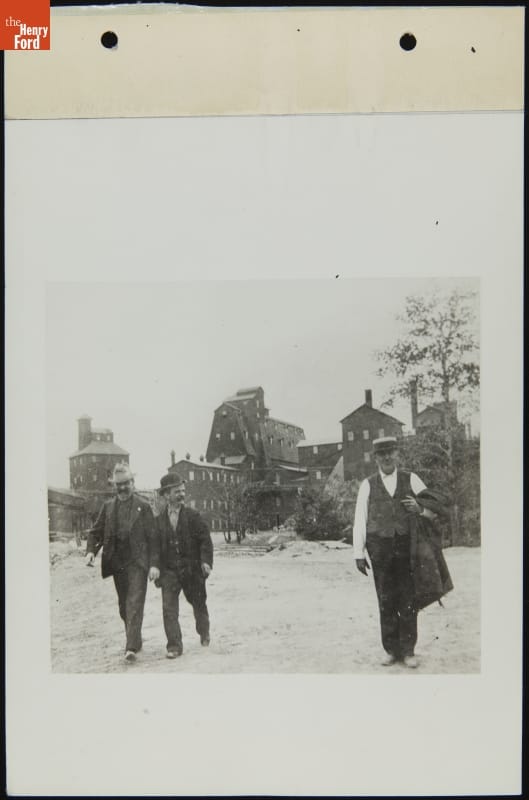
- Thomas Edison at His Ore-Concentrating Works, circa 1897 - During the 1890s, Thomas Edison launched a New Jersey mining operation to address an iron ore shortage. He designed rock-crushing technology and an electromagnetic ore separator to extract low-grade ore from crushed boulders. The final product -- a briquette made of powdered iron ore -- didn't do well commercially, especially after high-grade ore was discovered around Lake Superior. In 1899, Edison left the industry.
- circa 1897
- Collections - Artifact
Thomas Edison at His Ore-Concentrating Works, circa 1897
During the 1890s, Thomas Edison launched a New Jersey mining operation to address an iron ore shortage. He designed rock-crushing technology and an electromagnetic ore separator to extract low-grade ore from crushed boulders. The final product -- a briquette made of powdered iron ore -- didn't do well commercially, especially after high-grade ore was discovered around Lake Superior. In 1899, Edison left the industry.
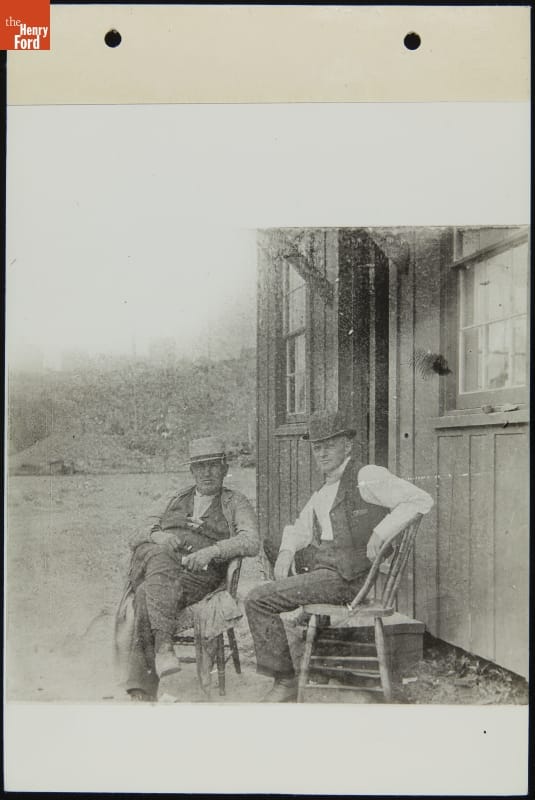
- Thomas Edison and Another Man at Edison's Ore-Concentrating Works, Ogdensburg, New Jersey, circa 1895 - During the 1890s, Thomas Edison launched a New Jersey mining operation to address an iron ore shortage. He designed rock-crushing technology and an electromagnetic ore separator to extract low-grade ore from crushed boulders. The final product -- a briquette made of powdered iron ore -- didn't do well commercially, especially after high-grade ore was discovered around Lake Superior. In 1899, Edison left the industry.
- circa 1895
- Collections - Artifact
Thomas Edison and Another Man at Edison's Ore-Concentrating Works, Ogdensburg, New Jersey, circa 1895
During the 1890s, Thomas Edison launched a New Jersey mining operation to address an iron ore shortage. He designed rock-crushing technology and an electromagnetic ore separator to extract low-grade ore from crushed boulders. The final product -- a briquette made of powdered iron ore -- didn't do well commercially, especially after high-grade ore was discovered around Lake Superior. In 1899, Edison left the industry.
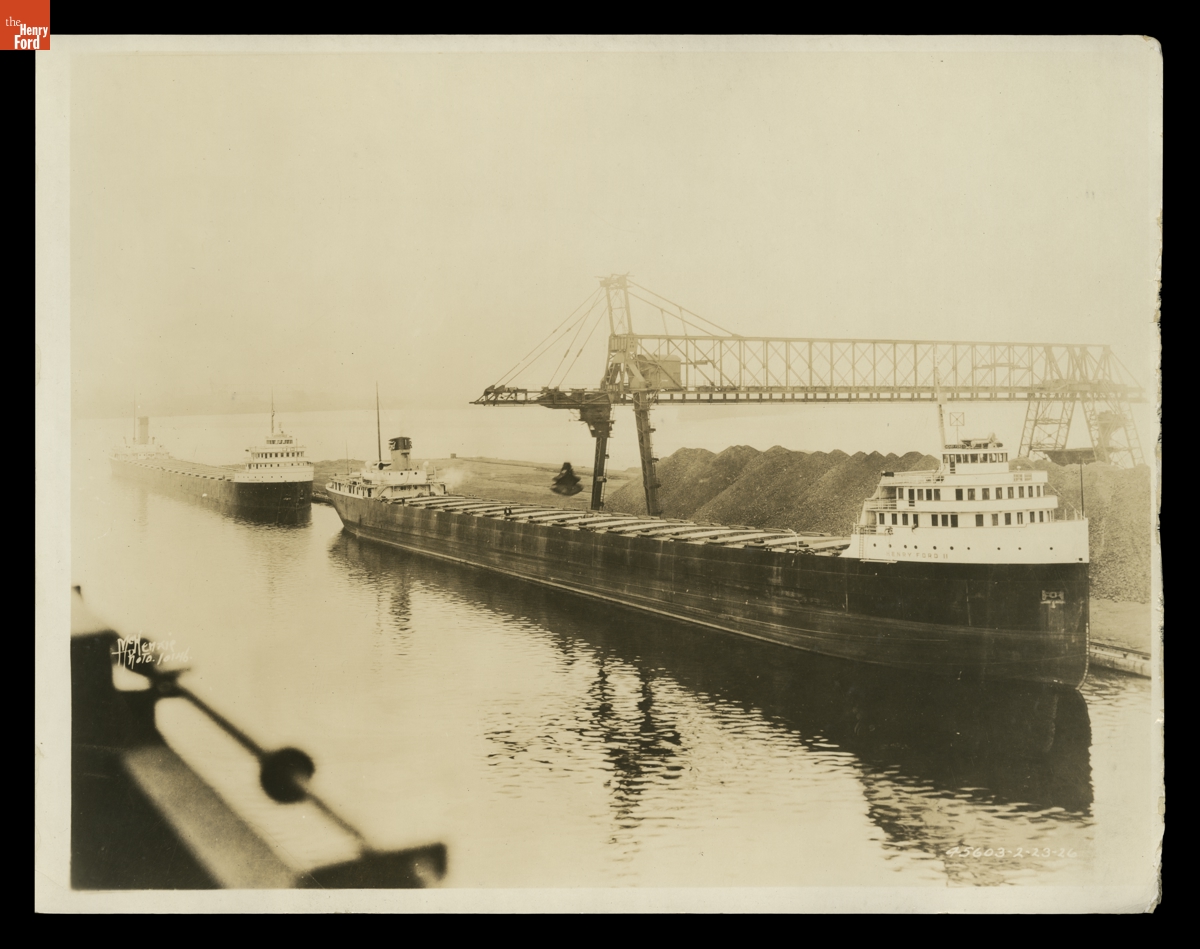
- Freighters Benson Ford and Henry Ford II Docked at the Rouge River Plant to Deliver Iron Ore, February 23, 1926 - Henry Ford had two ore freighters constructed in 1924 and named them after his grandsons, Henry Ford II and Benson Ford. The ships plied the Great Lakes, transporting raw materials to and from Ford's River Rouge manufacturing complex. This image shows the twin freighters docked at the Rouge River Plant delivering iron ore.
- February 23, 1926
- Collections - Artifact
Freighters Benson Ford and Henry Ford II Docked at the Rouge River Plant to Deliver Iron Ore, February 23, 1926
Henry Ford had two ore freighters constructed in 1924 and named them after his grandsons, Henry Ford II and Benson Ford. The ships plied the Great Lakes, transporting raw materials to and from Ford's River Rouge manufacturing complex. This image shows the twin freighters docked at the Rouge River Plant delivering iron ore.