
Search
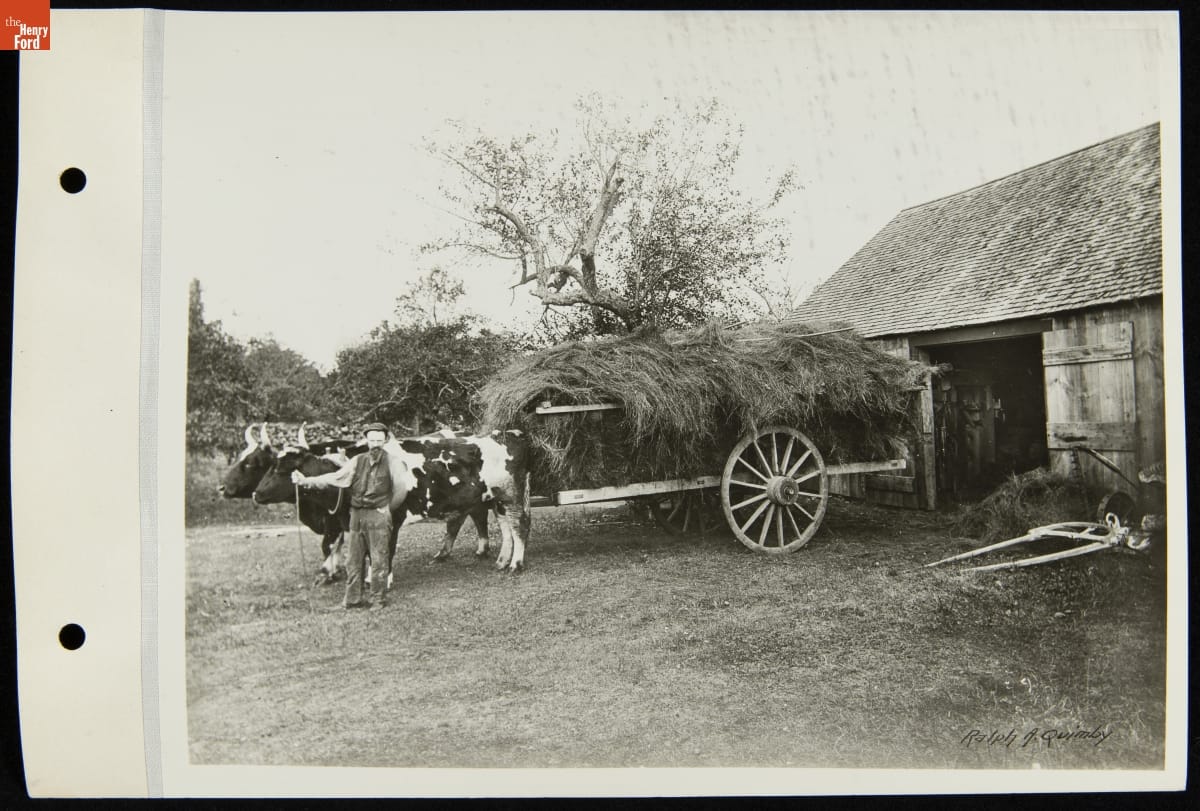
- Hay Wagon Drawn by Oxen, York, Maine, 1890 -
- April 16, 1929
- Collections - Artifact
Hay Wagon Drawn by Oxen, York, Maine, 1890
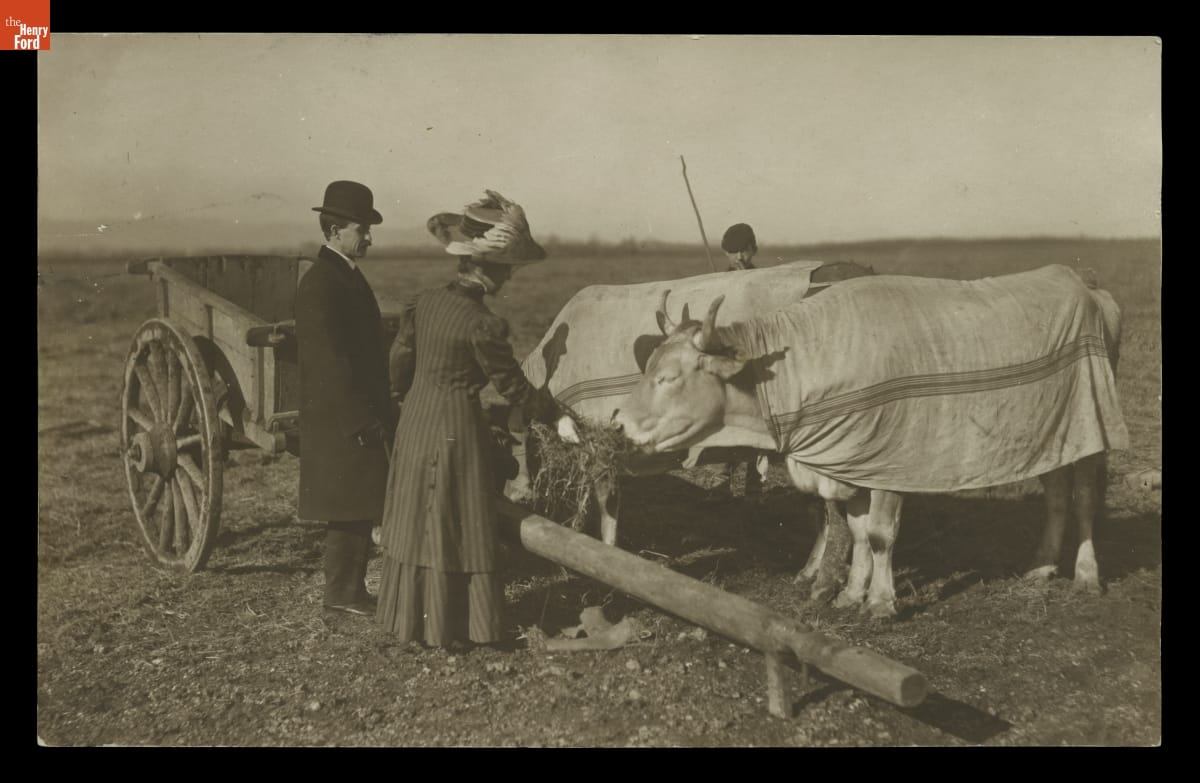
- Orville Wright and Katharine Wright Feeding Cattle at Pau, France, February 1909 - Orville Wright and Katharine Wright joined their brother, Wilbur, in France in early 1909. Wilbur had completed a series of impressive demonstration flights the previous fall, and the three siblings were celebrated throughout the country as heroes. Despite all the attention from monarchs, politicians, and business titans, the Wrights remained unaffectedly true to their Midwestern modesty.
- February 01, 1909
- Collections - Artifact
Orville Wright and Katharine Wright Feeding Cattle at Pau, France, February 1909
Orville Wright and Katharine Wright joined their brother, Wilbur, in France in early 1909. Wilbur had completed a series of impressive demonstration flights the previous fall, and the three siblings were celebrated throughout the country as heroes. Despite all the attention from monarchs, politicians, and business titans, the Wrights remained unaffectedly true to their Midwestern modesty.
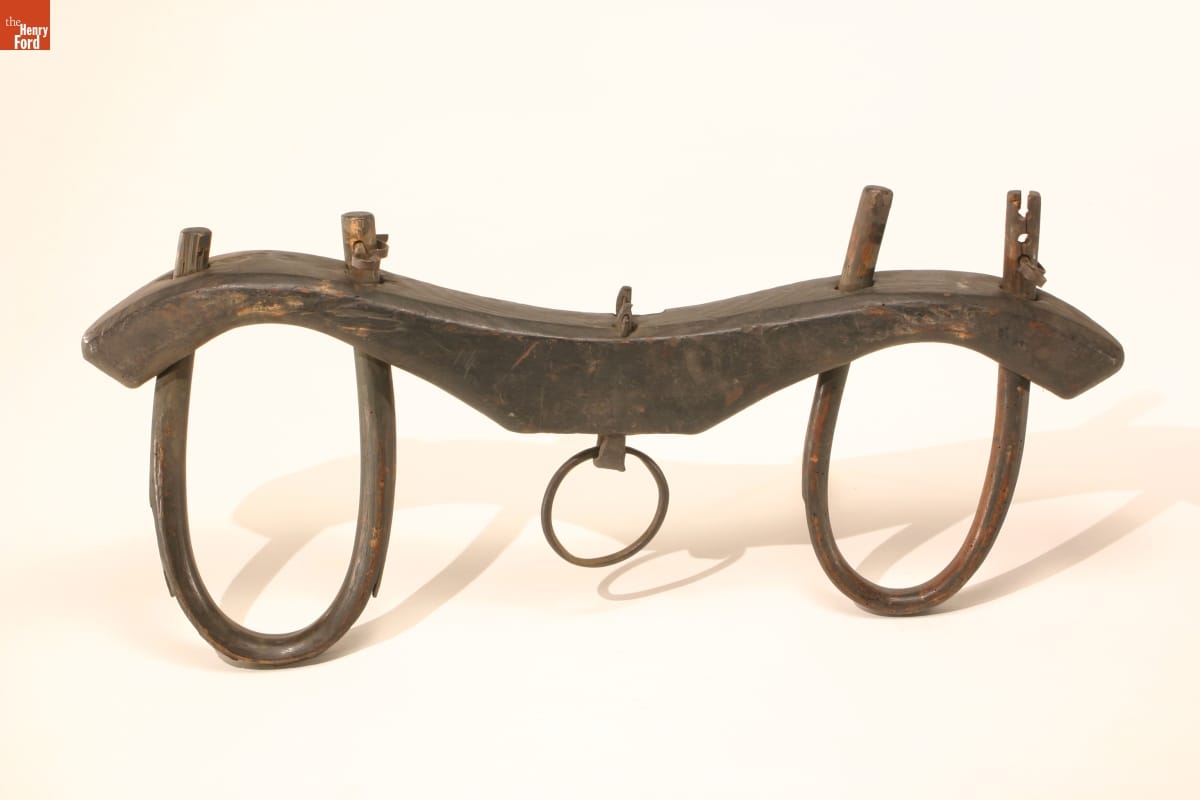
- Ox Yoke with Two Bows, 1800-1900 - This carved, wooden yoke captures the strength of oxen's necks and shoulders. The carved beam is placed across the back of the neck and shoulders of a team of oxen while the curved wood bows are secured around each ox's neck. Once trained and fitted with a yoke, these large, powerful animals can pull wagons, transport heavy loads, and plow fields.
- 1800-1900
- Collections - Artifact
Ox Yoke with Two Bows, 1800-1900
This carved, wooden yoke captures the strength of oxen's necks and shoulders. The carved beam is placed across the back of the neck and shoulders of a team of oxen while the curved wood bows are secured around each ox's neck. Once trained and fitted with a yoke, these large, powerful animals can pull wagons, transport heavy loads, and plow fields.
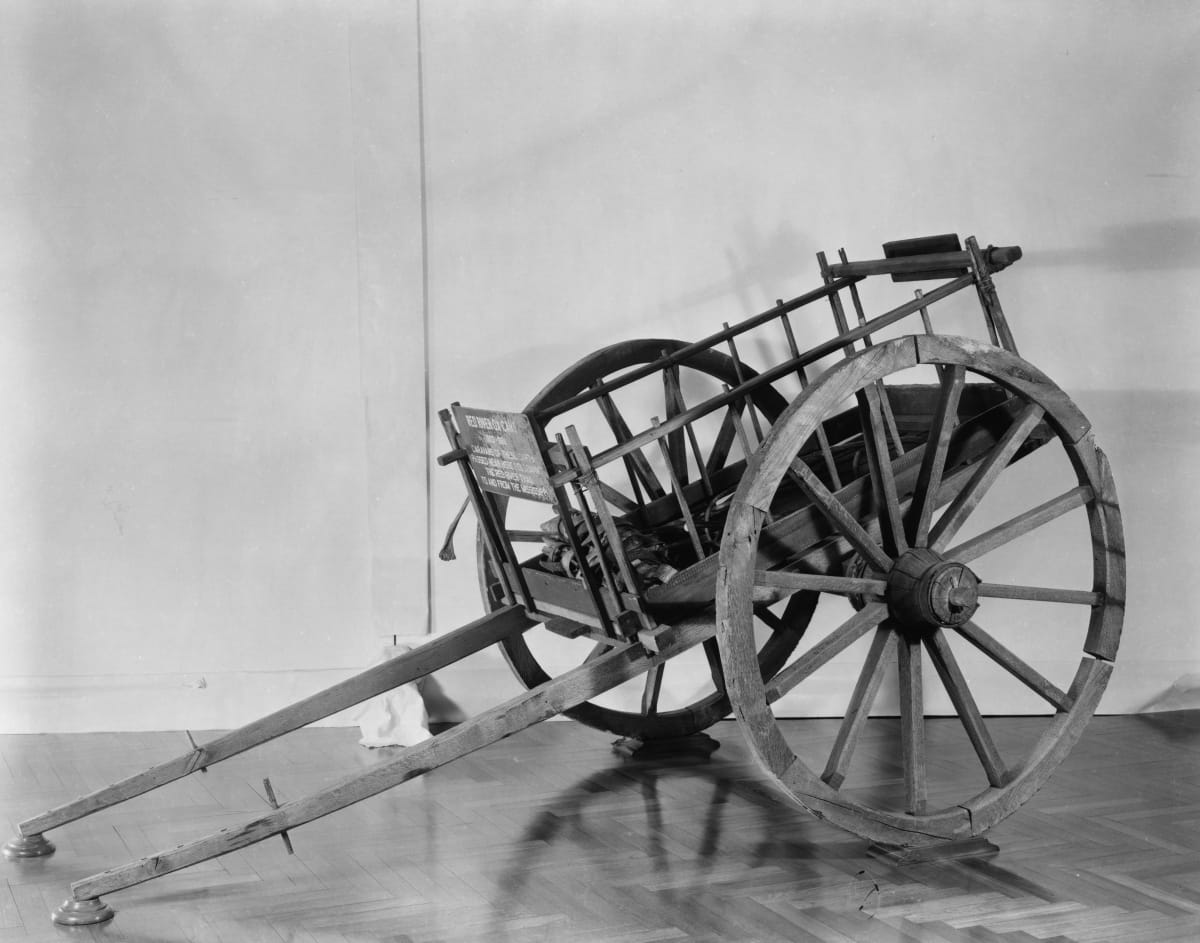
- Red River Cart Replica, circa 1925 - From the 1820s to the 1850s, hundreds of these simple, rugged carts transported annual supplies to the Red River Valley settlements of Minnesota and Manitoba, Canada. On return trips, the carts -- each drawn by a single ox -- carried meat, furs, and skins to St. Paul. This replica was probably built for exhibition by the Great Northern Railway.
- circa 1925
- Collections - Artifact
Red River Cart Replica, circa 1925
From the 1820s to the 1850s, hundreds of these simple, rugged carts transported annual supplies to the Red River Valley settlements of Minnesota and Manitoba, Canada. On return trips, the carts -- each drawn by a single ox -- carried meat, furs, and skins to St. Paul. This replica was probably built for exhibition by the Great Northern Railway.
- Oxen-Drawn Logging Sled Figurine, circa 1900 -
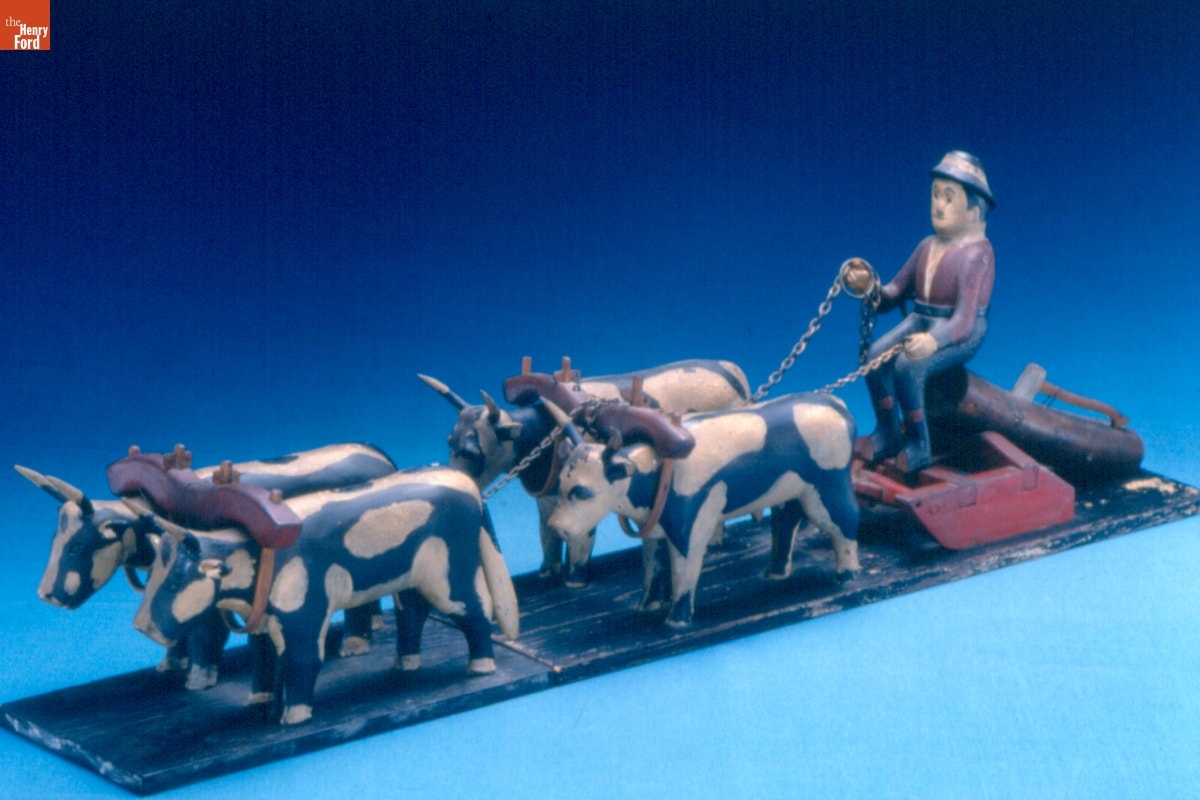
- circa 1900
- Collections - Artifact
Oxen-Drawn Logging Sled Figurine, circa 1900
- Christmas Card, Snowy Street Scene, 1950-1960 - Raymond J. Holden (1901-1993) was born in Massachusetts and studied at the Rhode Island School of Design. In 1937, he moved to Sterling, Connecticut, where he resided most of his life. Holden, an artist and illustrator, painted watercolors for Hallmark Cards and illustrated several books. Holden also created Christmas card designs for the American Artist Group of New York for 40 years.
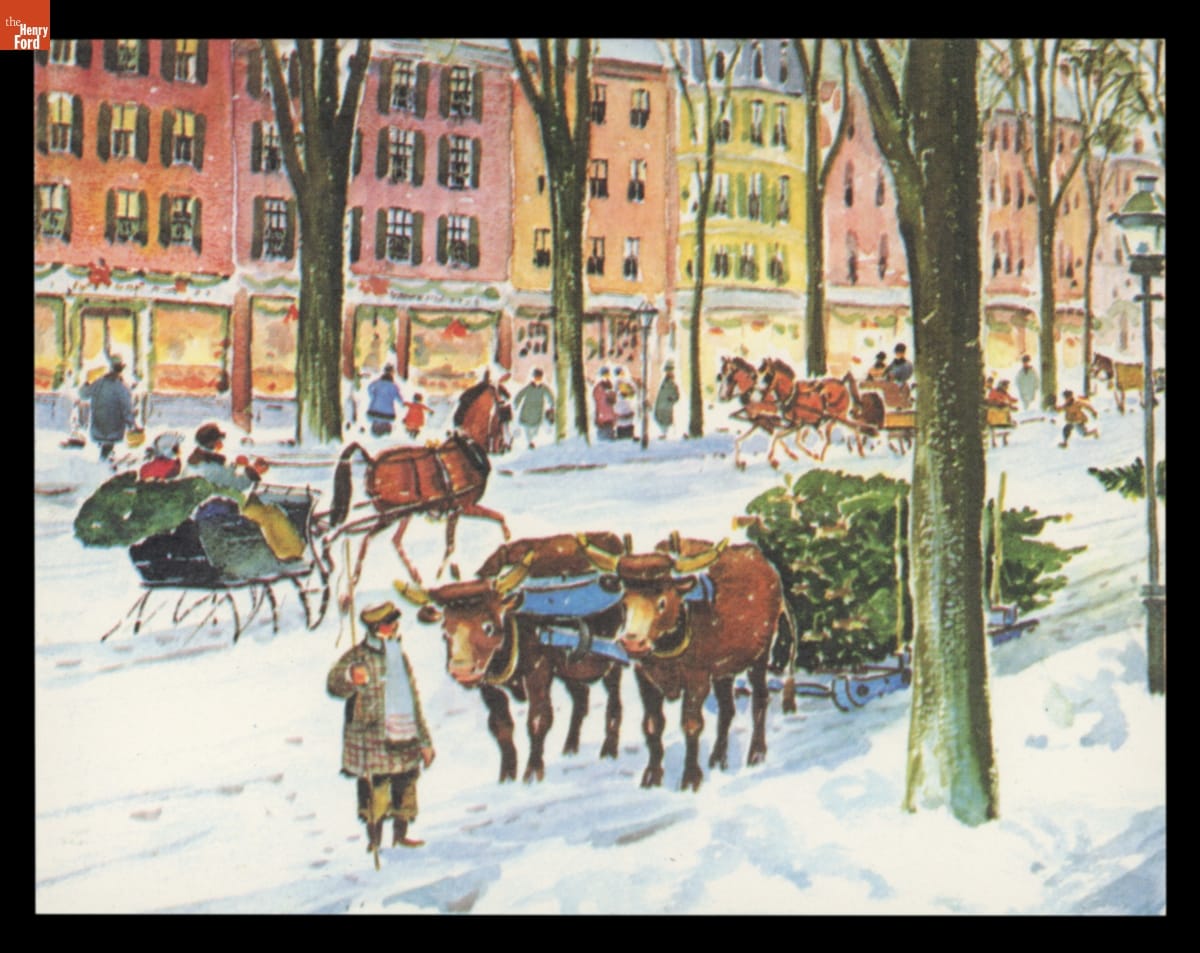
- 1950-1960
- Collections - Artifact
Christmas Card, Snowy Street Scene, 1950-1960
Raymond J. Holden (1901-1993) was born in Massachusetts and studied at the Rhode Island School of Design. In 1937, he moved to Sterling, Connecticut, where he resided most of his life. Holden, an artist and illustrator, painted watercolors for Hallmark Cards and illustrated several books. Holden also created Christmas card designs for the American Artist Group of New York for 40 years.
- Clara Ford with Other Woman's National Farm and Garden Association Members in Greenfield Village, November 5, 1930 -
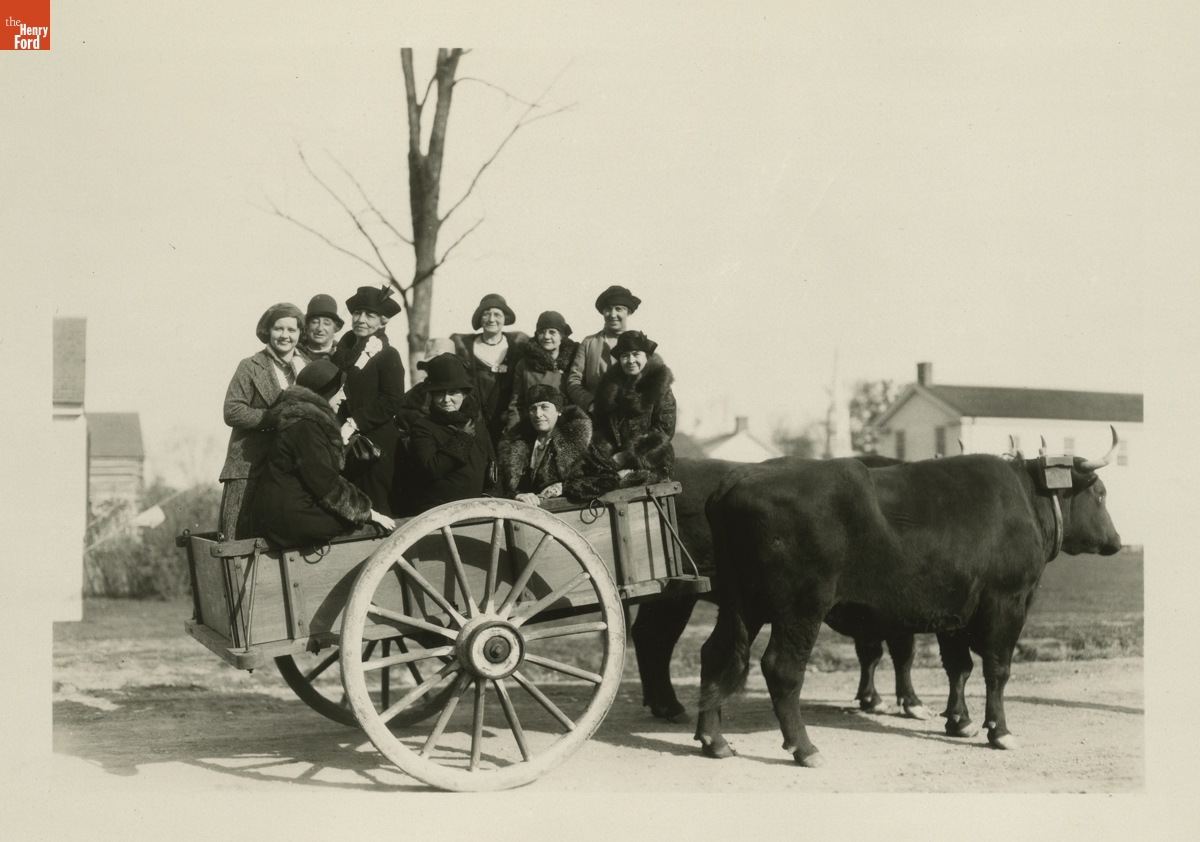
- November 05, 1930
- Collections - Artifact
Clara Ford with Other Woman's National Farm and Garden Association Members in Greenfield Village, November 5, 1930
- Oxcart Passing Ford Automobiles Dealership, India, 1920 - Ford sold the Model T throughout the world. This photograph from 1920 was taken in front of a dealership in India.
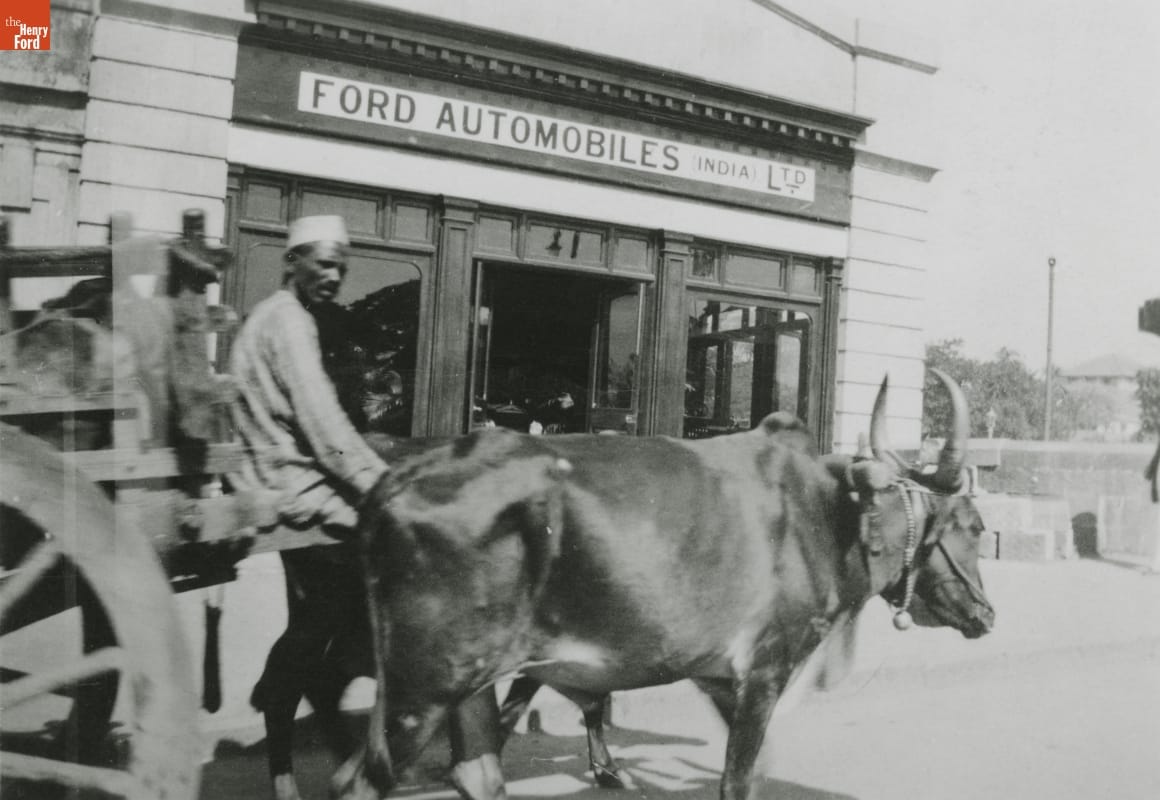
- 1920
- Collections - Artifact
Oxcart Passing Ford Automobiles Dealership, India, 1920
Ford sold the Model T throughout the world. This photograph from 1920 was taken in front of a dealership in India.
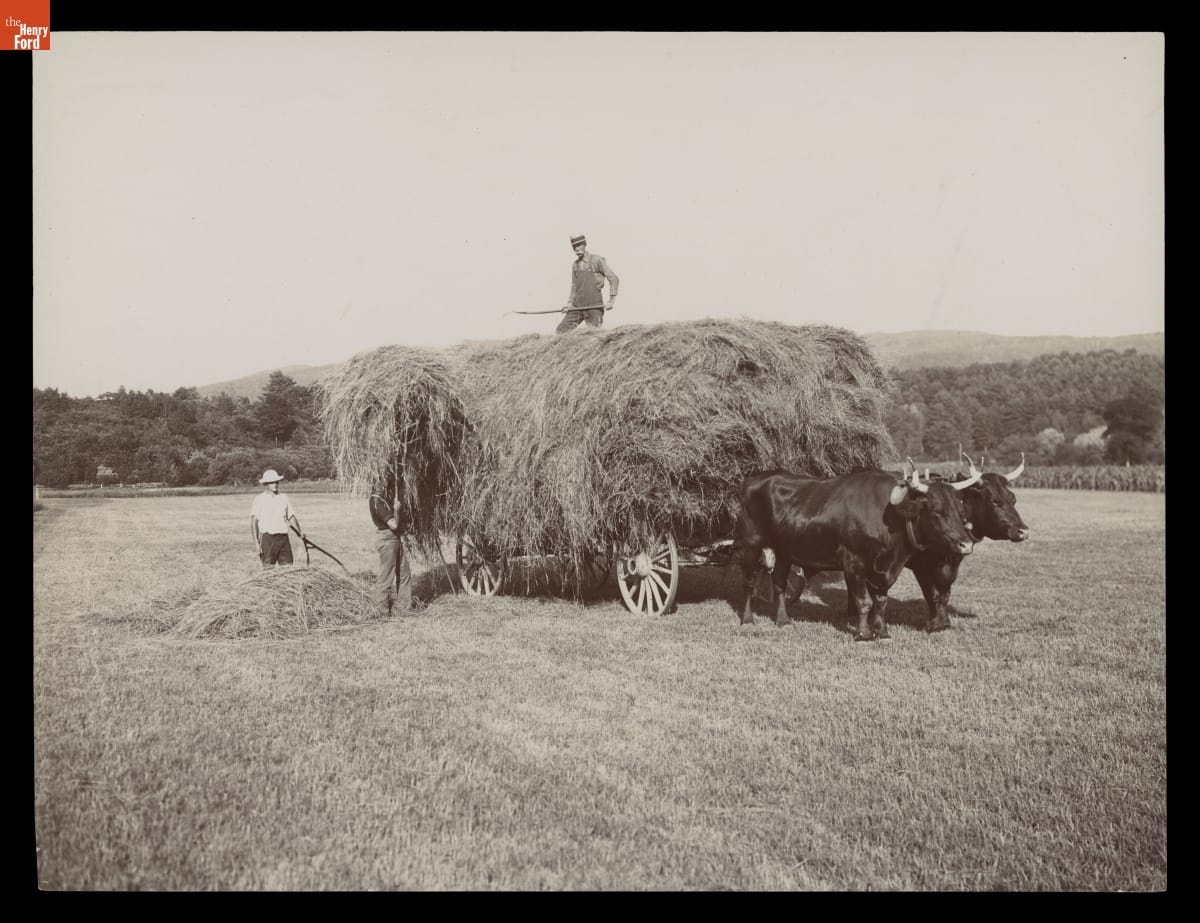
- Haying on the Meadows, Northfield, Massachusetts, circa 1900 - Oxen were the main source of power on many American farms before the development of portable steam and internal combustion engines. Farmers making hay might use oxen to haul loaded wagons (as shown here) or other haying equipment including mowers, rakes, tedders, and loaders. Using specially designed treadmills, oxen could also power presses and operate hay forks.
- circa 1900
- Collections - Artifact
Haying on the Meadows, Northfield, Massachusetts, circa 1900
Oxen were the main source of power on many American farms before the development of portable steam and internal combustion engines. Farmers making hay might use oxen to haul loaded wagons (as shown here) or other haying equipment including mowers, rakes, tedders, and loaders. Using specially designed treadmills, oxen could also power presses and operate hay forks.
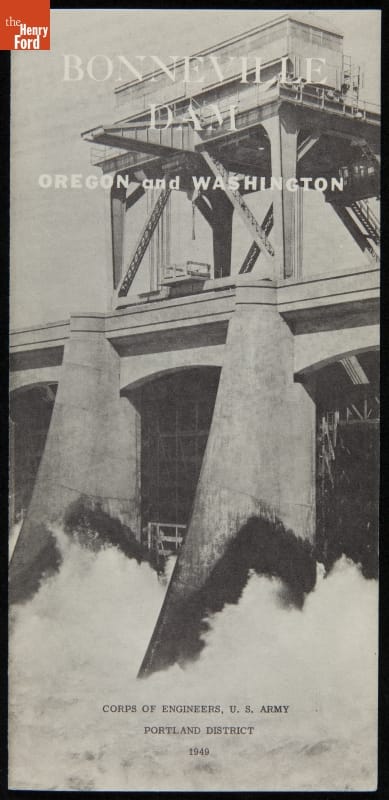
- "Bonneville Dam, Oregon and Washington," 1949 -
- 1949
- Collections - Artifact
"Bonneville Dam, Oregon and Washington," 1949