
Search
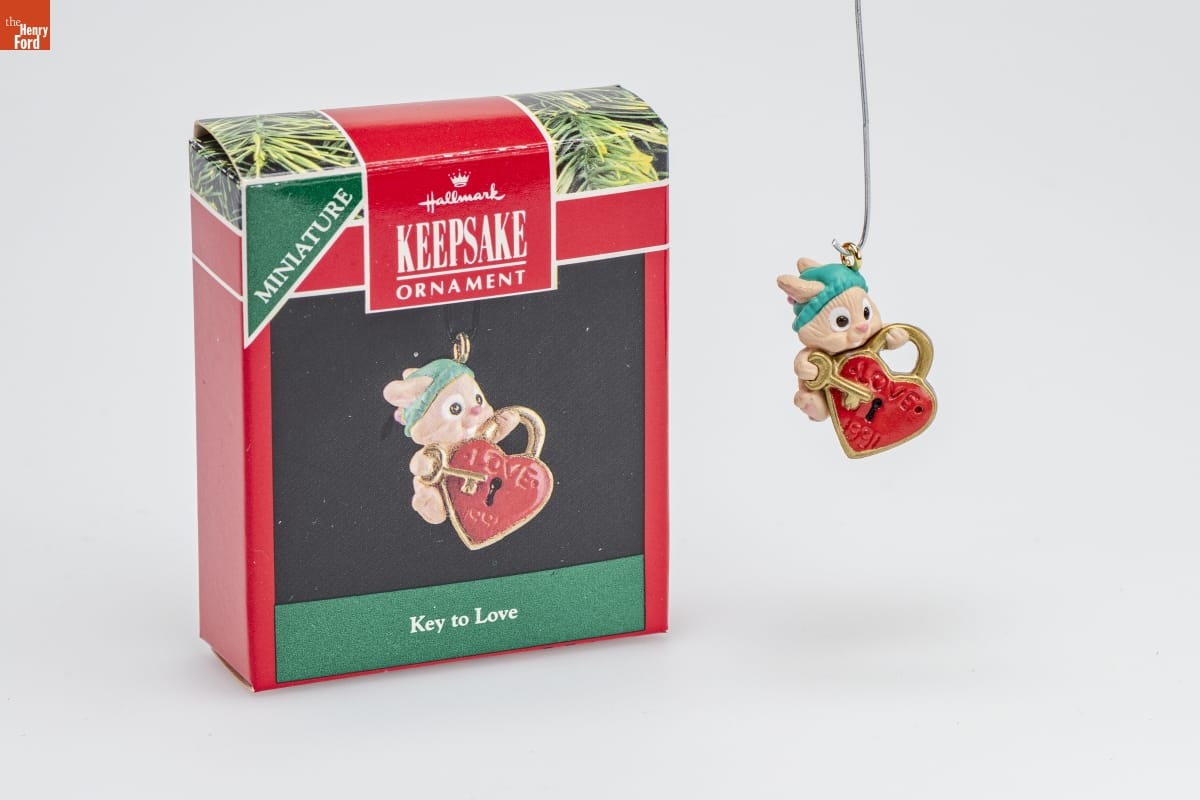
- Hallmark "Key to Love" Miniature Christmas Ornament, 1991 - Already known for greeting cards, Hallmark introduced a line of Christmas ornaments in 1973. The company's annual release of an increasing array of ornaments revolutionized Christmas decorating, appealing to customers' interest in marking memories and milestones as well as expressing one's personality and unique tastes.
- 1991
- Collections - Artifact
Hallmark "Key to Love" Miniature Christmas Ornament, 1991
Already known for greeting cards, Hallmark introduced a line of Christmas ornaments in 1973. The company's annual release of an increasing array of ornaments revolutionized Christmas decorating, appealing to customers' interest in marking memories and milestones as well as expressing one's personality and unique tastes.
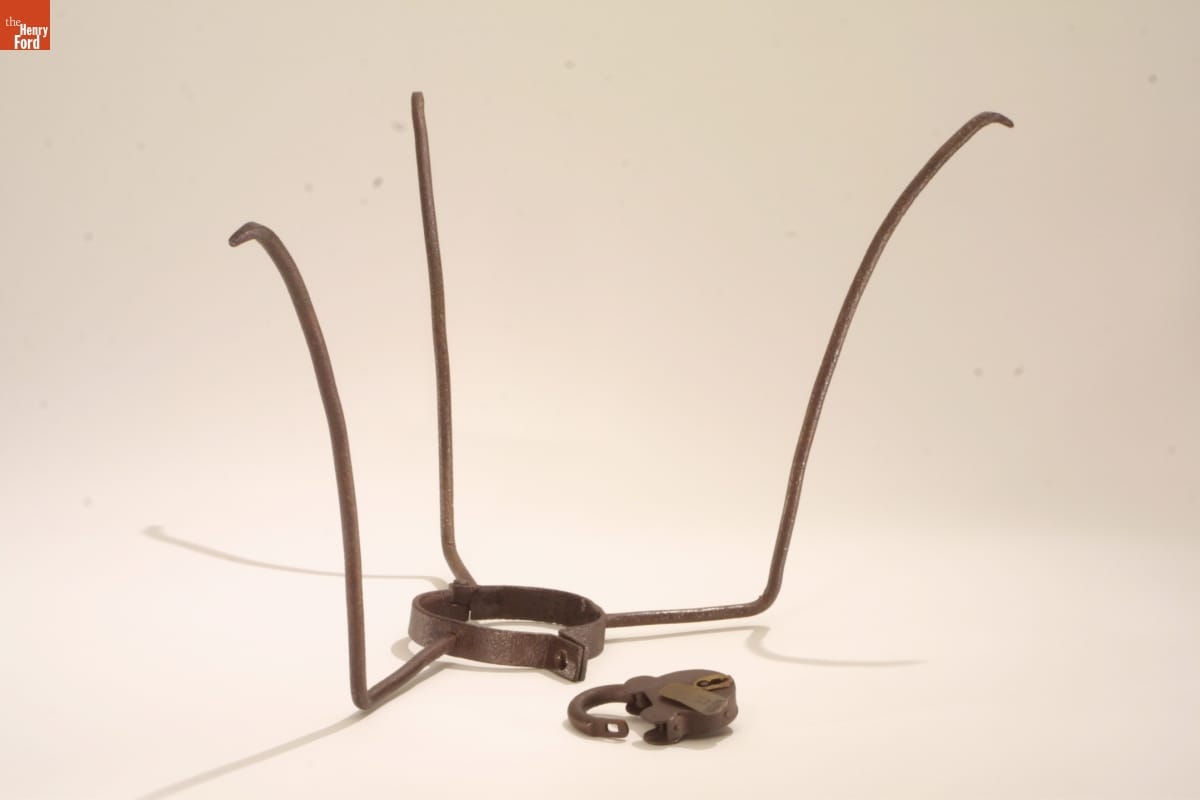
- Slave Collar, circa 1860 - The wealth and power of Southern plantation owners depended upon a large labor force of enslaved people. Slaves known for running away might have had to wear an iron collar like this, for punishment or to prevent them from running away again. The hooks caught on bushes or tree limbs, causing a violent jerking to the individual's head and neck.
- circa 1860
- Collections - Artifact
Slave Collar, circa 1860
The wealth and power of Southern plantation owners depended upon a large labor force of enslaved people. Slaves known for running away might have had to wear an iron collar like this, for punishment or to prevent them from running away again. The hooks caught on bushes or tree limbs, causing a violent jerking to the individual's head and neck.
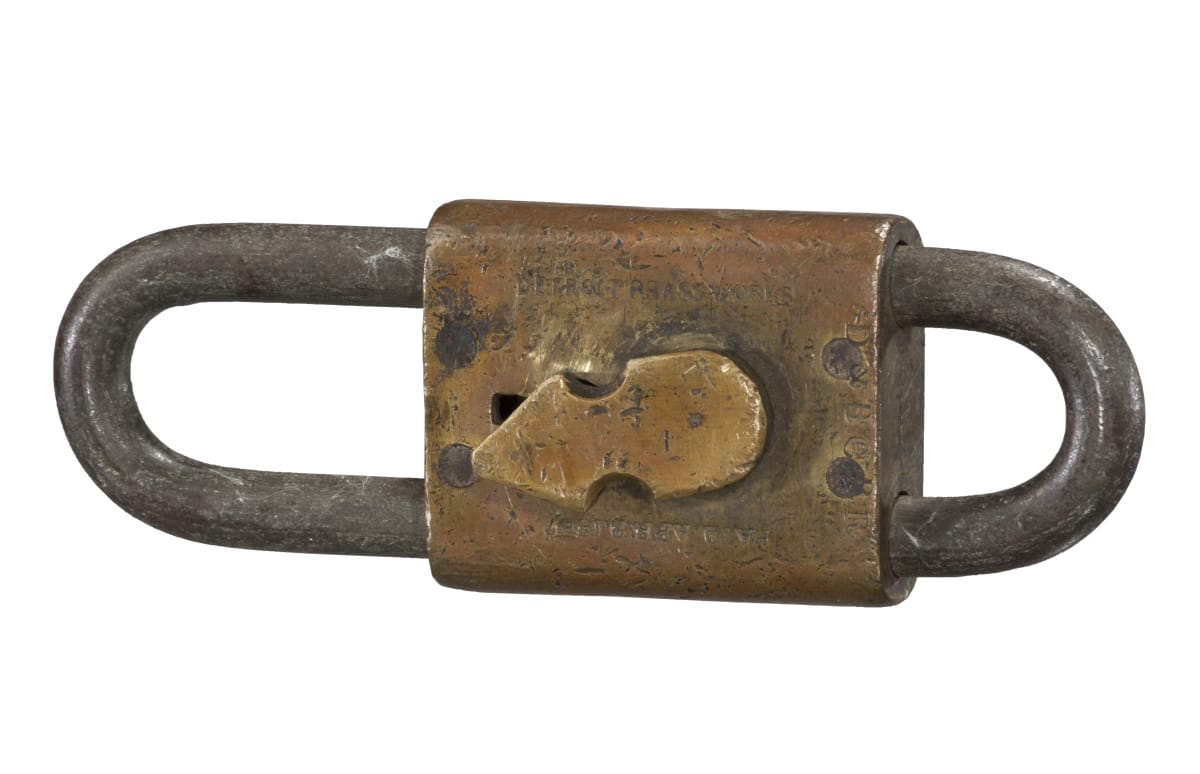
- Detroit Brass Works Padlock Used by Detroit & Bay City Railroad, 1870-1875 - Railroad employees depended on padlocks to secure track switches, signals, and equipment. Generally, these locks were standardized so that multiple workers could open them with identically cut keys. Railroad locks later became popular with collectors. The Detroit & Bay City Railroad, opened in 1872, connected its namesake cities in Michigan. It became part of the Michigan Central Railroad in 1881.
- 1870-1875
- Collections - Artifact
Detroit Brass Works Padlock Used by Detroit & Bay City Railroad, 1870-1875
Railroad employees depended on padlocks to secure track switches, signals, and equipment. Generally, these locks were standardized so that multiple workers could open them with identically cut keys. Railroad locks later became popular with collectors. The Detroit & Bay City Railroad, opened in 1872, connected its namesake cities in Michigan. It became part of the Michigan Central Railroad in 1881.
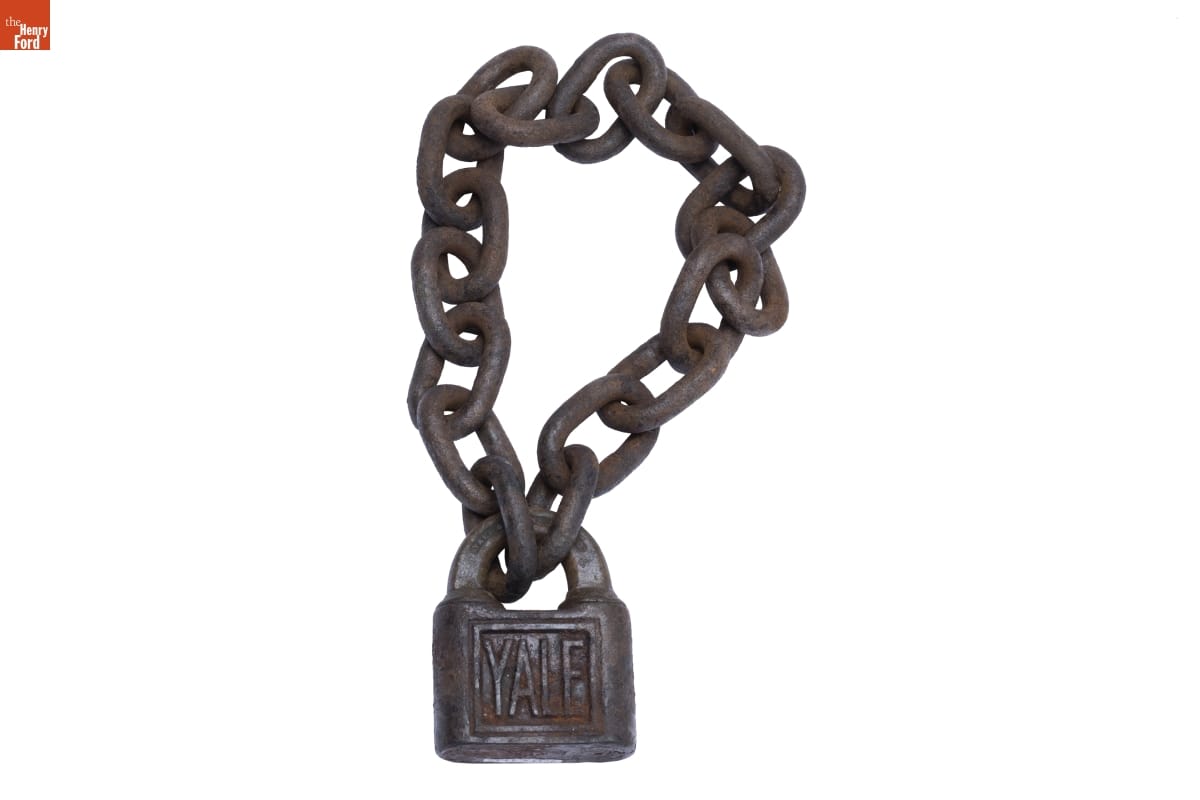
- Yale Padlock with Chain, circa 1930 - Yale & Towne Manufacturing Company began in 1868 in Stamford, Connecticut, founded by Linus Yale, the inventor of the tumbler lock, and Henry Towne. Yale locks became the industry standard, noted for their high quality and durability.
- circa 1930
- Collections - Artifact
Yale Padlock with Chain, circa 1930
Yale & Towne Manufacturing Company began in 1868 in Stamford, Connecticut, founded by Linus Yale, the inventor of the tumbler lock, and Henry Towne. Yale locks became the industry standard, noted for their high quality and durability.