
Search
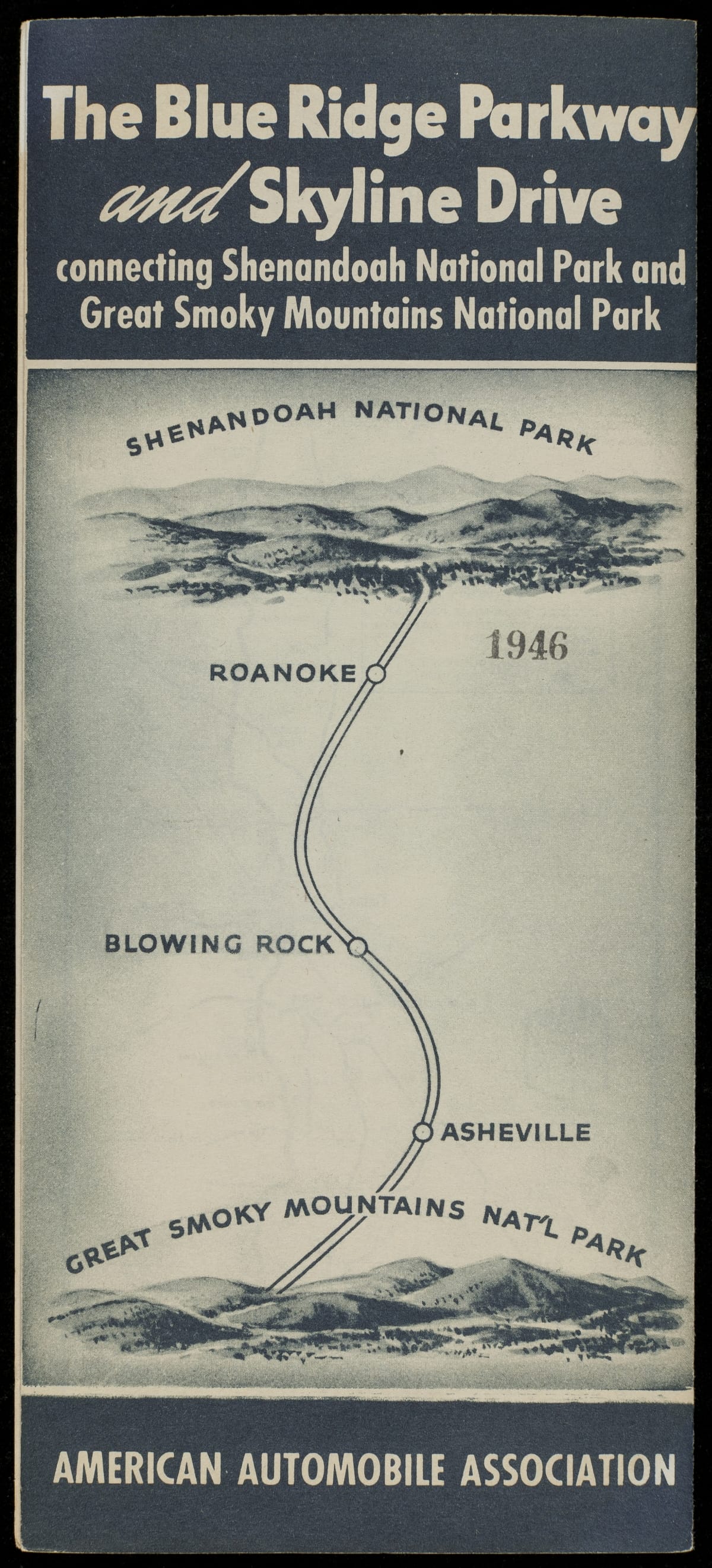
- "Blue Ridge Parkway and Skyline Drive," 1946 - The Blue Ridge Parkway links Shenandoah National Park in Virginia to the Great Smoky Mountains National Park in North Carolina. The 469-mile scenic Skyline Drive offers panoramic views of the surrounding countryside. The Blue Ridge Parkway, often referred to as "America's Favorite Drive," has been one of the most visited parks since 1946, when this brochure was printed.
- 1946
- Collections - Artifact
"Blue Ridge Parkway and Skyline Drive," 1946
The Blue Ridge Parkway links Shenandoah National Park in Virginia to the Great Smoky Mountains National Park in North Carolina. The 469-mile scenic Skyline Drive offers panoramic views of the surrounding countryside. The Blue Ridge Parkway, often referred to as "America's Favorite Drive," has been one of the most visited parks since 1946, when this brochure was printed.
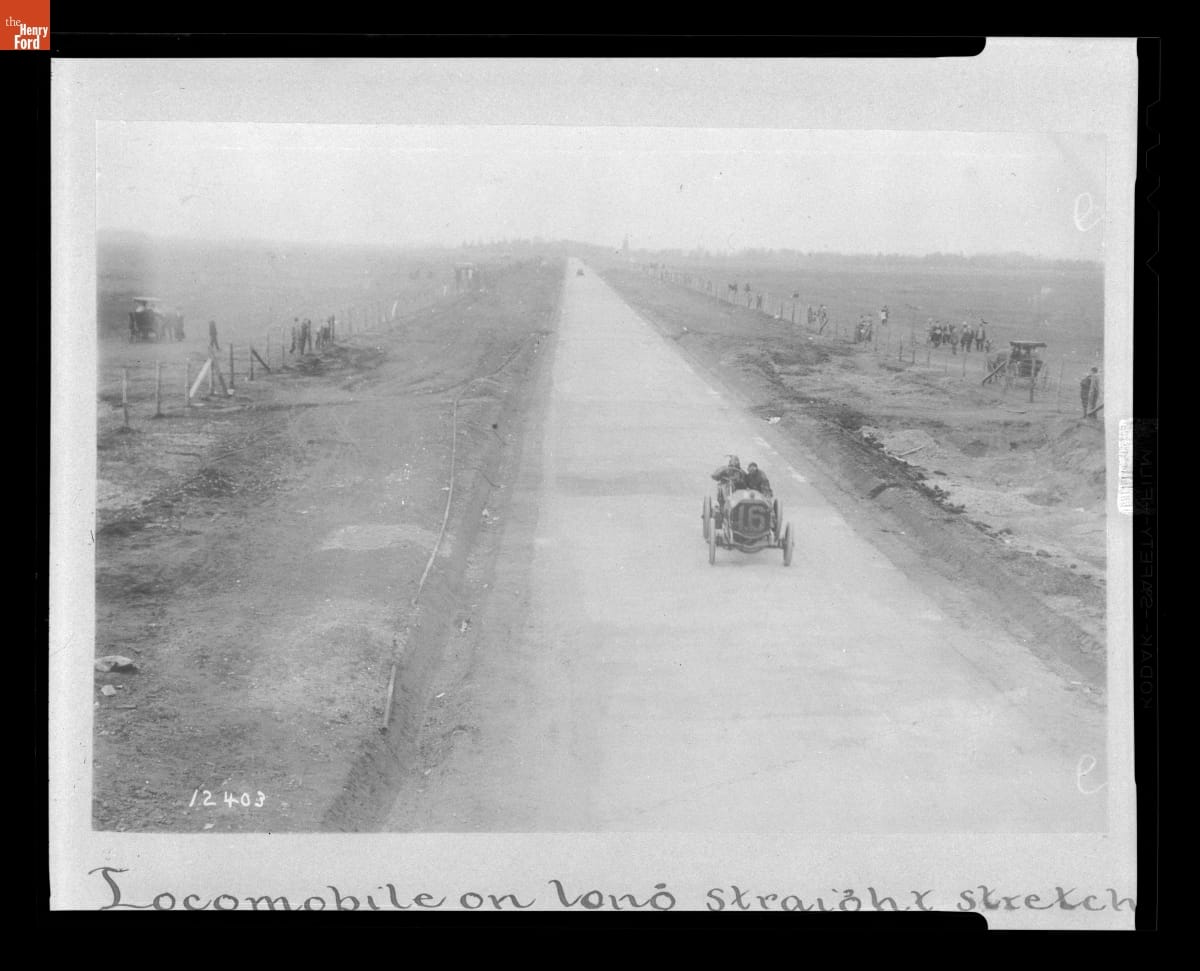
- 1906 Locomobile "Old 16" in Vanderbilt Cup Race, Long Island Parkway, October 24, 1908 - Driver George Robertson and riding mechanic Glenn Ethridge won the 1908 Vanderbilt Cup with a 1906 Locomobile. It was the first American-built car to win America's first great automobile race. The Locomobile competed while wearing number 16, and it's been known as "Old 16" ever since.
- October 24, 1908
- Collections - Artifact
1906 Locomobile "Old 16" in Vanderbilt Cup Race, Long Island Parkway, October 24, 1908
Driver George Robertson and riding mechanic Glenn Ethridge won the 1908 Vanderbilt Cup with a 1906 Locomobile. It was the first American-built car to win America's first great automobile race. The Locomobile competed while wearing number 16, and it's been known as "Old 16" ever since.
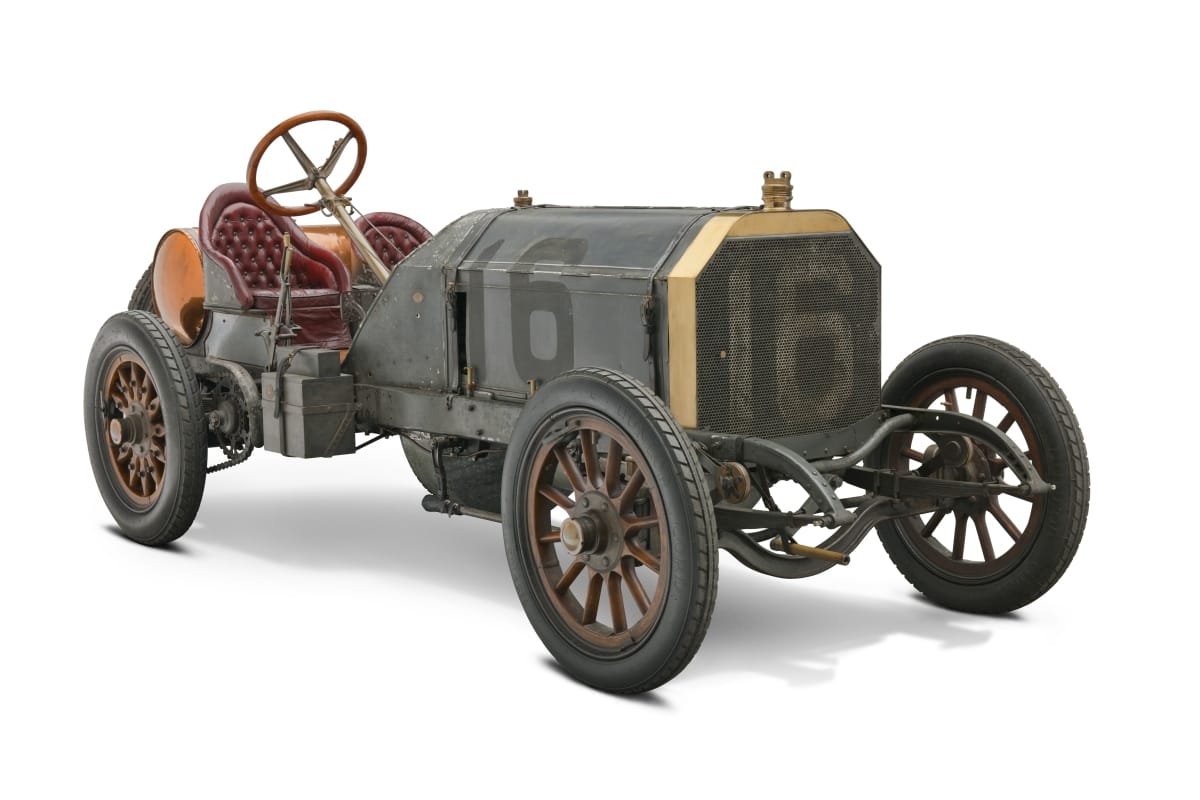
- 1906 Locomobile "Old 16" Race Car - In 1908, driver George Robertson and mechanician Glenn Ethridge took this car to victory in the Vanderbilt Cup, America's first great automobile race. It marked the first time an American-built car won a major international road-circuit race. The Locomobile competed while wearing number 16, and it's been known as "Old 16" ever since.
- 1906
- Collections - Artifact
1906 Locomobile "Old 16" Race Car
In 1908, driver George Robertson and mechanician Glenn Ethridge took this car to victory in the Vanderbilt Cup, America's first great automobile race. It marked the first time an American-built car won a major international road-circuit race. The Locomobile competed while wearing number 16, and it's been known as "Old 16" ever since.
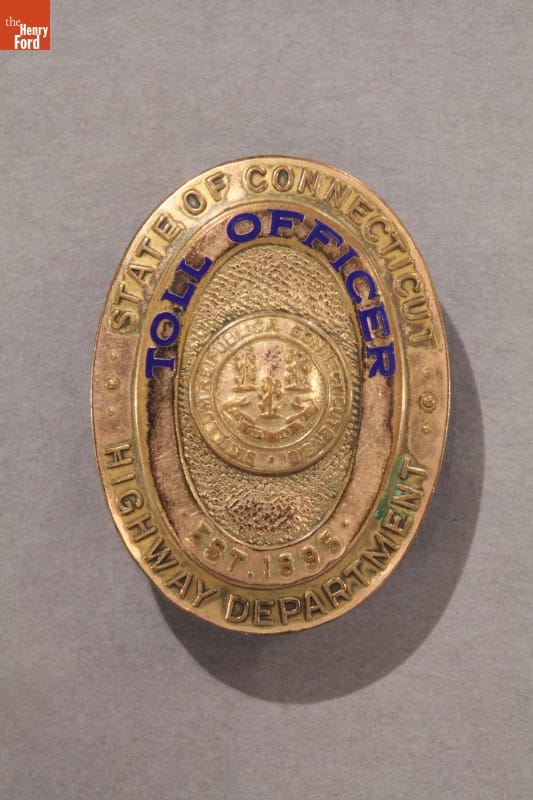
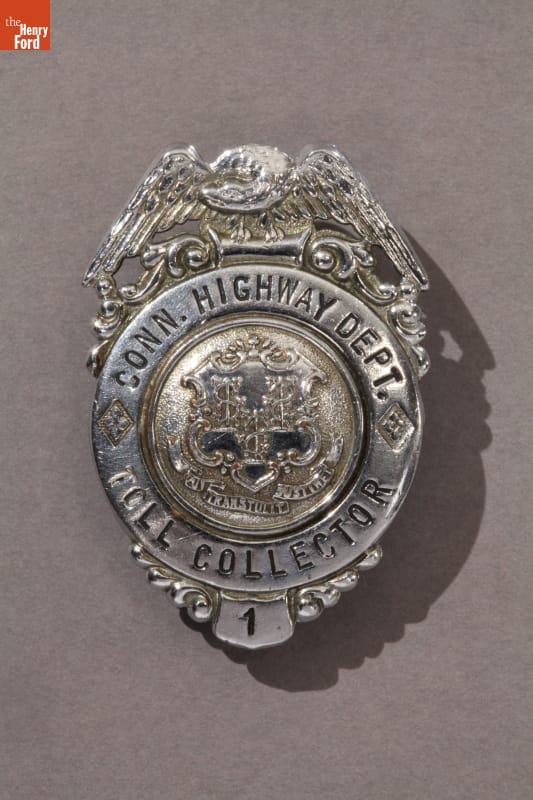
- Toll Collector's Badge, circa 1980 - This badge was worn by toll collectors on the Merritt Parkway, a 37 1/2-mile toll road in Fairfield County, Connecticut. The Parkway opened in 1938 and is one of the oldest parkways in the United States. Toll officials, stationed in toll plazas and booths, collected fees from drivers until 1988.
- 1895
- Collections - Artifact
Toll Collector's Badge, circa 1980
This badge was worn by toll collectors on the Merritt Parkway, a 37 1/2-mile toll road in Fairfield County, Connecticut. The Parkway opened in 1938 and is one of the oldest parkways in the United States. Toll officials, stationed in toll plazas and booths, collected fees from drivers until 1988.
- Toll Collector's Badge, circa 1980 - This badge was worn by toll collectors on the Merritt Parkway, a 37 1/2-mile toll road in Fairfield County, Connecticut. The Parkway opened in 1938 and is one of the oldest parkways in the United States. Toll officials, stationed in toll plazas and booths, collected fees from drivers until 1988.
- circa 1980
- Collections - Artifact
Toll Collector's Badge, circa 1980
This badge was worn by toll collectors on the Merritt Parkway, a 37 1/2-mile toll road in Fairfield County, Connecticut. The Parkway opened in 1938 and is one of the oldest parkways in the United States. Toll officials, stationed in toll plazas and booths, collected fees from drivers until 1988.
- Merritt Parkway Tollbooth, circa 1950 - Scenic, park-like roadways for carriages, horses, and bicycles led to experiments with urban "parkways" for automobiles. But these roads, intended for pleasure driving, were soon dominated by suburban commuters. One such road was the Merritt Parkway, created in the 1930s to relieve traffic congestion on busy U.S. Route 1 between the New York state line and Milford, Connecticut.

- circa 1950
- Collections - Artifact
Merritt Parkway Tollbooth, circa 1950
Scenic, park-like roadways for carriages, horses, and bicycles led to experiments with urban "parkways" for automobiles. But these roads, intended for pleasure driving, were soon dominated by suburban commuters. One such road was the Merritt Parkway, created in the 1930s to relieve traffic congestion on busy U.S. Route 1 between the New York state line and Milford, Connecticut.
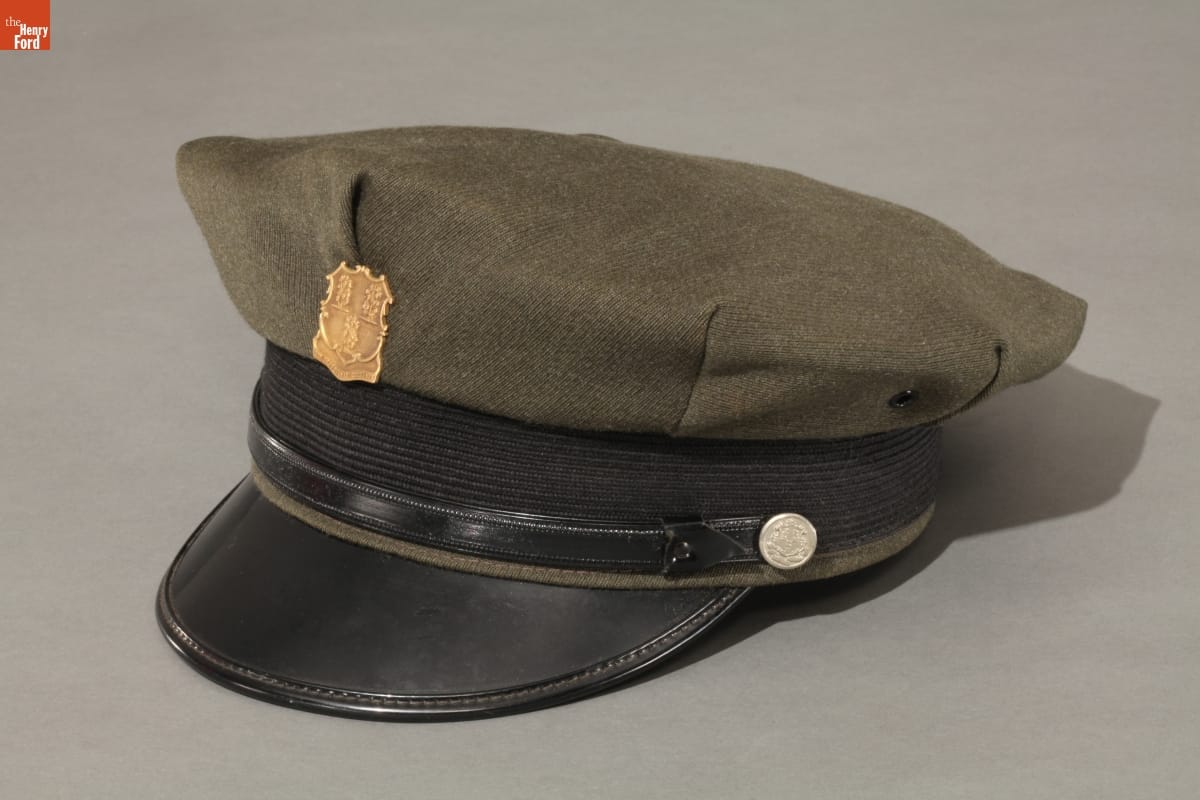
- Toll Collector's Hat, circa 1980 - Scenic, park-like roads designed for carriage drivers, horseback riders, and bicyclists led to the idea of pastoral urban "parkways" for motorists. One of these was the 37 1/2-mile, controlled-access Merritt Parkway, created to ease commuter congestion between the New York State line and Milford, Connecticut. Tolls were charged from the Merritt Parkway's opening in 1938 until 1988.
- circa 1980
- Collections - Artifact
Toll Collector's Hat, circa 1980
Scenic, park-like roads designed for carriage drivers, horseback riders, and bicyclists led to the idea of pastoral urban "parkways" for motorists. One of these was the 37 1/2-mile, controlled-access Merritt Parkway, created to ease commuter congestion between the New York State line and Milford, Connecticut. Tolls were charged from the Merritt Parkway's opening in 1938 until 1988.
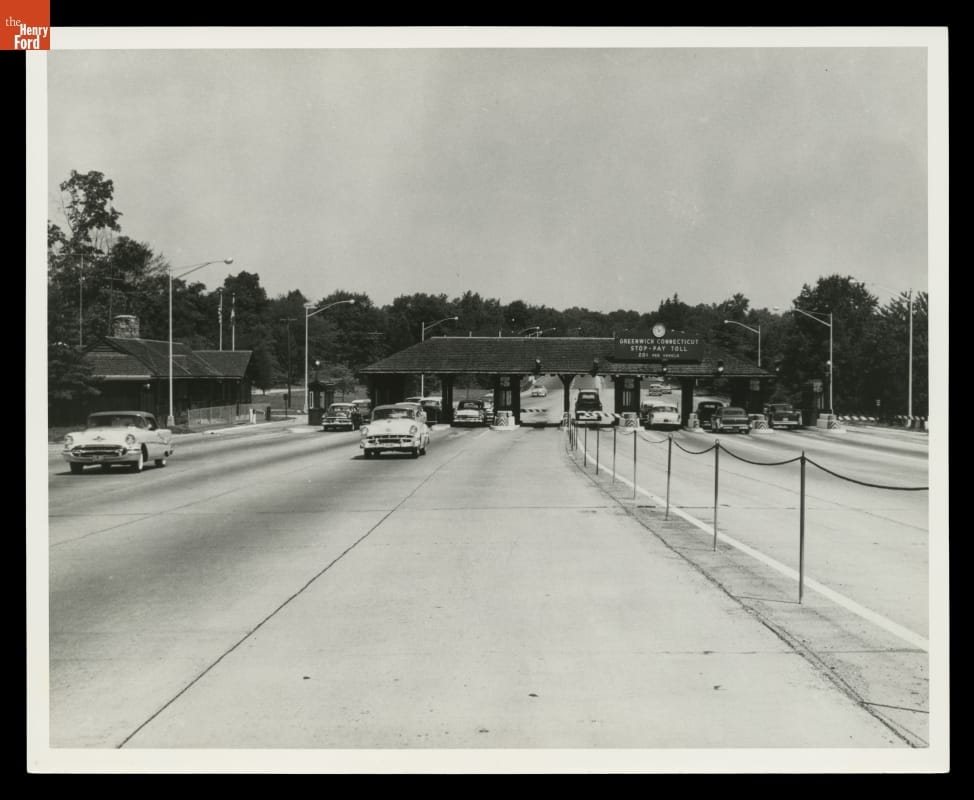
- Tollbooths on Merritt Parkway, Greenwich, Connecticut, 1960-1969 - This photograph, taken about 1958, shows the Greenwich Toll Plaza along the Merritt Parkway in Connecticut. Its rustic design was intended to blend with the scenery. The Henry Ford acquired one of the outer tollbooths for our collection in 1988.
- 1960-1969
- Collections - Artifact
Tollbooths on Merritt Parkway, Greenwich, Connecticut, 1960-1969
This photograph, taken about 1958, shows the Greenwich Toll Plaza along the Merritt Parkway in Connecticut. Its rustic design was intended to blend with the scenery. The Henry Ford acquired one of the outer tollbooths for our collection in 1988.
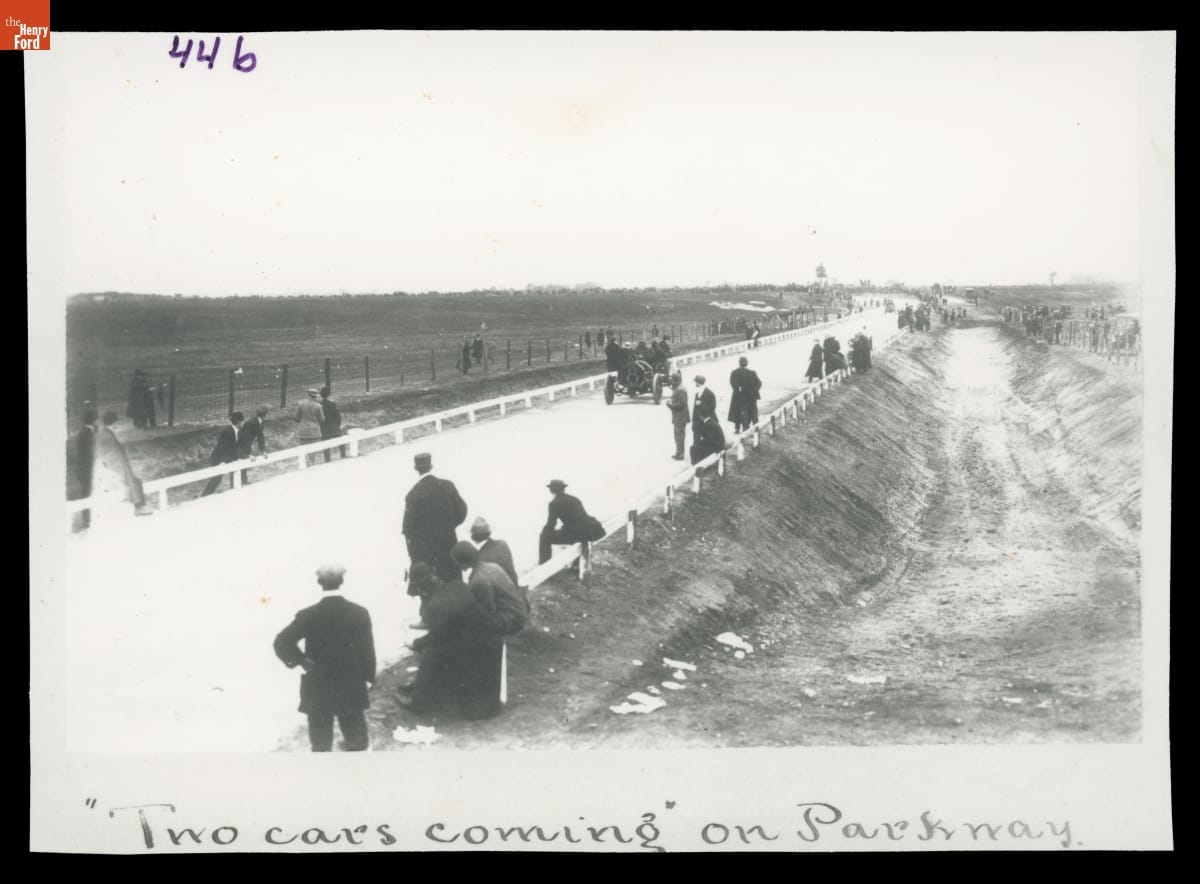
- "Two Cars Coming on Parkway," Vanderbilt Cup Race, Long Island, New York, 1908 - In 1908, portions of the Vanderbilt Cup race circuit were moved to the newly built Long Island Motor Parkway. The parkway -- one of the world's first paved, limited-access highways -- provided a safer route for racers and spectators alike. Nevertheless, some fans still insisted on getting too close to the action.
- October 24, 1908
- Collections - Artifact
"Two Cars Coming on Parkway," Vanderbilt Cup Race, Long Island, New York, 1908
In 1908, portions of the Vanderbilt Cup race circuit were moved to the newly built Long Island Motor Parkway. The parkway -- one of the world's first paved, limited-access highways -- provided a safer route for racers and spectators alike. Nevertheless, some fans still insisted on getting too close to the action.
- Tollbooths on Merritt Parkway, Greenwich, Connecticut, 1960-1969 - Scenic, park-like roads designed for carriage drivers, horseback riders, and bicyclists led to the idea of pastoral urban "parkways" for motorists. One of these was the 37 1/2-mile, controlled-access Merritt Parkway, created to ease commuter congestion between the New York State line and Milford, Connecticut. Tolls were charged from the Merritt Parkway's opening in 1938 until 1988.
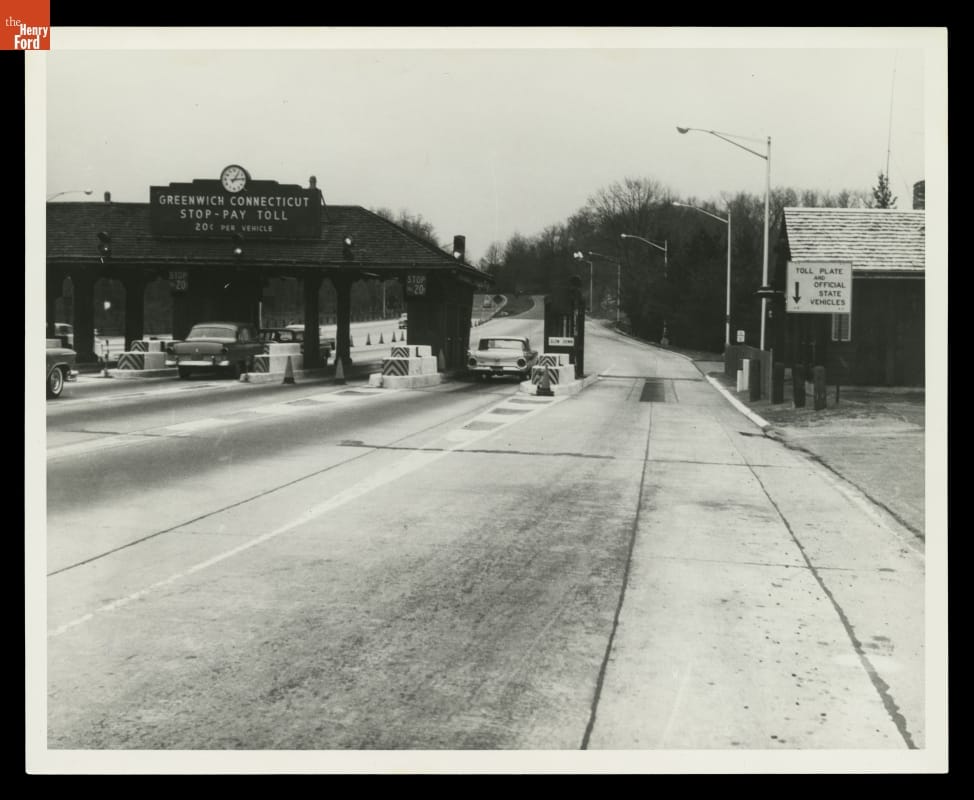
- 1960-1969
- Collections - Artifact
Tollbooths on Merritt Parkway, Greenwich, Connecticut, 1960-1969
Scenic, park-like roads designed for carriage drivers, horseback riders, and bicyclists led to the idea of pastoral urban "parkways" for motorists. One of these was the 37 1/2-mile, controlled-access Merritt Parkway, created to ease commuter congestion between the New York State line and Milford, Connecticut. Tolls were charged from the Merritt Parkway's opening in 1938 until 1988.