
Merritt Parkway Tollbooth, circa 1950
THF79062 / Merritt Parkway Tollbooth, circa 1950
01
Artifact Overview
Scenic, park-like roadways for carriages, horses, and bicycles led to experiments with urban "parkways" for automobiles. But these roads, intended for pleasure driving, were soon dominated by suburban commuters. One such road was the Merritt Parkway, created in the 1930s to relieve traffic congestion on busy U.S. Route 1 between the New York state line and Milford, Connecticut.
Artifact Details
Artifact
Tollbooth
Date Made
circa 1950
Place of Creation
Location
at Henry Ford Museum in Driving America
Object ID
88.238.1.1
Credit
From the Collections of The Henry Ford. Gift of Blakeslee Arpaia Chapman, Inc.
Material
Wood (Plant Material)
Glass (Material)
Color
Green
Dimensions
Height: 9 ft
Width: 3.5 ft
Length: 8.3 ft
Keywords |
|---|
02
Related Content
 Set
SetFunding the Interstate Highway System
- 25 Artifacts
The 48,000-mile Interstate Highway System connects all corners of the United States with high-speed, limited-access roadways. Funding for new construction and ongoing maintenance comes from taxes on vehicles, tires, and -- mostly -- fuel. But as cars get more efficient and drivers shift to hybrids and electrics, gas tax revenues get smaller. Highway funds shrink as the costs of caring for an aging system grow.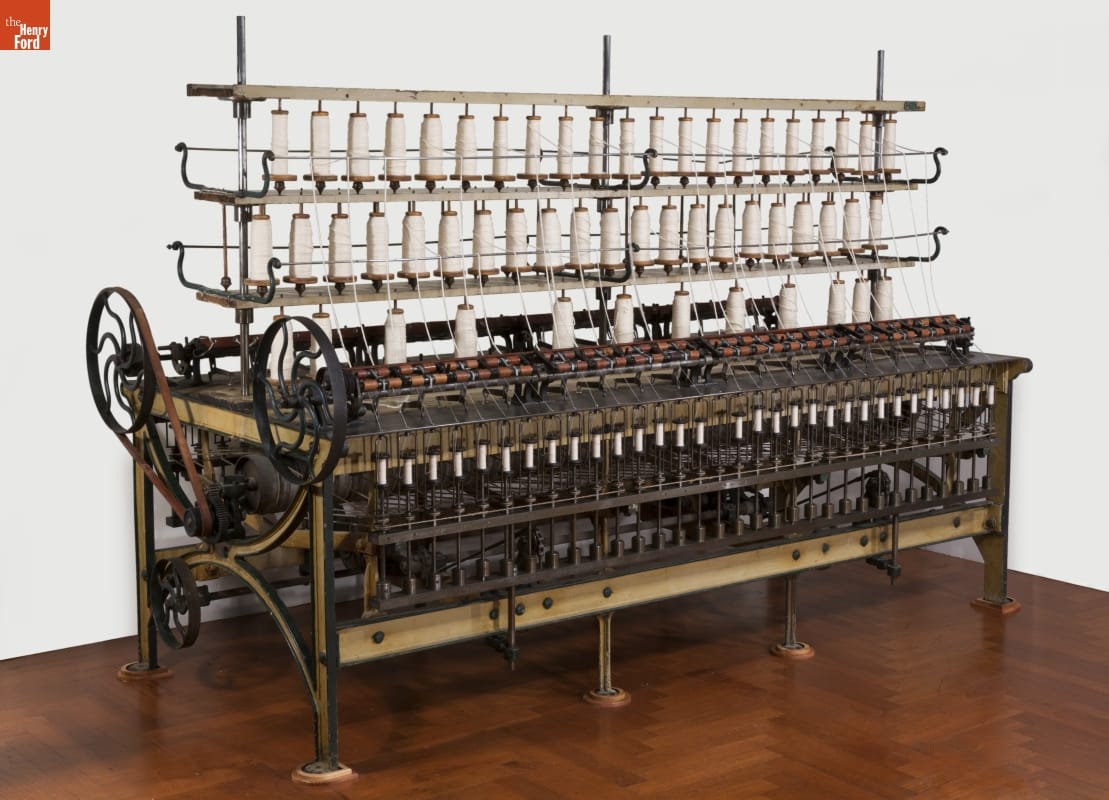 Set
SetFeatured on The Henry Ford's Innovation Nation: Season 8
- 26 Artifacts
Spinning frames spin cotton fiber into yarn and then wind it onto a bobbin. This throstle spinning frame could simultaneously spin 64 strands of yarn. (Throstle -- an old name for a song thrush -- refers to the bird-like sounds the machine made.) Machines like this helped produce the large quantities of yarn that growing industrial weaving operations needed in the early and mid-1800s.