
Search
- Letter from Richard Trotter to Edsel Ford, Offering to Sell Drawings, March 20, 1924 -
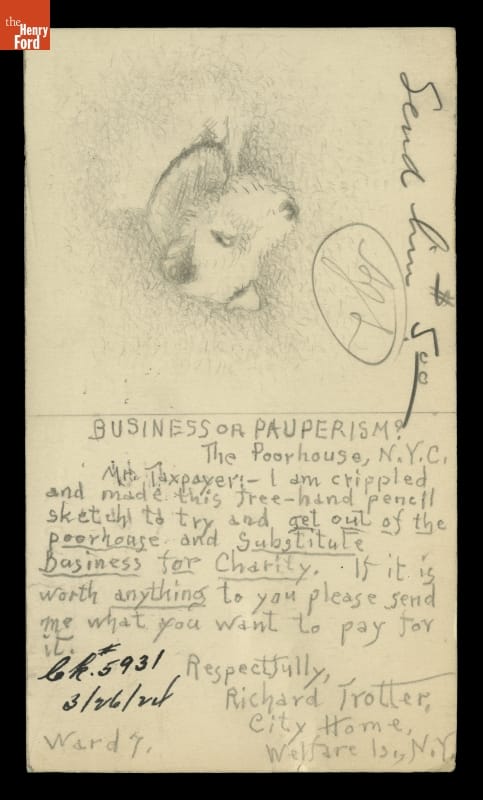
- March 20, 1924
- Collections - Artifact
Letter from Richard Trotter to Edsel Ford, Offering to Sell Drawings, March 20, 1924
- Letter from Richard Trotter to Edsel Ford, Offering to Sell Drawings, December 18, 1924 -
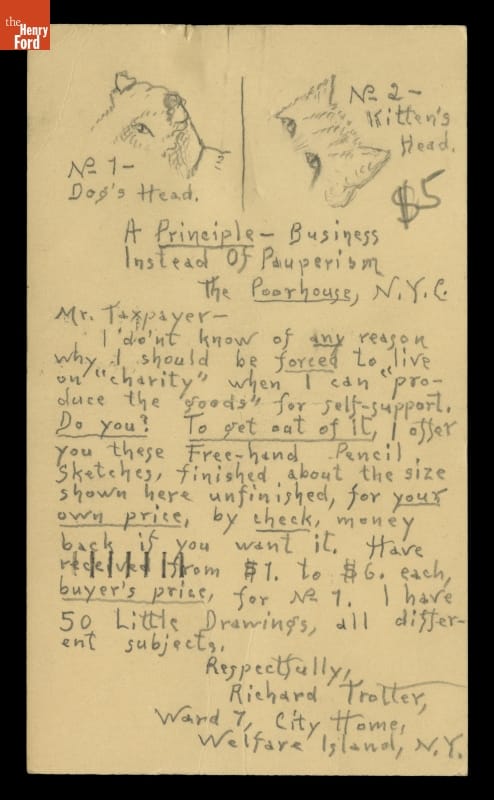
- December 18, 1924
- Collections - Artifact
Letter from Richard Trotter to Edsel Ford, Offering to Sell Drawings, December 18, 1924
- "Jerry O'Mahony, Inc." Mechanical Pencil, 1945-1949 -
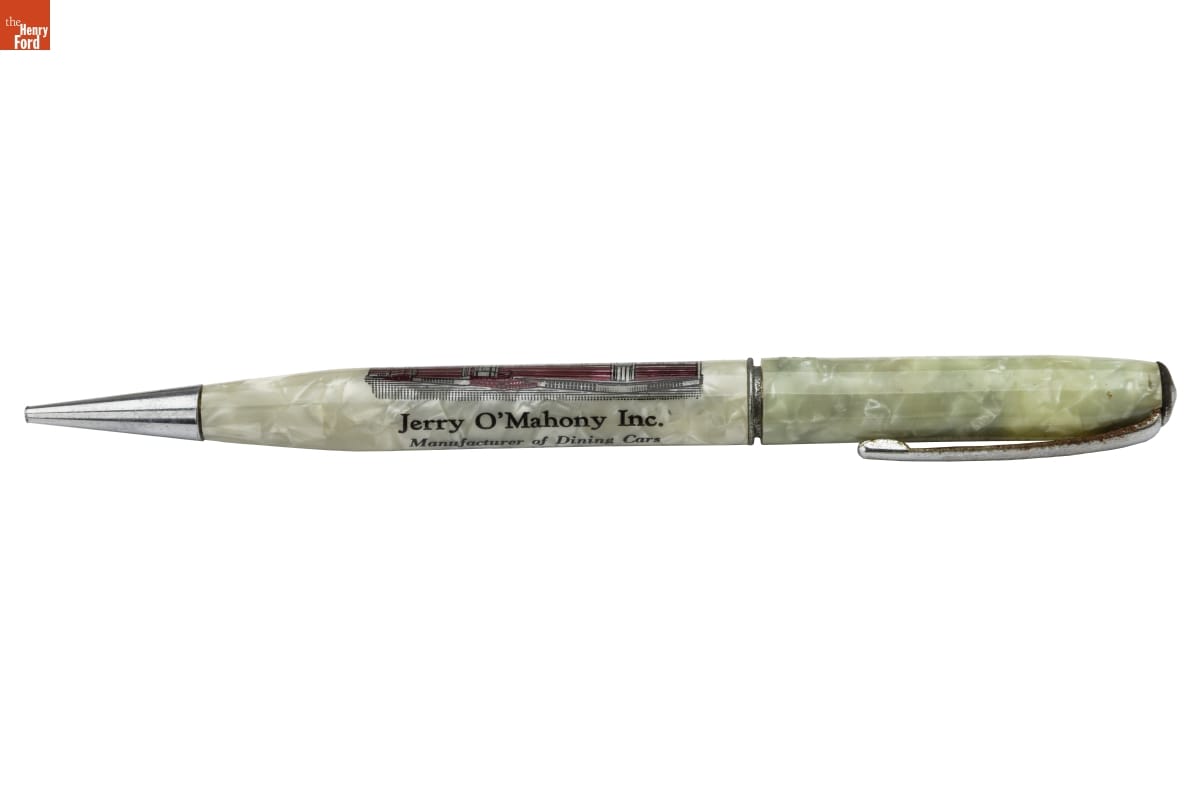
- 1945-1949
- Collections - Artifact
"Jerry O'Mahony, Inc." Mechanical Pencil, 1945-1949
- Hallmark "Packed with Memories Photo Holder" Christmas Ornament, 1995 - Already known for greeting cards, Hallmark introduced a line of Christmas ornaments in 1973. The company's annual release of an increasing array of ornaments revolutionized Christmas decorating, appealing to customers' interest in marking memories and milestones as well as expressing one's personality and unique tastes.
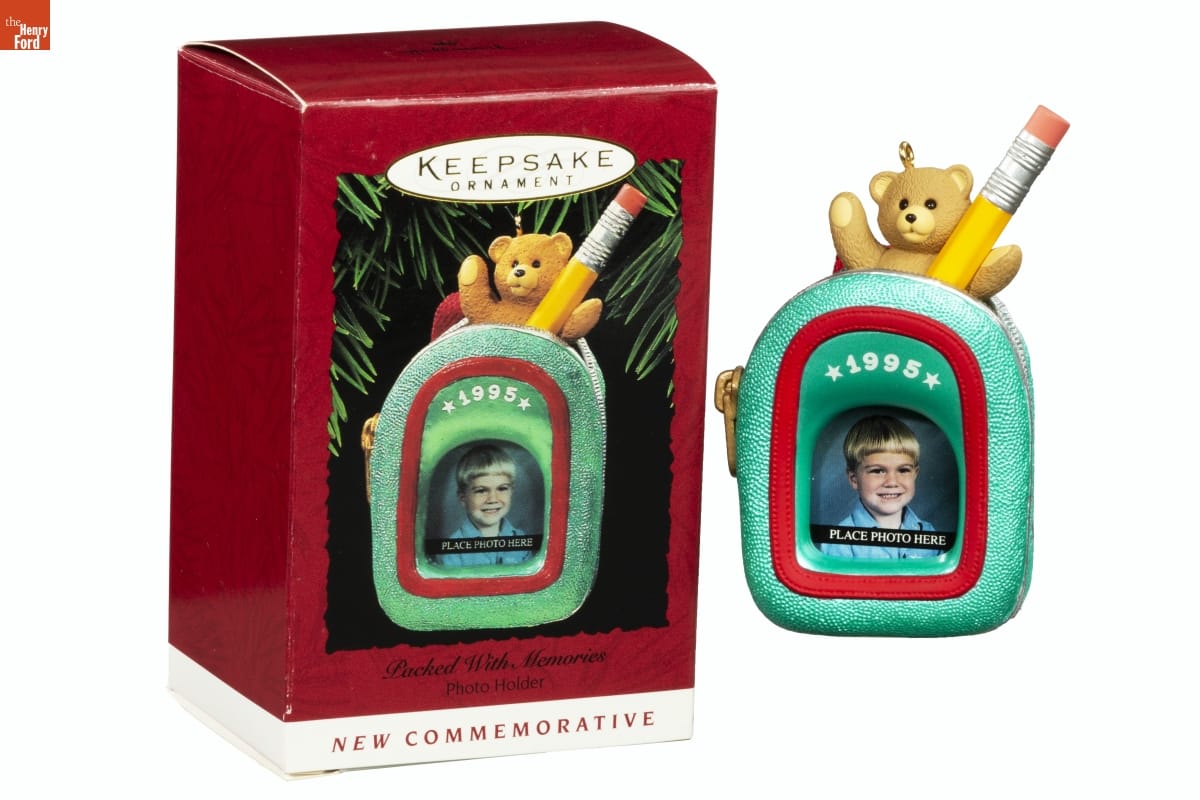
- 1995
- Collections - Artifact
Hallmark "Packed with Memories Photo Holder" Christmas Ornament, 1995
Already known for greeting cards, Hallmark introduced a line of Christmas ornaments in 1973. The company's annual release of an increasing array of ornaments revolutionized Christmas decorating, appealing to customers' interest in marking memories and milestones as well as expressing one's personality and unique tastes.
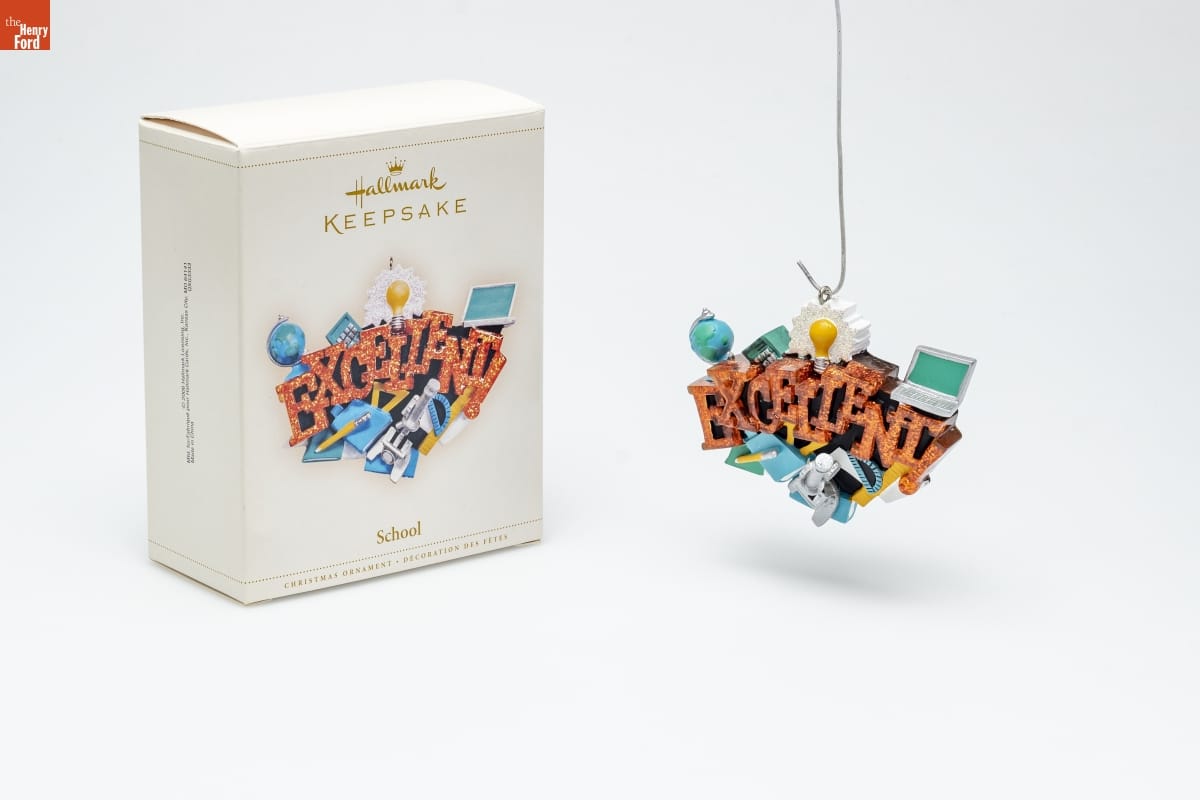
- Hallmark "School" Christmas Ornament, 2006 - Already known for greeting cards, Hallmark introduced a line of Christmas ornaments in 1973. The company's annual release of an increasing array of ornaments revolutionized Christmas decorating, appealing to customers' interest in marking memories and milestones as well as expressing one's personality and unique tastes.
- 2006
- Collections - Artifact
Hallmark "School" Christmas Ornament, 2006
Already known for greeting cards, Hallmark introduced a line of Christmas ornaments in 1973. The company's annual release of an increasing array of ornaments revolutionized Christmas decorating, appealing to customers' interest in marking memories and milestones as well as expressing one's personality and unique tastes.
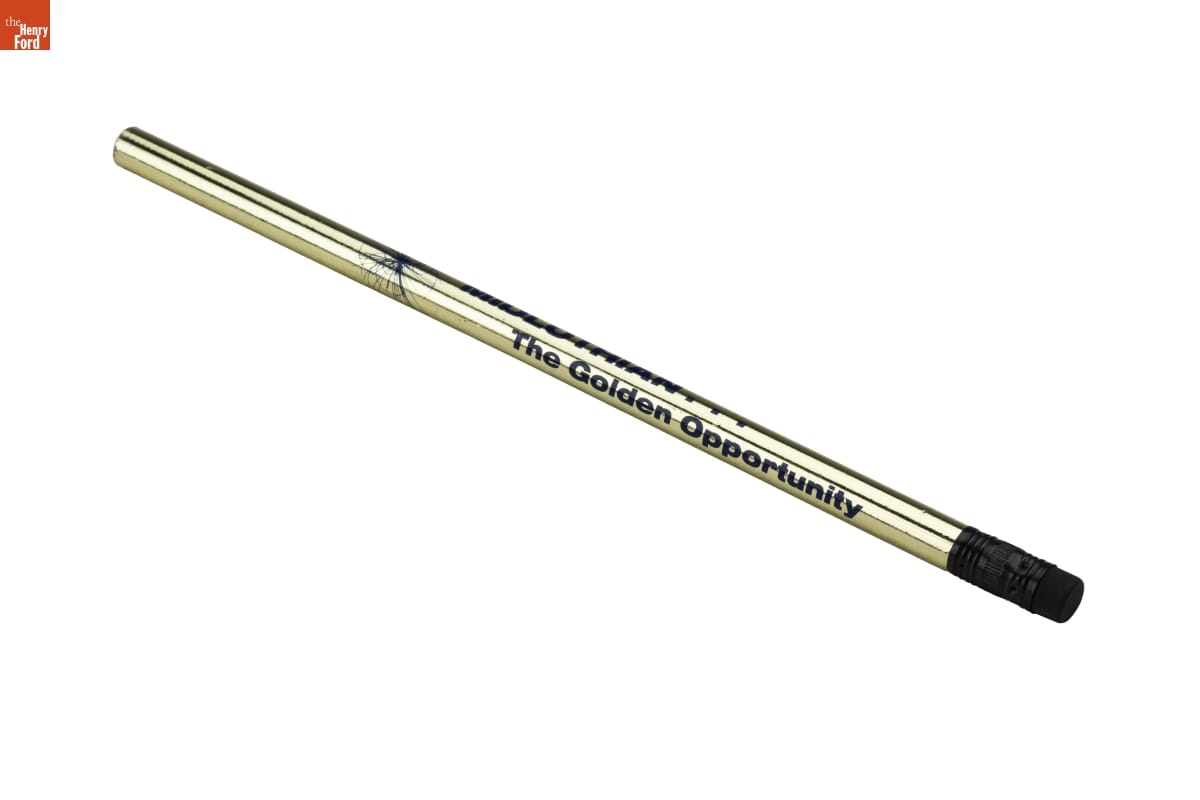
- "Midlothian...The Golden Opportunity" Pencil, 1987-1993 - In the 1980s, several states vied to become the home of the Superconducting Super Collider (SSC), intended as the world's largest particle accelerator. The SSC would have enabled scientists to study the basic particles from which all matter is formed. Planners factored in public support, both positive and negative, before selecting Texas. The project, however, was canceled in 1993.
- 1987-1993
- Collections - Artifact
"Midlothian...The Golden Opportunity" Pencil, 1987-1993
In the 1980s, several states vied to become the home of the Superconducting Super Collider (SSC), intended as the world's largest particle accelerator. The SSC would have enabled scientists to study the basic particles from which all matter is formed. Planners factored in public support, both positive and negative, before selecting Texas. The project, however, was canceled in 1993.
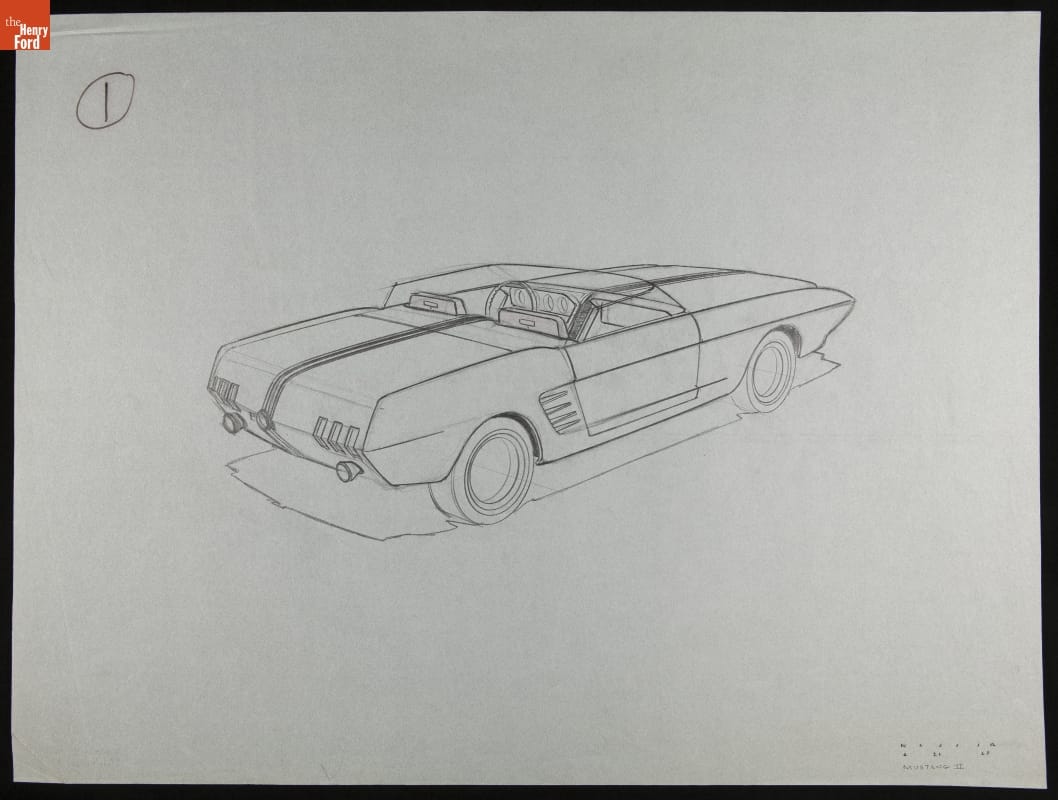
- John Najjar Sketch for 1963 Ford Mustang II Concept Car - When the two-seat Mustang I concept car caused so much excitement in 1962, Ford worried that buyers might be disappointed in the four-seat production Mustang already in development. The company built the four-seat Mustang II concept car in 1963 to prepare customers for the general shape and look of the production car. It worked -- few complained about the 1965 Mustang.
- April 21, 1963
- Collections - Artifact
John Najjar Sketch for 1963 Ford Mustang II Concept Car
When the two-seat Mustang I concept car caused so much excitement in 1962, Ford worried that buyers might be disappointed in the four-seat production Mustang already in development. The company built the four-seat Mustang II concept car in 1963 to prepare customers for the general shape and look of the production car. It worked -- few complained about the 1965 Mustang.
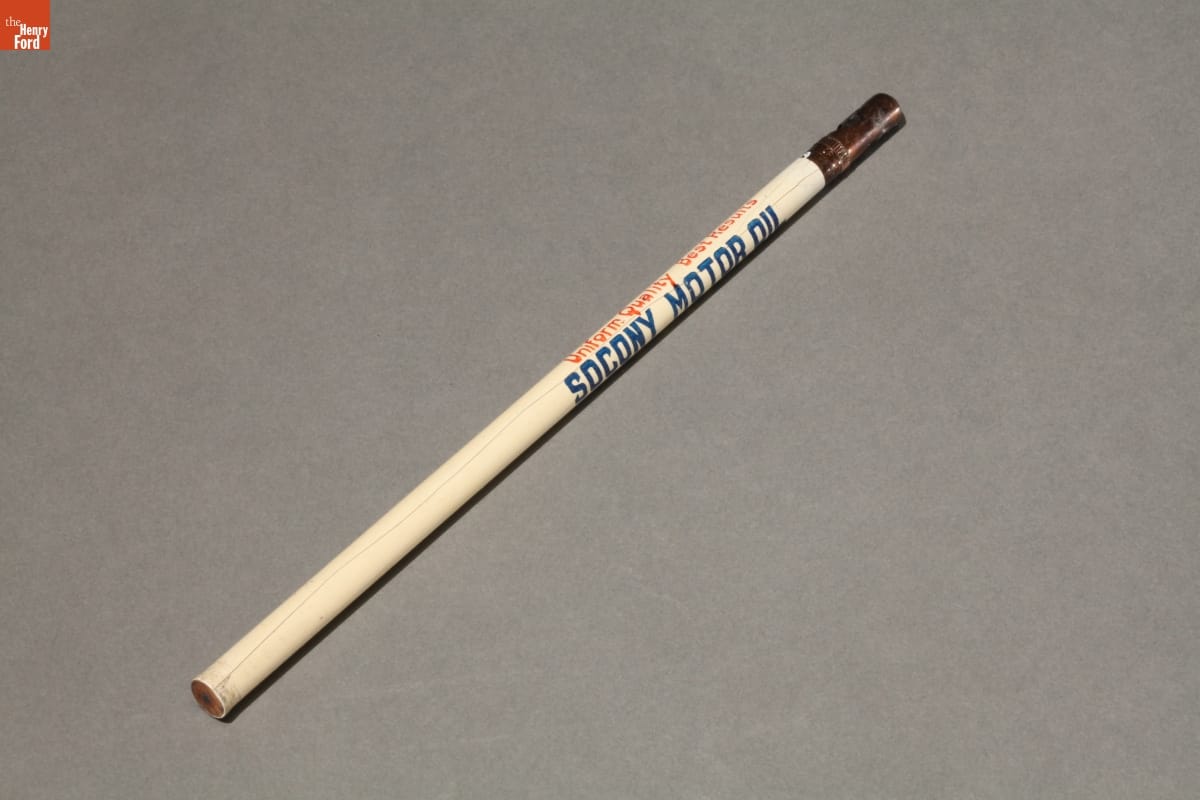
- Standard Oil Company of New York Pencil, 1919-1930 - The Standard Oil Company of New York (Socony) gave away this pencil during the 1920s. Users would be reminded of the company and its products -- its "Uniform Quality [and] Best Results" -- every time they used the pencil.
- 1919-1930
- Collections - Artifact
Standard Oil Company of New York Pencil, 1919-1930
The Standard Oil Company of New York (Socony) gave away this pencil during the 1920s. Users would be reminded of the company and its products -- its "Uniform Quality [and] Best Results" -- every time they used the pencil.
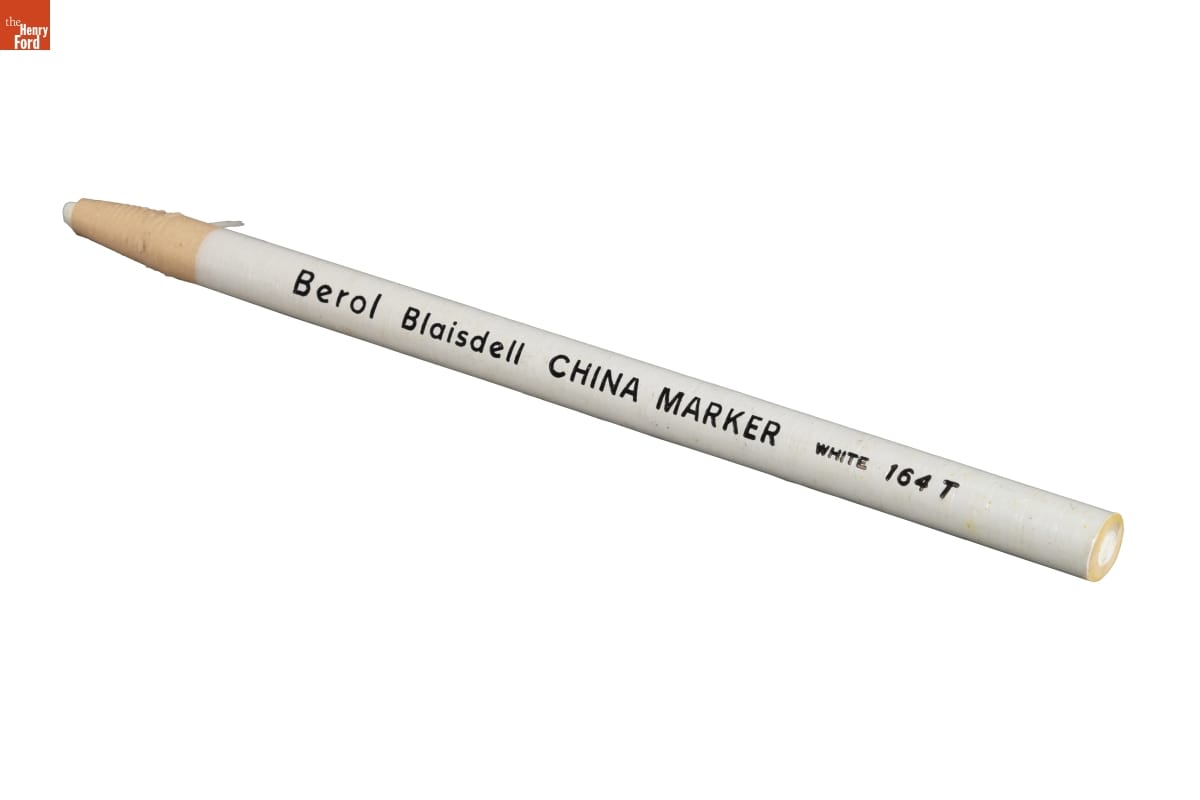
- Blaisdell Grease Pencil, Used by Lillian F. Schwartz - Lillian Schwartz is a pioneer of computer-generated art. From 1969-2002, she was a "resident visitor" at Bell Laboratories, producing groundbreaking films, videos, and multimedia works. The Schwartz Collection spans Lillian's childhood into her late career, documenting an expansive mindset, mastery over traditional and experimental mediums alike--and above all--an ability to create inspirational connections between science, art, and technology.
- Collections - Artifact
Blaisdell Grease Pencil, Used by Lillian F. Schwartz
Lillian Schwartz is a pioneer of computer-generated art. From 1969-2002, she was a "resident visitor" at Bell Laboratories, producing groundbreaking films, videos, and multimedia works. The Schwartz Collection spans Lillian's childhood into her late career, documenting an expansive mindset, mastery over traditional and experimental mediums alike--and above all--an ability to create inspirational connections between science, art, and technology.
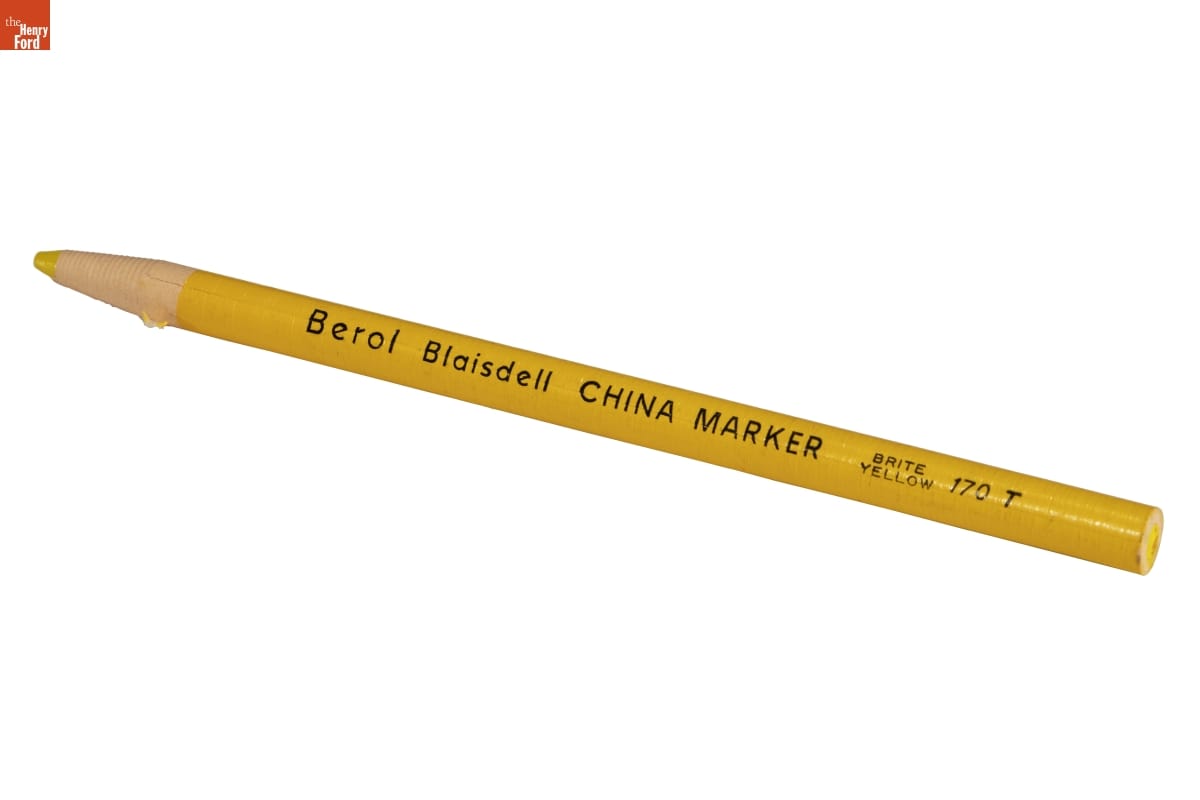
- Blaisdell Grease Pencil, Used by Lillian F. Schwartz - Lillian Schwartz is a pioneer of computer-generated art. From 1969-2002, she was a "resident visitor" at Bell Laboratories, producing groundbreaking films, videos, and multimedia works. The Schwartz Collection spans Lillian's childhood into her late career, documenting an expansive mindset, mastery over traditional and experimental mediums alike--and above all--an ability to create inspirational connections between science, art, and technology.
- Collections - Artifact
Blaisdell Grease Pencil, Used by Lillian F. Schwartz
Lillian Schwartz is a pioneer of computer-generated art. From 1969-2002, she was a "resident visitor" at Bell Laboratories, producing groundbreaking films, videos, and multimedia works. The Schwartz Collection spans Lillian's childhood into her late career, documenting an expansive mindset, mastery over traditional and experimental mediums alike--and above all--an ability to create inspirational connections between science, art, and technology.