
Search
- Mourning Pendant, 1780-1800 - Before the 20th century, death came early and often. One way people coped was to wear jewelry as memorials to their loved ones. Over the centuries, mourning jewelry followed the prevailing fashions. Shortly after independence, Americans favored illuminated, miniature brooches and pendants painted on ivory. These featured shapes derived from classical design, symbols such as urns and weeping women dressed as ancient Romans.
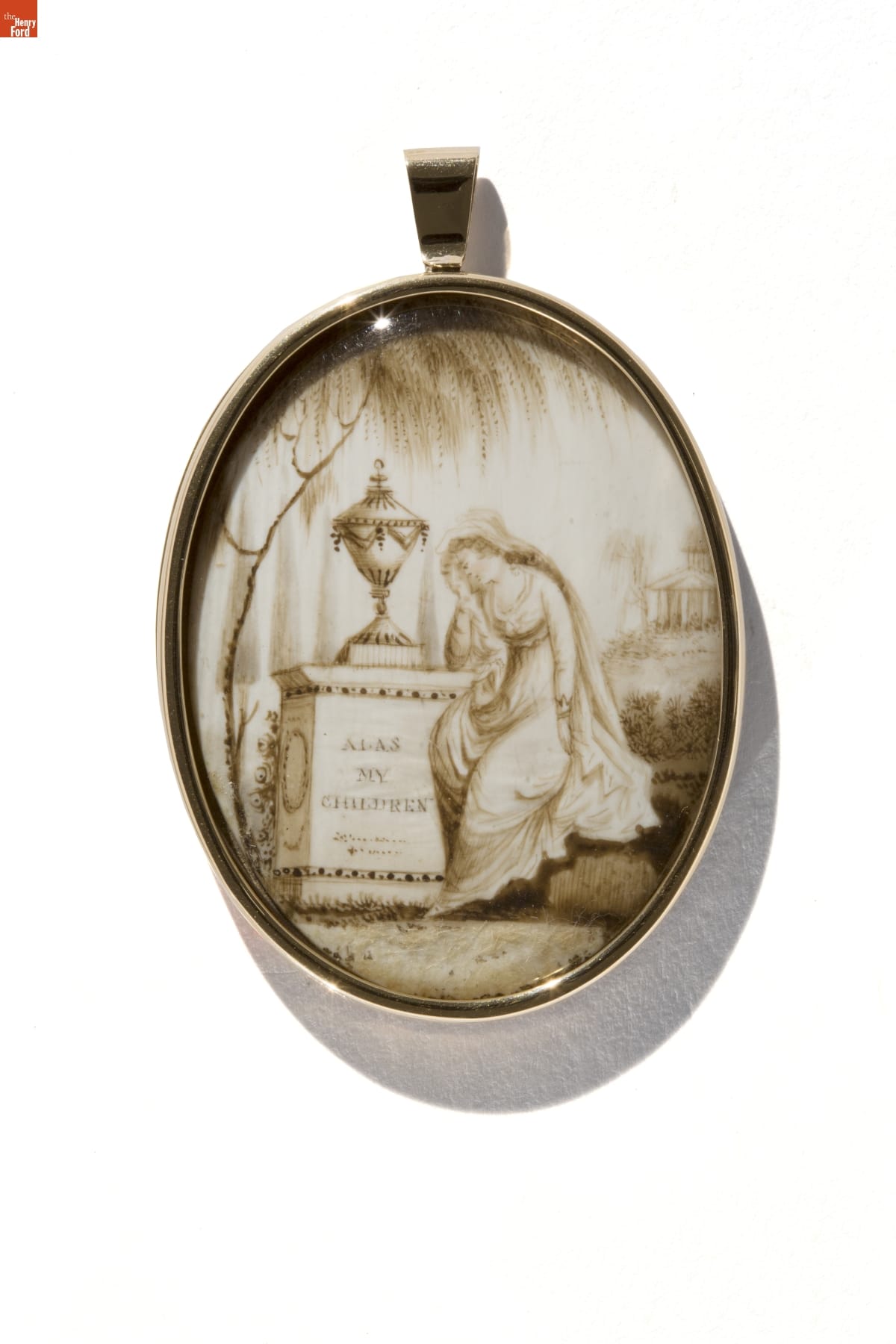
- 1780-1800
- Collections - Artifact
Mourning Pendant, 1780-1800
Before the 20th century, death came early and often. One way people coped was to wear jewelry as memorials to their loved ones. Over the centuries, mourning jewelry followed the prevailing fashions. Shortly after independence, Americans favored illuminated, miniature brooches and pendants painted on ivory. These featured shapes derived from classical design, symbols such as urns and weeping women dressed as ancient Romans.
- Mourning Pendant for William Oliphant, 1790 - Before the 20th century, death came early and often. One way people coped was to wear jewelry as memorials to their loved ones. Over the centuries, mourning jewelry followed the prevailing fashions. Shortly after independence, Americans favored illuminated, miniature brooches and pendants painted on ivory. These featured shapes derived from classical design, symbols such as urns and weeping women dressed as ancient Romans.
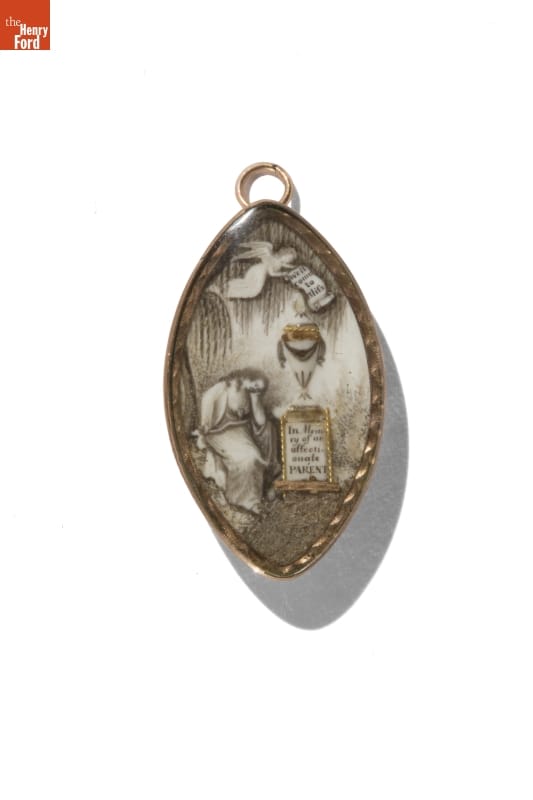
- April 10, 1790
- Collections - Artifact
Mourning Pendant for William Oliphant, 1790
Before the 20th century, death came early and often. One way people coped was to wear jewelry as memorials to their loved ones. Over the centuries, mourning jewelry followed the prevailing fashions. Shortly after independence, Americans favored illuminated, miniature brooches and pendants painted on ivory. These featured shapes derived from classical design, symbols such as urns and weeping women dressed as ancient Romans.
- Mourning Pendant, 1790-1810 - Before the 20th century, death came early and often. One way people coped was to wear jewelry as memorials to their loved ones. Over the centuries, mourning jewelry followed the prevailing fashions. Shortly after independence, Americans favored illuminated, miniature brooches and pendants painted on ivory. These featured shapes derived from classical design, symbols such as urns and weeping women dressed as ancient Romans.
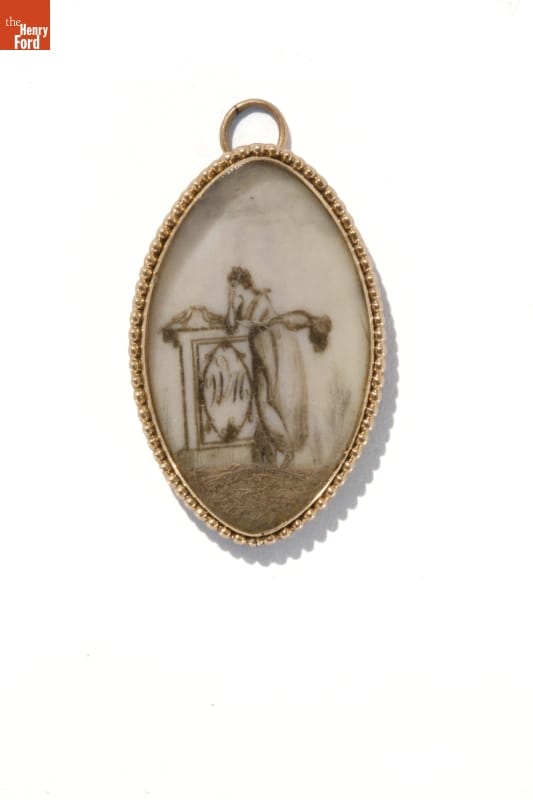
- 1790-1810
- Collections - Artifact
Mourning Pendant, 1790-1810
Before the 20th century, death came early and often. One way people coped was to wear jewelry as memorials to their loved ones. Over the centuries, mourning jewelry followed the prevailing fashions. Shortly after independence, Americans favored illuminated, miniature brooches and pendants painted on ivory. These featured shapes derived from classical design, symbols such as urns and weeping women dressed as ancient Romans.
- Mourning Pendant, 1790-1810 - Before the 20th century, death came early and often. One way people coped was to wear jewelry as memorials to their loved ones. Over the centuries, mourning jewelry followed the prevailing fashions. Shortly after independence, Americans favored illuminated, miniature brooches and pendants painted on ivory. These featured shapes derived from classical design, symbols such as urns and weeping women dressed as ancient Romans.
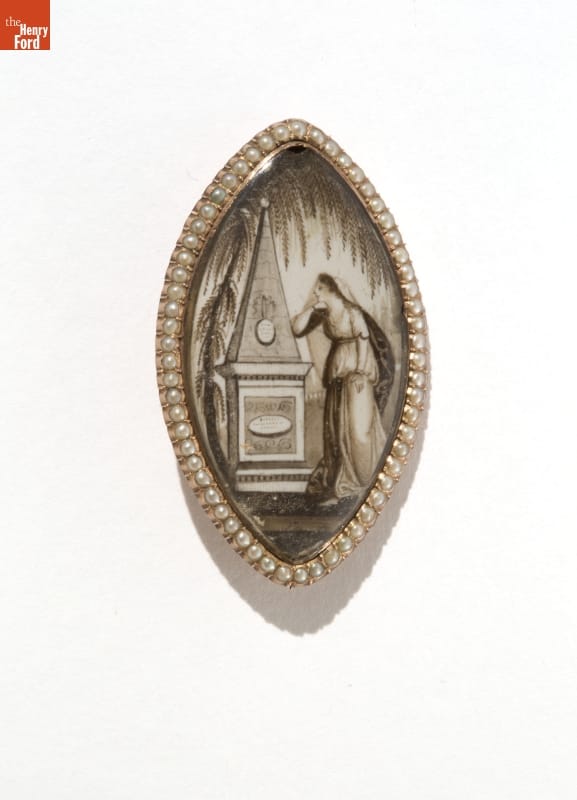
- 1790-1810
- Collections - Artifact
Mourning Pendant, 1790-1810
Before the 20th century, death came early and often. One way people coped was to wear jewelry as memorials to their loved ones. Over the centuries, mourning jewelry followed the prevailing fashions. Shortly after independence, Americans favored illuminated, miniature brooches and pendants painted on ivory. These featured shapes derived from classical design, symbols such as urns and weeping women dressed as ancient Romans.
- Mourning Pendant for Percival Barker, 1786 - Before the 20th century, death came early and often. One way people coped was to wear jewelry as memorials to their loved ones. Over the centuries, mourning jewelry followed the prevailing fashions. Shortly after independence, Americans favored illuminated, miniature brooches and pendants painted on ivory. These featured shapes derived from classical design, symbols such as urns and weeping women dressed as ancient Romans.
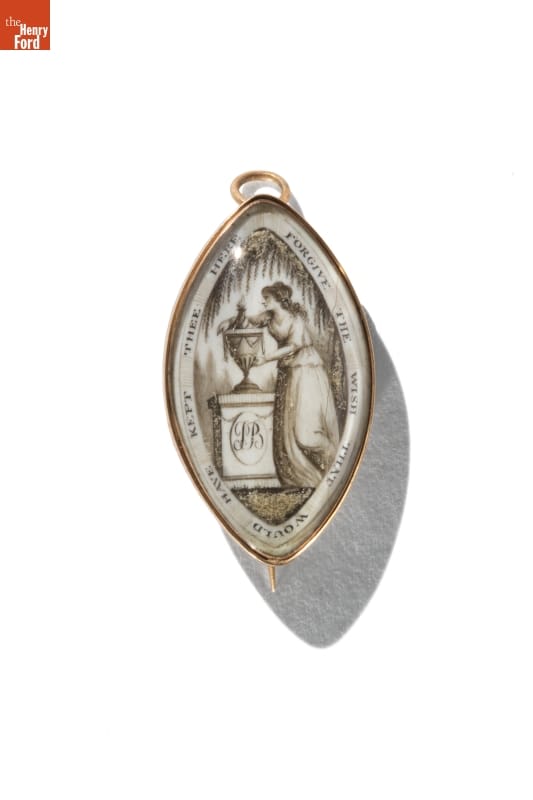
- June 26, 1786
- Collections - Artifact
Mourning Pendant for Percival Barker, 1786
Before the 20th century, death came early and often. One way people coped was to wear jewelry as memorials to their loved ones. Over the centuries, mourning jewelry followed the prevailing fashions. Shortly after independence, Americans favored illuminated, miniature brooches and pendants painted on ivory. These featured shapes derived from classical design, symbols such as urns and weeping women dressed as ancient Romans.
- Mourning Pendant, 1790-1810 - Before the 20th century, death came early and often. One way people coped was to wear jewelry as memorials to their loved ones. Over the centuries, mourning jewelry followed the prevailing fashions. Shortly after independence, Americans favored illuminated, miniature brooches and pendants painted on ivory. These featured shapes derived from classical design, symbols such as urns and weeping women dressed as ancient Romans.
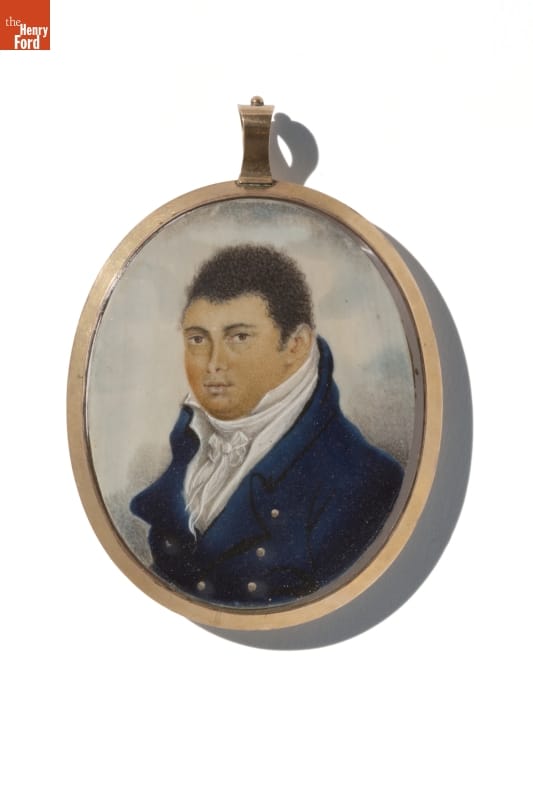
- 1790-1810
- Collections - Artifact
Mourning Pendant, 1790-1810
Before the 20th century, death came early and often. One way people coped was to wear jewelry as memorials to their loved ones. Over the centuries, mourning jewelry followed the prevailing fashions. Shortly after independence, Americans favored illuminated, miniature brooches and pendants painted on ivory. These featured shapes derived from classical design, symbols such as urns and weeping women dressed as ancient Romans.
- Mourning Pendant, 1783 - Before the 20th century, death came early and often. One way people coped was to wear jewelry as memorials to their loved ones. Over the centuries, mourning jewelry followed the prevailing fashions. Shortly after independence, Americans favored illuminated, miniature brooches and pendants painted on ivory. These featured shapes derived from classical design, symbols such as urns and weeping women dressed as ancient Romans.
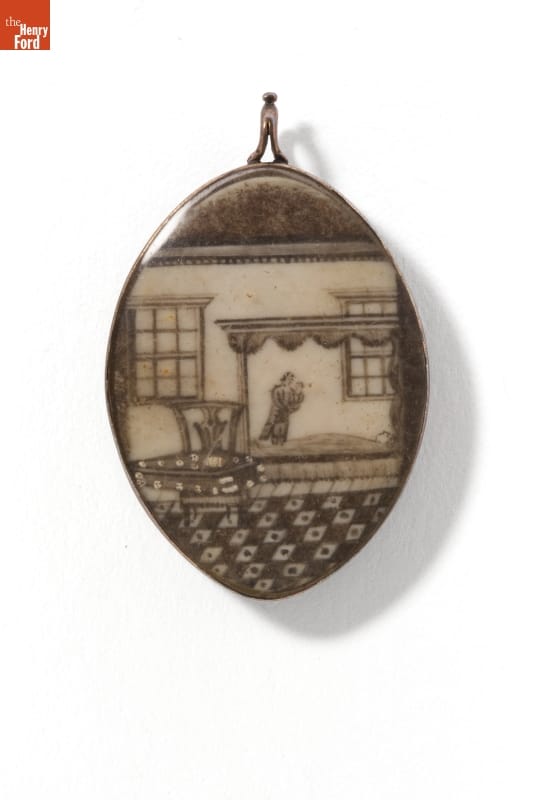
- 1783
- Collections - Artifact
Mourning Pendant, 1783
Before the 20th century, death came early and often. One way people coped was to wear jewelry as memorials to their loved ones. Over the centuries, mourning jewelry followed the prevailing fashions. Shortly after independence, Americans favored illuminated, miniature brooches and pendants painted on ivory. These featured shapes derived from classical design, symbols such as urns and weeping women dressed as ancient Romans.
- Centennial Exhibition Souvenir Pendant, 1876 - The first official World's Fair held in the United States celebrated the 100th anniversary of the signing of the Declaration of Independence. Around ten million people visited Philadelphia during the Centennial International Exhibition of 1876. Many returned home with mementos of the exposition, such as this souvenir pendant.
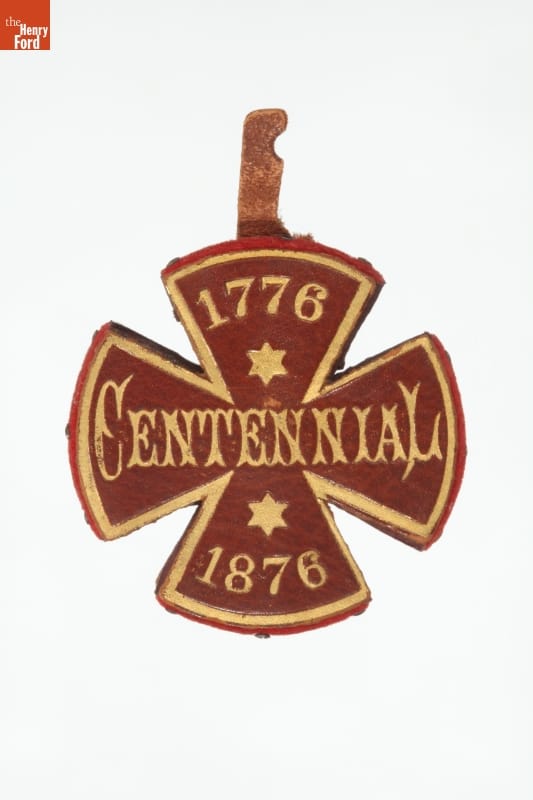
- 1876
- Collections - Artifact
Centennial Exhibition Souvenir Pendant, 1876
The first official World's Fair held in the United States celebrated the 100th anniversary of the signing of the Declaration of Independence. Around ten million people visited Philadelphia during the Centennial International Exhibition of 1876. Many returned home with mementos of the exposition, such as this souvenir pendant.
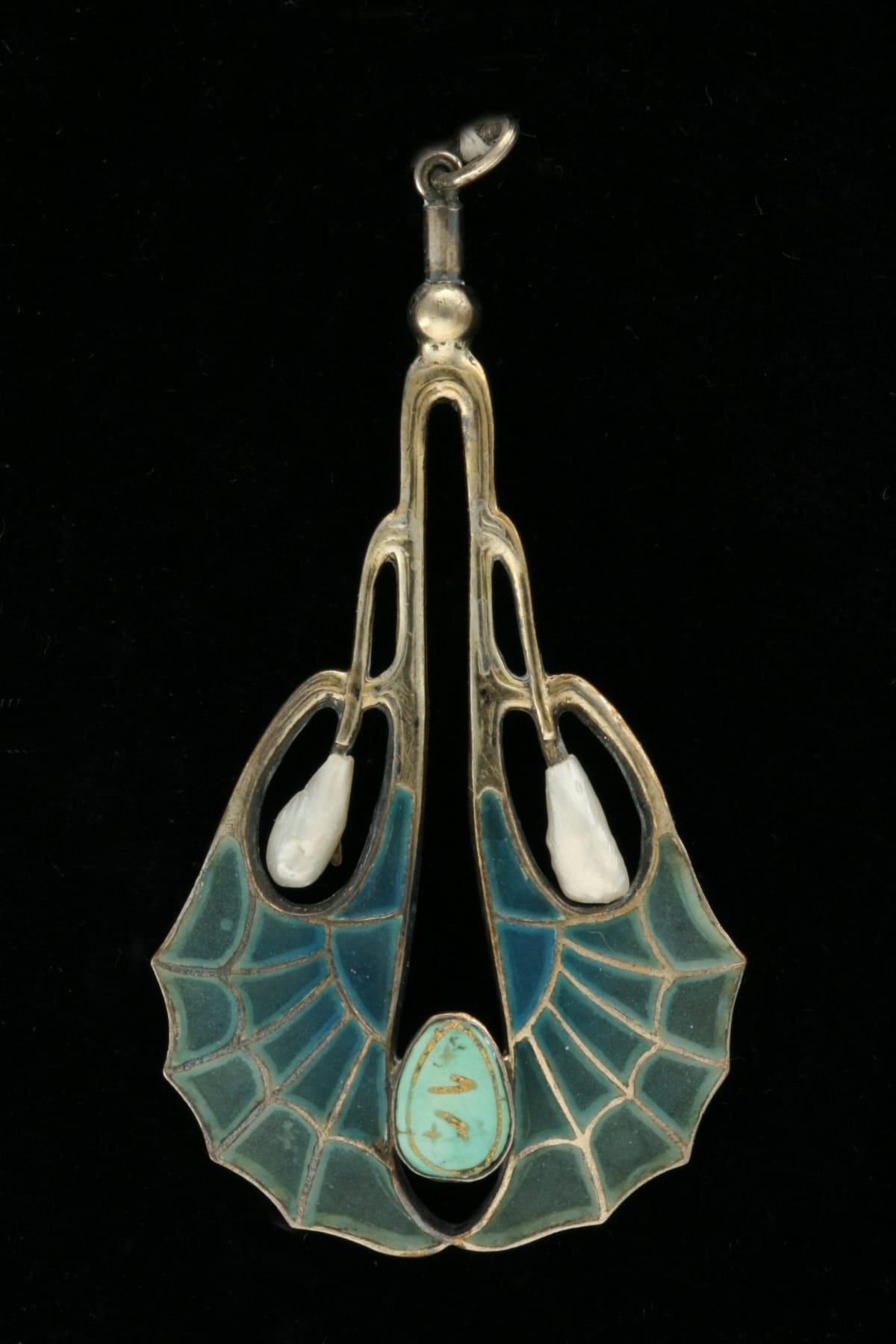
- Pendant, 1898-1903 - This elegant sterling pendant adorned the neck of a wealthy lady around 1900, when the Art Nouveau style was at its height. Emphasizing sinuous, organic lines and shapes, the Art Nouveau sought to create a modern aesthetic based on nature. The Art Nouveau was everywhere; this pendant was made in Germany for an international market.
- 1898-1903
- Collections - Artifact
Pendant, 1898-1903
This elegant sterling pendant adorned the neck of a wealthy lady around 1900, when the Art Nouveau style was at its height. Emphasizing sinuous, organic lines and shapes, the Art Nouveau sought to create a modern aesthetic based on nature. The Art Nouveau was everywhere; this pendant was made in Germany for an international market.
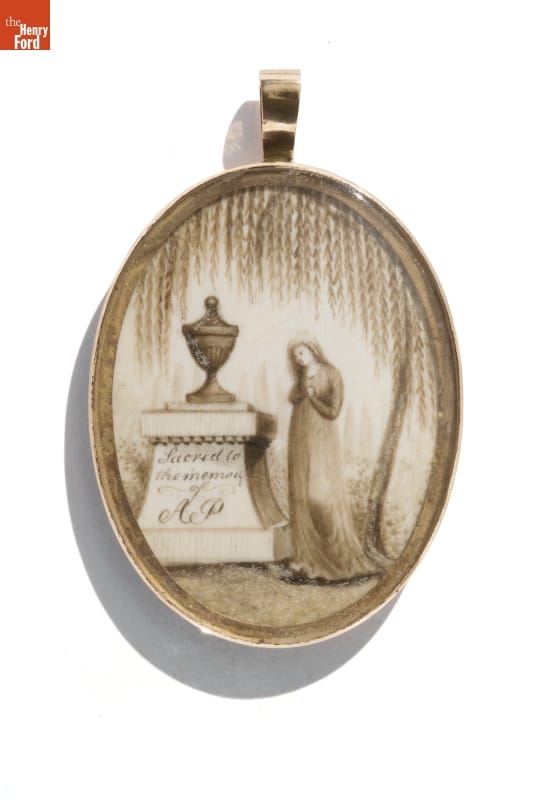
- Mourning Pendant, 1790-1810 - Before the 20th century, death came early and often. One way people coped was to wear jewelry as memorials to their loved ones. Over the centuries, mourning jewelry followed the prevailing fashions. Shortly after independence, Americans favored illuminated, miniature brooches and pendants painted on ivory. These featured shapes derived from classical design, symbols such as urns and weeping women dressed as ancient Romans.
- 1790-1810
- Collections - Artifact
Mourning Pendant, 1790-1810
Before the 20th century, death came early and often. One way people coped was to wear jewelry as memorials to their loved ones. Over the centuries, mourning jewelry followed the prevailing fashions. Shortly after independence, Americans favored illuminated, miniature brooches and pendants painted on ivory. These featured shapes derived from classical design, symbols such as urns and weeping women dressed as ancient Romans.