
Search
- American Legion Employees with Wheelchairs Purchased for Percy Jones Veterans Hospital with Muster Out Pay, March 1944 - In August 1942, the United States Army purchased the former main building of John Harvey Kellogg's Battle Creek, Michigan, sanitarium. It was remodeled and rededicated as Percy Jones Army Hospital. By the end of World War II, the hospital and its associated facilities were the Army's largest medical installation. Reactivated during the Korean War, Percy Jones closed permanently in 1954.
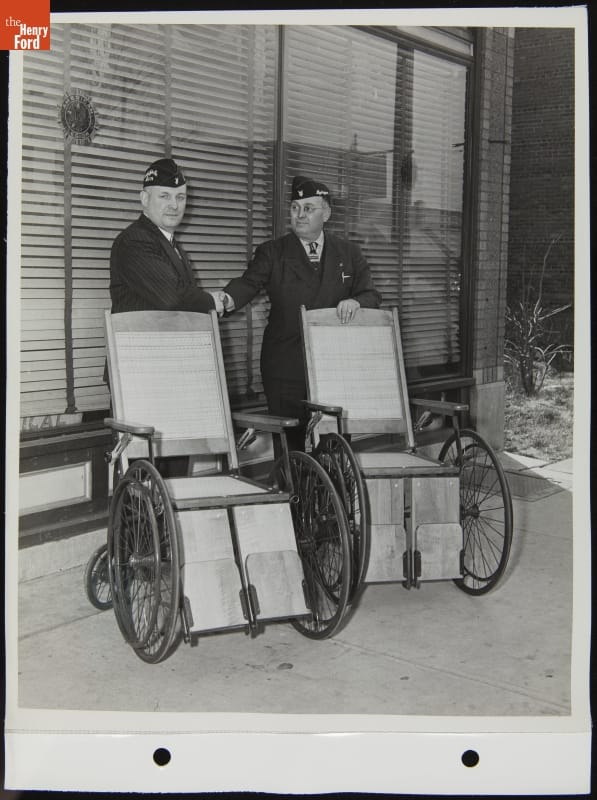
- March 22, 1944
- Collections - Artifact
American Legion Employees with Wheelchairs Purchased for Percy Jones Veterans Hospital with Muster Out Pay, March 1944
In August 1942, the United States Army purchased the former main building of John Harvey Kellogg's Battle Creek, Michigan, sanitarium. It was remodeled and rededicated as Percy Jones Army Hospital. By the end of World War II, the hospital and its associated facilities were the Army's largest medical installation. Reactivated during the Korean War, Percy Jones closed permanently in 1954.
- Patients at Percy Jones Hospital, Ford Legion Day, Battle Creek, Michigan, April 1944 - In August 1942, the United States Army purchased the former main building of John Harvey Kellogg's Battle Creek, Michigan, sanitarium. It was remodeled and rededicated as Percy Jones Army Hospital. By the end of World War II, the hospital and its associated facilities were the Army's largest medical installation. Reactivated during the Korean War, Percy Jones closed permanently in 1954.
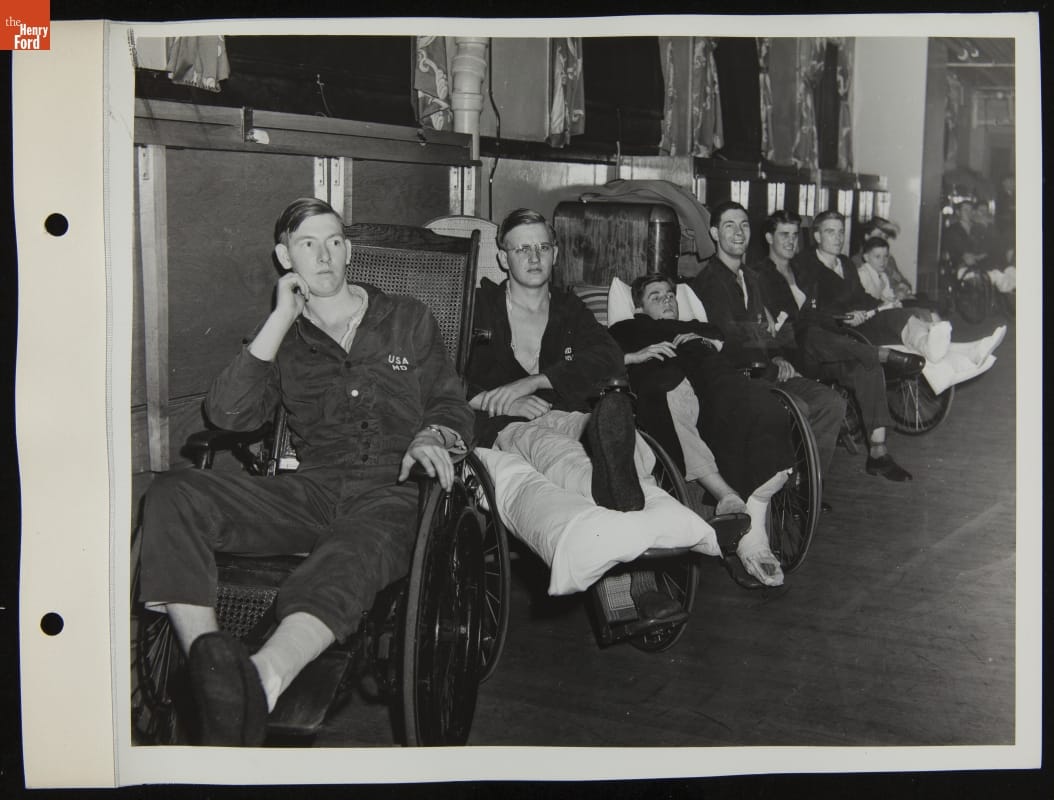
- April 09, 1944
- Collections - Artifact
Patients at Percy Jones Hospital, Ford Legion Day, Battle Creek, Michigan, April 1944
In August 1942, the United States Army purchased the former main building of John Harvey Kellogg's Battle Creek, Michigan, sanitarium. It was remodeled and rededicated as Percy Jones Army Hospital. By the end of World War II, the hospital and its associated facilities were the Army's largest medical installation. Reactivated during the Korean War, Percy Jones closed permanently in 1954.
- Privates Stacey and Kelley, Former Lincoln Plant Employees, Convalesce at Percy Jones Hospital, April 1945 - In August 1942, the United States Army purchased the former main building of John Harvey Kellogg's Battle Creek, Michigan, sanitarium. It was remodeled and rededicated as Percy Jones Army Hospital. By the end of World War II, the hospital and its associated facilities were the Army's largest medical installation. Reactivated during the Korean War, Percy Jones closed permanently in 1954.
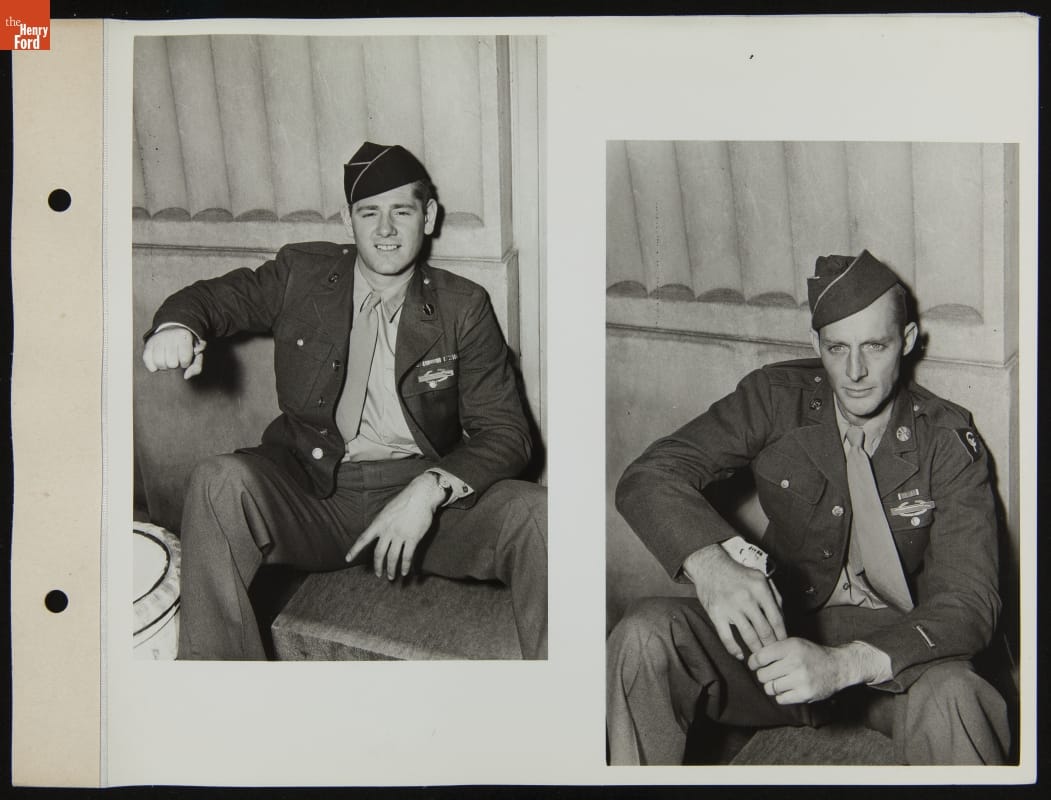
- April 07, 1945
- Collections - Artifact
Privates Stacey and Kelley, Former Lincoln Plant Employees, Convalesce at Percy Jones Hospital, April 1945
In August 1942, the United States Army purchased the former main building of John Harvey Kellogg's Battle Creek, Michigan, sanitarium. It was remodeled and rededicated as Percy Jones Army Hospital. By the end of World War II, the hospital and its associated facilities were the Army's largest medical installation. Reactivated during the Korean War, Percy Jones closed permanently in 1954.
- Percy Jones General Hospital Postcard, Sent Home from Fort Custer Military Training Base, August 12, 1944 - In August 1942, the United States Army purchased the former main building of John Harvey Kellogg's Battle Creek, Michigan, sanitarium. It was remodeled and rededicated as Percy Jones Army Hospital. By the end of World War II, the hospital and its associated facilities were the Army's largest medical installation. Reactivated during the Korean War, Percy Jones closed permanently in 1954.
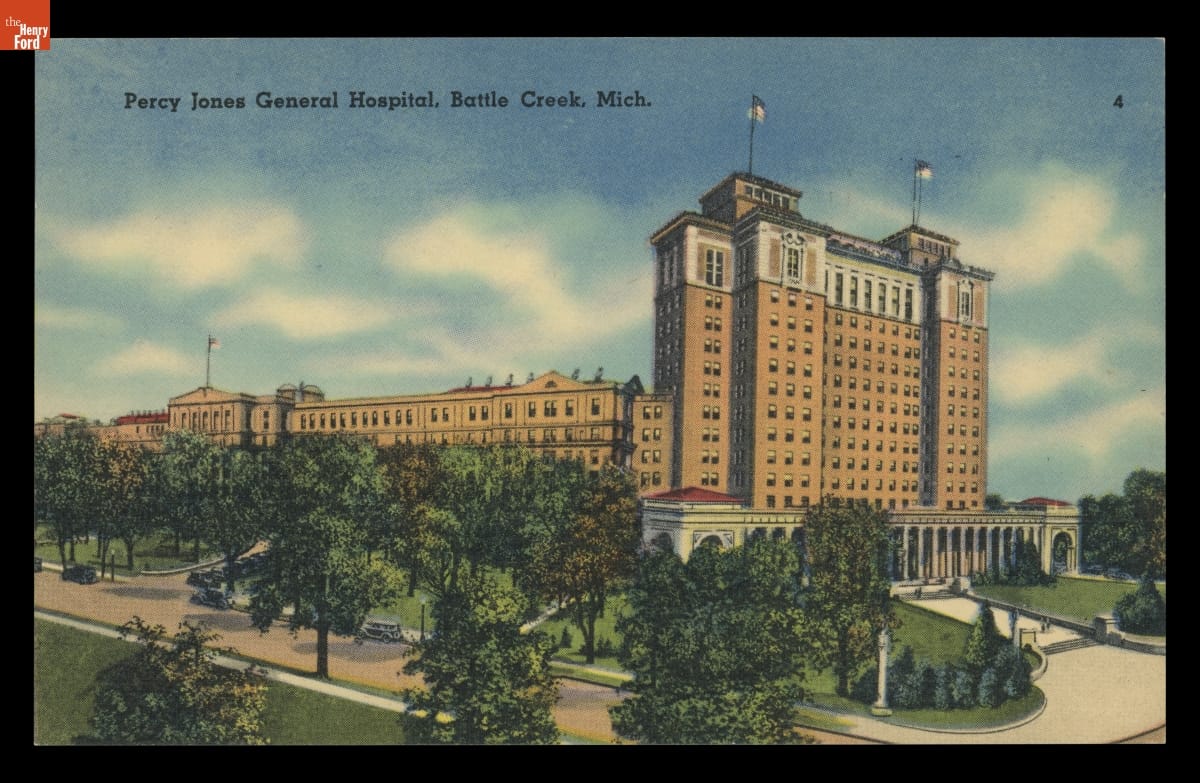
- August 12, 1944
- Collections - Artifact
Percy Jones General Hospital Postcard, Sent Home from Fort Custer Military Training Base, August 12, 1944
In August 1942, the United States Army purchased the former main building of John Harvey Kellogg's Battle Creek, Michigan, sanitarium. It was remodeled and rededicated as Percy Jones Army Hospital. By the end of World War II, the hospital and its associated facilities were the Army's largest medical installation. Reactivated during the Korean War, Percy Jones closed permanently in 1954.
- American Legion Employee with Wheelchairs Purchased for Percy Jones Veterans Hospital with Muster Out Pay, March 1944 - In August 1942, the United States Army purchased the former main building of John Harvey Kellogg's Battle Creek, Michigan, sanitarium. It was remodeled and rededicated as Percy Jones Army Hospital. By the end of World War II, the hospital and its associated facilities were the Army's largest medical installation. Reactivated during the Korean War, Percy Jones closed permanently in 1954.
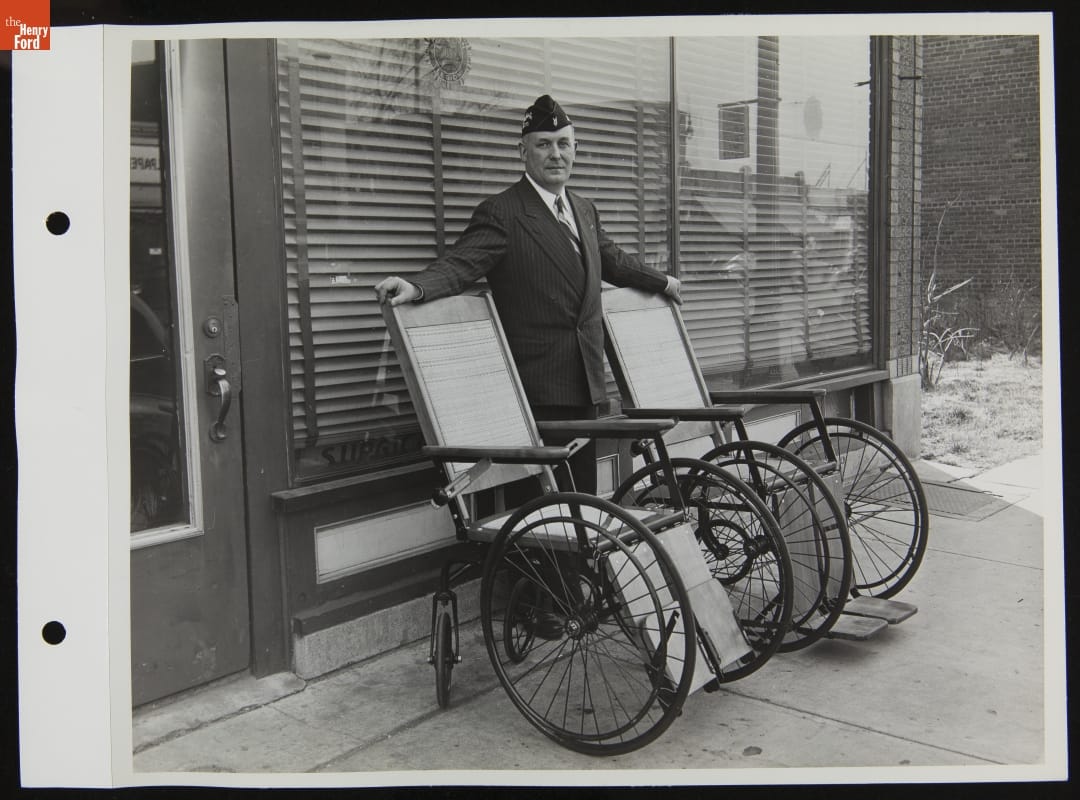
- March 22, 1944
- Collections - Artifact
American Legion Employee with Wheelchairs Purchased for Percy Jones Veterans Hospital with Muster Out Pay, March 1944
In August 1942, the United States Army purchased the former main building of John Harvey Kellogg's Battle Creek, Michigan, sanitarium. It was remodeled and rededicated as Percy Jones Army Hospital. By the end of World War II, the hospital and its associated facilities were the Army's largest medical installation. Reactivated during the Korean War, Percy Jones closed permanently in 1954.
- Assorted Gifts for Veterans at Percy Jones Hospital, March 1945 - In August 1942, the United States Army purchased the former main building of John Harvey Kellogg's Battle Creek, Michigan, sanitarium. It was remodeled and rededicated as Percy Jones Army Hospital. By the end of World War II, the hospital and its associated facilities were the Army's largest medical installation. Reactivated during the Korean War, Percy Jones closed permanently in 1954.
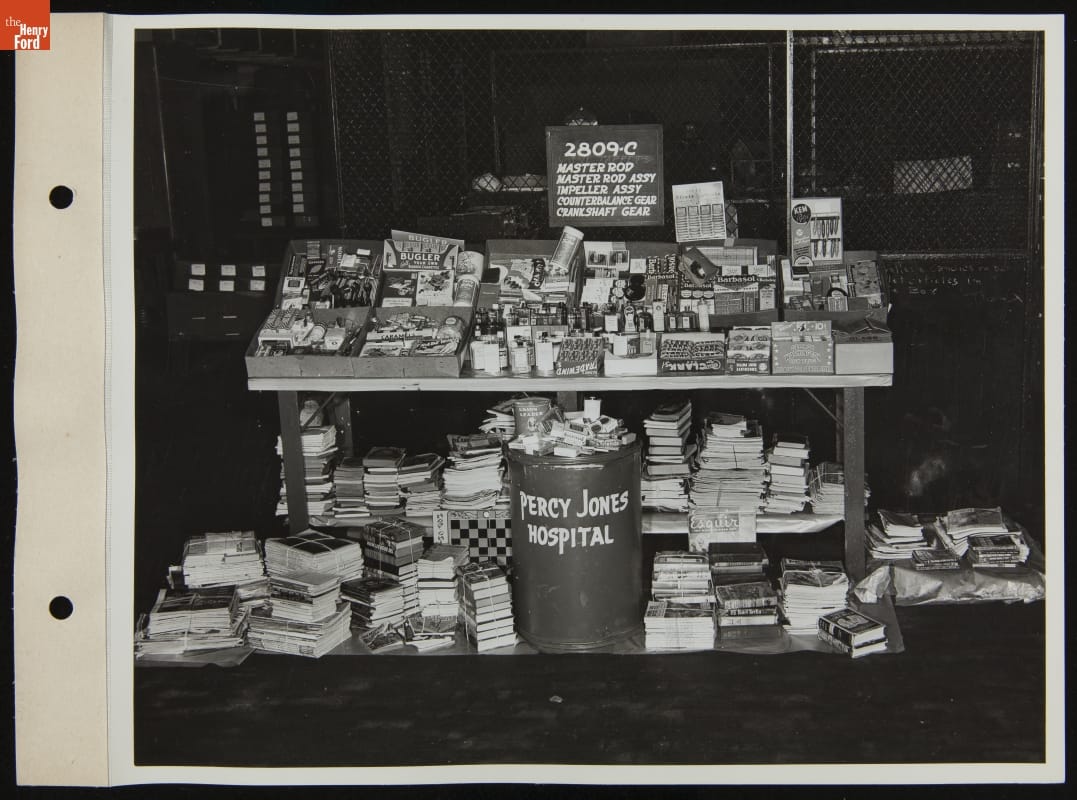
- March 25, 1945
- Collections - Artifact
Assorted Gifts for Veterans at Percy Jones Hospital, March 1945
In August 1942, the United States Army purchased the former main building of John Harvey Kellogg's Battle Creek, Michigan, sanitarium. It was remodeled and rededicated as Percy Jones Army Hospital. By the end of World War II, the hospital and its associated facilities were the Army's largest medical installation. Reactivated during the Korean War, Percy Jones closed permanently in 1954.
- AFL-USO Dinner for Percy Jones Hospital Veterans, Detroit, Michigan, May 1945 - At the end of September 1945, the United Services Organization and American Federation of Labor sponsored a two-day program for military veterans of Percy Jones Army Hospital in Battle Creek, Michigan. This photograph shows the young men in uniform with female "hostesses" -- local volunteers who accompanied the soldiers during portions of the entertainment-filled weekend.
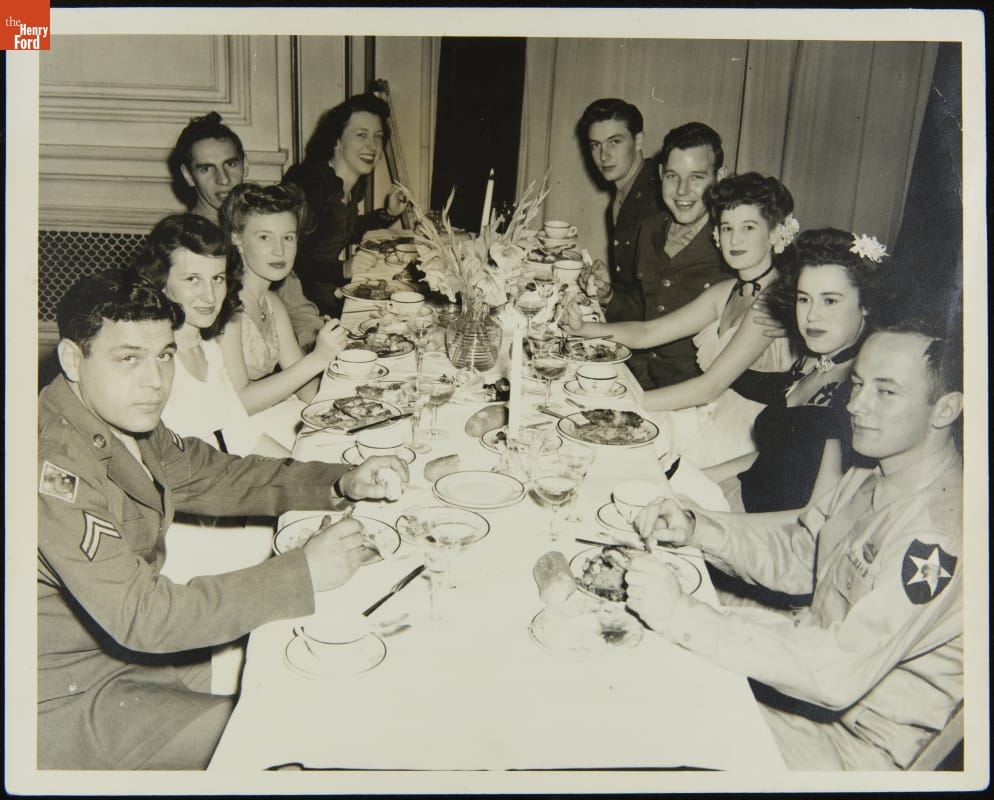
- May 01, 1945
- Collections - Artifact
AFL-USO Dinner for Percy Jones Hospital Veterans, Detroit, Michigan, May 1945
At the end of September 1945, the United Services Organization and American Federation of Labor sponsored a two-day program for military veterans of Percy Jones Army Hospital in Battle Creek, Michigan. This photograph shows the young men in uniform with female "hostesses" -- local volunteers who accompanied the soldiers during portions of the entertainment-filled weekend.
- American Legion Employee with Wheelchairs Purchased for Percy Jones Veterans Hospital with Muster Out Pay, March 1944 - In August 1942, the United States Army purchased the former main building of John Harvey Kellogg's Battle Creek, Michigan, sanitarium. It was remodeled and rededicated as Percy Jones Army Hospital. By the end of World War II, the hospital and its associated facilities were the Army's largest medical installation. Reactivated during the Korean War, Percy Jones closed permanently in 1954.
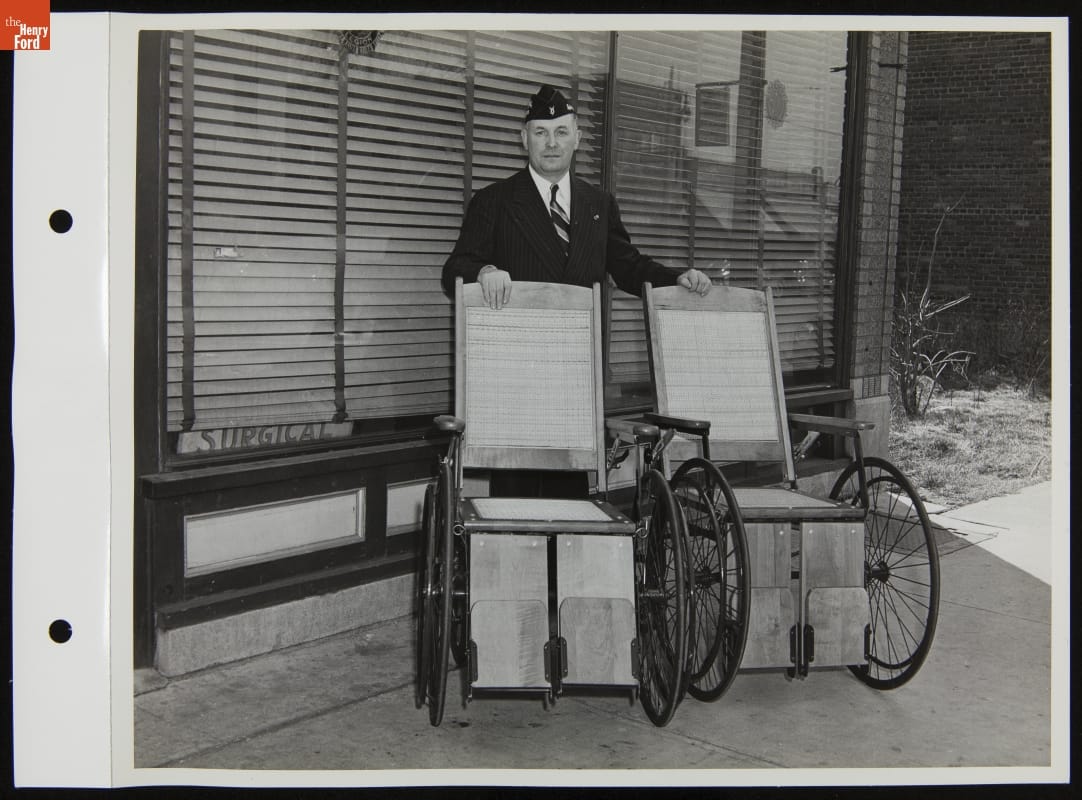
- March 22, 1944
- Collections - Artifact
American Legion Employee with Wheelchairs Purchased for Percy Jones Veterans Hospital with Muster Out Pay, March 1944
In August 1942, the United States Army purchased the former main building of John Harvey Kellogg's Battle Creek, Michigan, sanitarium. It was remodeled and rededicated as Percy Jones Army Hospital. By the end of World War II, the hospital and its associated facilities were the Army's largest medical installation. Reactivated during the Korean War, Percy Jones closed permanently in 1954.
- Collecting Gifts at Ford Rotunda for Percy Jones Veterans Hospital in Battle Creek, Michigan, April 1944 - In August 1942, the United States Army purchased the former main building of John Harvey Kellogg's Battle Creek, Michigan, sanitarium. It was remodeled and rededicated as Percy Jones Army Hospital. By the end of World War II, the hospital and its associated facilities were the Army's largest medical installation. Reactivated during the Korean War, Percy Jones closed permanently in 1954.
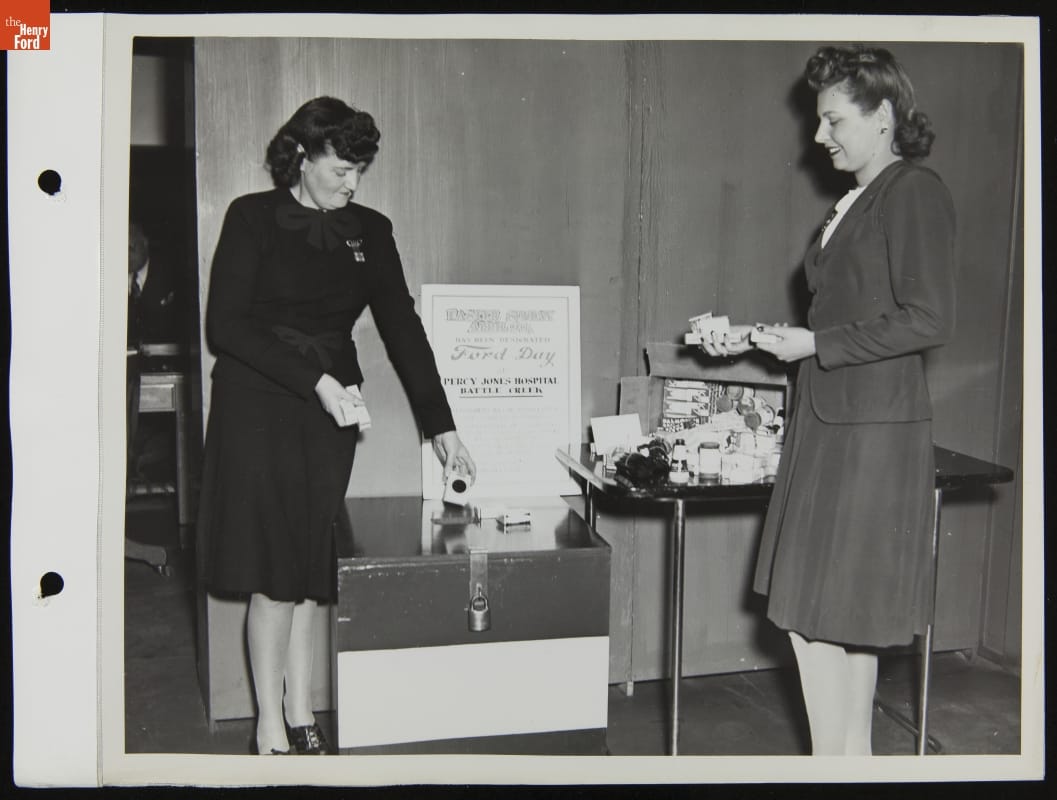
- April 07, 1944
- Collections - Artifact
Collecting Gifts at Ford Rotunda for Percy Jones Veterans Hospital in Battle Creek, Michigan, April 1944
In August 1942, the United States Army purchased the former main building of John Harvey Kellogg's Battle Creek, Michigan, sanitarium. It was remodeled and rededicated as Percy Jones Army Hospital. By the end of World War II, the hospital and its associated facilities were the Army's largest medical installation. Reactivated during the Korean War, Percy Jones closed permanently in 1954.
- Patients at Percy Jones Hospital Opening Packages on Ford Legion Day, Battle Creek, Michigan, April 1944 - In August 1942, the United States Army purchased the former main building of John Harvey Kellogg's Battle Creek, Michigan, sanitarium. It was remodeled and rededicated as Percy Jones Army Hospital. By the end of World War II, the hospital and its associated facilities were the Army's largest medical installation. Reactivated during the Korean War, Percy Jones closed permanently in 1954.
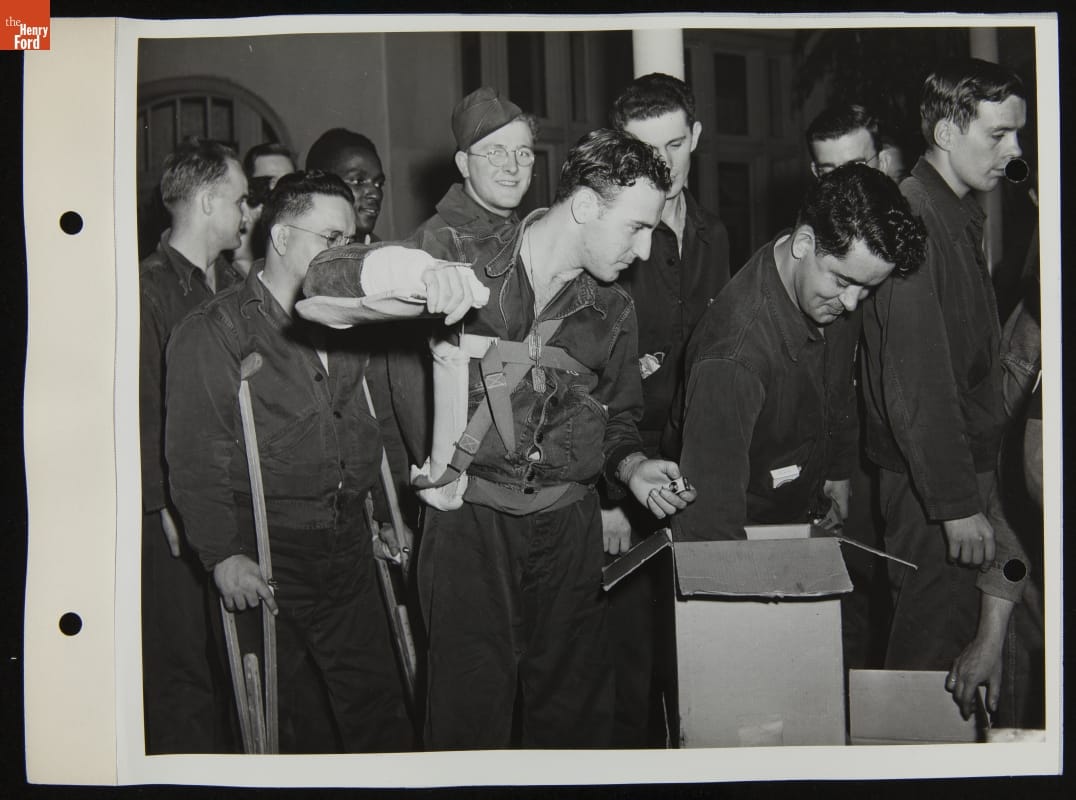
- April 09, 1944
- Collections - Artifact
Patients at Percy Jones Hospital Opening Packages on Ford Legion Day, Battle Creek, Michigan, April 1944
In August 1942, the United States Army purchased the former main building of John Harvey Kellogg's Battle Creek, Michigan, sanitarium. It was remodeled and rededicated as Percy Jones Army Hospital. By the end of World War II, the hospital and its associated facilities were the Army's largest medical installation. Reactivated during the Korean War, Percy Jones closed permanently in 1954.