
Search
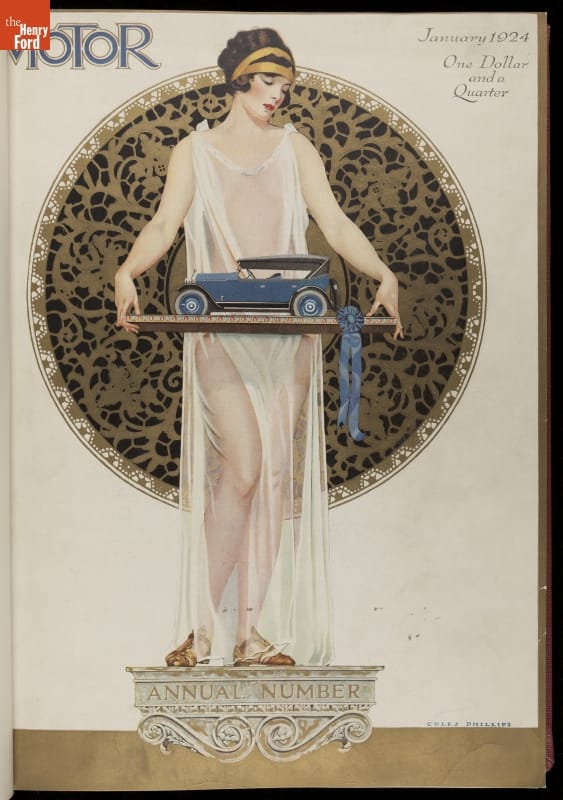
- Magazine, "Motor," January 1924 - <EM>Motor</EM> magazine was filled with useful information for car owners. In this issue is an ad for the "Safe-T-Arm," a device to help drivers indicate whether they were going to turn left or right, drive forward -- or stop. It was one of many signaling systems on the market. In the early 1920s, hand or mechanical signals were not legally required of drivers!
- January 01, 1924
- Collections - Artifact
Magazine, "Motor," January 1924
Motor magazine was filled with useful information for car owners. In this issue is an ad for the "Safe-T-Arm," a device to help drivers indicate whether they were going to turn left or right, drive forward -- or stop. It was one of many signaling systems on the market. In the early 1920s, hand or mechanical signals were not legally required of drivers!
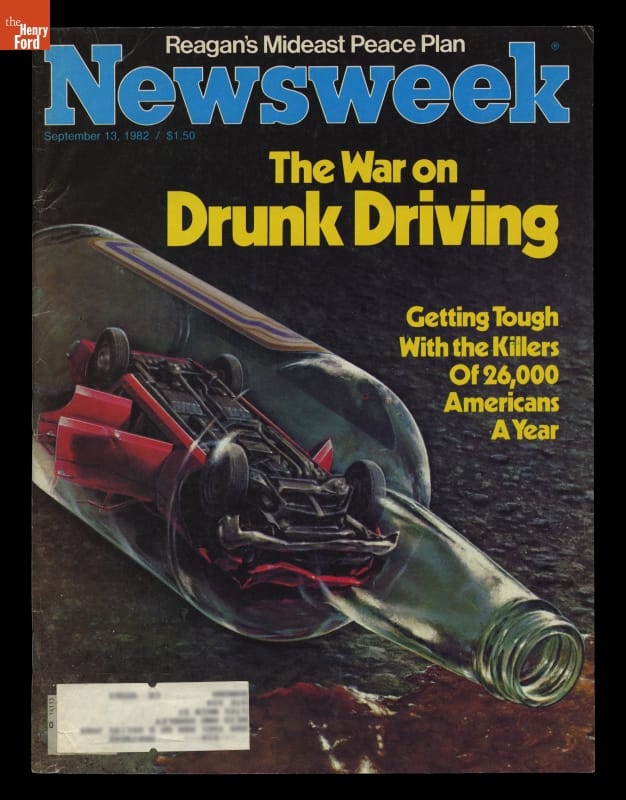
- "Newsweek," September 13, 1982 - In the 1980s, efforts by organizations, such as Mothers Against Drunk Driving (MADD), focused attention on the human cost of drunk driving. Drunk driving and the loss of life could no longer be tolerated. This shift in American attitudes was highlighted on the cover of this September 13, 1982 issue of <EM>Newsweek</EM>.
- September 13, 1982
- Collections - Artifact
"Newsweek," September 13, 1982
In the 1980s, efforts by organizations, such as Mothers Against Drunk Driving (MADD), focused attention on the human cost of drunk driving. Drunk driving and the loss of life could no longer be tolerated. This shift in American attitudes was highlighted on the cover of this September 13, 1982 issue of Newsweek.
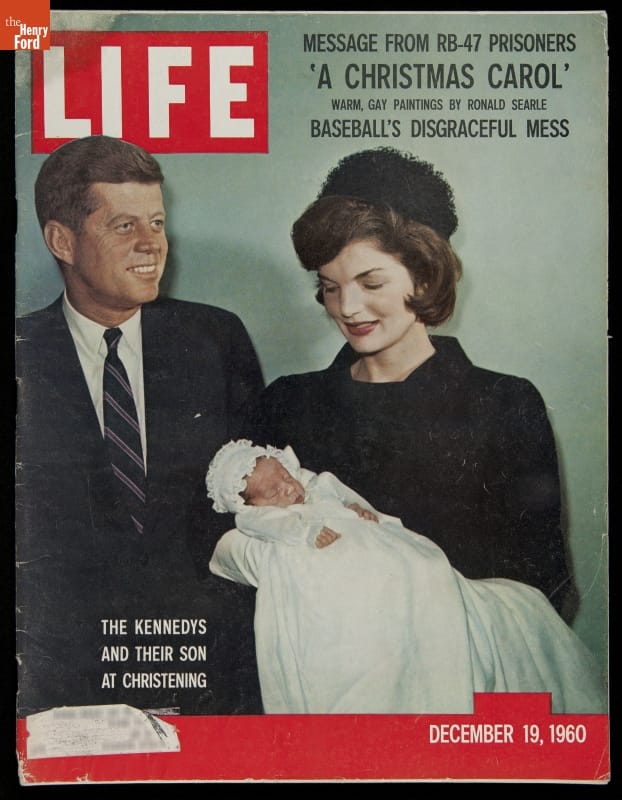
- Life Magazine for December 19, 1960, "The Kennedys and Their Son at Christening" - Americans were enchanted by the young John F. Kennedy family and they wanted to know more, always more. Photographs of any members of the Kennedy family sold magazines but the kids often stole the show. This <EM>Life</EM> magazine cover story featured the christening of John F. Kennedy, Jr., born November 25, 1960, just weeks after his father's presidential election.
- December 19, 1960
- Collections - Artifact
Life Magazine for December 19, 1960, "The Kennedys and Their Son at Christening"
Americans were enchanted by the young John F. Kennedy family and they wanted to know more, always more. Photographs of any members of the Kennedy family sold magazines but the kids often stole the show. This Life magazine cover story featured the christening of John F. Kennedy, Jr., born November 25, 1960, just weeks after his father's presidential election.
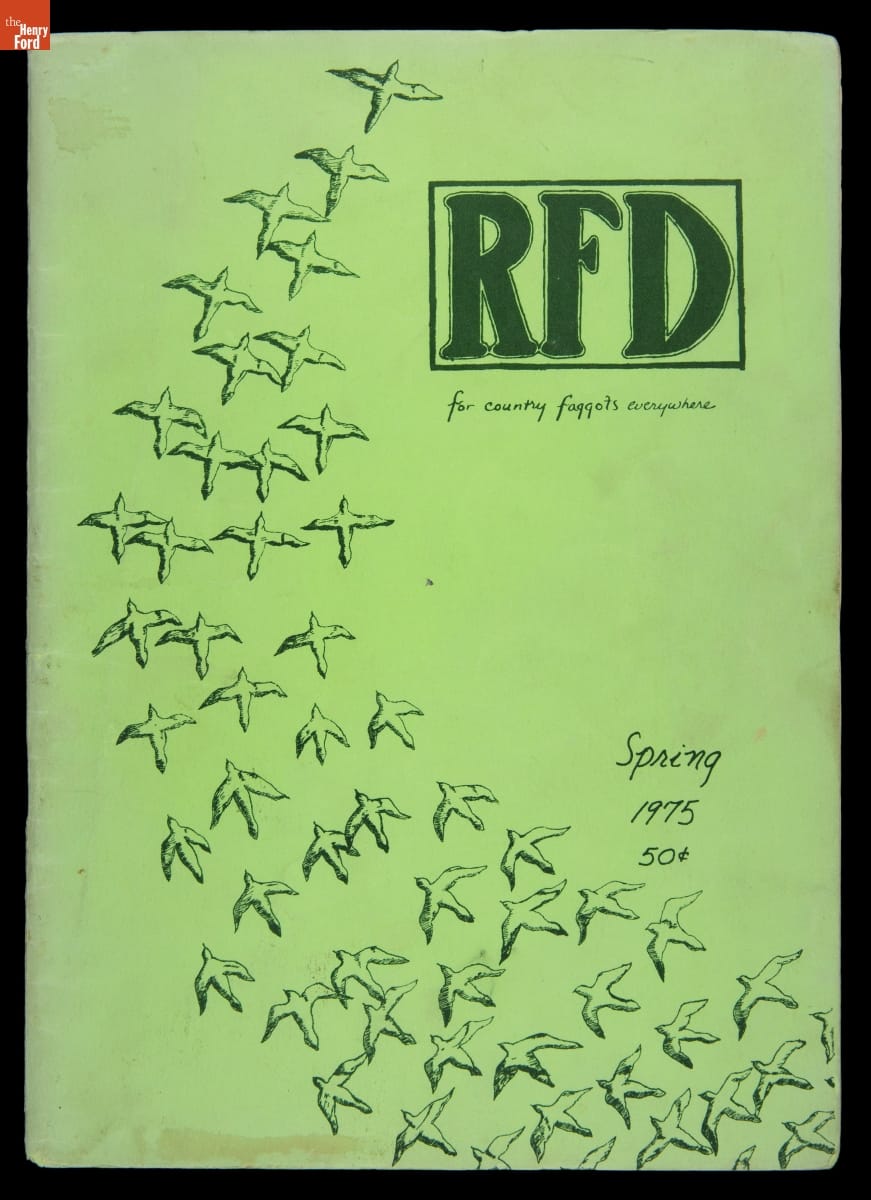
- RFD Magazine, Issue #3, Spring 1975 - Stewart Scofield, Carl Wittman, and Allen Troxler launched the journal "RFD: A Country Journal for Gay Men Everywhere" in 1974. The journal documents the experiences of gay men in rural American communities, rejecting the mindset that gay men can only have fulfilling lives in urban areas with large LGBTQ+ communities. First published in Grinnell, Iowa, the journal is still published today.
- 1975
- Collections - Artifact
RFD Magazine, Issue #3, Spring 1975
Stewart Scofield, Carl Wittman, and Allen Troxler launched the journal "RFD: A Country Journal for Gay Men Everywhere" in 1974. The journal documents the experiences of gay men in rural American communities, rejecting the mindset that gay men can only have fulfilling lives in urban areas with large LGBTQ+ communities. First published in Grinnell, Iowa, the journal is still published today.
- "Popular Science," March 1949 -
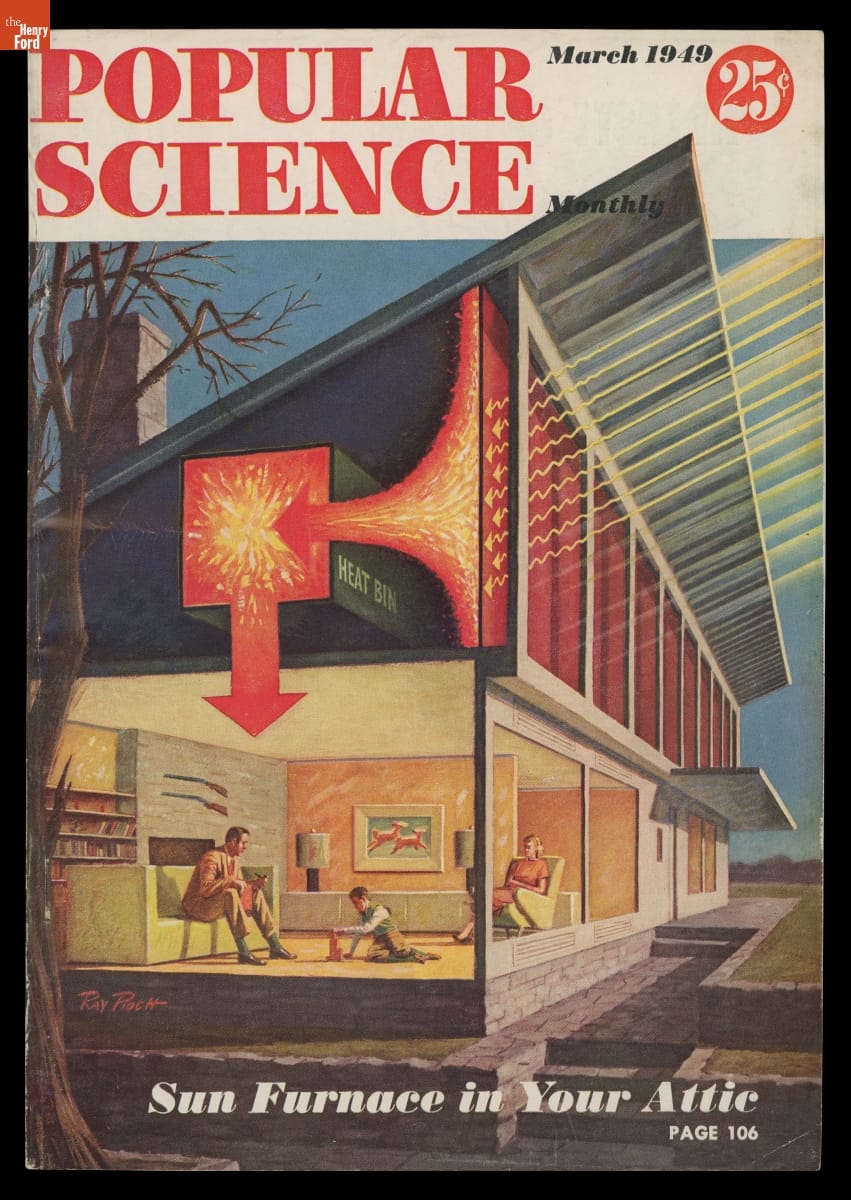
- March 01, 1949
- Collections - Artifact
"Popular Science," March 1949
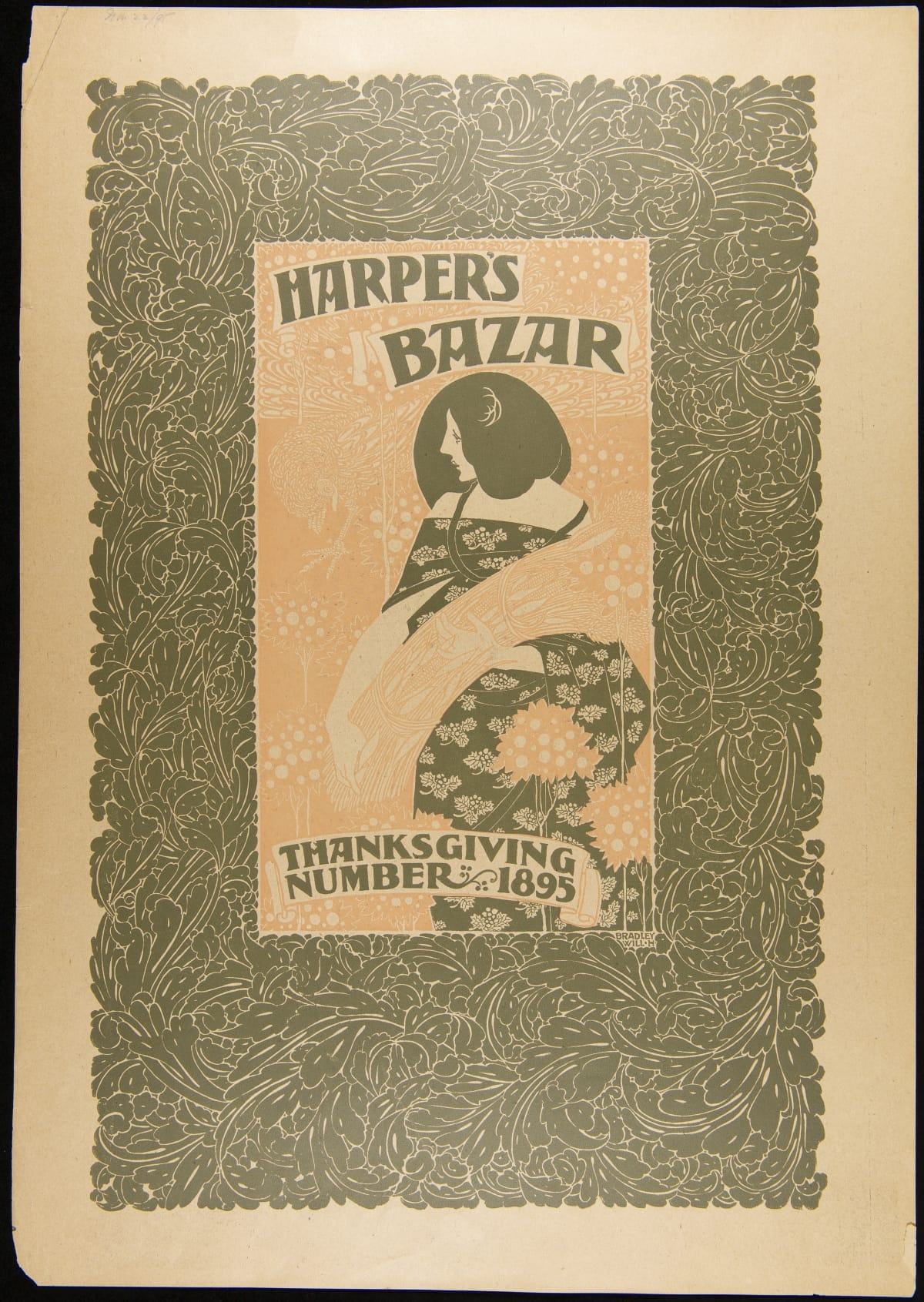
- Harper's Bazar Thanksgiving, Number 1895 - For a few years in the 1890s, a poster craze swept America. Bold, colorful art posters printed for bookstores and newsstands became collectors' items--sometimes more popular than the books and magazines they were designed to promote. Many posters, like this one by Will H. Bradley for a Thanksgiving issue of <em>Harper's Bazar</em>, featured eye-catching illustrations inspired by Art Nouveau trends.
- November 22, 1895
- Collections - Artifact
Harper's Bazar Thanksgiving, Number 1895
For a few years in the 1890s, a poster craze swept America. Bold, colorful art posters printed for bookstores and newsstands became collectors' items--sometimes more popular than the books and magazines they were designed to promote. Many posters, like this one by Will H. Bradley for a Thanksgiving issue of Harper's Bazar, featured eye-catching illustrations inspired by Art Nouveau trends.
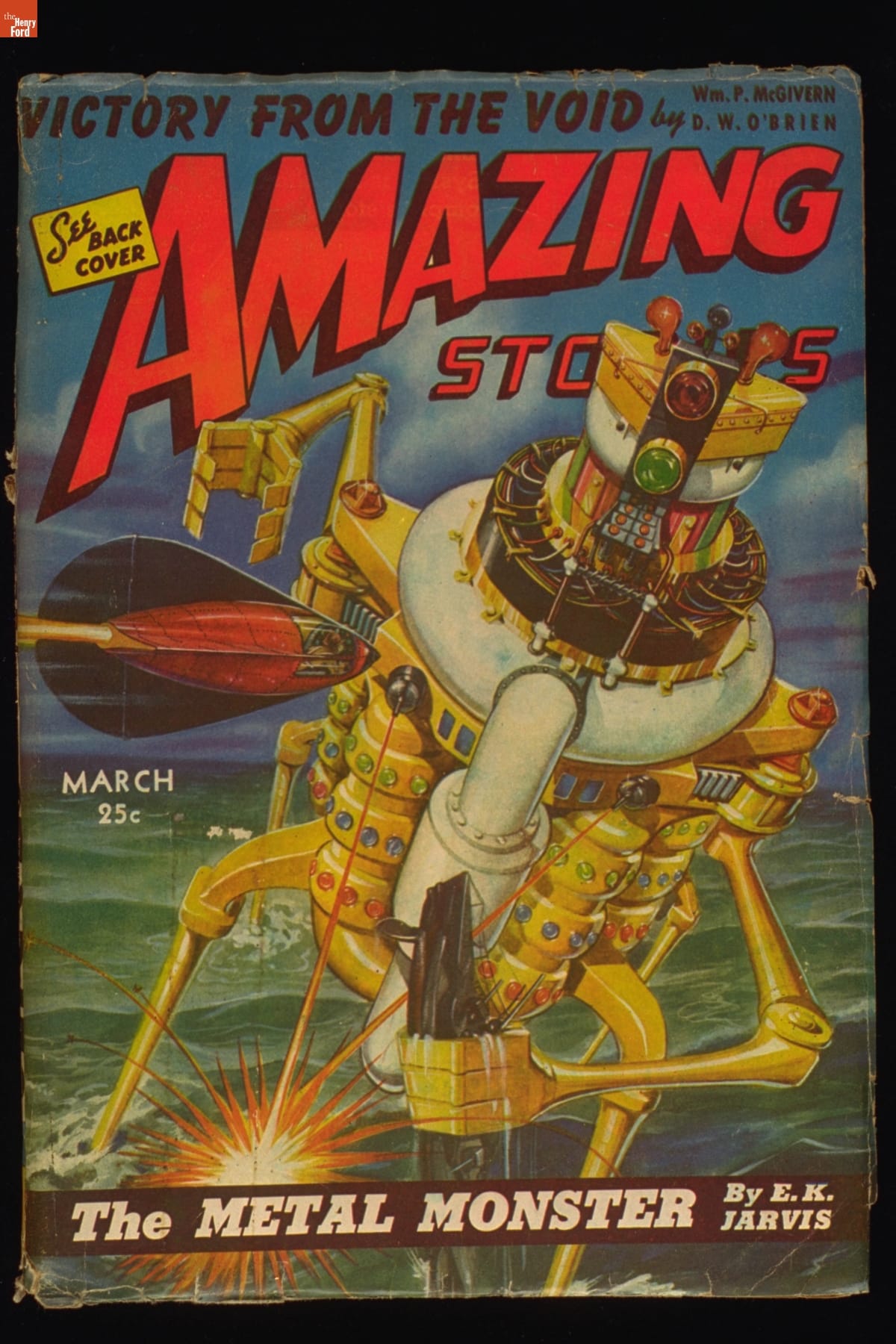
- Amazing Stories, March 1943 - <em>Amazing Stories</em> was the first magazine dedicated to the genre of science fiction. The first issue was published in April 1926 by inventor Hugo Gernsback, who is considered to be the "father" of science fiction (or "scientification"). The cover story documents a type of fanciful inspiration--the result of speculative, popular culture combining with technological possibility.
- March 01, 1943
- Collections - Artifact
Amazing Stories, March 1943
Amazing Stories was the first magazine dedicated to the genre of science fiction. The first issue was published in April 1926 by inventor Hugo Gernsback, who is considered to be the "father" of science fiction (or "scientification"). The cover story documents a type of fanciful inspiration--the result of speculative, popular culture combining with technological possibility.
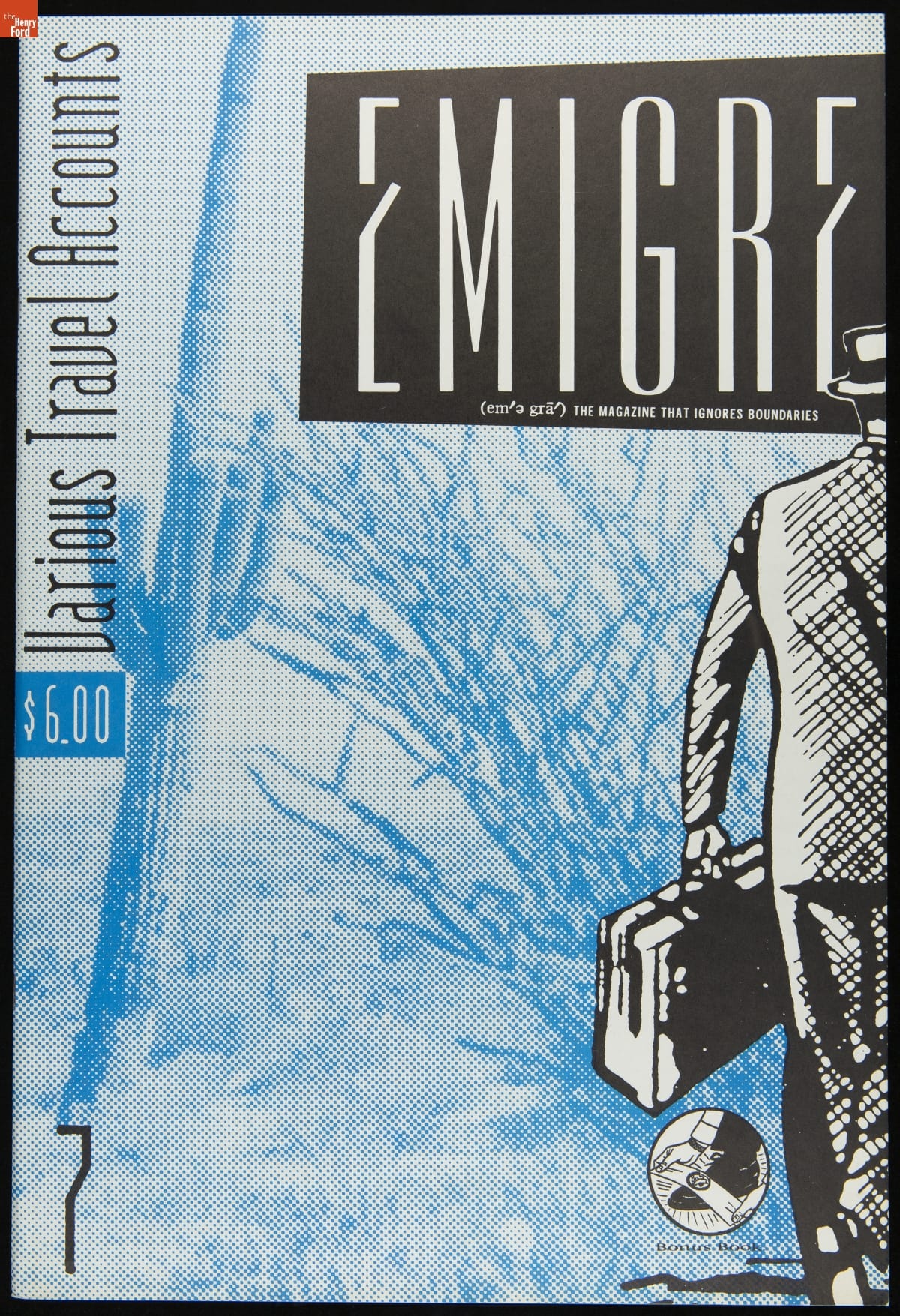
- Magazine, Emigre No. 7, "Various Travel Accounts," 1987 - Emigre is a digital type foundry established by Rudy VanderLans and Zuzana Licko. The company's history is linked with the introduction of the 1984 Macintosh computer, used to design their early bitmapped typefaces. Emigre's digital work gained notoriety -- defying visual communication standards with fractured, layered combinations of text and image. <em>Emigre</em> magazine showcased their fonts and promoted groundbreaking designers.
- 1987
- Collections - Artifact
Magazine, Emigre No. 7, "Various Travel Accounts," 1987
Emigre is a digital type foundry established by Rudy VanderLans and Zuzana Licko. The company's history is linked with the introduction of the 1984 Macintosh computer, used to design their early bitmapped typefaces. Emigre's digital work gained notoriety -- defying visual communication standards with fractured, layered combinations of text and image. Emigre magazine showcased their fonts and promoted groundbreaking designers.
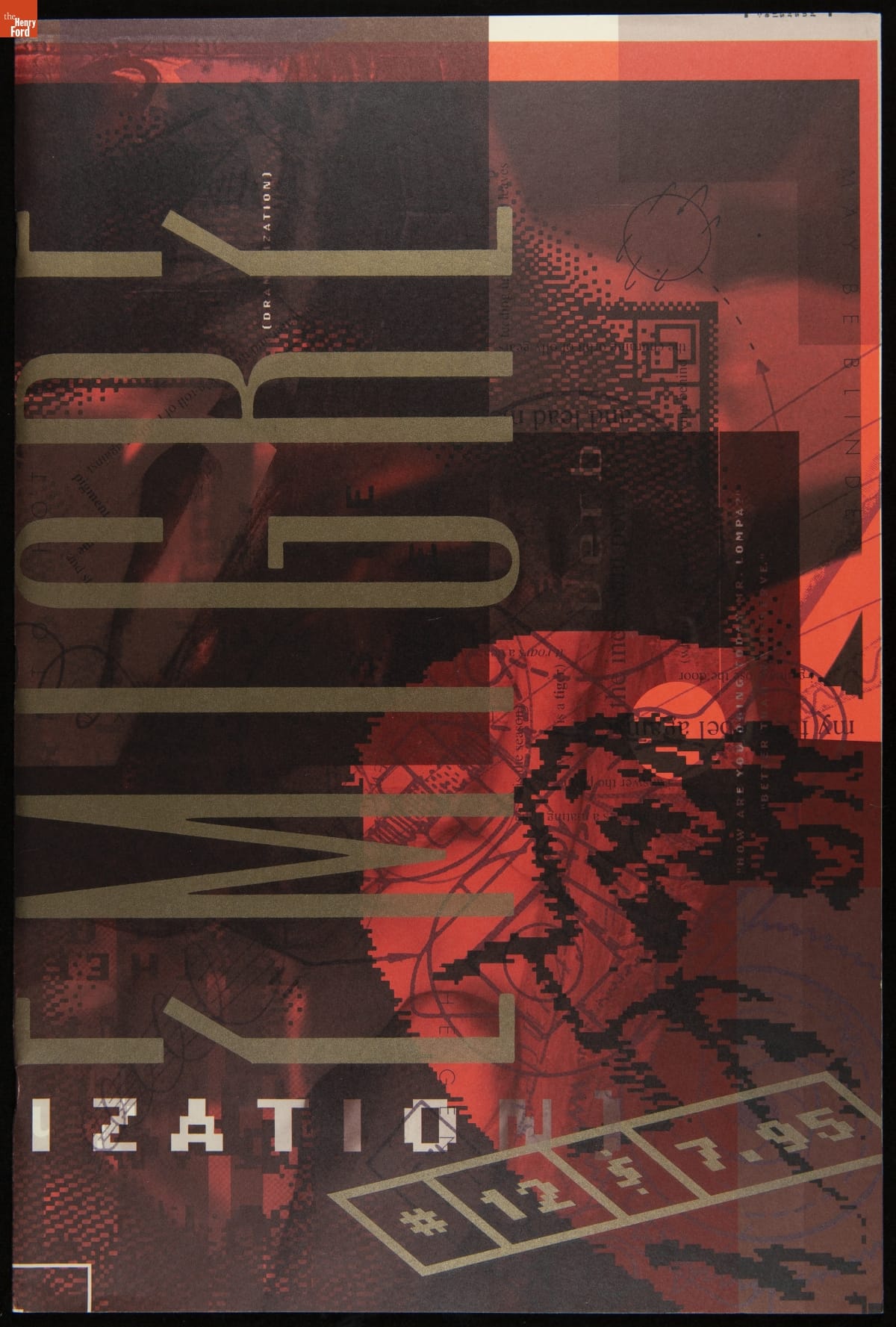
- Magazine, Emigre No. 12, "Press Time!," 1989 - Emigre is a digital type foundry established by Rudy VanderLans and Zuzana Licko. The company's history is linked with the introduction of the 1984 Macintosh computer, used to design their early bitmapped typefaces. Emigre's digital work gained notoriety -- defying visual communication standards with fractured, layered combinations of text and image. <em>Emigre</em> magazine showcased their fonts and promoted groundbreaking designers.
- 1989
- Collections - Artifact
Magazine, Emigre No. 12, "Press Time!," 1989
Emigre is a digital type foundry established by Rudy VanderLans and Zuzana Licko. The company's history is linked with the introduction of the 1984 Macintosh computer, used to design their early bitmapped typefaces. Emigre's digital work gained notoriety -- defying visual communication standards with fractured, layered combinations of text and image. Emigre magazine showcased their fonts and promoted groundbreaking designers.
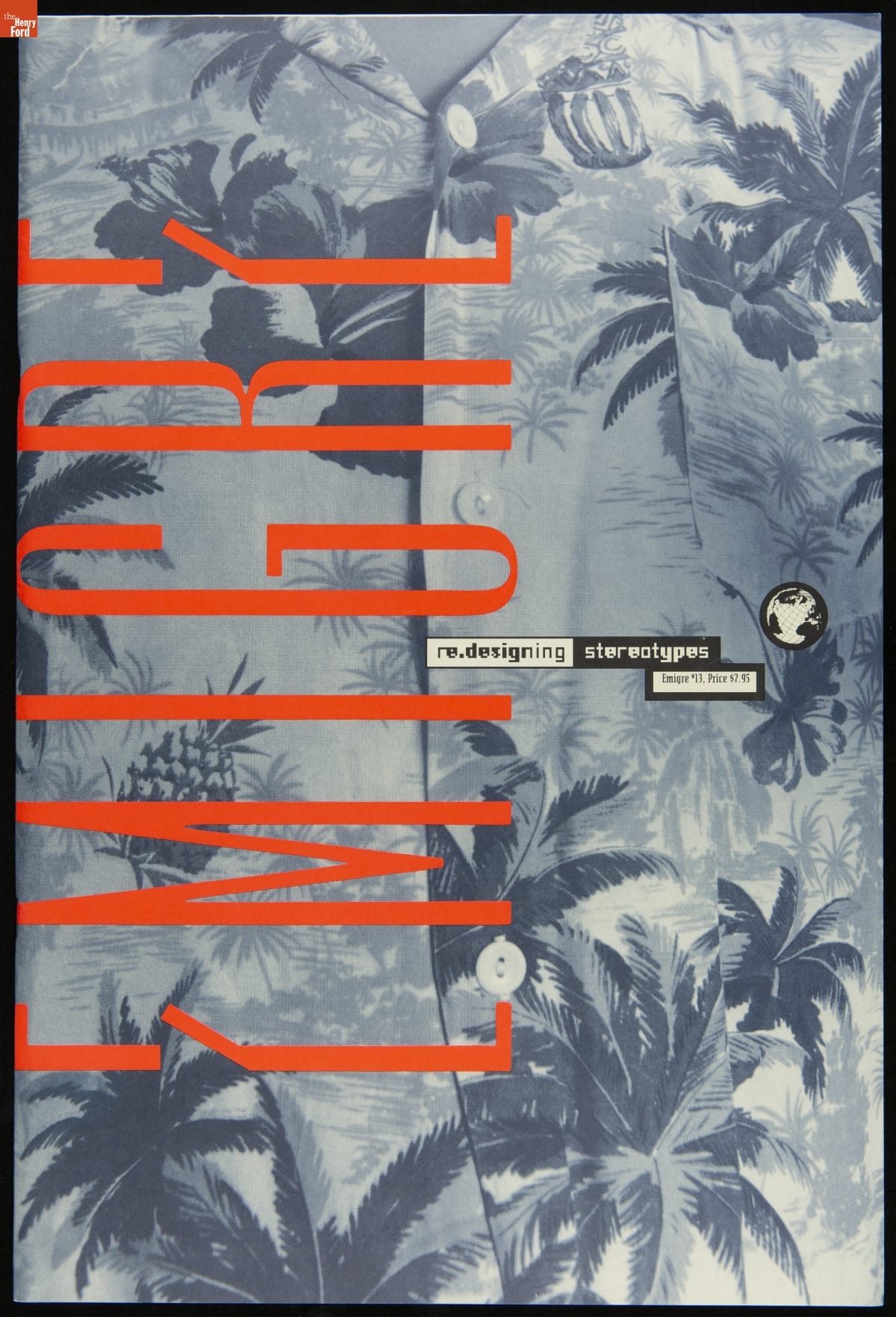
- Magazine, Emigre No. 13, "Redesigning Stereotypes," 1989 - Emigre is a digital type foundry established by Rudy VanderLans and Zuzana Licko. The company's history is linked with the introduction of the 1984 Macintosh computer, used to design their early bitmapped typefaces. Emigre's digital work gained notoriety -- defying visual communication standards with fractured, layered combinations of text and image. <em>Emigre</em> magazine showcased their fonts and promoted groundbreaking designers.
- 1989
- Collections - Artifact
Magazine, Emigre No. 13, "Redesigning Stereotypes," 1989
Emigre is a digital type foundry established by Rudy VanderLans and Zuzana Licko. The company's history is linked with the introduction of the 1984 Macintosh computer, used to design their early bitmapped typefaces. Emigre's digital work gained notoriety -- defying visual communication standards with fractured, layered combinations of text and image. Emigre magazine showcased their fonts and promoted groundbreaking designers.