
Search
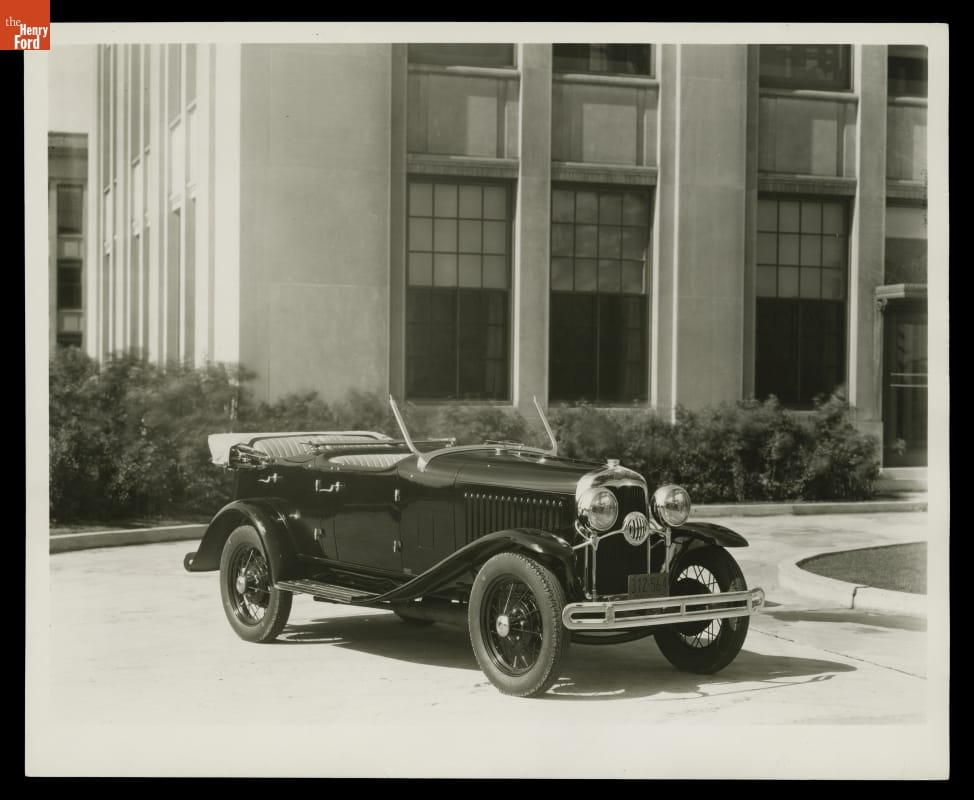
- 1930 Ford Model A Sport Phaeton - Ford's Model A received its first major styling updates with the 1930 model year. The deeper radiator shell and wider fenders were obvious changes, while the smaller wheels and larger tires subtly made the car look lower. Six new body styles were added. Ford Motor Company produced more than 1.1 million cars that year.
- 1930
- Collections - Artifact
1930 Ford Model A Sport Phaeton
Ford's Model A received its first major styling updates with the 1930 model year. The deeper radiator shell and wider fenders were obvious changes, while the smaller wheels and larger tires subtly made the car look lower. Six new body styles were added. Ford Motor Company produced more than 1.1 million cars that year.
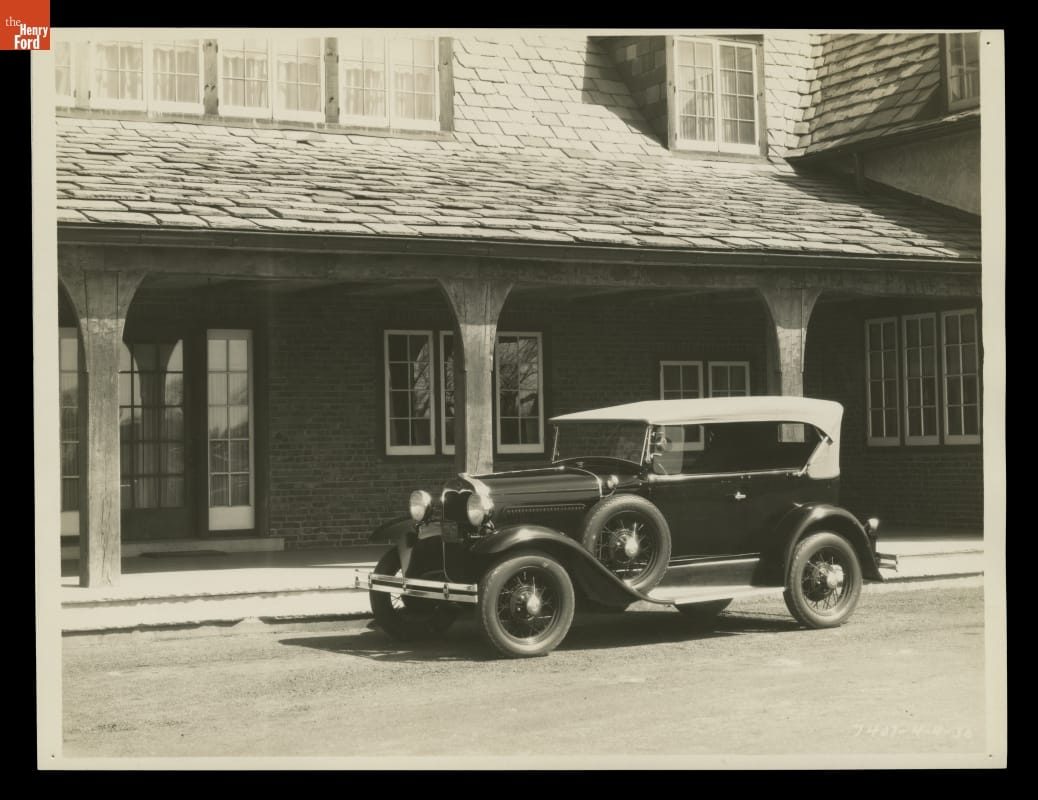
- 1930 Ford Model A DeLuxe Phaeton, 1930 - Ford's Model A received its first major styling updates with the 1930 model year. The deeper radiator shell and wider fenders were obvious changes, while the smaller wheels and larger tires subtly made the car look lower. Six new body styles were added. Ford Motor Company produced more than 1.1 million cars that year.
- April 04, 1930
- Collections - Artifact
1930 Ford Model A DeLuxe Phaeton, 1930
Ford's Model A received its first major styling updates with the 1930 model year. The deeper radiator shell and wider fenders were obvious changes, while the smaller wheels and larger tires subtly made the car look lower. Six new body styles were added. Ford Motor Company produced more than 1.1 million cars that year.
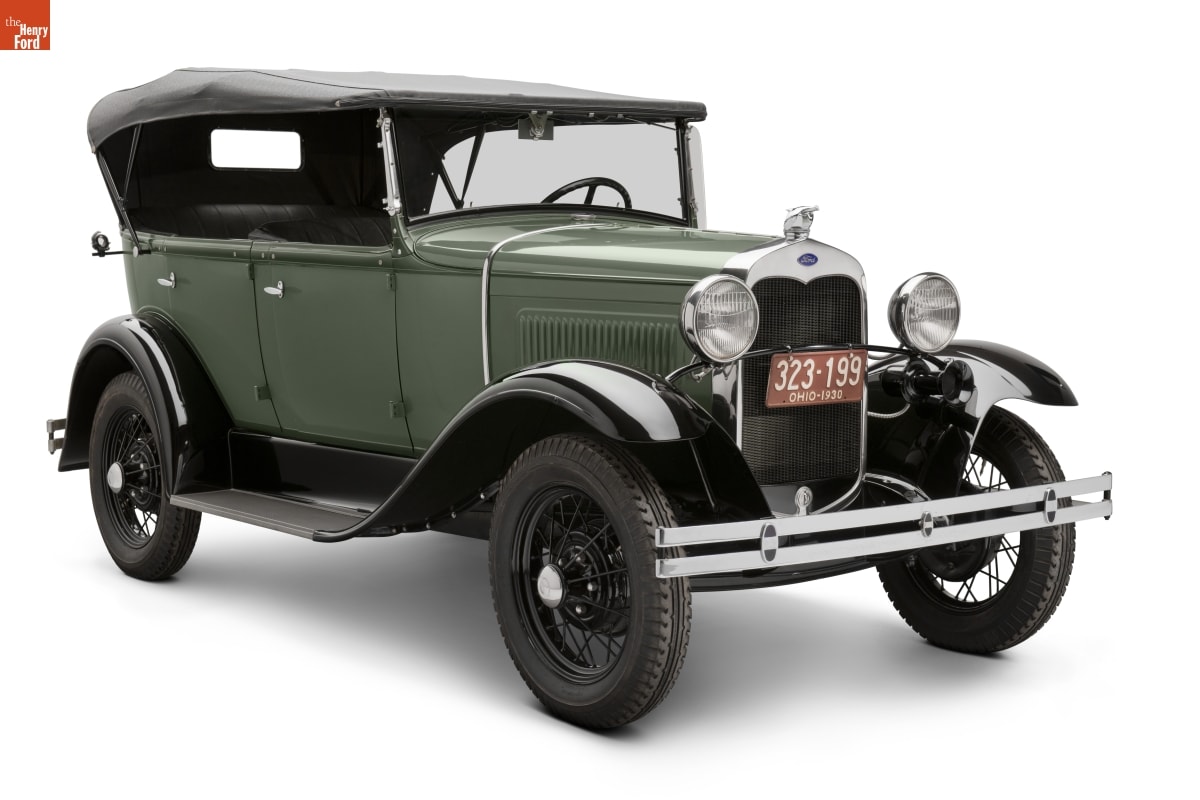
- 1930 Ford Model A Touring Car - The Model A's two-year-old styling was refreshed for 1930 with new sweeping fenders, a new radiator, smaller wheels, and a longer hood. Ford sold nearly 1,160,000 Model As in 1930, but only 16,470 were open phaetons like this car. Most buyers preferred closed sedans or coupes, with permanent roofs and roll-up windows.
- 1930
- Collections - Artifact
1930 Ford Model A Touring Car
The Model A's two-year-old styling was refreshed for 1930 with new sweeping fenders, a new radiator, smaller wheels, and a longer hood. Ford sold nearly 1,160,000 Model As in 1930, but only 16,470 were open phaetons like this car. Most buyers preferred closed sedans or coupes, with permanent roofs and roll-up windows.
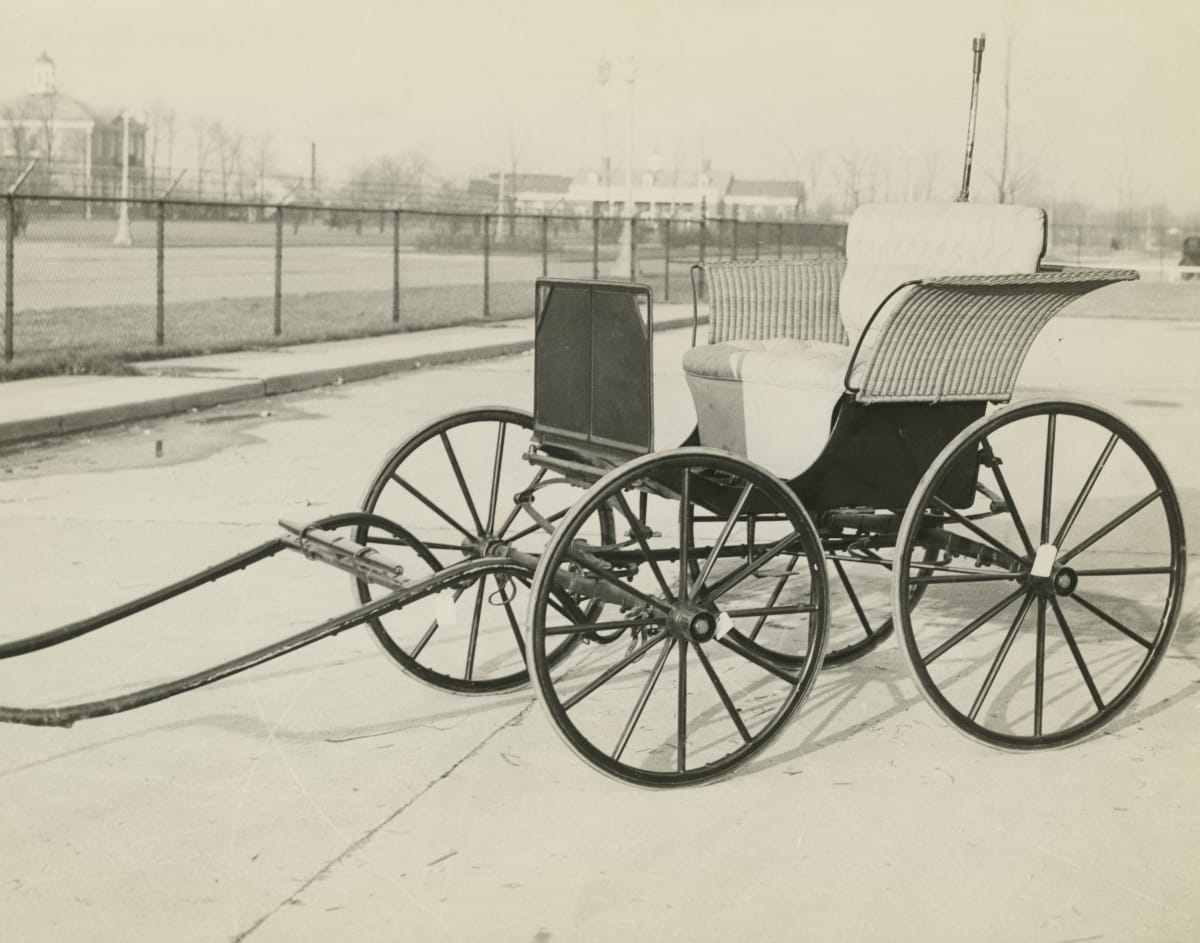
- Basket Phaeton, circa 1895 - Mary Kellogg Hopkins of San Francisco, California, whose husband made his fortune in the railroad industry, used this Ladies' Phaeton, sometimes called a Basket Phaeton or Morning Phaeton. These light, fashionable vehicles, driven almost exclusively by women, were popular at resorts, parks or beaches. The ample foot bay allowed women to display their sweeping skirts.
- circa 1895
- Collections - Artifact
Basket Phaeton, circa 1895
Mary Kellogg Hopkins of San Francisco, California, whose husband made his fortune in the railroad industry, used this Ladies' Phaeton, sometimes called a Basket Phaeton or Morning Phaeton. These light, fashionable vehicles, driven almost exclusively by women, were popular at resorts, parks or beaches. The ample foot bay allowed women to display their sweeping skirts.
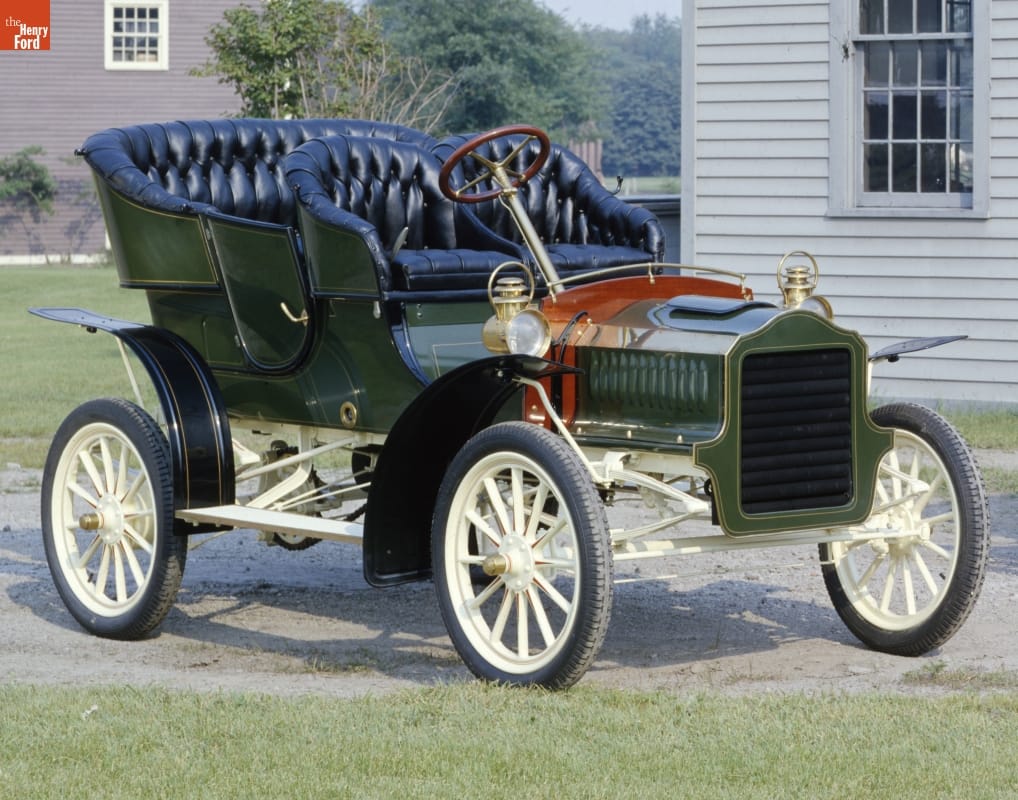
- 1905 Ford Model F Phaeton - Ford's Model F continued a direct evolution from the original Model A. The two-cylinder engine was still mounted under the front seat, but a false hood was added to the front to copy European cars of the time. At $1,000, the Model F was Ford's mid-price offering, falling between the two-cylinder Model C and the four-cylinder Model B.
- 1905
- Collections - Artifact
1905 Ford Model F Phaeton
Ford's Model F continued a direct evolution from the original Model A. The two-cylinder engine was still mounted under the front seat, but a false hood was added to the front to copy European cars of the time. At $1,000, the Model F was Ford's mid-price offering, falling between the two-cylinder Model C and the four-cylinder Model B.
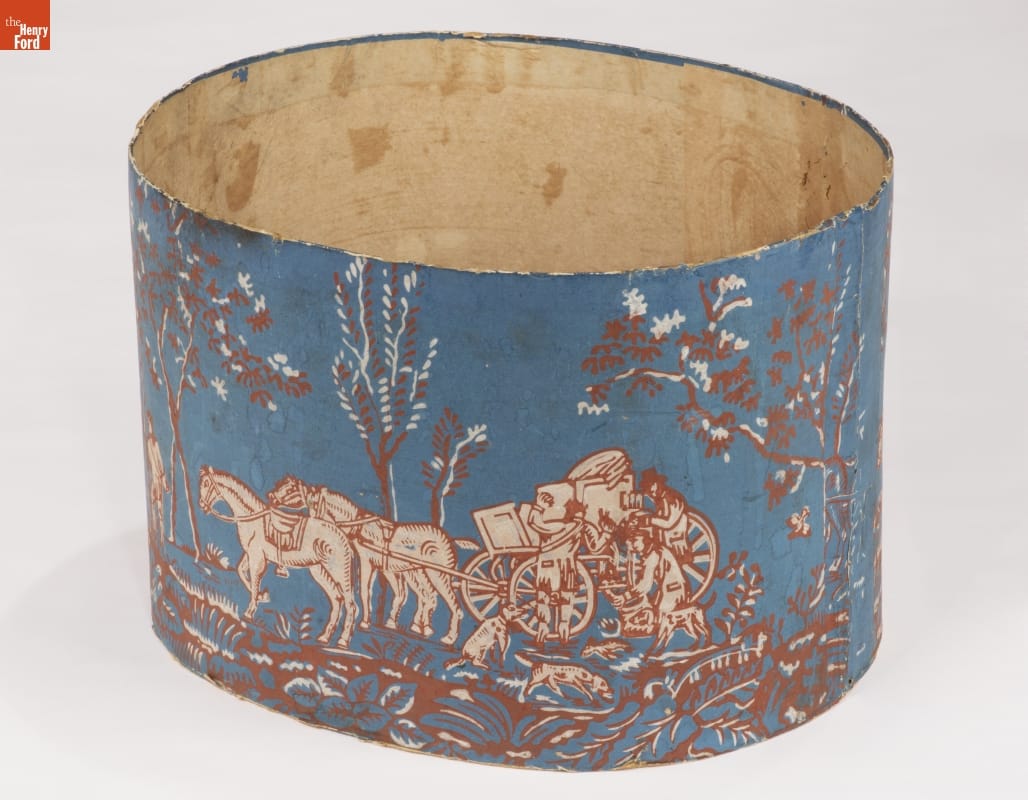
- Bandbox, 1830-1840 - In the early 1800s, Americans used bandboxes to store clothing, accessories, and other small items. Bandboxes were handy containers in the home or when traveling by stage, boat, or rail. Manufacturers covered these inexpensive pasteboard or wooden boxes with colorful papers. This bandbox's paper depicts a scene with hunters loading their catch into a coach.
- 1830-1840
- Collections - Artifact
Bandbox, 1830-1840
In the early 1800s, Americans used bandboxes to store clothing, accessories, and other small items. Bandboxes were handy containers in the home or when traveling by stage, boat, or rail. Manufacturers covered these inexpensive pasteboard or wooden boxes with colorful papers. This bandbox's paper depicts a scene with hunters loading their catch into a coach.
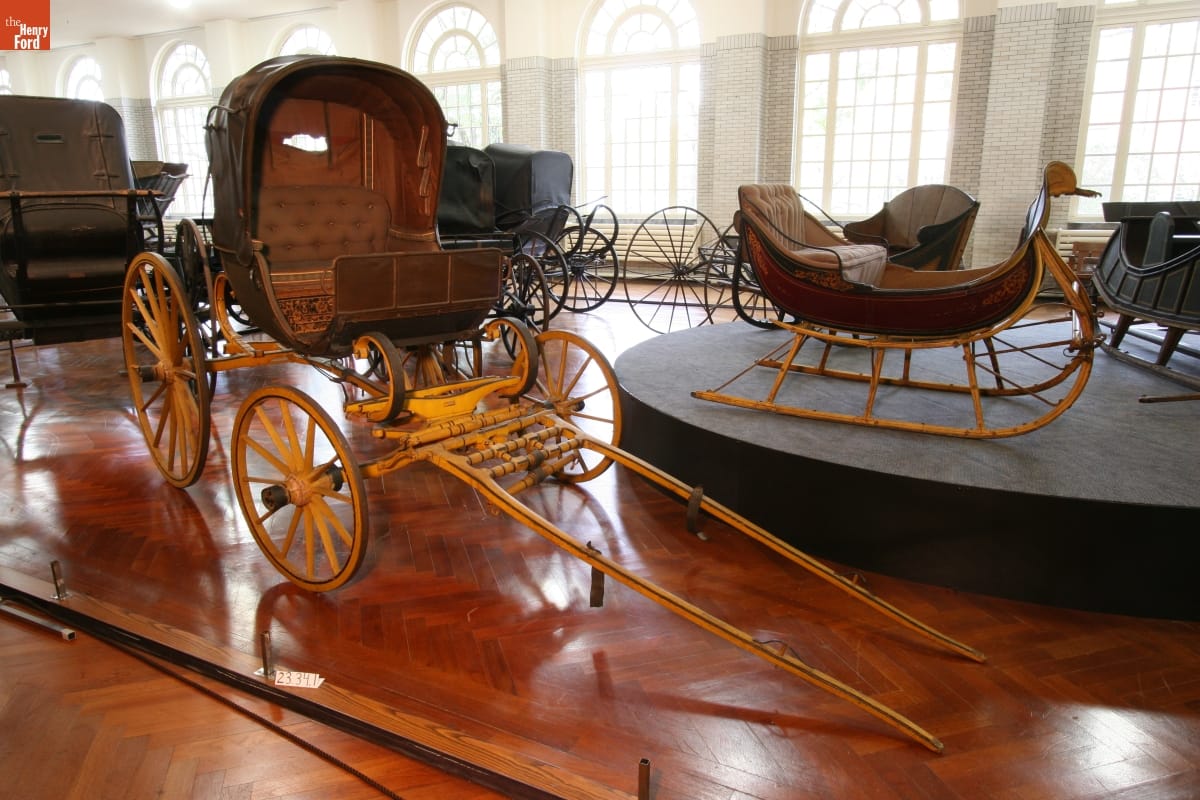
- Phaeton, 1792-1812 - Before the Industrial Revolution, personal transportation vehicles were a privilege of wealth. This phaeton was owned by three generations of the prosperous Baker family of New Hampshire. Light, four-wheel phaeton carriages were popular for their open, sporty appearance. "Phaeton" comes from the Phaeton of Greek mythology, who recklessly drove the carriage that carried the Sun.
- 1792-1812
- Collections - Artifact
Phaeton, 1792-1812
Before the Industrial Revolution, personal transportation vehicles were a privilege of wealth. This phaeton was owned by three generations of the prosperous Baker family of New Hampshire. Light, four-wheel phaeton carriages were popular for their open, sporty appearance. "Phaeton" comes from the Phaeton of Greek mythology, who recklessly drove the carriage that carried the Sun.
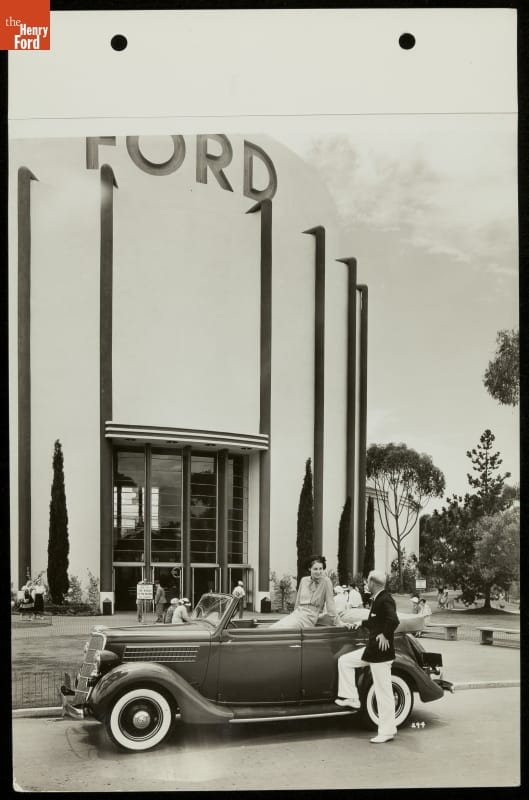
- Ford V-8 Phaeton in Front of Ford Building, California Pacific International Exposition, San Diego, 1935 - Resembling two engaged gears, Ford's steel, concrete, and glass exhibition building towered above more traditional structures at the 1935 California Pacific International Exposition. The Ford Building -- created in the "Streamline Moderne" architectural style by industrial design pioneer Walter Dorwin Teague -- combined clean curves and sharp lines with modern materials, reflecting technological progress in the new machine age.
- 1935
- Collections - Artifact
Ford V-8 Phaeton in Front of Ford Building, California Pacific International Exposition, San Diego, 1935
Resembling two engaged gears, Ford's steel, concrete, and glass exhibition building towered above more traditional structures at the 1935 California Pacific International Exposition. The Ford Building -- created in the "Streamline Moderne" architectural style by industrial design pioneer Walter Dorwin Teague -- combined clean curves and sharp lines with modern materials, reflecting technological progress in the new machine age.
- Noyes Piano Box Buggy, circa 1910 - Factory-built buggies made the pleasures of carriage ownership affordable for a new group of people. Whether in town or on the farm, people loved these inexpensive, lightweight vehicles. The piano box buggy -- named for its resemblance to 19th-century square pianos -- was the most popular of all. Buggy owners quickly became accustomed to the freedom and control offered by personal vehicles.

- circa 1910
- Collections - Artifact
Noyes Piano Box Buggy, circa 1910
Factory-built buggies made the pleasures of carriage ownership affordable for a new group of people. Whether in town or on the farm, people loved these inexpensive, lightweight vehicles. The piano box buggy -- named for its resemblance to 19th-century square pianos -- was the most popular of all. Buggy owners quickly became accustomed to the freedom and control offered by personal vehicles.
- 1930 Ford Model A DeLuxe Phaeton - Ford's Model A received its first major styling updates with the 1930 model year. The deeper radiator shell and wider fenders were obvious changes, while the smaller wheels and larger tires subtly made the car look lower. Six new body styles were added. Ford Motor Company produced more than 1.1 million cars that year.
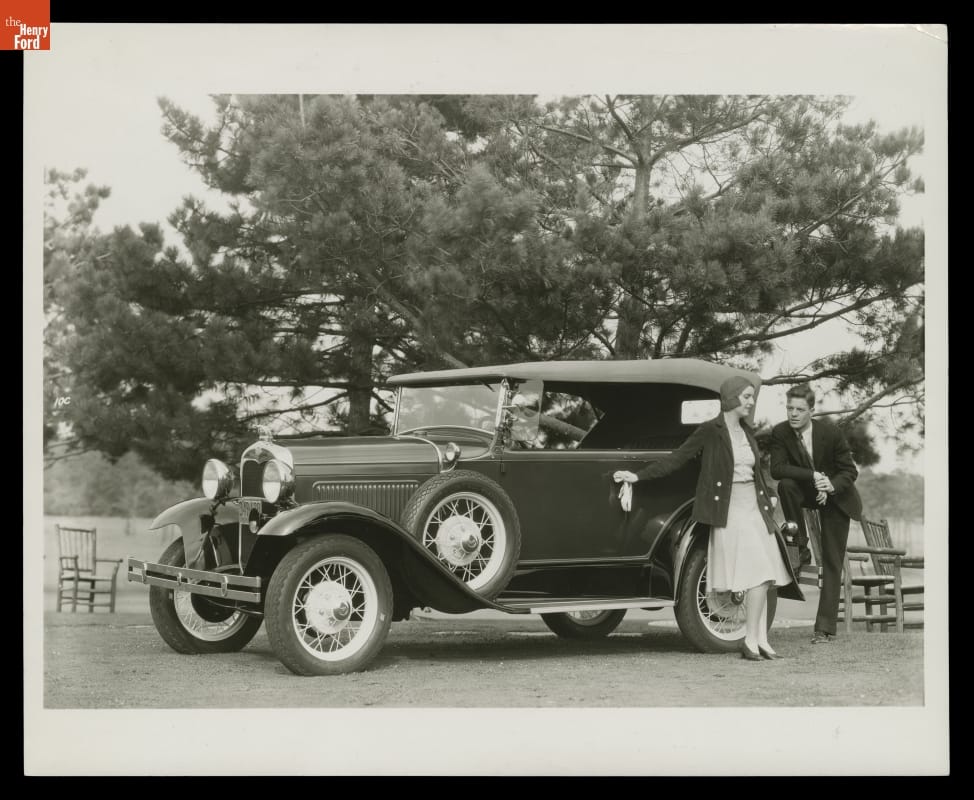
- August 20, 1930
- Collections - Artifact
1930 Ford Model A DeLuxe Phaeton
Ford's Model A received its first major styling updates with the 1930 model year. The deeper radiator shell and wider fenders were obvious changes, while the smaller wheels and larger tires subtly made the car look lower. Six new body styles were added. Ford Motor Company produced more than 1.1 million cars that year.