
Search
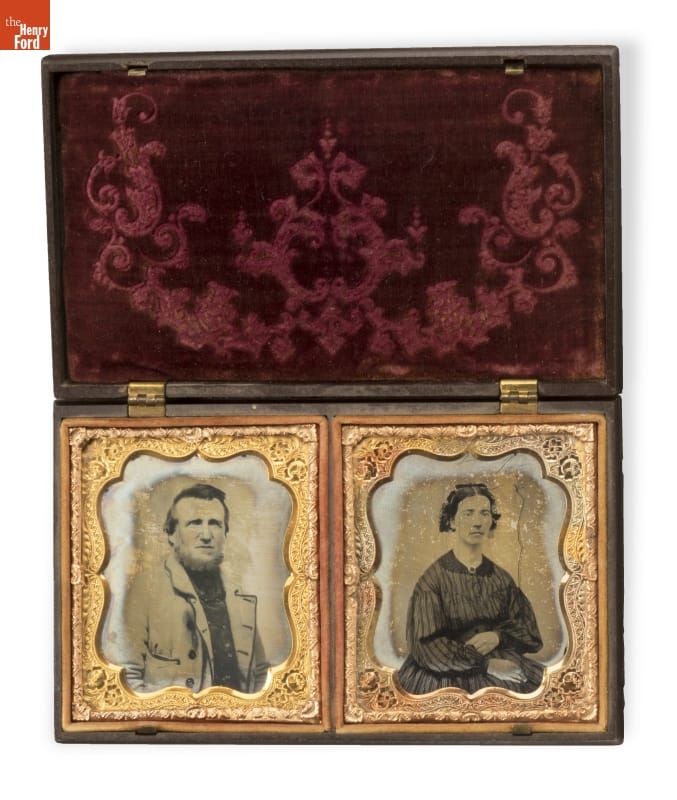
- Portraits of Dr. Alonson B. Howard, circa 1865-1866 and Cynthia Coryell Edmunds Howard, circa 1858-1860 - Alonson Howard, Jr., a doctor practicing medicine in Tekonsha Township, Michigan, married his second wife, Cynthia Coryell Edmunds, in August 1858. Dr. Howard's first wife had passed away a year earlier. Cynthia became a caring stepmother to Alonson's two sons, and the couple would have four children of their own.
- circa 1858-circa 1865
- Collections - Artifact
Portraits of Dr. Alonson B. Howard, circa 1865-1866 and Cynthia Coryell Edmunds Howard, circa 1858-1860
Alonson Howard, Jr., a doctor practicing medicine in Tekonsha Township, Michigan, married his second wife, Cynthia Coryell Edmunds, in August 1858. Dr. Howard's first wife had passed away a year earlier. Cynthia became a caring stepmother to Alonson's two sons, and the couple would have four children of their own.
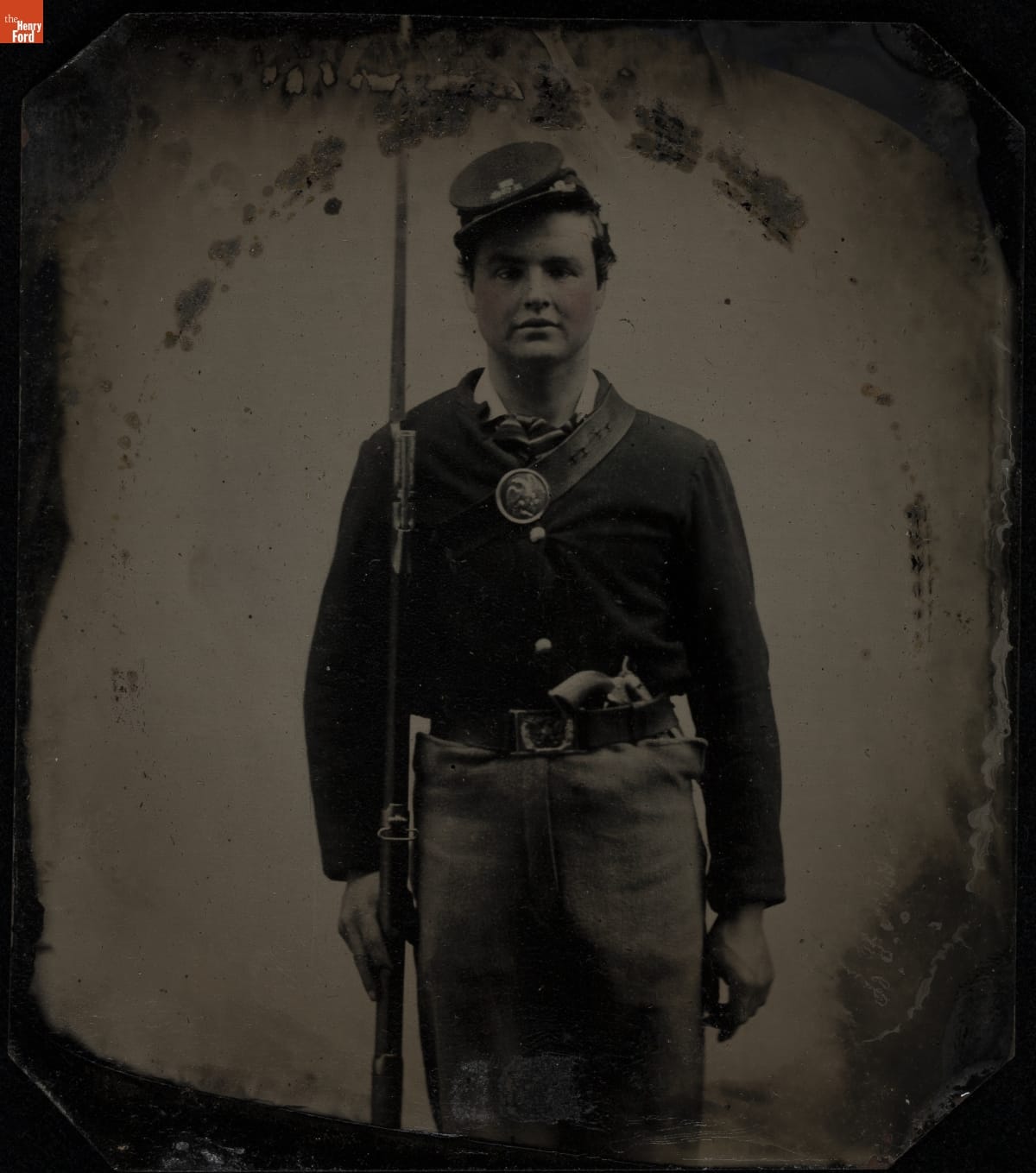
- Private Frank Stough with an 1842 Springfield Rifle, circa 1865 - Tintypes, the popular "instant photographs" of the 19th century, could be produced in a matter of minutes at a price most people could afford. Tintypes democratized photography. Beginning in the mid-1850s, they gave more people than ever before the chance to have a real likeness of themselves--capturing unique glimpses of how everyday Americans looked and lived.
- circa 1865
- Collections - Artifact
Private Frank Stough with an 1842 Springfield Rifle, circa 1865
Tintypes, the popular "instant photographs" of the 19th century, could be produced in a matter of minutes at a price most people could afford. Tintypes democratized photography. Beginning in the mid-1850s, they gave more people than ever before the chance to have a real likeness of themselves--capturing unique glimpses of how everyday Americans looked and lived.
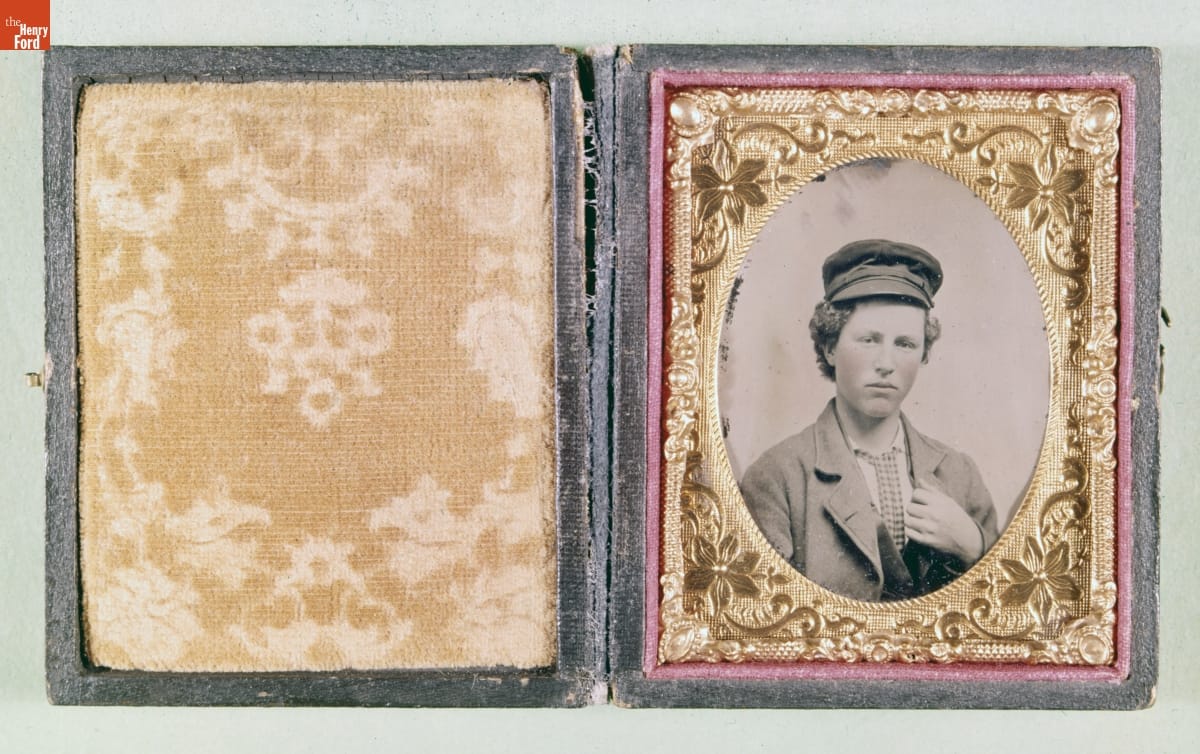
- Portrait of Thomas Edison While Working on the Grand Trunk Railroad, 1859-1862 - Ambrotypes (meaning, "imperishable pictures") were popular in the mid-1850s through the 1860s. Glass plates coated with photosensitive collodion were exposed in cameras while wet. The resulting image on glass, backed with black material, appeared as a photographic positive. Ambrotypes replaced daguerrotypes as an affordable and convenient alternative; however, improvements in photographic processes soon led to widespread adoption of the tintype.
- 1859-1862
- Collections - Artifact
Portrait of Thomas Edison While Working on the Grand Trunk Railroad, 1859-1862
Ambrotypes (meaning, "imperishable pictures") were popular in the mid-1850s through the 1860s. Glass plates coated with photosensitive collodion were exposed in cameras while wet. The resulting image on glass, backed with black material, appeared as a photographic positive. Ambrotypes replaced daguerrotypes as an affordable and convenient alternative; however, improvements in photographic processes soon led to widespread adoption of the tintype.
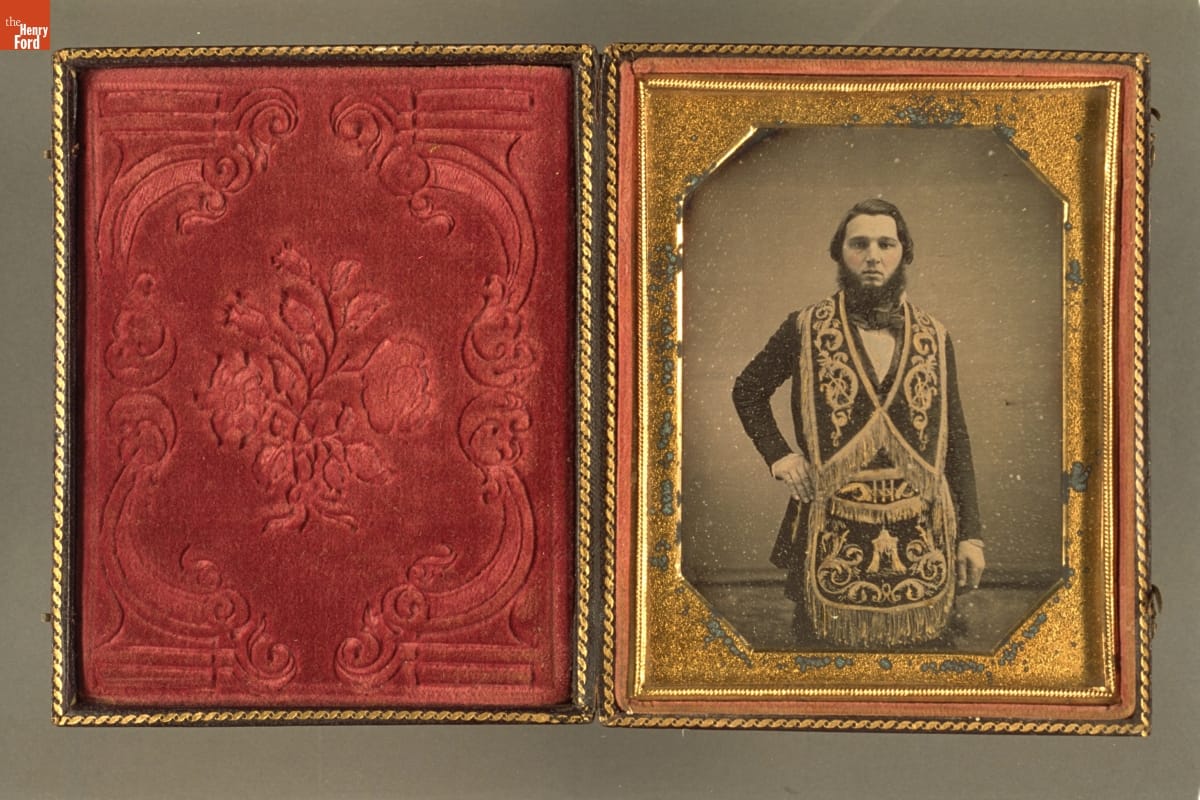
- Member of the Independent Order of Odd Fellows, circa 1850 - The daguerreotype, popular in the early 1840s-late 1850s, was the first form of photography available to the public. Sheets of silver-plated copper--polished to a mirror finish--were bathed in photosensitive vapors, and exposed in cameras. In formal studios and traveling booths, photographers created affordable portraits. For the first time, people saw their likenesses--fixed permanently in time and place.
- circa 1850
- Collections - Artifact
Member of the Independent Order of Odd Fellows, circa 1850
The daguerreotype, popular in the early 1840s-late 1850s, was the first form of photography available to the public. Sheets of silver-plated copper--polished to a mirror finish--were bathed in photosensitive vapors, and exposed in cameras. In formal studios and traveling booths, photographers created affordable portraits. For the first time, people saw their likenesses--fixed permanently in time and place.
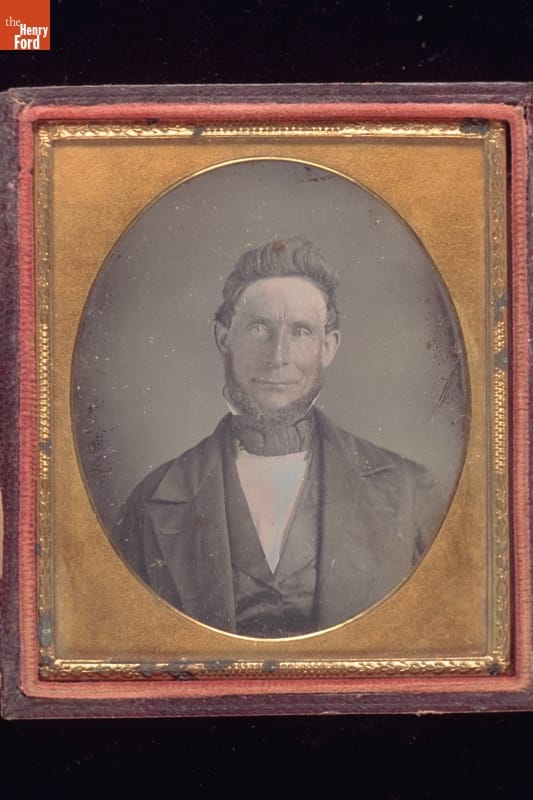
- Portrait of Leo Adler, Wisconsin, 1860 - The daguerreotype, popular in the early 1840s-late 1850s, was the first form of photography available to the public. Sheets of silver-plated copper--polished to a mirror finish--were bathed in photosensitive vapors, and exposed in cameras. In formal studios and traveling booths, photographers created affordable portraits. For the first time, people saw their likenesses--fixed permanently in time and place.
- 1860
- Collections - Artifact
Portrait of Leo Adler, Wisconsin, 1860
The daguerreotype, popular in the early 1840s-late 1850s, was the first form of photography available to the public. Sheets of silver-plated copper--polished to a mirror finish--were bathed in photosensitive vapors, and exposed in cameras. In formal studios and traveling booths, photographers created affordable portraits. For the first time, people saw their likenesses--fixed permanently in time and place.
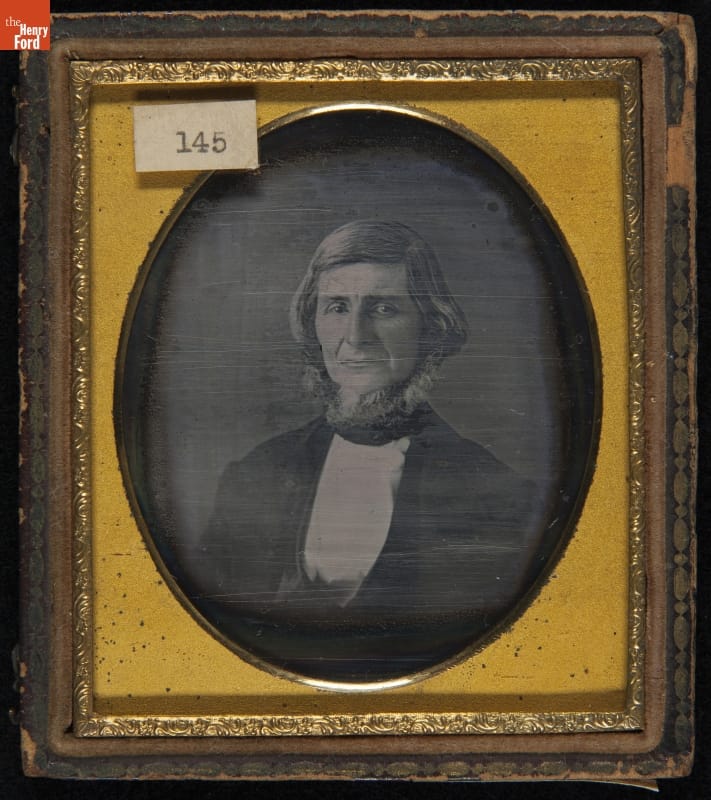
- Portrait of a Man, circa 1855 - The daguerreotype, popular in the early 1840s-late 1850s, was the first form of photography available to the public. Sheets of silver-plated copper--polished to a mirror finish--were bathed in photosensitive vapors, and exposed in cameras. In formal studios and traveling booths, photographers created affordable portraits. For the first time, people saw their likenesses--fixed permanently in time and place.
- circa 1855
- Collections - Artifact
Portrait of a Man, circa 1855
The daguerreotype, popular in the early 1840s-late 1850s, was the first form of photography available to the public. Sheets of silver-plated copper--polished to a mirror finish--were bathed in photosensitive vapors, and exposed in cameras. In formal studios and traveling booths, photographers created affordable portraits. For the first time, people saw their likenesses--fixed permanently in time and place.
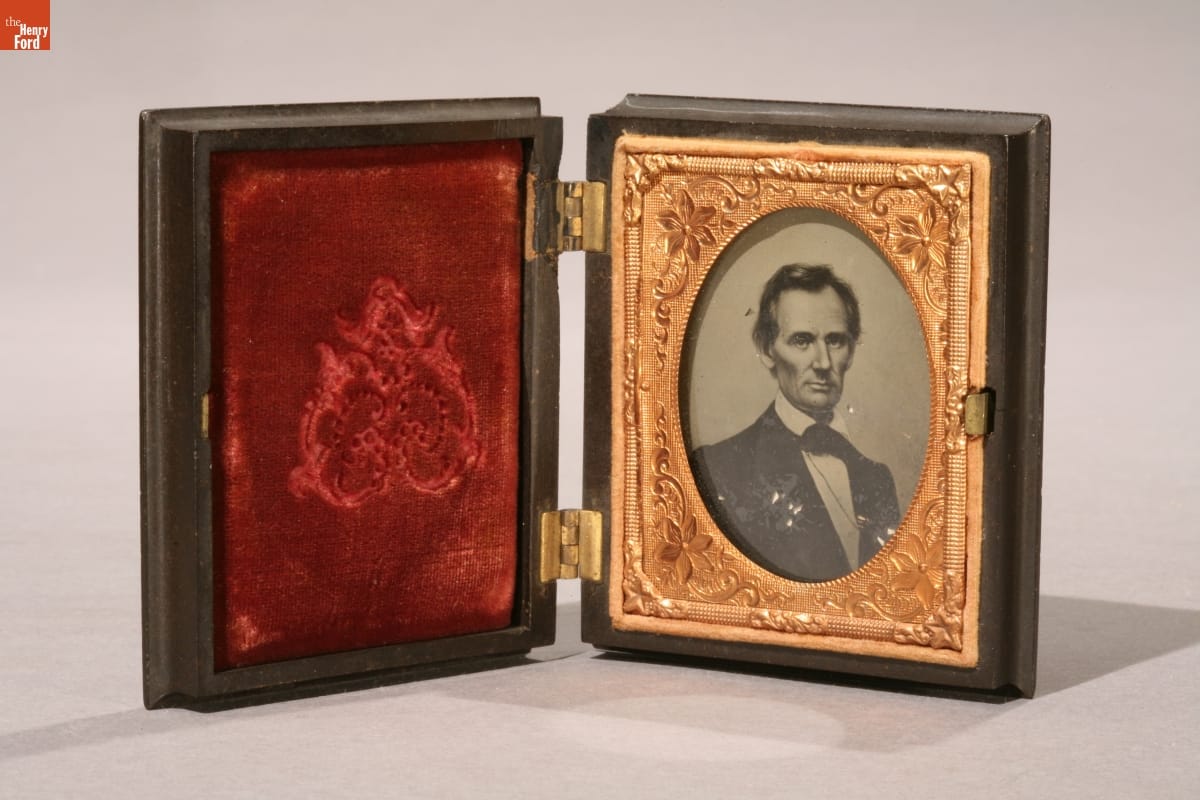
- Abraham Lincoln Ambrotype Portrait and Presidential Election Campaign Badge, 1860 - This portrait of Abraham Lincoln was used as a campaign badge during the 1860 presidential election. It was originally housed in an oval brass frame and pinned to one's clothing. The ambrotype is based on a photograph of Lincoln taken by Mathew B. Brady on February 27, 1860. Lincoln was in New York City to give a speech at Cooper Union.
- 1860
- Collections - Artifact
Abraham Lincoln Ambrotype Portrait and Presidential Election Campaign Badge, 1860
This portrait of Abraham Lincoln was used as a campaign badge during the 1860 presidential election. It was originally housed in an oval brass frame and pinned to one's clothing. The ambrotype is based on a photograph of Lincoln taken by Mathew B. Brady on February 27, 1860. Lincoln was in New York City to give a speech at Cooper Union.
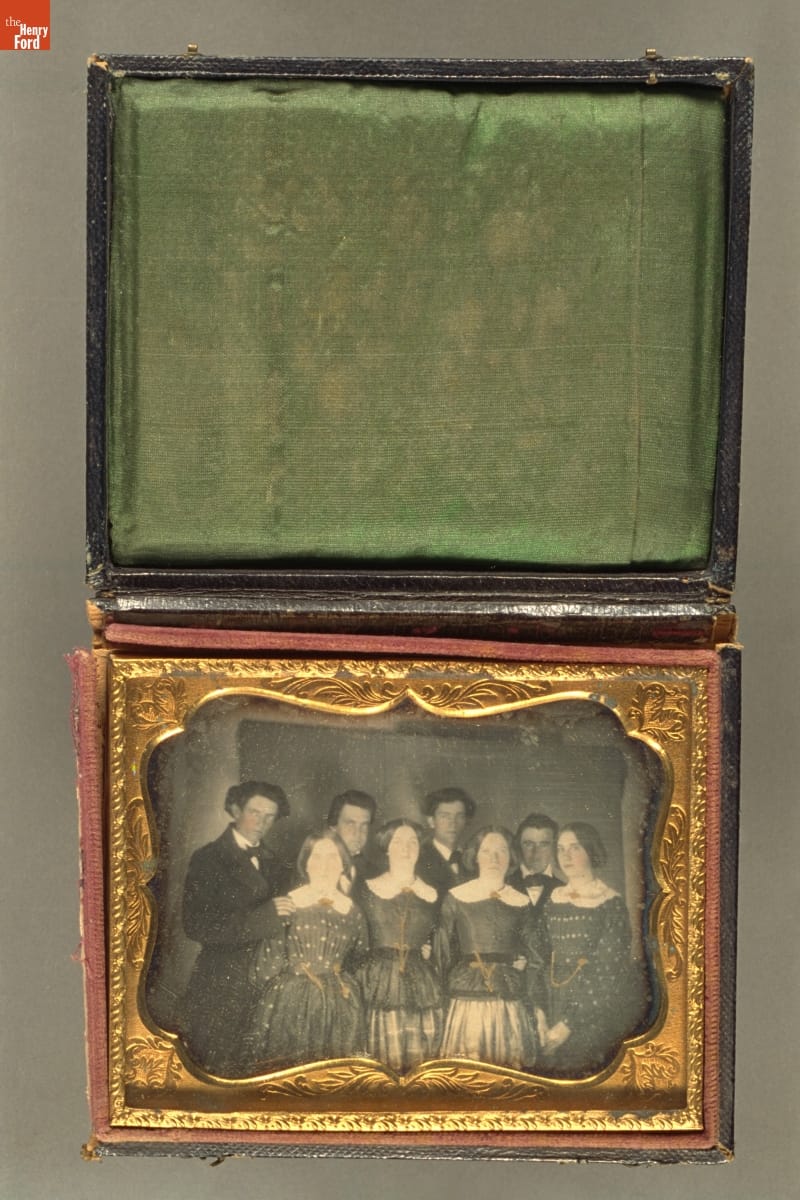
- Group Portrait of Faculty, circa 1855 - The daguerreotype, popular in the early 1840s-late 1850s, was the first form of photography available to the public. Sheets of silver-plated copper--polished to a mirror finish--were bathed in photosensitive vapors, and exposed in cameras. In formal studios and traveling booths, photographers created affordable portraits. For the first time, people saw their likenesses--fixed permanently in time and place.
- 1850-1855
- Collections - Artifact
Group Portrait of Faculty, circa 1855
The daguerreotype, popular in the early 1840s-late 1850s, was the first form of photography available to the public. Sheets of silver-plated copper--polished to a mirror finish--were bathed in photosensitive vapors, and exposed in cameras. In formal studios and traveling booths, photographers created affordable portraits. For the first time, people saw their likenesses--fixed permanently in time and place.
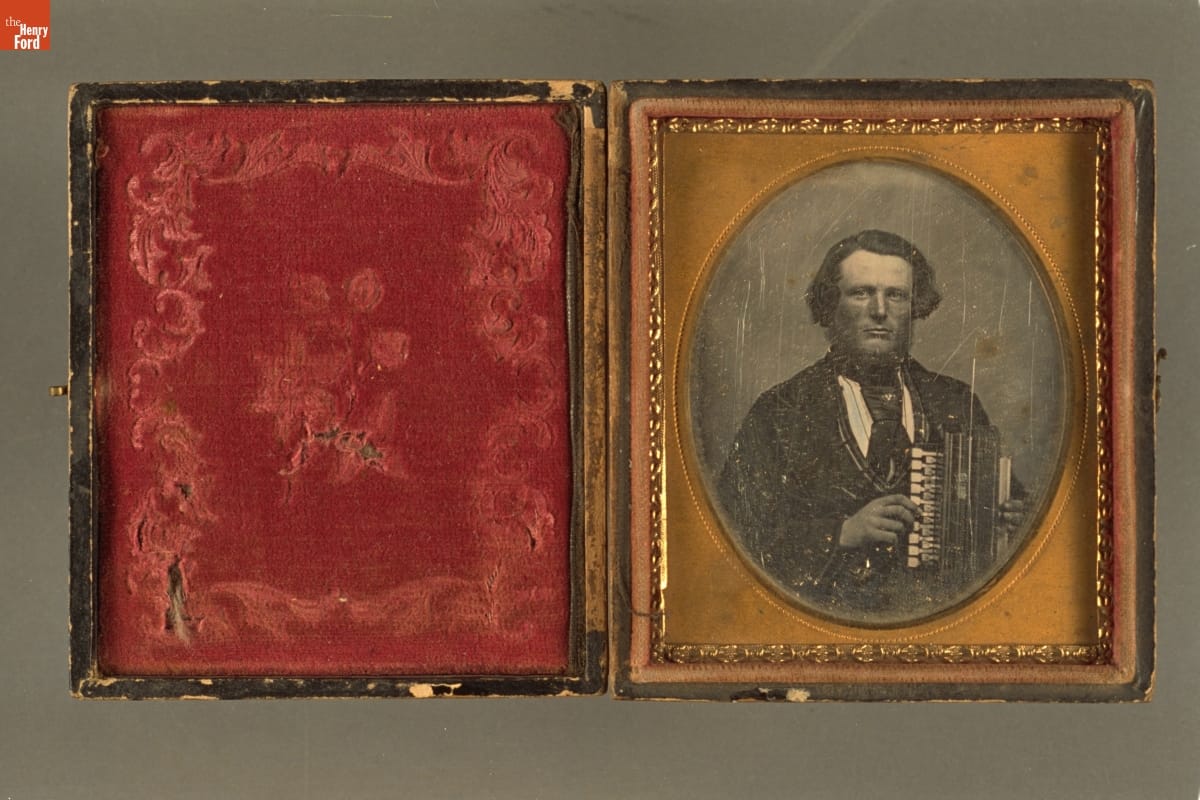
- Man with Accordion, circa 1855 - The daguerreotype, popular in the early 1840s-late 1850s, was the first form of photography available to the public. Sheets of silver-plated copper--polished to a mirror finish--were bathed in photosensitive vapors, and exposed in cameras. In formal studios and traveling booths, photographers created affordable portraits. For the first time, people saw their likenesses--fixed permanently in time and place.
- circa 1855
- Collections - Artifact
Man with Accordion, circa 1855
The daguerreotype, popular in the early 1840s-late 1850s, was the first form of photography available to the public. Sheets of silver-plated copper--polished to a mirror finish--were bathed in photosensitive vapors, and exposed in cameras. In formal studios and traveling booths, photographers created affordable portraits. For the first time, people saw their likenesses--fixed permanently in time and place.
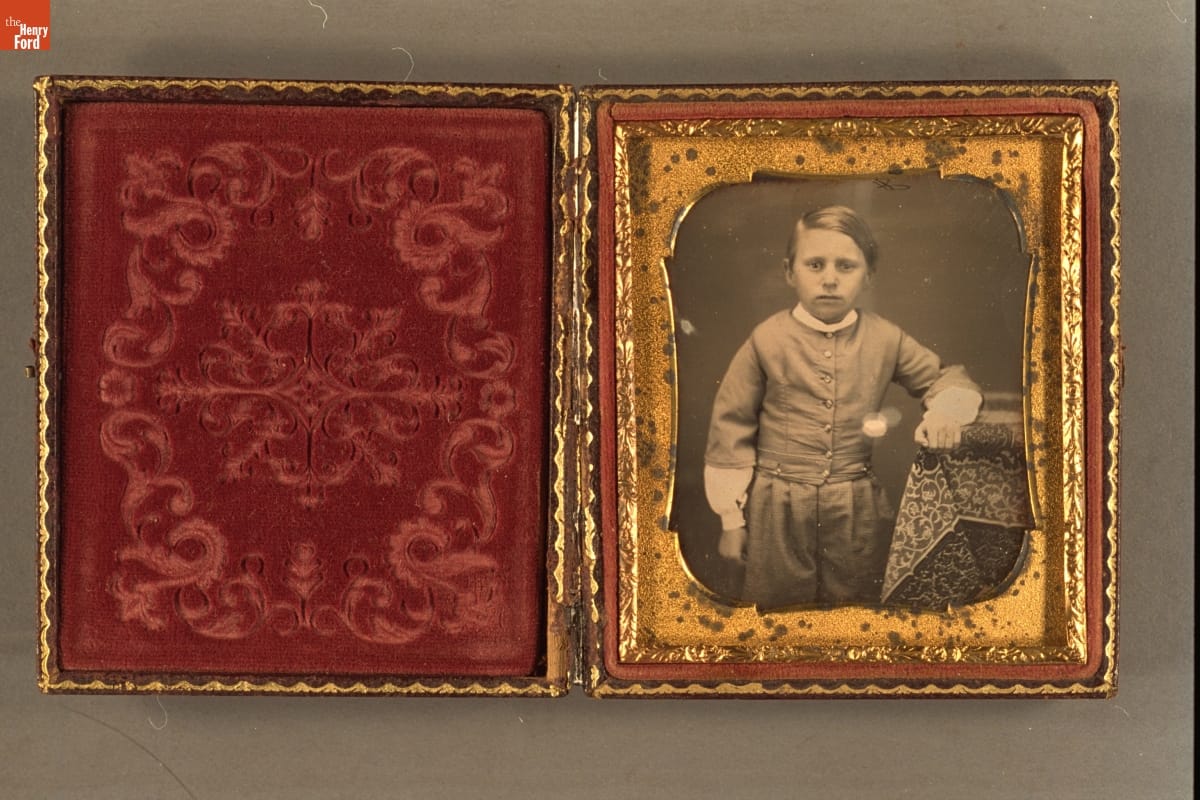
- Portrait of a Boy, circa 1854 - The daguerreotype, popular in the early 1840s-late 1850s, was the first form of photography available to the public. Sheets of silver-plated copper--polished to a mirror finish--were bathed in photosensitive vapors, and exposed in cameras. In formal studios and traveling booths, photographers created affordable portraits. For the first time, people saw their likenesses--fixed permanently in time and place.
- circa 1854
- Collections - Artifact
Portrait of a Boy, circa 1854
The daguerreotype, popular in the early 1840s-late 1850s, was the first form of photography available to the public. Sheets of silver-plated copper--polished to a mirror finish--were bathed in photosensitive vapors, and exposed in cameras. In formal studios and traveling booths, photographers created affordable portraits. For the first time, people saw their likenesses--fixed permanently in time and place.