
Search
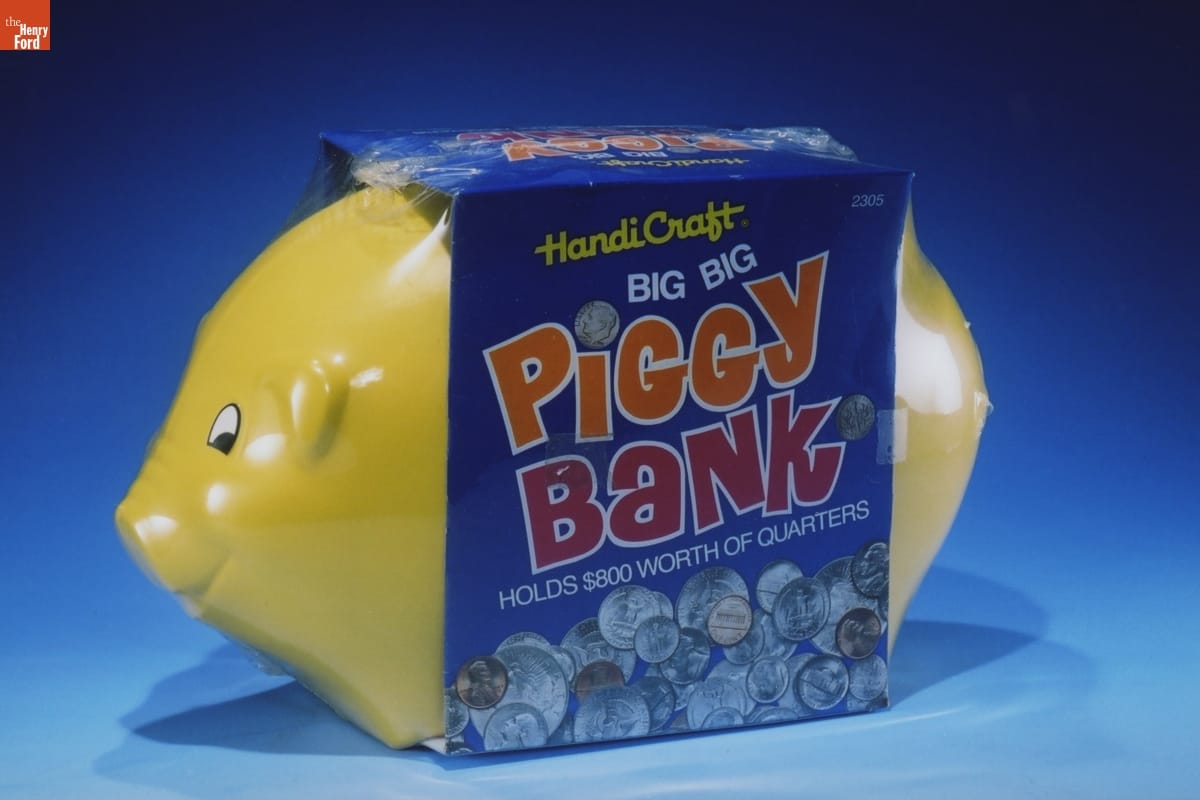
- Piggy Bank, 1991 - Still banks provide a simple way to save money. You place your coin in the slot then let it drop -- there are no mechanical devices. Still banks come in a variety of interesting and decorative shapes, including buildings, people, and animals. This yellow plastic "piggy" bank -- a popular form used for saving money -- was made in 1991.
- 1991
- Collections - Artifact
Piggy Bank, 1991
Still banks provide a simple way to save money. You place your coin in the slot then let it drop -- there are no mechanical devices. Still banks come in a variety of interesting and decorative shapes, including buildings, people, and animals. This yellow plastic "piggy" bank -- a popular form used for saving money -- was made in 1991.
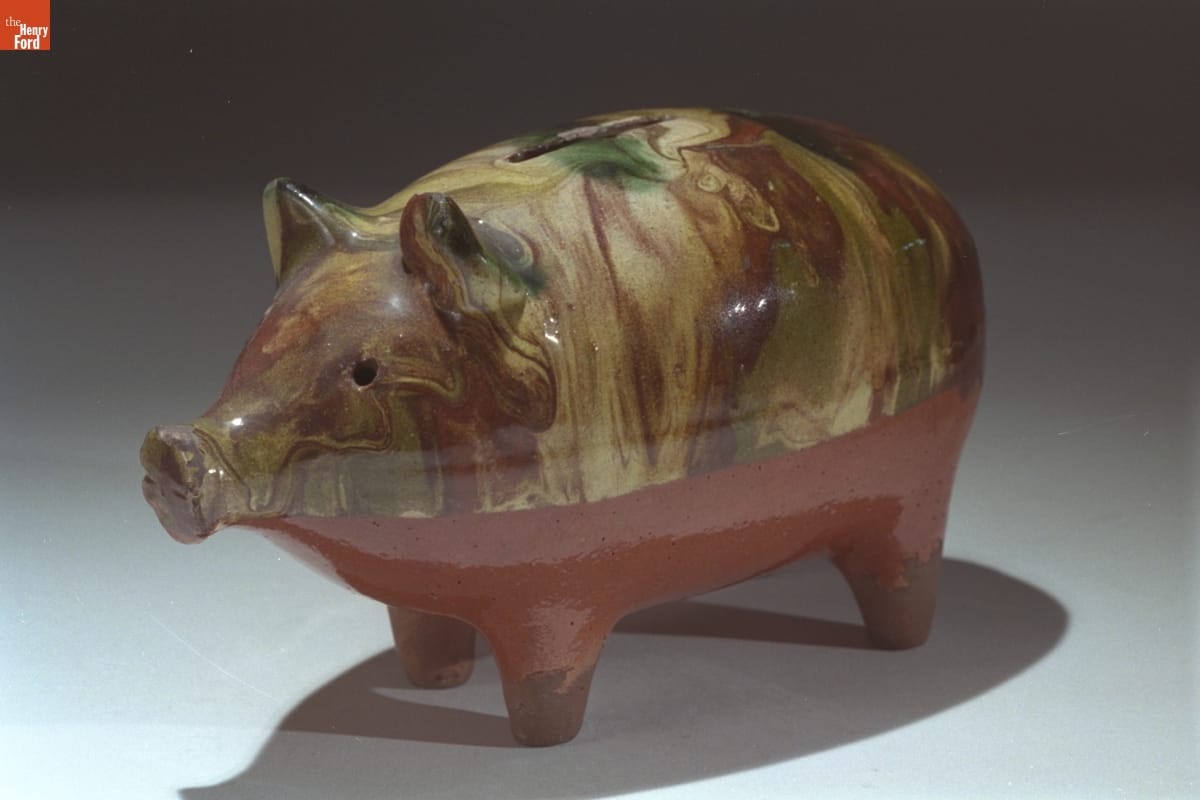
- Piggy Bank, 1870-1920 - In the late-19th and early-20th centuries, toy banks were marketed to parents as a way to encourage thrift in children. Some banks used mechanical actions to deposit a coin, while others, like this one, just had a slot where the coin was dropped. These simple banks came in a variety of shapes that delighted children of all ages.
- 1870-1920
- Collections - Artifact
Piggy Bank, 1870-1920
In the late-19th and early-20th centuries, toy banks were marketed to parents as a way to encourage thrift in children. Some banks used mechanical actions to deposit a coin, while others, like this one, just had a slot where the coin was dropped. These simple banks came in a variety of shapes that delighted children of all ages.
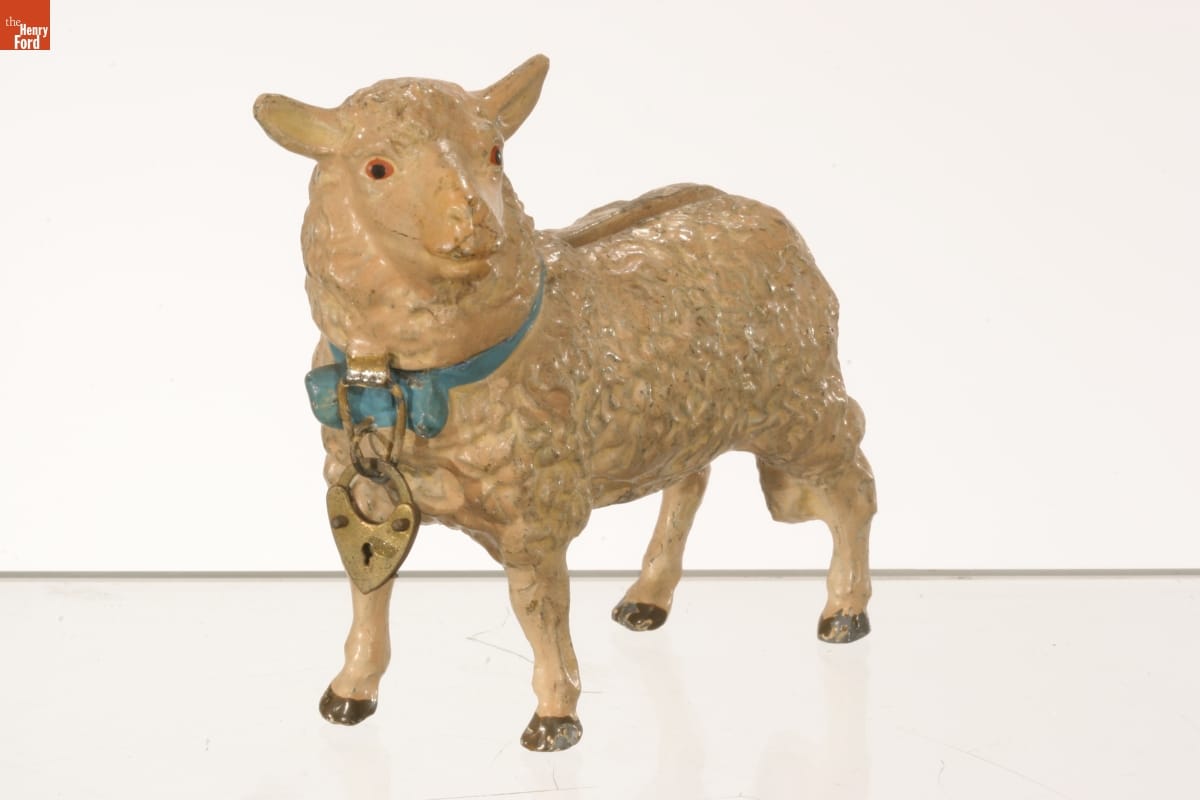
- Sheep Bank, 1900-1930 - In the late-19th and early-20th centuries, several manufacturers marketed cast-iron toy banks to parents as a way to encourage thrift in children. Some banks used mechanical actions to deposit a coin, while others, like this one, just had a slot where the coin was dropped. These simple banks came in a variety of shapes that delighted children of all ages.
- 1900-1930
- Collections - Artifact
Sheep Bank, 1900-1930
In the late-19th and early-20th centuries, several manufacturers marketed cast-iron toy banks to parents as a way to encourage thrift in children. Some banks used mechanical actions to deposit a coin, while others, like this one, just had a slot where the coin was dropped. These simple banks came in a variety of shapes that delighted children of all ages.
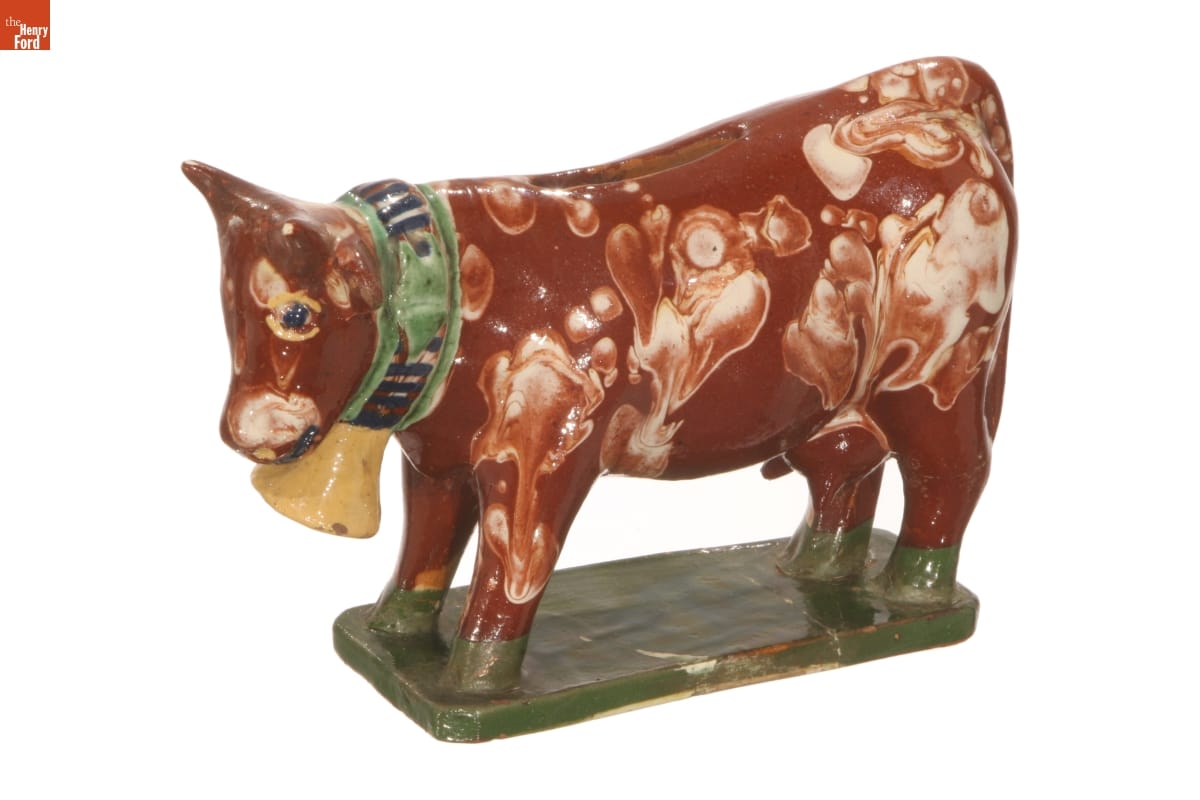
- Cow Bank, 1900-1920 - In the late-19th and early-20th centuries, toy banks were marketed to parents as a way to encourage thrift in children. Some banks used mechanical actions to deposit a coin, while others, like this one, just had a slot where the coin was dropped. These simple banks came in a variety of shapes that delighted children of all ages.
- 1900-1920
- Collections - Artifact
Cow Bank, 1900-1920
In the late-19th and early-20th centuries, toy banks were marketed to parents as a way to encourage thrift in children. Some banks used mechanical actions to deposit a coin, while others, like this one, just had a slot where the coin was dropped. These simple banks came in a variety of shapes that delighted children of all ages.