
Sheep Bank, 1900-1930
THF33483 / Sheep Bank, 1900-1930
01
Artifact Overview
In the late-19th and early-20th centuries, several manufacturers marketed cast-iron toy banks to parents as a way to encourage thrift in children. Some banks used mechanical actions to deposit a coin, while others, like this one, just had a slot where the coin was dropped. These simple banks came in a variety of shapes that delighted children of all ages.
Artifact Details
Artifact
Bank (Container)
Date Made
1900-1930
Place of Creation
Creator Notes
Attributed to an American maker
Location
at Greenfield Village in Soybean Lab Agricultural Gallery
Object ID
38.309.79
Credit
From the Collections of The Henry Ford. Gift of Susan Stebbins Stark.
Material
Cast iron
Color
White (Color)
Blue
Dimensions
Height: 3.75 in
Width: 1.50 in
Length: 3.75 in
Keywords |
|---|
02
Related Content
 Set
SetSheep
- 12 Artifacts
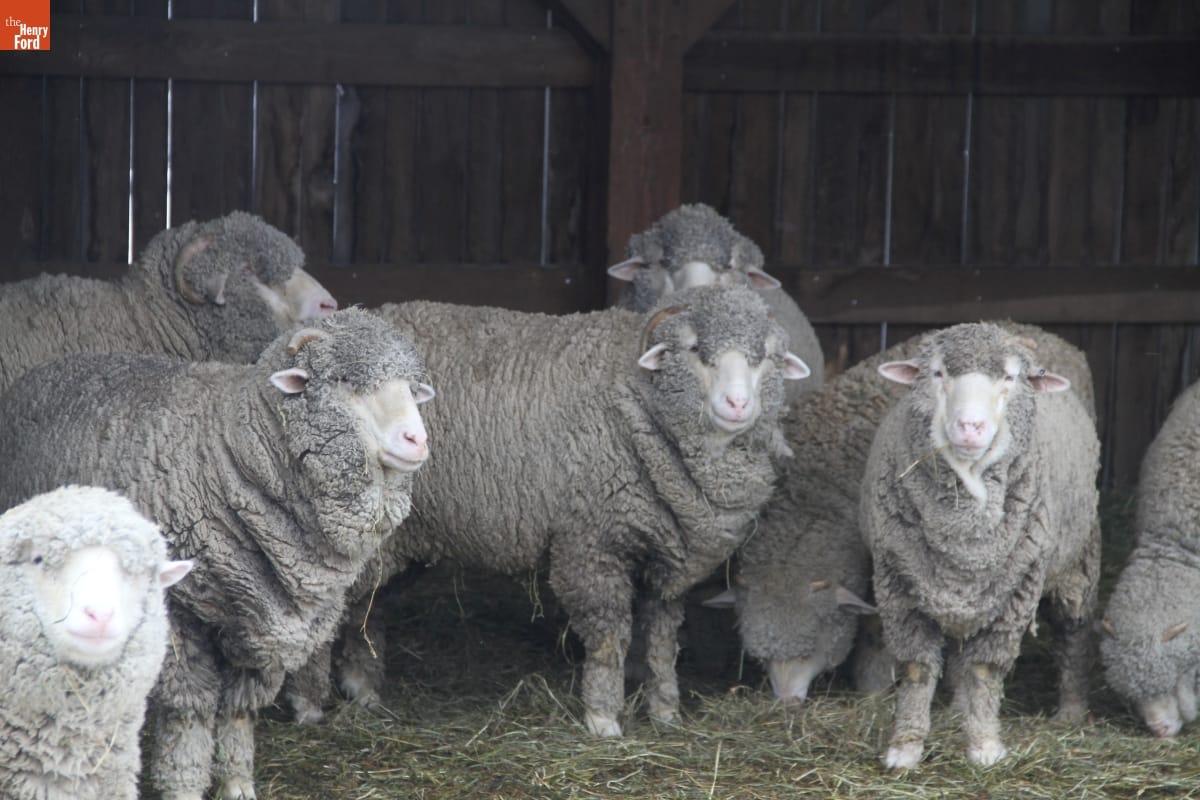
Sheep supply two items essential for human survival, wool for clothing and meat for food. This makes them a farm asset, but protecting sheep requires vigilance. Sheep are social animals with an instinct to move together as a flock. Shepherds use dogs to help protect their flock and herd animals from pens to pasture and back. The close bond conjures visions of a bucolic rural past, emphasizing human-animal relationships.