
Search
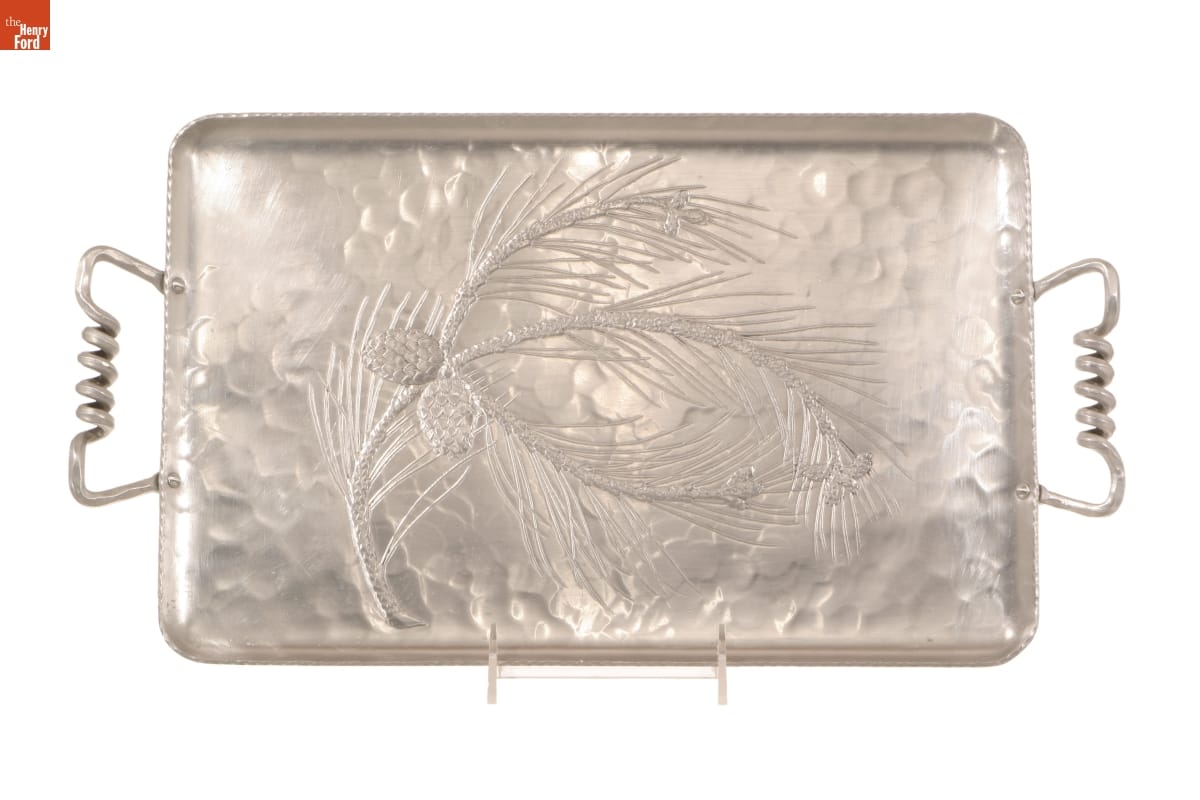
- Everlast "Forged Pine" Serving Tray, 1938-1950 - In 1932, Louis Schnitzer and Nathan Gelfman formed Everlast Metal Products Corporation, producing high-quality, hand-forged aluminum giftware. In an era of growing uniformity via factory production, the "made by hand" aspect of these products held an aesthetic appeal for consumers. In 1933, Everlast introduced its first product line, "Forged Giftware," featuring Colonial Revival inspired designs. The "Forged Pine" pattern was introduced in 1935.
- 1938-1950
- Collections - Artifact
Everlast "Forged Pine" Serving Tray, 1938-1950
In 1932, Louis Schnitzer and Nathan Gelfman formed Everlast Metal Products Corporation, producing high-quality, hand-forged aluminum giftware. In an era of growing uniformity via factory production, the "made by hand" aspect of these products held an aesthetic appeal for consumers. In 1933, Everlast introduced its first product line, "Forged Giftware," featuring Colonial Revival inspired designs. The "Forged Pine" pattern was introduced in 1935.
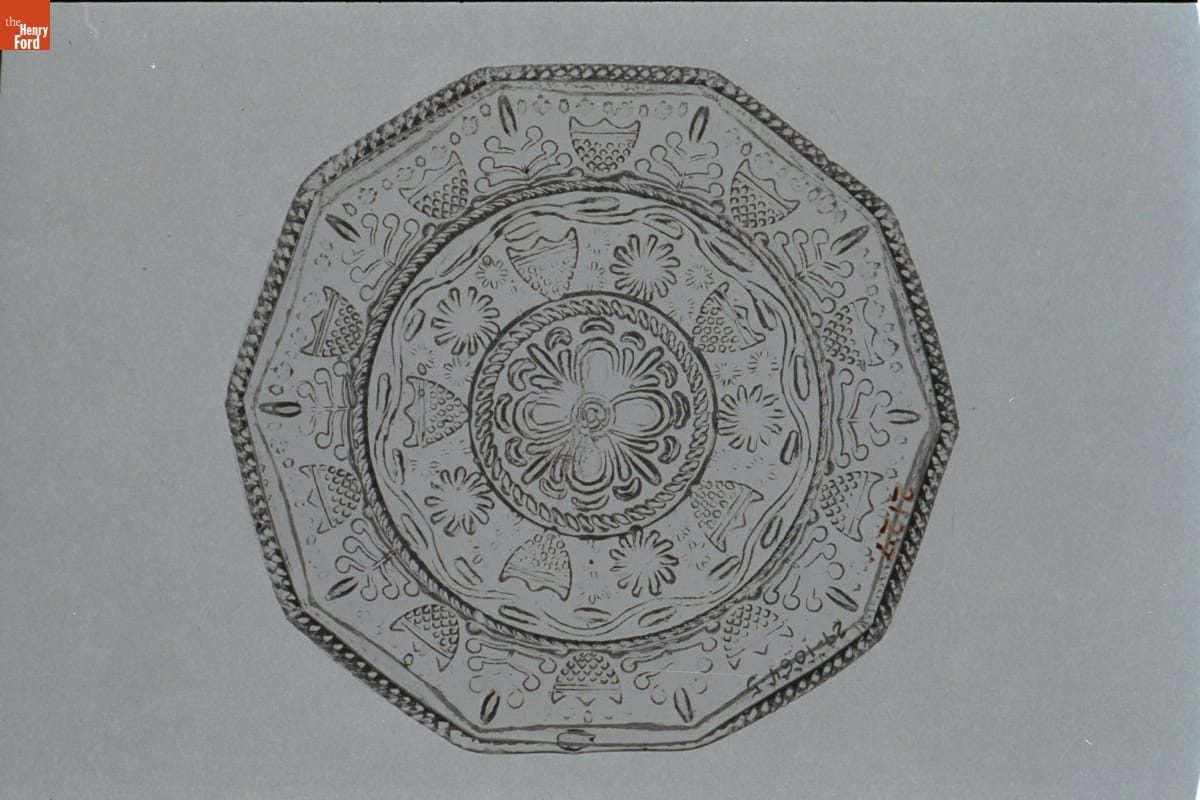
- Cup Plate, 1825-1860 - Americans in the early 19th century poured hot tea into their saucers to cool -- leaving the staining liquid around the teacup's base. Hostesses would provide guests with cup plates to prevent damage to tablecloths and wood. Pressed glass cup plates were popular from the 1820s to the 1860s. Pressed designs varied from purely decorative to images of famous men, places and events.
- 1825-1860
- Collections - Artifact
Cup Plate, 1825-1860
Americans in the early 19th century poured hot tea into their saucers to cool -- leaving the staining liquid around the teacup's base. Hostesses would provide guests with cup plates to prevent damage to tablecloths and wood. Pressed glass cup plates were popular from the 1820s to the 1860s. Pressed designs varied from purely decorative to images of famous men, places and events.
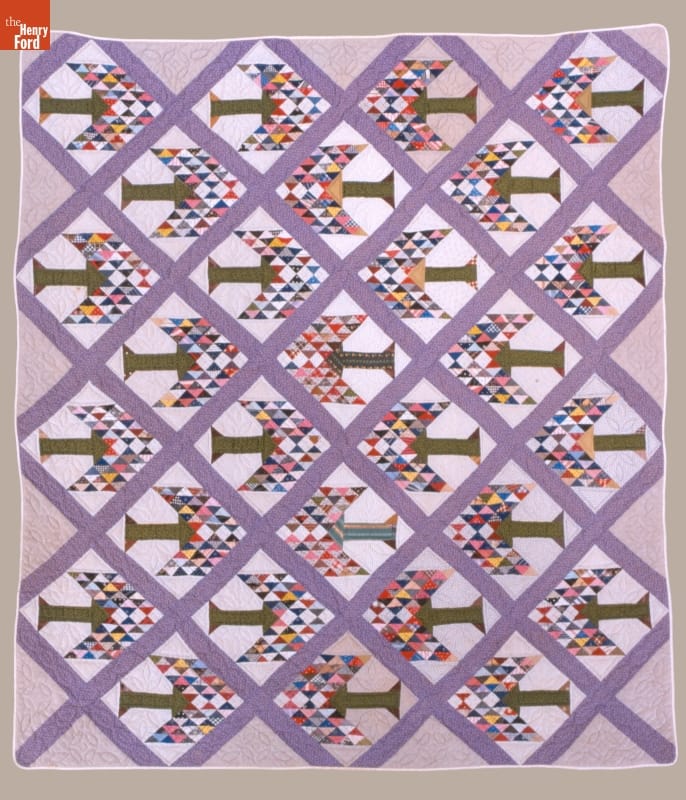
- Pine Tree Quilt by Susan McCord, circa 1900 - Susan McCord pieced this Pine Tree pattern quilt top, but never finished it. Her descendants later had it quilted so that this bedcovering could be used. It is one of McCord's later quilts, and includes many turn-of-the-twentieth century fabric scraps. A close look reveals some fabrics seen in other McCord quilts. Purple calico sashing sets off the scrappy pine trees nicely.
- circa 1900
- Collections - Artifact
Pine Tree Quilt by Susan McCord, circa 1900
Susan McCord pieced this Pine Tree pattern quilt top, but never finished it. Her descendants later had it quilted so that this bedcovering could be used. It is one of McCord's later quilts, and includes many turn-of-the-twentieth century fabric scraps. A close look reveals some fabrics seen in other McCord quilts. Purple calico sashing sets off the scrappy pine trees nicely.
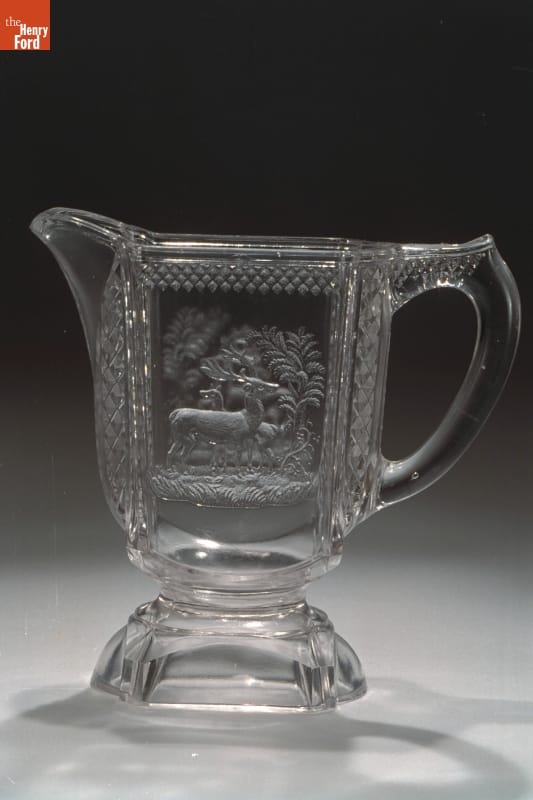
- Creamer, 1870-1880 - Middle-class Americans in the late 19th century arrayed their dining tables with affordable pressed-glass tableware. These items, usually sold in sets, came in a wide variety of patterns, colors, and styles. These decorative pieces -- like this cream pitcher -- communicated a family's status and taste to visitors and guests.
- 1870-1880
- Collections - Artifact
Creamer, 1870-1880
Middle-class Americans in the late 19th century arrayed their dining tables with affordable pressed-glass tableware. These items, usually sold in sets, came in a wide variety of patterns, colors, and styles. These decorative pieces -- like this cream pitcher -- communicated a family's status and taste to visitors and guests.
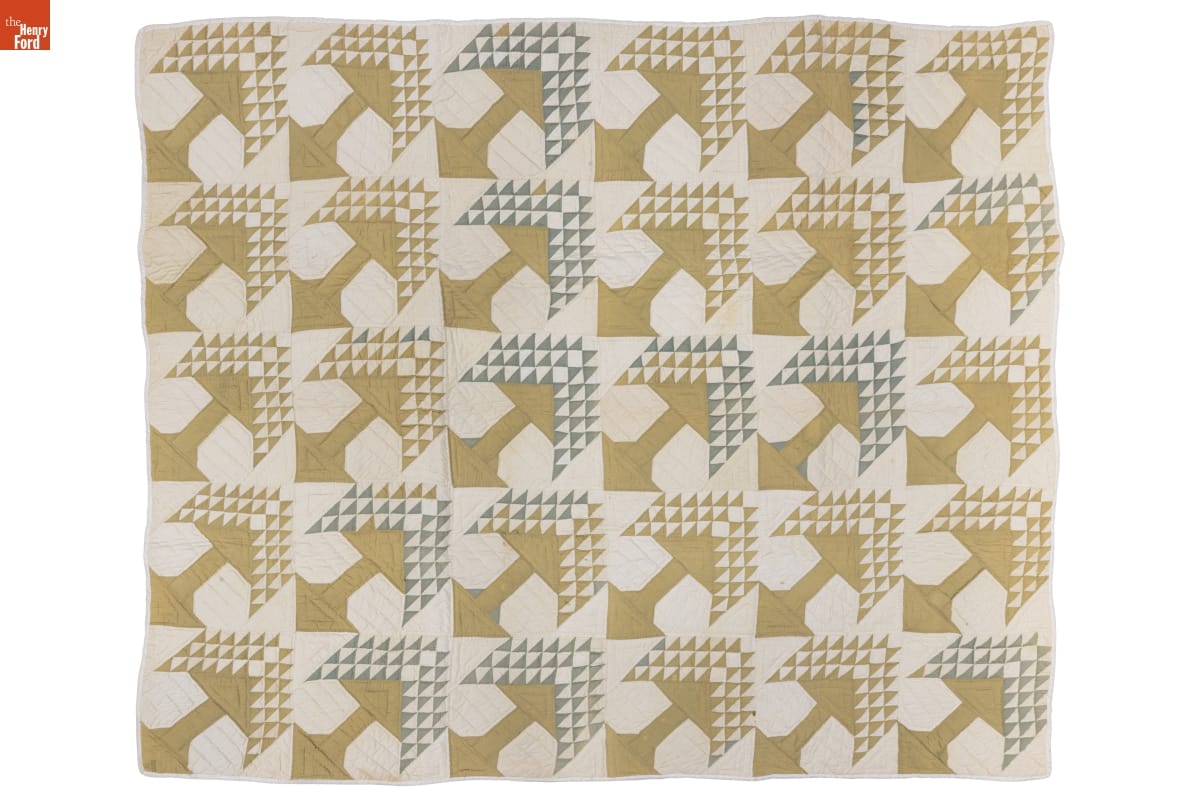
- "Pine Tree" Quilt, circa 1930 -
- circa 1930
- Collections - Artifact
"Pine Tree" Quilt, circa 1930
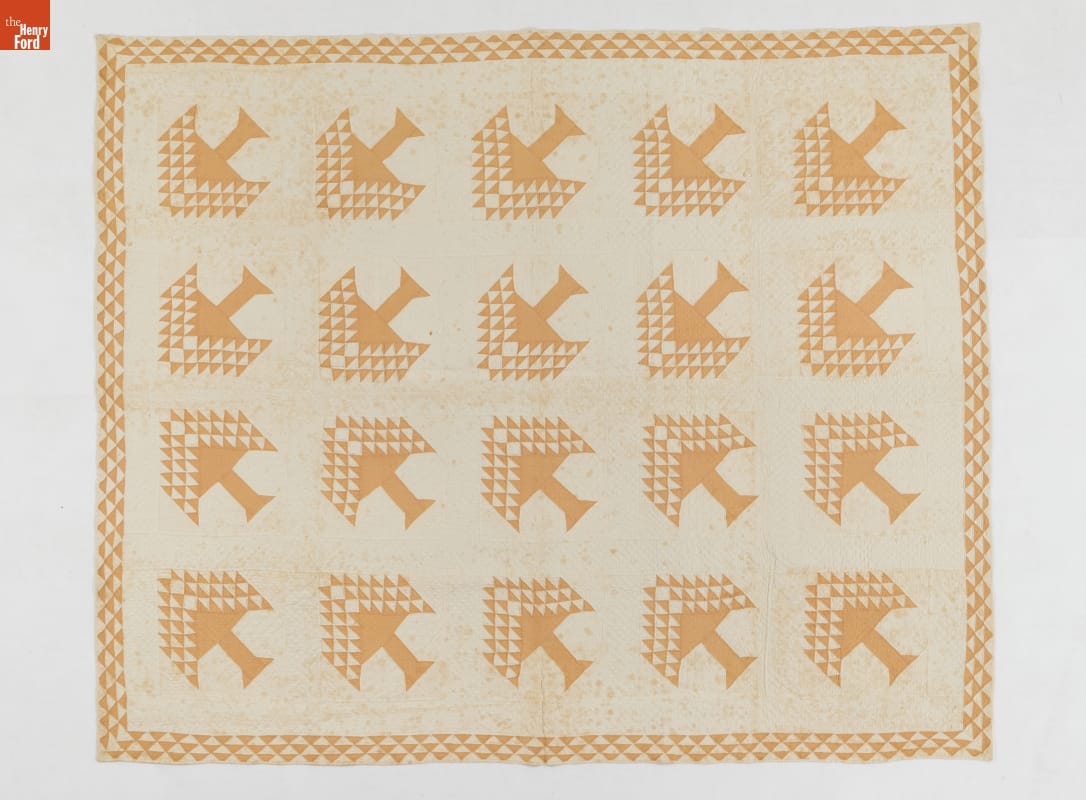
- Quilt, Made by Mary L. Johnson, circa 1885 -
- circa 1885
- Collections - Artifact
Quilt, Made by Mary L. Johnson, circa 1885
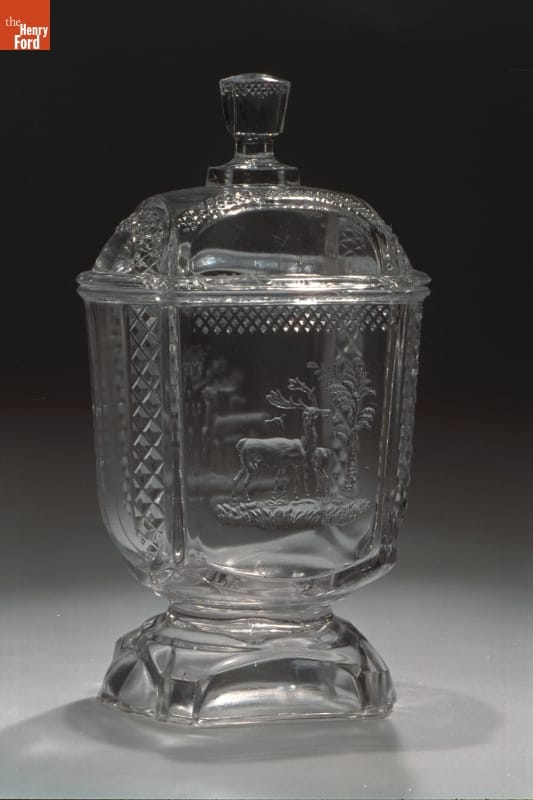
- Covered Sugar Bowl, 1870-1880 - Middle-class Americans in the late 19th century arrayed their dining tables with affordable pressed-glass tableware. These items, usually sold in sets, came in a wide variety of patterns, colors and styles. These decorative pieces -- like this sugar bowl -- communicated a family's status and taste to visitors and guests.
- 1870-1880
- Collections - Artifact
Covered Sugar Bowl, 1870-1880
Middle-class Americans in the late 19th century arrayed their dining tables with affordable pressed-glass tableware. These items, usually sold in sets, came in a wide variety of patterns, colors and styles. These decorative pieces -- like this sugar bowl -- communicated a family's status and taste to visitors and guests.
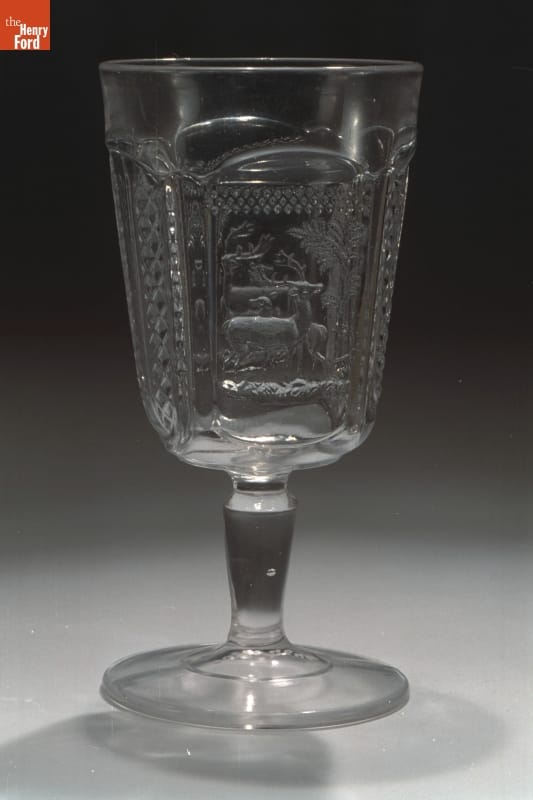
- Goblet, 1886-1890 - Nineteenth-century American glassmakers experimented with new methods to create products for a growing consumer market. In the 1820s, pressing glass into metal molds by machine was perfected, and by the mid-1800s, manufacturers were creating a variety of inexpensive pressed glass housewares. America's middle-class consumers could now decorate their homes with attractive glass bowls, creamers, dishes, plates, vases, and other tableware.
- 1886-1890
- Collections - Artifact
Goblet, 1886-1890
Nineteenth-century American glassmakers experimented with new methods to create products for a growing consumer market. In the 1820s, pressing glass into metal molds by machine was perfected, and by the mid-1800s, manufacturers were creating a variety of inexpensive pressed glass housewares. America's middle-class consumers could now decorate their homes with attractive glass bowls, creamers, dishes, plates, vases, and other tableware.