
Search
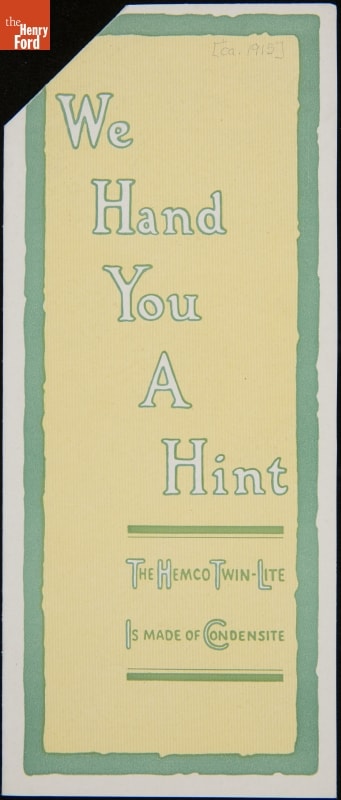
- We Hand You a Hint: The Hemco Twin-Lite is Made of Condensite, circa 1915 - Chemically synthetic plastics were developed in the early 1900s to replace shellac and hard rubber -- naturally derived substances increasingly in demand for various industrial applications. The Condensite Company of America formed in 1910 to sell a new material first developed at Thomas Edison's West Orange laboratory for phonograph records. Durable and nonconductive, Condensite was well suited for electrical products.
- circa 1915
- Collections - Artifact
We Hand You a Hint: The Hemco Twin-Lite is Made of Condensite, circa 1915
Chemically synthetic plastics were developed in the early 1900s to replace shellac and hard rubber -- naturally derived substances increasingly in demand for various industrial applications. The Condensite Company of America formed in 1910 to sell a new material first developed at Thomas Edison's West Orange laboratory for phonograph records. Durable and nonconductive, Condensite was well suited for electrical products.
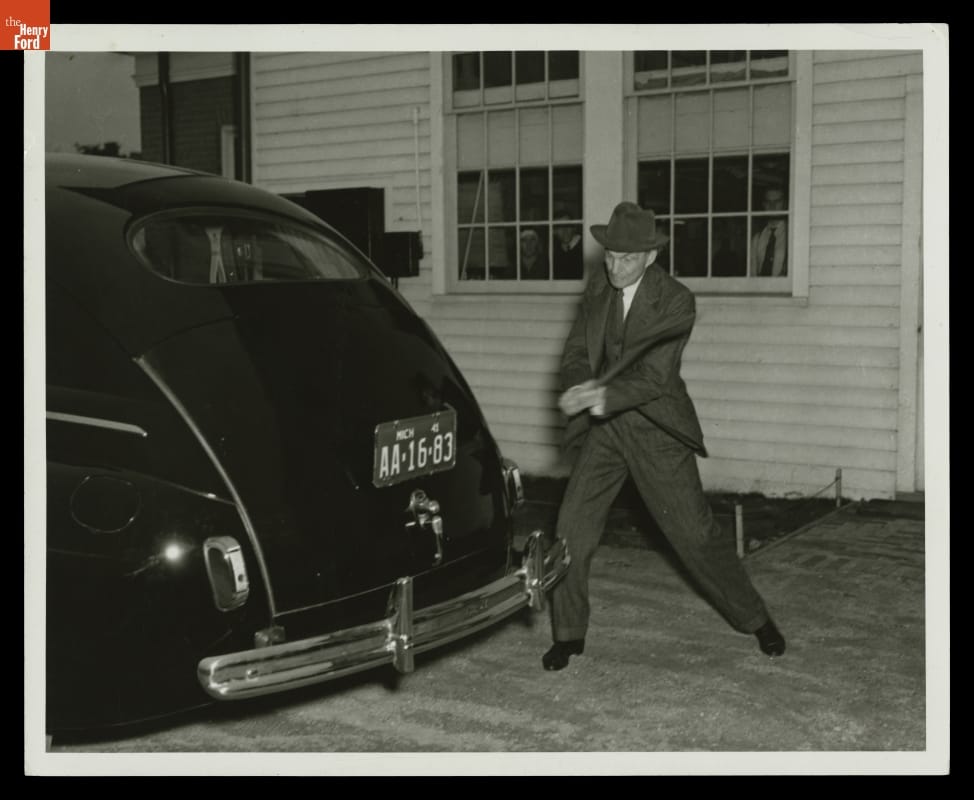
- Henry Ford Hitting Soybean Plastic Trunk with an Axe, 1940 - Henry Ford hoped that plastic made from soybeans might be developed into a strong, safe substitute for traditional metals. He established a laboratory where scientists molded ground soybean meal into small plastic car parts. Here, Ford swings an ax at a plastic trunk lid -- mounted to his personal car -- to demonstrate the material's strength.
- November 02, 1940
- Collections - Artifact
Henry Ford Hitting Soybean Plastic Trunk with an Axe, 1940
Henry Ford hoped that plastic made from soybeans might be developed into a strong, safe substitute for traditional metals. He established a laboratory where scientists molded ground soybean meal into small plastic car parts. Here, Ford swings an ax at a plastic trunk lid -- mounted to his personal car -- to demonstrate the material's strength.
- Employee Operating New Machinery in the Plastic Building of the Ford Motor Company Rouge Plant, November 1946 -
- November 11, 1946
- Collections - Artifact
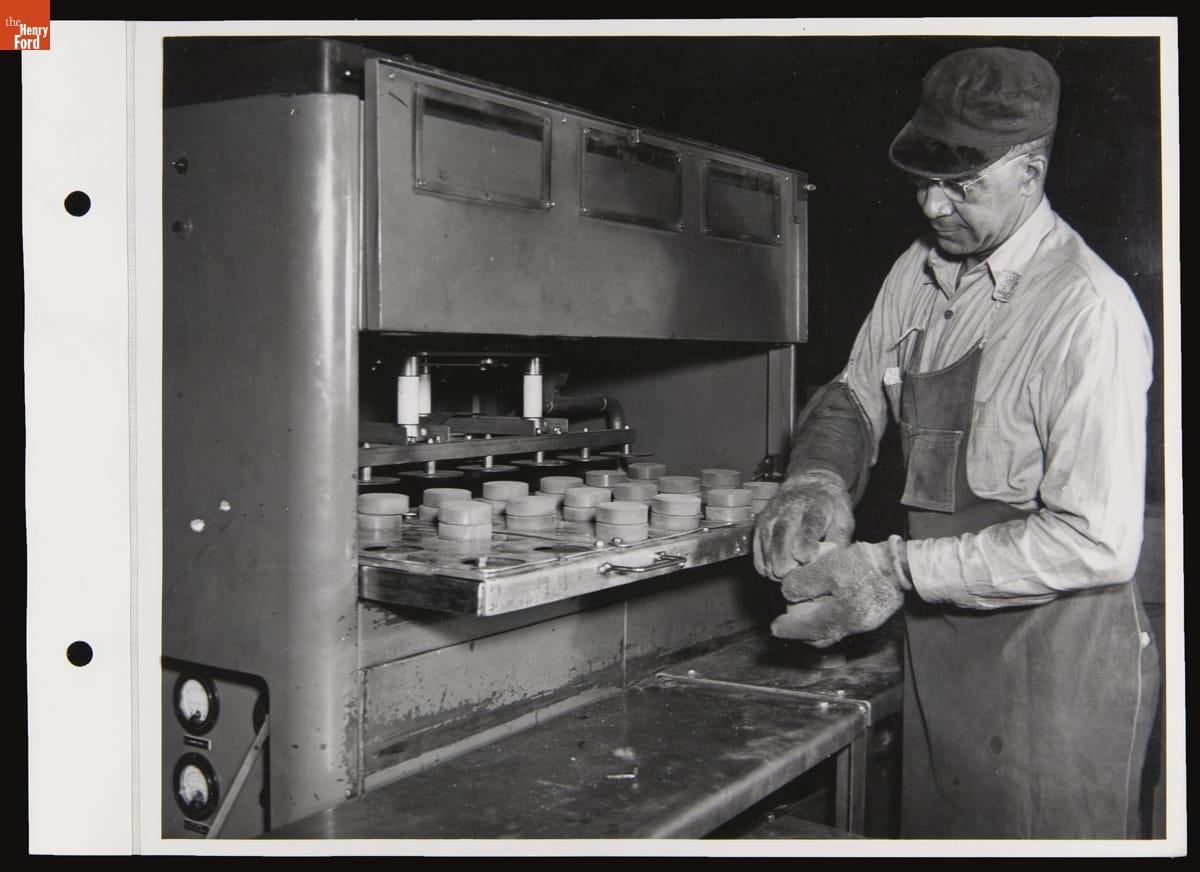
Employee Operating New Machinery in the Plastic Building of the Ford Motor Company Rouge Plant, November 1946
- W.R. Grace & Co. Sales Brochure, "Now the True All Plastic Milk Container from Grace Plastics," circa 1965 -

- circa 1965
- Collections - Artifact
W.R. Grace & Co. Sales Brochure, "Now the True All Plastic Milk Container from Grace Plastics," circa 1965
- Fellows No. 3-125 Injection Molding Machine, circa 1961 -
- circa 1961
- Collections - Artifact
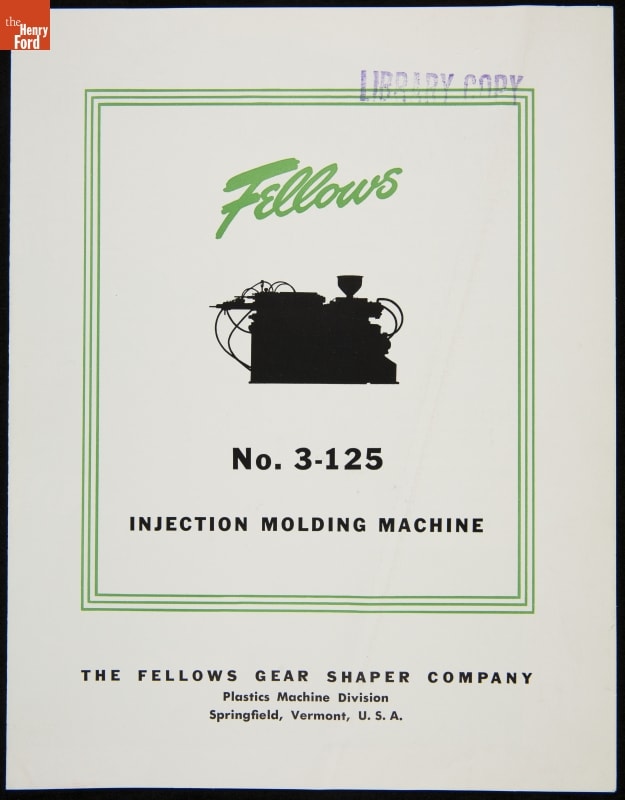
Fellows No. 3-125 Injection Molding Machine, circa 1961
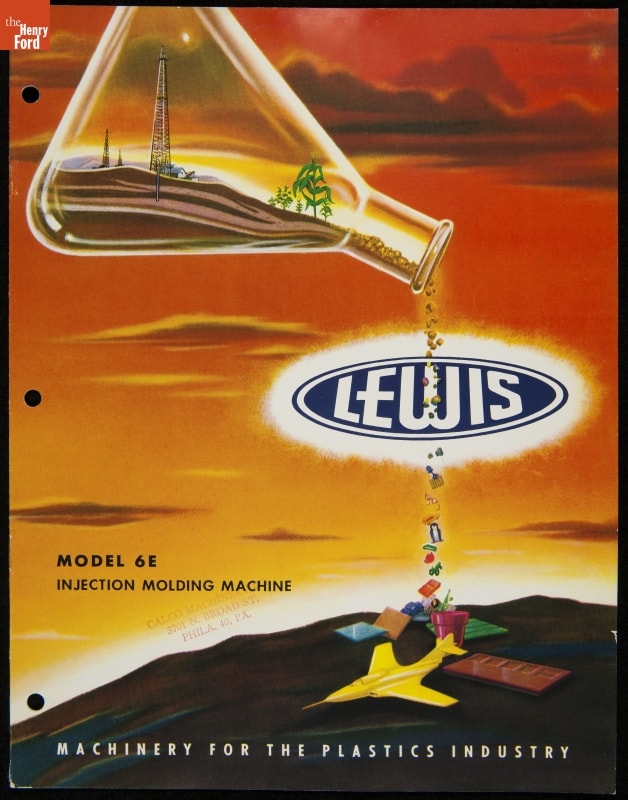
- Model 6E Injection Molding Machine: Machinery for the Plastic Industry, circa 1958 -
- circa 1958
- Collections - Artifact
Model 6E Injection Molding Machine: Machinery for the Plastic Industry, circa 1958
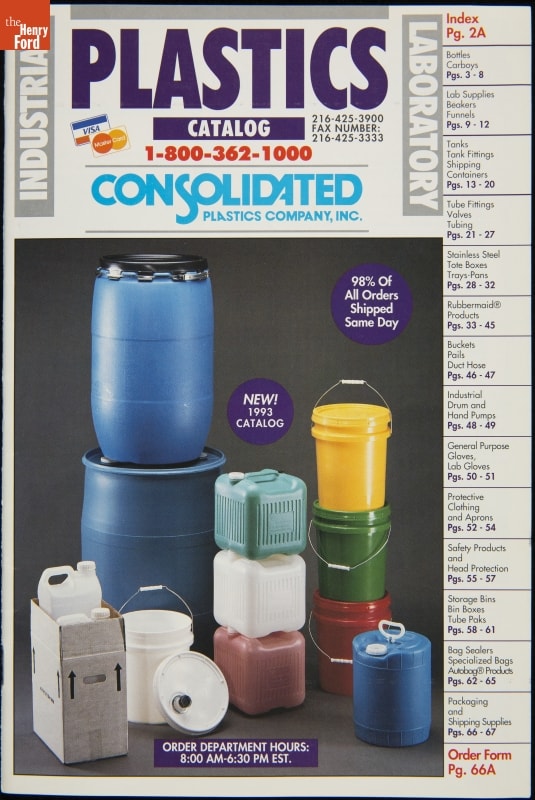
- Consolidated Plastics Company Catalog, "Industrial and Laboratory Plastics," 1993 -
- 1993
- Collections - Artifact
Consolidated Plastics Company Catalog, "Industrial and Laboratory Plastics," 1993
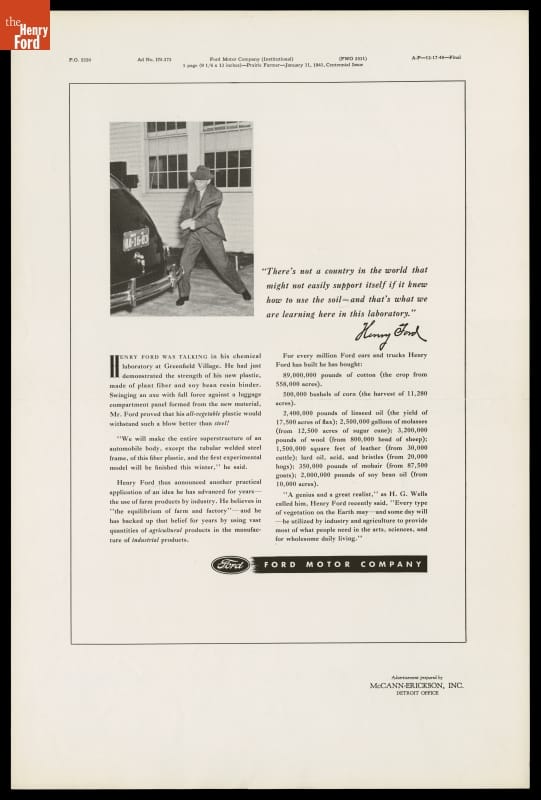
- Ford Institutional Advertisement Announcing a New Soybean Plastic, 1941 - Henry Ford believed farmers would prosper if they could produce crops for industry. At a secret lab in Greenfield Village, Ford's scientists settled on soybeans as a crop that could be sold to industry. Automobile body panels were among many products developed in Ford's Soybean Lab. Ford attacked a trunk lid made from soybeans with an axe to demonstrate its strength.
- 1941
- Collections - Artifact
Ford Institutional Advertisement Announcing a New Soybean Plastic, 1941
Henry Ford believed farmers would prosper if they could produce crops for industry. At a secret lab in Greenfield Village, Ford's scientists settled on soybeans as a crop that could be sold to industry. Automobile body panels were among many products developed in Ford's Soybean Lab. Ford attacked a trunk lid made from soybeans with an axe to demonstrate its strength.
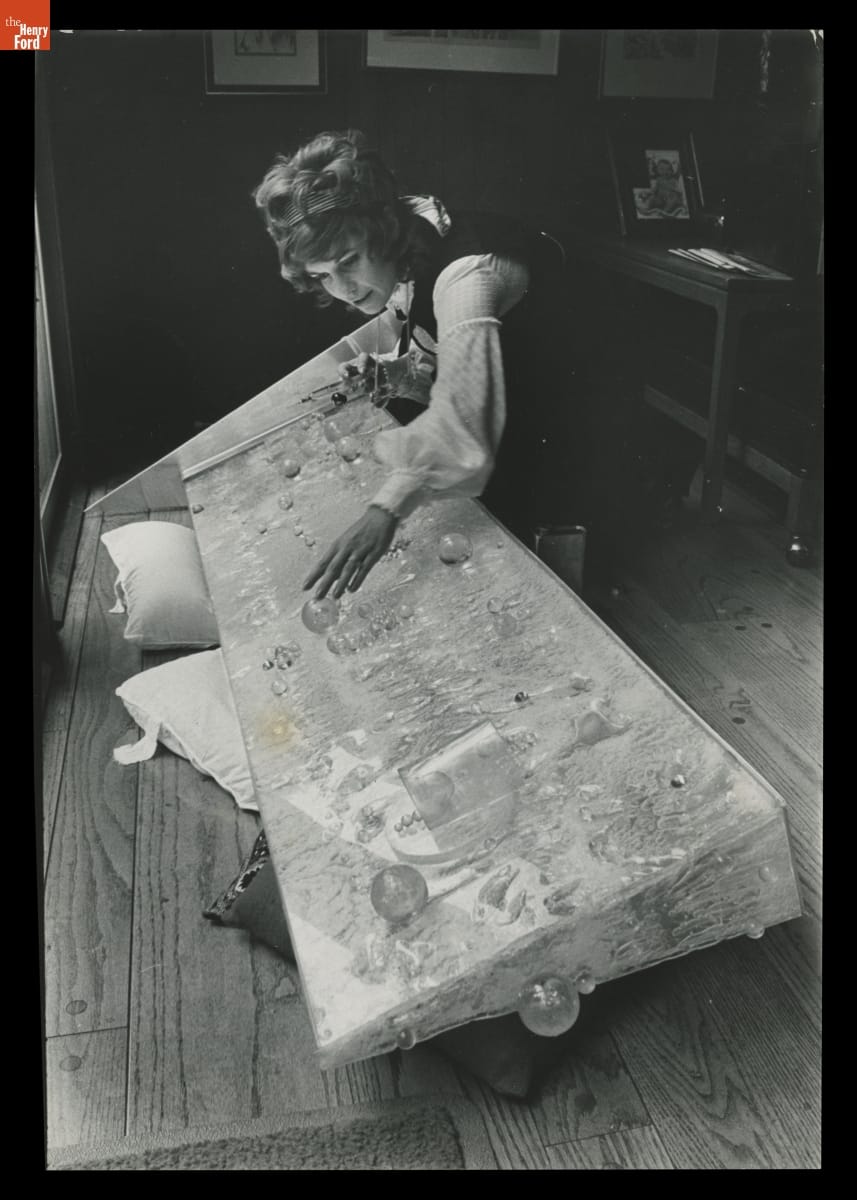
- Lillian Schwartz Working with Plastic Panels, circa 1967 - Lillian Schwartz is a pioneer of computer-generated art. From 1969-2002, she was a "resident visitor" at Bell Laboratories, producing groundbreaking films, videos, and multimedia works. The Schwartz Collection spans Lillian's childhood into her late career, documenting an expansive mindset, mastery over traditional and experimental mediums alike--and above all--an ability to create inspirational connections between science, art, and technology.
- circa 1967
- Collections - Artifact
Lillian Schwartz Working with Plastic Panels, circa 1967
Lillian Schwartz is a pioneer of computer-generated art. From 1969-2002, she was a "resident visitor" at Bell Laboratories, producing groundbreaking films, videos, and multimedia works. The Schwartz Collection spans Lillian's childhood into her late career, documenting an expansive mindset, mastery over traditional and experimental mediums alike--and above all--an ability to create inspirational connections between science, art, and technology.
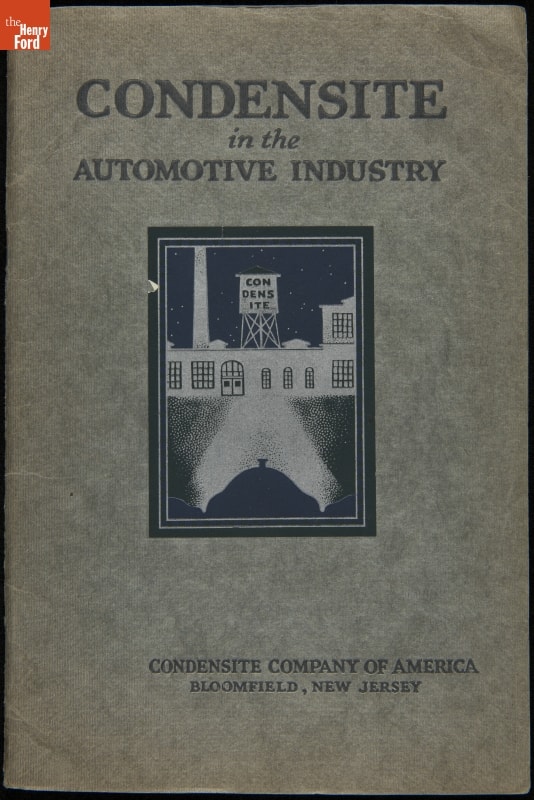
- Condensite in the Automotive Industry, March 1922 - Chemically synthetic plastics were developed in the early 1900s to replace shellac and hard rubber -- naturally derived substances increasingly in demand for various industrial applications. The Condensite Company of America formed in 1910 to sell a new material first developed at Thomas Edison's West Orange laboratory for phonograph records. Durable and nonconductive, Condensite was well suited for automotive components.
- March 01, 1922
- Collections - Artifact
Condensite in the Automotive Industry, March 1922
Chemically synthetic plastics were developed in the early 1900s to replace shellac and hard rubber -- naturally derived substances increasingly in demand for various industrial applications. The Condensite Company of America formed in 1910 to sell a new material first developed at Thomas Edison's West Orange laboratory for phonograph records. Durable and nonconductive, Condensite was well suited for automotive components.