
Search
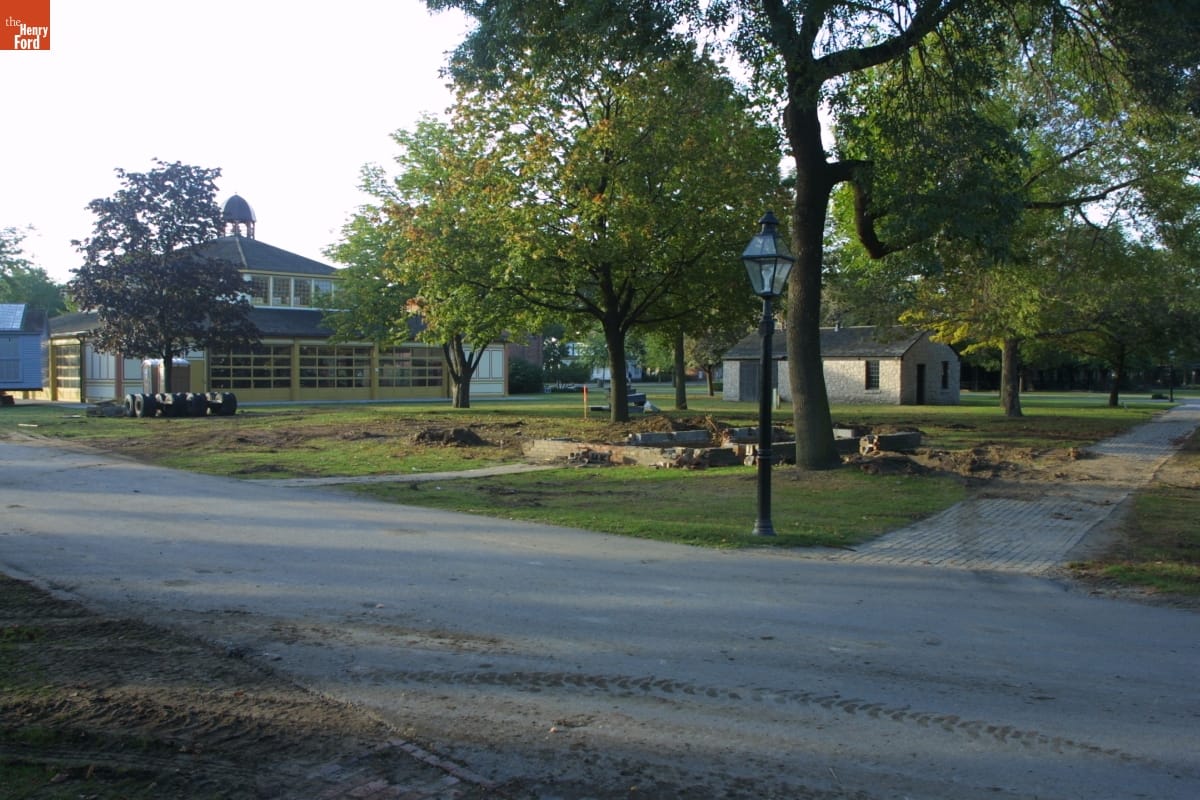
- Tintype Studio Former Site after Relocation during the Greenfield Village Restoration Project, September 2002 - By 2000, Greenfield Village began showing its age. Buildings and crumbling infrastructure desperately needed repair. Museum planners envisioned a revitalized village. They created themed "Historic Districts" by relocating and refurbishing the historic structures. Workers repaved streets and upgraded water, sewer, electric, and gas lines. In June 2003, nine months after restoration began, visitors passed through a new entrance into a reborn Greenfield Village.
- September 01, 2002
- Collections - Artifact
Tintype Studio Former Site after Relocation during the Greenfield Village Restoration Project, September 2002
By 2000, Greenfield Village began showing its age. Buildings and crumbling infrastructure desperately needed repair. Museum planners envisioned a revitalized village. They created themed "Historic Districts" by relocating and refurbishing the historic structures. Workers repaved streets and upgraded water, sewer, electric, and gas lines. In June 2003, nine months after restoration began, visitors passed through a new entrance into a reborn Greenfield Village.
- Toys "R" Us Summer Catalog, 1994 -

- 1994
- Collections - Artifact
Toys "R" Us Summer Catalog, 1994
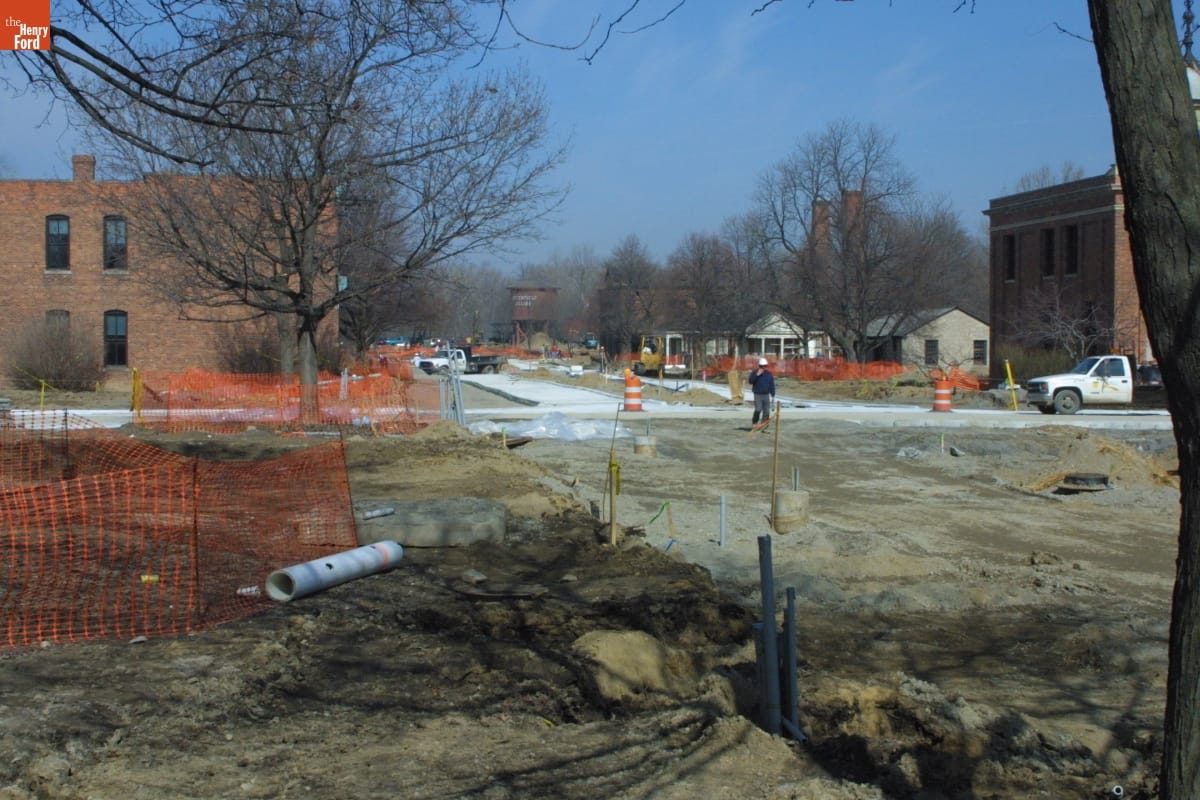
- Main Street and Washington Boulevard Intersection Paving during the Greenfield Village Restoration Project, March 2003 - By 2000, Greenfield Village began showing its age. Buildings and crumbling infrastructure desperately needed repair. Museum planners envisioned a revitalized village. They created themed "Historic Districts" by relocating and refurbishing the historic structures. Workers repaved streets and upgraded water, sewer, electric, and gas lines. In June 2003, nine months after restoration began, visitors passed through a new entrance into a reborn Greenfield Village.
- March 01, 2003
- Collections - Artifact
Main Street and Washington Boulevard Intersection Paving during the Greenfield Village Restoration Project, March 2003
By 2000, Greenfield Village began showing its age. Buildings and crumbling infrastructure desperately needed repair. Museum planners envisioned a revitalized village. They created themed "Historic Districts" by relocating and refurbishing the historic structures. Workers repaved streets and upgraded water, sewer, electric, and gas lines. In June 2003, nine months after restoration began, visitors passed through a new entrance into a reborn Greenfield Village.
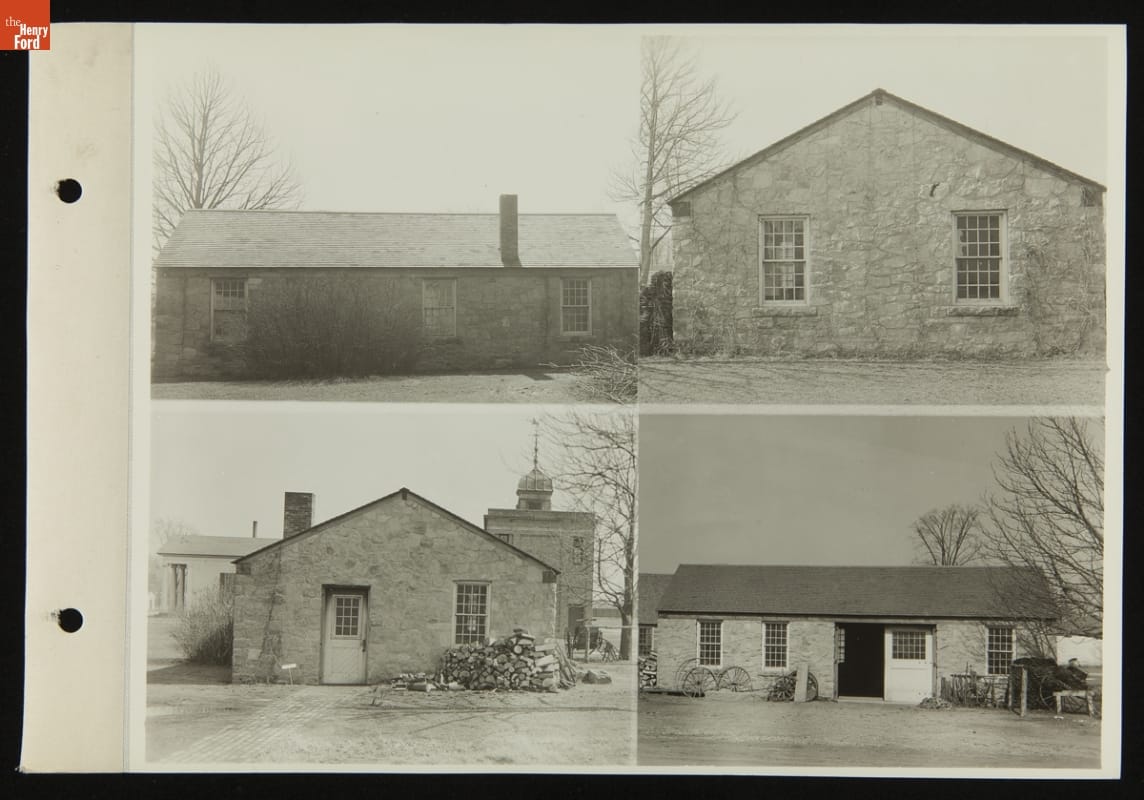
- Blacksmith Shop in Greenfield Village - In 1929, Henry Ford instructed Edward Cutler, Ford's Greenfield Village architect, to design and build a stone blacksmith shop. Cutler's building initially served as a place to shoe the horses used in the Village, house blacksmith tools, and demonstrate the fast-disappearing craft of blacksmithing. Over the years the structure's mission has evolved with new Village initiatives.
- Collections - Artifact
Blacksmith Shop in Greenfield Village
In 1929, Henry Ford instructed Edward Cutler, Ford's Greenfield Village architect, to design and build a stone blacksmith shop. Cutler's building initially served as a place to shoe the horses used in the Village, house blacksmith tools, and demonstrate the fast-disappearing craft of blacksmithing. Over the years the structure's mission has evolved with new Village initiatives.
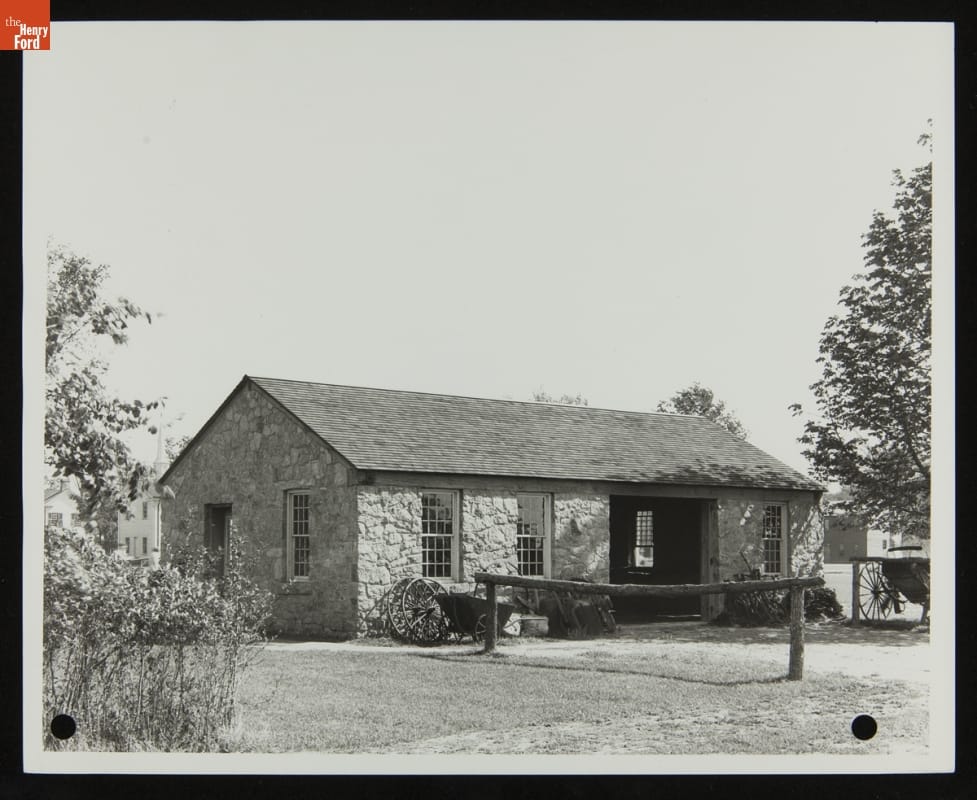
- Blacksmith Shop in Greenfield Village, 1931 - In 1929, Henry Ford instructed Edward Cutler, Ford's Greenfield Village architect, to design and build a stone blacksmith shop. Cutler's building initially served as a place to shoe the horses used in the Village, house blacksmith tools, and demonstrate the fast-disappearing craft of blacksmithing. Over the years the structure's mission has evolved with new Village initiatives.
- September 10, 1931
- Collections - Artifact
Blacksmith Shop in Greenfield Village, 1931
In 1929, Henry Ford instructed Edward Cutler, Ford's Greenfield Village architect, to design and build a stone blacksmith shop. Cutler's building initially served as a place to shoe the horses used in the Village, house blacksmith tools, and demonstrate the fast-disappearing craft of blacksmithing. Over the years the structure's mission has evolved with new Village initiatives.
- Blacksmith Shop in Greenfield Village, 1931 - In 1929, Henry Ford instructed Edward Cutler, Ford's Greenfield Village architect, to design and build a stone blacksmith shop. Cutler's building initially served as a place to shoe the horses used in the Village, house blacksmith tools, and demonstrate the fast-disappearing craft of blacksmithing. Over the years the structure's mission has evolved with new Village initiatives.
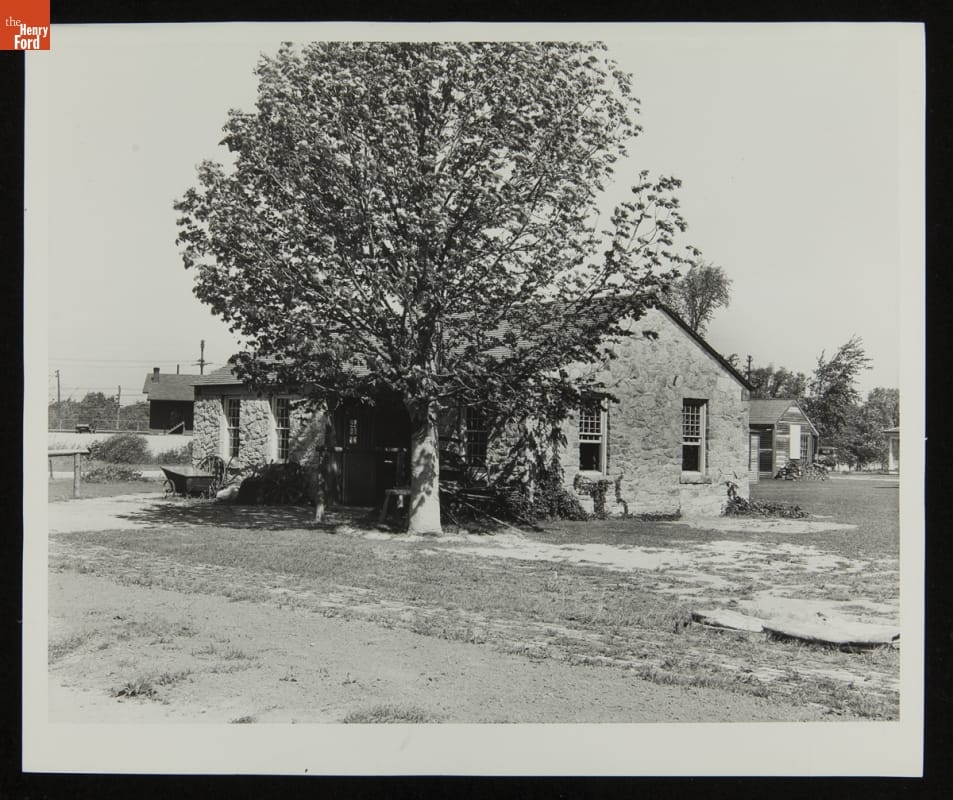
- September 20, 1931
- Collections - Artifact
Blacksmith Shop in Greenfield Village, 1931
In 1929, Henry Ford instructed Edward Cutler, Ford's Greenfield Village architect, to design and build a stone blacksmith shop. Cutler's building initially served as a place to shoe the horses used in the Village, house blacksmith tools, and demonstrate the fast-disappearing craft of blacksmithing. Over the years the structure's mission has evolved with new Village initiatives.
- Blacksmith Shop in Greenfield Village, 1931 - In 1929, Henry Ford instructed Edward Cutler, Ford's Greenfield Village architect, to design and build a stone blacksmith shop. Cutler's building initially served as a place to shoe the horses used in the Village, house blacksmith tools, and demonstrate the fast-disappearing craft of blacksmithing. Over the years the structure's mission has evolved with new Village initiatives.
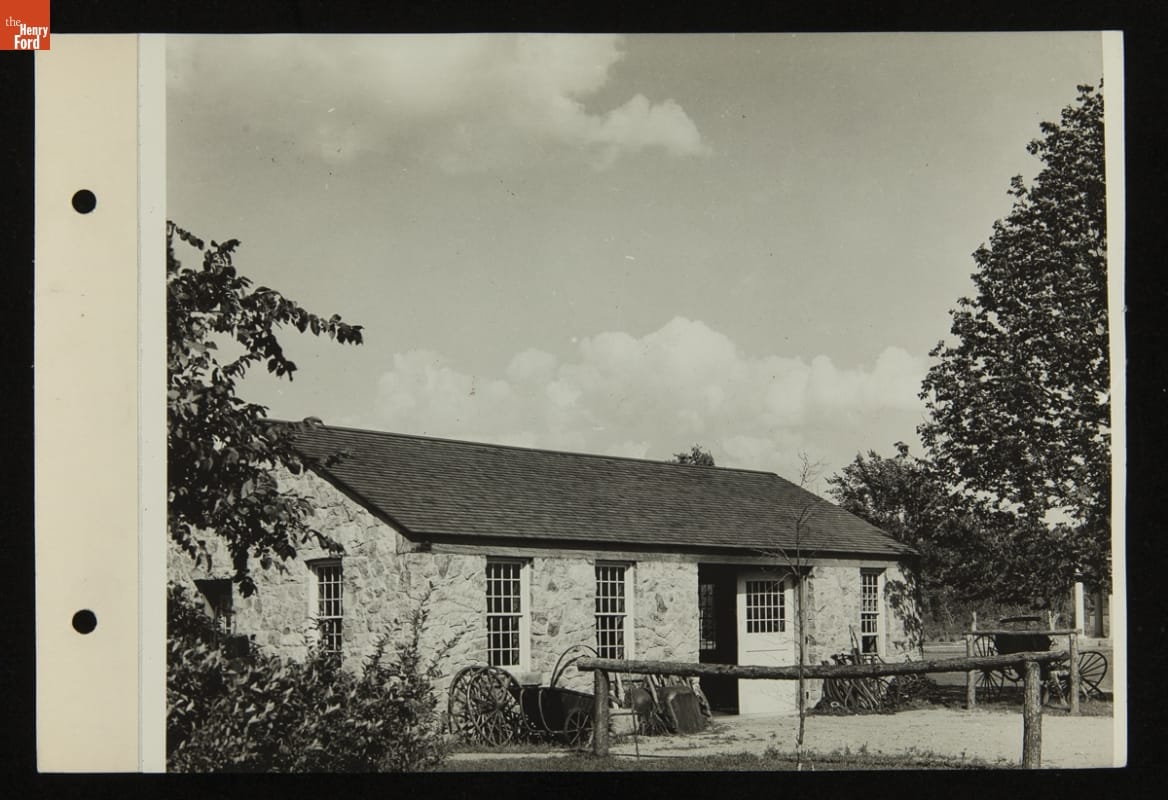
- September 10, 1931
- Collections - Artifact
Blacksmith Shop in Greenfield Village, 1931
In 1929, Henry Ford instructed Edward Cutler, Ford's Greenfield Village architect, to design and build a stone blacksmith shop. Cutler's building initially served as a place to shoe the horses used in the Village, house blacksmith tools, and demonstrate the fast-disappearing craft of blacksmithing. Over the years the structure's mission has evolved with new Village initiatives.
- Blacksmith Shop in Greenfield Village, near KIngston Cooper Shop, Currier Shoe Shop, and Plymouth House, circa 1930 - In 1929, Henry Ford instructed Edward Cutler, Ford's Greenfield Village architect, to design and build a stone blacksmith shop. Cutler's building initially served as a place to shoe the horses used in the Village, house blacksmith tools, and demonstrate the fast-disappearing craft of blacksmithing. Over the years the structure's mission has evolved with new Village initiatives.
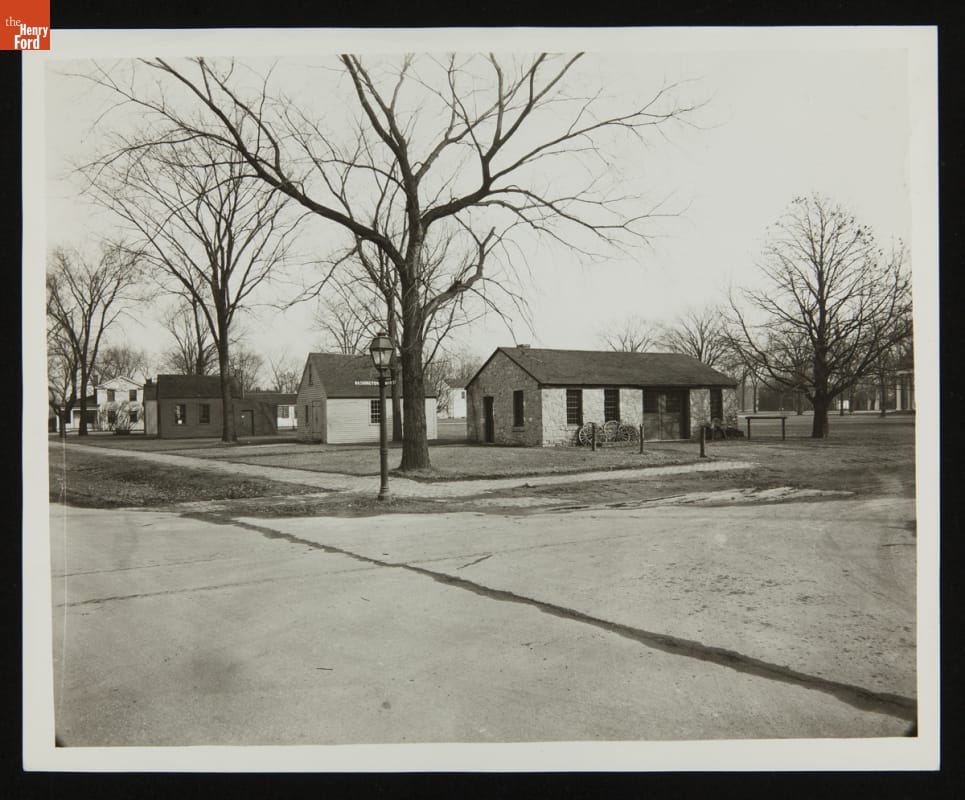
- circa 1930
- Collections - Artifact
Blacksmith Shop in Greenfield Village, near KIngston Cooper Shop, Currier Shoe Shop, and Plymouth House, circa 1930
In 1929, Henry Ford instructed Edward Cutler, Ford's Greenfield Village architect, to design and build a stone blacksmith shop. Cutler's building initially served as a place to shoe the horses used in the Village, house blacksmith tools, and demonstrate the fast-disappearing craft of blacksmithing. Over the years the structure's mission has evolved with new Village initiatives.
- Blacksmith Shop in Greenfield Village, 1932 - In 1929, Henry Ford instructed Edward Cutler, Ford's Greenfield Village architect, to design and build a stone blacksmith shop. Cutler's building initially served as a place to shoe the horses used in the Village, house blacksmith tools, and demonstrate the fast-disappearing craft of blacksmithing. Over the years the structure's mission has evolved with new Village initiatives.
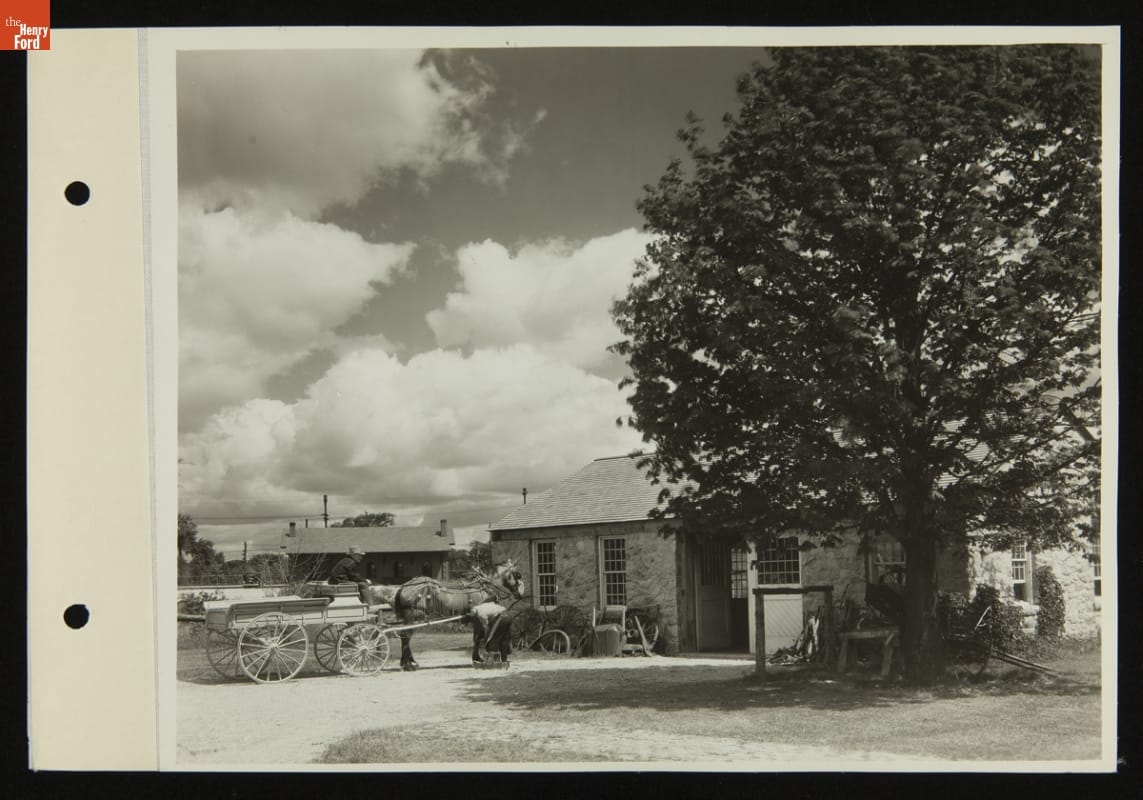
- July 08, 1932
- Collections - Artifact
Blacksmith Shop in Greenfield Village, 1932
In 1929, Henry Ford instructed Edward Cutler, Ford's Greenfield Village architect, to design and build a stone blacksmith shop. Cutler's building initially served as a place to shoe the horses used in the Village, house blacksmith tools, and demonstrate the fast-disappearing craft of blacksmithing. Over the years the structure's mission has evolved with new Village initiatives.
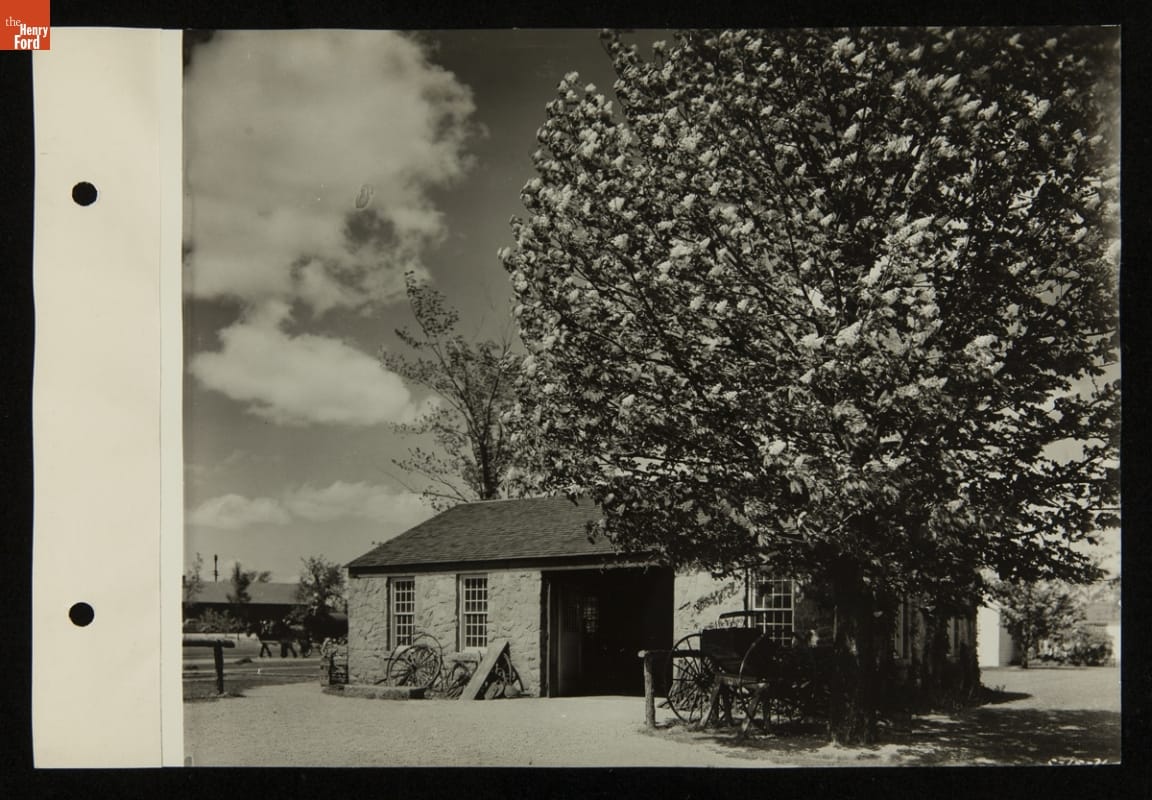
- Blacksmith Shop in Greenfield Village, 1932 - In 1929, Henry Ford instructed Edward Cutler, Ford's Greenfield Village architect, to design and build a stone blacksmith shop. Cutler's building initially served as a place to shoe the horses used in the Village, house blacksmith tools, and demonstrate the fast-disappearing craft of blacksmithing. Over the years the structure's mission has evolved with new Village initiatives.
- May 13, 1932
- Collections - Artifact
Blacksmith Shop in Greenfield Village, 1932
In 1929, Henry Ford instructed Edward Cutler, Ford's Greenfield Village architect, to design and build a stone blacksmith shop. Cutler's building initially served as a place to shoe the horses used in the Village, house blacksmith tools, and demonstrate the fast-disappearing craft of blacksmithing. Over the years the structure's mission has evolved with new Village initiatives.