
Search
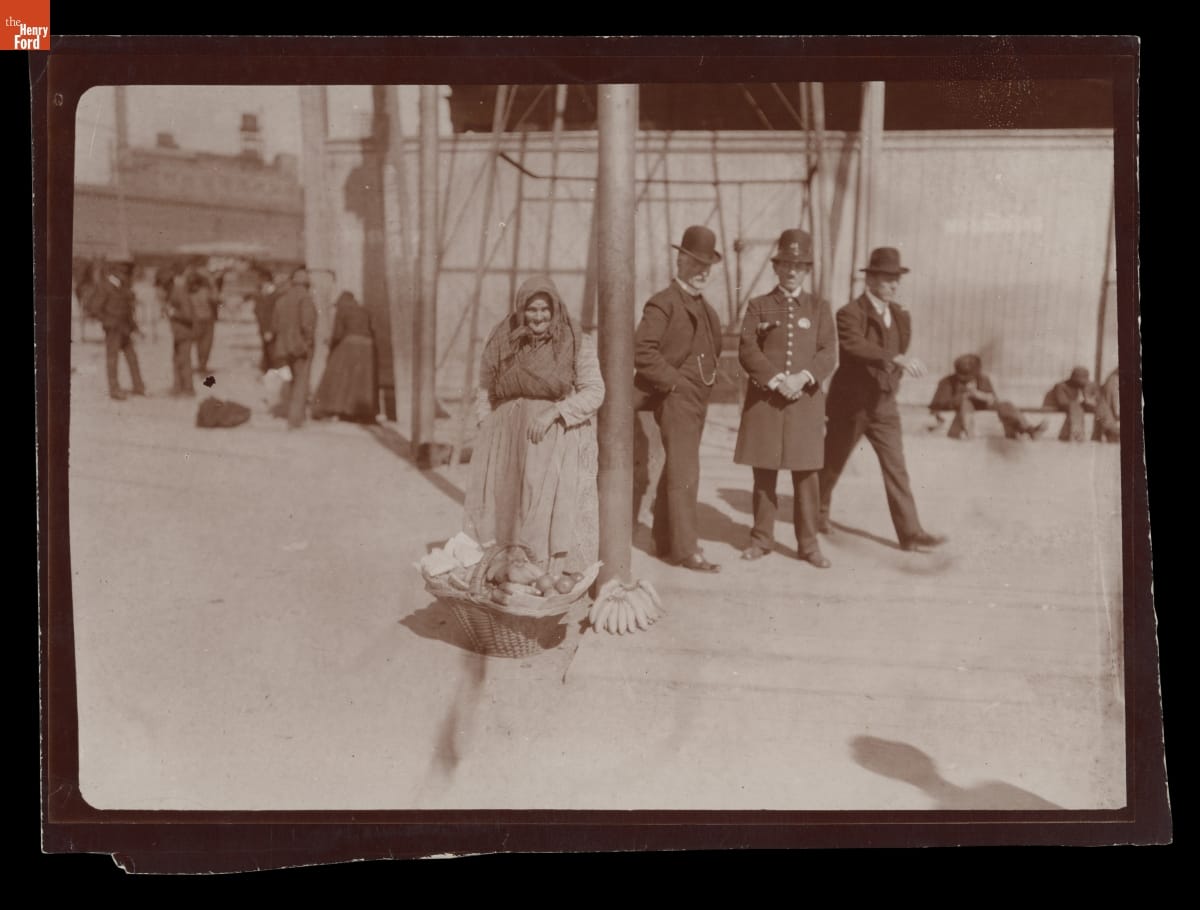
- Woman with Basket of Fruit, New Orleans, Louisiana, circa 1905 -
- circa 1905
- Collections - Artifact
Woman with Basket of Fruit, New Orleans, Louisiana, circa 1905
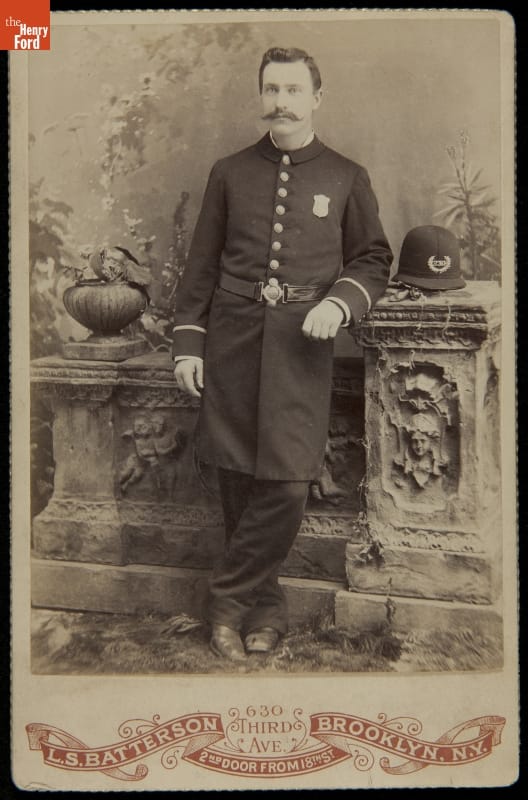
- Portrait of Police Officer Patrick J. Sheehan, Inscribed to Nora O'Donnell, 1893 - Growing American urban centers spurred the creation of modern police departments in the mid-1800s. By the end of the century, most police officers wore military-type uniforms and badges to help citizens easily identify them. This cabinet card shows Patrick Sheehan decked out in his uniform. Friends and family usually exchanged cabinet cards, sometimes adding a personal greeting on the back.
- May 31, 1893
- Collections - Artifact
Portrait of Police Officer Patrick J. Sheehan, Inscribed to Nora O'Donnell, 1893
Growing American urban centers spurred the creation of modern police departments in the mid-1800s. By the end of the century, most police officers wore military-type uniforms and badges to help citizens easily identify them. This cabinet card shows Patrick Sheehan decked out in his uniform. Friends and family usually exchanged cabinet cards, sometimes adding a personal greeting on the back.
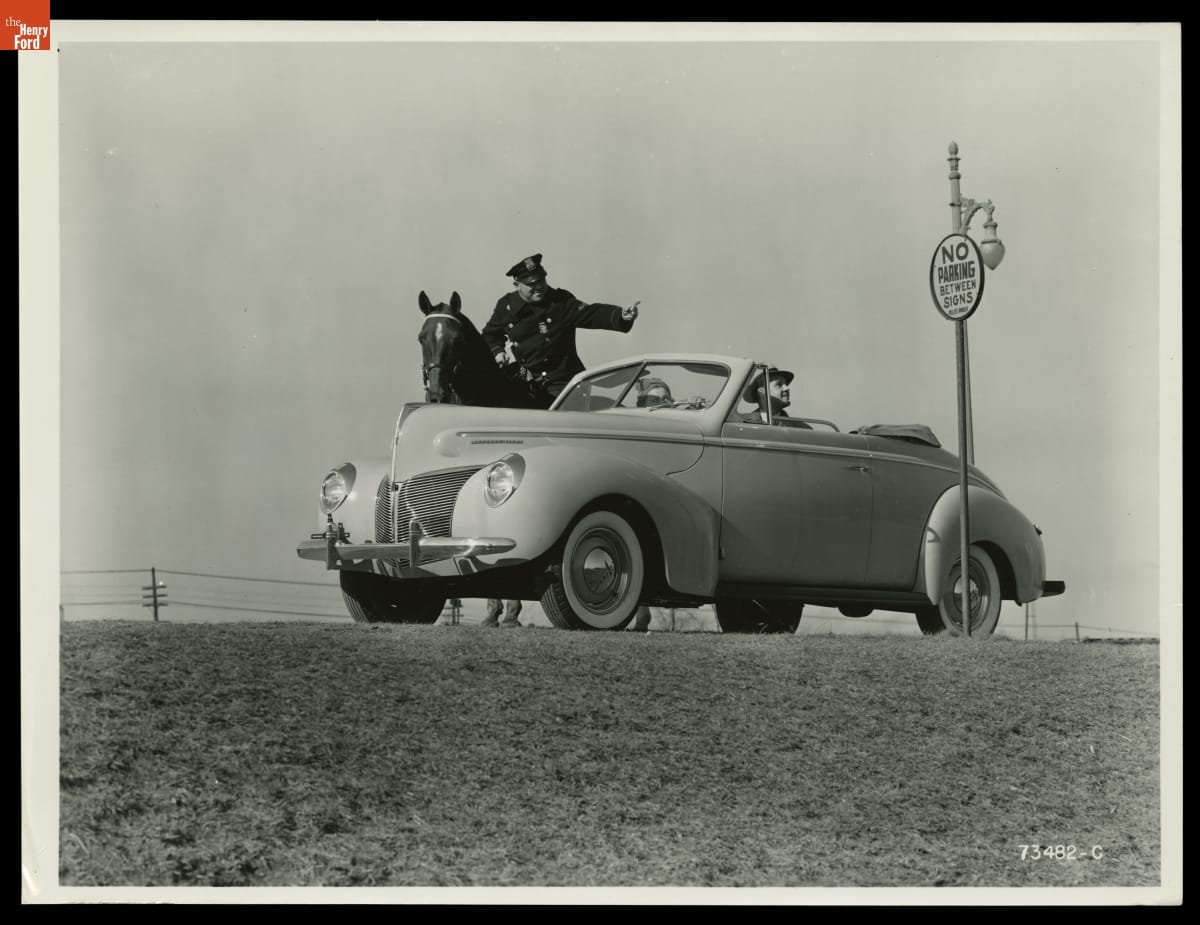
- Police Officer on Horseback Showing a Driver the "No Parking" Sign on a Lamp Post, April 1940 - Ford Motor Company launched its Mercury line for 1939. The medium-priced car fit neatly between the basic Ford and the upmarket Lincoln. Ford promoted Mercury as a larger car that was economical to operate. The 1940 model seen here featured a 116-inch wheelbase -- four inches longer than a comparable Ford -- and fuel economy of up to 20 miles per gallon.
- April 01, 1940
- Collections - Artifact
Police Officer on Horseback Showing a Driver the "No Parking" Sign on a Lamp Post, April 1940
Ford Motor Company launched its Mercury line for 1939. The medium-priced car fit neatly between the basic Ford and the upmarket Lincoln. Ford promoted Mercury as a larger car that was economical to operate. The 1940 model seen here featured a 116-inch wheelbase -- four inches longer than a comparable Ford -- and fuel economy of up to 20 miles per gallon.
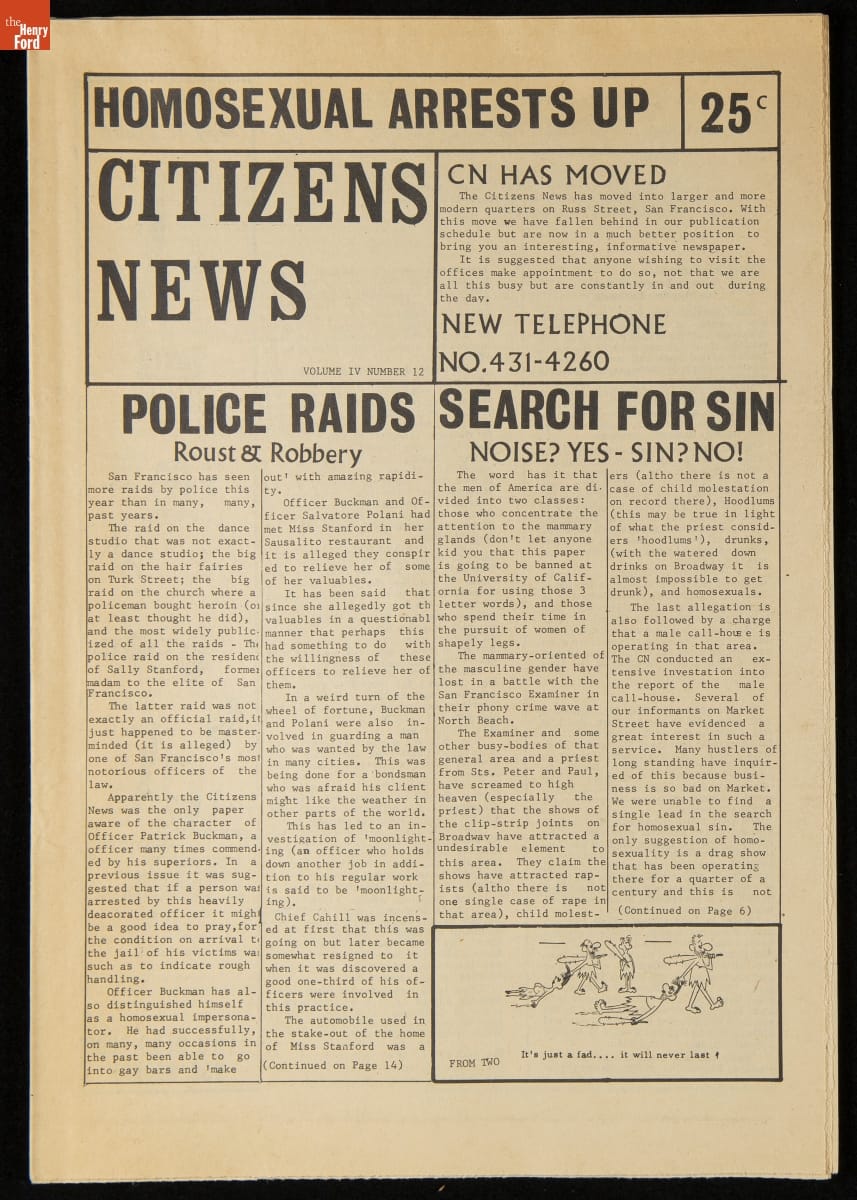
- Citizens News, Volume IV, Number 12, 1964-1965 - LGBTQ+ newspapers became more available beginning in the 1950s as organizations added print media to their activist tool kit. These newspapers were a regionally focused way to rally the LGBTQ+ community, share information, and fight discrimination. Many of these newspapers came to rely on gay bars as a location for disbursement as they were among the only private gay spaces in many cities.
- 1964-1965
- Collections - Artifact
Citizens News, Volume IV, Number 12, 1964-1965
LGBTQ+ newspapers became more available beginning in the 1950s as organizations added print media to their activist tool kit. These newspapers were a regionally focused way to rally the LGBTQ+ community, share information, and fight discrimination. Many of these newspapers came to rely on gay bars as a location for disbursement as they were among the only private gay spaces in many cities.
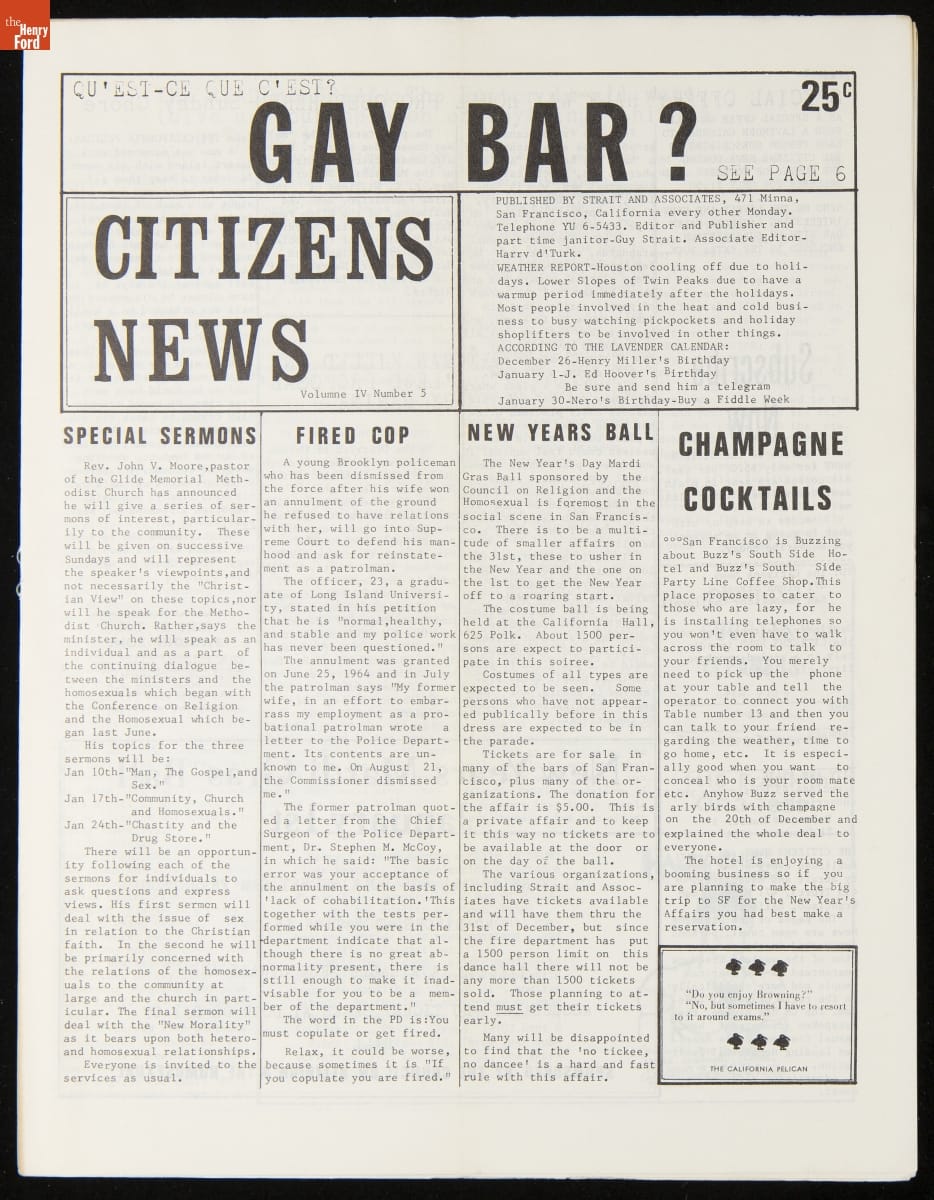
- Citizens News, Volume IV, Number 5, 1964-1965 - LGBTQ+ newspapers became more available beginning in the 1950s as organizations added print media to their activist tool kit. These newspapers were a regionally focused way to rally the LGBTQ+ community, share information, and fight discrimination. Many of these newspapers came to rely on gay bars as a location for disbursement as they were among the only private gay spaces in many cities.
- 1964-1965
- Collections - Artifact
Citizens News, Volume IV, Number 5, 1964-1965
LGBTQ+ newspapers became more available beginning in the 1950s as organizations added print media to their activist tool kit. These newspapers were a regionally focused way to rally the LGBTQ+ community, share information, and fight discrimination. Many of these newspapers came to rely on gay bars as a location for disbursement as they were among the only private gay spaces in many cities.
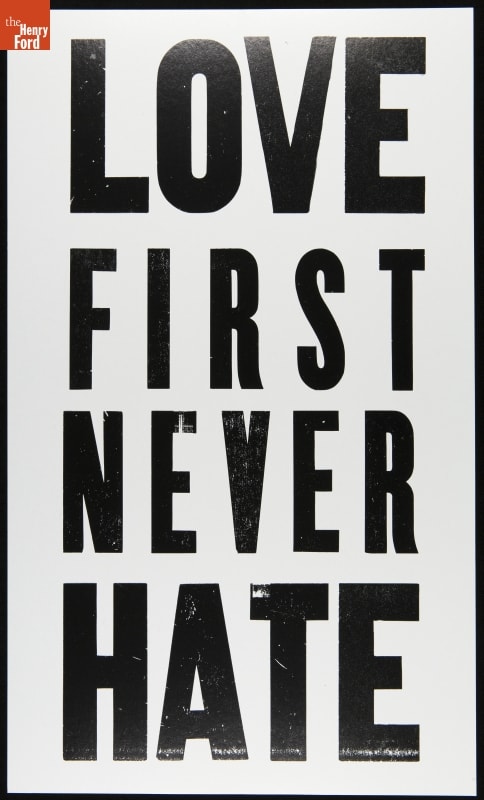
- "Love First Never Hate," 2016 -
- 2016
- Collections - Artifact
"Love First Never Hate," 2016
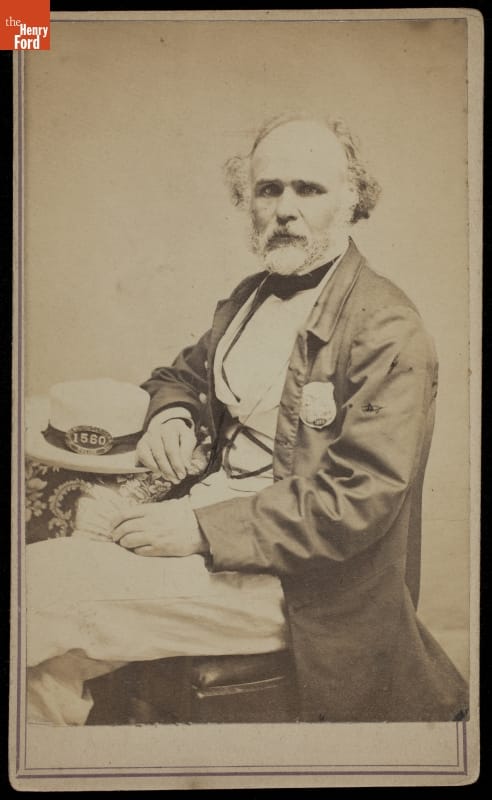
- Portrait of a Police Officer, 1860-1890 - Growing American urban centers spurred the creation of modern police departments in the mid-1800s. This carte-de-visite shows an unnamed police officer. The badge on his jacket and hat helped citizen identify him as a police officer. By the end of the century, he would have worn a military-type uniform as an additional way of identification.
- 1860-1890
- Collections - Artifact
Portrait of a Police Officer, 1860-1890
Growing American urban centers spurred the creation of modern police departments in the mid-1800s. This carte-de-visite shows an unnamed police officer. The badge on his jacket and hat helped citizen identify him as a police officer. By the end of the century, he would have worn a military-type uniform as an additional way of identification.
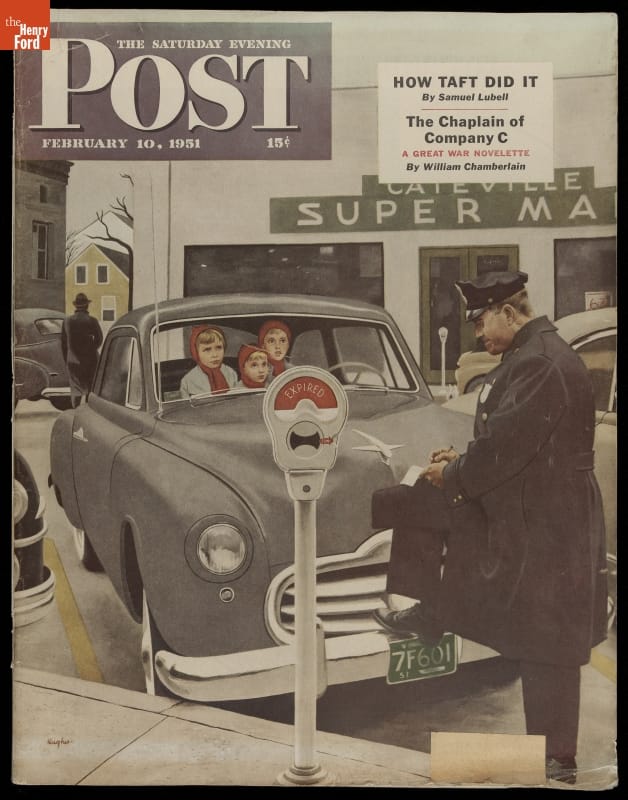
- "The Saturday Evening Post," February 10, 1951 - The <EM>Saturday Evening Post</EM> relied on a number of cover artists throughout its history to engage people to leaf through the magazine's pages. Time has expired in this illustration by cover artist George Hughes. The conflicted policeman struggles to issue a parking ticket under the soulful stares of three innocent children.
- February 10, 1951
- Collections - Artifact
"The Saturday Evening Post," February 10, 1951
The Saturday Evening Post relied on a number of cover artists throughout its history to engage people to leaf through the magazine's pages. Time has expired in this illustration by cover artist George Hughes. The conflicted policeman struggles to issue a parking ticket under the soulful stares of three innocent children.
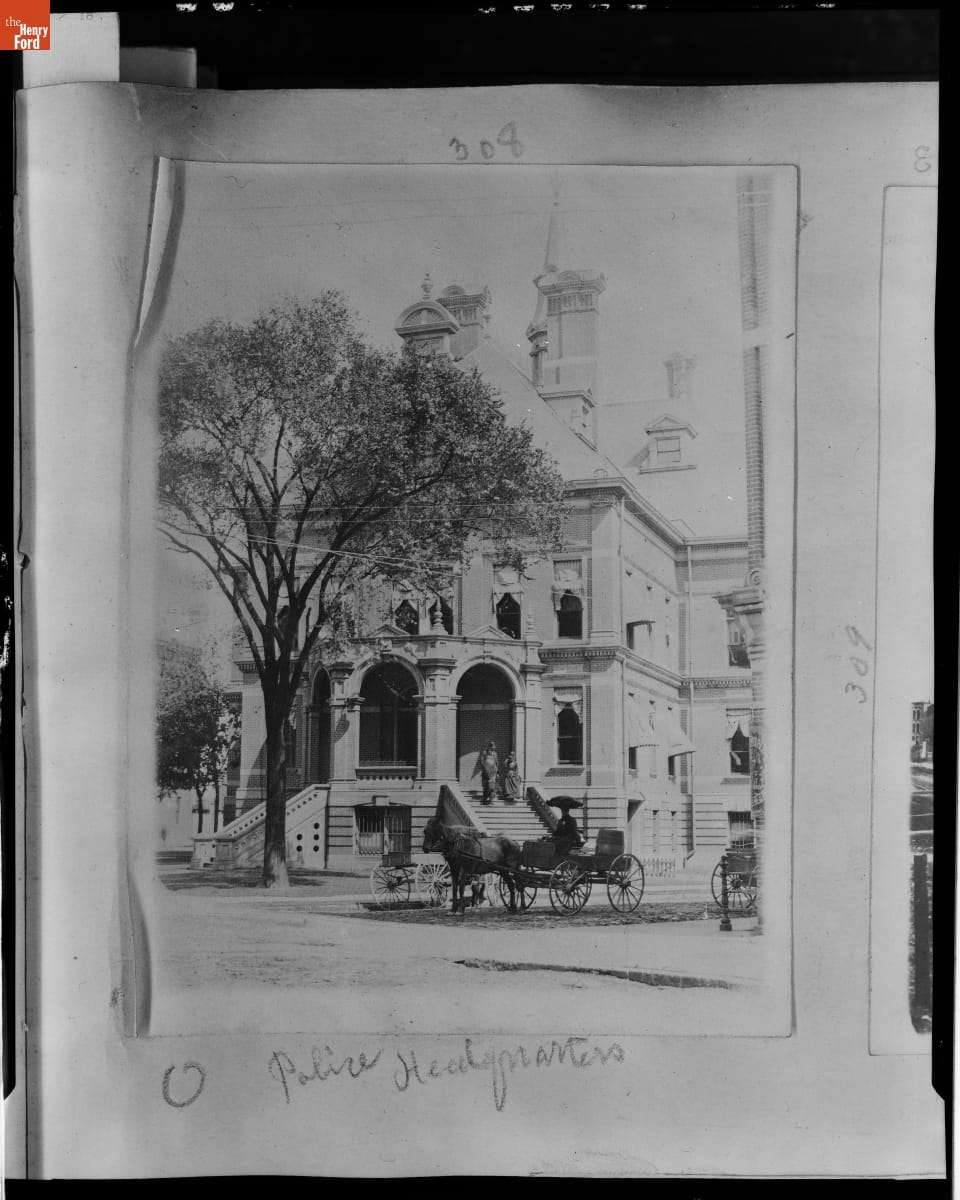
- Detroit Police Headquarters on Woodbridge Street, 1870-1883 -
- 1870-1883
- Collections - Artifact
Detroit Police Headquarters on Woodbridge Street, 1870-1883
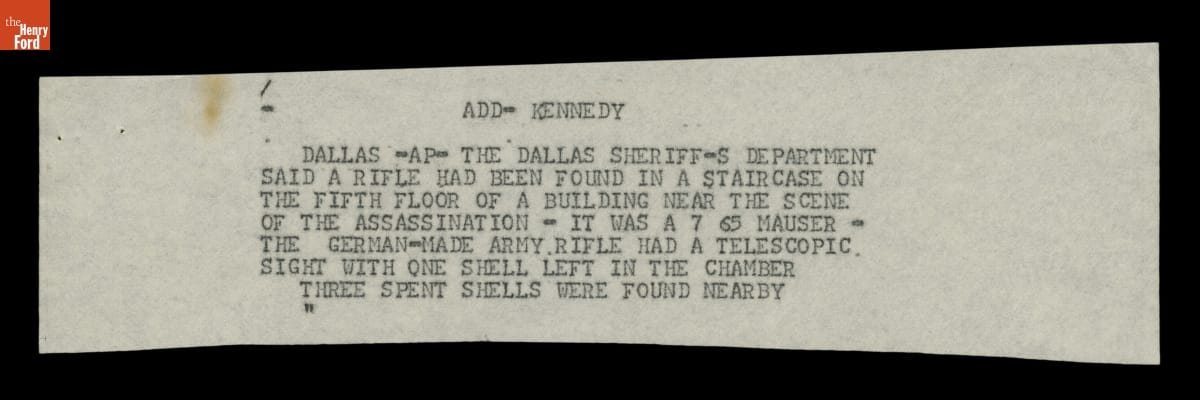
- Teletype Message with Wire Service News Coverage of John F. Kennedy Assassination, November 22, 1963 - In the routine course of business, Ford Motor Company received a steady flow of news and financial reports from the Wall Street Journal. These dispatches came over the teletype machine on November 22, 1963 describing events from the arrival of President John F. Kennedy and his wife Jacqueline in Dallas through the official report of his death several hours later.
- November 22, 1963
- Collections - Artifact
Teletype Message with Wire Service News Coverage of John F. Kennedy Assassination, November 22, 1963
In the routine course of business, Ford Motor Company received a steady flow of news and financial reports from the Wall Street Journal. These dispatches came over the teletype machine on November 22, 1963 describing events from the arrival of President John F. Kennedy and his wife Jacqueline in Dallas through the official report of his death several hours later.