
Search
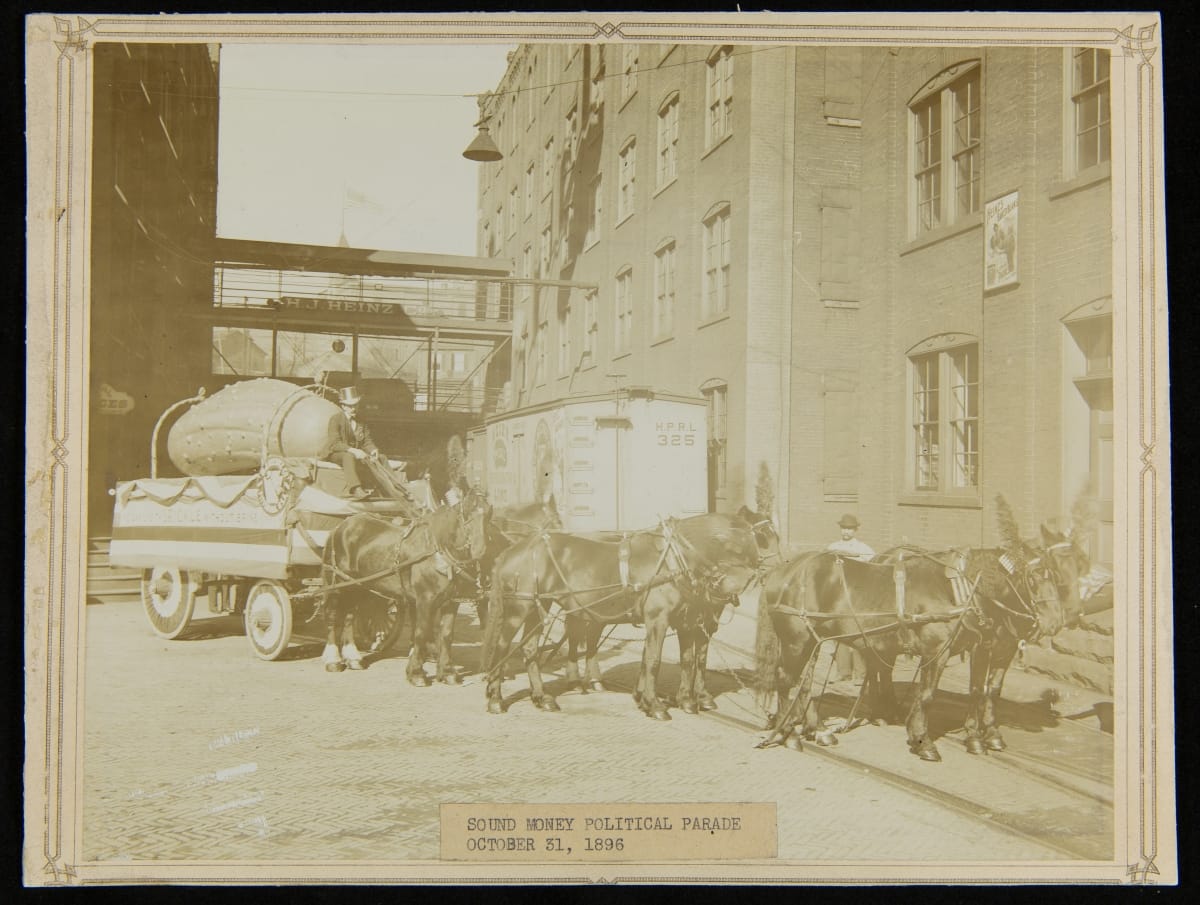
- Heinz Float for the Sound Money Political Parade in Pittsburgh, Pennsylvania, October 31, 1896 - During the 1896 election campaign, "Sound Money" political parades were held in San Francisco and New York City in support of presidential candidate William McKinley. The H.J. Heinz Company participated in the parade held in New York with this float featuring a giant pickle. McKinley would go on to defeat candidate William Jennings Bryan to become President.
- October 31, 1896
- Collections - Artifact
Heinz Float for the Sound Money Political Parade in Pittsburgh, Pennsylvania, October 31, 1896
During the 1896 election campaign, "Sound Money" political parades were held in San Francisco and New York City in support of presidential candidate William McKinley. The H.J. Heinz Company participated in the parade held in New York with this float featuring a giant pickle. McKinley would go on to defeat candidate William Jennings Bryan to become President.
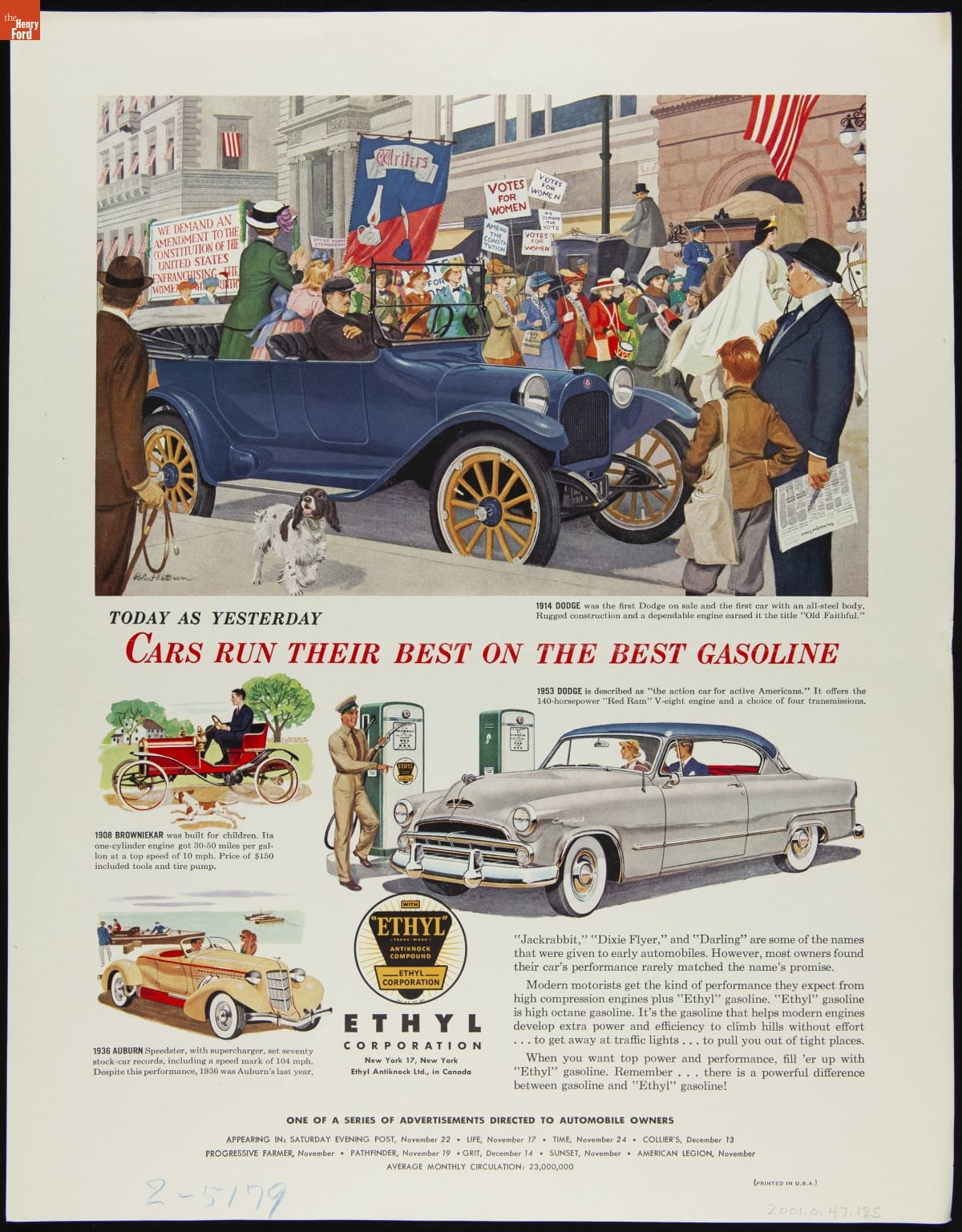
- Today as Yesterday Cars Run their Best on the Best Gasoline, circa 1952 - This advertisement for Ethyl antiknock gasoline additive features historic vehicles from Browniekar, Auburn, and Dodge. The main image shows a 1914 Dodge touring car being used at a rally for women's suffrage. The automobile served as a mobile podium and billboard for American women who fought for the vote in the early 20th century.
- 1953
- Collections - Artifact
Today as Yesterday Cars Run their Best on the Best Gasoline, circa 1952
This advertisement for Ethyl antiknock gasoline additive features historic vehicles from Browniekar, Auburn, and Dodge. The main image shows a 1914 Dodge touring car being used at a rally for women's suffrage. The automobile served as a mobile podium and billboard for American women who fought for the vote in the early 20th century.
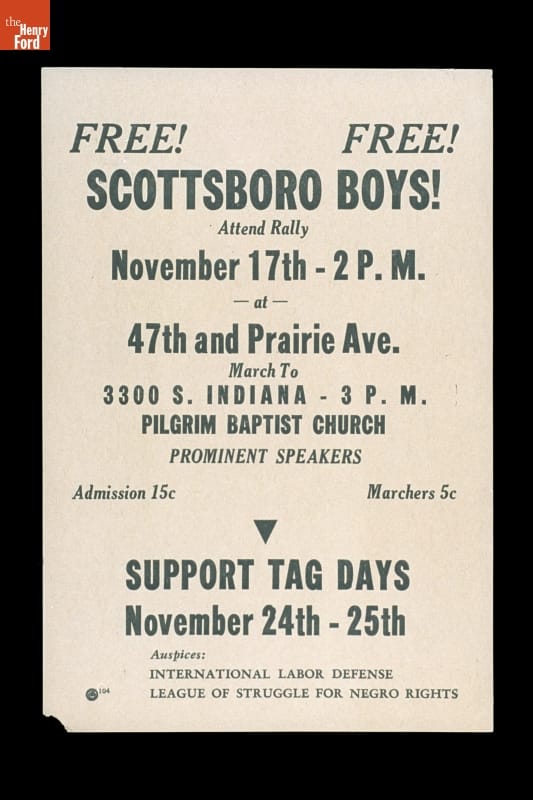
- Handbill for a Rally in Support of the Scottsboro Boys, Pilgrim Baptist Church, Chicago, Illinois, November 17, 1933 - In 1931, nine black youths were unjustly accused of raping two white women in Alabama. White juries quickly convicted and sentenced eight of the defendants to death. The International Labor Defense, the legal arm of the Communist Party of the United States, issued this handbill to rally public support to combat this injustice and to free the "Scottsboro Boys."
- November 17, 1933
- Collections - Artifact
Handbill for a Rally in Support of the Scottsboro Boys, Pilgrim Baptist Church, Chicago, Illinois, November 17, 1933
In 1931, nine black youths were unjustly accused of raping two white women in Alabama. White juries quickly convicted and sentenced eight of the defendants to death. The International Labor Defense, the legal arm of the Communist Party of the United States, issued this handbill to rally public support to combat this injustice and to free the "Scottsboro Boys."
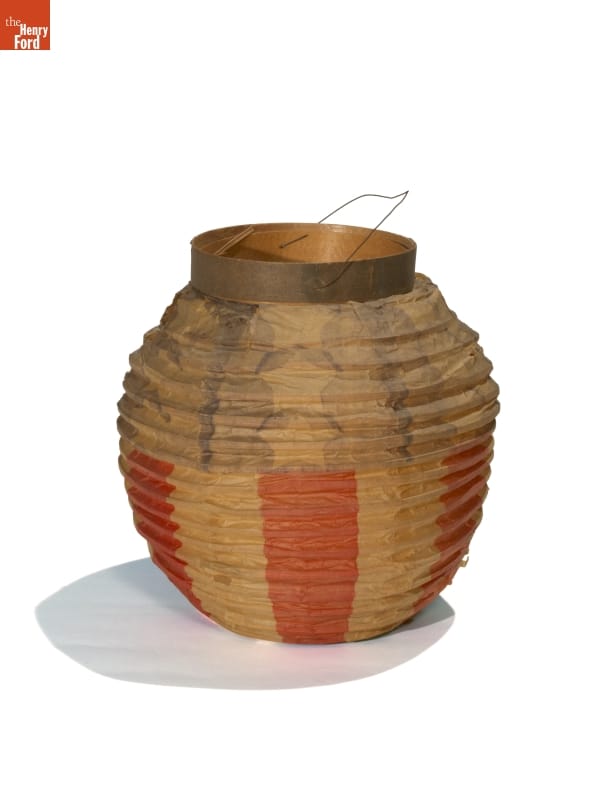
- Political Lantern, 1860-1880 - Late-nineteenth-century political parties rallied their supporters by holding torchlight parades. In the evening, marchers lit up the street carrying torches, lamps and lanterns. Inexpensive paper lanterns glowed with the image or name of the party's candidate or other patriotic imagery. This accordion-pleated lantern is decorated simply with stars and stripes.
- 1860-1880
- Collections - Artifact
Political Lantern, 1860-1880
Late-nineteenth-century political parties rallied their supporters by holding torchlight parades. In the evening, marchers lit up the street carrying torches, lamps and lanterns. Inexpensive paper lanterns glowed with the image or name of the party's candidate or other patriotic imagery. This accordion-pleated lantern is decorated simply with stars and stripes.
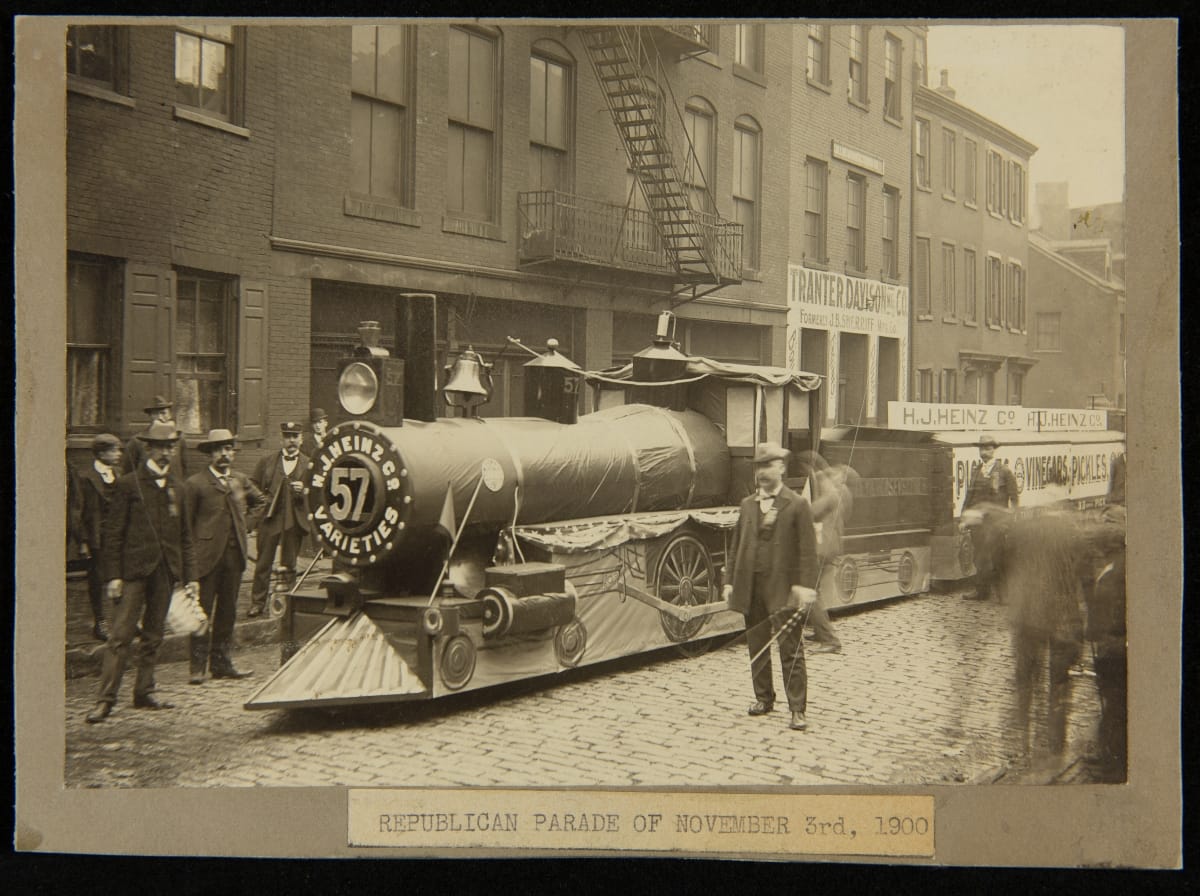
- H. J. Heinz Company Float at a Republican Parade, November 3, 1900 - The presidential election of 1900 saw Republican candidate William McKinley run for reelection against Democratic candidate William Jennings Bryan, a repeat of the 1896 election. The H.J. Heinz Company participated in a political parade on November 3, 1900, in support of William McKinley with a float pulled by horses and another resembling a train advertising Heinz's "57 Varieties." McKinley defeated Bryan three days later.
- November 03, 1900
- Collections - Artifact
H. J. Heinz Company Float at a Republican Parade, November 3, 1900
The presidential election of 1900 saw Republican candidate William McKinley run for reelection against Democratic candidate William Jennings Bryan, a repeat of the 1896 election. The H.J. Heinz Company participated in a political parade on November 3, 1900, in support of William McKinley with a float pulled by horses and another resembling a train advertising Heinz's "57 Varieties." McKinley defeated Bryan three days later.
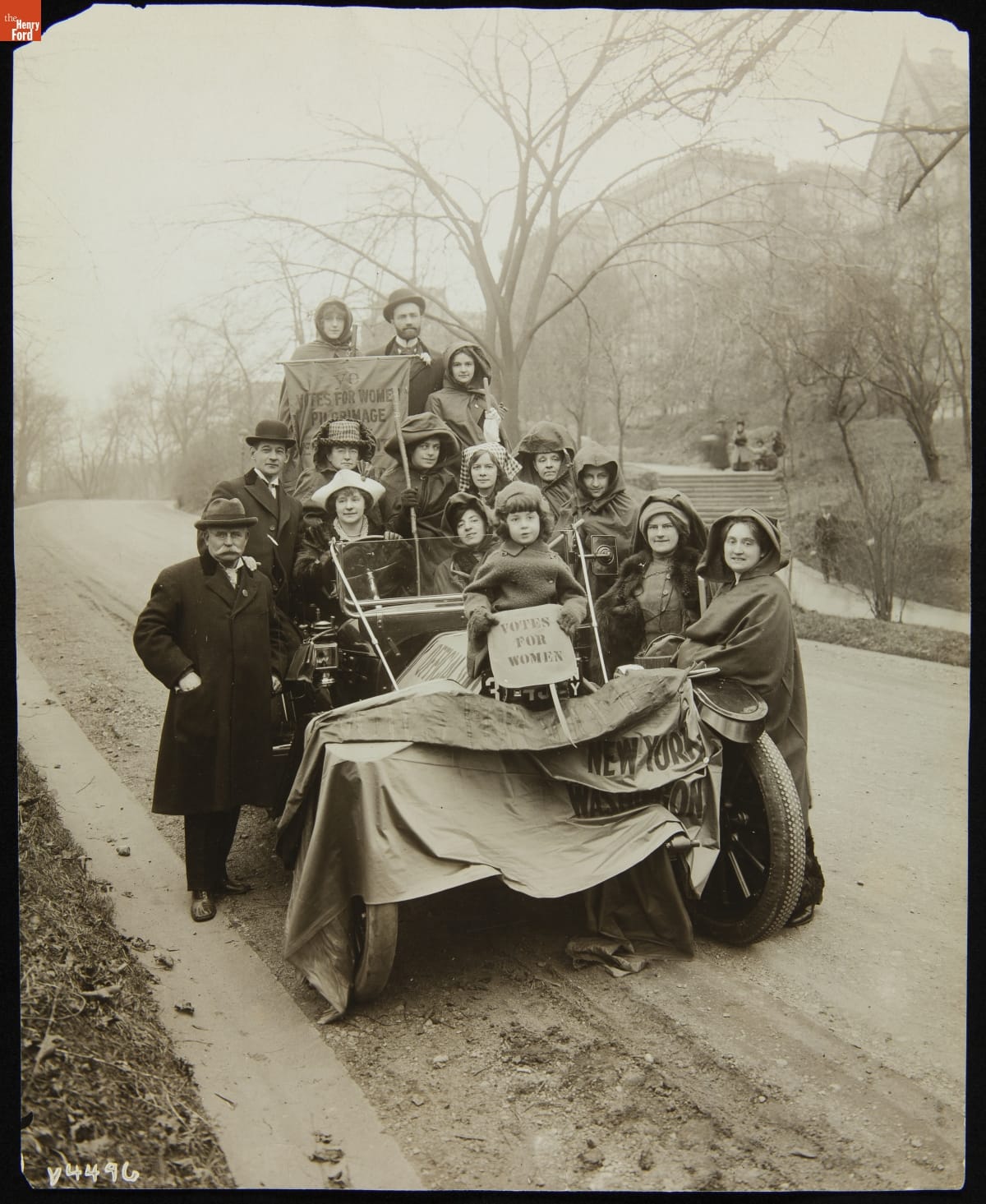
- Olive Schultz at the Wheel of a Buick Automobile with Other Suffragists Prior to the New York to Washington, D.C. Suffrage Hike, 1913 - In 1913, National American Woman Suffrage Association (NAWSA) activist Rosalie Jones led a well-publicized hike from New York City to Washington, D.C. Jones's "army" of suffragists hiked more than 200 miles in 20 days, distributing literature and delivering speeches along the way. Olive Schultz piloted the group's scout vehicle. Reaching Washington on March 3, the hikers joined thousands of demonstrators in a NAWSA-organized suffrage procession.
- 1913
- Collections - Artifact
Olive Schultz at the Wheel of a Buick Automobile with Other Suffragists Prior to the New York to Washington, D.C. Suffrage Hike, 1913
In 1913, National American Woman Suffrage Association (NAWSA) activist Rosalie Jones led a well-publicized hike from New York City to Washington, D.C. Jones's "army" of suffragists hiked more than 200 miles in 20 days, distributing literature and delivering speeches along the way. Olive Schultz piloted the group's scout vehicle. Reaching Washington on March 3, the hikers joined thousands of demonstrators in a NAWSA-organized suffrage procession.
- "Patriotic Suffrage Rally," circa 1917 - In the early 20th century, women and men alike joined the already decades-long fight for women's suffrage, or equal voting rights. They often appealed to patriotic sentiment, staging parades and organizing public demonstrations calling for the right to vote. This rally poster features a woman in a tricorne hat, associating suffragists with the patriots of the American Revolution.

- circa 1917
- Collections - Artifact
"Patriotic Suffrage Rally," circa 1917
In the early 20th century, women and men alike joined the already decades-long fight for women's suffrage, or equal voting rights. They often appealed to patriotic sentiment, staging parades and organizing public demonstrations calling for the right to vote. This rally poster features a woman in a tricorne hat, associating suffragists with the patriots of the American Revolution.
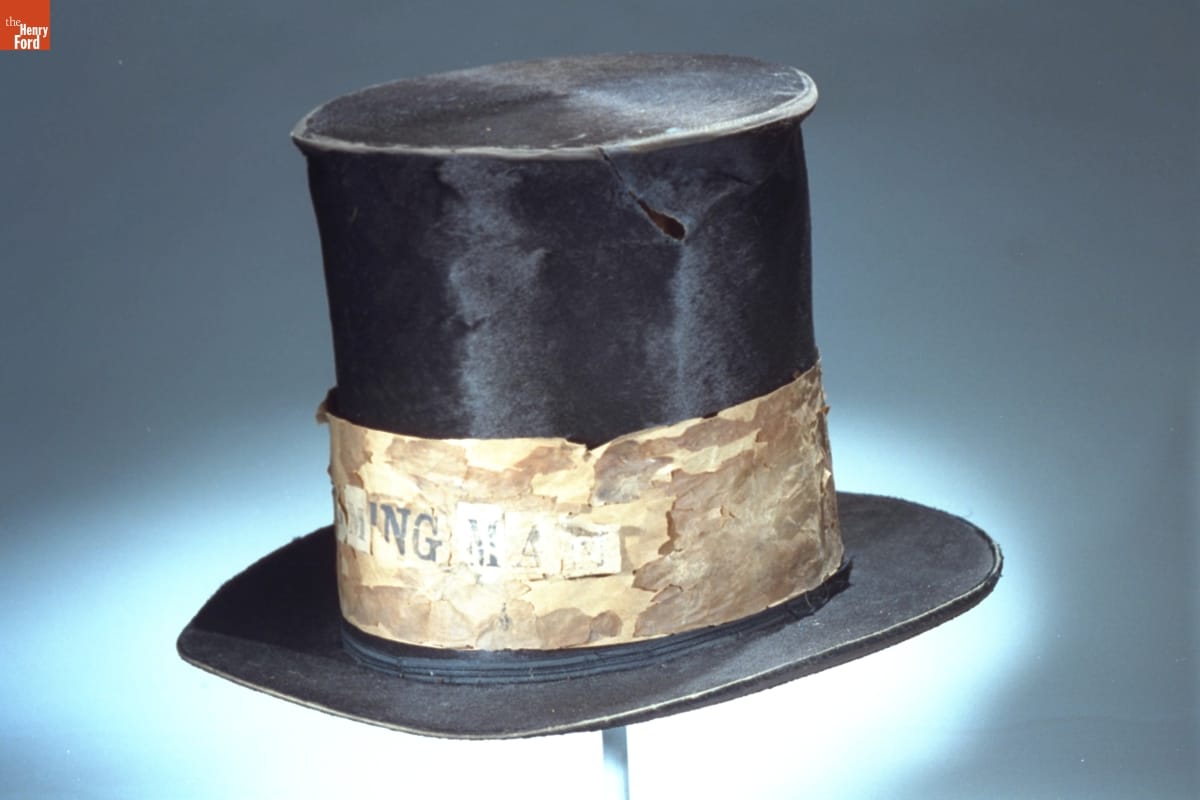
- Abraham Lincoln Campaign Hat, 1860 - By 1860, Abraham Lincoln was a rising star (a "coming man") in the Republican Party and American politics. Lincoln backers may have donned top hats like this one -- symbolic of the Illinois politician -- during campaign rallies for his Party's nomination or Presidential run. His supporters would not be disappointed; Lincoln became the 16th President.
- 1860
- Collections - Artifact
Abraham Lincoln Campaign Hat, 1860
By 1860, Abraham Lincoln was a rising star (a "coming man") in the Republican Party and American politics. Lincoln backers may have donned top hats like this one -- symbolic of the Illinois politician -- during campaign rallies for his Party's nomination or Presidential run. His supporters would not be disappointed; Lincoln became the 16th President.
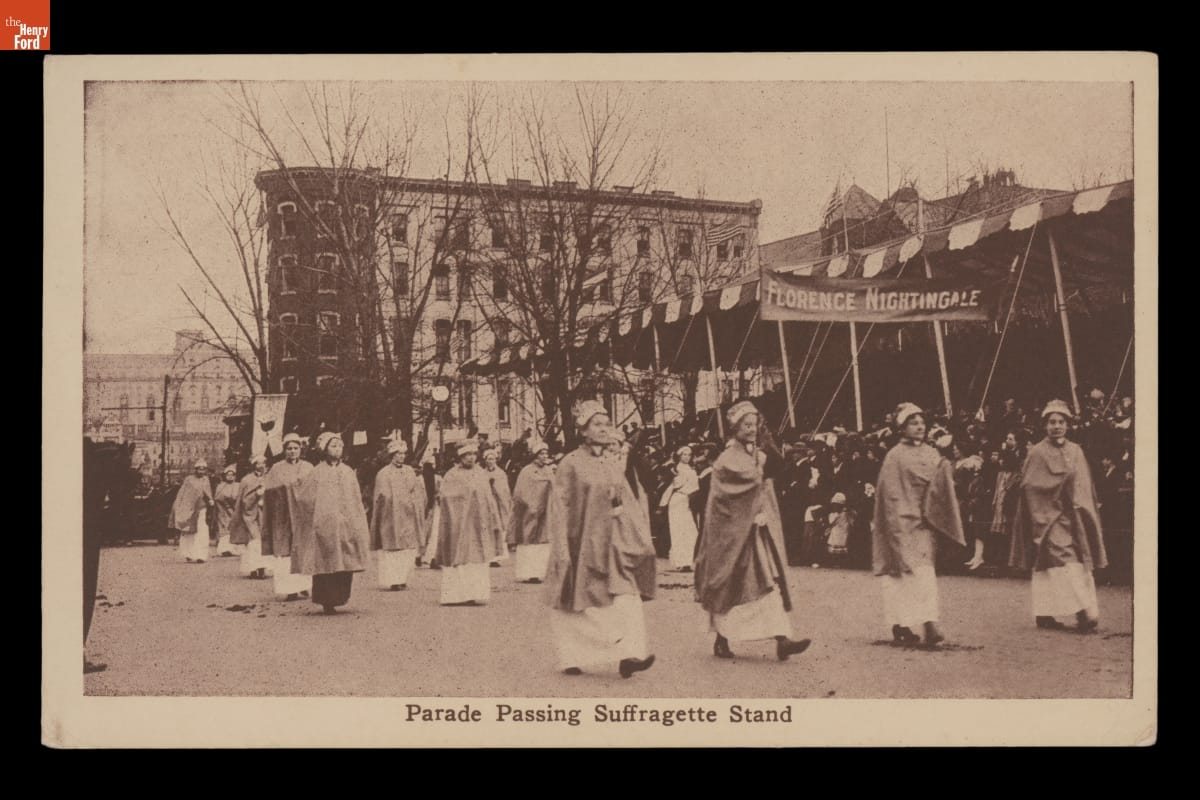
- "Parade Passing Suffragette Stand," Washington, D. C., 1913 - Alice Paul, a leader in the fight for women's suffrage, or equal voting rights, zealously targeted President Woodrow Wilson. The day before his first inauguration, Paul executed a parade of 8,000 women, who marched past the White House from the Capitol calling for suffrage. Sections of the well-orchestrated procession honored the contributions of working women, including these uniformed nurses.
- 1913
- Collections - Artifact
"Parade Passing Suffragette Stand," Washington, D. C., 1913
Alice Paul, a leader in the fight for women's suffrage, or equal voting rights, zealously targeted President Woodrow Wilson. The day before his first inauguration, Paul executed a parade of 8,000 women, who marched past the White House from the Capitol calling for suffrage. Sections of the well-orchestrated procession honored the contributions of working women, including these uniformed nurses.
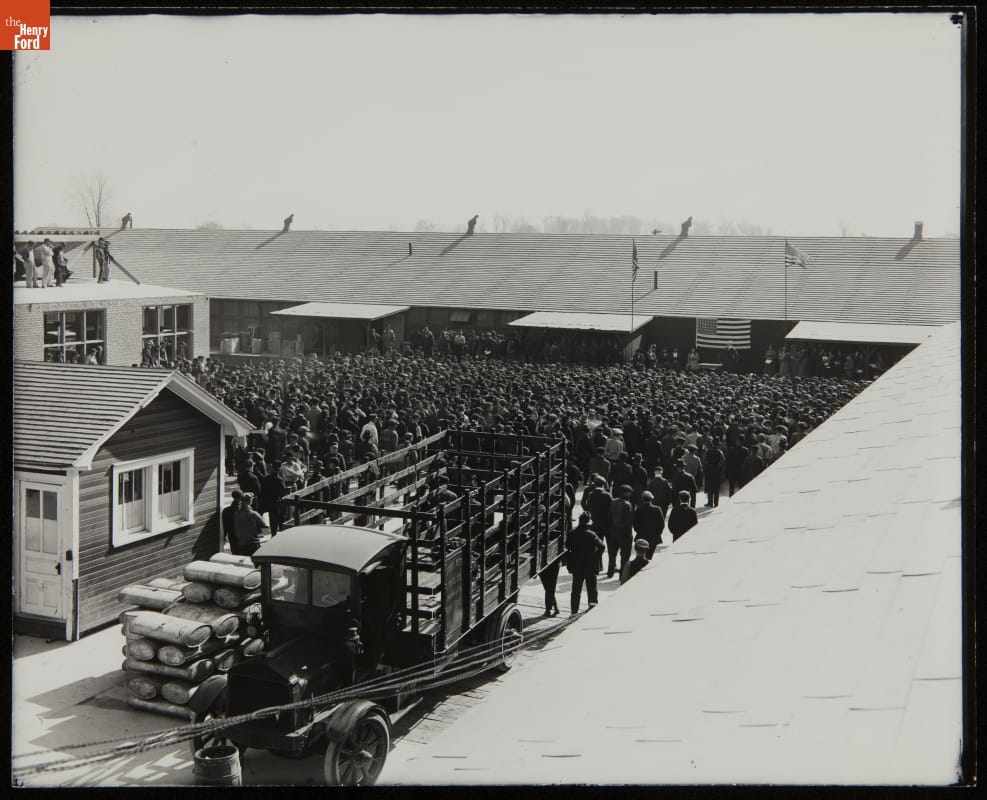
- Women's Suffrage Meeting, Henry Ford & Son Tractor Plant, Dearborn, Michigan, October 18, 1918 - Securing the right for women to vote in Michigan depended on persuading men to vote "yes" to amend the state constitution in the November 1918 election. Clara Ford, vice-chair of the Dearborn Township branch of the Equal Suffrage League of Wayne County, handed out literature, pins, and stickers during two open-air meetings at the Ford tractor plant that reportedly reached more than 7,000 attendees.
- October 18, 1918
- Collections - Artifact
Women's Suffrage Meeting, Henry Ford & Son Tractor Plant, Dearborn, Michigan, October 18, 1918
Securing the right for women to vote in Michigan depended on persuading men to vote "yes" to amend the state constitution in the November 1918 election. Clara Ford, vice-chair of the Dearborn Township branch of the Equal Suffrage League of Wayne County, handed out literature, pins, and stickers during two open-air meetings at the Ford tractor plant that reportedly reached more than 7,000 attendees.