
Search
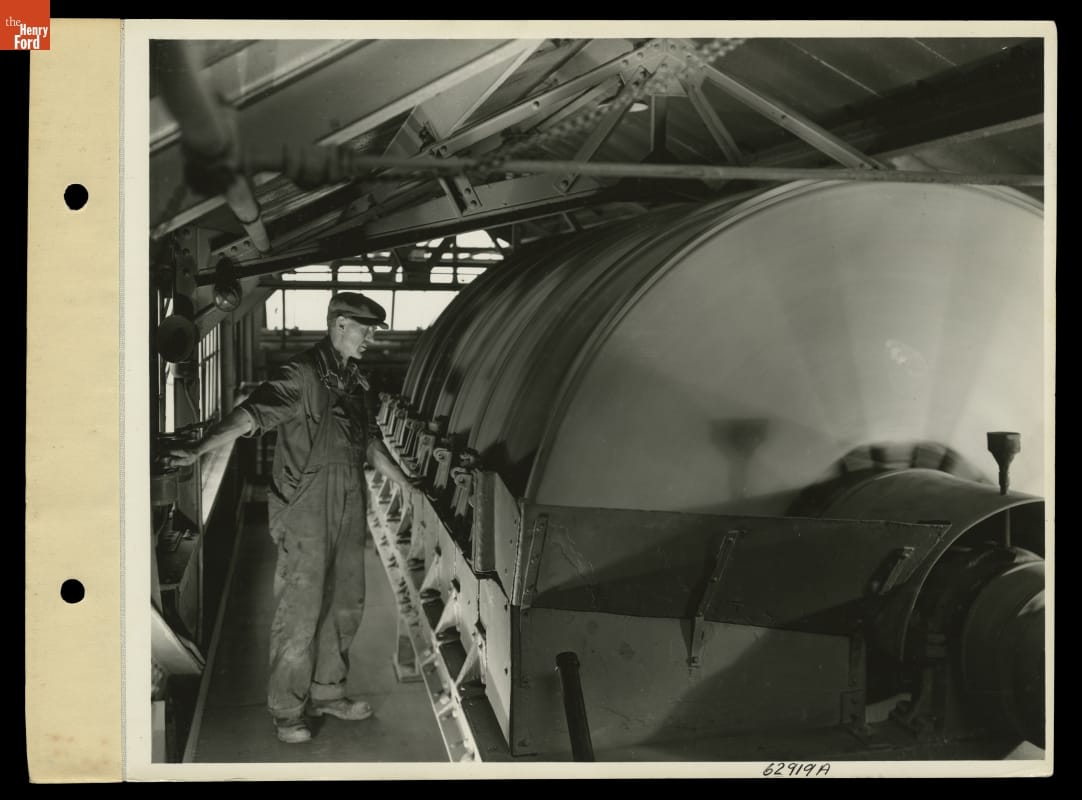
- Worker Monitoring Portland Cement Filtering Process at the Ford Rouge Plant, 1935 - Ford Motor Company's massive Rouge industrial complex near Dearborn, Michigan, included a cement plant. Slag from the Rouge's blast furnaces was mixed with lime and smaller amounts of silica, alumina, iron oxide, and magnesia to make Portland cement. The cement plant remained in operation for about 20 years, and it produced more than 2,000 barrels a day at its peak.
- May 02, 1935
- Collections - Artifact
Worker Monitoring Portland Cement Filtering Process at the Ford Rouge Plant, 1935
Ford Motor Company's massive Rouge industrial complex near Dearborn, Michigan, included a cement plant. Slag from the Rouge's blast furnaces was mixed with lime and smaller amounts of silica, alumina, iron oxide, and magnesia to make Portland cement. The cement plant remained in operation for about 20 years, and it produced more than 2,000 barrels a day at its peak.
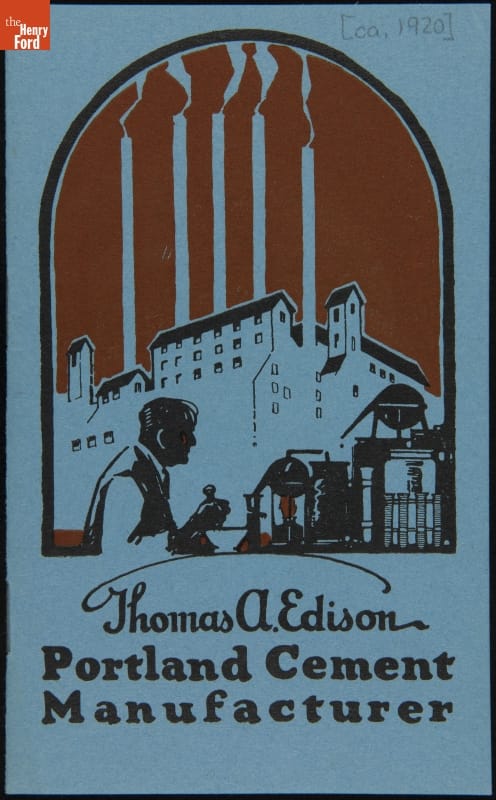
- "Thomas A. Edison Portland Cement Manufacturer," circa 1920 - In 1899, after a failed attempt at ore mining, Thomas Edison formed the Edison Portland Cement Company. At his plant, Edison combined his mining operation's rock-crushing technology with new machinery he developed, like a more efficient cement kiln. These innovations drove overproduction in the cement industry, leading Edison to propose a radical use for the excess product -- concrete houses for working class families.
- circa 1920
- Collections - Artifact
"Thomas A. Edison Portland Cement Manufacturer," circa 1920
In 1899, after a failed attempt at ore mining, Thomas Edison formed the Edison Portland Cement Company. At his plant, Edison combined his mining operation's rock-crushing technology with new machinery he developed, like a more efficient cement kiln. These innovations drove overproduction in the cement industry, leading Edison to propose a radical use for the excess product -- concrete houses for working class families.
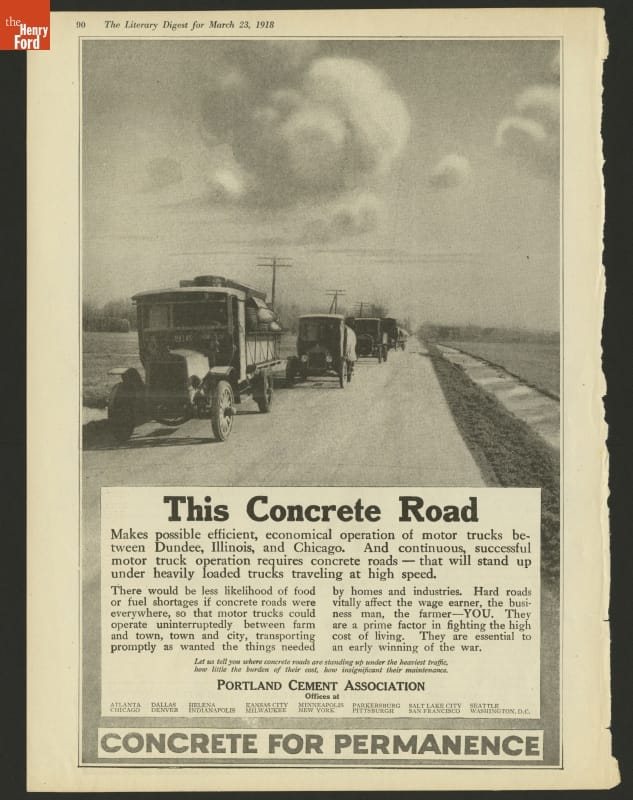
- "This Concrete Road," Portland Cement Association, 1918 - As trucking increased during World War I, paved road became essential. This advertisement from the Portland Cement Association promoted concrete roads that would hold up under the heavy loads.
- 1918
- Collections - Artifact
"This Concrete Road," Portland Cement Association, 1918
As trucking increased during World War I, paved road became essential. This advertisement from the Portland Cement Association promoted concrete roads that would hold up under the heavy loads.
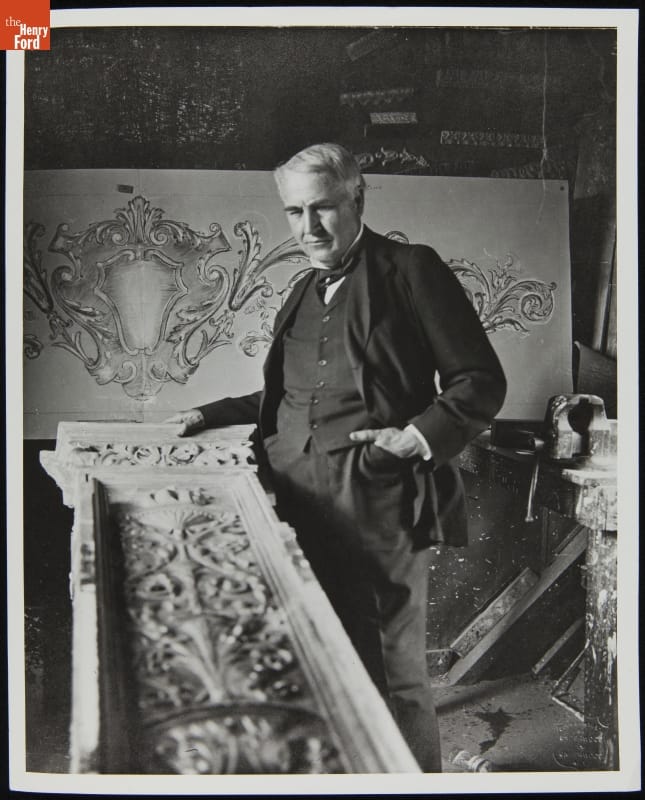
- Thomas Edison Looking at a Concrete House Unit, circa 1911 - In 1899, after a failed attempt at ore mining, Thomas Edison formed the Edison Portland Cement Company. At his plant, Edison combined his mining operation's rock-crushing technology with new machinery he developed, like a more efficient cement kiln. These innovations drove overproduction in the cement industry, leading Edison to propose a radical use for the excess product -- concrete houses for working class families.
- circa 1911
- Collections - Artifact
Thomas Edison Looking at a Concrete House Unit, circa 1911
In 1899, after a failed attempt at ore mining, Thomas Edison formed the Edison Portland Cement Company. At his plant, Edison combined his mining operation's rock-crushing technology with new machinery he developed, like a more efficient cement kiln. These innovations drove overproduction in the cement industry, leading Edison to propose a radical use for the excess product -- concrete houses for working class families.
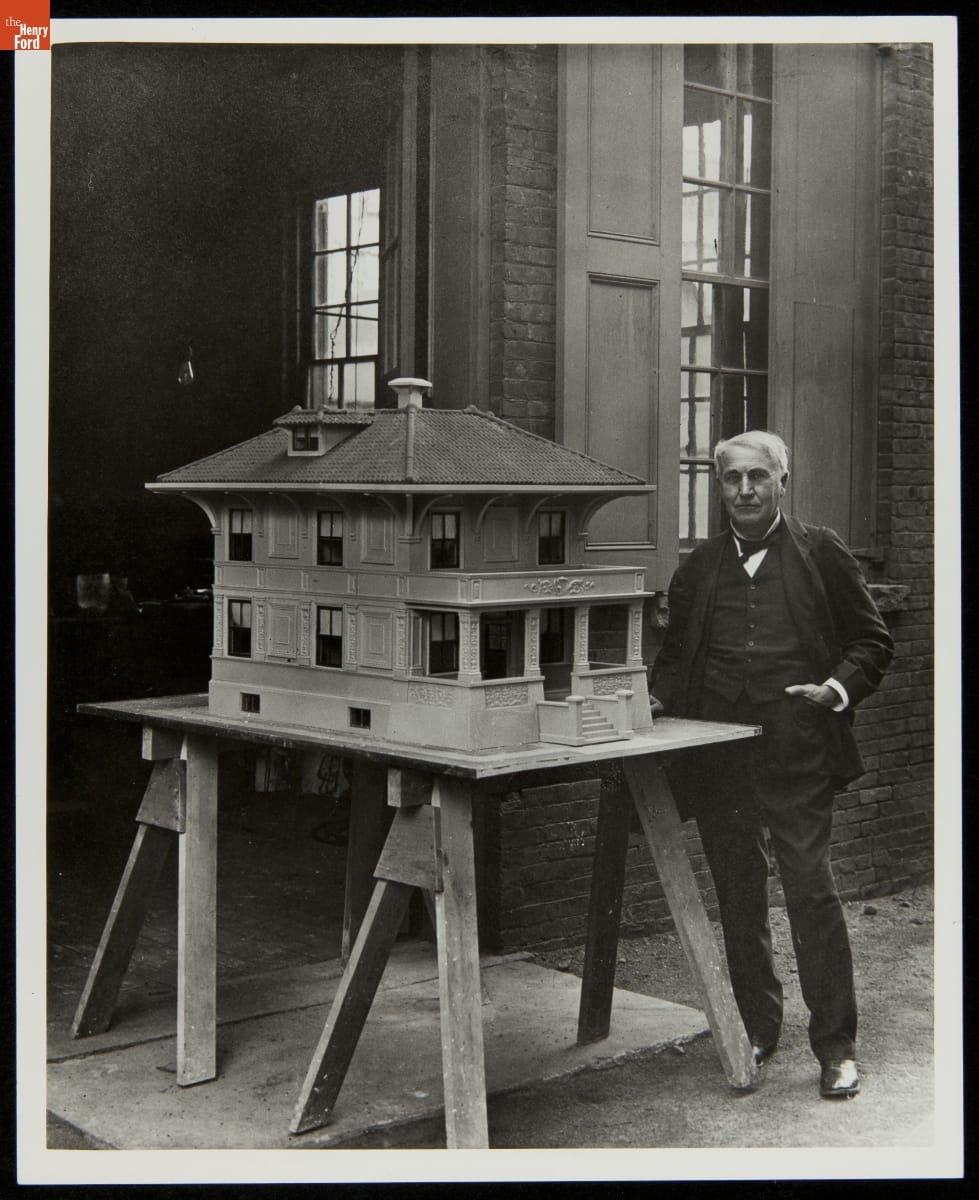
- Thomas Edison with a Model of a Concrete House, circa 1911 - In 1899, after a failed attempt at ore mining, Thomas Edison formed the Edison Portland Cement Company. At his plant, Edison combined his mining operation's rock-crushing technology with new machinery he developed, like a more efficient cement kiln. These innovations drove overproduction in the cement industry, leading Edison to propose a radical use for the excess product -- concrete houses for working class families.
- circa 1911
- Collections - Artifact
Thomas Edison with a Model of a Concrete House, circa 1911
In 1899, after a failed attempt at ore mining, Thomas Edison formed the Edison Portland Cement Company. At his plant, Edison combined his mining operation's rock-crushing technology with new machinery he developed, like a more efficient cement kiln. These innovations drove overproduction in the cement industry, leading Edison to propose a radical use for the excess product -- concrete houses for working class families.
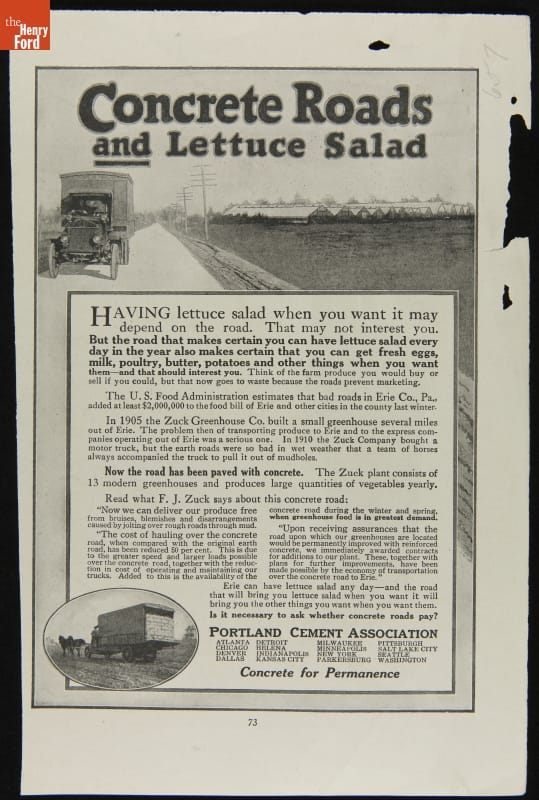
- Portland Cement Association Advertisement Promoting Good Roads "Concrete Roads and Lettuce Salad," April 1919 - The Portland Cement Association, a trade group promoting the use of Portland cement, published this advertisement in 1919 to support road improvements. The ad used the example of fresh lettuce, stating that it could be delivered more economically over paved highways versus dirt roads. Of course, cement producers stood to profit from the construction of paved roads.
- April 01, 1919
- Collections - Artifact
Portland Cement Association Advertisement Promoting Good Roads "Concrete Roads and Lettuce Salad," April 1919
The Portland Cement Association, a trade group promoting the use of Portland cement, published this advertisement in 1919 to support road improvements. The ad used the example of fresh lettuce, stating that it could be delivered more economically over paved highways versus dirt roads. Of course, cement producers stood to profit from the construction of paved roads.