
Search
- Ruth Elder at Mrs. Mackey's Home, Horte, Azores, October 1927 - Ruth Elder fell short of her goal to be the first woman to fly the Atlantic in 1927, but the public loved her just the same. She competed in the 1929 Women's Air Derby and parlayed her aviation fame into a modest film career. Elder was fondly remembered as the "Miss America of the Air" when she died in 1977.
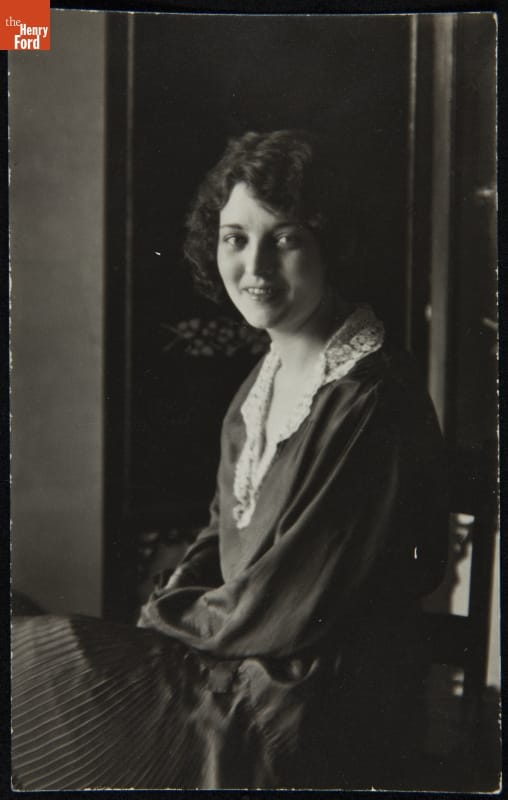
- October 01, 1927
- Collections - Artifact
Ruth Elder at Mrs. Mackey's Home, Horte, Azores, October 1927
Ruth Elder fell short of her goal to be the first woman to fly the Atlantic in 1927, but the public loved her just the same. She competed in the 1929 Women's Air Derby and parlayed her aviation fame into a modest film career. Elder was fondly remembered as the "Miss America of the Air" when she died in 1977.
- George Haldeman and Ruth Elder after Their Rescue, Horta, Azores, October 1927 - Ruth Elder fell short of her goal to be the first woman to fly the Atlantic in 1927, but the public loved her just the same. She competed in the 1929 Women's Air Derby and parlayed her aviation fame into a modest film career. Elder was fondly remembered as the "Miss America of the Air" when she died in 1977.
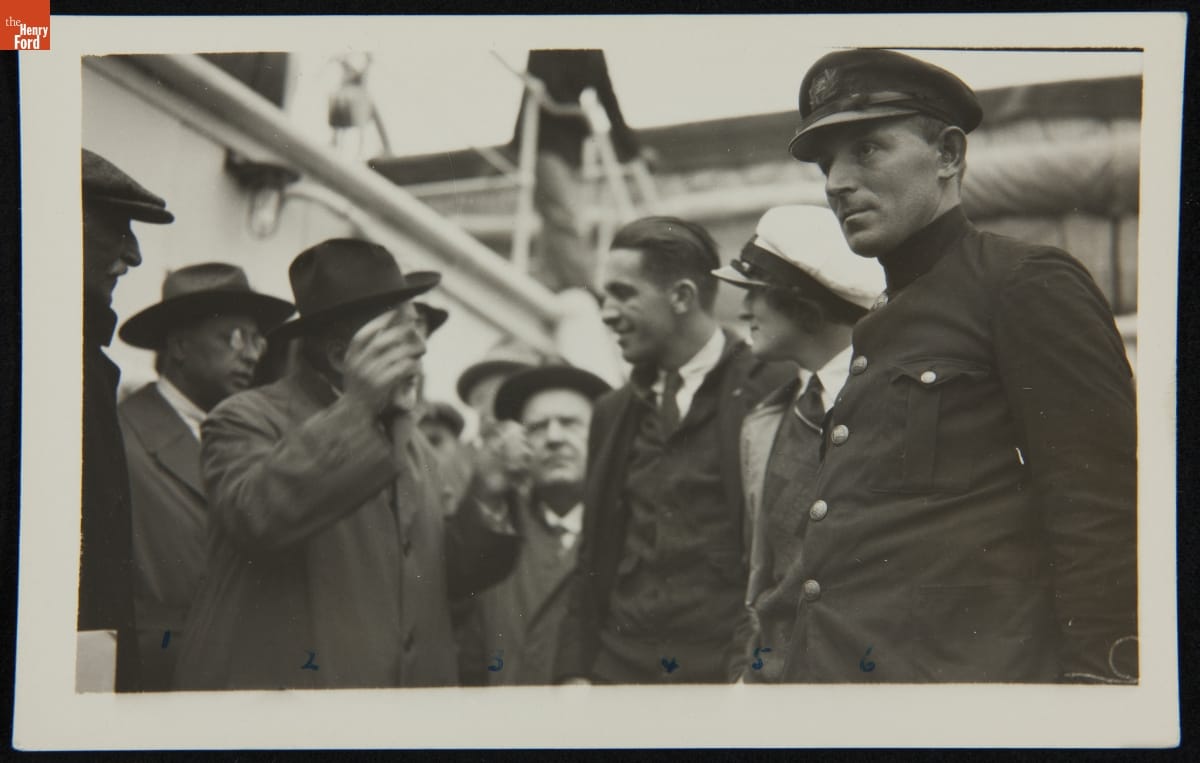
- October 01, 1927
- Collections - Artifact
George Haldeman and Ruth Elder after Their Rescue, Horta, Azores, October 1927
Ruth Elder fell short of her goal to be the first woman to fly the Atlantic in 1927, but the public loved her just the same. She competed in the 1929 Women's Air Derby and parlayed her aviation fame into a modest film career. Elder was fondly remembered as the "Miss America of the Air" when she died in 1977.
- "Ford Theatre--Lincoln Museum, Washington, D.C.," 1935 Postcard - Abraham Lincoln was assassinated in Ford's Theatre in April 1865. In the fall, the U.S. government leased--and later purchased--the building after an attempt to reopen the theater failed. Over the next sixty-five years the building housed offices and became a warehouse. In 1931, a museum displaying Lincoln memorabilia was created. The theatre returned to its 1865 appearance in the 1960s after Congress appropriated funds for the building's restoration.
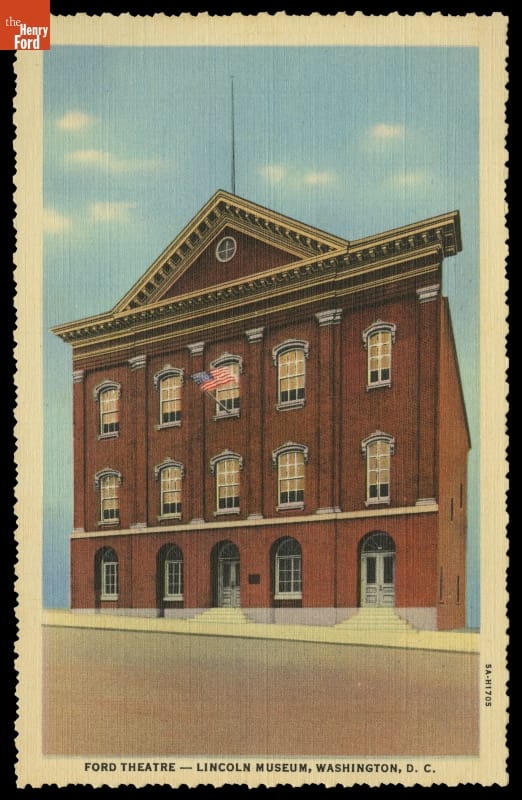
- 1935
- Collections - Artifact
"Ford Theatre--Lincoln Museum, Washington, D.C.," 1935 Postcard
Abraham Lincoln was assassinated in Ford's Theatre in April 1865. In the fall, the U.S. government leased--and later purchased--the building after an attempt to reopen the theater failed. Over the next sixty-five years the building housed offices and became a warehouse. In 1931, a museum displaying Lincoln memorabilia was created. The theatre returned to its 1865 appearance in the 1960s after Congress appropriated funds for the building's restoration.
- "J.T. Slack Shoddy Mills, Springfield, Vt.," circa 1910 -
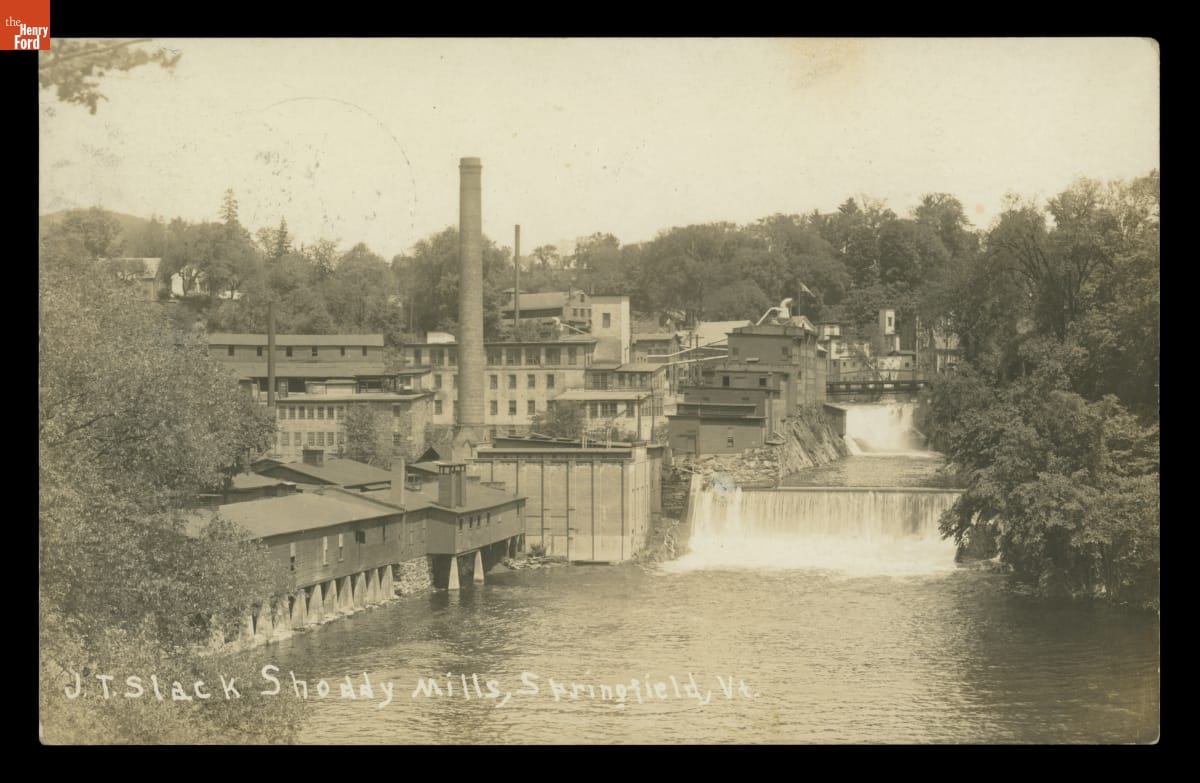
- circa 1910
- Collections - Artifact
"J.T. Slack Shoddy Mills, Springfield, Vt.," circa 1910
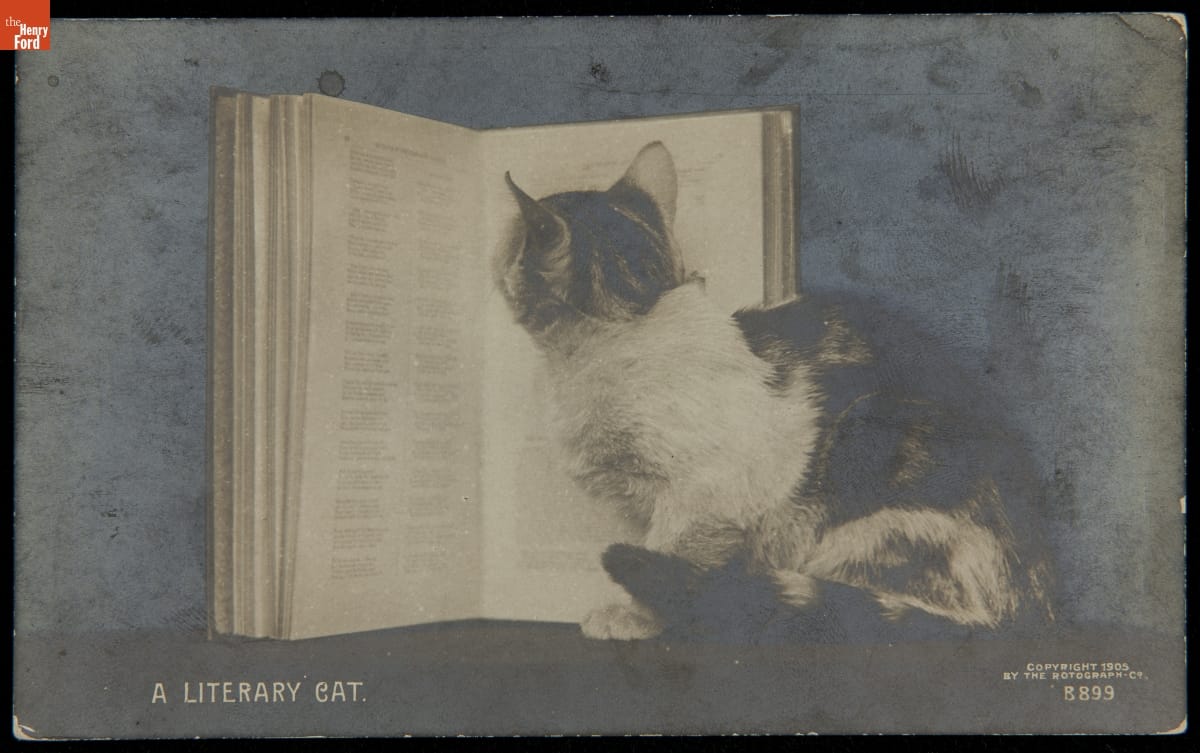
- Postcard, "A Literary Cat," 1909 - Depictions of cats and kittens often appeared in art and folk art in the United States. Inexpensive lithograph prints made in the mid-19th century helped to make this topic popular. Starting in the late 1890s picture postcards included these types of popular illustrations of cats. Sending colorful postcards through the U.S. mail continued to be widespread well into the 1910s.
- 1909
- Collections - Artifact
Postcard, "A Literary Cat," 1909
Depictions of cats and kittens often appeared in art and folk art in the United States. Inexpensive lithograph prints made in the mid-19th century helped to make this topic popular. Starting in the late 1890s picture postcards included these types of popular illustrations of cats. Sending colorful postcards through the U.S. mail continued to be widespread well into the 1910s.
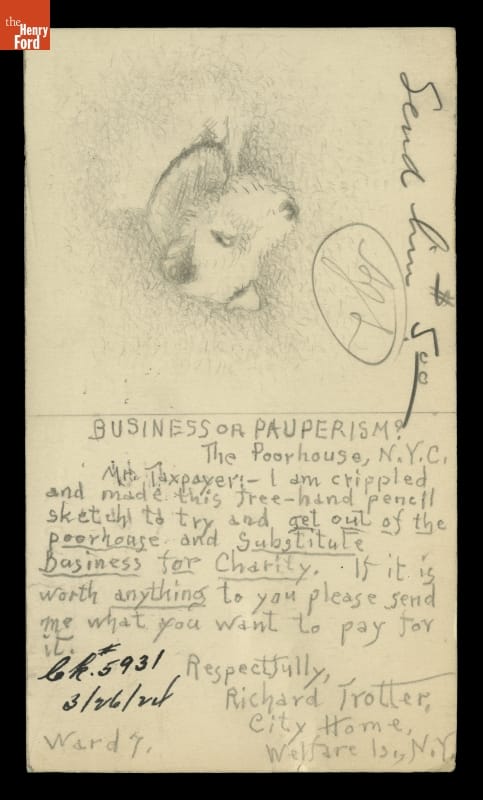
- Letter from Richard Trotter to Edsel Ford, Offering to Sell Drawings, March 20, 1924 -
- March 20, 1924
- Collections - Artifact
Letter from Richard Trotter to Edsel Ford, Offering to Sell Drawings, March 20, 1924
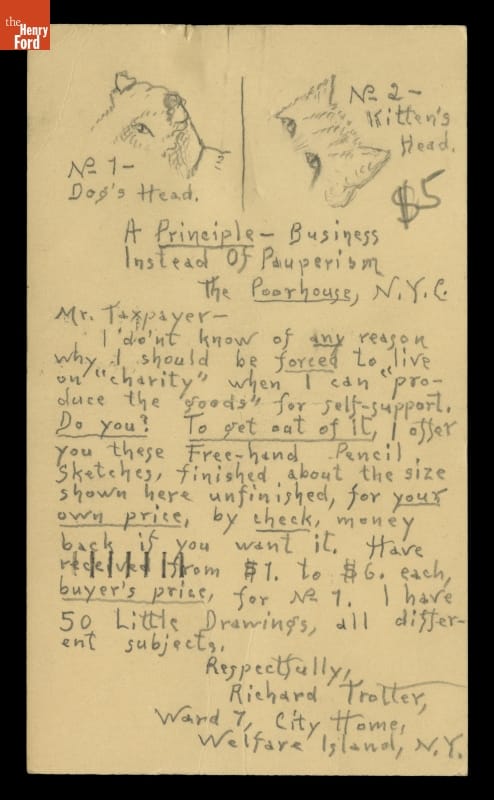
- Letter from Richard Trotter to Edsel Ford, Offering to Sell Drawings, December 18, 1924 -
- December 18, 1924
- Collections - Artifact
Letter from Richard Trotter to Edsel Ford, Offering to Sell Drawings, December 18, 1924
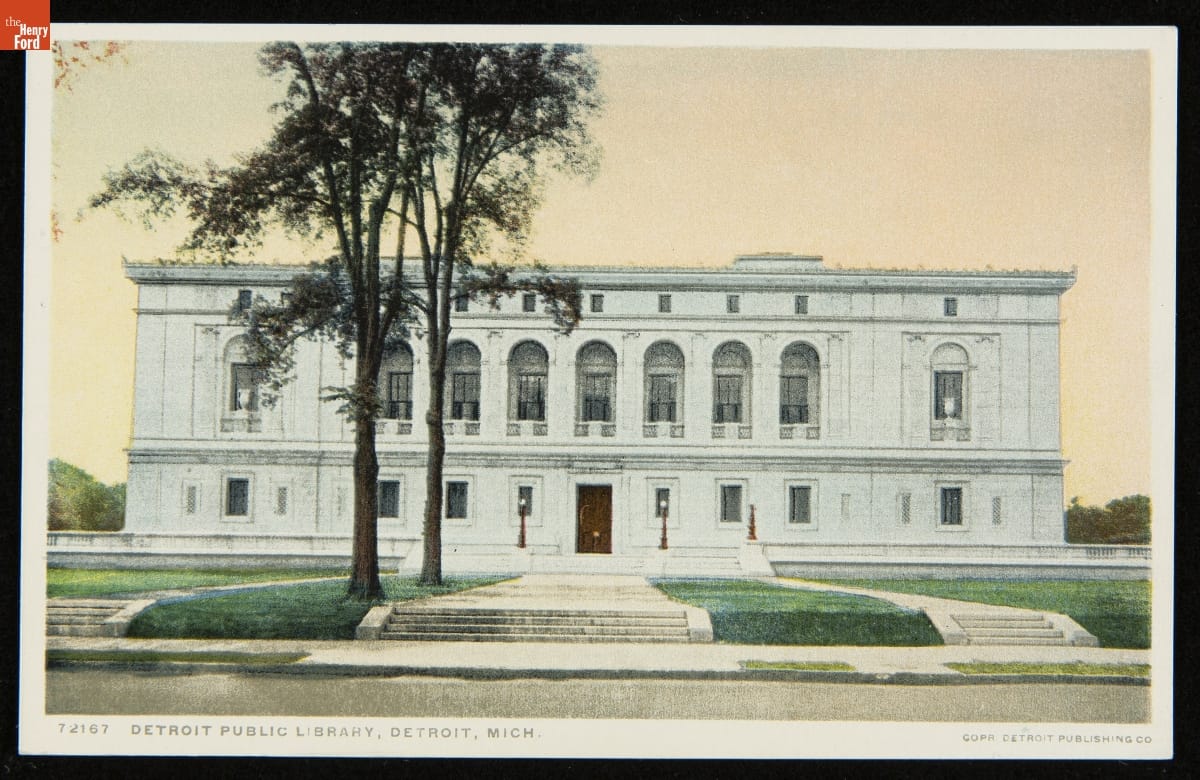
- Postcard, "Detroit Public Library, Detroit, Mich.," circa 1920 - Andrew Carnegie (1835-1919) amassed an immense fortune from railroads, oil, and steel. He devoted his later years to philanthropy. Between 1886 and 1919, Carnegie donated more than $40 million to build 1,679 new libraries in communities of all sizes across America. This library building, funded by a Carnegie grant and designed by New York City architect Cass Gilbert, opened in 1921 in Detroit, Michigan.
- circa 1920
- Collections - Artifact
Postcard, "Detroit Public Library, Detroit, Mich.," circa 1920
Andrew Carnegie (1835-1919) amassed an immense fortune from railroads, oil, and steel. He devoted his later years to philanthropy. Between 1886 and 1919, Carnegie donated more than $40 million to build 1,679 new libraries in communities of all sizes across America. This library building, funded by a Carnegie grant and designed by New York City architect Cass Gilbert, opened in 1921 in Detroit, Michigan.
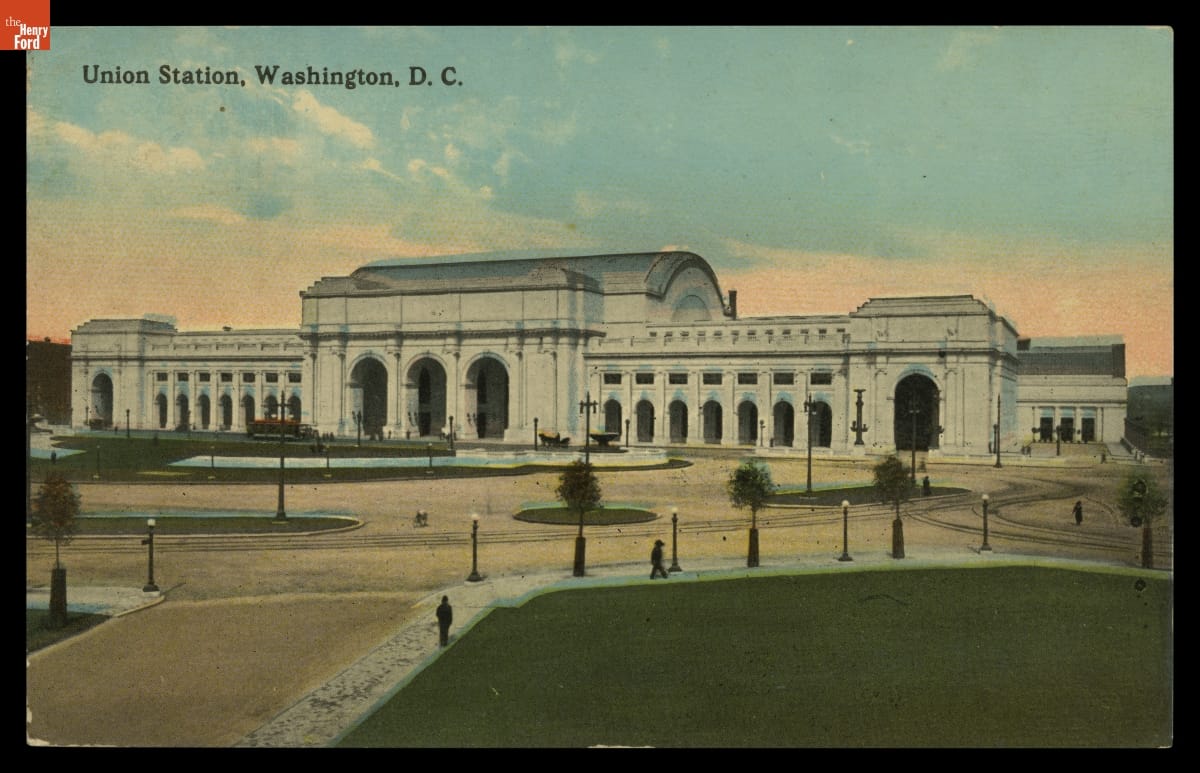
- Union Station, Washington, D.C., circa 1913 - Washington's Union Station was opened by the Baltimore & Ohio and Pennsylvania Railroads in 1907. The monumental building -- well suited to a city of monuments -- was part of a larger project to beautify the nation's capital in the early 1900s. Removal of the Pennsylvania Railroad's previous station, located directly on the National Mall, was a major component of the plan.
- April 27, 1913
- Collections - Artifact
Union Station, Washington, D.C., circa 1913
Washington's Union Station was opened by the Baltimore & Ohio and Pennsylvania Railroads in 1907. The monumental building -- well suited to a city of monuments -- was part of a larger project to beautify the nation's capital in the early 1900s. Removal of the Pennsylvania Railroad's previous station, located directly on the National Mall, was a major component of the plan.
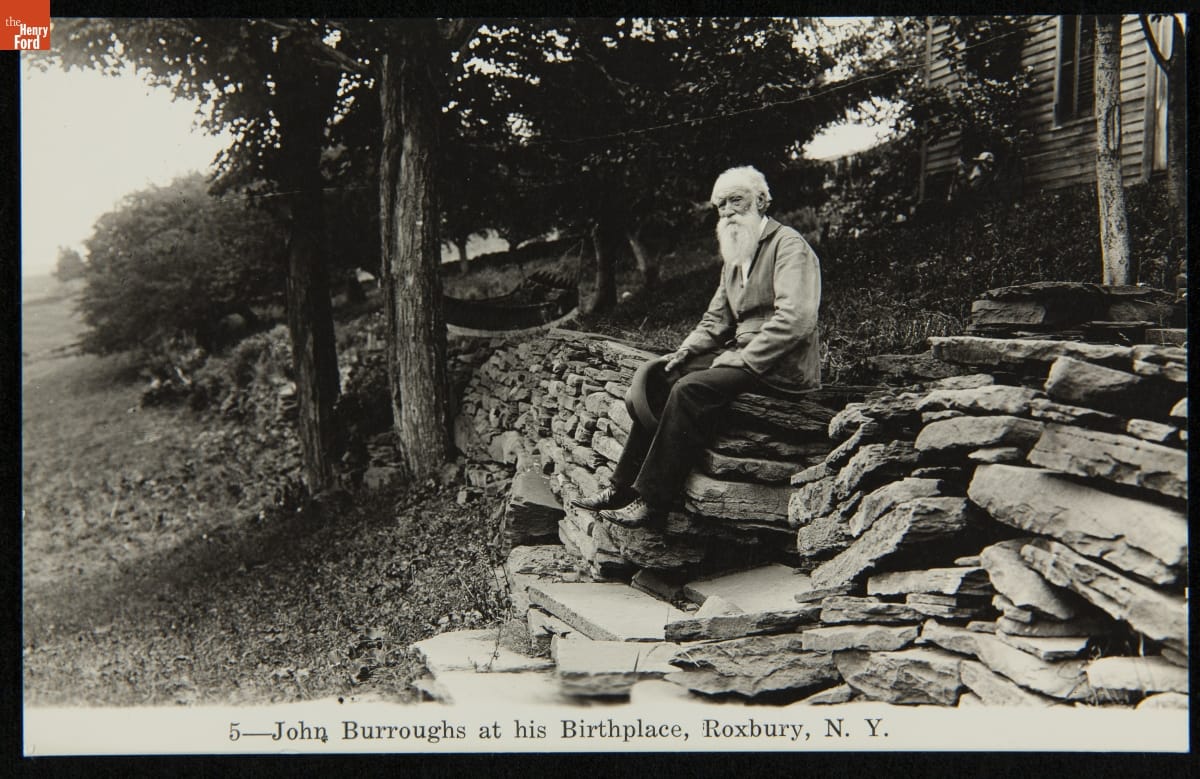
- John Burroughs Sitting at his Birthplace, Roxbury, New York, circa 1915 - John Burroughs (1837-1921), an internationally known naturalist and writer, was born on a dairy farm near Roxbury, New York, in the Catskills Mountains. After working as an itinerant teacher and living in Washington, D.C., Burroughs returned to the Catskills and built a home. There, he could visit his birthplace and the surrounding lands where he grew up.
- circa 1915
- Collections - Artifact
John Burroughs Sitting at his Birthplace, Roxbury, New York, circa 1915
John Burroughs (1837-1921), an internationally known naturalist and writer, was born on a dairy farm near Roxbury, New York, in the Catskills Mountains. After working as an itinerant teacher and living in Washington, D.C., Burroughs returned to the Catskills and built a home. There, he could visit his birthplace and the surrounding lands where he grew up.