
Search
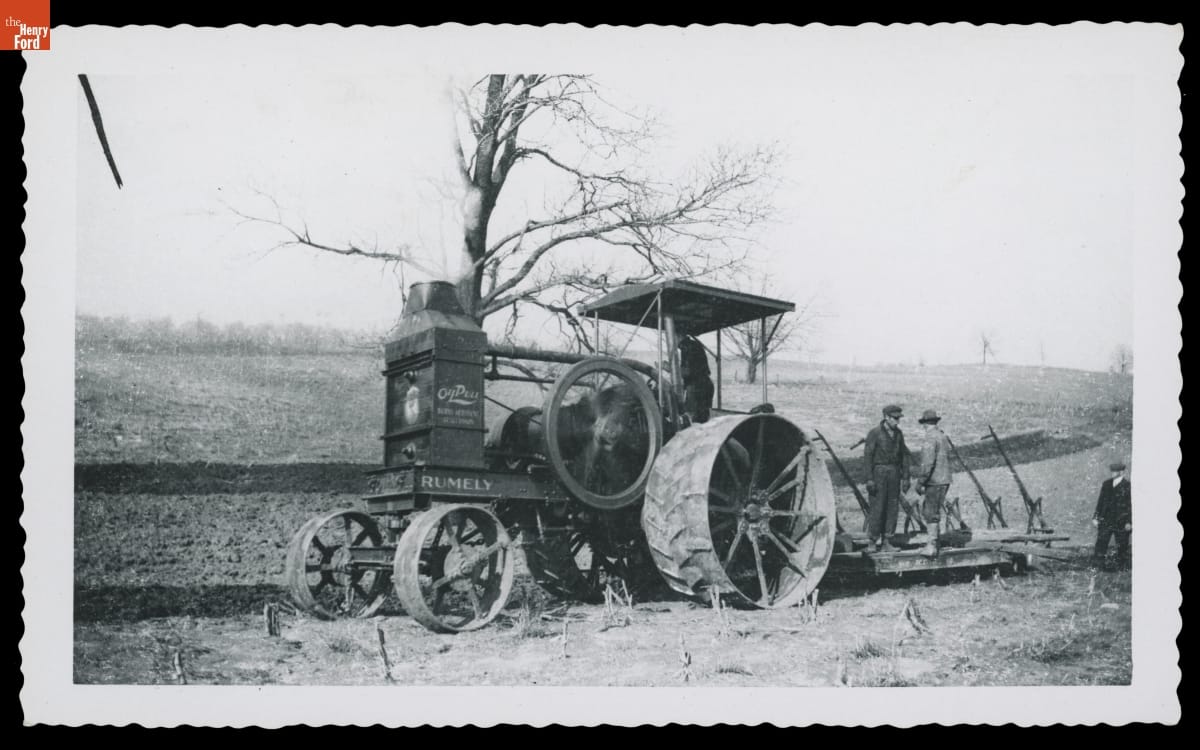
- 1910 Advance-Rumely Oil Pull Tractor Used at Interlaken School near Rolling Prairie, Indiana, 1914 -
- 1914
- Collections - Artifact
1910 Advance-Rumely Oil Pull Tractor Used at Interlaken School near Rolling Prairie, Indiana, 1914
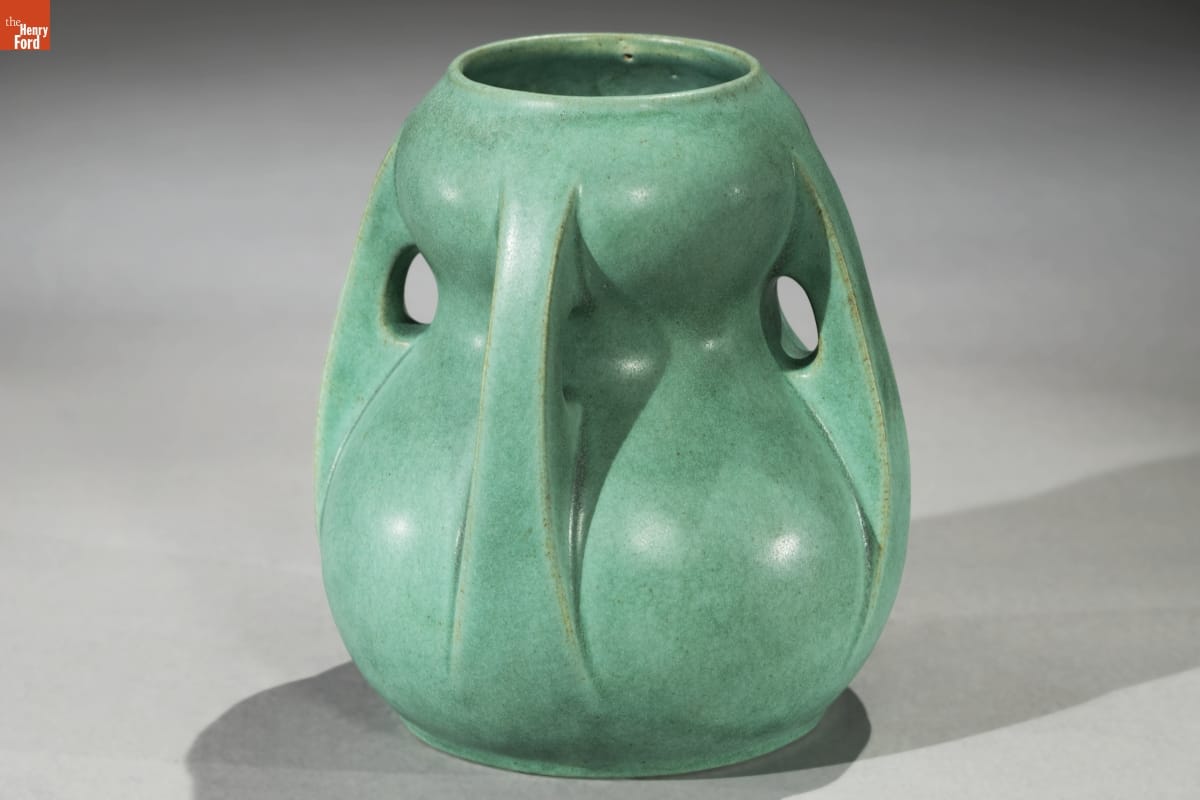
- Vase, 1905-1920 - Teco Pottery was a major provider of mid-price-level decorative ceramics for the home in the first two decades of the twentieth century. Because many of the shapes were based on architectural forms, Teco was the preferred line of ceramics of the Prairie School architects, including Louis Sullivan and Frank Lloyd Wright, who designed a piece for the firm.
- 1905-1920
- Collections - Artifact
Vase, 1905-1920
Teco Pottery was a major provider of mid-price-level decorative ceramics for the home in the first two decades of the twentieth century. Because many of the shapes were based on architectural forms, Teco was the preferred line of ceramics of the Prairie School architects, including Louis Sullivan and Frank Lloyd Wright, who designed a piece for the firm.
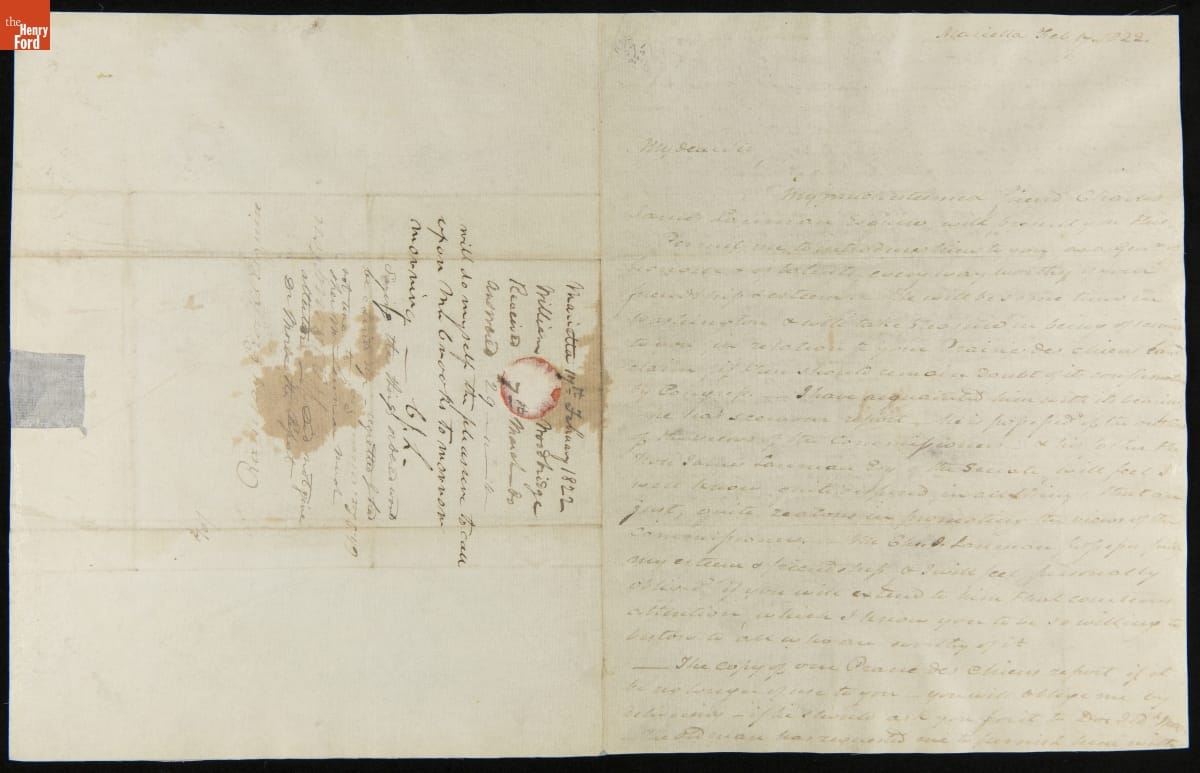
- Letter from William Woodbridge to Ramsay Crooks, February 17, 1822 -
- February 17, 1822
- Collections - Artifact
Letter from William Woodbridge to Ramsay Crooks, February 17, 1822
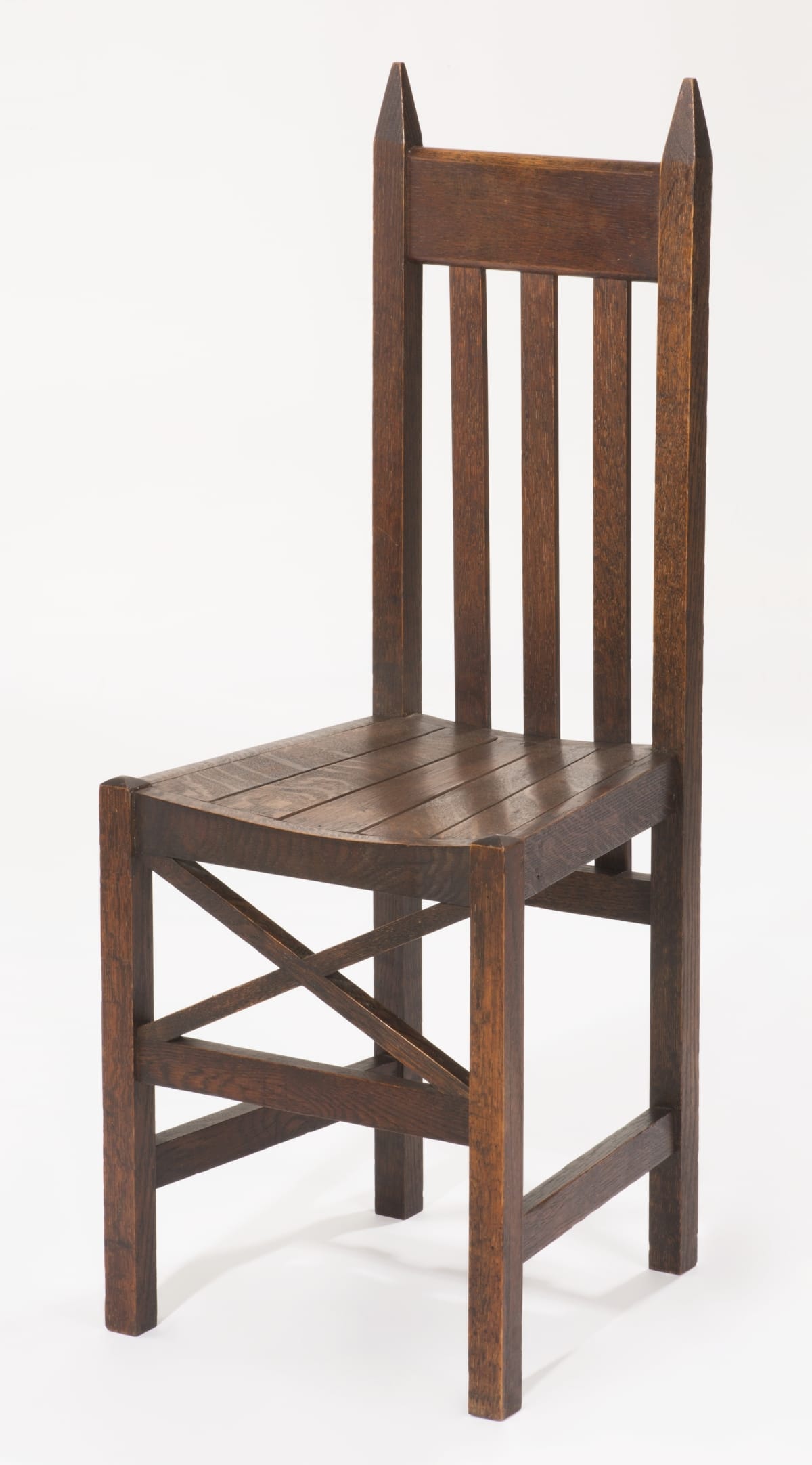
- Side Chair, 1910-1920 - This Arts and Crafts style chair was purchased in Chicago, Illinois between 1910 and 1920. It was donated along with a desk made by the Stickley Brothers, with which it was paired. An unusual example, this oak chair shows the influence of Frank Lloyd Wright's Prairie style in its severely rectilinear back outfitted with slats that continue below the seat.
- 1910-1920
- Collections - Artifact
Side Chair, 1910-1920
This Arts and Crafts style chair was purchased in Chicago, Illinois between 1910 and 1920. It was donated along with a desk made by the Stickley Brothers, with which it was paired. An unusual example, this oak chair shows the influence of Frank Lloyd Wright's Prairie style in its severely rectilinear back outfitted with slats that continue below the seat.
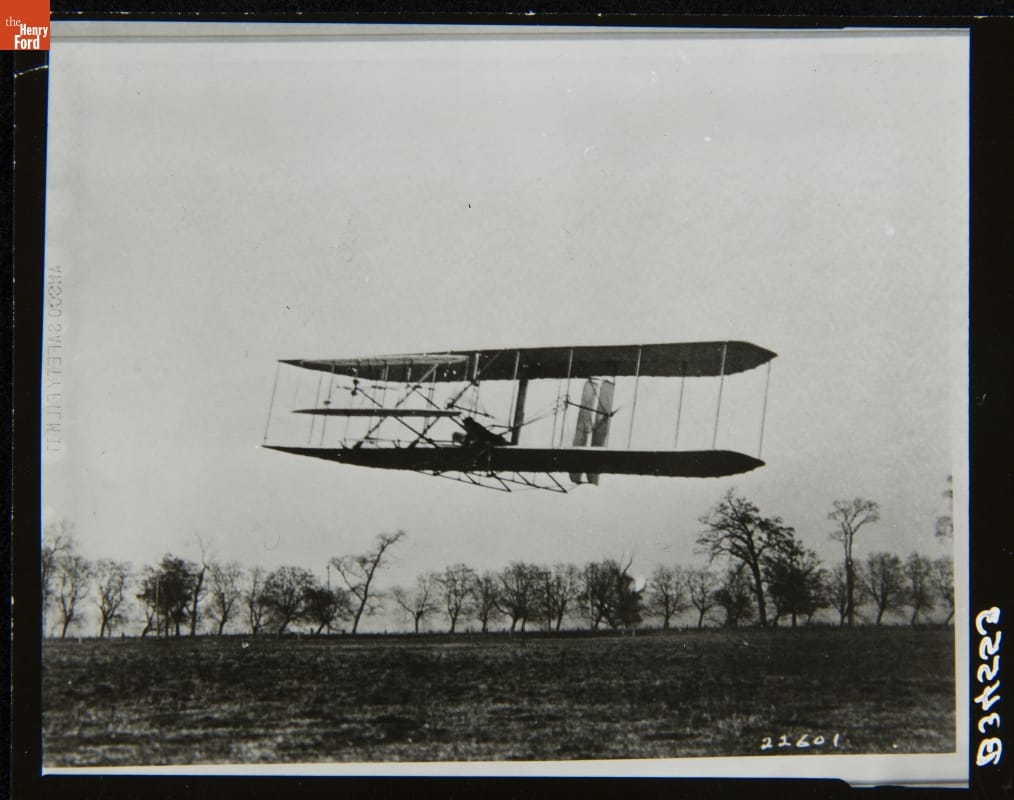
- Wright Brothers 1904 Flyer over Huffman Prairie near Dayton, Ohio, November 15, 1904 - Following their successful flights at Kill Devil Hills, North Carolina, in December 1903, the Wright brothers made further test flights closer to home. They flew at Huffman Prairie, an open field some eight miles northeast of their bicycle shop in Dayton, Ohio. The Wrights devised a catapult system to help launch their airplanes in the field's comparatively calm winds.
- November 15, 1904
- Collections - Artifact
Wright Brothers 1904 Flyer over Huffman Prairie near Dayton, Ohio, November 15, 1904
Following their successful flights at Kill Devil Hills, North Carolina, in December 1903, the Wright brothers made further test flights closer to home. They flew at Huffman Prairie, an open field some eight miles northeast of their bicycle shop in Dayton, Ohio. The Wrights devised a catapult system to help launch their airplanes in the field's comparatively calm winds.
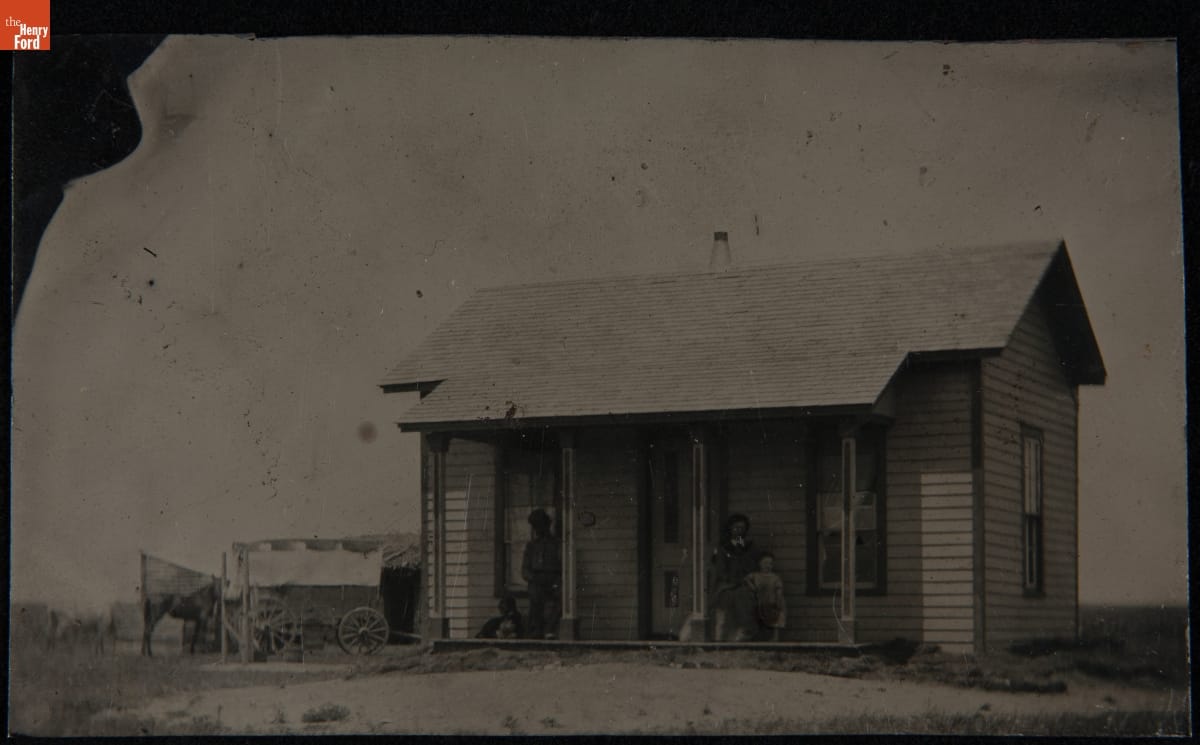
- Small Wooden Frame House on a Prairie, circa 1885 - Tintypes, the popular "instant photographs" of the 19th century, could be produced in a matter of minutes at a price most people could afford. At first, outdoor tintypes were rare. But after a new, more convenient process was introduced in the 1880s, some tintypists began traveling with their equipment from farm-to-farm, offering to photograph rural customers, who proudly posed in front of their homes.
- circa 1885
- Collections - Artifact
Small Wooden Frame House on a Prairie, circa 1885
Tintypes, the popular "instant photographs" of the 19th century, could be produced in a matter of minutes at a price most people could afford. At first, outdoor tintypes were rare. But after a new, more convenient process was introduced in the 1880s, some tintypists began traveling with their equipment from farm-to-farm, offering to photograph rural customers, who proudly posed in front of their homes.
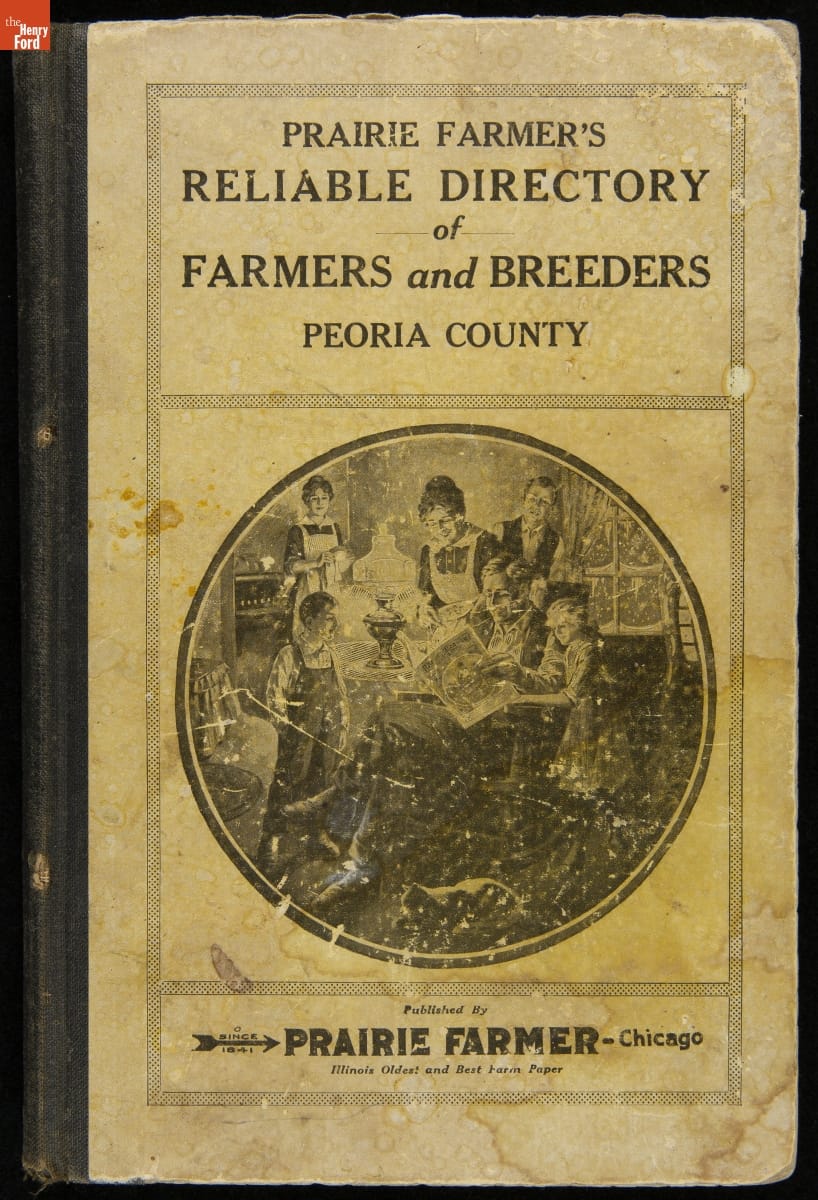
- Prairie Farmer's Reliable Directory of Farmers and Breeders: Peoria County, 1917 -
- 1917
- Collections - Artifact
Prairie Farmer's Reliable Directory of Farmers and Breeders: Peoria County, 1917
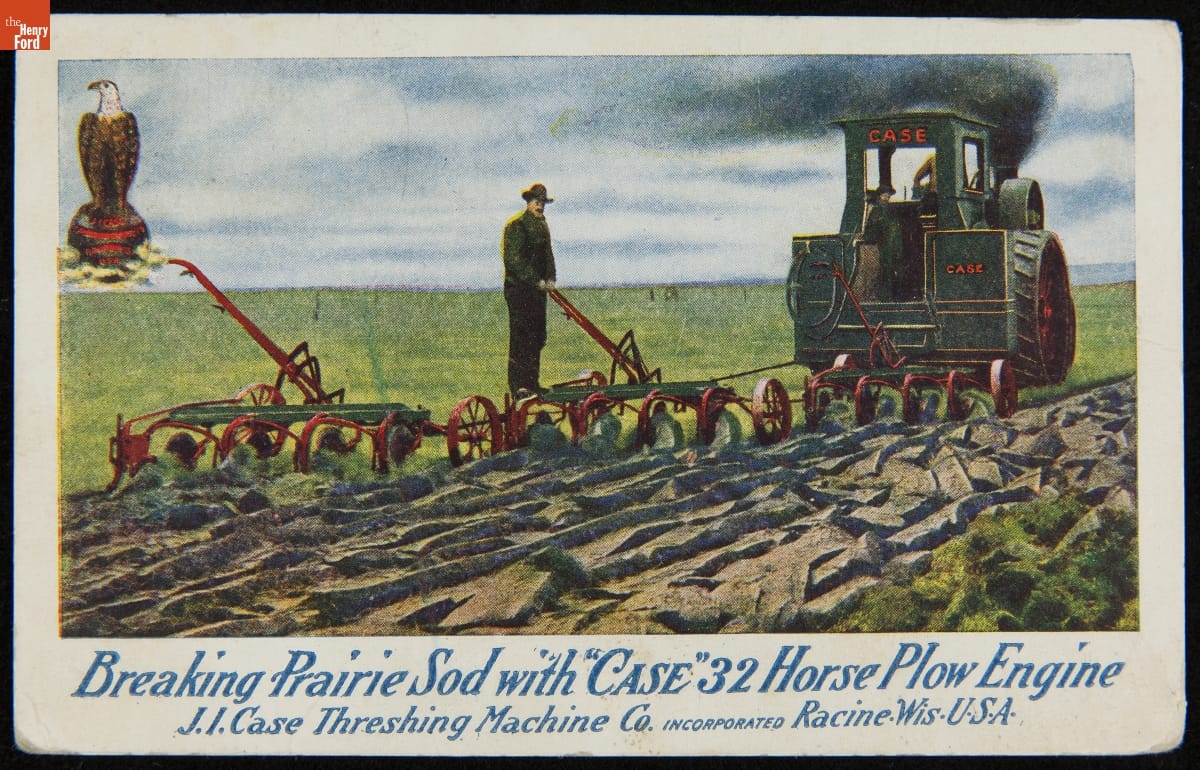
- "Breaking Prairie Sod With 'Case' 32 Horse Plow Engine," 1915 - Treeless grasslands covered 1.4 million square miles of North America, but crews with plowing engines like this created crop fields in short order. Work crews traveled from farm to farm pulling their equipment, a cook wagon, and fuel supplies. Others invested in "bonanza farms," intensely cultivating thousands of acres season after season. This system of agriculture destroyed the semi-arid plains ecosystem.
- 1915
- Collections - Artifact
"Breaking Prairie Sod With 'Case' 32 Horse Plow Engine," 1915
Treeless grasslands covered 1.4 million square miles of North America, but crews with plowing engines like this created crop fields in short order. Work crews traveled from farm to farm pulling their equipment, a cook wagon, and fuel supplies. Others invested in "bonanza farms," intensely cultivating thousands of acres season after season. This system of agriculture destroyed the semi-arid plains ecosystem.
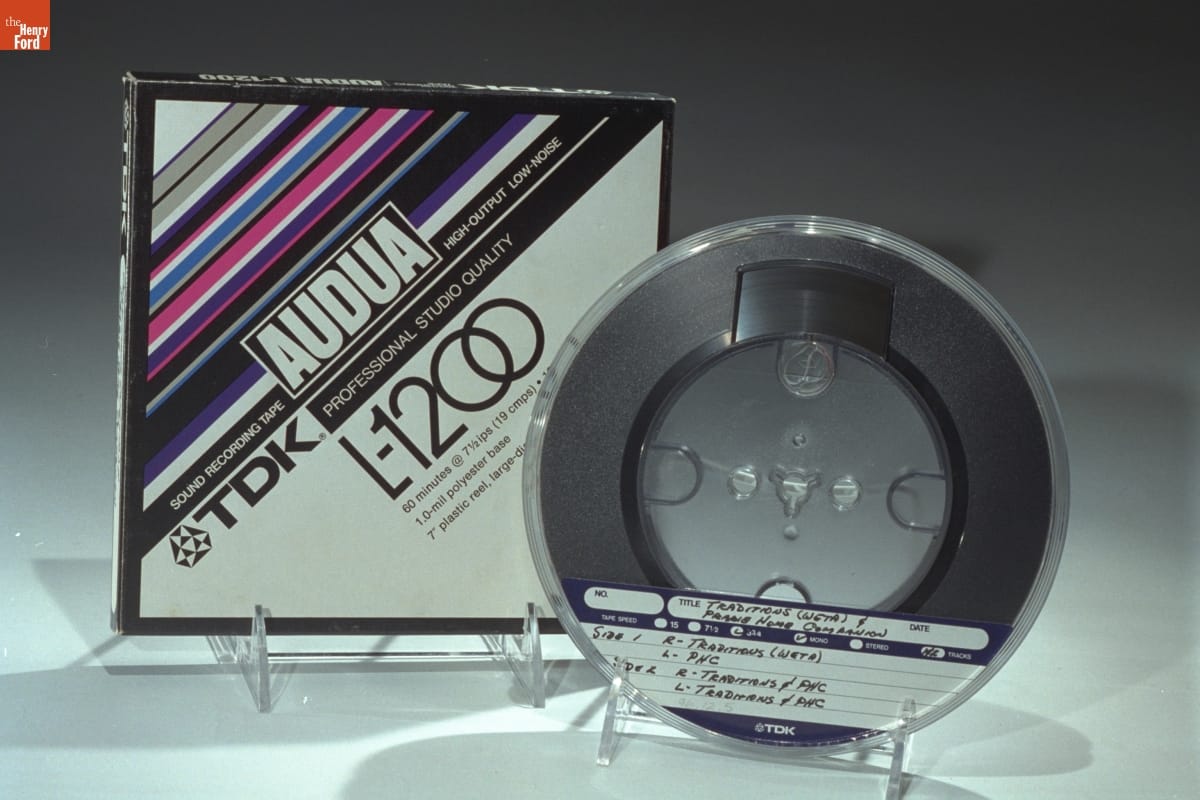
- Tape Recording Featuring Radio Programs "Traditions" (WETA) and "Prairie Home Companion," 1977-1982 - The transformative effects of magnetic tape upon sound, broadcast, and computing history cannot be overstated. In 1930, German companies AEG and BASF revised wire recording technology by using a new material: plastic tape coated with magnetic iron pigment. Its proposed applications were varied, idealistic and practical: recording music and radio, factory automation, data storage, media lending libraries, and many others.
- 1977-1982
- Collections - Artifact
Tape Recording Featuring Radio Programs "Traditions" (WETA) and "Prairie Home Companion," 1977-1982
The transformative effects of magnetic tape upon sound, broadcast, and computing history cannot be overstated. In 1930, German companies AEG and BASF revised wire recording technology by using a new material: plastic tape coated with magnetic iron pigment. Its proposed applications were varied, idealistic and practical: recording music and radio, factory automation, data storage, media lending libraries, and many others.
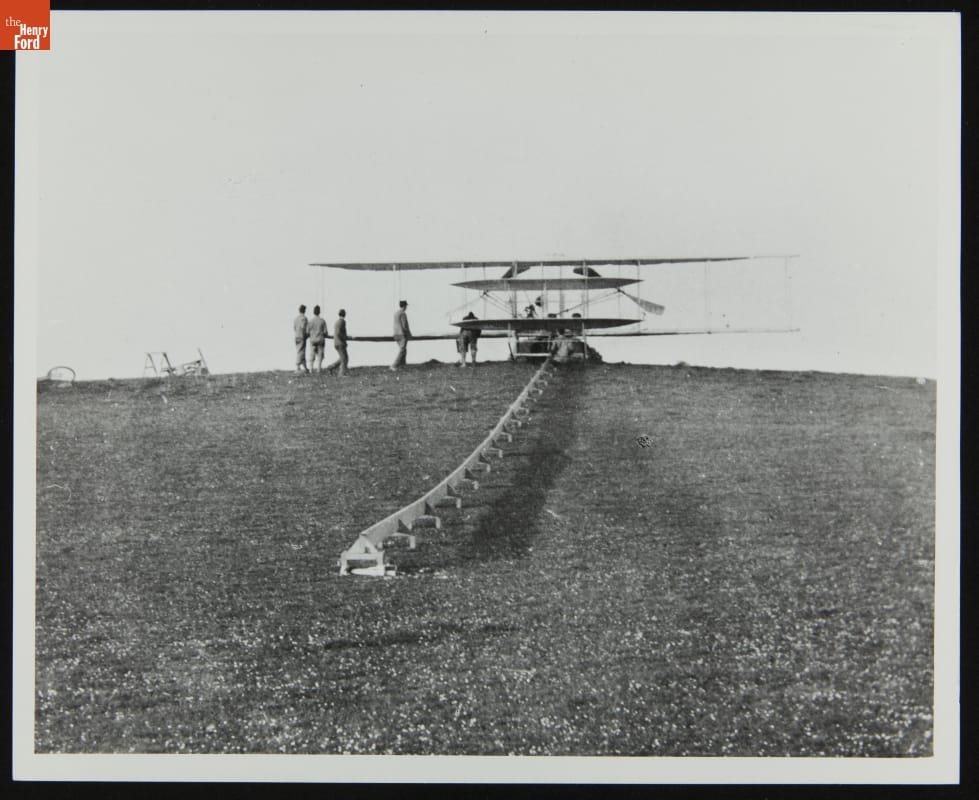
- Wright Airplane and Launching Track at Huffman Prairie, Dayton, Ohio, 1904 - The Wright brothers' early airplanes had no wheels, just simple landing skids. To achieve takeoff, the Wrights mounted their planes on long wooden monorails like the one seen here at Huffman Prairie in 1904. The system worked well with the Kill Devil Hills' steady winds, but not in relatively calm Dayton. The brothers devised a catapult device, for added momentum, later that year.
- 1904
- Collections - Artifact
Wright Airplane and Launching Track at Huffman Prairie, Dayton, Ohio, 1904
The Wright brothers' early airplanes had no wheels, just simple landing skids. To achieve takeoff, the Wrights mounted their planes on long wooden monorails like the one seen here at Huffman Prairie in 1904. The system worked well with the Kill Devil Hills' steady winds, but not in relatively calm Dayton. The brothers devised a catapult device, for added momentum, later that year.