
Search
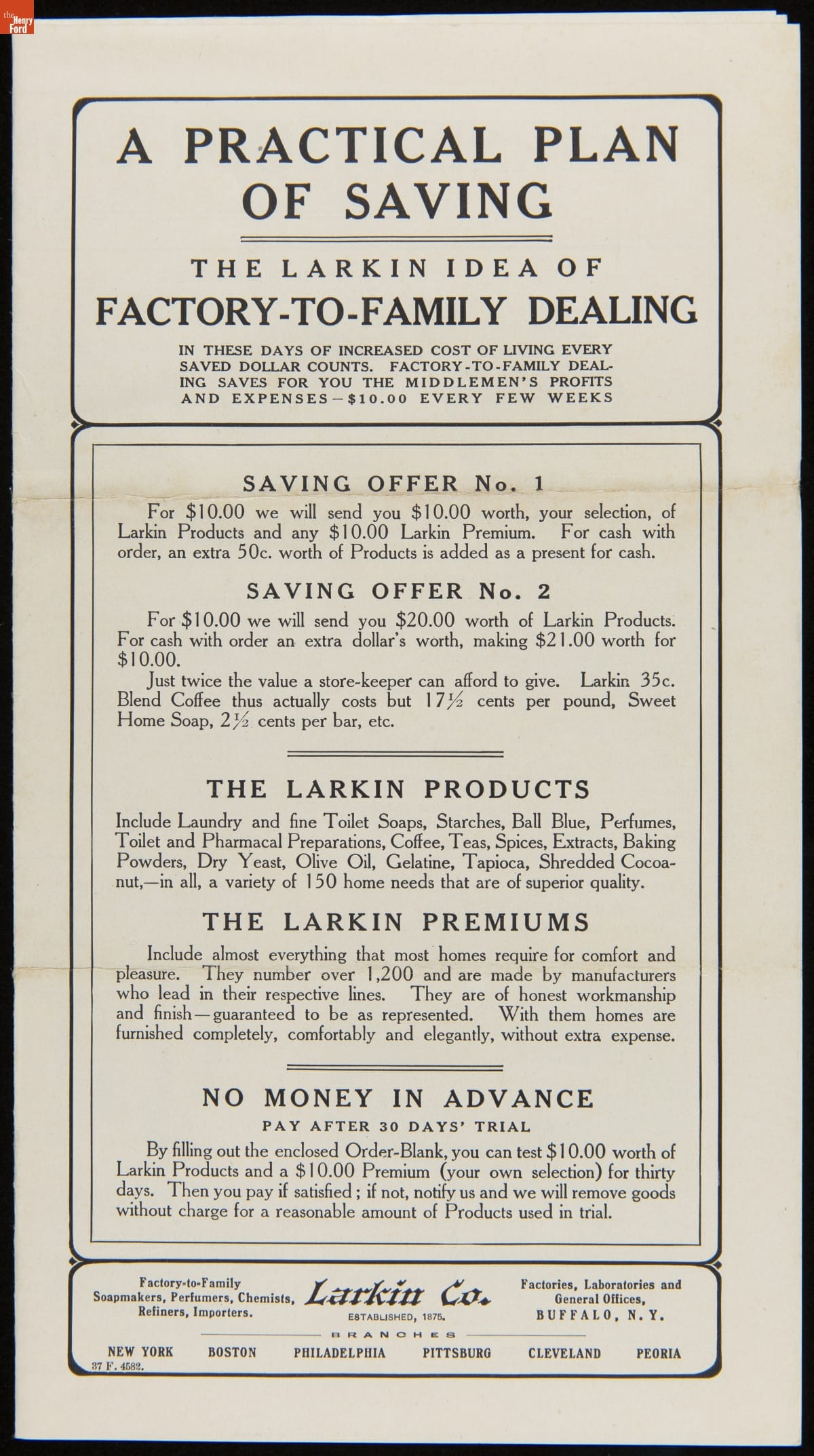
- Larkin Company Trade Catalog, "A Practical Plan of Saving: The Larkin Idea of Factory-To-Family Dealing," circa 1906 - John D. Larkin established a soap manufacturing company in 1875. He hired his brother-in-law, Elbert Hubbard, as a salesman. Hubbard developed "The Larkin Idea," a plan that sold goods directly to consumers through mail-order catalogs and offered incentivizing giveaways. It was a success. By the early 1900s, Larkin's catalogs contained pages of products and even more pages of premiums from which customers could choose.
- circa 1906
- Collections - Artifact
Larkin Company Trade Catalog, "A Practical Plan of Saving: The Larkin Idea of Factory-To-Family Dealing," circa 1906
John D. Larkin established a soap manufacturing company in 1875. He hired his brother-in-law, Elbert Hubbard, as a salesman. Hubbard developed "The Larkin Idea," a plan that sold goods directly to consumers through mail-order catalogs and offered incentivizing giveaways. It was a success. By the early 1900s, Larkin's catalogs contained pages of products and even more pages of premiums from which customers could choose.
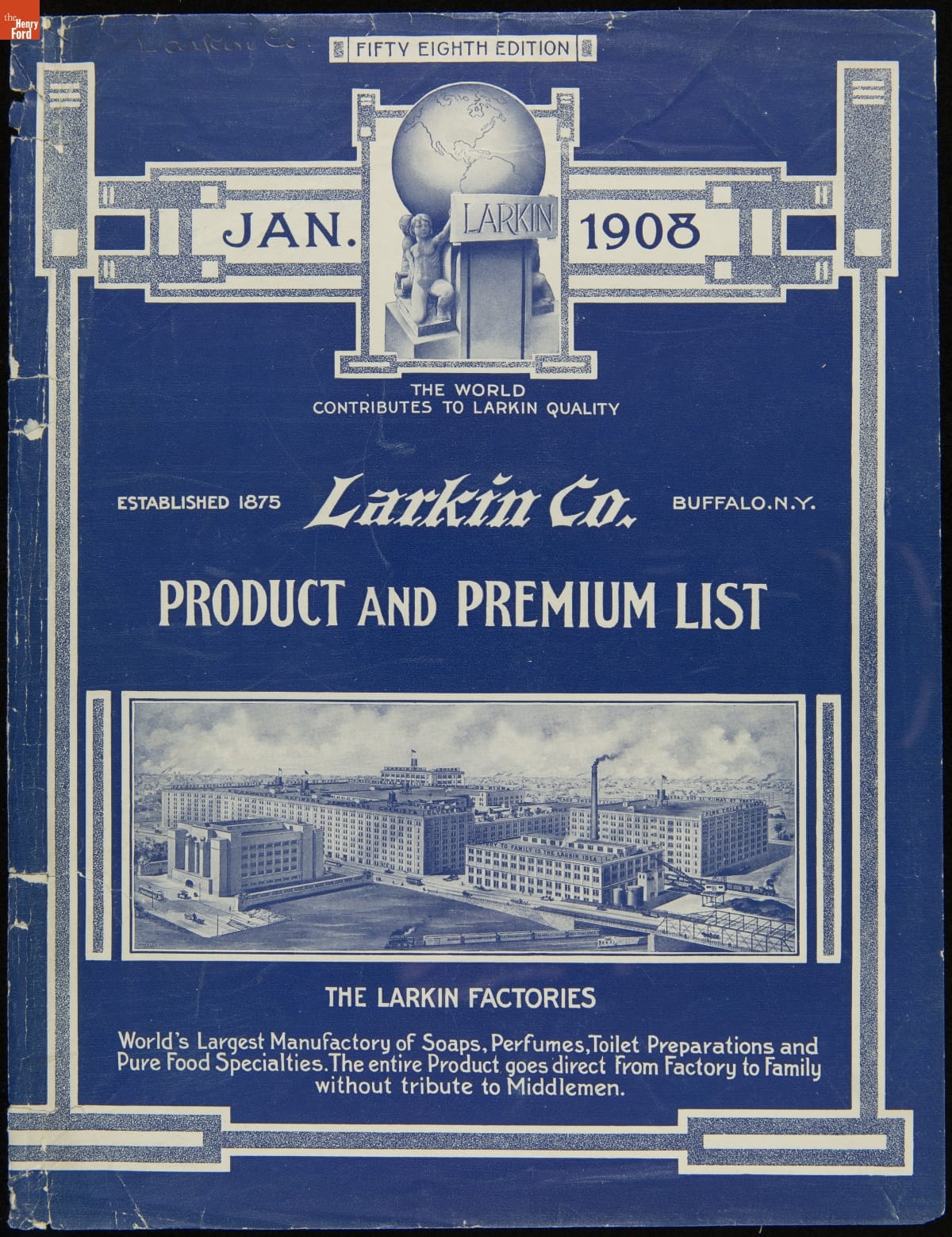
- Larkin Company Trade Catalog, "Product and Premium List," January 1908 (58th Edition) - John D. Larkin established a soap manufacturing company in 1875. He hired his brother-in-law, Elbert Hubbard, as a salesman. Hubbard developed "The Larkin Idea," a plan that sold goods directly to consumers through mail-order catalogs and offered incentivizing giveaways. It was a success. By the early 1900s, Larkin's catalogs contained pages of products and even more pages of premiums from which customers could choose.
- January 01, 1908
- Collections - Artifact
Larkin Company Trade Catalog, "Product and Premium List," January 1908 (58th Edition)
John D. Larkin established a soap manufacturing company in 1875. He hired his brother-in-law, Elbert Hubbard, as a salesman. Hubbard developed "The Larkin Idea," a plan that sold goods directly to consumers through mail-order catalogs and offered incentivizing giveaways. It was a success. By the early 1900s, Larkin's catalogs contained pages of products and even more pages of premiums from which customers could choose.
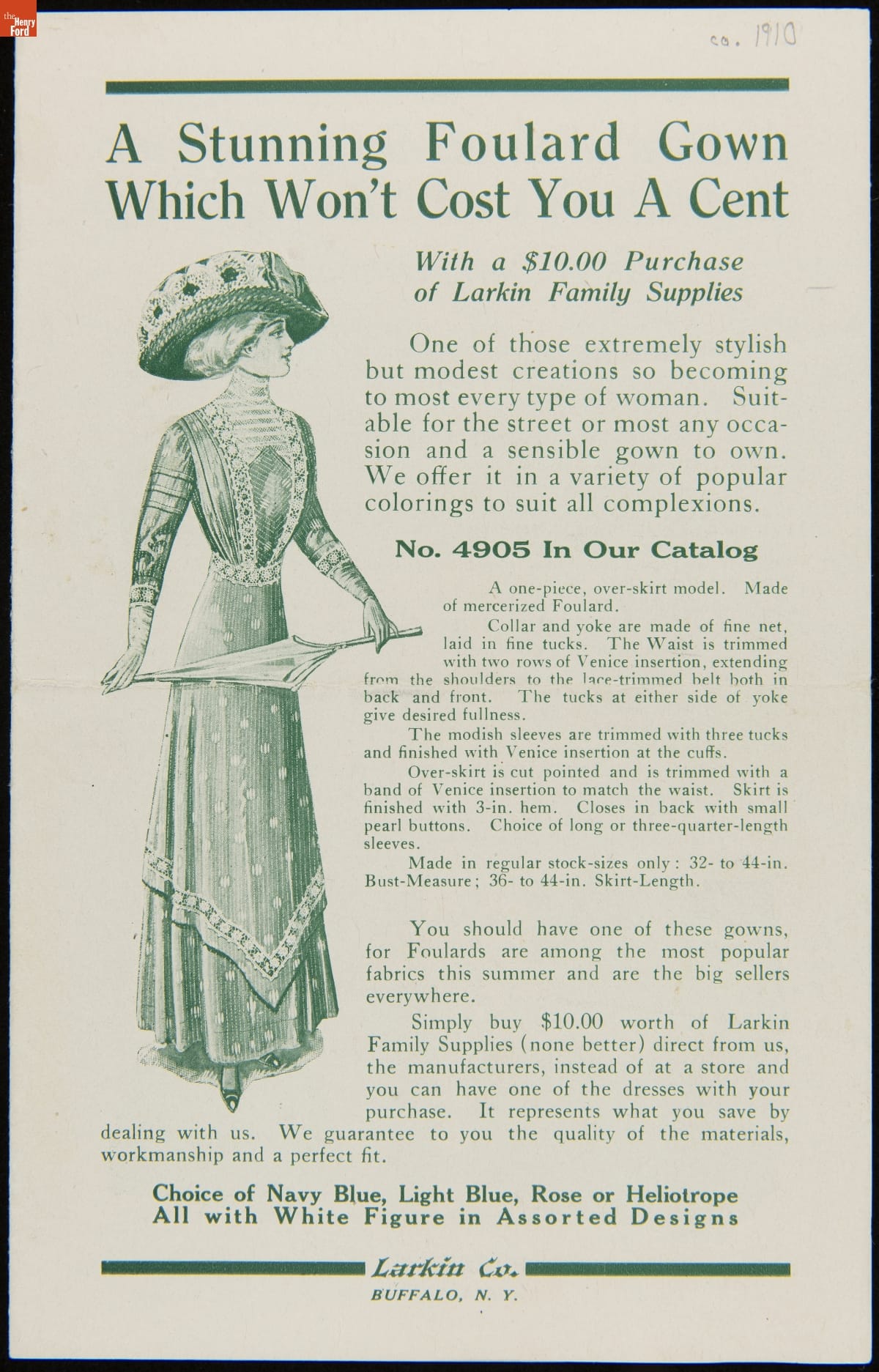
- Larkin Company Trade Catalog, "A Stunning Foulard Gown Which Won't Cost You a Cent," circa 1910 - John D. Larkin established a soap manufacturing company in 1875. He hired his brother-in-law, Elbert Hubbard, as a salesman. Hubbard developed "The Larkin Idea," a plan that sold goods directly to consumers through mail-order catalogs and offered incentivizing giveaways. It was a success. By the early 1900s, Larkin's catalogs contained pages of products and even more pages of premiums from which customers could choose.
- circa 1910
- Collections - Artifact
Larkin Company Trade Catalog, "A Stunning Foulard Gown Which Won't Cost You a Cent," circa 1910
John D. Larkin established a soap manufacturing company in 1875. He hired his brother-in-law, Elbert Hubbard, as a salesman. Hubbard developed "The Larkin Idea," a plan that sold goods directly to consumers through mail-order catalogs and offered incentivizing giveaways. It was a success. By the early 1900s, Larkin's catalogs contained pages of products and even more pages of premiums from which customers could choose.
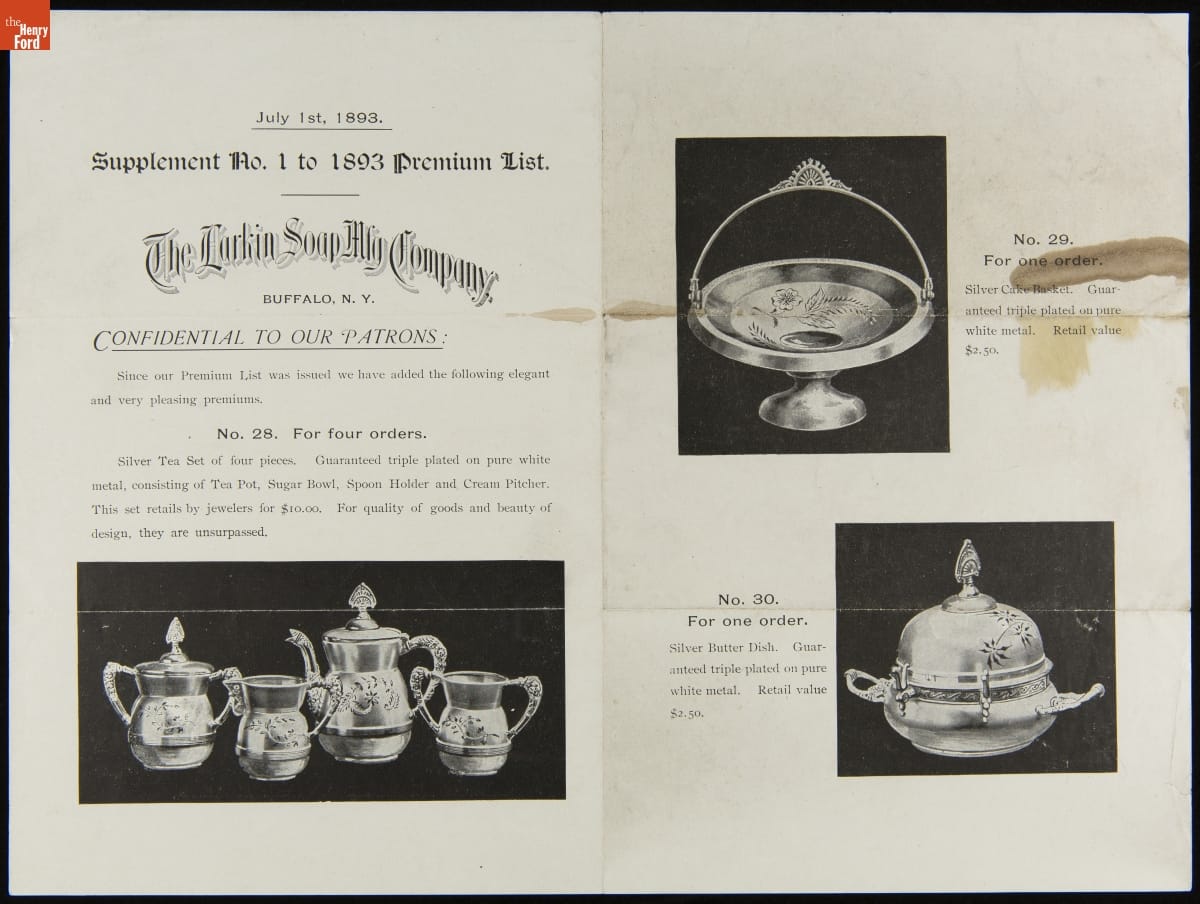
- Larkin Company, "Supplement No. 1 to 1893 Premium List," July 1, 1893 - John D. Larkin established a soap manufacturing company in 1875. He hired his brother-in-law, Elbert Hubbard, as a salesman. Hubbard developed "The Larkin Idea," a plan that sold goods directly to consumers through mail-order catalogs and offered incentivizing giveaways. It was a success. By the early 1900s, Larkin's catalogs contained pages of products and even more pages of premiums from which customers could choose.
- July 01, 1893
- Collections - Artifact
Larkin Company, "Supplement No. 1 to 1893 Premium List," July 1, 1893
John D. Larkin established a soap manufacturing company in 1875. He hired his brother-in-law, Elbert Hubbard, as a salesman. Hubbard developed "The Larkin Idea," a plan that sold goods directly to consumers through mail-order catalogs and offered incentivizing giveaways. It was a success. By the early 1900s, Larkin's catalogs contained pages of products and even more pages of premiums from which customers could choose.
- Taft-Sherman Campaign Button, 1908-1912 - Republican William Howard Taft ran for president twice, in 1908 and 1912. Taft had the support of his friend President Theodore Roosevelt in 1908 and easily won. But by 1912 their friendship had ended. Roosevelt challenged Taft for the Republican nomination, then bolted from the Party after Taft secured enough delegates. The rift allowed Democrat Woodrow Wilson to sweep into the White House.
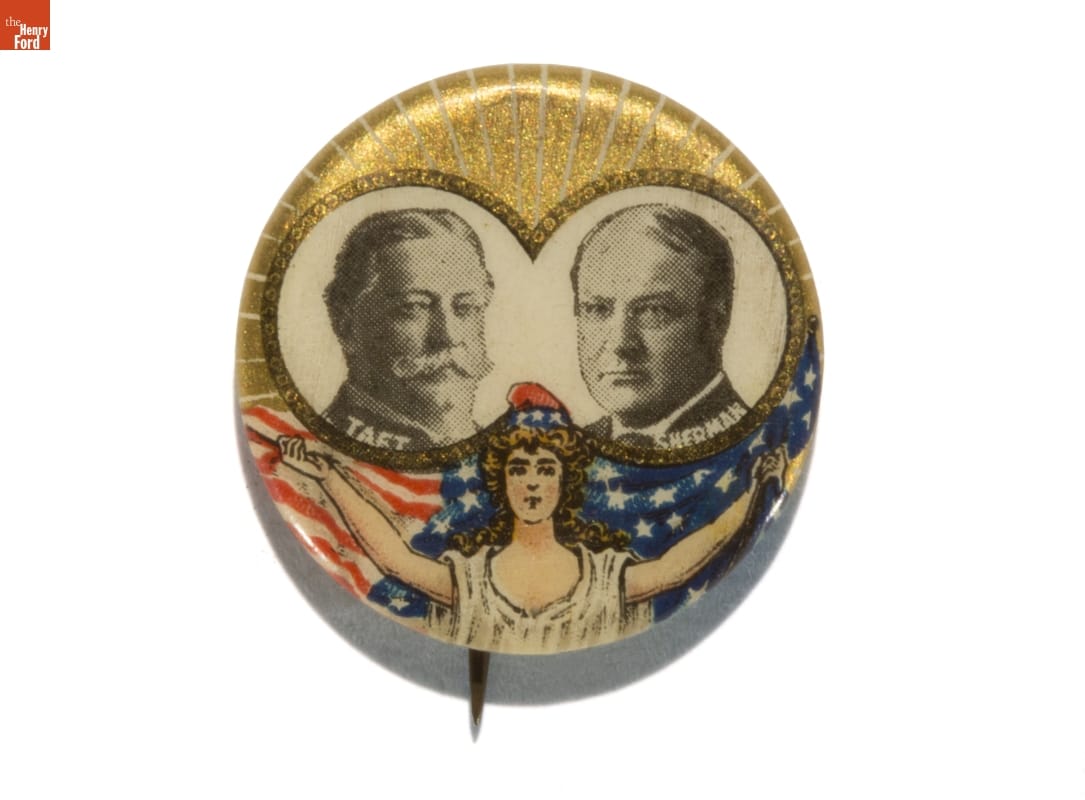
- 1908-1912
- Collections - Artifact
Taft-Sherman Campaign Button, 1908-1912
Republican William Howard Taft ran for president twice, in 1908 and 1912. Taft had the support of his friend President Theodore Roosevelt in 1908 and easily won. But by 1912 their friendship had ended. Roosevelt challenged Taft for the Republican nomination, then bolted from the Party after Taft secured enough delegates. The rift allowed Democrat Woodrow Wilson to sweep into the White House.
- Cap'n Crunch Bo'sun Whistle, circa 1965 - The Bo'sun Whistle was a prize included in Cap'n Crunch cereal boxes in the late-1960s. The cereal company didn't realize the whistles emitted a 2600hz tone--a sound that could trick telephone routing equipment into giving people free long-distance telephone calls. "Phone phreakers"--a group of pranksters that repurposed technology to infiltrate and test telephone system limits--prized these whistles.
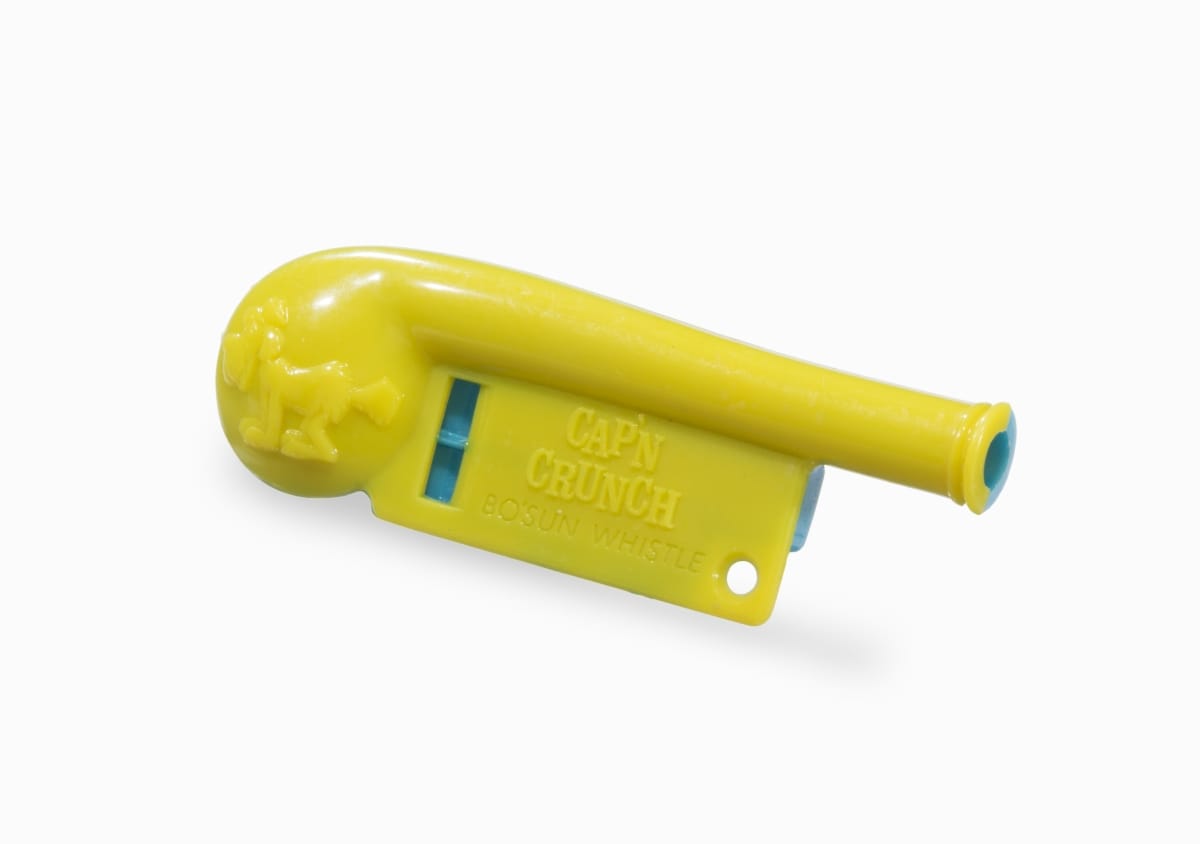
- circa 1965
- Collections - Artifact
Cap'n Crunch Bo'sun Whistle, circa 1965
The Bo'sun Whistle was a prize included in Cap'n Crunch cereal boxes in the late-1960s. The cereal company didn't realize the whistles emitted a 2600hz tone--a sound that could trick telephone routing equipment into giving people free long-distance telephone calls. "Phone phreakers"--a group of pranksters that repurposed technology to infiltrate and test telephone system limits--prized these whistles.
- Old Dutch Cleanser Salt and Pepper Shakers Premium Set, 1900-1920 -
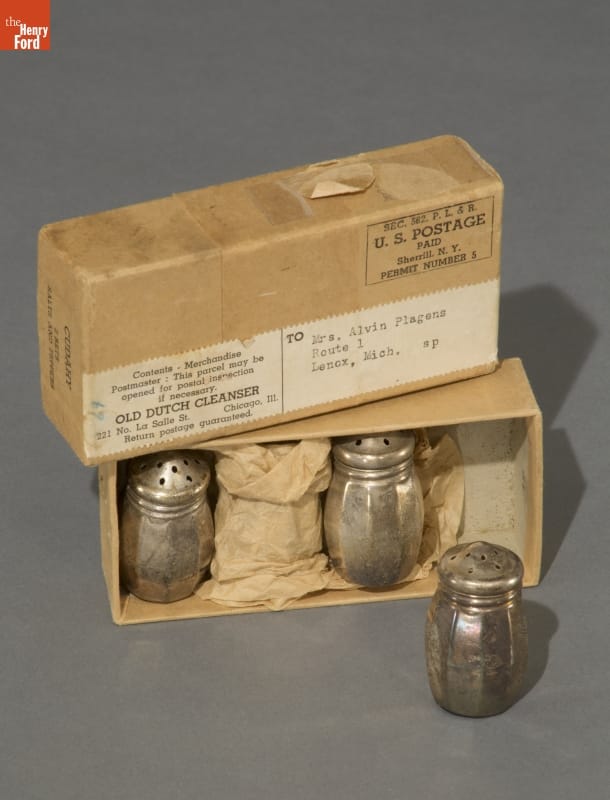
- 1900-1920
- Collections - Artifact
Old Dutch Cleanser Salt and Pepper Shakers Premium Set, 1900-1920
- "Old Company Plate Signature" Flatware Set with Case, 1950-1955 -
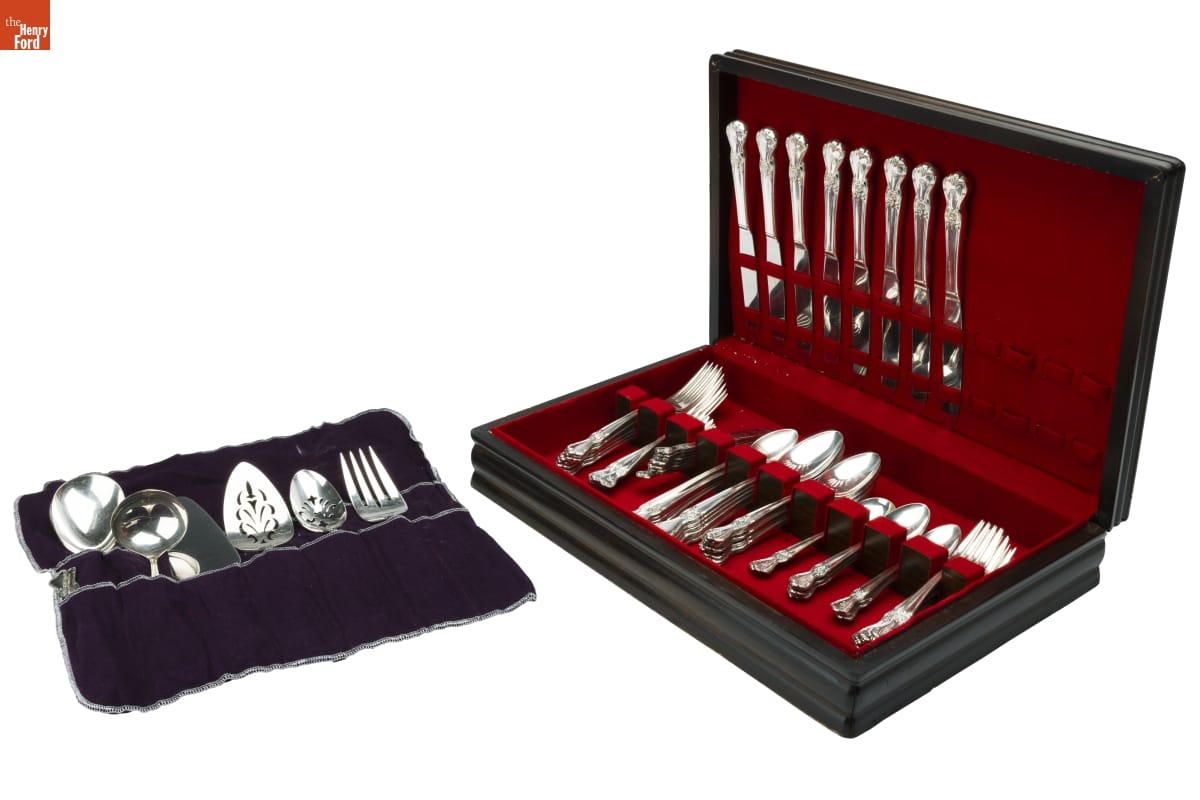
- 1950-1955
- Collections - Artifact
"Old Company Plate Signature" Flatware Set with Case, 1950-1955
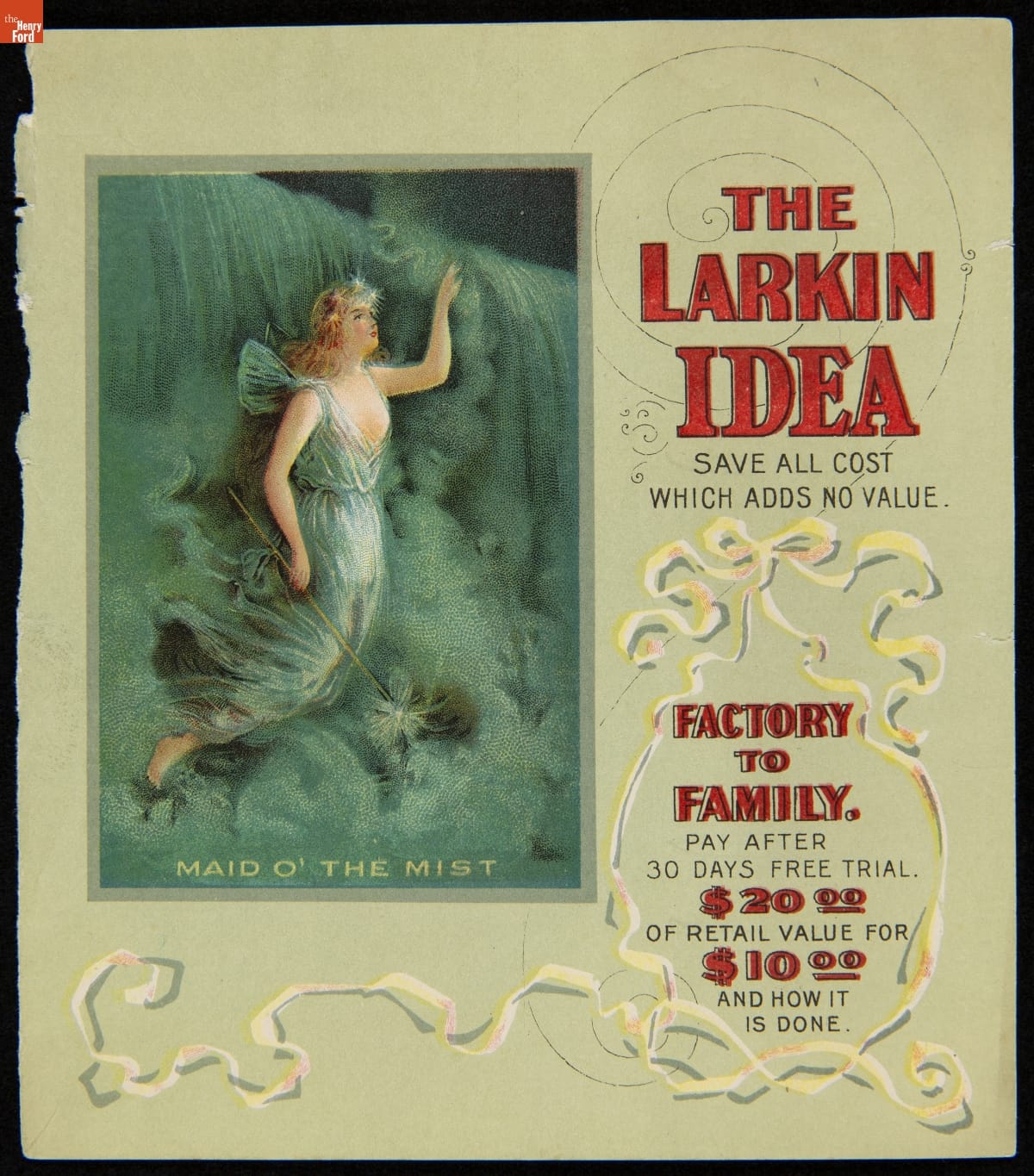
- Trade Card for the Larkin Idea, Larkin Soap Company, 1900 - As color printing gained momentum in the late 19th century, trade cards became a major means of advertising goods and services. In 1885, the Larkin Soap Company developed a marketing strategy known as "The Larkin Idea," which offered giveaways with the purchase of particular items from the company's mail order catalog. This trade card promotes and explains "The Larkin Idea."
- circa 1900
- Collections - Artifact
Trade Card for the Larkin Idea, Larkin Soap Company, 1900
As color printing gained momentum in the late 19th century, trade cards became a major means of advertising goods and services. In 1885, the Larkin Soap Company developed a marketing strategy known as "The Larkin Idea," which offered giveaways with the purchase of particular items from the company's mail order catalog. This trade card promotes and explains "The Larkin Idea."
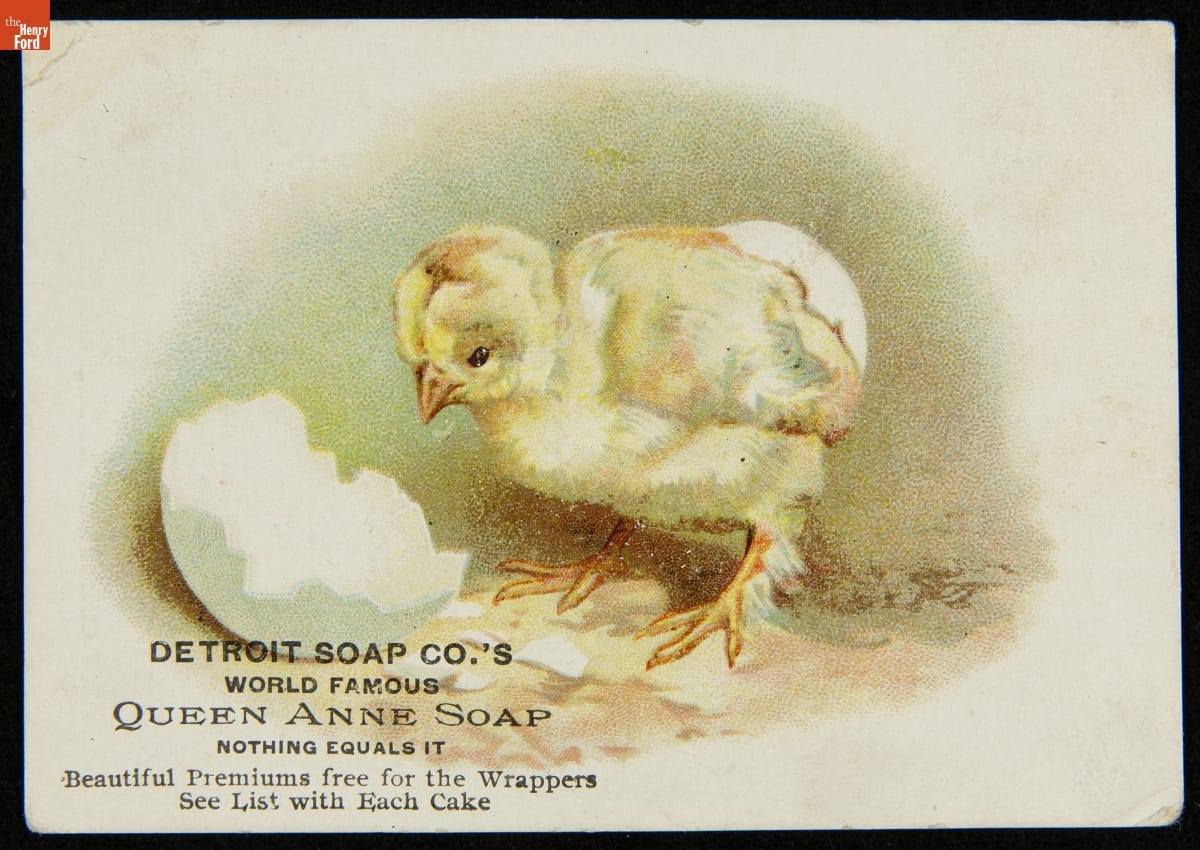
- Trade Card for Queen Anne Soap, Detroit Soap Company, 1881-1900 - In the last third of the nineteenth century, an unprecedented variety of consumer goods and services flooded the American market. Advertisers, armed with new methods of color printing, bombarded potential customers with trade cards. Americans enjoyed and often saved the vibrant little advertisements found in product packages or distributed by local merchants. Many survive as historical records of commercialism in the United States.
- 1881-1900
- Collections - Artifact
Trade Card for Queen Anne Soap, Detroit Soap Company, 1881-1900
In the last third of the nineteenth century, an unprecedented variety of consumer goods and services flooded the American market. Advertisers, armed with new methods of color printing, bombarded potential customers with trade cards. Americans enjoyed and often saved the vibrant little advertisements found in product packages or distributed by local merchants. Many survive as historical records of commercialism in the United States.